How to Keep Rabbits Out of Garden Without a Fence
Stop rabbit damage with a practical plan for fences and no-fence gardens. Identify the signs, protect seedlings and trees, and avoid ineffective scare tricks.
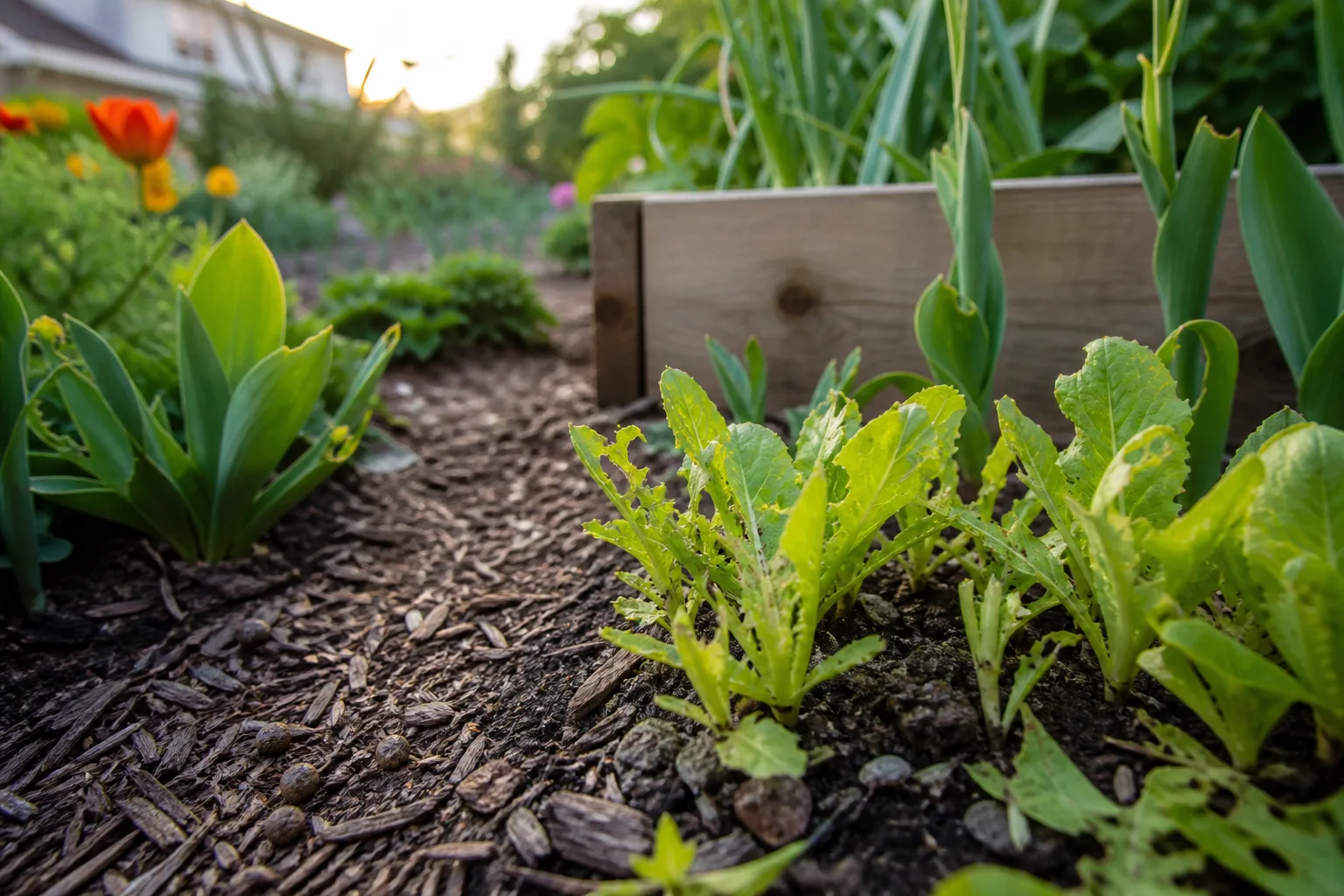
The fastest dependable way to protect a rabbit-prone garden is to block access to the plants. Repellents, plant choices, and habitat changes can reduce pressure, but a rabbit that can still walk up to a tender lettuce or young tree will eventually test it again.
That does not mean you need to fence an entire yard. A 30- to 36-inch wire barrier around a vegetable bed, a sturdy cylinder around a fruit tree, or a well-anchored cover over seedlings can solve the problem at the point where it happens. The right choice depends on the size of the area, the plants at risk, and whether the animal is a small cottontail or a larger jackrabbit.
Confirm that rabbits are causing the damage
Before you buy repellent, identify the browser. Rabbits commonly leave clean, angled cuts on young stems, as if a sharp pruner clipped them, and they browse close to the ground. Look for scattered round pellets roughly 1/4 to 1/2 inch across, small tracks with larger rear-foot impressions, and bark gnawed from the base of young trees or shrubs. UC IPM describes the characteristic twig cut as a diagonal cut of about 45 degrees. (UC IPM)
The pattern matters because deer, slugs, insects, voles, and woodchucks need different fixes. Deer browsing is often higher and leaves ragged, pulled breaks on woody stems; slugs leave slime and irregular holes; voles tend to work at the base of plants or below mulch. If damage appears overnight but there are no pellets or low cuts, keep investigating instead of treating every missing leaf as rabbit damage.
Rabbits may be active at dawn, dusk, or overnight, so not seeing one during a midday inspection proves nothing. A simple trail check helps: rake a small patch of soil or mulch smooth near the bed, then check it the next morning for tracks. A motion camera can also settle the question when several animals share the garden.
Start with a 24-hour damage-control plan
When a plant has been eaten to the soil line, do not spend the first evening experimenting with five sprays. Give the remaining plants a physical shield immediately, then improve the permanent setup once you know where rabbits enter.
- Cover the most valuable plants first. Use a rigid wire cage, cloche, upside-down laundry basket with safe openings, or another barrier that rabbits cannot chew through or push aside. Remove anything with small openings that could catch a rabbit’s head or feet.
- Mark the damage. Photograph clipped stems and bark before pruning. Note which edge of the garden has pellets, tracks, or a runway through grass.
- Inspect every opening. Check under gates, between panels, around compost bins, and where a fence meets a wall. Rabbits exploit the bottom gap more often than the center of an intact barrier.
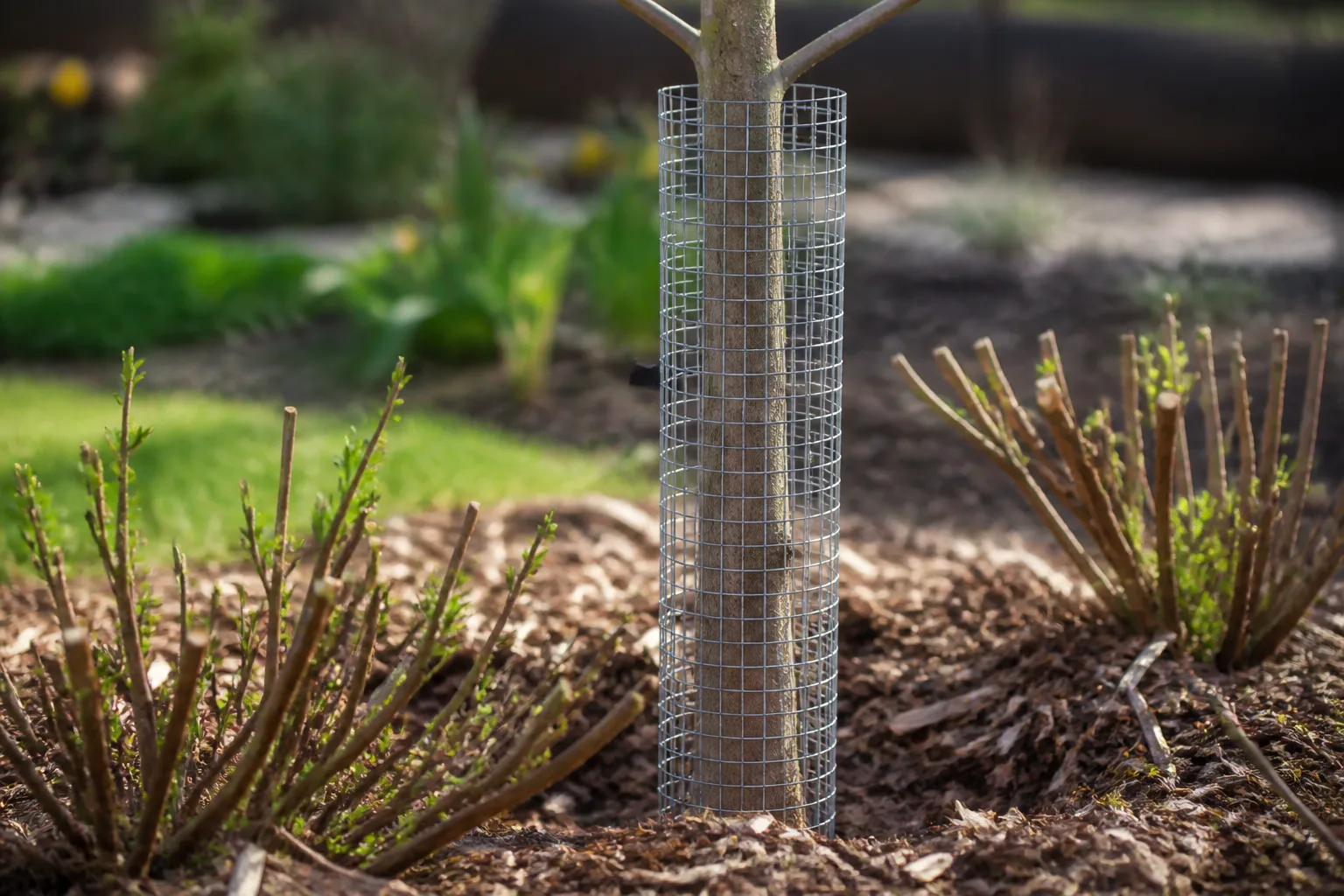
- Protect young trunks. Wrap a guard around the full reach of the rabbit, leaving air space between mesh and bark. A trunk that is ringed all the way around may not recover.
- Delay the tempting cleanup. Do not remove every brushy corner before checking for nests or other wildlife. Clear only what is safe to disturb, and contact local wildlife help if you find a nest with young.
This sequence buys time without pretending that a scent or scare device will hold a hungry animal away. It also prevents a common failure: treating the visible plant while leaving the access route open.
Choose between a perimeter fence and targeted protection
The most reliable decision is based on how much garden you must protect, not on whether fences look attractive. If rabbits are mowing an entire bed, a perimeter barrier is usually less work than maintaining ten separate cages. If only three shrubs or a row of seedlings is vulnerable, targeted protection is more economical and easier to inspect.
| Situation | Best starting point | Why |
|---|---|---|
| Large vegetable bed or repeated whole-bed browsing | Perimeter wire fence | One continuous barrier protects many plants and reduces daily spraying. |
| One young tree, rose, berry plant, or shrub | Individual guard | You protect the high-value plant without enclosing the yard. |
| Seedlings and leafy greens | Rigid cage or secured cover | Tender growth is most attractive and can disappear before a repellent is reapplied. |
| Rental, balcony, or short seasonal crop | Portable panels or a sturdy cover | It can be removed without permanent posts or buried wire. |
| Large property with jackrabbits or deep snow | Taller, reinforced exclusion | Height and reach change the fence design and inspection routine. |
When a full rabbit fence is worth the work
Use a full barrier when damage is widespread, when the garden contains edible crops that should not receive repeated repellent, or when you are tired of replacing seedlings. A fence is also the better long-term answer beside open land, a greenbelt, or a brushy lot where new rabbits will keep arriving.
The trade-off is installation quality. A fence with a perfect top and a two-inch gap along the ground is not a rabbit fence; it is a visual suggestion. Gates, corners, and the soil line deserve as much attention as the mesh itself.
When cages, covers, or a raised bed are enough
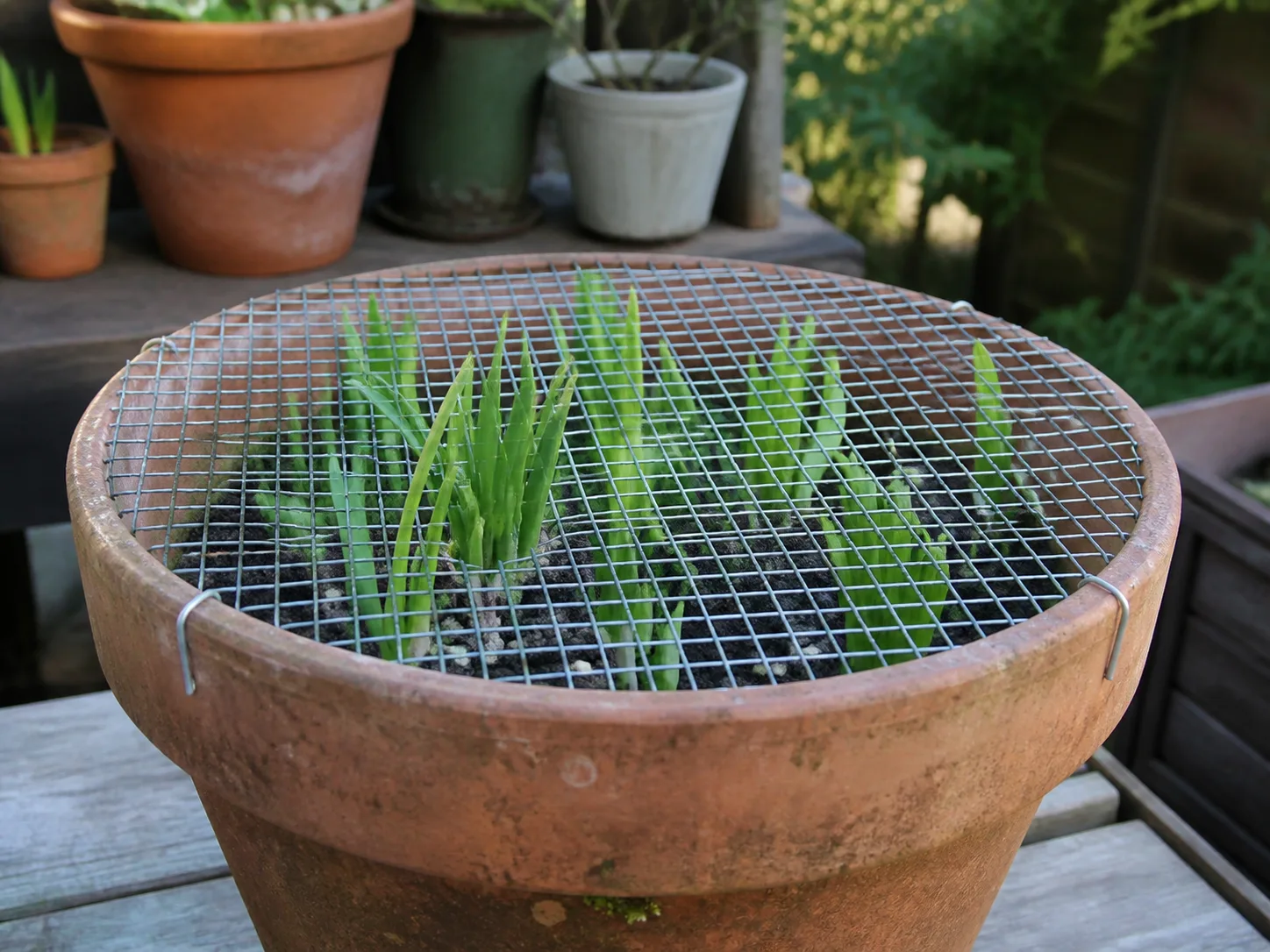
Individual cages work well around young trees, shrubs, vines, and isolated flower clumps. A raised bed helps only when its sides are high and its top or perimeter is protected; rabbits can still jump onto a low bed and feed comfortably. For lettuce, carrots, peas, and seedlings, a metal mesh cover over hoops can be more useful than raising the soil another few inches.
Savvy Gardening’s practical cover guidance favors sturdy chicken-wire structures and row protectors for rabbits because they let rain and light through while keeping the animal’s mouth away from foliage. (Savvy Gardening) Fabric alone is a short-term shield if a rabbit can chew through it, and any loose netting needs frequent checks for holes and entanglement.
Build a rabbit fence that closes the real gaps
Select mesh and height for your rabbit type
Choose wire mesh no larger than 1 inch so young rabbits cannot squeeze through. Hardware cloth with smaller openings is useful around small seedlings, but it costs more and is not necessary for every tall perimeter fence. Poultry netting is inexpensive and flexible; welded wire is stiffer and tends to hold its shape longer.
For ordinary cottontails, a fence about 30 to 36 inches above ground is a practical target. Larger jackrabbits, a dog chasing rabbits toward the fence, or snow that raises the launch point justify more height. UC IPM gives a conservative specification of 48 inches above ground and 6 to 10 inches below ground, while noting that a two-foot fence can exclude many cottontails. (UC IPM) In a garden where species are uncertain, choose the taller design if the extra material will prevent a rebuild.
Do not rely on a height number without considering the surroundings. A fence beside a retaining wall, woodpile, raised bed, or snowbank may be easier to jump than the same fence in open soil. Keep climbable objects away from the barrier, and avoid leaving a rabbit trapped inside a closed enclosure without an exit plan.
Secure the bottom, corners, and gate
Rabbits investigate the lower edge first. Bury the mesh at least 6 inches, or bend a 6- to 12-inch apron outward along the soil surface and pin it down with landscape staples. The outward bend makes digging at the base frustrating because the rabbit meets wire before it can create a tunnel. Fill dips under the fence and check newly loosened soil after rain.
Make the gate overlap the frame and fit tightly at the bottom. Add a sill or a buried threshold if the gate swings over soft soil, and keep it closed; rabbits can be active both day and night. Walk the full perimeter weekly, looking for lifted staples, stretched wire, fresh holes, and places where mulch has built up enough to act as a ramp.
For a temporary garden, connect low wire panels to lightweight stakes so the enclosure can be moved with the crop rotation. Fine Gardening describes a 30- to 36-inch woven-wire fence with mesh no larger than 1 inch as a practical garden barrier, plus an outward-turned buried edge to discourage digging. (Fine Gardening) The important detail is continuity: a short panel that stops at the path still leaves the bed open.
Keep rabbits out without a perimeter fence
Protect seedlings and favorite plants individually
Cut a cylinder of poultry netting or welded wire wide enough to leave several inches between the mesh and the plant. Anchor it so a rabbit cannot press the wire against a stem and reach through. For a young tree, bury the lower edge about 2 to 3 inches and brace the cylinder at least 2 inches away from the trunk; inspect it as the trunk expands.
For vegetables, build a low “cage” from rigid wire over the bed rather than laying netting directly on leaves. Secure the edges with staples, boards, or weights that a rabbit cannot nose underneath. Leave enough headroom for growth and harvest, and check beneath the cover after every windy day.
If you use bird netting or flexible fabric, keep it taut and supported. RHS warns that rabbits can gnaw through plastic and fabric netting and recommends checking for holes so animals are not accidentally trapped or injured. (RHS) That makes a rigid frame the better choice for a cover that will stay in place for weeks.
Use covers and temporary electric netting carefully
Portable electric netting can protect a seasonal bed where local rules, safe placement, and correct equipment are understood. It is not a casual substitute for garden twine with a battery attached. Keep it away from children, pets, public paths, and standing water, and follow the manufacturer’s installation guidance.
A covered bed is usually the simpler no-fence approach for a small garden. Combine it with a clear edge inspection rather than assuming the cover is enough. Rabbits can push under a low tunnel, chew a weak seam, or use a nearby object to reach through. If you find nibbled leaves inside, look for the exact contact point before changing the whole method.
Use repellents as backup, not your main barrier
Commercial repellents can help protect woody ornamentals, young trees, and shrubs when a fence is impractical. UC IPM reports that products containing dried blood or putrescent whole-egg solids can reduce rabbit browsing, but says repellents work best when applied before damage and reapplied after rain, heavy dew, irrigation, or new growth. (UC IPM) They work by making a plant smell, taste, or feel unpleasant; they do not close the route into the garden.
Read the label before applying anything. Many repellents are unsuitable for edible portions or are most practical on ornamentals, and even a product approved for an edible crop may have a harvest interval or application limit. Wet weather and a garden full of highly preferred lettuce or young peas can overwhelm the effect.
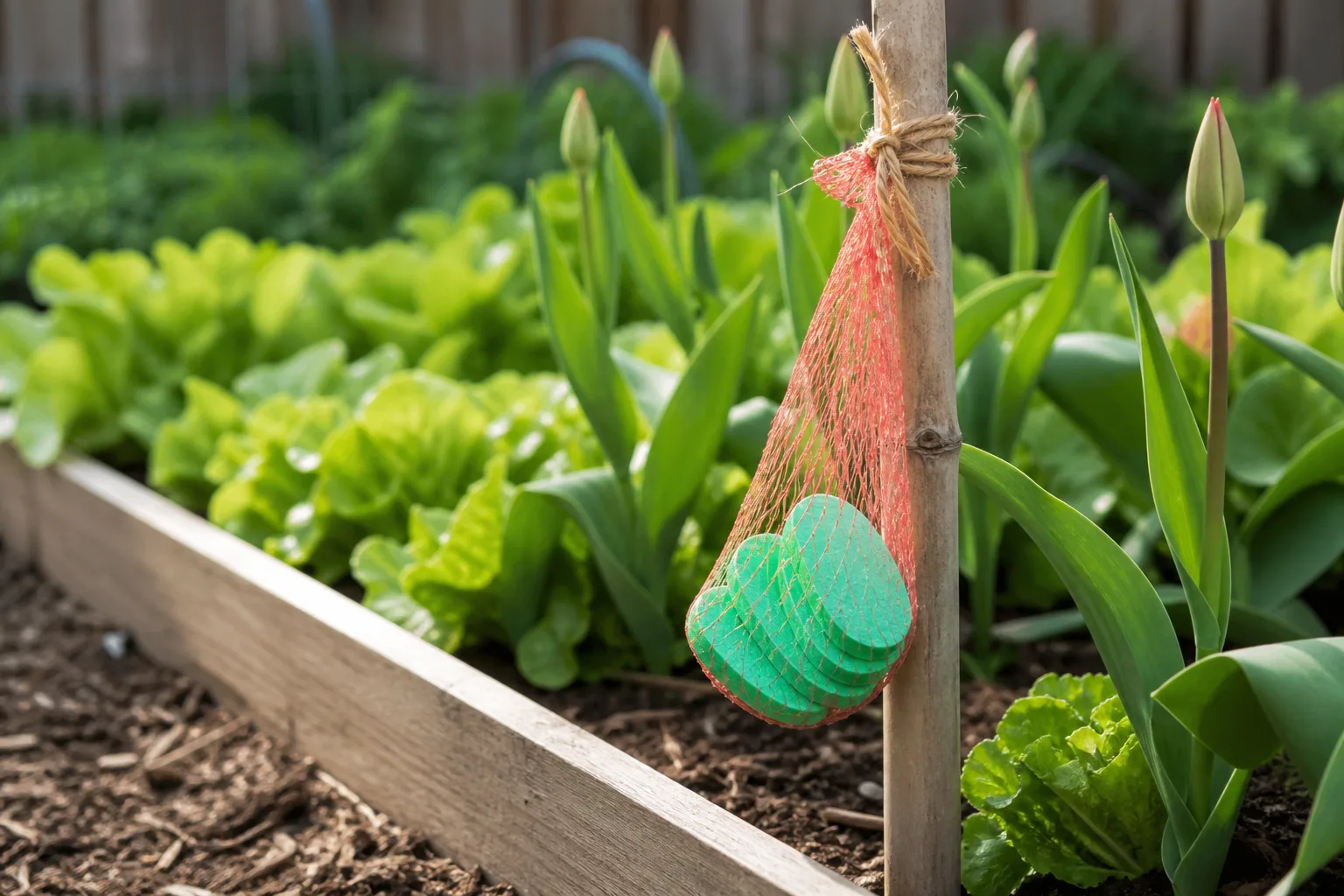
Treat home remedies skeptically. Irish Spring soap, citrus peels, garlic, chili, vinegar, ammonia, and strong-smelling powders are often recommended online, but scent intensity is not the same as dependable exclusion. Soap may be a temporary novelty and can wash away; vinegar or ammonia near foliage can injure plants; and spicy dust can irritate eyes, skin, pets, and non-target wildlife. Our guide to whether Irish soap keeps rabbits away explains the limits of that popular idea.
Make the garden less convenient for rabbits
Habitat work is a pressure-reduction step, not a magic removal technique. Cottontails often use brushy edges, dense weeds, rock piles, debris, or the space beneath a raised shed for cover. Remove unused piles, trim vegetation along the fence line, and block gaps beneath outbuildings when doing so will not displace nesting wildlife or harm a desirable habitat.
The trade-off matters. A brush pile can shelter rabbits, but it may also shelter songbirds, beneficial insects, or other wildlife. Clear the material selectively and seasonally, and check for active nests before disturbing it. Habitat reduction has less effect on jackrabbits that rest in open depressions away from the feeding area, so pair it with exclusion when the animal is traveling in from open land. (UC IPM)
Keep grass and weeds from forming a covered runway directly into the bed, but do not strip the whole yard bare in an attempt to remove every wild animal. A clean, visible strip near the garden makes tracks and new holes easier to spot and gives you a better chance to repair a breach before the next feeding period.
Choose plants with realistic expectations
Rabbit-resistant is a relative description, not a guarantee. Rabbits eat a broad range of herbaceous plants, vegetables, shrubs, and trees, and new growth can be especially vulnerable even on plants that mature specimens often survive. RHS recommends treating resistant plant lists as a starting point and observing what remains untouched in nearby gardens. (RHS)
A border built around aromatic or coarse-leaved plants such as rosemary, sage, thyme, lavender, catmint, and alliums may experience less browsing than a bed full of lettuce and young beans. Use those plants to lower the value of the border, not to create a rabbit-proof perimeter. A hungry rabbit may eat a supposedly resistant plant, especially during winter, drought, or after a new planting has been watered and put on soft growth.
Place the most tempting crops behind the strongest barrier. You can also grow a sacrificial patch of grass or clover away from the vegetable bed, but treat it as a distraction rather than a guaranteed diversion; adding food can attract more animals if the protected crop remains easy to reach.
Skip scare tactics and risky home remedies
Flashing lights, noisemakers, fake owls, plastic snakes, and ultrasonic devices may startle a rabbit once, but they do not address hunger or access. UC IPM says frightening devices and ultrasonic units generally are not effective, and animals can habituate to repeated signals. (UC IPM) Moveable decoys may work briefly when combined with a barrier, but buying a louder device is not a substitute for fixing the gap below the gate.
Do not use toxic baits in a home garden. They create risks for pets, children, predators, scavengers, and animals that were never part of the problem, and they are often restricted or impractical outside agricultural settings. Outdoor cats are not a responsible rabbit-control plan either; they can kill songbirds and other wildlife, while a dog left loose can chase rabbits into fences or roads.
Avoid handling a wild rabbit with bare hands. If an injured or trapped animal needs help, use local wildlife rehabilitation or animal-control guidance. House Rabbit Society recommends humane, prevention-focused methods and notes that local laws and conditions determine what can be done with wild rabbits. (House Rabbit Society)
Adjust your plan for spring, summer, and winter
Spring is when tender seedlings and soft shoots can disappear overnight. Install covers before transplanting, not after a rabbit has learned that the new bed is a reliable buffet. Recheck the barrier after mowing, cultivating, heavy rain, and mulch application because each can open a low route.
Summer damage often concentrates on leafy vegetables, flowers, and new woody growth. Harvest promptly, keep covers supported so plants do not touch the mesh, and refresh a labeled repellent only as directed. In hot weather, make sure a cover does not overheat the bed or prevent pollinators from reaching flowers that need them.
Fall and winter shift the target toward bark, buds, and young twigs when green food is scarce. Keep tree guards in place through the vulnerable season, and account for snow: a fence that was tall enough in bare soil may become a short platform after a storm. RHS notes that bark gnawing can kill young trees and shrubs if the trunk is ringbarked. (RHS)
Help plants recover after rabbit browsing
Do not fertilize a freshly browsed plant heavily in an attempt to force fast replacement growth. First stop the feeding, water according to the plant’s normal needs, and wait to see which buds remain alive. For herbaceous plants, trim ragged or crushed stems back to a healthy node once the damage is dry and visible; avoid removing every bit of green tissue if the plant can still photosynthesize.
Young trees and shrubs need closer attention. A few clipped twigs are usually a pruning problem, but a continuous strip of missing bark around the trunk is a structural and survival risk. Protect the trunk immediately, keep lawn equipment away, and ask a local Cooperative Extension office or qualified arborist to assess significant girdling rather than sealing it with a random household product.
If a seedling was grazed to ground level, check whether the growing point survived. Brassicas and some leafy crops can regrow from the center; a plant with its crown severed may be faster to replace. Record what recovered so you can decide which plants deserve a cage next season.
Monitor for breaches and know when to call for help
Rabbit control is ongoing because the surrounding population does not disappear when one garden is protected. Walk the barrier once a week and after storms, look for new pellets and angled cuts, and inspect plants that were previously untouched. If damage resumes, compare the location of new cuts with the fence line; the pattern often reveals a lifted edge, open gate, or mesh large enough for a juvenile rabbit.
If a property has repeated breaches, a large population, damaged utility lines, a nest in a dangerous location, or trees that are being girdled, contact a nuisance-wildlife professional or local Cooperative Extension office. Trapping and relocation rules vary widely, and releasing a rabbit elsewhere may be illegal or may simply move the problem to another property. The International Wildlife Damage Management Council emphasizes matching the control method to the species, damage, and setting rather than treating every rabbit problem alike. (ICWDM)
Keep records of what worked: the mesh size, fence height, breach locations, repellent weathering, and seasonal damage. That small log turns next year’s first rabbit sighting into a quick repair instead of a full re-learning cycle.
Conclusion
To keep rabbits out of a garden, start with exclusion. Fence the whole bed when damage is widespread, cage the high-value plants when it is localized, and use a rigid cover when you need a no-perimeter solution for seedlings or greens. Use mesh no larger than 1 inch, secure the bottom with buried wire or an outward apron, close the gate, and inspect the lowest edge as carefully as the top.
Repellents, resistant plants, and habitat changes can make the garden less attractive, but they work best as supporting layers. Skip toxic baits and unreliable scare gadgets, protect young trunks before winter, and check for new damage every week. A well-built barrier will not make rabbits vanish; it will make your plants unreachable, which is the durable result a garden actually needs.