8 Perennial Plants That Come Back Every Year
These eight perennial plants return after winter when matched to the right site. Compare bloom time, light, soil, maintenance, and common failure points.
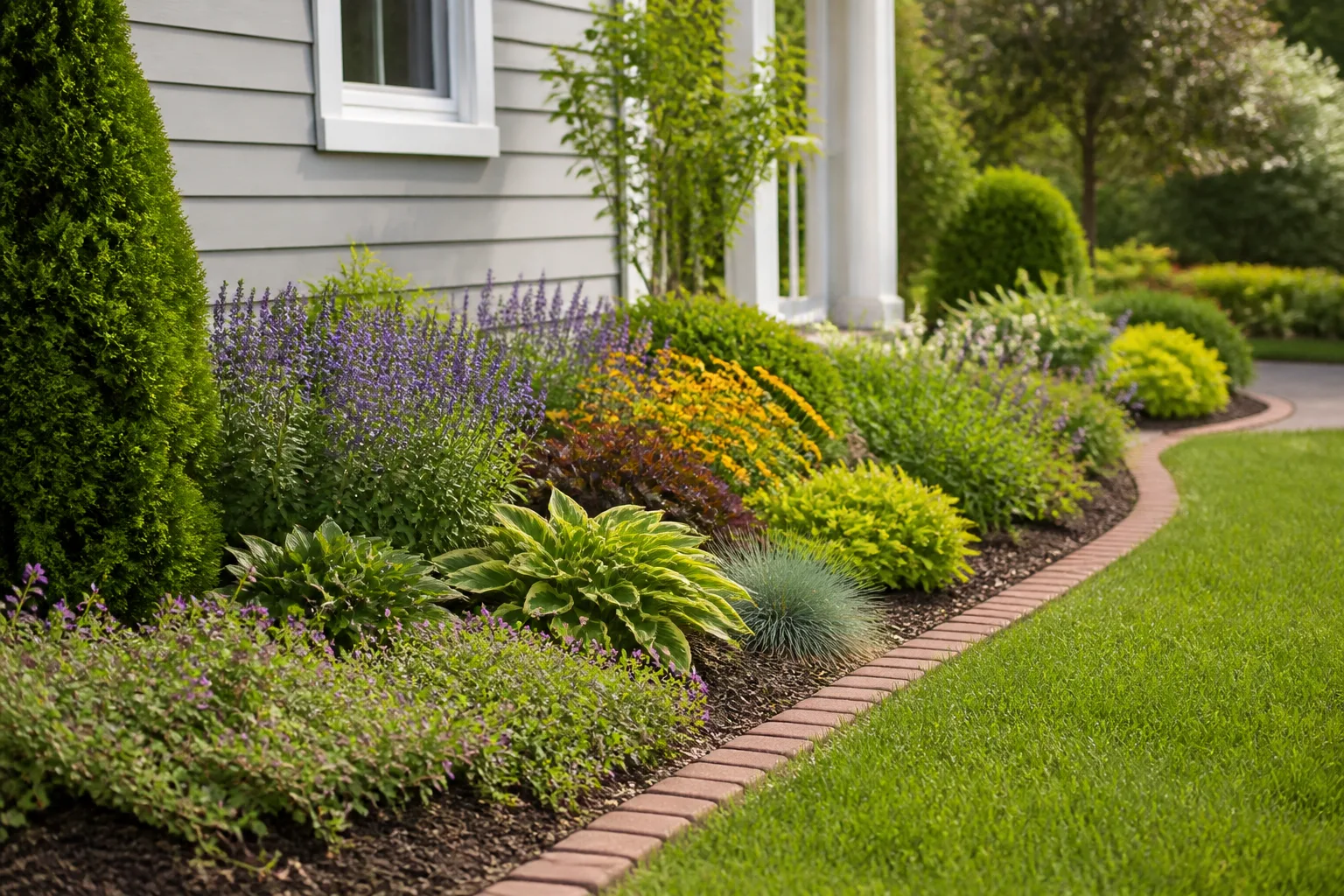
If you want a garden that becomes fuller instead of starting over each spring, begin with the right definition of “perennial.” A perennial plant lives for more than two years, but it does not necessarily stay green or flower continuously. Many herbaceous perennials disappear above ground in winter and return from a surviving crown, root system, or rhizome when conditions improve. The University of Arkansas Cooperative Extension makes the useful distinction that some perennials die to the ground while others remain evergreen.
The eight plants below are not ranked by flower size or novelty. They are chosen for different jobs: dependable summer color, shade coverage, a long-lived focal point, pollinator value, late-season flowers, or tolerance of a site that is too wet or dry for the usual bedding plants. The real secret is not finding a plant that “never dies.” It is matching the plant to the place, then giving a new planting enough time and water to establish.
What “comes back every year” really means
An annual completes its life cycle in one growing season, from seed to flower to seed. A perennial survives long enough to grow again in a later season, although its top growth may die back, its leaves may vanish, or its flowers may be absent for a year after transplanting. Trees and shrubs are technically perennials too, but gardeners usually use the word for herbaceous or semi-woody plants in borders and containers.
That distinction matters when shopping. A plant can be perennial in one climate and sold as an annual in another. A tender salvia may survive a mild winter but fail in a colder one; a cool-season plant may survive winter and then collapse in summer. Even a genuinely hardy perennial can die from waterlogged soil, a damaged crown, drought during its first summer, or an exposed container that freezes more severely than the ground. The RHS growing guide separates herbaceous perennials from evergreen and semi-evergreen types for exactly this reason.
How to choose a perennial for your garden
Match light, moisture, and winter conditions
Start with the site, not the plant tag. Watch the bed for a full day and record whether it gets morning sun, hot afternoon sun, dappled shade, or deep shade. Then test the soil after rain: does water drain within a few hours, remain damp overnight, or sit in a puddle? “Full sun” and “moist soil” are not interchangeable instructions, and a plant that likes regular moisture may still rot in stagnant water.
Hardiness is only one part of the winter picture. The coldest temperature a plant tolerates is influenced by cultivar, snow cover, wind, spring frost, drainage, and whether the plant has rooted before winter. Use your local hardiness zone as a starting filter, then ask whether the plant is commonly grown in your immediate area. A sunny south-facing wall, a windy balcony, and a sheltered bed under snow can give the same nominal zone very different outcomes.
Decide how much maintenance you will actually do
Low maintenance does not mean no maintenance. The easiest perennial is the one whose natural preferences match your routine: drought-tolerant plants for a bed you cannot irrigate, shade plants for a tree-rooted corner, and compact clump-formers for a small border. If you dislike staking, avoid tall top-heavy varieties; if you do not want spreaders, choose a clump-forming cultivar and leave room around it.
Expect the first year to be different from later years. A newly planted perennial spends energy making roots, so it may flower lightly or look undersized. The University of Idaho Extension emphasizes selecting plants suited to local soils and climate, while the RHS advises regular watering during establishment and extra attention to plants in containers.
The eight best perennial plants
1. Daylily
Daylilies (Hemerocallis) are a strong choice for a sunny border where you want a dense clump and reliable summer flowers. Their arching, grass-like leaves give the plant structure before and after bloom, and established clumps can tolerate short dry periods better than many shallow-rooted bedding flowers. Modern cultivars range from compact edging plants to tall varieties, so check mature height and width before planting.
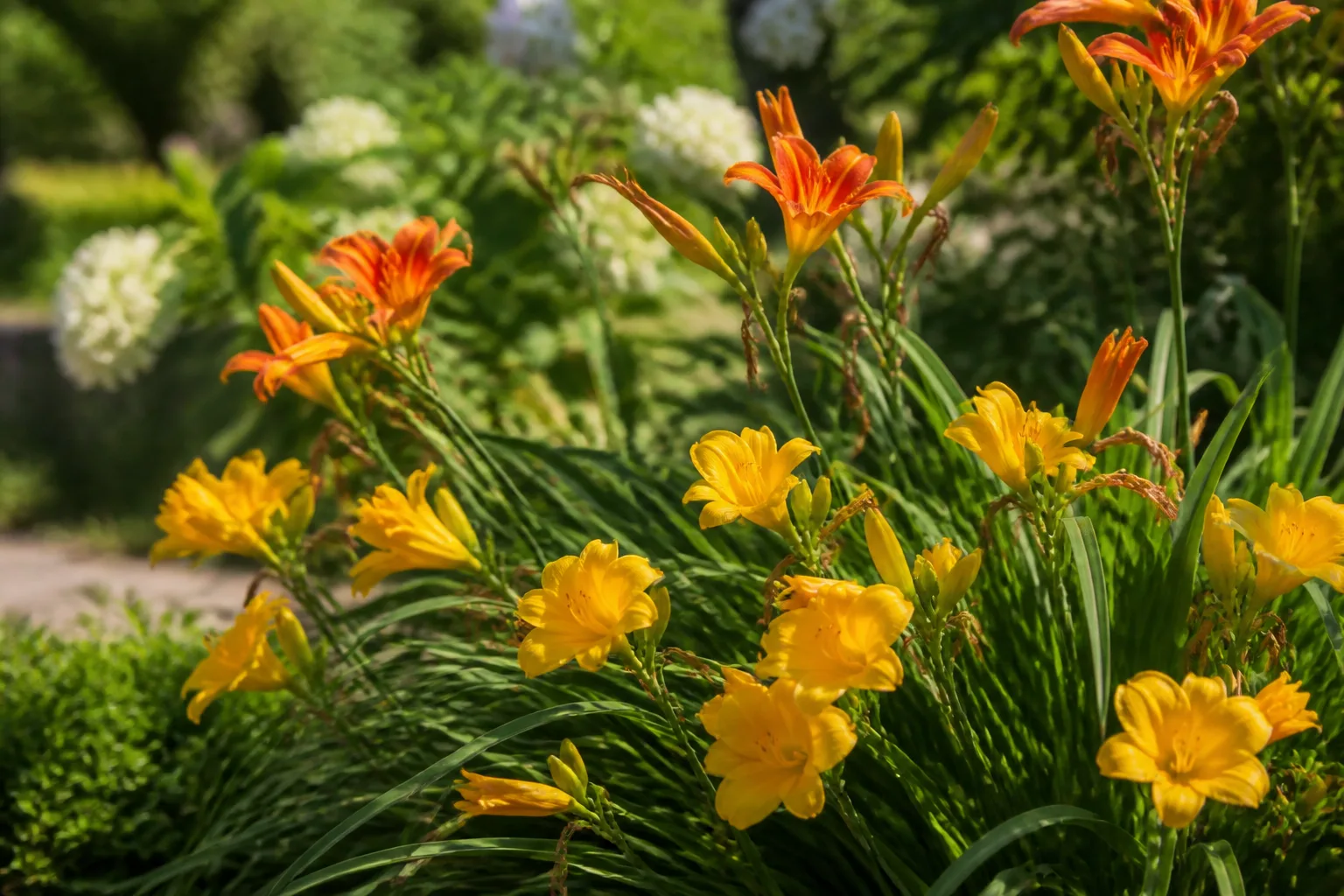
Give daylilies full sun for the heaviest flowering, though light afternoon shade can help in very hot locations. Use soil that drains reasonably well; drought tolerance does not make a plant happy in compacted, waterlogged ground. Water deeply during the first growing season, keep mulch away from the crown, and remove spent flowers if you want a tidier display rather than more seedpods. Divide an overcrowded clump after flowering or in early spring, but do not divide just because the plant has not bloomed heavily in its first year.
The common mistake is treating every “lily” as the same plant. Daylilies are clump-forming perennials, not the bulb-grown lilies that produce tall stems from scales, and their care and hazard profile differ. Buy by the botanical name or a clearly identified cultivar when the planting conditions are demanding.
2. Hosta
Hostas are among the best perennial plants for shade, especially when the goal is dependable foliage rather than a long flower season. Their leaves create mass, contrast, and ground-level coverage in places where sun-loving flowers become thin or scorched. Blue, green, gold, and variegated cultivars behave differently: yellow-leaved types often need more light to hold their color, while blue foliage can scorch in intense afternoon sun.
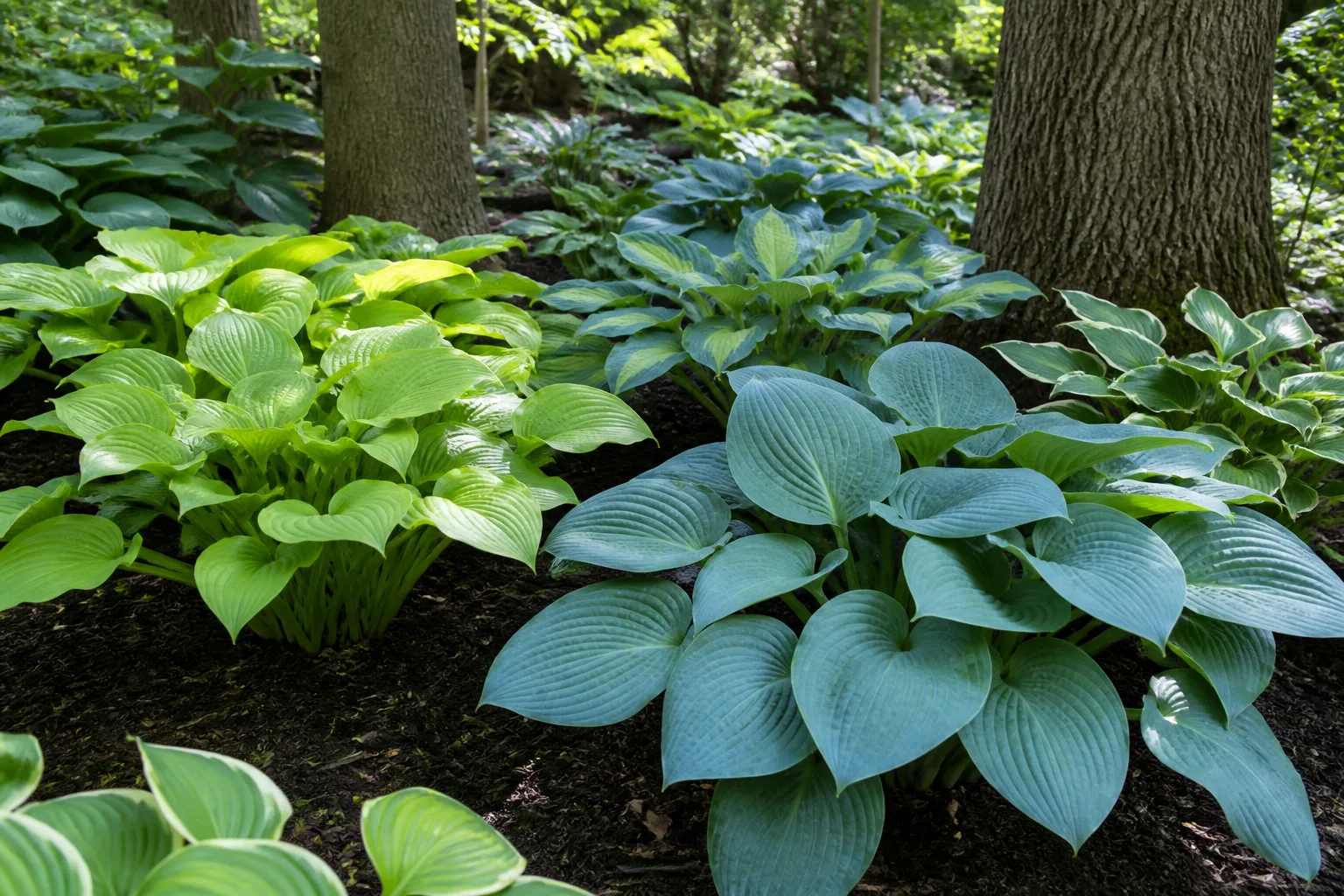
Plant hostas in rich, moisture-retentive but well-drained soil. They appreciate consistent moisture while establishing, and a thick organic mulch can buffer swings in soil temperature and moisture, but mulch piled over the crown encourages rot. Slugs and snails may turn fresh leaves into lace, and deer can remove an entire clump overnight, so a hosta is not automatically low-maintenance in wildlife-heavy gardens.
Hostas die back in cold climates and may look completely gone before re-emerging in spring. Mark the clump or leave a small label if you are tempted to dig the bed early. The RHS notes that leaving some dead perennial material through winter can shelter beneficial insects; cut back old hosta foliage when it has collapsed and new shoots are still dormant.
3. Peony
Peonies (Paeonia) are the long-term investment on this list. They can take a few seasons to settle, but a well-sited plant may flower for decades, making it a better choice for a permanent bed than a quick-color annual. The flowers are excellent for cutting, but the plant also provides attractive foliage after bloom if it is not cut down prematurely.
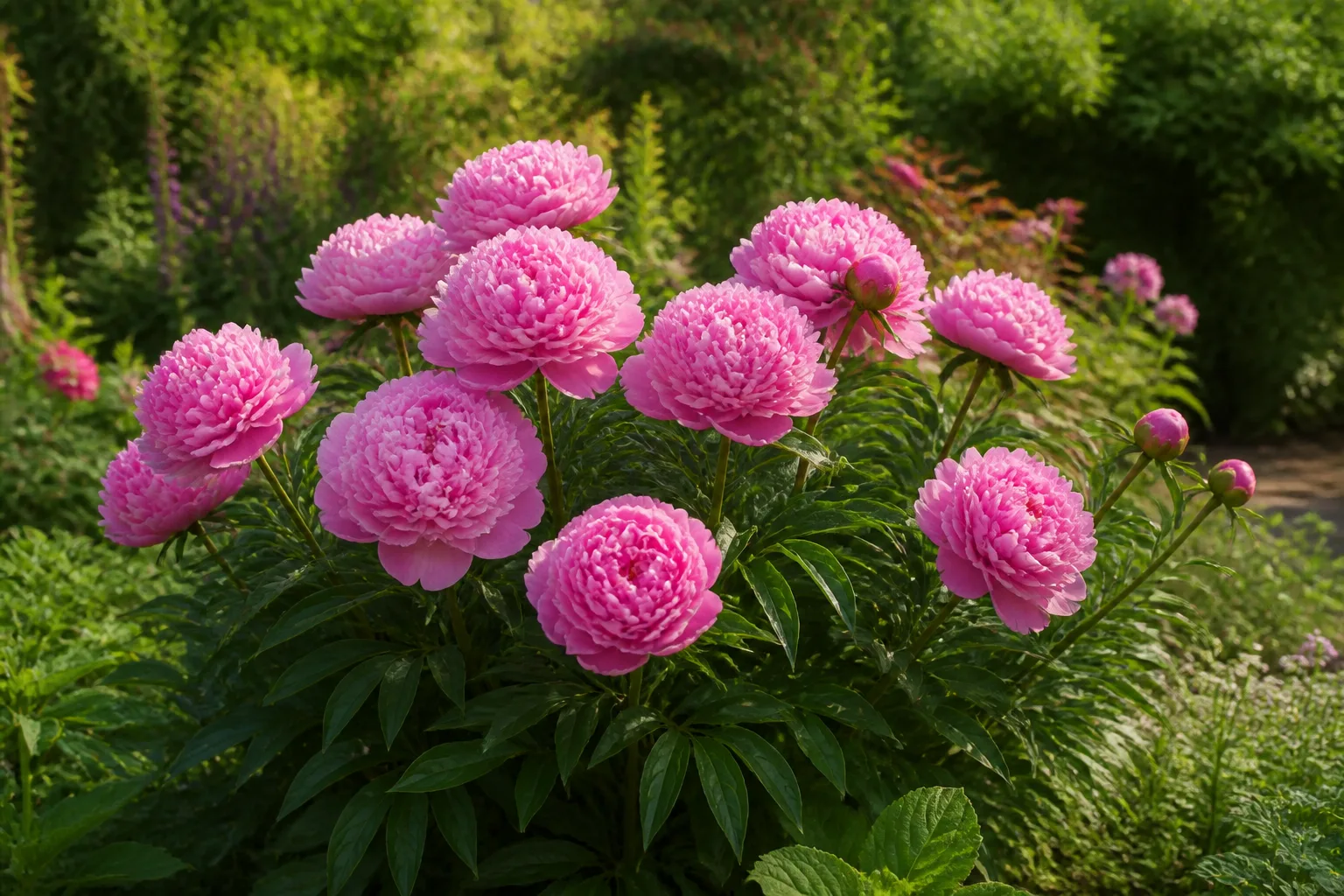
Give herbaceous peonies full sun or light afternoon shade and well-drained soil. Plant the eyes of a bare-root division shallowly according to the nursery’s directions; burying them too deeply is one of the most common reasons a healthy plant produces leaves but no flowers. Leave enough space for air movement, and install a support ring early in spring if the cultivar has heavy double blooms.
Deadhead spent flowers if you want a neat plant, but keep the leaves until they yellow naturally. Those leaves are rebuilding the underground storage system that supports next year’s growth. Peonies do not need constant feeding, and excessive nitrogen can create lush foliage with weak stems rather than more flowers. The RHS perennial guidance also recommends staking heavy-flowered perennials before stems are tall enough to hide the support.
4. Black-eyed Susan
Black-eyed Susan is a common name used for several Rudbeckia species and cultivars, which is why plant labels matter. Rudbeckia fulgida and named garden cultivars are generally better bets for a long-lived clump than assuming every plant sold under the common name will behave identically. Some Rudbeckia hirta selections are short-lived perennials or biennials and may return by reseeding rather than by maintaining one permanent plant.
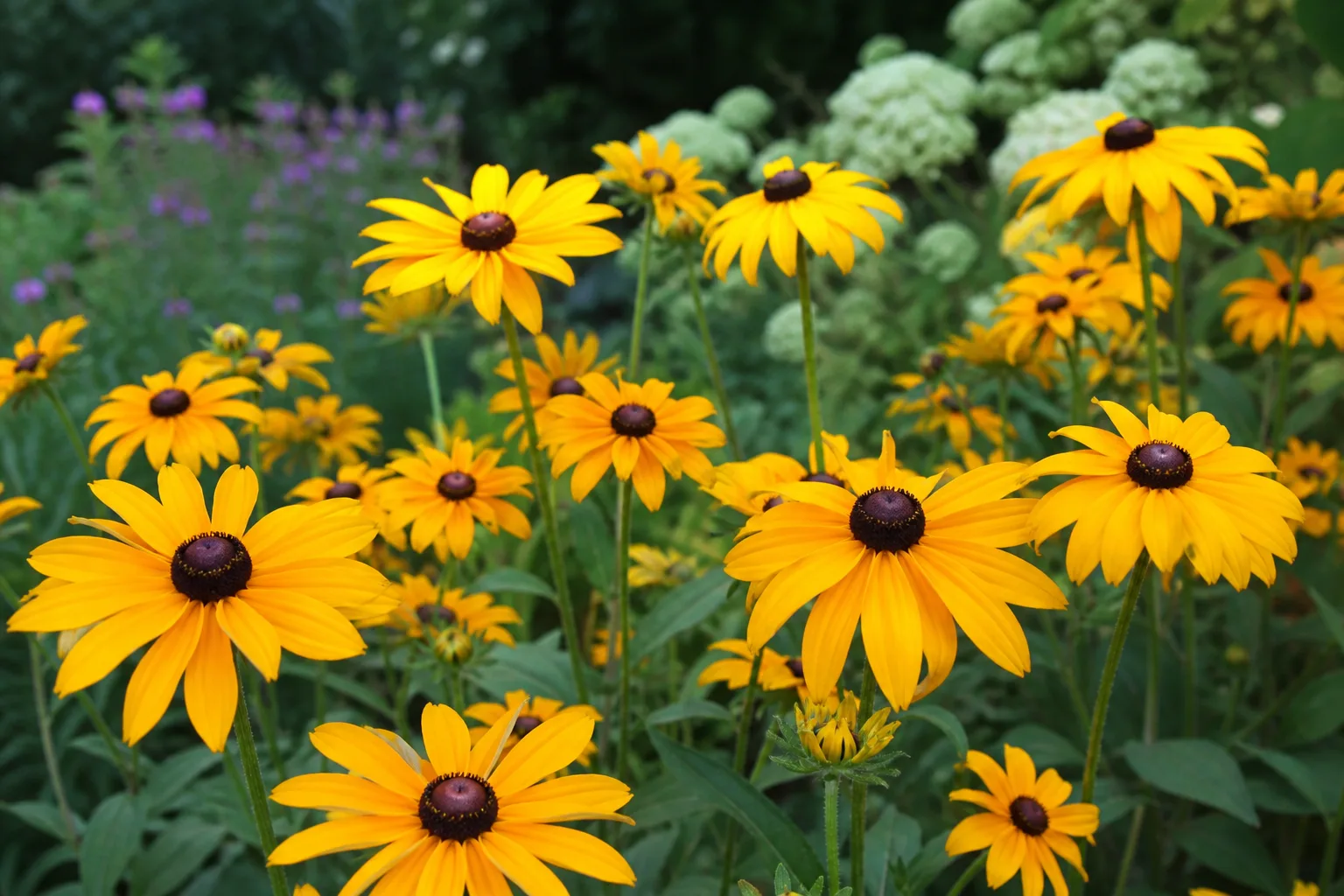
Choose a sunny spot with good drainage and average soil. Black-eyed Susans are useful in a pollinator border because their daisy-shaped flowers provide a visible landing platform, and their seedheads can feed birds if left standing. Deadhead for a tidier, longer flower display, or leave the final seedheads for winter texture and wildlife. Do not cut a slow-emerging clump away in early spring simply because the bed looks empty; mark its location and wait for the soil to warm.
The best buying rule is simple: if winter reliability matters, choose a named, locally hardy cultivar and check its mature size. This avoids turning a broad common name into a false guarantee.
5. Purple coneflower
Purple coneflower (Echinacea purpurea) earns its place for sturdy stems, a long summer presence, and useful seedheads after the petals fade. It works in a sunny border, prairie-style planting, or pollinator garden, and its upright form pairs well with softer grasses and spreading perennials. The Missouri Botanical Garden’s perennial guide highlights coneflowers as sturdy plants for sunny borders and native-style gardens.
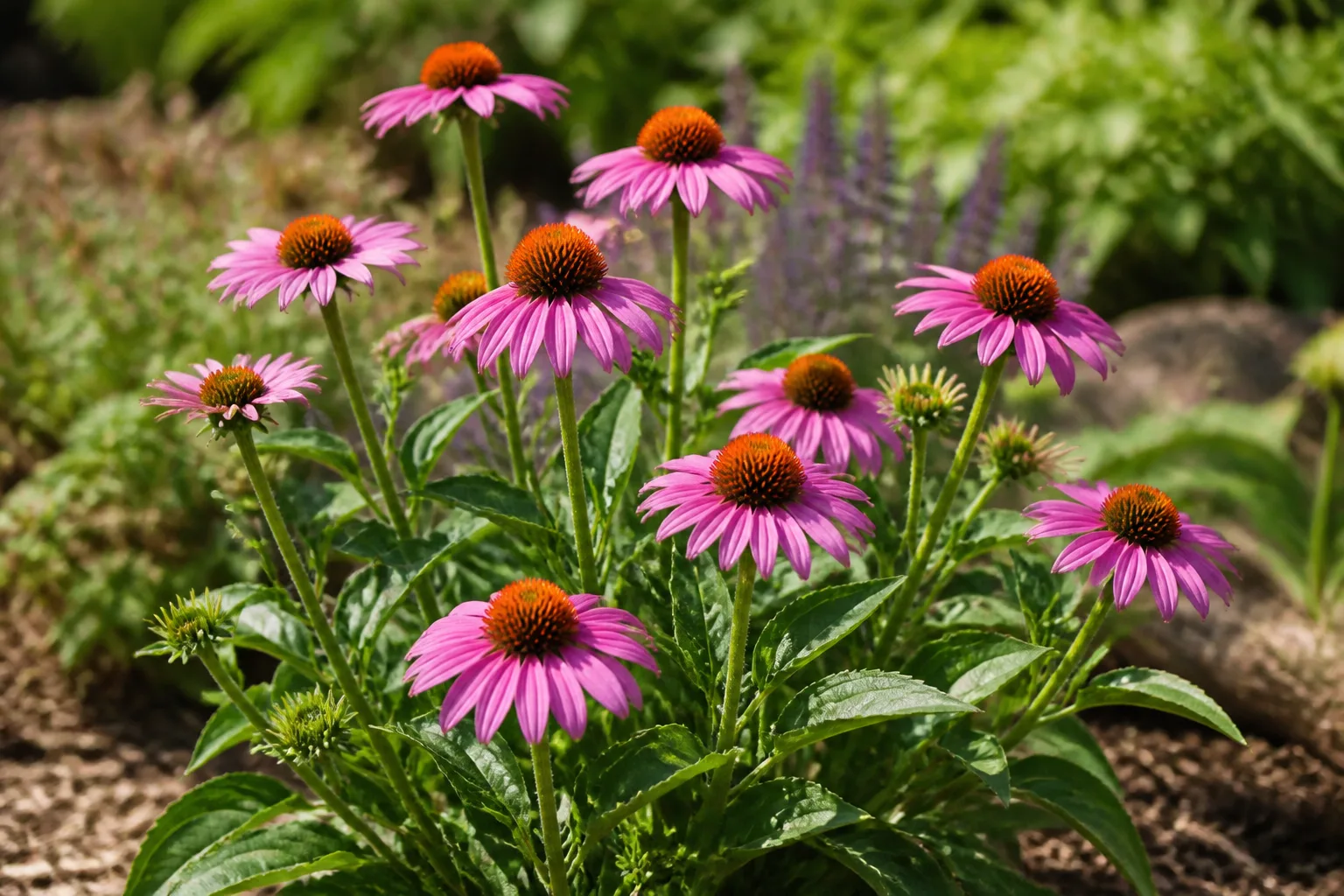
Plant coneflower where water drains freely. It is more forgiving of dry soil after establishment than a new transplant, but soggy winter ground can be more damaging than summer heat. Water the root zone when the top few inches of soil begin to dry during the first season, then taper as roots grow. Leave seedheads standing if birds and winter structure matter to you; cut them after winter or deadhead selectively if you prefer continuous tidiness.
Avoid judging a coneflower by the first month after planting. A small division may make leaves without producing many flowers, while an established clump can become a reliable midsummer anchor. Cultivar height and flower form vary, and some heavily bred double forms may support fewer accessible flower centers than open-centered types.
6. Perennial sage
“Perennial sage” is not one precise plant. For a cold-winter border, look for hardy Salvia nemorosa types and verify the cultivar’s local hardiness rather than buying any plant simply labeled salvia. These upright plants produce spikes of purple, blue, pink, or white flowers above aromatic foliage, and many rebloom after a prompt cutback of spent flower stems.
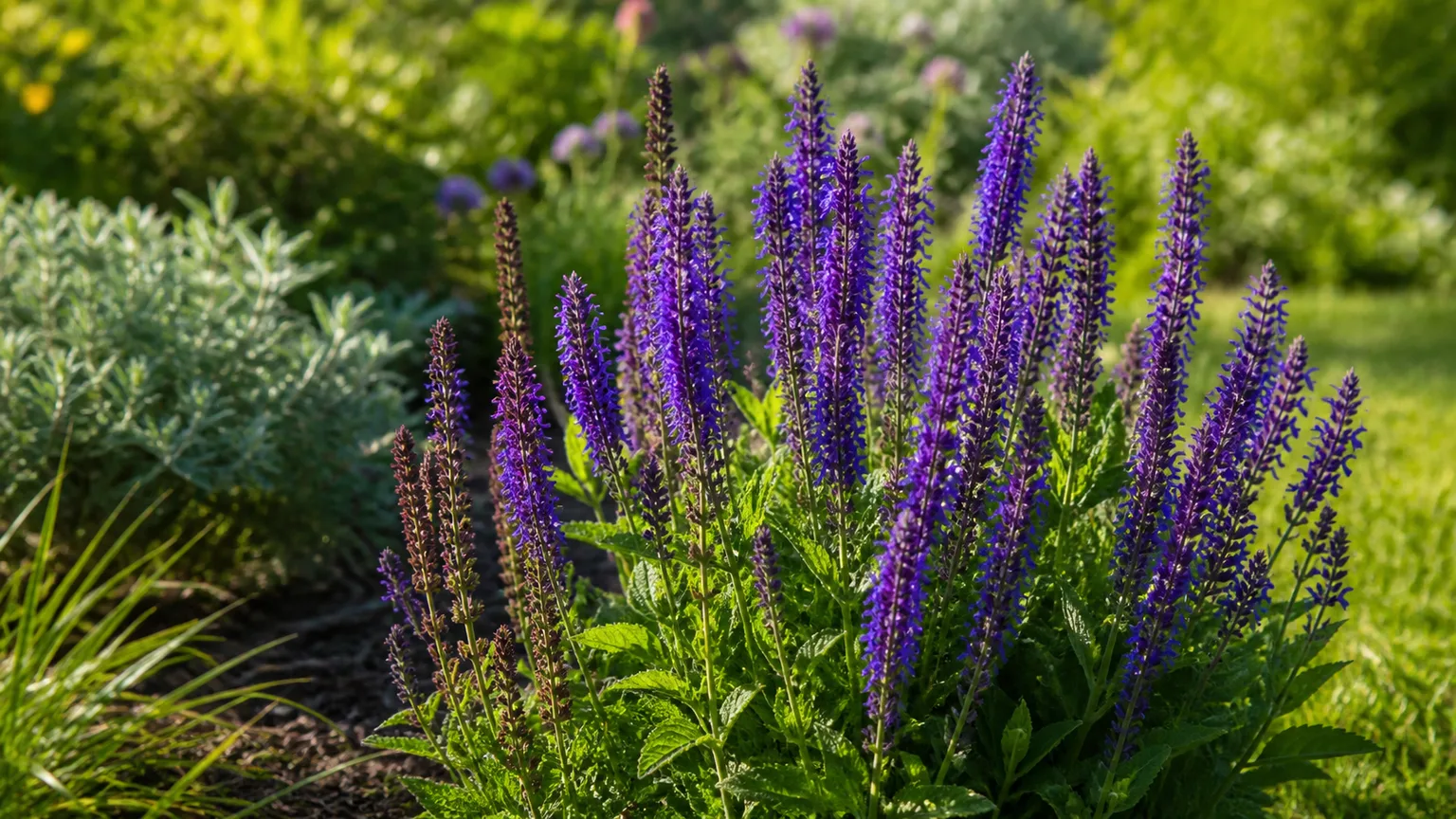
Give perennial sage full sun and sharply drained soil. It is a poor match for a low, wet pocket even if the bed is sunny. Cut flower spikes back to the next strong set of leaves after the first flush; this redirects the plant into a fresh mound and can encourage another bloom. Do not keep watering on a fixed schedule once the plant is established if the soil is still damp several inches down.
The trade-off is winter and summer variation. A hardy sage may return reliably in a cold climate, while a tender culinary or ornamental salvia may need overwintering or be grown as an annual. The BBC Gardeners’ World guidance makes the broader practical point that long-flowering perennials often need deadheading and, depending on the plant, feeding to keep new flowers coming.
7. Siberian iris
Siberian iris (Iris sibirica) brings vertical leaves and elegant flowers to a sunny or lightly shaded bed. It is especially useful where the soil stays evenly moist but is not permanently flooded. The plant forms a clump rather than a wandering carpet, and its foliage remains valuable after the flowers finish, though it may flop if crowded or stressed.
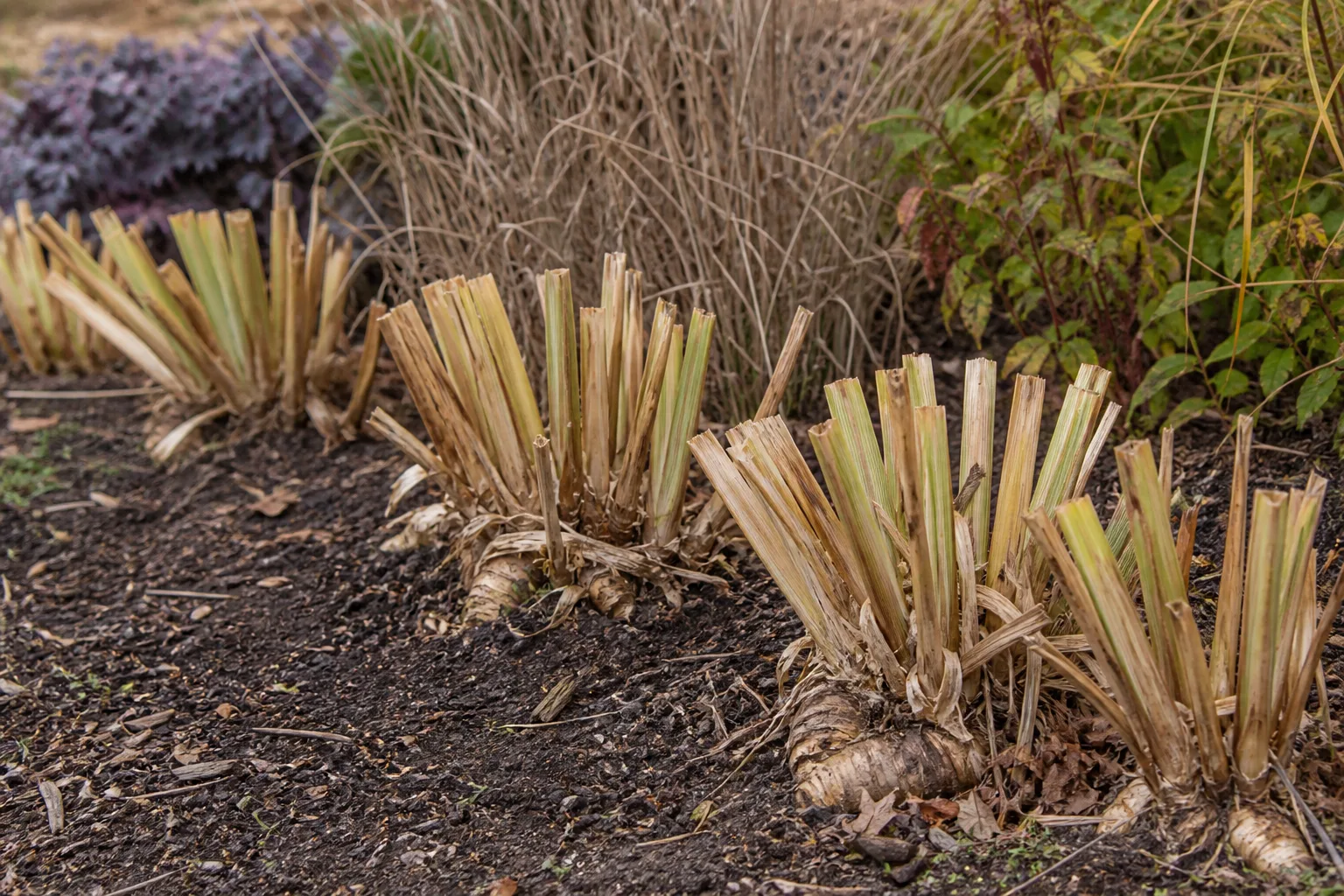
Prepare the site before planting: remove perennial weeds, loosen compacted soil, and improve drainage if water sits around the roots. Water new divisions consistently while they establish. Divide when the clump becomes congested or flowering declines, usually after bloom or during a suitable cool period, and replant healthy sections at the same depth rather than burying the crown.
Siberian iris is not a solution for every rain garden. “Moisture-loving” still requires oxygen around the roots, and a permanently saturated planting hole can cause decline. If the bed alternates between drought and flooding, solve the drainage and irrigation pattern first or choose a plant adapted to that specific hydrology.
8. Veronica
Veronica, often called speedwell, gives a border narrow flower spikes that are useful for adding vertical punctuation among rounded plants. The name covers many species and cultivars, from low groundcovers to upright clumps, so use the mature height and spread on the tag rather than assuming every veronica is a seven-inch plant or has the same sun tolerance.
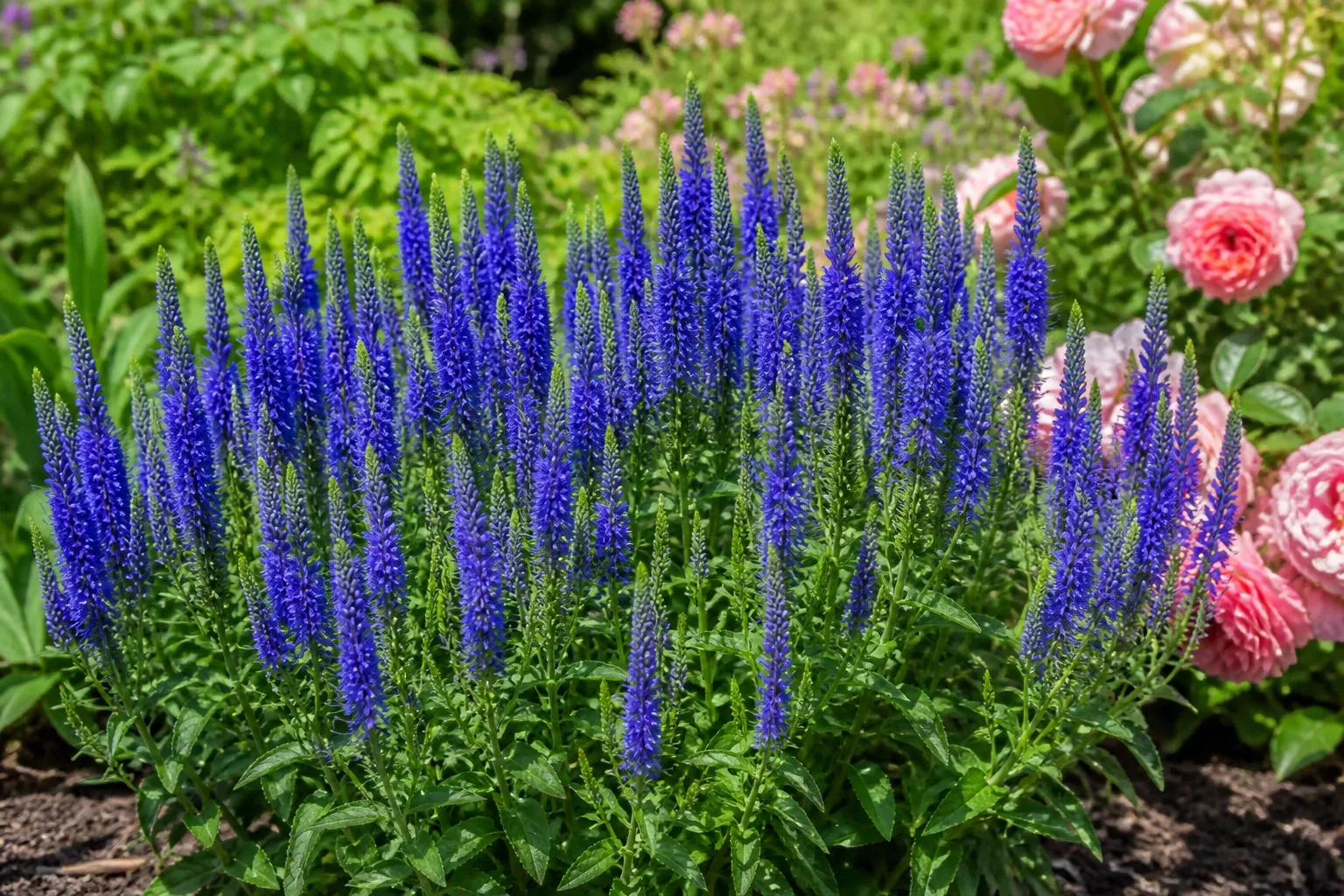
Most upright garden veronicas prefer full sun and well-drained soil. In hot regions, a little afternoon shade can protect the plant from stress, but too much shade usually means fewer flower spikes and floppier growth. Deadhead the first flowers by cutting back to a healthy leaf joint; this keeps the clump tidy and may extend the season. Avoid heavy, rich soil that stays wet around the crown.
Veronica is a good bridge between early-summer plants and later bloomers, but it is not an instant groundcover in every form. Compact cultivars suit the front of a border, while tall cultivars need space and may benefit from neighboring plants that support rather than smother them.
Planting for first-year survival
For most hardy perennials, early fall or spring are the safest planting windows because the soil is workable and temperatures are less stressful than midsummer. The RHS recommends planting hardy perennials outdoors in autumn or spring. In a cold region, plant early enough in fall for roots to grow before the ground freezes; in a hot region, spring may be easier unless you can irrigate reliably.
Prepare the entire planting area, not just a small pocket of amended soil. Break up compaction, remove weeds, and use a soil test if the bed has a history of poor growth. Set the crown at the depth recommended for that plant: peony eyes are a classic shallow-planting case, while rhizomatous plants should not be buried under a thick blanket of soil.
Water slowly and deeply after planting so the root ball and surrounding soil make contact. For the first several weeks, check moisture with your finger or a trowel rather than relying on a calendar. A new plant may need water even after a light shower because the rain never reached the root zone. Apply a modest layer of mulch to reduce evaporation, leaving an air gap around the crown and stems.
Space for the mature plant, not the small pot you brought home. Temporary gaps are cheaper than moving a crowded perennial two years later, and good spacing improves airflow, reduces competition, and makes it easier to inspect leaves and stems. Expect a small plant to “sleep, creep, leap”: root growth often comes before visible size.
Care that keeps perennials returning
Established perennials usually need less intervention than annual bedding plants, but they still benefit from a simple rhythm. In spring, remove collapsed foliage, pull weeds while they are small, and place supports around peonies or tall stems before the plants flop. Check for emerging shoots before cultivating deeply; late-emerging plants can be damaged by enthusiastic spring cleanup.
In summer, water at the soil line during long dry spells, especially for plants under trees where roots compete for moisture. Deadhead when you want more flowers or a cleaner border, but leave selected seedheads when they feed birds or provide winter structure. Avoid fertilizing by reflex. A soil test or visibly poor growth is a better reason to feed than the mere fact that the calendar says spring.
In fall, do not treat every brown stem as waste. Cut diseased or mushy material promptly, but leave healthy stems standing if they protect crowns, catch snow, or provide habitat. After the ground cools, a thin mulch layer can buffer temperature swings, though wet mulch packed against the crown creates a rot risk. Container-grown perennials need more winter planning because roots are exposed above ground; use a plant rated for your conditions or move the pot to a sheltered location.
Division is a renewal tool, not an annual chore. Divide when a clump has a dead center, overcrowded stems, reduced flowering, or a size that no longer fits the bed. Peonies dislike frequent disturbance, while daylilies and many clump-forming perennials are more forgiving. Lift carefully, discard damaged tissue, replant divisions promptly, and water them as new plants.
When a perennial fails to return
First, confirm that the plant is actually late rather than dead. Some perennials emerge weeks after bulbs and spring weeds, especially after a cold spring or in heavy soil. Look for firm buds, living tissue near the crown, or new shoots at the edge of the clump before digging.
If there is no growth, work through four questions. Was the plant suited to your winter temperatures and summer heat? Did the crown sit in water or dry out during establishment? Was it planted too deep, mulched too heavily, or damaged by digging, rodents, deer, or repeated foot traffic? Did a container freeze hard enough to kill roots even though the plant would survive in the ground?
The symptom before winter helps. A plant that declined during a wet summer points toward drainage or root disease; one that vanished after a dry first season may never have built a root system; a plant with shredded leaves may have been eaten rather than killed by cold. Correct the site before replacing the plant. Repeating the same purchase in the same problem spot is not persistence; it is an expensive experiment with a known result.
Build a bloom sequence instead of a one-week show
Eight perennial plants can make a border feel more reliable when they are chosen as a sequence rather than planted as eight isolated specimens. Use peony and Siberian iris for late spring to early-summer drama, daylily, black-eyed Susan, coneflower, salvia, and veronica for summer continuity, and hosta foliage to carry the shade bed after flowers finish. Add spring bulbs, annuals, grasses, or shrubs if you need color before the perennials wake up or after their main bloom.
Repeat plants in groups of three or five when space allows. A group reads as a deliberate patch, is easier to water than scattered singles, and gives you a visual check: if one plant is thriving while another same-species group is failing, the microclimate may be the problem. Combine different shapes—spikes, daisies, rounded peony flowers, and broad hosta leaves—so the garden still has texture on a day when nothing is at peak bloom.
And there is no rule that a perennial border must be made of perennials alone. Fine Gardening’s practical border discussion treats carefully chosen annuals as useful gap-fillers when a perennial goes dormant, finishes flowering, or is lost to weather or wildlife (Fine Gardening). Use that option strategically: an annual can cover a temporary hole while the permanent plant rebuilds, without disguising a site problem that needs fixing.
Conclusion
The best perennial plants that come back every year are the ones that fit your actual garden. Daylily and perennial sage suit sunny, well-drained beds; hosta fills shade; peony rewards patience; coneflower and black-eyed Susan support a lively summer border; Siberian iris handles evenly moist soil; and veronica adds vertical flower spikes without demanding a full redesign.
Buy by botanical name or a clearly described cultivar when reliability matters, give new plants consistent first-year water, and leave room for mature size. If a perennial disappears, diagnose climate, drainage, establishment, depth, and wildlife before replacing it. A good perennial garden is not maintenance-free—it is a garden where the work you do this season makes next season easier.