How to Kill Weeds Without Also Killing Your Lawn
Kill weeds without killing grass: identify the weed, choose hand removal, lawn repair, or a selective herbicide, and avoid drift, salt, and vinegar damage.
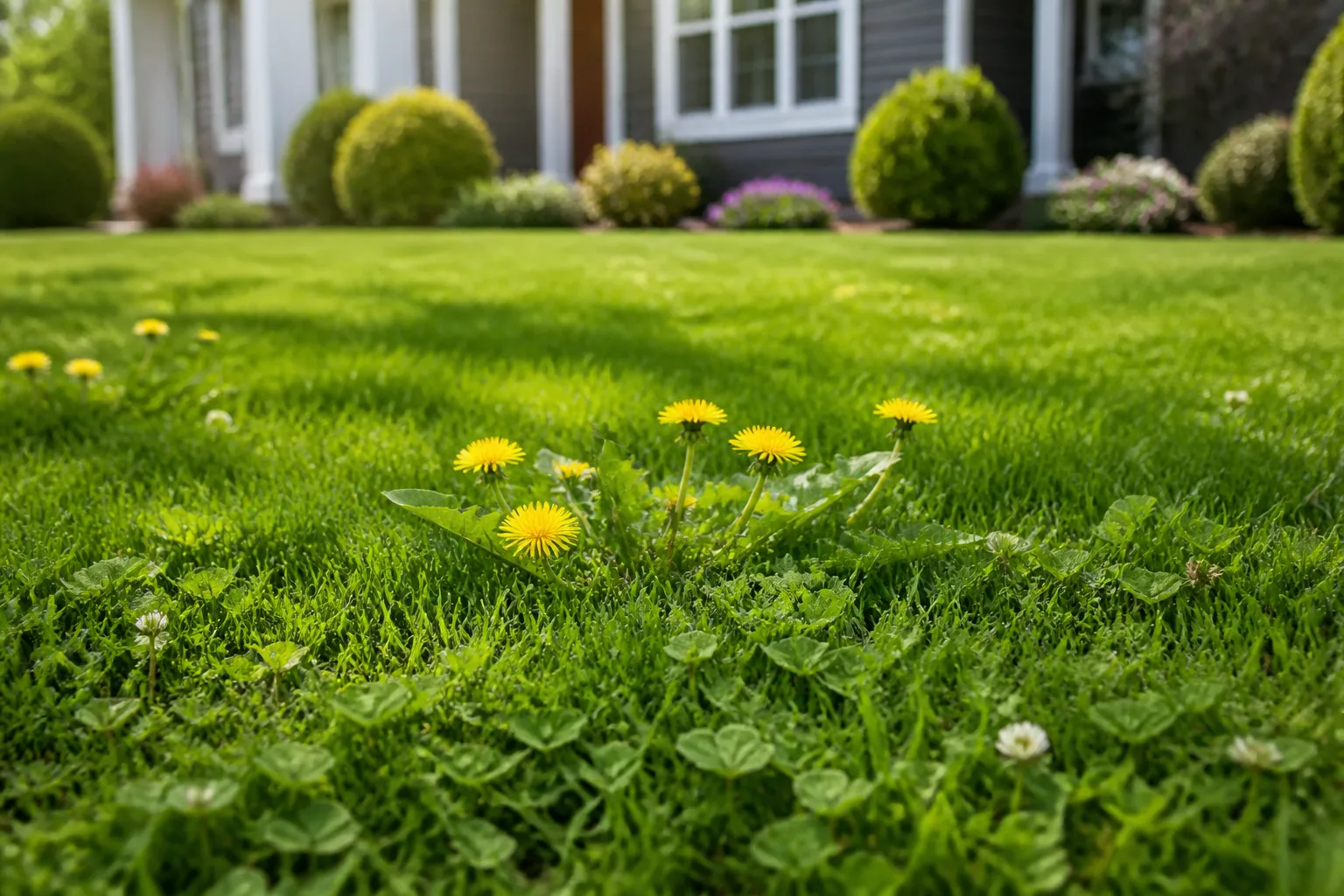
The safest way to kill weeds without killing grass is to identify the weed first, inspect the lawn around it, and use the narrowest effective method. Pulling or digging is usually best for a few weeds. A turf-labeled selective herbicide can make sense for a widespread broadleaf problem. A thin, wet, compacted, or newly seeded lawn needs repair before it needs a stronger spray.
That order matters because “weed killer” is not one thing. A product or homemade spray that burns a weed can also burn turf, injure nearby flowers, damage tree roots, or leave you with a bare patch where the next generation of weeds germinates. The goal is not a perfectly empty lawn overnight; it is a lawn that can recover faster than weeds can establish.
Start With a Three-Question Diagnosis
Before reaching for a sprayer, answer three questions: What is the plant? Where is it growing? How large is the problem? Take a close photo of the leaves, stems, and any flower or seed head. If you cannot identify it, save a small sample in a sealed bag or use a local extension diagnostic service rather than guessing from a product aisle.
Next, look at the site. Weeds in a sunny, dry, compacted strip may need a different response from weeds in a low, soggy corner. A lawn full of clover and plantain often signals open soil or stress; a lawn full of dollarweed or nutsedge points toward excess moisture; a pale, spreading grassy weed may be competing with turf under heat, irrigation, or poor mowing conditions.
Finally, estimate the scale. Five dandelions are a hand-tool job. A patch of crabgrass across a whole lawn is a prevention and renovation problem. A vine, rhizome-forming invader, or weed growing through a valuable planting may justify professional identification before chemical treatment. Acting at the right scale prevents the common mistake of using a broadcast herbicide for a problem that could have been solved with a fork.
Identify the Weed Type Before Choosing a Method
The plant’s structure is more useful than its common name when you are choosing control. Penn State Extension’s weed guide groups weeds by both appearance and life cycle, and that distinction explains why the same lawn treatment can work well on one weed and fail completely on another. Use the table as a first pass, not as a substitute for a local identification when the weed is unusual or invasive.
| What you notice | Likely group | First question to ask |
|---|---|---|
| Wide leaves with a visible central vein or branching veins | Broadleaf weed such as dandelion, clover, plantain, chickweed, or ground ivy | Can I remove it by hand, or is a turf-labeled broadleaf herbicide needed? |
| Narrow blades that blend into the turf | Grassy weed such as crabgrass, annual bluegrass, or quackgrass | Is this a different grass species that the lawn product will also injure? |
| Triangular stems, glossy blades, or small underground tubers | Sedge such as nutsedge | Is wet soil or poor drainage part of the cause? |
| Creeping stems, runners, rhizomes, or a deep root crown | Creeping or perennial weed | Will cutting the top simply leave a living underground plant? |
Do not treat “natural” as a synonym for selective. Vinegar, soap-based burners, essential-oil sprays, boiling water, salt, and many other contact remedies injure green tissue wherever they land. They may be appropriate for an isolated plant in a gravel path, but a lawn is a dense mix of wanted and unwanted plants, so the margin for error is small.
Broadleaf, grassy, and sedge weeds need different strategies
Broadleaf weeds have a useful difference from many turfgrasses: their leaf shape and growth processes can be targeted by certain selective lawn herbicides. That selectivity is conditional, not magical. It depends on the active ingredient, the weed list, the grass species listed on the label, the growth stage, the rate, and the weather.
Grassy weeds are harder because they are botanically closer to the lawn. A crabgrass product that is safe for one turf species may injure another, and a broadleaf herbicide will not solve a grassy weed. Sedges are a separate group again. Their triangular stems and tubers help explain why simply pulling the leaves or cutting them with a mower often gives only temporary relief.
If the plant is growing in a lawn but you cannot tell whether it is a grass, a sedge, or a broadleaf, pause. A local extension office, university turf site, or clear photo comparison can save the lawn from a misapplied treatment. Identification is not an extra step; it is the safety mechanism.
Annual, biennial, and perennial weeds change the timing
Annual weeds live for one growing season, so stopping seed production and preventing germination can make a dramatic difference. Crabgrass is a summer annual in many regions. Chickweed and henbit behave as winter annuals in many lawns, emerging in cooler months, flowering, and setting seed before summer heat.
Biennials make a leaf rosette during their first year and flower in the second. They are often easier to remove while young, before a deep crown and a seed stalk develop. Perennials such as dandelion and plantain survive for years, often through a taproot or crown; creeping perennials such as ground ivy can also spread through stems that root where they touch the soil.
Penn State Extension notes that perennial control is often more effective when the plant is actively moving resources into its roots, such as around the bud-to-bloom stage or in fall. The practical translation is simple: mowing a perennial before it flowers helps stop seed, but it does not prove the root is dead. Plan to revisit it.
Match the Least-Risky Method to the Infestation
Use a method ladder. Start at the least disruptive rung that can realistically solve the problem, then move up only when the first option is too slow, too labor-intensive, or biologically mismatched.
- Pull or dig a few young weeds, especially before flowers or seed heads form.
- Mow strategically to prevent seed production while you plan a more complete treatment.
- Correct the site if thin turf, shade, compaction, drought, or excess moisture is giving weeds the opening.
- Repair bare patches with the right grass seed for the season and site.
- Use a selective, turf-labeled herbicide only when the weed, grass, timing, and product label all match.
- Ask for help with invasive, poisonous, spiny, rhizomatous, or large infestations where an error would be costly.
This is integrated weed management in a home-lawn form. Penn State Extension describes prevention, cultural, mechanical, biological, and chemical methods as complementary rather than competing choices. You might pull dandelions, improve mowing, overseed a thin area, and spot-treat the few weeds that remain; no single tactic has to carry the whole job.
Pull Small Weeds While the Soil Is Moist
Hand-pulling is the safest answer for a small number of shallow-rooted weeds because the lawn receives no chemical exposure. Work after light rain or after irrigation has moistened the root zone, but avoid walking on saturated soil, which can compact it and tear turf. Grip the weed low, close to the crown, and pull steadily rather than yanking the leaves off.
Common chickweed, young bittercress, small clover plants, and many seedlings come out easily when young. Collect the plants rather than leaving flowering stems on the lawn. A weed that is already carrying mature seed can still contribute to the seed bank even after it is pulled, so bag seed-heavy material instead of adding it to a cool backyard compost pile.
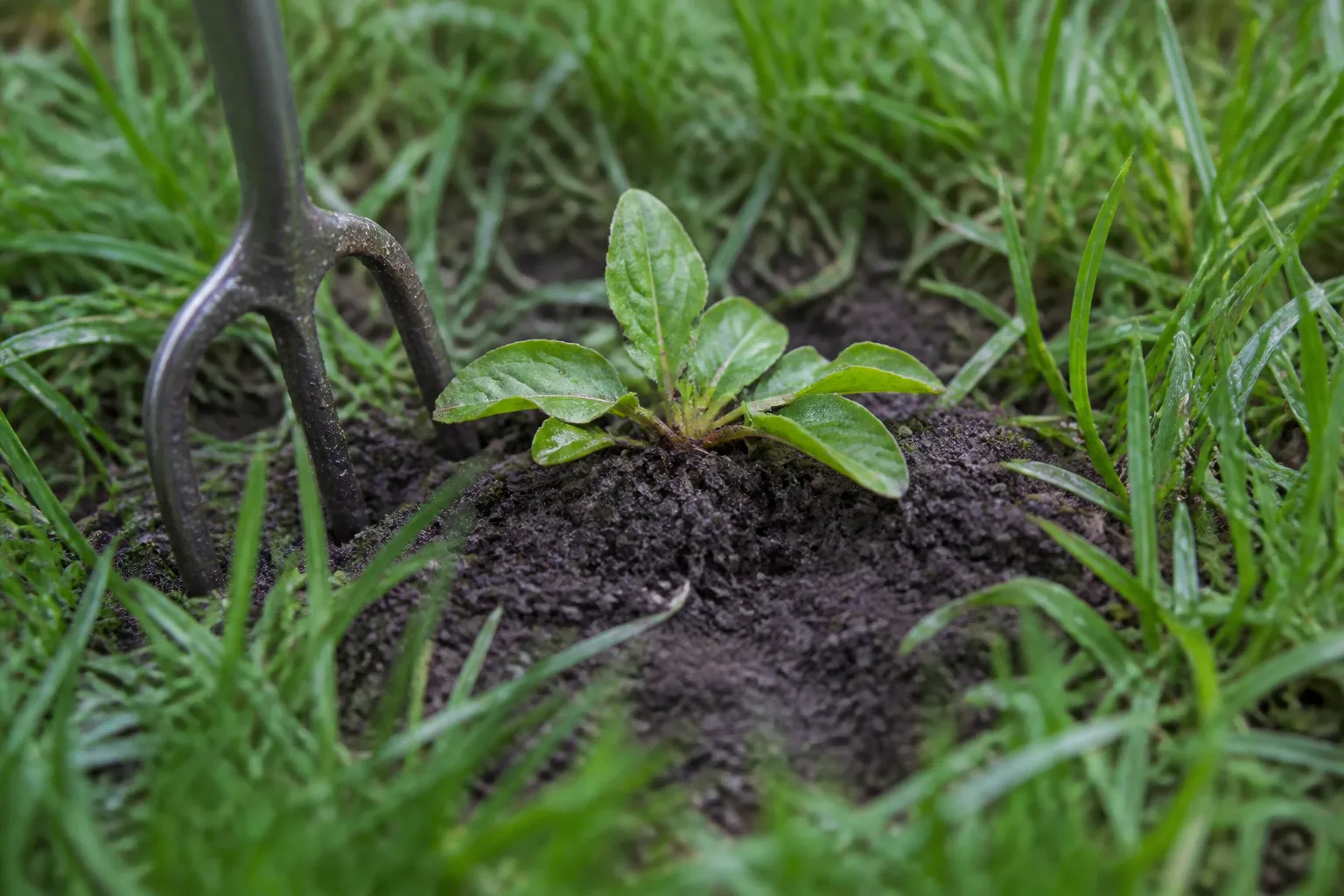
Hand removal is less effective when the plant spreads by rhizomes, stolons, tubers, or fragments. Ground ivy, nutsedge, bindweed, and spreading grasses may leave enough underground or creeping material to regrow. In those cases, pulling can still reduce the population, but treat it as repeated scouting and depletion, not a one-time cure.
Dig Out Taproots and Crowns Completely
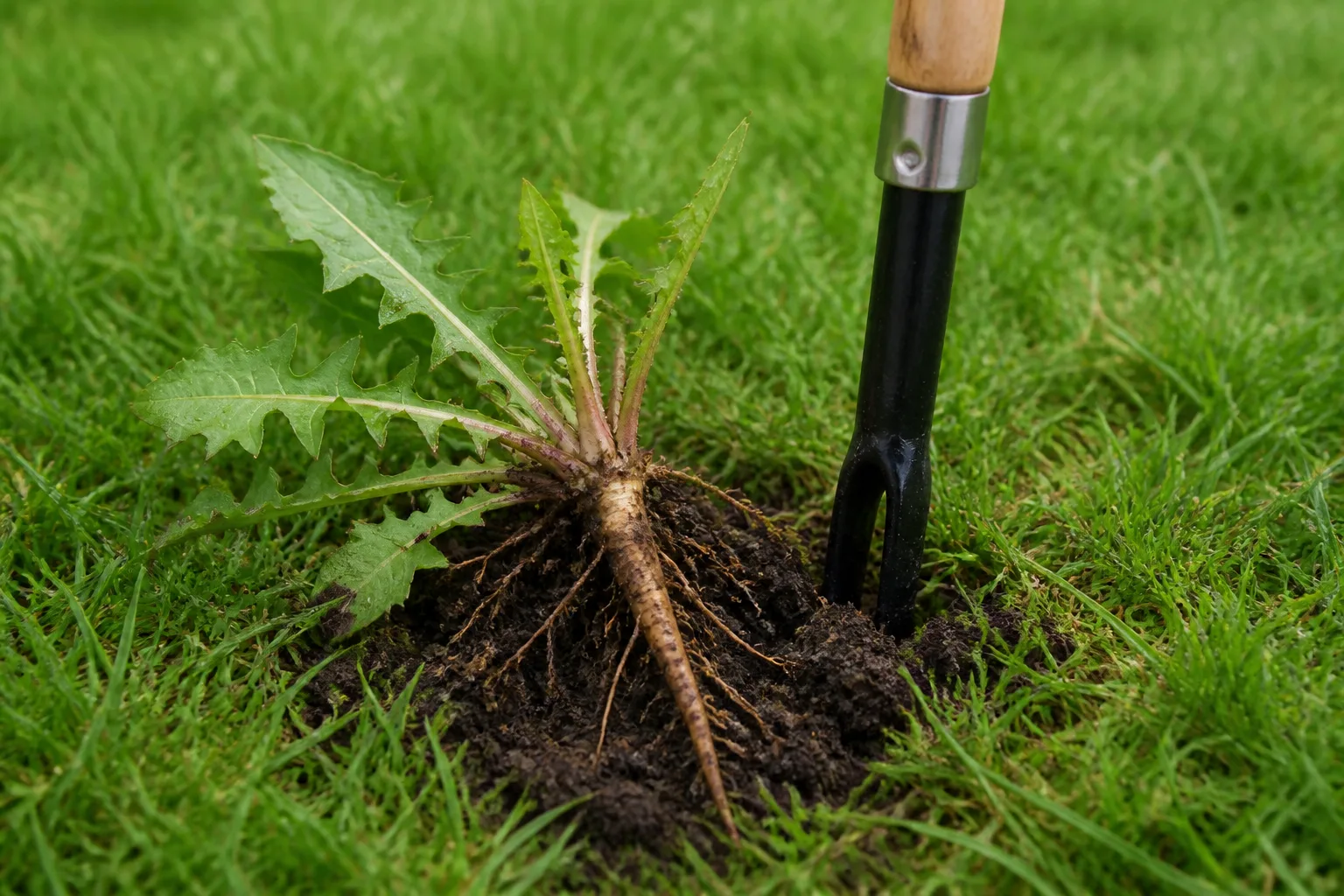
Dandelion is the classic example of why a clean-looking removal is not always a complete removal. Its leaves may snap away while the taproot remains below the crown. A long-handled dandelion fork or narrow weeder lets you work beside the root, loosen the soil, and lift the crown without turning a large plug of lawn.
Water the area lightly first if the soil is dry. Push the tool deep beside the crown, rock it to loosen the root, and lift while keeping the crown attached. If the root breaks, remove the remaining piece you can find and mark the spot for inspection in a week or two. A small divot is easier to repair than a persistent plant that flowers and reseeds.
The same principle applies to plantain and other crown-forming weeds, though the depth and shape vary. For a creeping weed, follow runners back to their origin and collect fragments. Do not rototill a lawn to solve a weed patch: chopping roots and rhizomes can multiply the pieces, and disturbing soil can expose dormant seeds.
Mow to Prevent Seed, Not to Cure Established Weeds
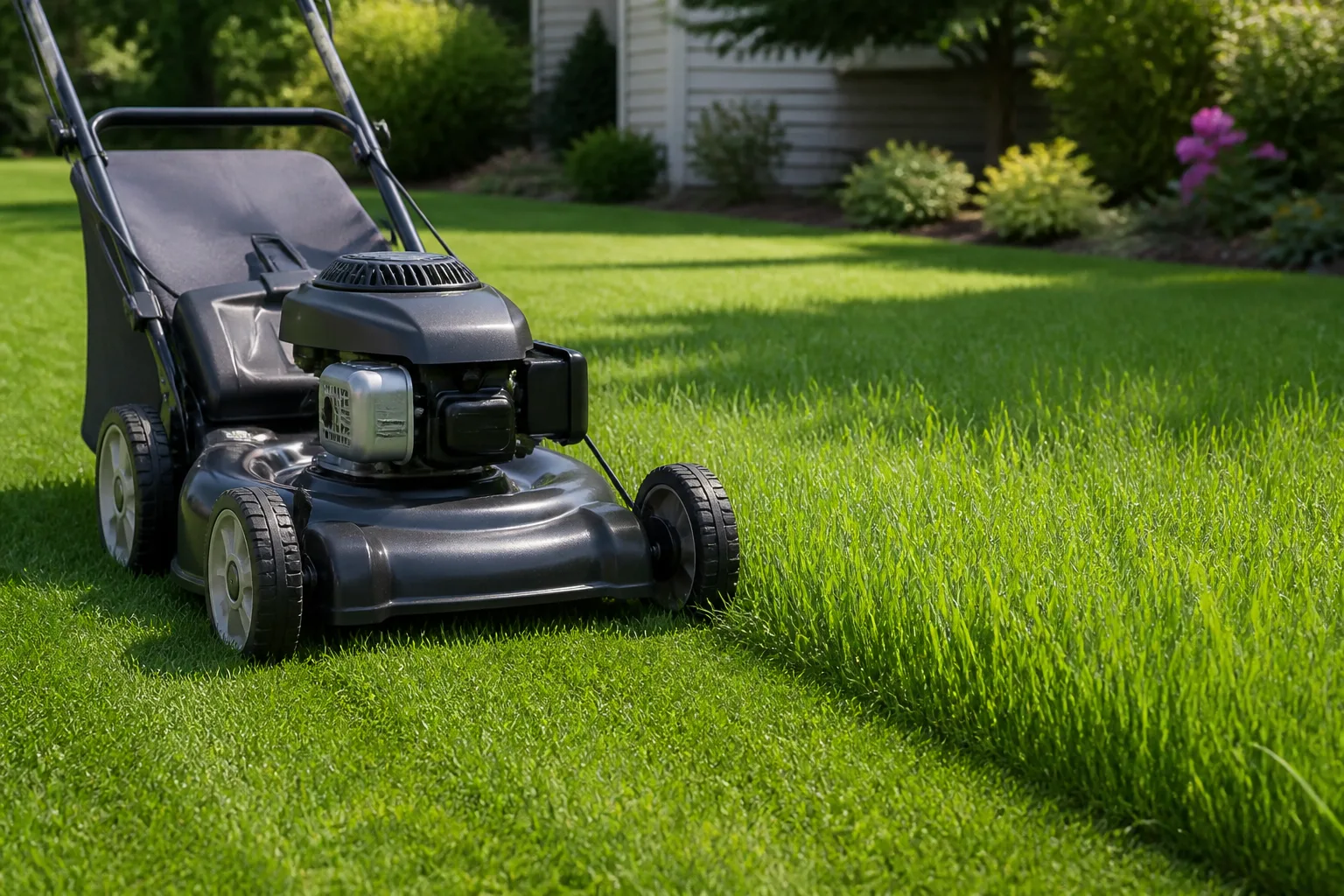
Mowing is a valuable weed-management tool, but its job is often misunderstood. It removes flowers and seed heads from annual and perennial weeds before they replenish the soil. It rarely kills an established dandelion, clover, or creeping weed because the plant still has leaves and stored energy below the cutting height.
Keep the mower blade sharp and mow often enough that weeds do not mature seed heads between cuts. Avoid scalping the lawn. The right height depends on the grass species, cultivar, season, shade, and local climate, but leaving more leaf area generally gives turf more ability to shade soil and recover from stress. Follow the recommended height for your specific grass rather than copying a number from a different region.
If the lawn is already tall, remove no more than roughly one-third of the blade height in a single mowing. Cutting off half the leaf at once can stress the turf and expose more soil, creating the same opening you are trying to close. Mow in dry enough conditions to avoid ruts and soil smearing, and clean seed-heavy clippings from areas where you do not want the weed spread.
Thicken Turf With Better Watering and Feeding
A dense lawn is the long-term barrier that makes every weed-control method easier. Grass roots and shoots compete for light, water, nutrients, and space; a patchy lawn leaves those resources available. Epic Gardening’s lawn-weed guide repeatedly ties control to identification, dense turf, avoiding overwatering, and managing weeds before they seed. That is a more durable strategy than chasing each new plant with a spray.
Water deeply enough to moisten the root zone, then allow the surface to dry somewhat before watering again, adjusting for soil, weather, grass type, and local restrictions. Frequent shallow watering can keep the surface hospitable to shallow-rooted weeds while discouraging deeper turf roots. On the other hand, drought-stressed grass is not a good candidate for aggressive renovation or an avoidable herbicide application.
Fertilize according to a soil test or a regionally appropriate turf schedule, not by adding extra nitrogen whenever the lawn looks pale. Overfertilizing can create fast, weak growth and runoff; underfeeding is only one possible cause of thin turf. Gardening Know How’s lawn-herbicide guidance also cautions that “weed and feed” timing can combine two jobs that have different ideal windows, so separate fertilizer and weed decisions when the label and your grass calendar call for it.
Fix Thin, Compacted, Shady, or Wet Areas
If weeds keep returning in the same patch, study the patch instead of increasing the herbicide dose. Plantain often tolerates compacted soil. Dollarweed and nutsedge favor excessive moisture. Moss, sparse grass, and shallow roots can point to shade, drainage, or a grass species that does not fit the site. A weed is sometimes a symptom of a lawn that cannot compete.
Use a simple inspection: push a screwdriver into moist soil, compare the problem patch with healthy turf, look for standing water after rain, and note how many hours of direct sun reach the area. Aerate only when compaction is part of the problem and the grass is in an appropriate growth window. Dethatch when a real thatch layer is blocking water and air; aggressive raking of a thin lawn can do more harm than good.
Do not fill a wet low spot with more seed and hope. Redirect or manage water where possible, improve grading only with care, or choose a groundcover or landscape treatment better suited to the site. Likewise, do not force sun-loving turf under dense tree shade with extra fertilizer. Pruning, a shade-tolerant grass, or replacing a small turf area may be the lower-risk solution.
Use Overseeding and Repair to Close Bare Soil
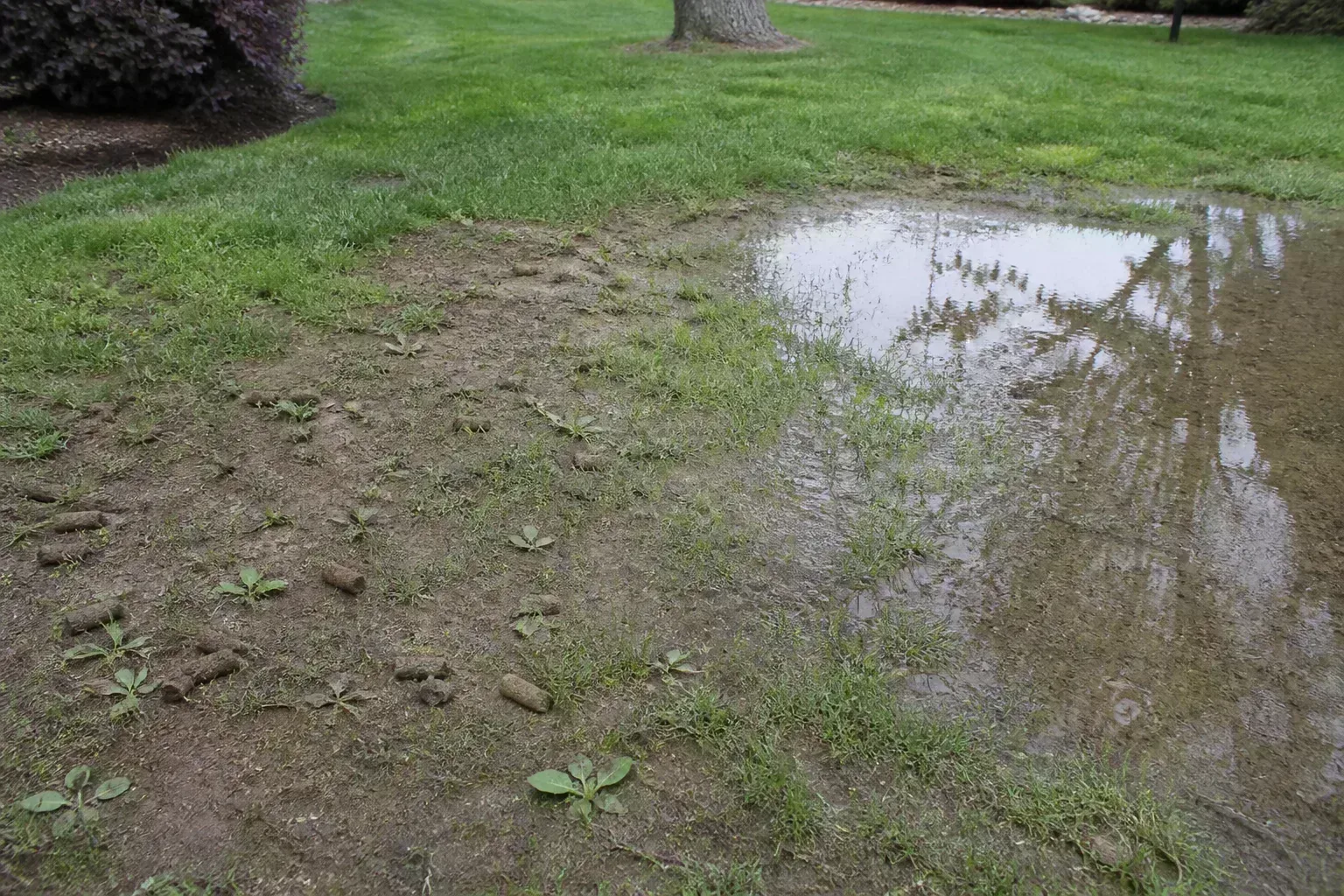
Weed removal often leaves a small hole. Repair it promptly when the season is right for your grass, because bare soil receives light, moisture, and new seed from the surrounding lawn. Rake away loose debris, loosen only the top layer, add a thin layer of appropriate soil or compost if needed, and use seed matched to the existing turf and the site’s sun and moisture.
Keep the seedbed evenly moist during germination without washing seed downhill. Protect it from traffic and delay herbicide use until the new grass has established enough to tolerate the product; the label controls the actual interval. Many pre-emergent products prevent desirable grass seed from establishing too, which is why applying one over a newly seeded repair can defeat the repair.
For larger thin areas, soil testing and site preparation matter more than simply scattering a heavier rate of seed. Correct compaction, adjust irrigation, and select the proper seeding season. If the existing grass is a poor fit for the site, repeated overseeding may create a cycle of spending without solving the cause.
Choose a Selective Herbicide Only After Identification
A selective herbicide is designed to affect some plants more than others, which makes it the usual chemical category for identified broadleaf weeds in established turf. It is not automatically safe for every grass or every situation. Read the product label for the exact turf species, target weeds, application rate, temperature limits, rain interval, mowing instructions, protective equipment, and restrictions around water, trees, pets, or edible crops.
NC State Extension’s weeds chapter emphasizes that the label is the best reference for effective and safe use, and that applying more than the labeled amount can increase injury without improving control. The same guidance warns against using a lawn weed-and-feed product in landscape beds or vegetable gardens. “For lawns” and “for all plants” are not interchangeable directions.
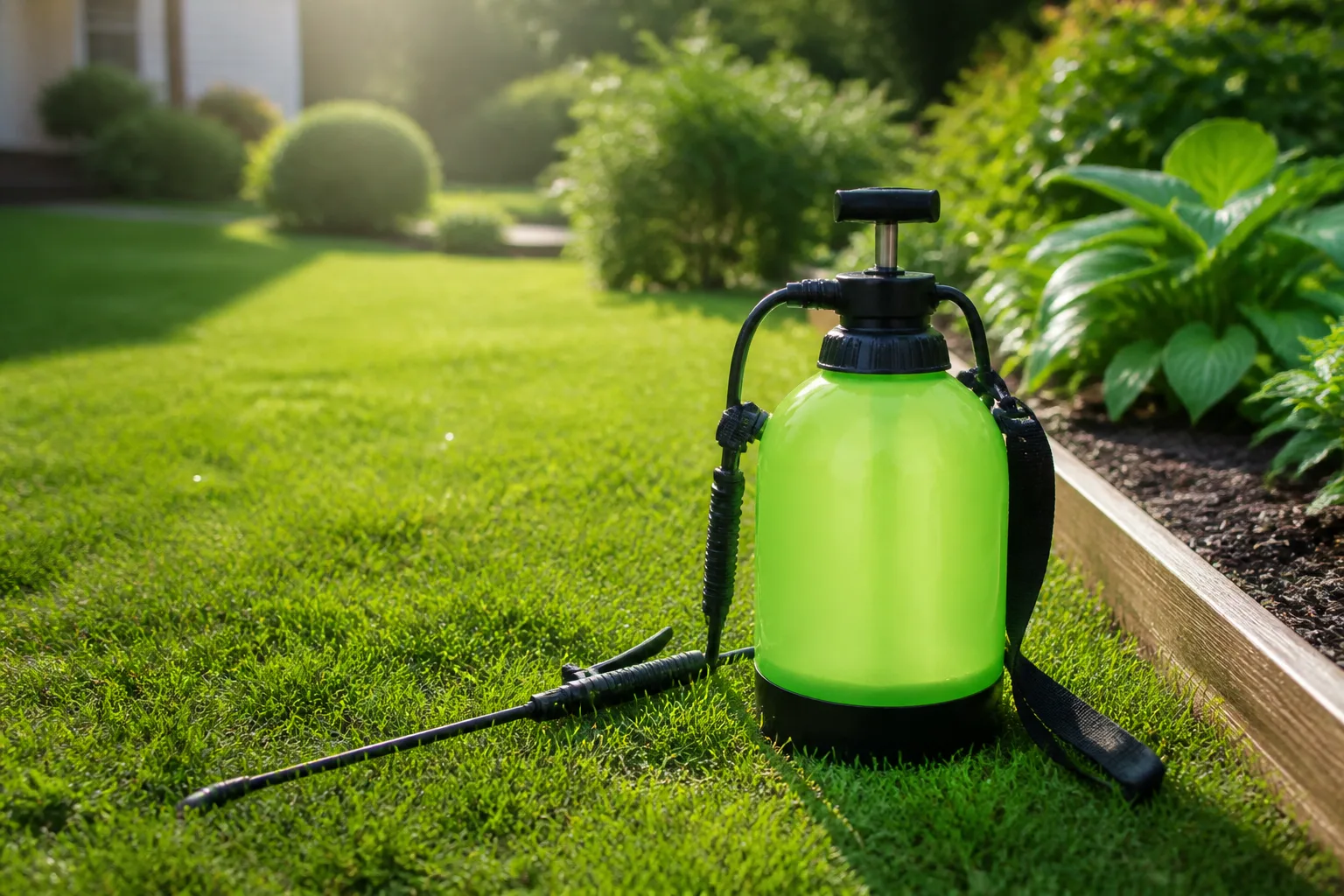
Use a spot treatment when weeds are scattered. A small pump sprayer with a focused, low-pressure stream is easier to control than a broad fan, and a shield or physical barrier can help around valuable plants. Do not mix extra surfactant, fertilizer, or another herbicide unless the label specifically allows it. Product names and formulations change, so choose by current active ingredient and label, not by an old recommendation.
Pre-emergent and post-emergent control solve different problems
Pre-emergent herbicides act before a weed is visible, typically by disrupting the early stages of germination. They are useful for annual weeds when timing is based on local soil temperature, weather, and the product label. They do not remove a mature dandelion, and they can interfere with the establishment of grass seed or other plants. If the annual weed is already up, a pre-emergent application is too late for that plant.
Post-emergent herbicides are applied to a visible, actively growing weed. A contact product damages the tissue it reaches and may work quickly but leave a perennial root alive. A systemic product moves within the plant and may be slower, but can be more useful against a rooted perennial. Neither category is a guarantee: a mature, drought-stressed, dusty, recently mowed, or cold-inactive weed may absorb poorly.
For crabgrass, prevention before germination is generally more reliable than trying to rescue mature plants. For dandelions and clover, a turf-labeled broadleaf treatment can be useful when the grass and weather fit the label. For grassy weeds in grass, assume the problem is higher risk until a product explicitly lists both the weed and your turf species.
Spray precisely and protect everything outside the target
Drift is the most common way a grass-safe treatment becomes a garden problem. NC State Extension notes that wind, fine droplets from high pressure, and high temperatures can move or vaporize some herbicide formulations. Apply only in the conditions allowed on the label, with calm air, no imminent rain if the product requires a dry window, and enough leaf surface on the target weed.
Keep spray away from flowering plants, vegetable beds, ponds, storm drains, tree trunks, and exposed roots. Tree roots can extend far beyond the canopy and may lie beneath turf. Avoid treating when turf is drought-stressed, heat-stressed, newly seeded, recently damaged, or outside the product’s listed growth conditions.
Wear the personal protective equipment listed on the label, keep people and pets out for the stated re-entry period, and store or dispose of leftovers as directed. Clean the sprayer according to the product instructions and never use a herbicide sprayer for fertilizer or plant-care products unless it has been thoroughly decontaminated. If drift occurs, stop the source, record the product and weather, and contact the manufacturer or a local extension professional for crop-specific advice rather than applying another chemical immediately.
Why Vinegar, Salt, and Boiling Water Are Risky in Lawns
Vinegar can kill or burn a weed’s contacted leaves, but it is nonselective. It cannot distinguish dandelion from turf. Household vinegar is also not the same as a registered herbicide formulation, while higher-acid products can cause eye and skin injuries and still leave perennial roots alive. A splash that appears to solve a weed may create a yellow ring in the surrounding grass.
Salt is even less compatible with a living lawn. It can injure grass directly and accumulate in soil, making the site harder for desirable plants to reestablish. Salt belongs nowhere near a lawn, garden bed, tree root zone, drainage path, or place where runoff can carry it. “Permanent” weed control through soil sterilization is not a benefit when you want turf to grow again.
Boiling water is a contact treatment that kills whatever foliage or crown it touches. It can be useful in a crack in a hard surface, but it is a poor lawn tool: the water spreads, the target is hard to isolate, and the heat can injure grass roots and soil organisms. The safer lesson is not that every household remedy is useless; it is that a lawn is the wrong setting for broad, nonselective contact treatments.
Follow a Four-Week Lawn Weed Control Plan
A short plan keeps you from repeating the same ineffective action. The dates should follow your local growing season rather than a fixed calendar.
Week 1: Scout and sort. Walk the lawn when weeds are visible. Photograph unfamiliar plants, mark wet or compacted areas, and divide the problem into broadleaf, grassy, sedge, and perennial categories. Pull small weeds before they flower and remove seed heads from the rest by mowing.
Week 2: Correct the opening. Check mowing height, blade sharpness, irrigation coverage, drainage, shade, soil compaction, and thatch. Fix the factor that is clearly creating bare or weak turf. Do not fertilize or aerate on autopilot; match the action to the diagnosis and your grass’s active growth period.
Week 3: Repair and target. Overseed or patch bare spots when the season suits the turf. If an identified, established broadleaf weed remains widespread, compare a selective product’s label with your exact grass and conditions. Spot-treat where practical, and avoid blanket spraying simply because it is faster.
Week 4: Evaluate, do not escalate blindly. Recheck treated weeds and repaired areas. Slow yellowing does not necessarily mean failure, and a dead top does not prove a perennial is gone. Pull survivors, follow the label’s reapplication interval if one is allowed, and record what worked. If the same weed returns in the same place, solve the soil, water, shade, or root problem before increasing the rate.
This approach also makes future control easier. You will know which weeds arrive in spring, which emerge after irrigation, which need a taproot tool, and which patches are better converted to a different landscape treatment. The Penn State and NC State guidance behind integrated weed management points to the same practical conclusion: prevention, cultural care, physical removal, and careful chemical use work best as a system.
Conclusion
To kill weeds without killing your lawn, make the first move an identification decision, not a product decision. Pull young shallow weeds, dig taproots and crowns, mow before seed forms, and repair the conditions that leave turf thin or stressed. Use a selective herbicide only when the label lists your weed and your grass, and apply it with enough precision that drift, runoff, and nearby roots are protected.
No lawn stays weed-free because of one perfect treatment. A lawn stays more resistant when it is thick, appropriately mowed, correctly watered, and monitored early. When you match the method to the plant’s anatomy and life cycle, you can remove the weeds that truly need removing while giving the grass the best chance to fill the space they leave behind.