7 Landscaping Features That Annoy Neighbors—and Fixes
Find out which landscaping features create smoke, glare, runoff, noise, or maintenance problems—and how to redesign them before they hurt relationships.
The landscaping features that cause the most conflict are not always the ugliest ones. A well-designed fire pit can be a pleasure; a neglected pond can be charming from one angle and a mosquito-filled eyesore from another. The real dividing line is spillover: smoke, glare, noise, water, visual bulk, or roots that cross the boundary of your own yard.
That is also why a blanket list of “bad” landscaping features is not very useful. Your wind direction, slope, lot size, local code, HOA rules, maintenance routine, and the location of your neighbor’s windows all change the answer. Use the seven examples below as an inspection checklist: keep the feature if you can control its spillover, redesign it if a small change solves the problem, and remove it when you are asking the next property to absorb the consequences.
How to tell whether a landscape feature is crossing the line
Stand at the property line and look back toward your house at the time the feature is most active. For a fire pit, that means a breezy evening; for lights, after dark; for drainage, during or immediately after heavy rain; for a pond or pool, when it is either being used or left unattended. Ask what a neighbor experiences from their side rather than judging the feature from the center of your yard.
The useful test is simple: Can you name the nuisance, trace its path, and stop it without transferring the problem elsewhere? Smoke follows wind, light travels beyond the task area, water follows grade, bamboo follows rhizomes, and bulky structures change views and usable space. If you cannot identify the path, do not start with a cosmetic fix; observe first, take a photo or video, and check the relevant local rules.
1. Smoke-producing fire pits
A fire pit becomes a neighbor problem when smoke repeatedly blows toward an open window, clothesline, patio, or outdoor gathering area. Burning damp wood, yard waste, cardboard, or treated lumber makes the odor and particle load worse, while a large flame, a windy site, or a pit tucked beside a fence increases the chance that embers and heat will cross the property line.
The feature itself is not automatically inconsiderate. The problem is a fire that is placed for the homeowner’s view without considering prevailing wind, nearby combustible material, or the hours when surrounding homes are being used. Even a legal fire can be disruptive if it fills the next yard every time the wind turns.
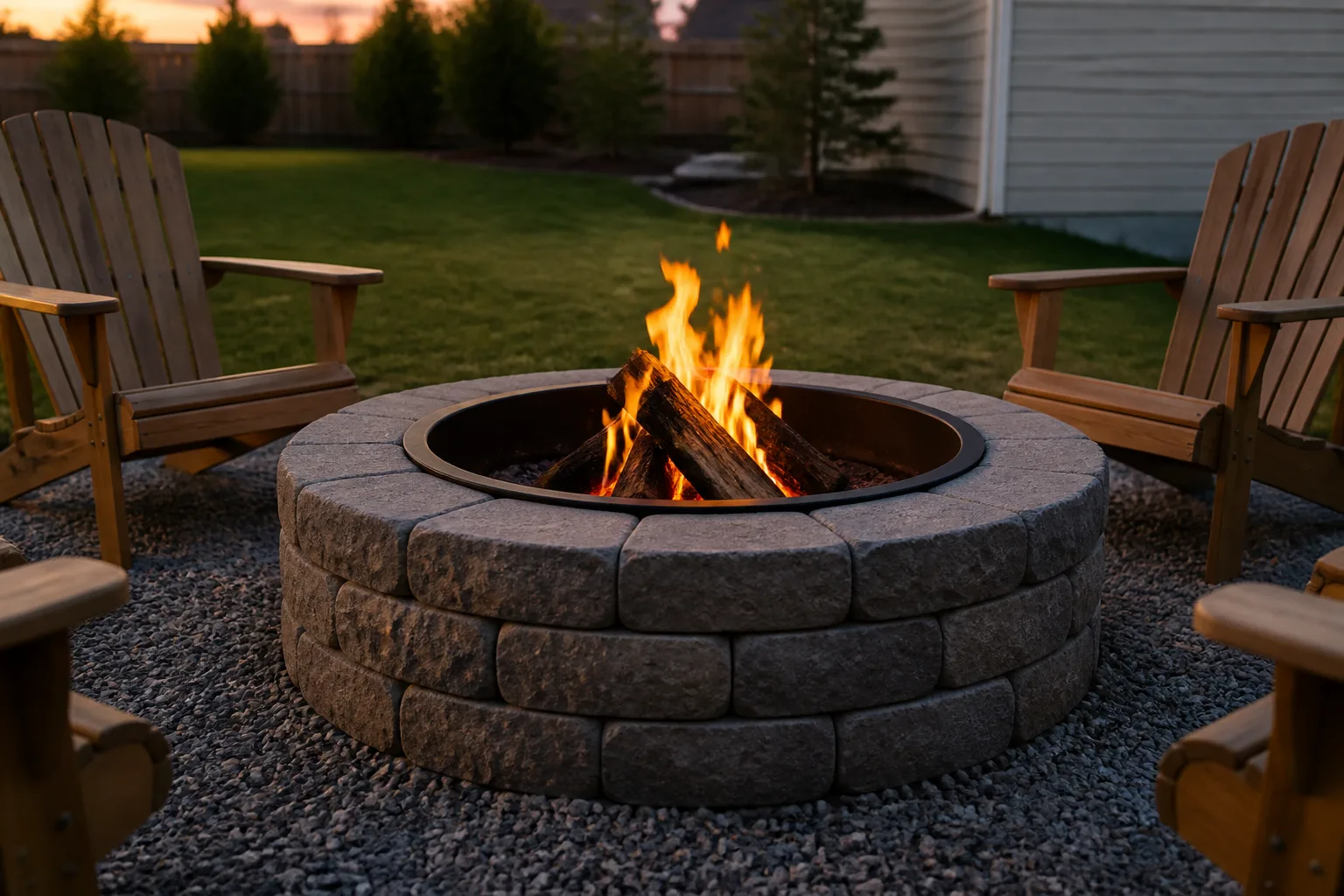
A neighbor-friendly fire pit starts with placement and behavior
Start with the baseline from the U.S. Fire Administration’s outdoor-fire guidance: use a fire pit outdoors at least 10 feet from the home or anything that can burn, and keep it watched, screened, and fully extinguished before you leave. That distance is not a universal permit or setback rule; local fire departments, wildfire conditions, building codes, and HOAs can require more or prohibit wood fires altogether.
Use dry, seasoned firewood and burn only materials your local rules allow. Never use gasoline or another accelerant, and do not burn plastics, painted wood, trash, or yard waste. A metal spark screen contains some embers but does not make a fire pit safe in high wind, drought, or beneath low branches.
If smoke is the complaint, move the pit before buying a taller chimney or planting a hedge. A taller feature can push smoke higher without preventing it from drifting across the next yard. A smaller wood fire, a wind-aware seating layout, or a properly installed propane unit may reduce the nuisance, but fuel changes do not erase local code, clearance, or supervision requirements.
The considerate move is to tell the neighbor what you are changing and ask when smoke is most disruptive. That conversation is not a substitute for safety rules; it is a way to find the real wind and timing pattern instead of guessing from your patio chair.
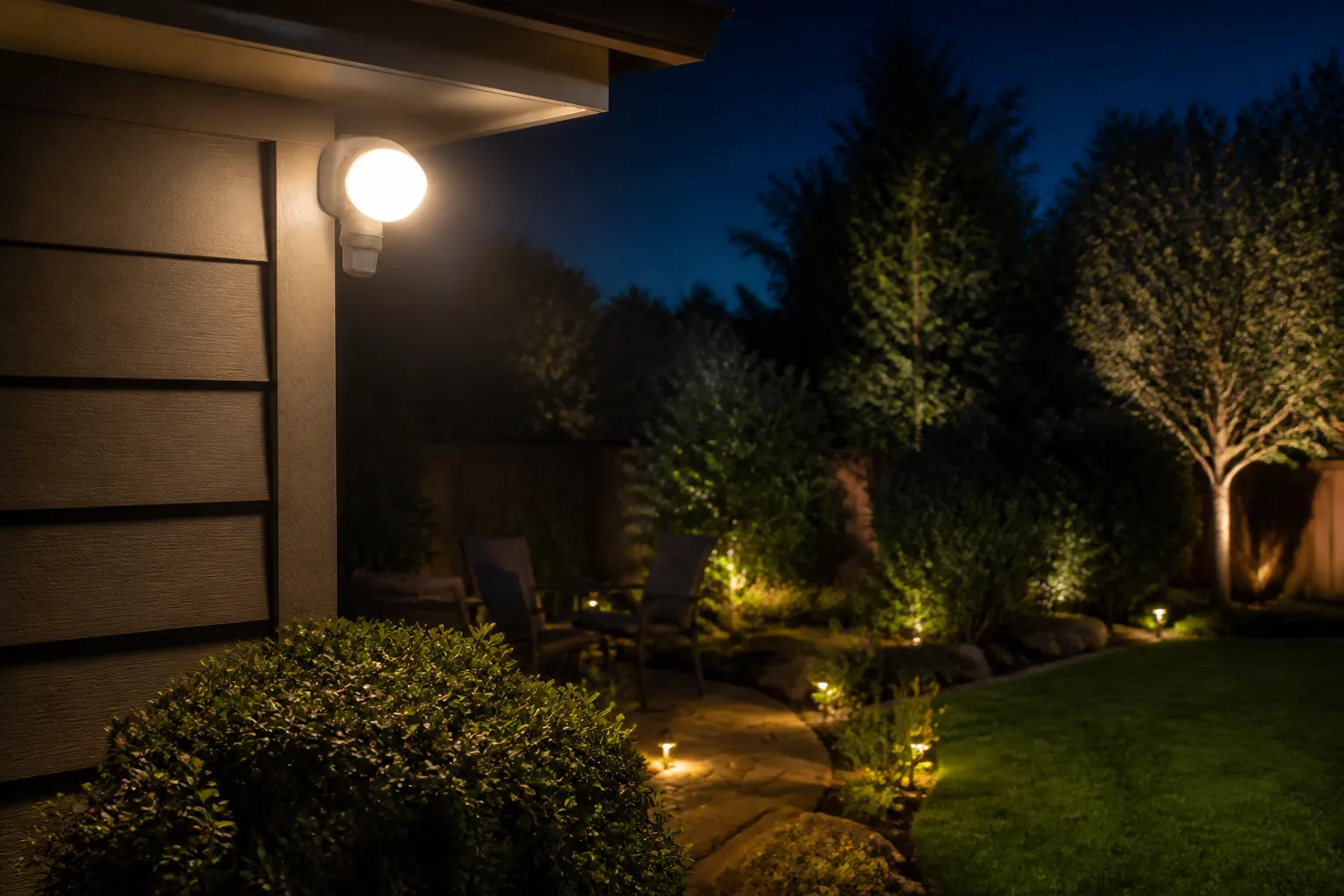
2. Bright motion lights and floodlights
Security lighting is meant to reveal a person near your home, not to illuminate the neighbor’s bedroom, kitchen, or entire back garden. A high-output motion light mounted at the corner of a house can trigger from cats, branches, passing cars, or a neighbor walking on their own path. Repeated bursts of blue-white glare feel less like security and more like a spotlight pointed across the boundary.
The nuisance has a practical cost as well as an etiquette cost. Direct glare can reduce dark adaptation and create shadows or blind spots, which is why more light is not automatically safer. The National Park Service’s guidance on home lighting recommends using light only when needed, directing it where needed, choosing warm or amber light, and using the minimum amount necessary.
The quick light-trespass fix
After dark, stand in the neighbor’s likely sightline and look toward your fixture. If you can see the bare bulb or LED from that position, the fixture is a candidate for shielding or replacement. The National Park Service’s outdoor-lighting principles favor fully shielded fixtures that direct light down to the task area rather than globes or floodlights that spill laterally and upward.
Aim the beam at your steps, gate, or driveway—not at the property line. Lower the sensitivity and detection range so the light responds to activity on your parcel, then shorten the run time. A timer, dimmer, or motion sensor can let a low-level path light turn off while reserving the brighter burst for a real approach.
If security is the reason for a bright fixture, preserve the safety function while changing the distribution. Swap a bare floodlight for a shielded, downward-facing fixture; use a warmer color for areas that do not need inspection-level brightness; and trim branches that repeatedly trigger the sensor. The practical lighting advice from Gardening Know How reaches the same conclusion: warm, shielded, dimmable, timed, or motion-controlled lights reduce unnecessary spill without making a path unusable.
3. Neglected ponds and water features
Water features are peaceful when the pump runs, the edges are clean, and the water has a clear purpose. They become a neighborhood irritant when a broken pump leaves an algae-covered basin, an unused pond collects debris, or a poorly graded edge overflows toward a fence. The issue is not that every pond attracts pests or lowers a home’s value; it is that an ornamental feature that no longer receives care becomes a visible maintenance obligation.
Noise can matter too. A pump that hums against a shared wall, a waterfall that runs overnight, or a loose filter cover can be more noticeable next door than it is beside the feature. A water sound that masks traffic in one yard may be the background noise someone else hears through an open window.

Repair, retrofit, or remove the feature
Use a three-part check before deciding what to do. First, inspect the basin, liner, pump, filter, overflow route, and electrical setup. Second, observe the feature at the time it bothers people: is the pump loud, the water stagnant, or the edge overflowing? Third, estimate the maintenance you will actually complete in a normal month, not the routine you intended when you installed it.
If the water feature is sound but visually harsh, soften the edge with plants that tolerate the site, a defined stone border, or a narrower basin. Keep vegetation from blocking service access, and do not use dense screening as a substitute for fixing an overflow or a failed pump. If the pond is near a property line, direct overflow into a planted on-site area rather than toward a fence, foundation, or neighbor’s low point.
Remove the feature when the liner leaks repeatedly, the basin cannot be safely serviced, the pump is abandoned, or the owner no longer wants the maintenance. Backfill only after confirming what lies below, including electrical lines, plumbing, and the original drainage path. A dry creek bed or planted rain garden can keep the space useful, but it should be designed to manage water on your property—not become a decorative trench that sends the next storm downhill.
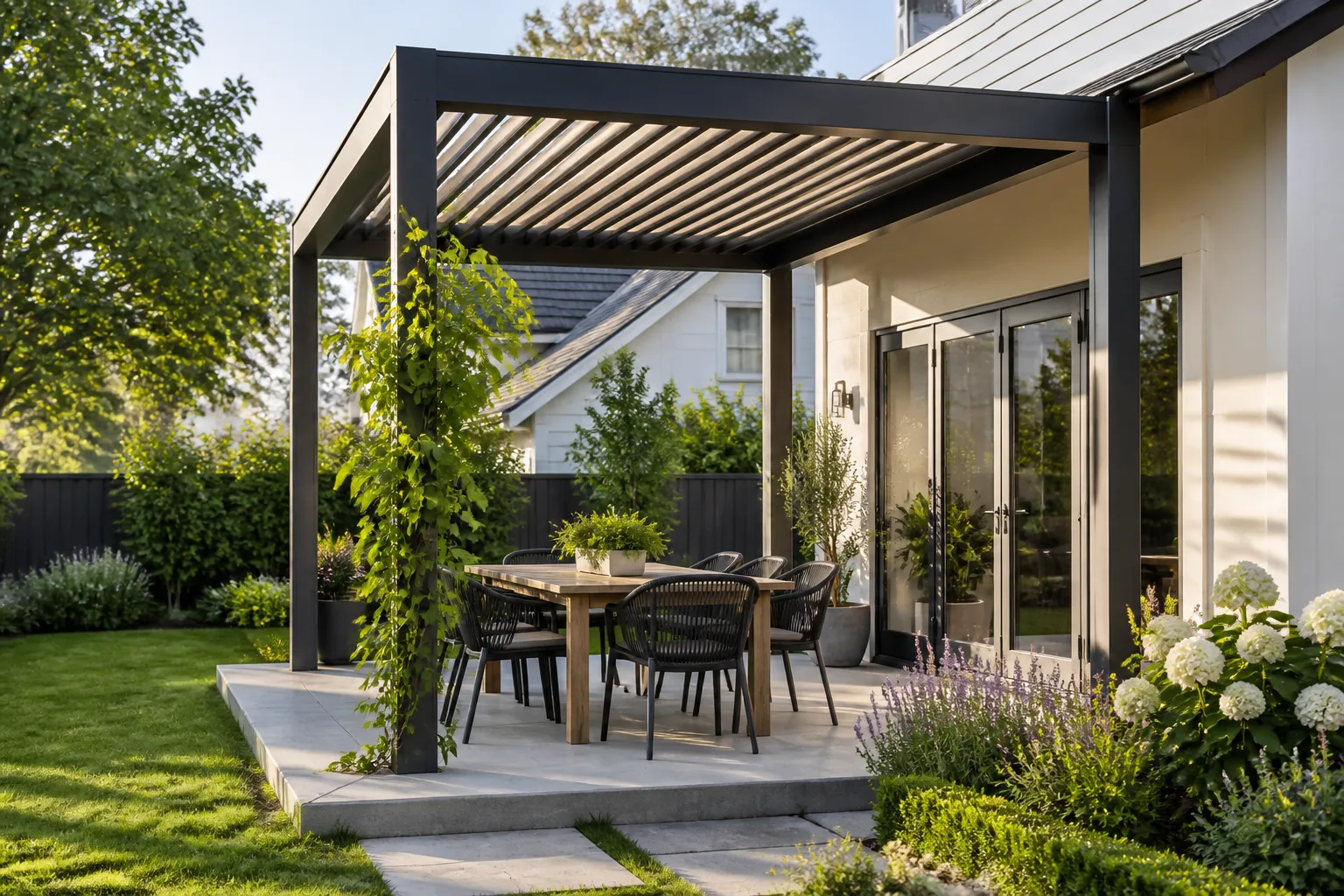
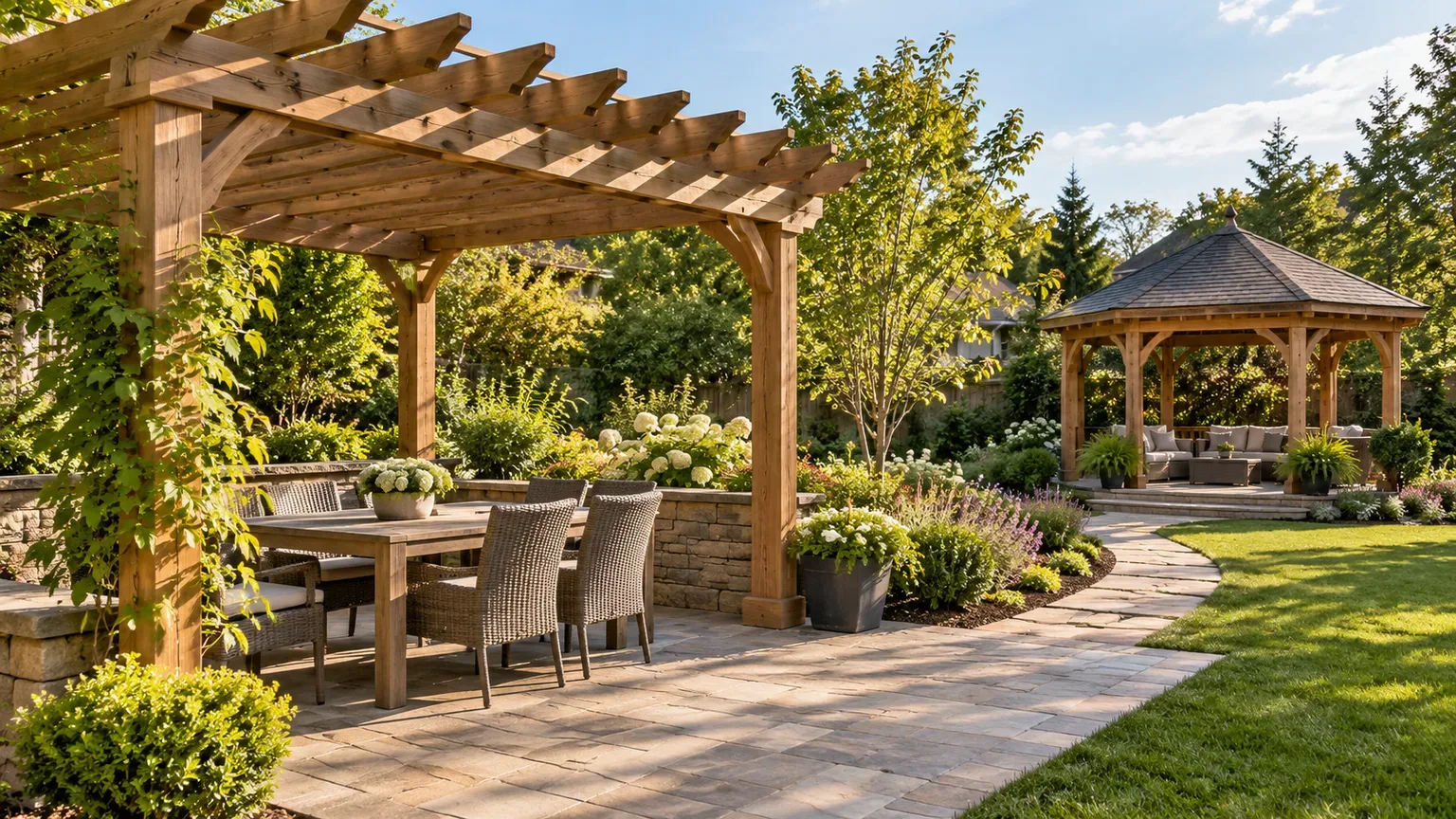
4. Oversized sheds, pergolas, and play structures
Large yard structures annoy neighbors when they dominate a shared view, sit tight against a fence, collect clutter, or create a maintenance and safety problem that the next property has to look at every day. A shed can be useful and still be too tall for a narrow lot. A pergola can make a patio comfortable and still feel intrusive if its roof, lights, or upper deck looks directly into a neighbor’s private space.
The resale concern is best understood as buyer perception, not a guarantee. Buyers often notice whether an outdoor structure looks intentional, accessible, and proportional to the house. They may discount the appeal of a yard that appears to require demolition, repainting, roof repair, or a difficult conversation about a boundary.
Design checks before you build
Measure the structure from the neighbor’s side before ordering materials. Mark the footprint with stakes, stand at the closest window, and check the view from both yards. Confirm setbacks, height limits, easements, permits, fence rules, and HOA requirements with the relevant local office; a structure can be unattractive to a neighbor and still be legal, or attractive and still violate a rule.
Keep service space around the structure so gutters, siding, paint, and plants do not become a shared burden. Choose a finish that relates to the house and fence, and use a layered screen—low plants, a breathable fence panel, or a trellis—rather than a wall of fast-growing vegetation. If the structure is already unused, unsafe, or too close to the line, removal is often kinder and cheaper than continuously disguising it.
5. Above-ground pools without a landscape plan
An above-ground pool can be the right choice for a family and the wrong choice for a property line. The complaints usually come from three places: a broad vinyl or metal wall dominates the view, activity noise carries across the fence, and the pool remains an eyesore or safety concern when it is closed. Grass also dies beneath and around a pool, leaving mud, bare soil, or a ring of improvised materials.
Do not frame this as a style judgment. The same pool can look orderly when it has a stable base, an intentional access path, a clean equipment zone, and required barriers; it can look temporary when hoses, ladders, toys, pump noise, and torn ground spill into the neighbor’s view.
Screen the pool without creating a new problem
Start with safety and service access, not screening. Follow the current local requirements for barriers, gates, alarms, electrical work, and setbacks. Keep the pump and filter on vibration-reducing supports, maintain them, and orient the equipment away from sleeping areas when the layout allows.
For the view, use a combination of a short deck or finished surround, containers, and plants suited to your climate. Leave enough space to inspect the pool, remove a cover, reach the equipment, and clean behind the screen. A hedge planted directly against the wall can trap humidity, hide leaks, drop leaves into the water, and eventually become another boundary problem.
If the pool is seasonal, make the closed-season plan before installation. Decide where the cover, ladder, pump hoses, and chemicals will live, and how bare ground will be protected. If that storage and maintenance plan does not fit the yard, a smaller pool or a different use of the space may be more neighbor-friendly than a large pool that is attractive for eight weeks and neglected for the rest of the year.
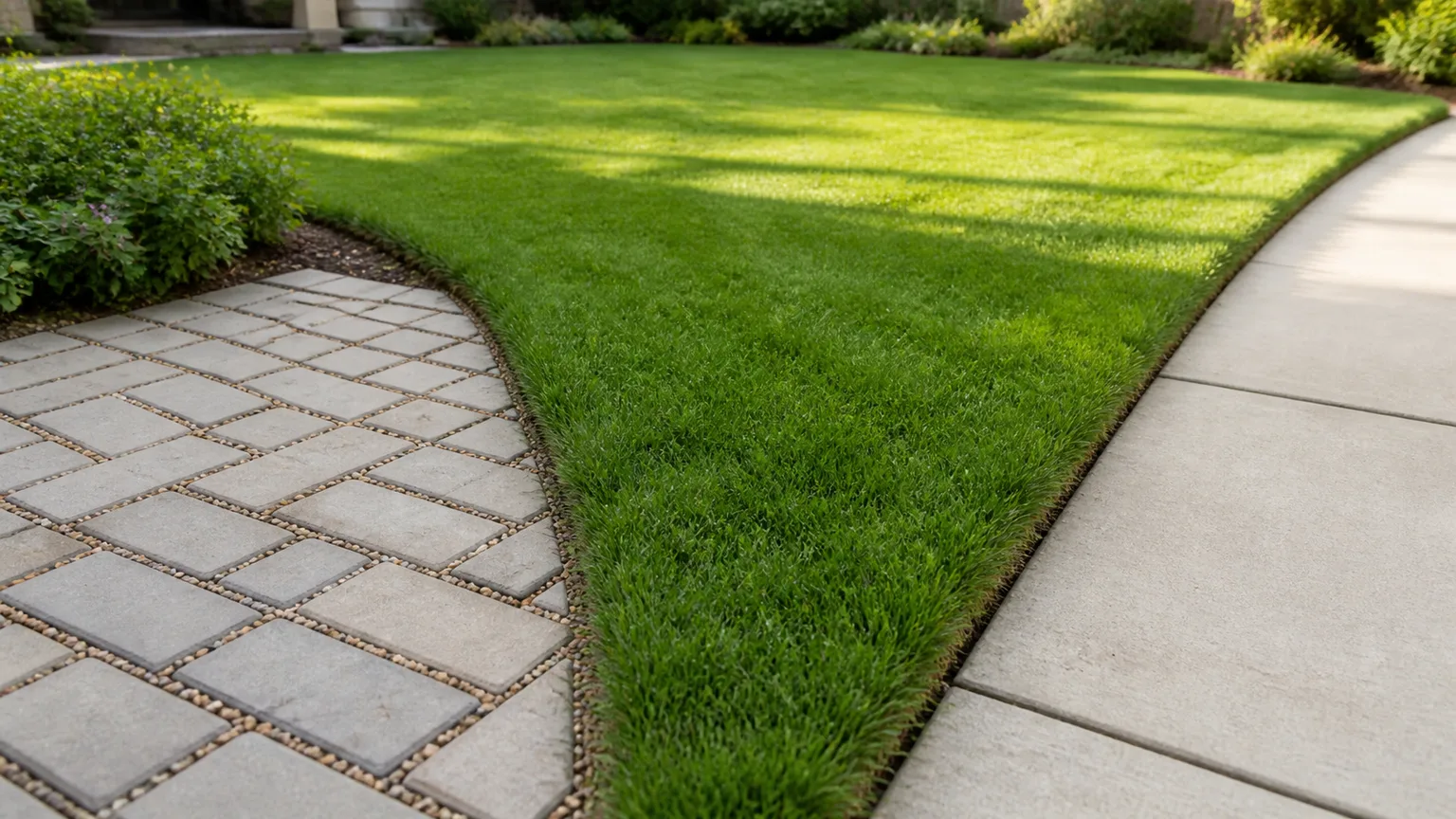
6. Concrete-heavy yards that move water next door
Concrete is durable and practical, but a yard made almost entirely of slabs, driveway extensions, and sealed pavers has fewer places for rain to slow down. The neighbor usually notices the result rather than the surface itself: a sheet of water crossing the property line, soil washing from a bed, muddy pooling near a fence, or a downspout that now discharges onto a lower yard.
The U.S. Environmental Protection Agency’s stormwater material explains why urban surfaces change the way water moves through a site. A residential landscape does not need to become a full drainage-engineering project every time it rains, but hardscape should be planned with the roof, slope, soil, and receiving area in mind.
Redirect and slow runoff before adding more hardscape
Watch the first heavy rain from a safe place and map the water’s path. Check whether the problem starts at a downspout, a driveway edge, a sloped patio, a compacted planting bed, or a blocked drain. Do not simply dig a channel aimed at the property line; that is a transfer of the nuisance, not a solution.
Where the site allows, slow water with a planted bed, a shallow swale, a rain garden, a stone splash basin, or a permeable surface. Fine Gardening’s rainwater-design guidance shows how planting, porous joints, stone, and carefully directed flow can manage runoff while remaining part of the landscape. Gardening Know How’s driveway guidance also describes permeable driveway approaches that reduce the amount of water leaving a hard surface.
Do not call every gravel driveway permeable. Compacted gravel can shed water, and a permeable paver system can fail when its base, slope, or maintenance is wrong. If water is reaching a foundation, undermining a wall, eroding a slope, or crossing the line in a concentrated stream, consult a qualified drainage or landscape professional before changing grades.
7. Running bamboo and boundary-hugging plants
Bamboo is the clearest example of a plant that can be attractive in one yard and a long-term dispute in two. The key distinction is growth habit: clumping bamboo expands from a tighter crown, while running bamboo sends underground rhizomes outward. A boundary is the worst place to discover which type you bought.
The Royal Horticultural Society’s bamboo-control guidance explains that running rhizomes often occupy the top foot of soil, can spread more than a meter in a year under favorable conditions, and may grow through gaps or cracks in hard surfaces. That does not mean every bamboo planting is invasive everywhere, but it does mean a plant sold as a fast privacy screen needs a containment plan before it goes in the ground.

Contain the spread before it becomes a dispute
If you are buying bamboo, identify the botanical name and growth habit first. A clumping type, a large container, or a raised planter may be a better fit for a narrow yard. If you choose running bamboo, install a purpose-made barrier correctly and plan annual inspection; do not assume a fence or a shallow edging strip will stop underground rhizomes.
For an established planting, search beyond the visible canes. Look for new shoots in lawn, beds, cracks, drains, and the strip beside the fence. Remove the spread before installing a barrier, because a barrier placed around the original clump does not collect rhizomes that have already escaped. The RHS describes a barrier trench about 60 centimeters deep, with overlapping joints and an above-soil edge; follow the product instructions and local conditions rather than improvising gaps with loose paving slabs.
Local rules can be specific. Fairfax County’s running-bamboo guidance is one example of a jurisdiction that requires property owners to contain running bamboo and prevent it from crossing the property line. That is not a universal law, but it is a useful reminder to check your own county, municipality, and HOA before planting or removing a boundary screen.
Do not throw live rhizomes into ordinary compost unless your local system is designed to destroy them. Follow local green-waste or disposal rules, clean soil from tools, and keep removal debris contained. If bamboo has reached a neighbor’s property, involve them early; coordinated removal is more effective than each household cutting visible shoots on its own side.
Fix the problem in the right order
When several features are causing complaints, prioritize the nuisance that can damage people, property, or a relationship first. Use this order:
- Stop immediate risk: extinguish unsafe fires, correct exposed electrical or pool hazards, and keep water away from foundations and slopes.
- Stop the spillover: redirect smoke and runoff, shield lights, reduce pump noise, and cut escaped bamboo before it travels farther.
- Restore maintenance: clean the pond, repair the pool surround, remove clutter from a structure, and clear blocked drains.
- Improve the view: add proportional screening, replace harsh materials, or redesign the feature once the underlying problem is controlled.
- Remove what you will not maintain: a smaller, simpler yard is better than an impressive feature that repeatedly exports work to someone else.
This sequence prevents a common mistake: using plants to hide a problem that is still active. A hedge cannot fix smoke, a taller fence cannot fix runoff, and decorative gravel cannot fix a broken pond pump. Solve the mechanism first, then make the solution attractive.
A five-minute neighbor check before you start a project
Before you dig, pour concrete, plant a screen, or mount a light, mark the proposed feature and look at it from the next property’s most sensitive points. Check bedroom and kitchen windows, outdoor seating, clotheslines, low spots, shared fences, and the path a person would walk at night. Photograph the view and the grade so you can compare the finished result with the plan.
Then ask three questions: What leaves my property? What maintenance can someone else see or hear? What happens when I am away for a month? Those questions catch most neighbor problems before they become expensive. A brief, specific conversation—“Will this light reach your window?” or “Where does the water go after a storm?”—is more useful than a vague promise to keep the project tasteful.
Conclusion
Neighbor-friendly landscaping is not about making every yard quiet, plain, or invisible. It is about keeping the enjoyable part of a feature on your property and keeping its smoke, glare, noise, runoff, bulk, and roots from becoming someone else’s daily problem.
Before installing or defending a fire pit, light, pond, structure, pool, hardscape expansion, or bamboo screen, trace the feature’s path across time and weather. Check the local rules, design for the worst realistic condition, and choose the smallest intervention that controls the spillover. If you would not want to receive the smoke, water, glare, or maintenance burden from the other side of the fence, that is the clearest signal to redesign it.