11 Hydrangea Landscaping Ideas for Gardens of All Sizes
Explore 11 hydrangea landscaping ideas for front yards, paths, patios, slopes, and shade gardens, plus plant choices and spacing that prevent crowding.
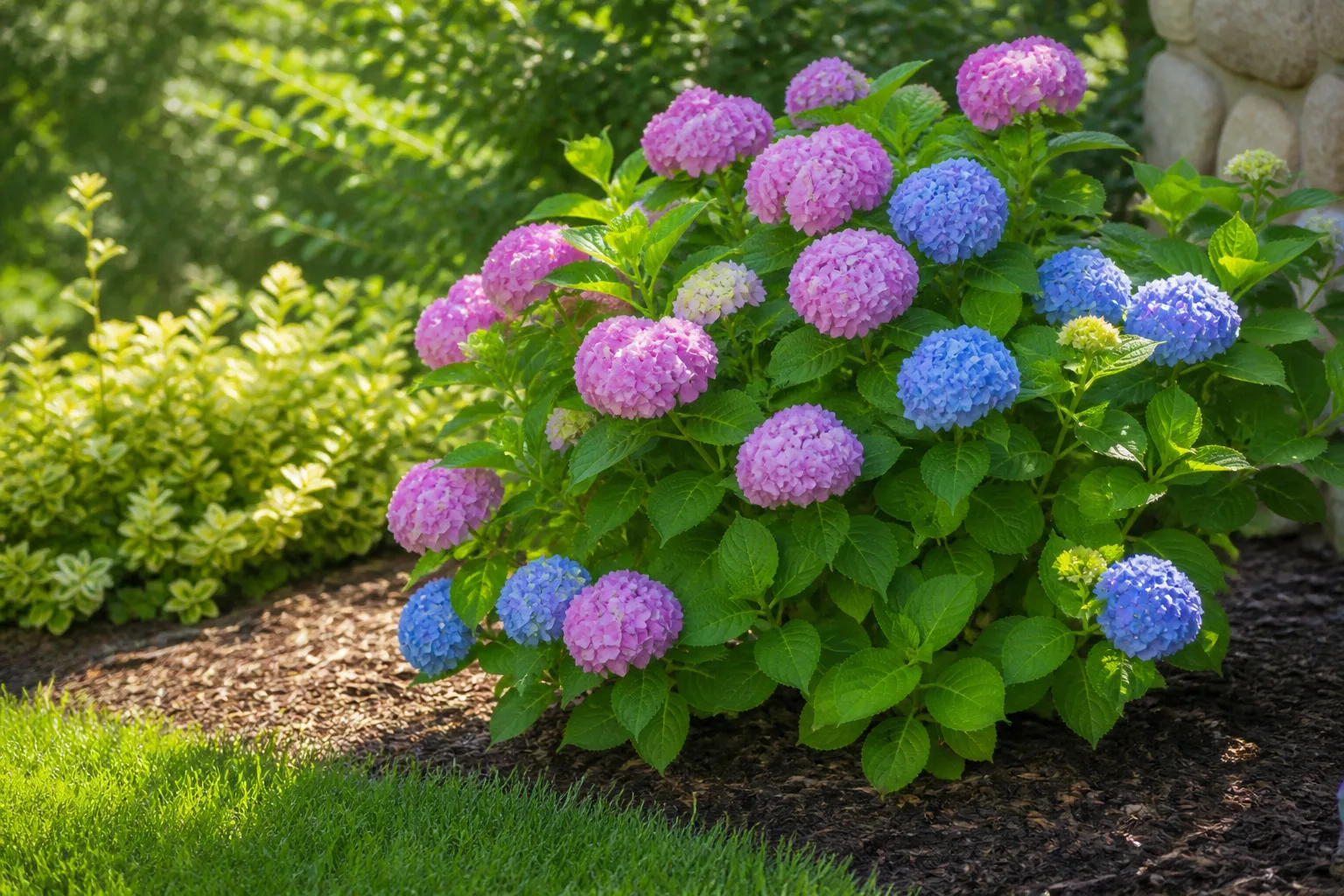
Hydrangeas can soften a house, mark an entrance, or make a shaded corner feel like a garden destination. The best design starts with the plant’s mature size and growing needs, then uses repetition, contrast, and clear paths to make the flowers feel intentional rather than crowded.
Use these ideas as layouts to adapt, not planting recipes to copy exactly. A hydrangea that thrives beside a cool woodland path may struggle beside a hot driveway, and a shrub that looks compact in a nursery pot can eventually fill a wide bed.
Start with the mature plant
Hydrangea is a genus with several different shapes, not one interchangeable landscape shrub. Bigleaf and mountain hydrangeas bring rounded flower heads and broad foliage; panicle types tend to have upright, cone-shaped blooms; oakleaf hydrangeas add bold leaves and autumn color; smooth hydrangeas often form broad mounds; climbing hydrangeas cover vertical surfaces. NC State Extension’s plant toolbox lists hydrangeas for borders, foundation beds, hedges, mass planting, woodland areas, and walkways, but the right species depends on the actual site and cultivar.
Match the hydrangea type to the job
For a sunny boundary or a more upright flower display, look first at locally suitable panicle hydrangeas. For a part-shade border, bigleaf, mountain, smooth, and oakleaf types may suit the look, but compare the specific cultivar’s mature width and hardiness before buying.
Compact cultivars can work in small beds or containers; a climbing hydrangea is a separate choice for a suitable wall, not a shrub to squeeze into a narrow border. The RHS hydrangea guide describes shrubby forms for borders and climbing forms for north- and east-facing walls.
Do not choose a shrub by flower color alone. Soil acidity changes the flower color of some bigleaf and mountain cultivars, while many other hydrangeas do not shift from pink to blue in the same way. If a particular color matters to the design, check the variety’s dependable color range and local soil conditions rather than assuming a soil amendment will create the exact shade you saw in a photograph.
Read light, moisture, and access before choosing a spot
Walk the site at different times of day and note where direct sun lands, where roof overhangs keep soil dry, and where water collects after rain. Many shrubby hydrangeas do well in light shade; some tolerate more sun if the soil stays reliably moist, while hot afternoon exposure can make a water-demanding planting harder to maintain. The RHS growing guide recommends moist soil that drains well and notes that hydrangeas tolerate sun when soil does not become too dry.
Also check windows, vents, meters, hose bibs, gates, outdoor faucets, and the route you use to reach the house. Leave room to maintain siding and fencing, and do not rely on regular hard pruning to keep an oversized shrub inside a space that is too small. If a large tree shades the site, account for root competition: shade can be helpful, but thirsty tree roots may leave the hydrangea with less available moisture.
1. Build a layered foundation border
A row of hydrangeas can soften a long wall, but a bed made only of large shrubs often looks heavy from the street and bare in winter. Give the planting a clear front, middle, and back: low groundcovers or compact perennials toward the edge, hydrangeas as the flowering middle layer, and evergreen structure or an existing small tree behind them where space allows. Repeating one or two hydrangea cultivars makes the border feel connected to the house instead of like a plant collection.
Scale the shrubs to the architecture. A compact selection can sit beneath lower windows; a taller panicle type can anchor a broad, taller wall if the bed is deep enough. Measure from the center of the plant to the wall using the shrub’s expected mature spread, and preserve access to windows, drains, and foundation vents.
A front-yard design can use white flowering shrubs and evergreen shapes to make the entrance legible without filling every open patch of soil. Repeat an evergreen or a low groundcover to carry the structure through winter.
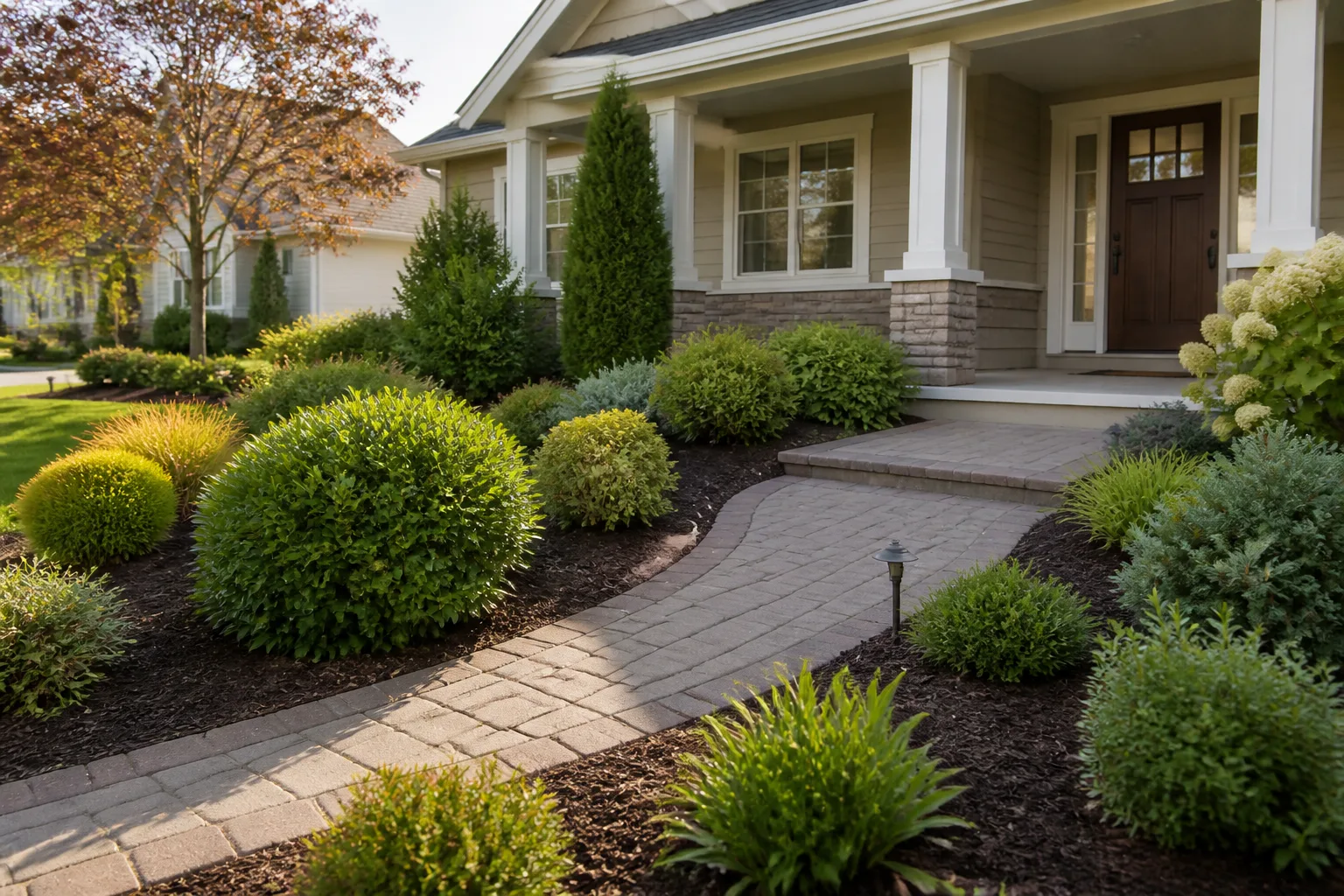
2. Let a small group lead to the front door
Instead of a continuous hedge, use a few hydrangeas as a visual rhythm along a walk: one group near the gate, a pause beside a step, then another near the porch. Repeating the same flower form and spacing helps the eye follow the route. A curved bed can make a straight approach feel softer, while a narrow straight bed suits a more formal house.
Keep the mature canopy outside the comfortable walking line. Flower heads and arching stems can lean into a path after rain, and a shrub that grows over the route becomes a repeated trimming job. For a small entry bed, a compact cultivar such as Bobo can supply a lower mound; confirm the nursery label’s mature dimensions because cultivar sizes vary.
The point is to guide someone toward the entrance, not make them brush through wet foliage to get there. Use a low perennial or groundcover at the edge if you want a finished look without putting another shrub in the walking line.
3. Screen a patio with a loose shrub row
Hydrangeas can make a patio feel tucked away without building a solid fence. Plant a loose row behind a seating area, or use two short rows to frame the view while leaving an opening toward the lawn. A mixed screen with evergreen shrubs or a small tree holds more structure in winter than hydrangeas alone, whose leaves drop in cold climates.
Treat screening as a medium-term result. Young shrubs need time to fill their mature outline, so do not crowd them close together just to make a fast wall; crowding reduces airflow and can make pruning and access awkward later. If privacy is needed year-round, pair hydrangeas with a suitable evergreen rather than expecting deciduous flowering shrubs to hide the patio in every season.
4. Soften a fence line without blocking access
A fence can look stark when it runs uninterrupted along a yard. Plant hydrangeas in staggered groups in front of it, varying the spacing slightly so the border feels relaxed while the repeated flower forms still create a visual line. Leave gaps for gates, fence repairs, hose access, and any neighboring plants that need more sun.
Before digging, locate buried utilities and check how water moves along the fence. A fence can cast shade, but a narrow strip may also stay dry under an eave or become root-filled if large trees grow nearby. Use a species and cultivar suited to those conditions; if the strip is too dry or cramped for a hydrangea, a smaller shade-tolerant shrub or groundcover may be a better way to soften the boundary.
5. Use a tree-form panicle hydrangea as a focal point
A tree-form hydrangea puts a rounded canopy of blooms above a clear stem, giving a border height without the footprint of a broad shrub at ground level. It can mark the end of a path, anchor a small lawn, or sit beside a terrace as a single focal point. Panicle hydrangeas are often used for this look, and their cone-shaped flowers create a different silhouette from the familiar rounded mopheads.
Keep the base visually simple so the trained trunk remains visible. A low ring of groundcover or a few small perennials can finish the planting, but avoid crowding the trunk with plants that compete for water. Select the cultivar for its expected canopy dimensions and local climate, not the size of the specimen at the garden center.
The RHS profile for panicle hydrangea describes a range of sizes and a preference for moist but well-drained soil. Use the label for the particular cultivar as the planning reference.
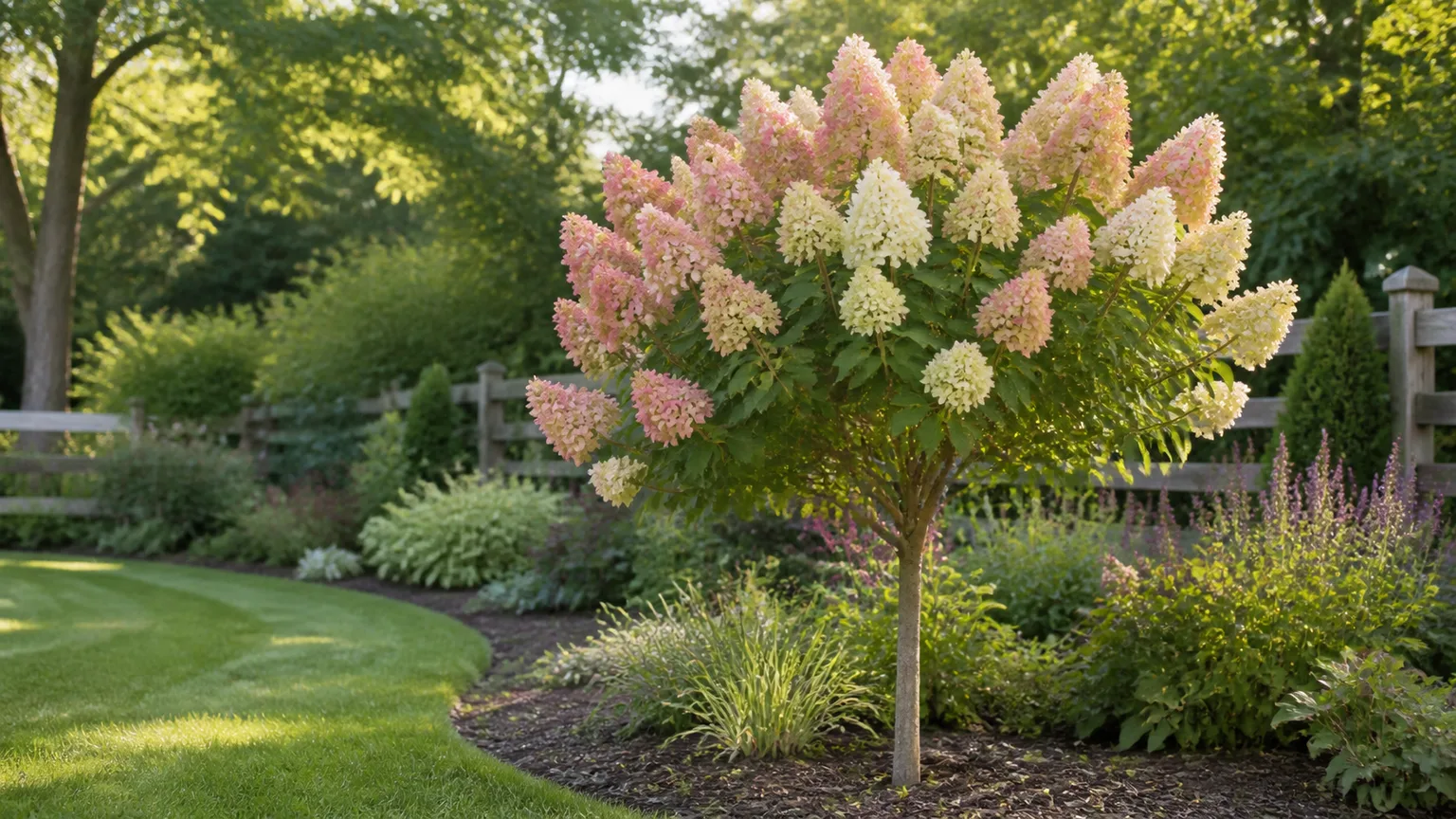
6. Bring hydrangeas onto a patio in large pots
Containers let you add a flowering shrub beside a door, on a terrace, or in a rental garden where you cannot plant in the ground. Use a compact cultivar and a substantial pot with drainage holes; a small nursery pot dries quickly and can make watering a daily chore during hot weather. Repeat a pair of pots to frame an entrance, or use one container to mark the corner of a seating area.
Pots dry faster than garden soil and expose roots to greater temperature swings. Check moisture with a finger rather than watering by calendar, and do not leave the container sitting in a saucer of water.
In cold-winter regions, ask whether the cultivar and container can overwinter outdoors in your climate; a plant may be hardy in the ground but more vulnerable when its roots are aboveground. If you do not want that seasonal work, choose another container shrub better matched to local winters.
7. Make a shaded woodland edge feel lush
Oakleaf hydrangeas work especially well where a garden transitions from lawn to trees. Their broad, lobed leaves and upright flower clusters add texture in summer, and the foliage can provide autumn interest after the flowers fade. Place them along the brighter outer edge of a woodland bed rather than in the darkest, driest pocket beneath a dense canopy.
Layer smaller plants in front only when their needs match the site. Ferns, hostas, and other shade-tolerant foliage plants can echo the hydrangea’s moisture preference and create a soft edge, while an open strip of mulch around the shrub makes watering and maintenance easier. Gardenista’s landscape examples for naturalistic hydrangea planting show how hydrangeas can read as part of a planted setting on a slope or among other garden plants; the local climate and available moisture still determine which combinations will work at home.
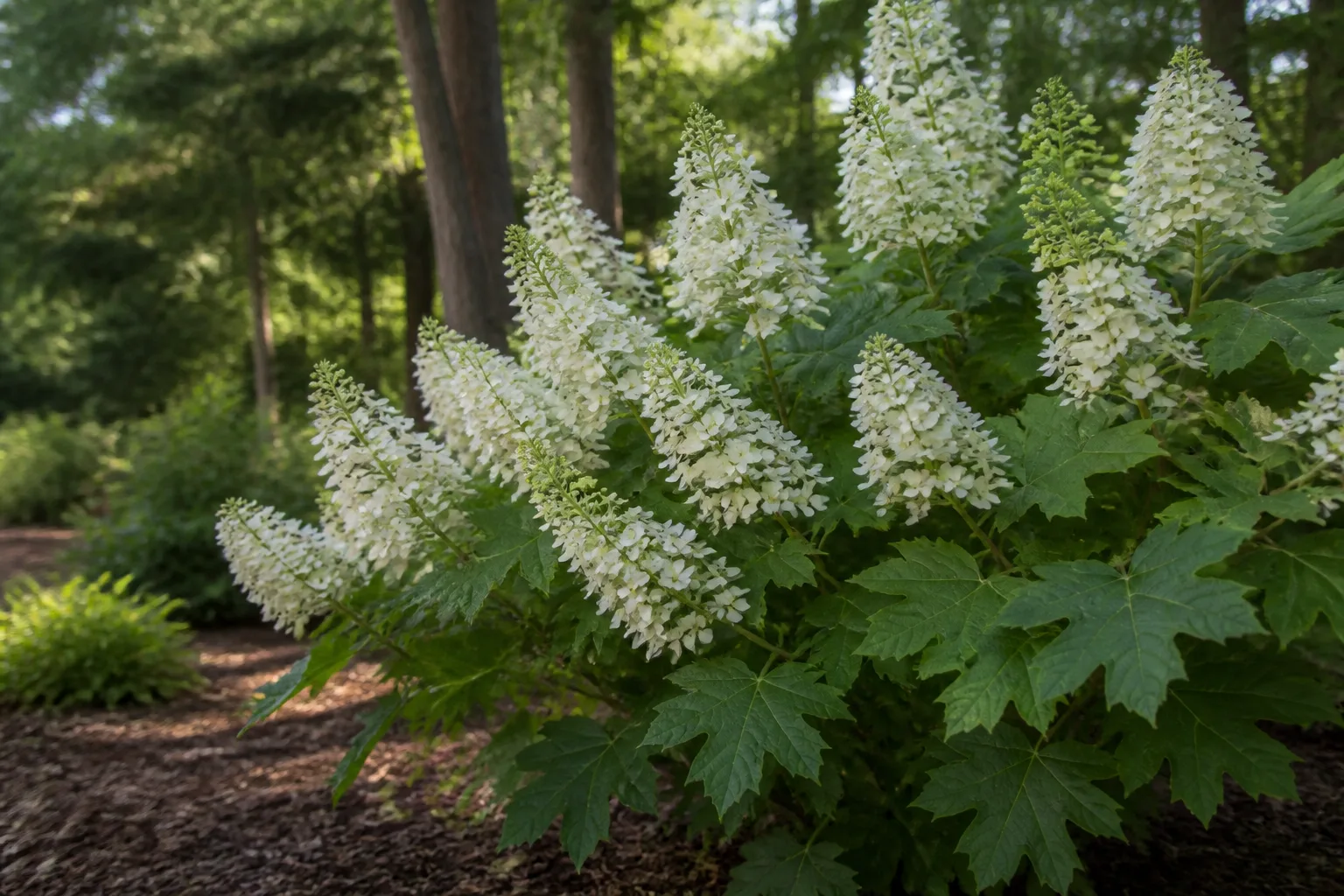
8. Borrow the cottage-garden look with a mixed border
Hydrangeas can anchor a relaxed border, but the cottage look comes from a mix of forms and bloom times—not from packing every flowering plant into the same bed. Set the hydrangeas toward the back or middle, then use lower foliage, airy flowers, and a few upright plants to create layers. Let some open spaces remain so the bed can be weeded and the shrubs can grow without rubbing against their neighbors.
Choose companions by the conditions they will share. A hydrangea under afternoon shade should not be paired automatically with sun-loving plants that need a drier soil; place those plants in a sunnier portion of the same border or use a separate bed. For a cottage house, repeated white or soft-colored hydrangeas can connect the house to more varied perennials without making the whole planting depend on one short bloom period.
9. Turn a slope into a planted backdrop
On a broad, stable slope, hydrangeas can soften the change in level and make a lawn or terrace feel sheltered. Use staggered groups that follow the contour instead of planting a ruler-straight row down the hill. The staggered pattern gives each plant room to form its natural outline and lets the planting read as a gradual transition from the upper garden to the lower one.
Check drainage and access before planting. Water can run quickly through a steep bed, while a low pocket at the bottom may stay soggy; neither condition is fixed simply by choosing a hydrangea.
Keep a route for pruning and watering, and avoid planting where mature shrubs would block a retaining-wall inspection or cover a path. Gardenista’s account of hydrangeas growing across a Cornish slope is useful visual inspiration, but the cool, moist conditions described there do not apply to every home garden.
10. Grow a climbing hydrangea on a suitable wall
If a bare wall needs greenery, a climbing hydrangea can cover vertical space while keeping the ground plane open. The RHS notes that climbing hydrangeas suit north- and east-facing walls, where many flowering shrubs would receive little direct sun. Their self-clinging roots help them attach to a surface, but the vine takes time to establish and should not be treated as a quick privacy screen.
Inspect the surface first. Use a sound masonry wall or sturdy support, keep the plant clear of gutters, windows, and service equipment, and avoid letting it cover damaged siding or a wall that needs regular repair.
A heavy mature climber is not a good match for every fence or structure. If you cannot confirm that the surface can support it and remain accessible, choose a trellis that can be inspected or use a smaller shrub instead.
11. Wrap an outdoor room or pool with flowers
Hydrangeas can soften the hard edges of a deck, patio, or pool area and make the space feel connected to the rest of the garden. Use them along the outside of the seating area, then preserve clear space where people walk, chairs move, and equipment needs service. A small group near a corner often frames the view better than a complete ring of shrubs.
Do not place thirsty shrubs where routine splashing or roof runoff keeps the soil saturated. Leave enough room to reach the pool edge and remove fallen flowers or leaves, and choose a cultivar whose mature size will not spread over paving. A row of hydrangeas near an outdoor room can look lush, but the planting should not make circulation, cleaning, or equipment access harder.
Make the ideas work in a real yard
Before buying plants, sketch the bed as it will look at mature size. Mark the house, paths, windows, utilities, fence gates, trees, and the areas you need to reach for maintenance. Then choose one main hydrangea form and repeat it where the design needs rhythm; add a contrasting flower shape or evergreen only after you know the site can support it.
Use mature width as your measuring tool
Read the label for the cultivar’s expected mature height and spread, then plan from that final size rather than the root ball. For a continuous row, a practical starting point is to compare the desired center-to-center spacing with the stated mature width: closer spacing closes the gaps sooner but creates overlap sooner, while wider spacing keeps separate shrubs and improves access. Local climate, pruning, soil, and cultivar can change the final size, so treat the label as a planning estimate, not a guarantee.
At a house or path, add the space needed to keep the shrub from rubbing against siding or narrowing the route. The center of a wide shrub must sit farther from the wall than the center of a compact one. Leave enough bed depth for the hydrangea’s full outline plus a reachable edge; if that does not fit, choose a smaller cultivar or a different planting idea instead of planning to shear the shrub every year.
Avoid the design mistakes that create extra work
Avoid choosing a site only because the flower color looks right, planting every variety at the same distance from a wall, or assuming “part shade” means the same light in every yard. Do not fill the entire front foundation with hydrangeas if you need year-round structure, and do not use a climbing type on a surface that cannot be inspected. A landscape becomes easier to maintain when plant size, bloom season, and access are part of the design from the beginning.
Pruning is not a substitute for choosing the right-sized shrub. Hydrangea species differ in when they set flower buds, so trimming at the wrong time can remove the next display; Fine Gardening’s hydrangea pruning guide explains why the bloom cycle matters. If a hydrangea repeatedly outgrows its space, consider moving it during a locally suitable planting window or replacing it with a compact cultivar rather than cutting it into a shape it cannot naturally hold.
Conclusion
The most successful hydrangea landscaping ideas begin with a simple match: choose the type for the light, moisture, mature size, and job the space needs. Repetition can make a foundation or path feel designed; a tree-form shrub, a container, a woodland edge, or a climbing variety can solve a different layout problem when the site suits it.
Start with one area you want to improve, measure the bed at mature size, and leave clear access around the house and garden. When the plant fits the place, its flowers become part of the landscape rather than a reason to keep reshaping it.