Lemon Lime Dracaena Care: Light, Water, and More
Learn Lemon Lime Dracaena care with practical rules for light, watering, soil, pruning, propagation, pests, brown tips, yellow leaves, and pet safety.
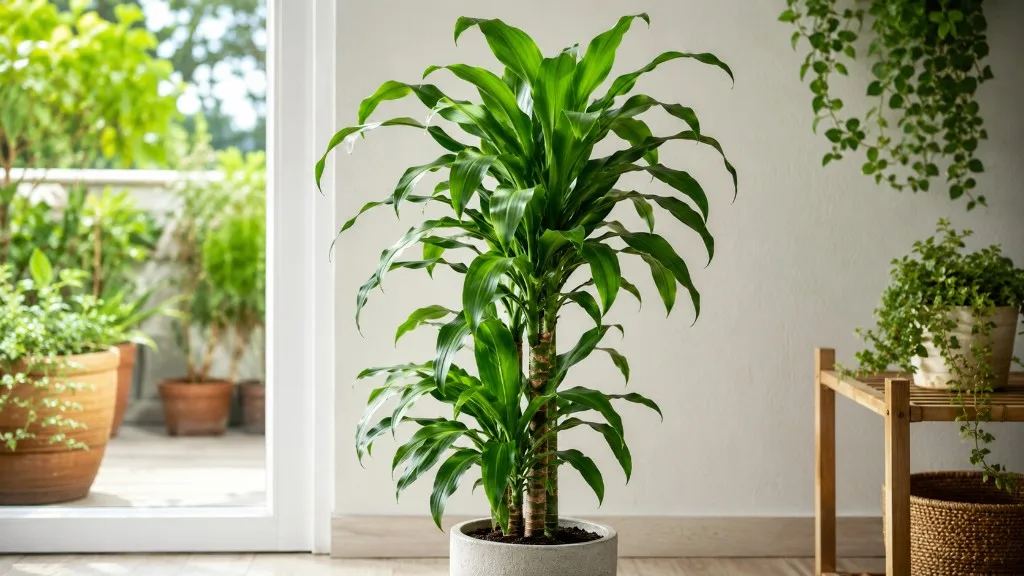
Lemon Lime Dracaena (Dracaena fragrans ‘Lemon Lime’) is an easy-care houseplant with a bright, almost fluorescent stripe running through its green leaves. It grows from woody canes, stays upright instead of sprawling, and tolerates a wider range of indoor light than many variegated plants. That does not mean it thrives in a dark corner or in permanently wet soil.
The simplest routine is also the most reliable: give it filtered light, let the upper root zone dry before watering deeply, use a pot that drains, and keep it away from cold drafts. The plant is naturally slow, so judge success by firm canes, steady new leaves, and a stable pattern of moisture rather than by rapid growth.
Lemon Lime Dracaena Care at a Glance
Use these baseline rules for Lemon Lime Dracaena care:
- Give it bright to moderate indirect light. It can tolerate lower light, but its color and growth will be weaker.
- Water when the upper portion of the potting mix is dry and the container has lost noticeable weight. Then water thoroughly and empty the saucer.
- Use an airy, fast-draining indoor mix in a container with a real drainage hole.
- Keep it warm and protect it from cold windows, air-conditioning, radiators, and hot glass.
- Feed a healthy, actively growing plant lightly in spring and summer; do not use fertilizer to rescue stressed roots.
- Prune a firm cane when you want to control height or encourage shoots below a cut.
- Keep the plant and all trimmings away from cats, dogs, and other pets that chew foliage.
The RHS lists ‘Lemon Lime’ among the yellow-and-green striped cultivars of Dracaena fragrans and recognizes the species as a warm, upright, cane-forming houseplant. Its growing guide also notes the cultivar’s Award of Garden Merit, which is useful context for its performance, but an award does not remove the plant’s sensitivity to cold, waterlogged mix, or mineral buildup. RHS dracaena growing guide
Identify the Plant and Choose a Healthy Start
Lemon Lime is a cultivar of Dracaena fragrans, sometimes sold under broader labels such as corn plant, cornstalk plant, or striped dracaena. It has strap-shaped leaves with a dark green center, a vivid lime band, and yellow-green margins, although the exact balance of colors can vary with light and the plant’s age. The leaves emerge in rosettes at the tops of one or more woody canes.
Expect a slow-growing indoor tree rather than a small tabletop plant forever. Older canes can become tall and bare below the leafy crowns, and pruning can be used to keep the plant proportionate to the room. Several canes in one pot create a fuller display, but they also change how quickly the container dries, so copy the plant’s actual moisture pattern rather than a label’s suggested interval.
When buying one, inspect the undersides of leaves, the leaf bases, and the cane junctions. Avoid a plant with widespread spotting, cottony clusters, attached bumps, a sour smell, or a soft stem. A few naturally aging lower leaves are not a reason to reject a healthy plant, but a plant already stressed by cold transport or saturated mix may take much longer to settle.
Give It Bright, Filtered Light
Bright indirect light is the best compromise between strong variegation and leaf protection. An east-facing window, a bright north-facing room, or a spot set back from a bright south- or west-facing window can work well. If direct sun reaches the leaves for hours, filter it with a sheer curtain or move the plant farther from the glass.
The lime coloring can fade in deep shade, and growth may become sparse or lean toward the nearest window. On the other hand, intense direct sun can bleach the stripes or leave tan, crisp patches on the side facing the window. The goal is not the darkest place where the plant survives; it is a bright room with soft rather than burning light.
The RHS recommends bright but indirect light and protection from strong summer sun, while Gardening Know How describes dracaenas as understory plants that tolerate lower light but do not perform well in direct sunlight. Those two observations fit the plant you can see at home: it may remain alive in a dim office, but it will usually keep better color and denser growth with more usable filtered light. Gardening Know How dracaena care guide
How to Tell if Light Is Wrong
Read the pattern over several weeks rather than reacting to one leaf. Low light often shows up as slow drying, narrow new leaves, a crown that leans strongly, and less vivid variegation. Slow growth by itself is not a diagnosis because Lemon Lime is naturally unhurried, especially during winter or after a move.
Too much light produces pale, bleached, or crispy patches on the window-facing side. Move the plant out of hard sun before removing damaged leaves; old scars cannot turn green again, but the remaining green tissue still supports the plant. Rotate the pot occasionally if it leans, but do not keep turning it into direct sun as a substitute for a better location.
If the room has no window, use a full-spectrum grow light on a timer and begin at the fixture manufacturer’s recommended distance. Watch the new growth for stretching or bleaching, because “low light” is not a precise measurement and different fixtures deliver very different intensity.
Water by Dryness, Not a Schedule
There is no dependable seven-day watering rule for this plant. A Lemon Lime Dracaena in a small nursery pot near a bright window may dry much faster than a large multi-cane specimen in a cool, dim room. Pot size, root density, mix structure, temperature, airflow, and season all change the interval.
Check the root zone before watering. When the upper 2 inches of mix feel dry, the pot is noticeably lighter, and the plant has had enough light and warmth to use water, pour slowly over the surface until a little drains from the bottom. Let the pot finish draining, then empty the saucer or cachepot so the roots are not left in runoff.
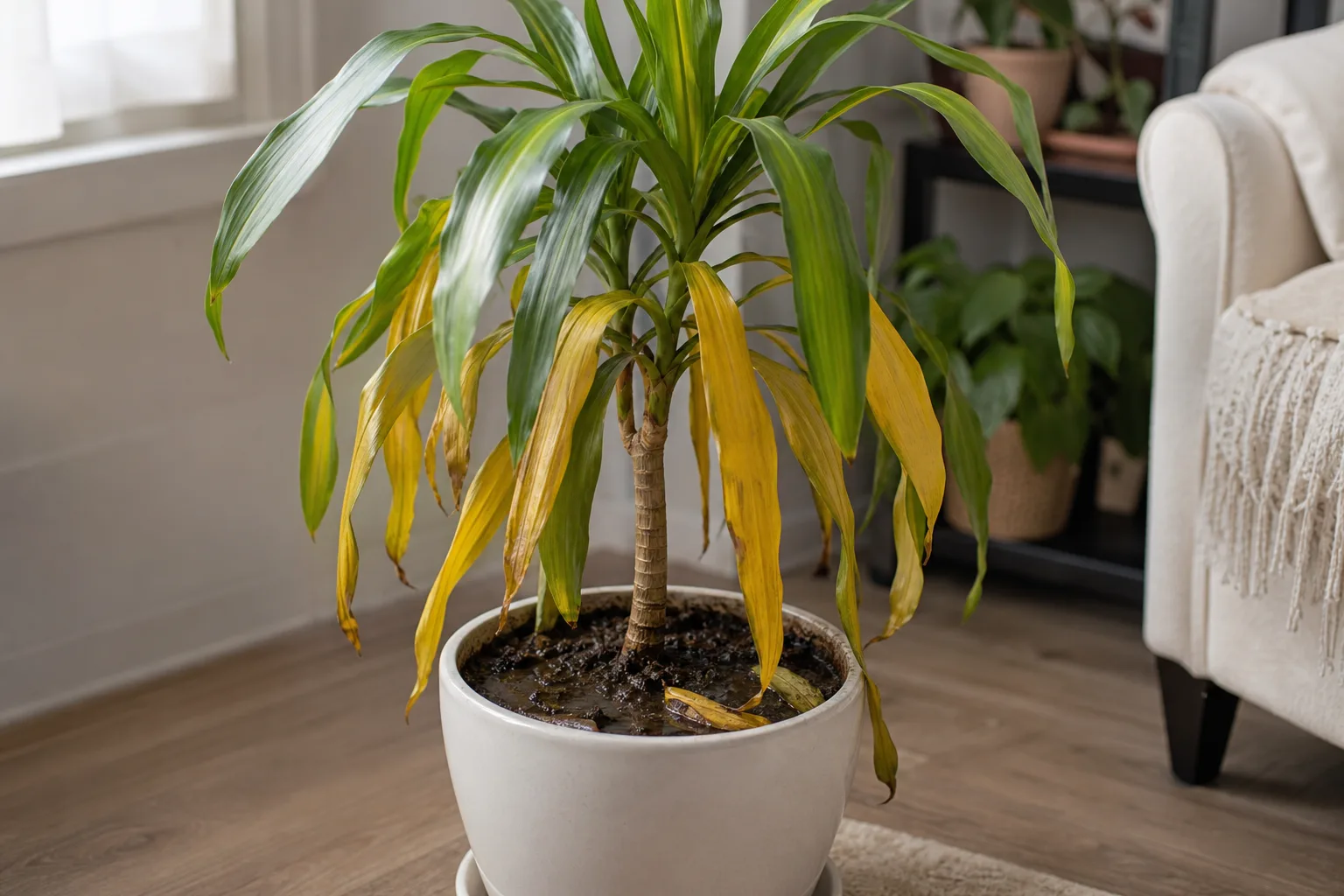
Avoid both extremes. Permanently soggy mix deprives roots of air and can lead to root rot; repeated severe drought can cause crisp tips, leaf curl, and premature yellowing. A slightly dry interval is useful, but “let it dry” should not become “leave it bone-dry for weeks.”
Water quality deserves attention when the plant is otherwise well placed but the tips keep browning. The RHS warns that fluoride and hard water can damage dracaena foliage and recommends rainwater or filtered water where possible. If your water is treated with a softener, do not assume it is safer; some systems replace minerals with sodium, which can also accumulate. RHS dracaena growing guide
A Three-Signal Watering Check
Use three observations together instead of trusting a calendar:
- Moisture depth: Push a finger or wooden skewer about 2 inches into the potting mix. The surface can be dry while the center remains wet.
- Pot weight: Lift the pot after a thorough watering and again as it dries. Over time, the change in weight becomes a useful personal reference.
- Recent conditions: Extend the interval after cloudy weather, a winter slowdown, a move to lower light, or a cool room. Recheck sooner in warm, bright conditions.
If water runs down the inside edge and out immediately, the mix may be hydrophobic or badly compacted. Water in two slow passes a few minutes apart, or briefly soak the draining nursery pot and allow it to drain completely. If the mix stays wet for many days and the cane begins to soften, stop watering and inspect the roots instead of adding another small drink.
Use Airy Soil and the Right Pot
Choose a loose indoor potting mix that holds some moisture while leaving air around the roots. A quality houseplant mix amended with coarse bark, pumice, or another stable chunky material is usually more useful than dense garden soil. The exact recipe matters less than the result: water should move through evenly, the mix should not collapse into mud, and the pot should dry at a reasonable pace for the room.
Use a container with at least one open drainage hole. A decorative planter without a hole is safe only as an outer cachepot around a draining inner pot, and runoff must be emptied after watering. A very large pot around a small root ball can remain wet long enough to cause trouble even when the top appears dry.
The RHS suggests a loose, fast-draining, moisture-retentive acidic mix and warns against overpotting because excess compost can stay wet for too long. You do not need to chase a perfect pH number at home, but avoid heavy garden soil and take persistent brown tips seriously if your water is hard or fluoridated. RHS plant profile for Dracaena fragrans
Keep Temperature and Humidity Steady
Lemon Lime Dracaena is tropical, but it usually adapts to normal indoor humidity. Stability matters more than turning the room into a greenhouse. Keep it away from cold doors, drafty windows, air-conditioning vents, radiators, and hot glass where a sudden change can stress the leaves.
The RHS gives a broad best-growth range of 65–86°F (18–30°C), while Gardening Know How places corn plant dracaenas around 65–70°F (16–24°C) for ordinary indoor growing. You do not need to maintain one exact number; avoid cold exposure and large swings, especially when the potting mix is already wet. Gardening Know How corn plant guide
Average household humidity is often sufficient. If winter heating makes the tips crisp, a humidifier can create a measurable improvement, and grouping plants may help a little. Misting wets the leaf surface briefly but does not reliably correct dry room air; it also should not replace better light, correct watering, or airflow.
You can place a humidity tray beneath the pot if the pot sits above the waterline on gravel, but never let the drainage hole sit in standing water. Humidity without airflow can encourage pests and leaf disease, so leave space around the plant and wipe away dust rather than keeping the foliage constantly wet.
If you move the plant outdoors for summer, wait until nights are reliably warm, place it in bright shade or filtered light, and acclimate it gradually over a week or two. Bring it back indoors before cold nights arrive, and inspect the foliage and pot before placing it near other houseplants. In frost-prone regions, treat outdoor time as a seasonal container move, not permanent planting.
Feed Lightly and Clean the Leaves
Feed a healthy, actively growing plant during spring and summer with a balanced liquid houseplant fertilizer diluted according to the label. Monthly feeding is plenty for many indoor plants, and a slower schedule is sensible in lower light. Stop or sharply reduce feeding in fall and winter when growth slows.
Never fertilize bone-dry mix, a plant with a soft cane, or a root system recovering from rot. Nutrients cannot compensate for inadequate light or damaged roots, and excess fertilizer can add salt stress. If you see a white crust on the mix or pot rim, pause feeding and flush the container thoroughly with suitable water only if the pot drains freely.
Clean leaves with a soft, damp cloth so dust does not block light or hide pests. Support each leaf as you wipe it, especially where the blade joins the crown. Avoid leaf-shine products; the plant’s natural sheen is enough, and oily residue makes it harder to inspect for scale or mites.
Prune for Height and New Shoots
Pruning is optional, but it is the best way to control a tall cane or create a fuller silhouette. A healthy cane cut below the leafy crown can activate dormant buds just below the cut, producing new shoots over time. Make the cut where you want the next tier of growth to begin, preferably during a warm, bright growing period.
Use clean, sharp pruners and cut straight across a firm cane. Save the leafy top as a cutting if you want another plant. Do not repeatedly shorten a cane that is soft, blackened, hollow, or foul-smelling; first determine whether rot is moving through the stem and keep only firm, healthy tissue.
Remove a completely yellow lower leaf by cutting it close to the cane or waiting until it releases easily. One old leaf yellowing at a time can be normal as the plant builds a visible trunk. Several leaves yellowing across the crown is a signal to check roots, water quality, light, and pests rather than simply cutting everything back.
Propagate from Stem Cuttings
Stem cuttings are the practical way to propagate Lemon Lime Dracaena at home. Take a firm leafy top or a section of healthy cane during warm, active growth. Each piece needs a viable node or growing point, and you should keep track of which end was originally up; a cane section planted upside down is unlikely to grow as intended.
Use clean pruners, remove leaves that would sit below water or under the mix, and let a freshly cut surface dry briefly if it is dripping with sap. Set the cutting in bright indirect light and provide warmth. Keep a potting-medium cutting lightly moist but airy rather than constantly saturated, and wait patiently; rooting can take weeks.
The RHS recommends warm summer conditions and notes that bottom heat can improve rooting of dracaena stem cuttings. A heat mat is optional in a warm room, but a cold windowsill paired with wet mix is a poor setup. Do not fertilize until the cutting has rooted and shows new growth. RHS dracaena growing guide
Water Rooting Versus Potting-Mix Rooting
Water rooting lets you watch a leafy top develop roots. Keep only the bare stem in the water, change it when it becomes cloudy, and pot the cutting once it has several developing roots. Move it into a small draining container and keep the mix a little more evenly moist for the first few weeks while the roots adjust.
Potting-mix rooting avoids the transition from water-adapted roots to soil. Insert the correct end into a small pot of airy medium, firm it upright, and keep the medium lightly moist. A loose clear cover can help in very dry air, but ventilate it and remove it if condensation is constant; warm, stagnant wetness can rot a cane.
For long bare canes, sections can sometimes root horizontally with a node facing upward, but this is slower and less predictable for beginners. A leafy top cutting plus the original pruned cane gives you two chances: the top may root while the parent produces new shoots below the cut.
Repot Only When the Roots Need It
Repot when the roots, mix, or container provide evidence that the plant needs a change. Useful signs include roots circling densely, roots emerging from drainage holes, the root ball lifting from the pot, water passing through a collapsed mix without wetting it, or the plant drying far faster than it used to. Slow growth alone is not enough; Lemon Lime Dracaena is naturally slow.
Choose a new pot only one size larger, with a drainage hole. Repot in spring or early summer when possible, keep the canes at their original depth, and fill around the roots with fresh mix without packing it hard. Water once to settle the mix, let it drain, and return the plant to similar filtered light while it recovers.
If the roots smell sour or feel mushy, remove the plant and cut away only tissue that is clearly dead. Use fresh, airy mix and a clean draining container. After a root-trimmed repot, wait for the upper mix to dry more slowly than you might expect because the plant has fewer roots using water; the safest schedule is based on the pot and plant, not a fixed number of days.
Avoid repotting a stable plant just because a calendar says two years have passed. Unnecessary root disturbance can set a slow plant back, and a slightly snug pot is often easier to manage than an oversized decorative container.
Diagnose Pests and Diseases
Inspect the leaf bases, crown, cane crevices, and leaf undersides whenever you water or clean the plant. Mealybugs look like white cottony clusters, scale appears as attached brown or tan bumps, spider mites can cause stippling and fine webbing, and thrips may leave silvery scarring, black specks, or distorted new leaves. The RHS lists scale, red spider mites, thrips, and mealybugs among dracaena pests.
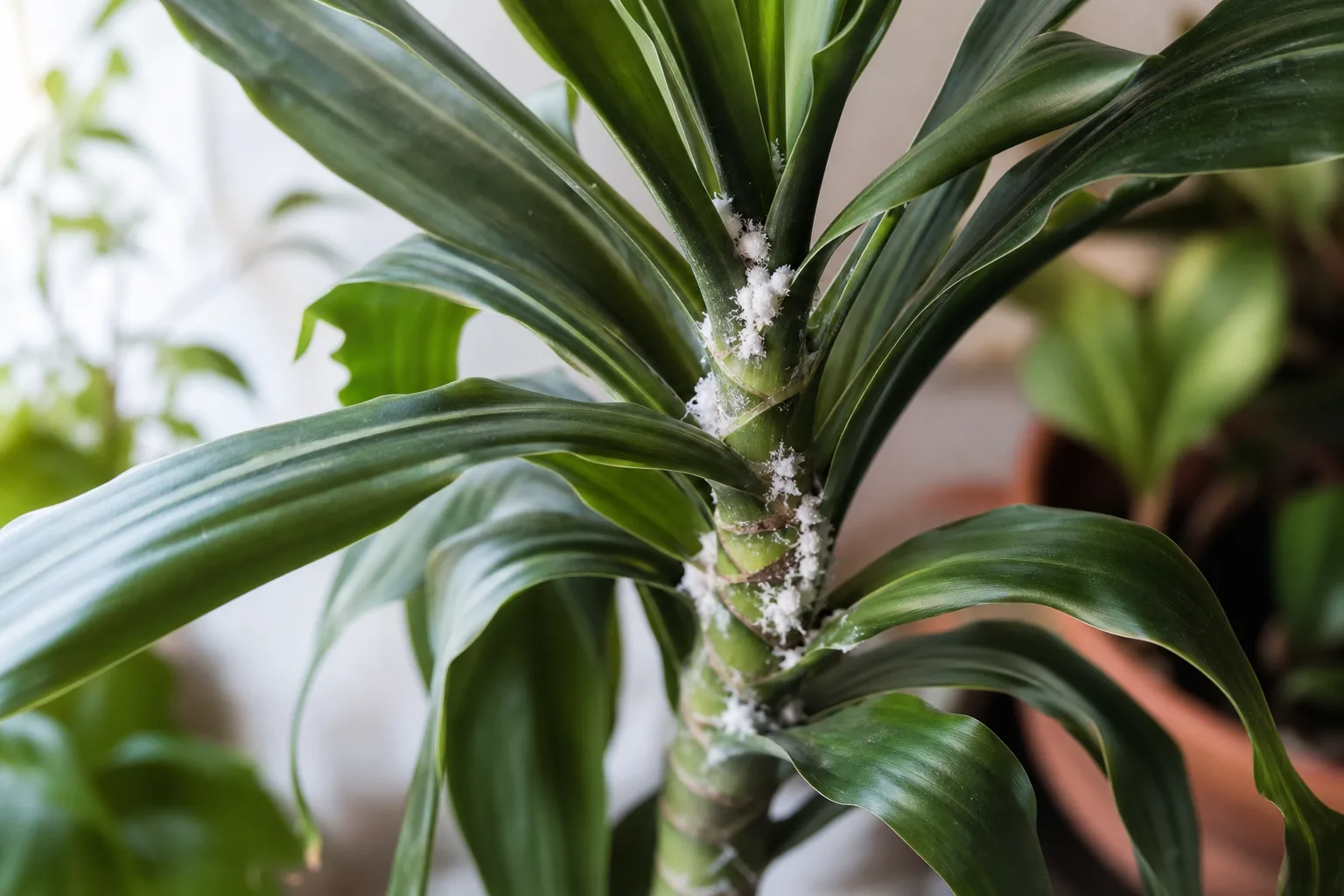
Isolate a suspect plant from your collection. For a light infestation, remove visible pests with a damp swab or cloth and rinse the foliage, then inspect again several days later because one cleaning rarely reaches every egg or hiding place. A horticultural soap can help when it is labeled for indoor plants and the target pest; test a small area and follow the product label rather than mixing a strong homemade spray.
Root rot is usually a root-zone problem before it becomes a leaf problem. Constantly wet mix, poor drainage, a sour smell, soft dark roots, a softening cane, and yellowing that spreads quickly are more concerning than one brown tip. Improve drainage and watering first; if the cane is soft, unpot promptly and cut back to firm tissue.
Do not treat every yellow leaf as a disease and do not fertilize to solve an infestation. Pests, poor light, water stress, salts, and root damage can overlap, so inspect the plant and change one main variable at a time unless stem rot is advancing.
Read Brown Tips and Yellow Leaves
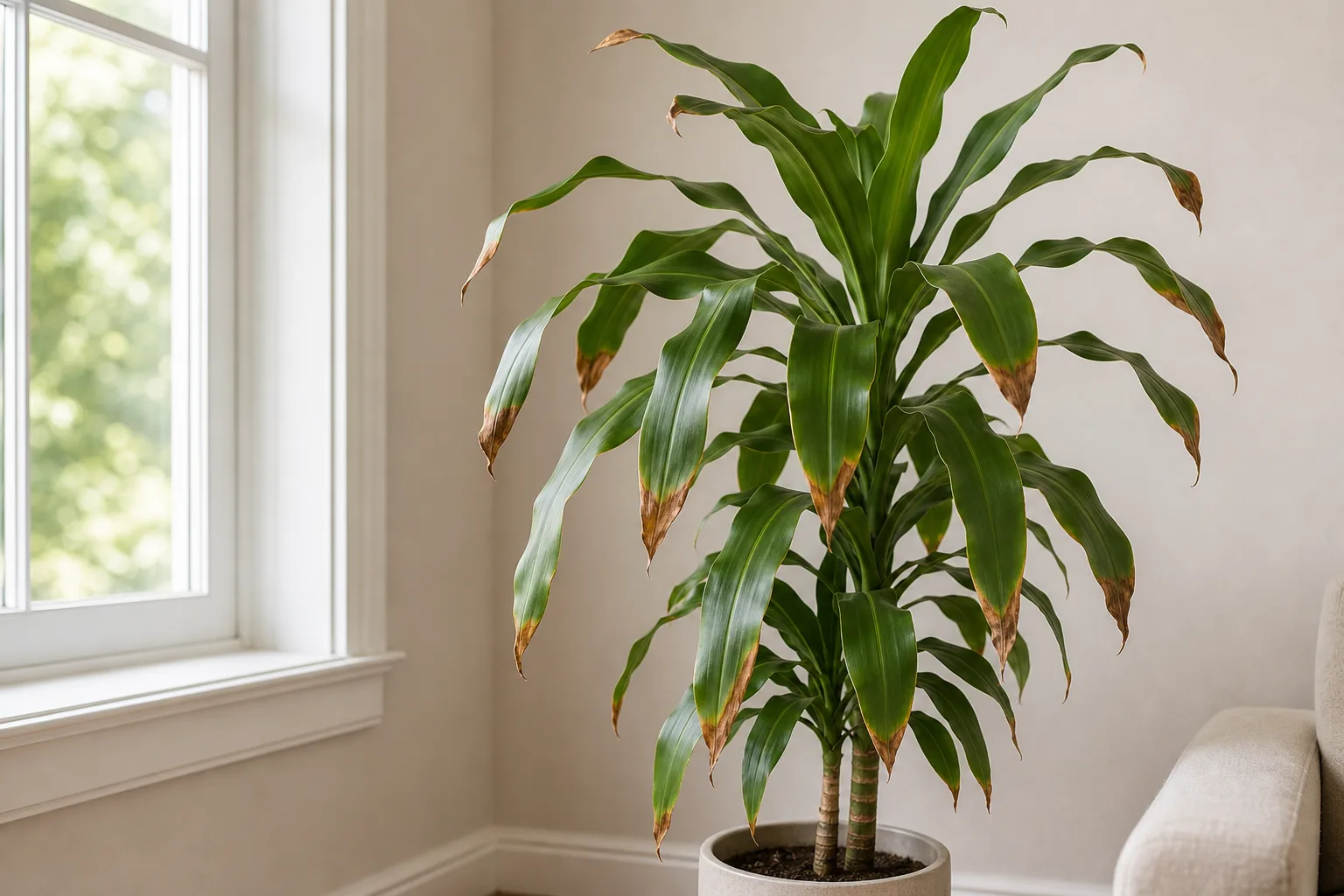
Brown tips are a symptom, not a diagnosis. Common contributors include repeated drought, very dry air, fluoride or salt accumulation, overwatering that damages roots, direct sun, hot air from a radiator, or a cold draft. The RHS specifically groups those environmental stresses among the causes of dying leaves and brown tips, which is why trimming alone rarely fixes the pattern.
Yellowing needs the same pattern-based approach. One oldest lower leaf turning yellow while the crown remains firm and new growth looks normal can be ordinary aging. Several yellow leaves combined with wet mix, a sour smell, or soft stems point toward excess moisture and root decline; pale, narrow growth in a pot that stays wet for weeks suggests low light is also slowing water use.
Bleached patches on the window-facing side suggest sun or heat damage. Fine stippling, sticky residue, cottony clusters, or attached bumps point toward pests. If browning continues despite normal moisture and good placement, switch to rainwater or a suitable filtered source and pause fertilizer long enough to rule out mineral buildup.
Damaged tissue will not turn green again. After correcting the cause, trim only the dead edge with clean scissors, following the leaf’s natural shape and leaving a narrow brown margin so you do not cut into living tissue. The meaningful measure of recovery is that new damage stops and healthy new growth appears.
Use the Symptom Pattern to Choose the First Fix
| Symptom pattern | Check first | Best first action |
|---|---|---|
| Dry brown tips; firm cane; mix dries normally | Water quality, salt crust, dry air, repeated drought | Pause fertilizer, use suitable filtered or rainwater, and correct the room stress |
| Yellow leaves plus wet mix and soft roots | Overwatering, blocked drainage, oversized pot | Unpot, remove rotten roots, and repot in fresh airy mix |
| Pale or tan patches facing a bright window | Direct sun or heat against glass | Filter the light or move the plant back gradually |
| Stippling, webbing, sticky residue, cottony clusters, or bumps | Mites, thrips, scale, or mealybugs | Isolate, identify the pest, clean the plant, and use a labeled treatment if needed |
| One oldest lower leaf yellows while the crown is firm | Normal leaf aging | Remove it when mostly yellow and keep the routine steady |
| New growth is narrow and leans strongly | Insufficient usable light | Move to brighter indirect light and expect the mix to dry faster |
Change one main condition and observe for a couple of weeks. If you repot, prune, fertilize, move the plant, and apply pesticide on the same day, you lose the ability to tell what helped. A rapidly softening cane is the exception: cut back to firm tissue promptly while you correct the wet root zone.
Keep Lemon Lime Dracaena Away From Pets
Lemon Lime Dracaena is not pet-safe. The ASPCA identifies Dracaena fragrans as toxic to dogs, cats, and horses, lists saponins as the toxic principle, and names vomiting, depression, appetite loss, excessive salivation, and dilated pupils in cats among possible clinical signs. Keep the plant, fallen leaves, cuttings, and pruning debris out of reach. ASPCA Corn Plant database
If a pet chews the plant, remove access and contact a veterinarian or animal poison-control service promptly. Do not wait for every listed sign to appear and do not induce vomiting unless a veterinary professional directs you to do so. Keep the plant label or a clear photo available so the plant can be identified accurately.
Conclusion
The best Lemon Lime Dracaena care is observant rather than busy. Give it bright filtered light, wait for the upper mix and pot weight to indicate drying, water deeply, and protect the roots from standing water and oversized pots. Those decisions prevent more problems than routine misting, frequent repotting, or heavy feeding.
When symptoms appear, read the pattern before acting: check moisture and root firmness, then light, water quality, temperature, humidity, and pests. Prune a healthy cane when you need to control height, root the removed top if you want another plant, and keep every part away from pets. With steady conditions and restrained care, this colorful cane-forming plant can stay full, upright, and healthy for years.