Meadowscaping Your Lawn: A Practical Yard Guide
Thinking about meadowscaping this summer? Compare meadow styles, choose regional plants, remove turf, and learn what establishment and mowing really involve.
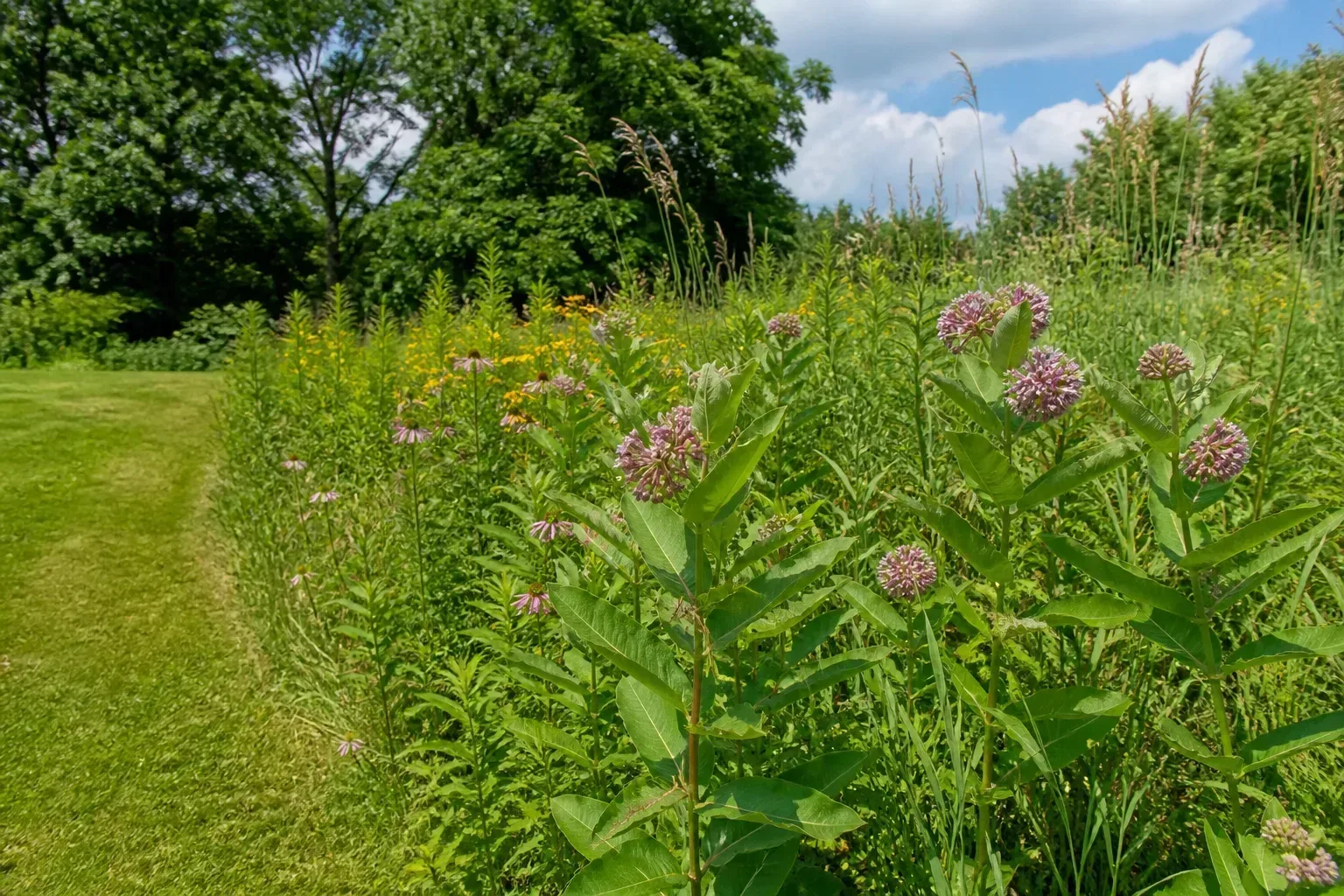
If mowing a large lawn feels like more work than the space gives back, meadowscaping may be worth a trial. The best version is not an abandoned lawn or a bag of colorful seed tossed into grass; it is a planned planting of grasses and flowering plants that suits the site and still leaves the yard usable.
Summer is a useful time to study sunlight, mark a test bed, check local rules, and prepare the ground. In many regions, however, the heat makes summer a poor time to broadcast seeds unless you can keep the seedbed consistently moist. You can decide now and plant during the cooler window your chosen mix calls for.
What Meadowscaping Means in a Residential Yard
Meadowscaping is a landscape approach that replaces some or all of a conventional turf lawn with a diverse, meadow-inspired mix of grasses and flowering plants. A residential version might be a small border, an island around a tree, a strip along a fence, or a broad planting crossed by mown paths. It can be tidy by design even when the plants themselves are loose and seasonal.
The word does not describe one exact planting recipe. A true regional meadow, a native prairie garden, an annual wildflower patch, and a lawn that is simply mown less often have different plant communities and maintenance needs. Penn State Extension describes meadows and prairies as mixtures of native grasses and wildflowers, while noting that even the terms and grass types can vary by region. For a home project, the useful question is less “Is this a real meadow?” and more “Will this planting support the wildlife and look I want, while fitting my soil, climate, and routine?” (Penn State Extension).
Is Your Yard a Good Candidate?
You do not need acreage or uninterrupted full sun. You do need a place where plants can establish without constant trampling, a way to manage the boundary, and a realistic expectation that the planting may look sparse or uneven at first. A steep slope you dislike mowing can be a strong candidate for adapted plants, but a narrow strip next to a sidewalk may need lower-growing species and a crisp edge rather than shoulder-high flowers.
Before ordering seed, observe the proposed area at different times of day and after rain. Note how many hours of direct sun it gets after nearby trees leaf out, whether water sits or drains quickly, where people and pets walk, and where you need clear access to a gate, utility, hose bib, or window. A short site sketch often prevents the common mistake of choosing plants from a pretty photograph without checking whether that photograph’s conditions resemble your yard.
Start with a Small, Easy-to-Edge Trial
For a first attempt, convert a defined section that you can maintain without turning the whole yard into a construction site. A border beside a path or a visible island surrounded by mown turf gives the planting a clear outline, makes weed inspection easier, and lets you see how the height and bloom pattern feel from indoors and the street. If you like the result after an establishment season, expand it using what you learned rather than guessing at a full-yard mix upfront.
Landscape architect and native-plant educator Graham Laird Gardner makes a similar case for scaling a meadow to the time and space a gardener can manage; a small planting also makes it easier to learn which species thrive in that particular microclimate (Joe Gardener). Starting small is not a compromise. It is a low-cost way to test whether you enjoy the less manicured look and the first-year maintenance it requires.
Keep Space for the Jobs a Meadow Cannot Do
Meadows are not durable play surfaces. If your household uses the lawn for soccer, dog running, outdoor games, or frequent entertaining, keep those areas as turf, patio, or another durable surface. A useful layout can be a smaller, simpler lawn “rug” for activity with meadow beds around its edge, instead of treating every square foot as a choice between pristine turf and a wildflower field.
Also consider sightlines, fire exposure, and access. Keep plants low enough near driveways and intersections to preserve visibility, and follow local defensible-space guidance where dry vegetation can increase wildfire risk. A meadow should make the yard work better, not block a route or create a hazard that a different planting would avoid.
Choose the Kind of Meadow You Actually Want
There are three common starting points. A naturalistic perennial meadow uses regionally appropriate perennials and grasses for a long-lived planting, but usually takes patience before it fills in. An annual wildflower patch can produce color quickly, yet many mixes need reseeding or rely on self-sowing and will change from year to year. A less-mown lawn or mini-meadow keeps most turf and allows existing clover and other low-growing flowers to bloom between cuts; it is the easiest experiment when you do not want to remove sod.
You can also create a designed meadow-style border with plugs and ornamental grasses. That approach often looks intentional sooner because you choose where larger plants go, but it can cost more per square foot than seed. Decide first whether you care most about quick color, local habitat value, fewer mowing hours, or a particular look; these goals overlap, but no single planting will maximize every one of them.
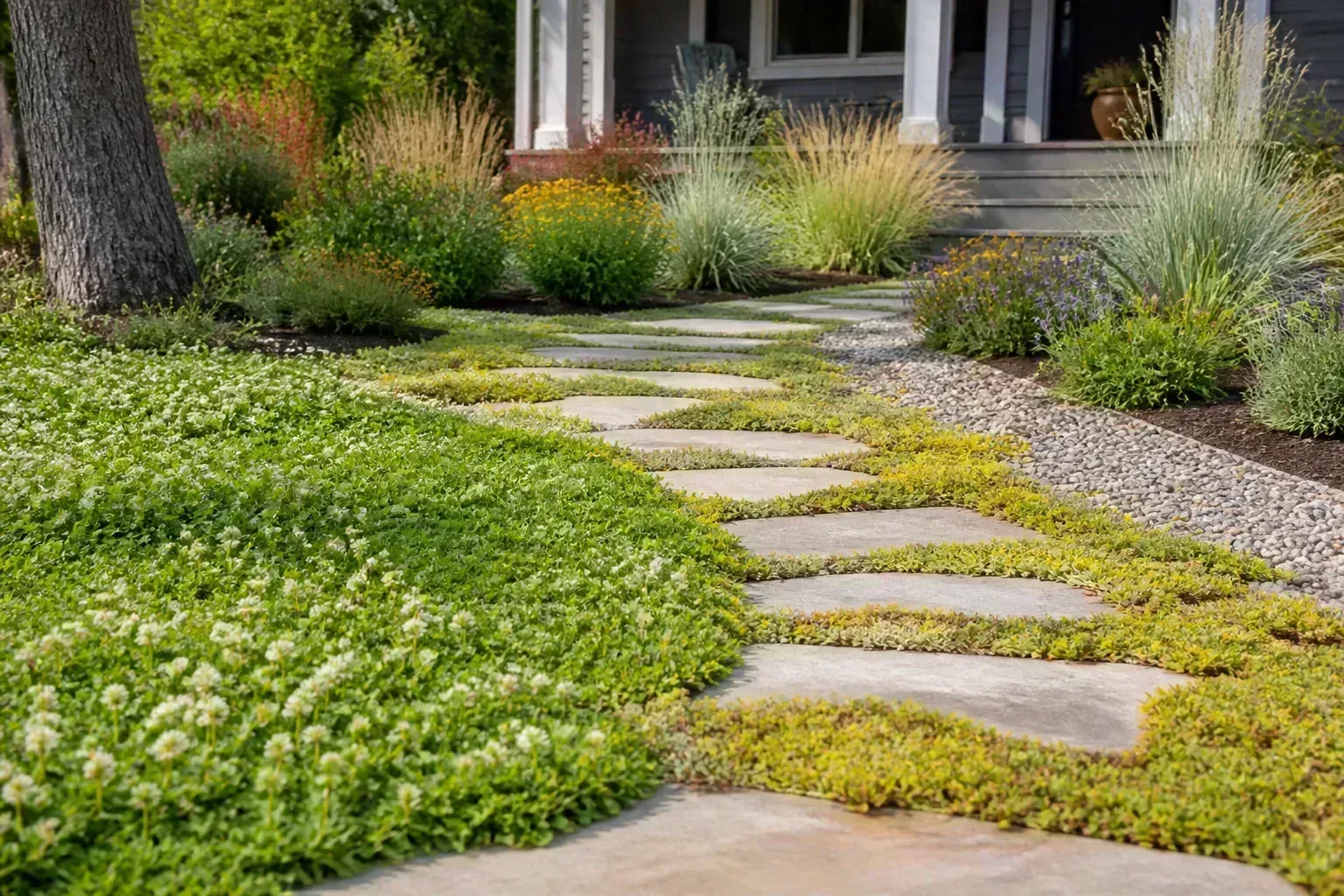
For a quick visual improvement, use structure rather than expecting flowers to appear everywhere at once. Repeat a few species in groups, keep a mown edge, and add a path or stepping stones if the planting is large enough to walk through. Meadow-inspired yards in landscape designs often use paths and borders to make the informal planting feel purposeful (Yardzen).
Match Plants to Sun, Soil, and Moisture
Full sun is common for prairie-style mixes, but it is not a rule for every meadow-inspired garden. Shady yards can support woodland-edge or shade-tolerant native plantings; wet depressions and dry slopes need different species again. If the site gets morning sun but shade after lunch, tell the nursery or local native-plant group exactly that instead of buying a mix labeled simply “sun-loving wildflowers.”
Soil moisture and fertility matter just as much as light. A frequently irrigated, fertilized lawn may have rich soil where fast-growing grasses and weeds outcompete slower wildflowers. Adding compost or fertilizer automatically can intensify that competition; native species adapted to the site often need little amendment. If you suspect drainage, compaction, or a pH issue, test the soil or ask your cooperative extension how to interpret a sample before changing it.
Do not assume the lowest or wettest part of the yard is unusable, either. A moisture-loving planting might fit there better than turf, while a dry slope could favor drought-tolerant grasses and forbs once established. The key is to choose plants for the conditions you actually have, not to spend the next three years watering against them.
Pick Regional Plants, Not Just a “Wildflower Mix”
“Wildflower” is a broad label, not a guarantee that a seed mix contains plants native to your county, harmless to nearby habitat, or suited to your soil. Read the species list and ask where the seed was collected or adapted, whether the mix is meant for your region, and whether it includes annuals, perennials, grasses, or species that can spread aggressively. Check state or local invasive and noxious-weed lists before sowing unfamiliar plants, especially in a front yard near natural areas.
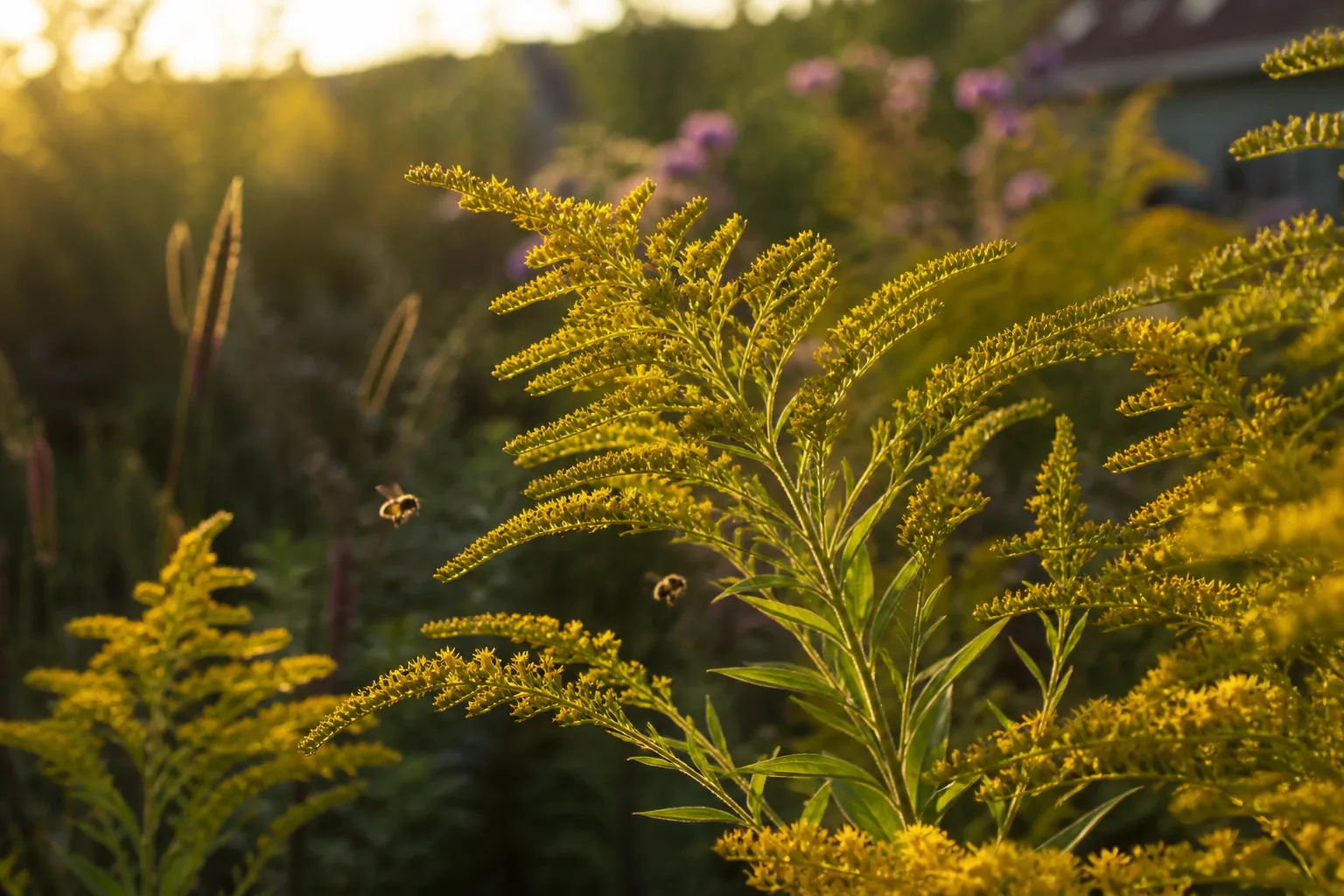
For wildlife value, prioritize locally native species that provide a succession of flowers, seedheads, and cover rather than a brief burst of color. Different pollinators use different plants, and a mix with early, midseason, and late bloomers can offer resources for longer than one dominated by a single summer flower. Penn State Extension emphasizes that meadow plants provide food and cover for a variety of wildlife; its species examples are Pennsylvania-specific, so use local extension or native-plant guidance for your own region rather than copying that list elsewhere.
Grasses are not filler. They provide structure between flower seasons, cover and seeds for wildlife, and a matrix that can help keep a meadow from looking like a scattered flower bed. Their height and spread still need to suit the space, so check mature size, soil preference, and whether a grass is clumping or spreading before combining it with smaller flowers.
Is Summer a Good Time to Begin?
Often, yes for planning and preparation; not always for sowing. Many meadow mixes are sown in fall or early spring, when local temperatures and moisture favor germination. Some native seeds need a period of cold and moist conditions before they sprout, while other species can be sown in spring. Recommendations vary by species and region, so use the seed supplier’s instructions and local extension guidance rather than a single national calendar. Yardzen’s landscape guide likewise points to fall or early spring for many meadow plantings, and Penn State Extension describes spring as a suitable planting period in its Pennsylvania guidance (Yardzen; Penn State Extension).
Summer is an excellent time to map the site, check rules, take a soil sample, compare native seed suppliers, and remove turf early enough for the soil to settle. If you plant plugs or container-grown plants during warm weather, do so only when the species and local conditions allow it, and be ready to water through establishment. A seedbed that dries between germination and root growth can lose seedlings just when they are most vulnerable.
If you are reading this in midsummer and the ground is hot or dry, there is no prize for sowing immediately. Prepare now and plant in the next locally recommended window. Planning ahead also gives you time to order regionally appropriate seed, since the best mix may not be available at the last minute.
Remove Turf and Prepare a Real Seedbed
Wildflower seed scattered over thick grass has to compete with established turf for light, water, and space. Some seeds may germinate, but seedlings can disappear before they are visible above the lawn. If you want a seeded meadow, clear the planting area so seed can contact prepared soil; a gardening-expert interview in Woman & Home also cautions that broadcasting seed into grass is unreliable because of that competition (Woman & Home).
Choose a removal method that fits the plot and your timeline. For a small bed, lift the sod with hand tools and remove it; for a larger patch, renting a sod cutter can save labor. Smothering or sheet-mulching may avoid digging, but it takes time, and the resulting surface still needs to be suitable for the planting method. If you plan to sow, do not leave cardboard or thick mulch over the seed zone: seeds need access to soil and light. If you plan to install plugs, open the planting area fully around each root ball and keep weeds from reclaiming gaps.
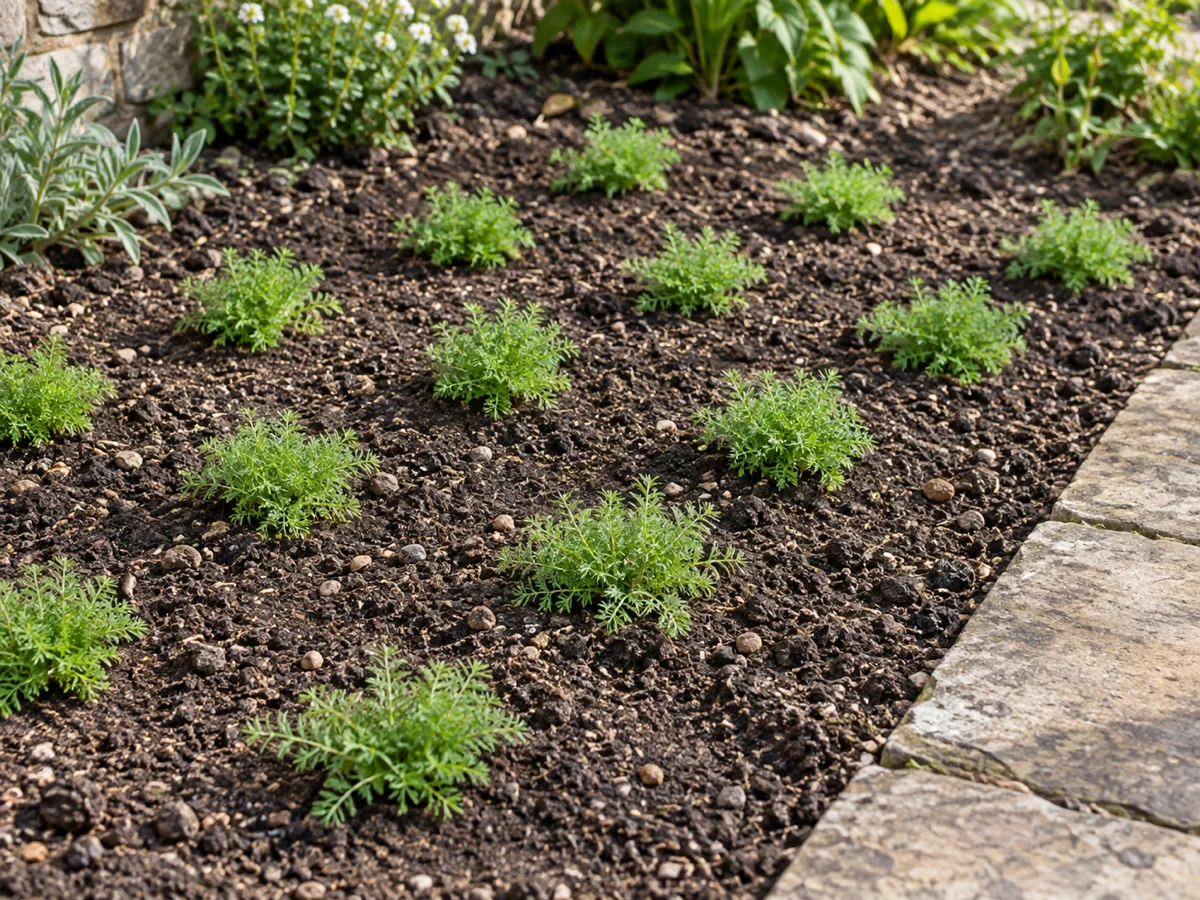
After turf removal, rake out thatch and persistent roots, then level the soil enough for even seeding without pulverizing it. Avoid automatically tilling deeply or adding rich compost; disturbance can bring dormant weed seed to the surface, and highly fertile soil may favor fast-growing competitors. The simplest preparation is the one that removes competition while leaving a firm, clean surface for the plants you intend to grow.
Choose Seed, Plugs, or a Combination
Seed is usually the economical way to cover a broad area and can offer many species in one mix. The trade-off is patience: seedlings are small, weeds can be hard to distinguish from desired plants, and the first season may not resemble a finished meadow. Some native perennials establish roots before putting on much aboveground growth, so an empty-looking patch in year one is not necessarily a failed project.
Plugs and small nursery plants cost more per plant but let you place species where you want them and create visible structure earlier. They can be useful in a small front border, around a seating area, or as anchors in a seeded bed. They still need careful watering and weed control while their roots spread. A mixed strategy—seed for broad coverage and a few plugs for recognizable clusters—can balance cost and appearance without pretending that every plant will thrive equally well.
Sow Seed With a Plan
Follow the mix’s recommended rate and sowing season; a thicker layer is not a shortcut to a fuller meadow. Small seeds can be blended with a carrier such as clean, dry sand to make an even application easier, then spread in two directions over the prepared area. Press or rake the seed only as deeply as the supplier recommends, because burying tiny seeds too far can prevent germination. Keep the seedbed moist as seedlings emerge, adjusting frequency for rainfall, soil, and species.
Mark the bed so family members do not accidentally mow it, and take a photograph from the same place every few weeks. That simple record helps distinguish new plants from weeds and makes slow progress easier to see. If the first planting is patchy, identify the cause—poor seed-to-soil contact, shade, dry soil, competition, or the wrong species—before adding more seed.
What to Expect During the First Three Years
In the first growing season, focus on establishment rather than a wall of flowers. Seedlings may be uneven, annuals may bloom before perennials, and weeds can appear faster than the plants you bought. Penn State Extension notes that perennial meadow plantings can take two or three years to establish; treat that as a useful planning horizon, not a guarantee that every species will take exactly that long. A newly installed plug bed may look fuller sooner, but it still needs time to knit together.
In year two, assess which plants survived and where grasses or aggressive weeds are dominating. Fill true gaps with species suited to the conditions, not just the plants that look best in a catalog. By year three, a successful planting should have a clearer rhythm of bloom and seedheads, though weather, deer, drought, and soil can still change the mix.
Use each season as feedback. If a species repeatedly fails in one wet corner but thrives on the dry slope, move future purchases accordingly. A meadow is a living planting, not a finished carpet delivered on installation day.
Maintain It So It Looks Intentional
Meadows generally trade frequent mowing for seasonal observation and occasional management. During establishment, remove invasive or especially aggressive weeds before they seed, and keep unwanted vegetation from shading small seedlings. Seeded meadows may need strategic high mowing to prevent weeds from taking over; planted beds are often easier to weed by hand around individual plugs. The schedule should follow the plant mix and local guidance rather than a fixed number of cuts for every yard.
Once established, a meadow often needs an annual or occasional cut, but when to cut depends on whether flowers have set seed, which species you want to support, and how vigorous the grasses are. Cuttings are often removed after they have had time to drop seed, which can also prevent a thick layer of clippings from smothering new growth. The RHS explains several seasonal cutting approaches and stresses that timing influences which flowers thrive; its calendar is UK-based, so use the principle—cut after the target plants finish setting seed—and check local timing for your region (RHS wildflower meadow maintenance).
Do not mow everything at once if wildlife cover matters to you. Leaving an uncut refuge section while cutting another area gives insects and other small animals places to shelter, then you can rotate sections later. Before using a mower or trimmer in long grass, inspect and walk through the area to encourage wildlife to move away; the RHS includes this precaution in its meadow maintenance guidance.
What Meadowscaping Can and Cannot Do for Wildlife
A diverse planting of locally native flowers and grasses can offer nectar, pollen, seeds, and cover that a short, uniform lawn does not provide in the same way. Penn State Extension describes how flowers, grasses, and seedheads support different wildlife needs, while the National Garden Bureau recommends matching plant selection to the wildlife goal and the local growing region (National Garden Bureau). The benefit comes from the plants and management, not from the “meadow” label by itself.
There is no guarantee that a new patch will immediately attract a particular butterfly or bird, and not every packaged wildflower mixture is equally useful. A nonnative annual mix can be colorful but may not support the same local relationships as regionally appropriate native species. Avoid pesticide use on the planting when possible, retain some seedheads and stems through winter if practical, and aim for a sequence of bloom rather than a single mass flowering week.
Meadows also do not make every other habitat unnecessary. A hedge, tree, water source, or nesting area may contribute different resources. The most practical home landscape often combines several small habitats with a path and an area of lawn, instead of trying to turn one planting into a complete ecosystem.
Avoid the Mistakes That Make a Meadow Harder
The first mistake is treating the project as a no-work lawn. A new meadow may need more attention than turf during the first seasons, especially if weed pressure is high or rain is unreliable. The payoff, if the planting suits the site, is reduced routine mowing and fertilizing later—not instant maintenance freedom.
The second mistake is choosing plants by flower color alone. A seed packet can contain species from a different region, plants suited to different soil moisture, or aggressive spreaders that overwhelm a small bed. Read the botanical names and consult local guidance before buying. The third is sowing onto living grass or burying fine seed deeply; both reduce the odds that the desired plants will establish.
Finally, avoid applying lawn fertilizer by habit and do not assume the meadow needs the same irrigation as the former turf. Extra nutrients can favor grasses and weeds, while insufficient water during establishment can kill seedlings. Observe the planting, correct the specific problem, and leave a healthy mix alone when it is progressing as expected.
Make the Design Work for Neighbors and Rules
Before changing a front yard, check the HOA covenants, municipal rules on vegetation height, and any requirements for sightlines or public right-of-way. The National Garden Bureau specifically advises gardeners to review HOA rules and local ordinances before converting a front lawn. Rules differ by address, and an exemption for a native garden in one town does not automatically apply in the next.
You can make an informal planting easier to read without suppressing it. Keep a mown strip along a sidewalk or property edge, use a path to show where people should walk, and repeat plants in visible groups. A clearly maintained border signals intention and gives you a route for weeding and observation. If neighbors are concerned during the first sparse season, explain the plan and the time it will take to establish; a small, well-edged pilot is often easier to discuss than an abrupt whole-lawn conversion.
Think about adjacent land, too. A plant that is suitable in a contained garden bed may be a poor choice near a natural area if it spreads beyond the boundary. Local native-plant groups can help you find species that support wildlife without introducing a new management problem.
Does It Really Save Water, Time, and Money?
It can reduce some ongoing inputs, but the comparison needs two time periods. Establishing a meadow may require seed or plant purchases, turf removal, weeding, and watering during dry spells. After the plants are established, a well-matched native planting may need less irrigation and fewer mowing sessions than a closely maintained lawn. A species mix that needs frequent summer watering in your climate, however, may erase some of that advantage.
The labor changes too. You may mow less often but spend more time checking for unwanted plants, refreshing paths, or cutting and removing growth at the right time. Seed is typically cheaper over a broad area; plugs give more immediate shape at a higher initial cost. Without knowing your lawn size, local water rates, seed prices, and current mowing costs, a fixed dollar-savings promise would be misleading.
For a useful comparison, estimate your current seasonal mowing and irrigation, then price the exact area you plan to convert. Include site preparation and first-year watering. If the cost or workload feels too high, shrink the project until it fits rather than abandoning the idea or overspending on a full-yard transformation.
When Keeping More Lawn Is the Better Choice
Keep turf where you need a dependable surface for children, pets, entertaining, or regular access. Keep or choose a different planting where deep shade, dense roots, salt, or extreme moisture make the proposed meadow species a poor fit. In fire-prone locations, follow local defensible-space requirements and choose a maintained landscape that reduces hazardous dry growth near structures.
You can still support a less uniform yard without converting it all. Mow a patch less often, add a native border, replace one difficult slope, or plant a pollinator bed near a path. A smaller project can deliver a visible change while retaining the lawn’s practical function. It is better to have a meadow you can manage than a large planting that becomes a source of weeds, neighbor conflict, or regret.
Conclusion
Meadowscaping is worth trying if you want a more diverse, natural-looking yard and can give the planting time to establish. The strongest candidates are areas you do not rely on for constant foot traffic, where you can match plants to sun, soil, and moisture, and where local rules allow a less manicured look.
Use summer to observe, plan, and prepare; plant when the species and regional guidance say conditions are right. Start with a small, clearly edged area, choose a transparent regional seed mix or well-suited plugs, and expect to weed and water while plants settle in. Keep the lawn that serves a real purpose. If the pilot thrives—and you enjoy caring for it—expand one section at a time.