A Home Cleaning Routine You Can Keep
Use this room-by-room home cleaning routine to save time, prevent cross-contamination, and use cleaners safely without over-disinfecting.
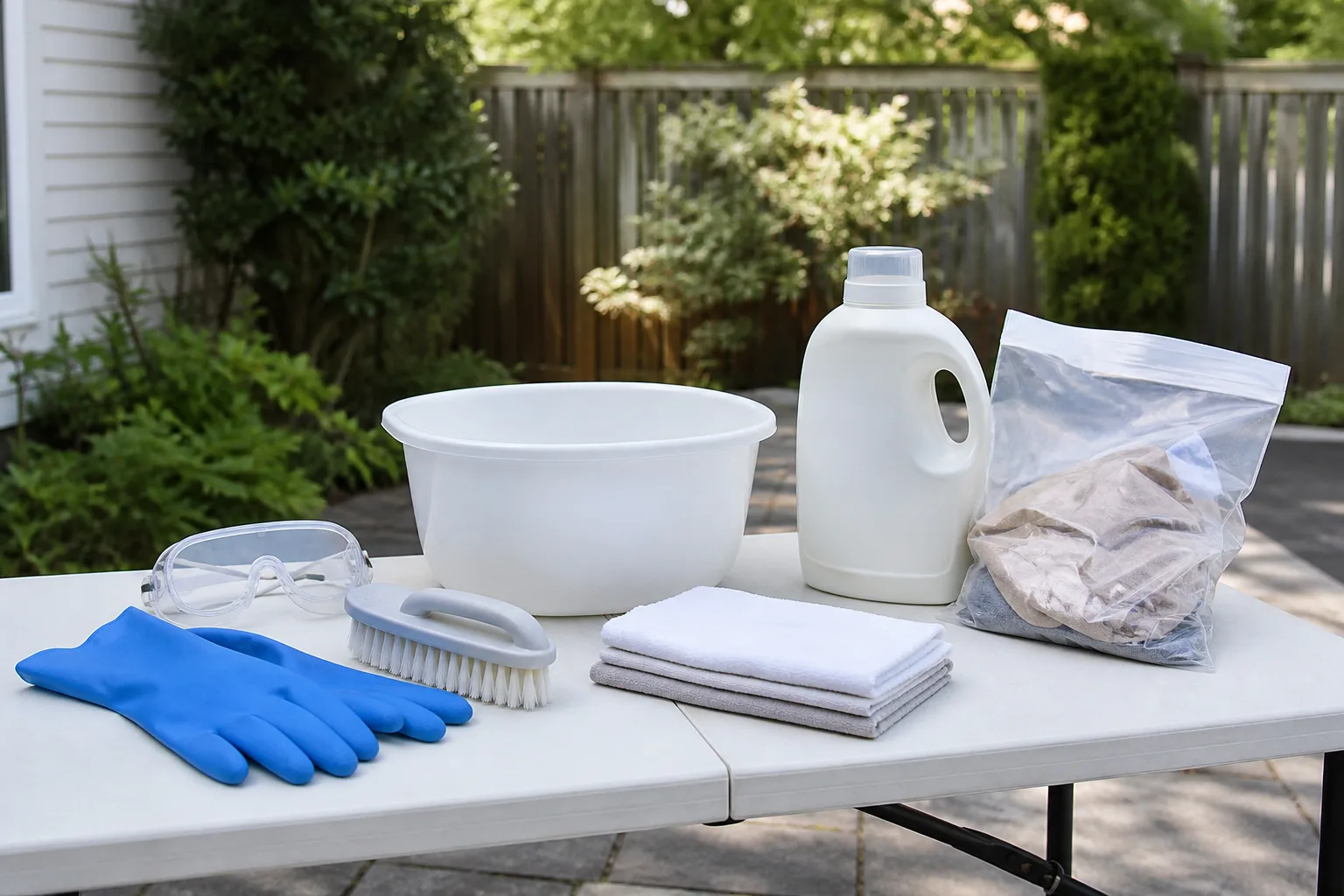
A useful home cleaning routine is not a demand to scrub every surface on a fixed calendar. It is a short set of repeatable decisions: remove visible soil, focus on the areas people touch and use most, choose a product that fits the surface, and reserve sanitizing or disinfecting for situations that call for it. Once that distinction is clear, cleaning becomes easier to plan and safer to do.
Use the schedule below as a starting point, then adjust it for the size of your home, number of people, pets, allergies, mobility, and how rooms are used. A lightly used guest room does not need the same attention as a busy kitchen, and a household with someone sick has different priorities from one doing routine upkeep.
Start with the right goal: clean, sanitize, or disinfect
Cleaning removes dirt, grease, crumbs, and many germs from surfaces through soap or detergent, water, and physical wiping or scrubbing. Sanitizing reduces germs to a level defined by public-health requirements, while disinfecting uses a product intended to kill specified germs on a surface. The CDC explains these terms and recommends routine cleaning for most household situations.
For everyday dust, fingerprints, and food residue, a suitable cleaner and a clean cloth are usually the right starting point. Disinfection is an additional step for particular circumstances, such as when someone in the home is sick or a household member has a weakened immune system; it is not a substitute for removing soil first. If the concern is a specific illness or contamination event, follow current public-health guidance for that situation rather than applying a stronger chemical everywhere.
This goal-first approach prevents two common problems: using a disinfectant where ordinary cleaning would do, and expecting an ordinary cleaner to disinfect. A product’s marketing name is not enough to tell you what it does; look for the product type, intended surfaces, directions, and any required wet contact time on its label.
Build a small, reliable cleaning kit and sequence
Most homes do not need a cabinet full of overlapping sprays. Start with a general-purpose detergent or cleaner approved for the surfaces you have, a bathroom cleaner if needed, dish soap, a toilet brush, a small scrub brush, a floor tool appropriate to your flooring, and enough reusable cloths to keep kitchen, bathroom, and general areas separate. Add a registered disinfectant only if you have a real use for one and can follow its directions.
Store products in their original, labeled containers. Keep them secured and away from children and pets, and do not pour leftovers into drink bottles or unmarked spray bottles. If you transfer a product as its label permits, label the new container clearly and retain the use directions; an unlabeled liquid creates avoidable risk for everyone in the home.
Before starting, gather only what the rooms need and check that the tools are clean. Work from higher surfaces to lower ones so dust and crumbs fall before floors are finished; move from dry tasks such as dusting to wet wiping, and save the toilet and floor for the end. This order reduces backtracking and helps keep a cloth that touched a dirty area from becoming the tool for a cleaner one.
A small set of clean tools makes it easier to keep tasks and surfaces separate.
A daily reset that takes 10 to 15 minutes
A daily reset is for the mess that grows quickly or interferes with the next day’s use of the home. It is not a whole-house deep clean. Set a short timer, choose the tasks that matter in your household, and stop when it rings unless a food spill or another immediate issue still needs attention.
A practical baseline is to clear and wipe the kitchen work surface after food preparation, put dishes in the sink or dishwasher, collect rubbish, return frequently used items to their places, and spot-clean obvious spills. In the bathroom, hang damp towels to dry, clear the sink area, and wipe visible toothpaste or water marks as needed. These small actions work because they address the mess at its source instead of letting it spread or harden.
Do a quick visual scan of the main living area: gather cups, put away loose items, and remove crumbs from the spot where people eat. If the floor has only a few crumbs, clean that patch rather than vacuuming every room. A household may need more frequent attention to high-touch surfaces such as a shared door handle or switch, particularly after visitors or during illness; the CDC advises cleaning these regularly and after visitors.
Set a weekly rhythm that fits the household
Instead of assigning every task to one exhausting cleaning day, divide recurring work across the week. The sample below is deliberately modest; increase or reduce frequency based on visible soil, traffic, cooking, household size, and manufacturer guidance for appliances and materials.
| Day or session | Core tasks |
|---|---|
| Daily | Reset food-preparation surfaces, dishes, obvious spills, and clutter that blocks normal use. |
| Session 1 | Clean the bathroom sink, toilet, shower or tub as needed; replace hand towels. |
| Session 2 | Dust reachable surfaces, wipe touch points, and vacuum or sweep the busiest rooms. |
| Session 3 | Refresh kitchen fronts and appliance handles; clean the sink and remove old food from the refrigerator. |
| Session 4 | Change or launder bedding and towels according to fabric-care directions; tidy bedrooms. |
| Flexible catch-up | Mop floors, clean mirrors, wash bins, or tackle one neglected area based on need. |
A schedule is a memory aid, not a hygiene standard. If nobody used the guest bath, its weekly slot can move to a task that actually needs doing; if the kitchen was used heavily, food-contact surfaces take priority. The CDC recommends cleaning other home surfaces when they are visibly dirty or as needed, with more attention when people are more likely to get sick.
Clean the kitchen where food and hands meet
Kitchen cleaning works best when you separate ordinary upkeep from food-safety cleanup. After cooking, remove scraps, wash utensils and dishes, then clean counters, cutting boards, and the sink with a suitable product. When raw meat, poultry, seafood, or their juices contact a surface, wash that area with hot, soapy water and then sanitize it using a product and method approved for that surface; the CDC specifically calls for sanitizing food-preparation surfaces after raw meat or poultry contamination.
Do not assume every spray is suitable for a food-contact surface. The label may require rinsing with potable water after use, or it may not allow use on a food-preparation surface at all. Follow those directions, and use a separate cloth for counters than the one used for the floor, sink drain, or rubbish bin.
A quick daily kitchen check can prevent larger jobs: wipe sticky handles, clean visible spills in the refrigerator, rinse the sink after food prep, and take out rubbish before it leaks or smells. The refrigerator itself does not need a full scrub every day; clean spills when they happen and follow appliance instructions for removable shelves and drawers.
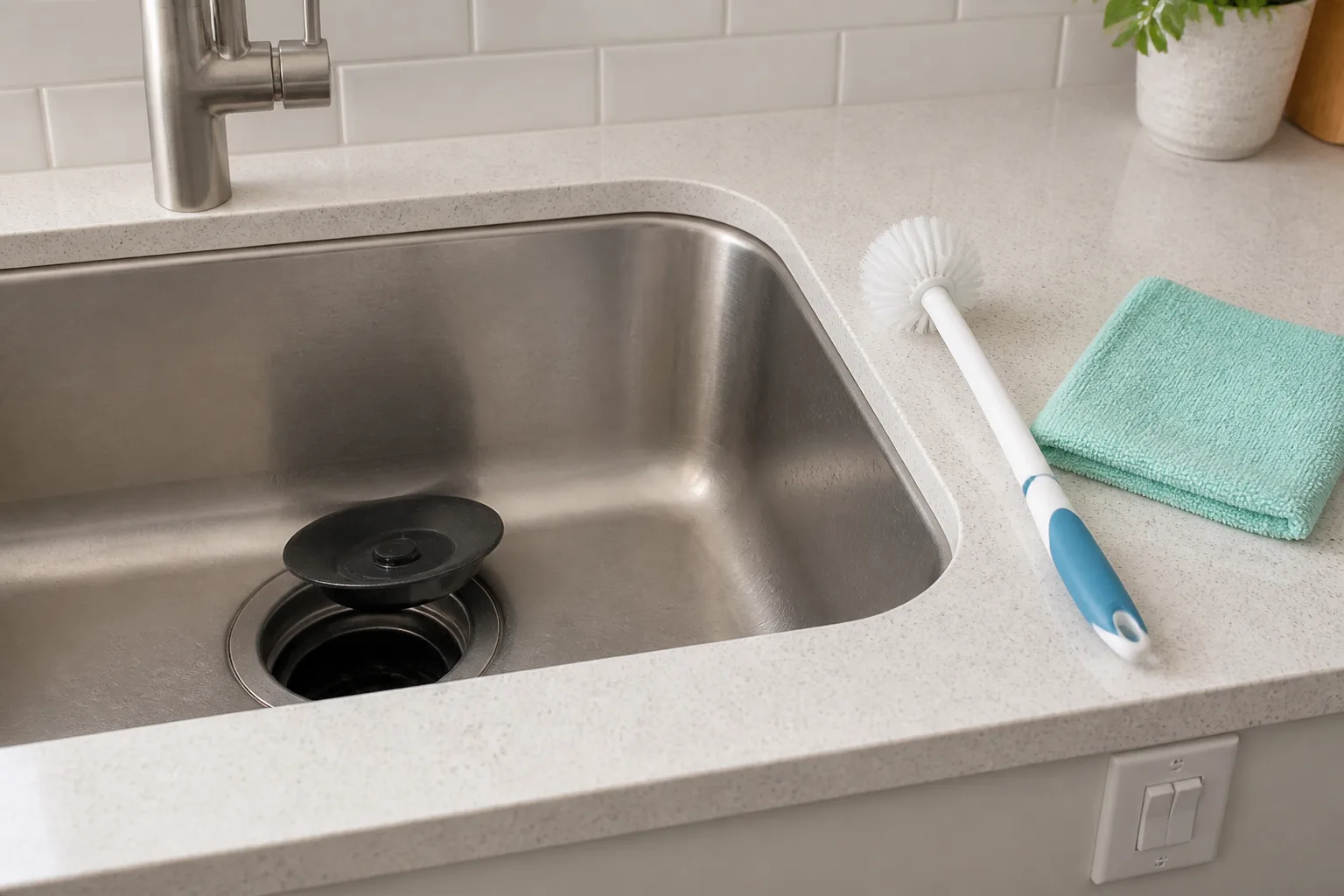
Keep sink and drain tools separate from cloths used on food-preparation surfaces.
Give bathrooms focused, separate attention
Bathrooms benefit from a consistent sequence because the room combines hand-contact surfaces, moisture, and areas that need separate tools. Start by moving personal items off the counter, then clean the mirror and sink, wipe faucet handles and other touch points, scrub the tub or shower if needed, and clean the toilet last with its dedicated brush and cloth. Finish the floor after the surfaces above it.
A bathroom does not need a strong disinfectant at every pass. Routine cleaning removes soap residue, hair, and visible soil; disinfecting becomes more relevant when someone is ill or when the product label and situation call for it. Keep ventilation running or open a window when the label recommends airflow, and leave the room if a product causes breathing irritation rather than trying to mask the odor with fragrance.
Never reuse the toilet cloth on the sink or counter. Wash reusable cloths promptly according to their care instructions, allow brushes to dry between uses, and do not store damp tools in a closed container. Those habits matter more than using a succession of chemicals on every fixture.
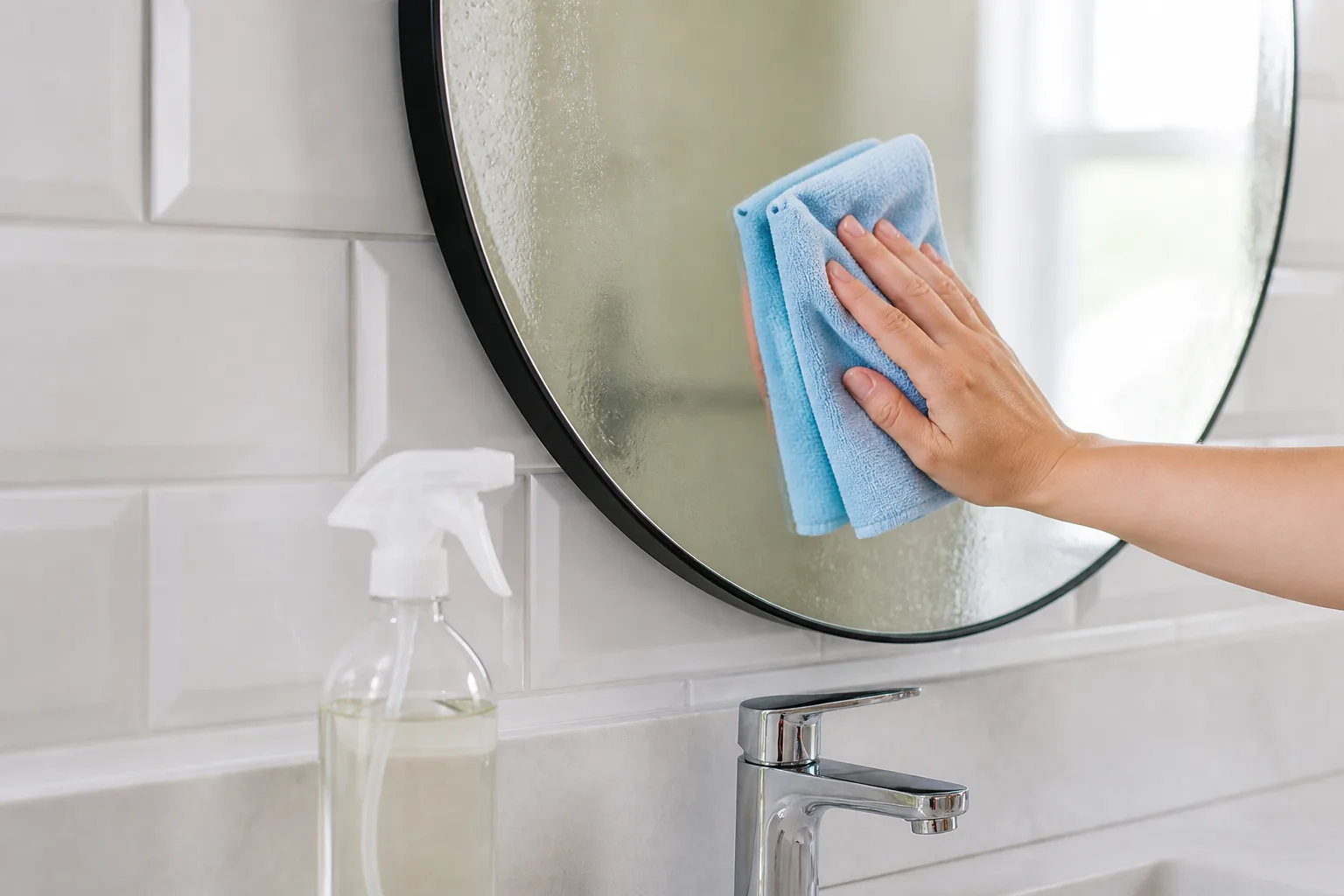
Use a cleaner that is approved for the mirror, counter, and finish in front of you.
Reset living areas and bedrooms without over-cleaning
In living rooms and bedrooms, begin with clutter and dry dust: put away objects, dust from high to low, and vacuum upholstery or rugs when they collect visible debris. Wipe switches, remote controls, and door handles when they are visibly soiled or receive frequent handling. A microfiber cloth can be useful for ordinary dusting, but follow the care instructions for both the cloth and the surface; some finishes scratch or dull when rubbed with the wrong material.
Wash sheets, towels, and washable throws on a schedule that fits use, skin contact, and product instructions. The CDC advises laundering items with detergent at the recommended water temperature and drying them completely; it also notes that laundry from a sick household member can be washed with other people’s items. Wash hands after handling dirty laundry, and clean the hamper when it becomes soiled.
For phones, tablets, keyboards, and remote controls, consult the device maker before applying liquid or disinfecting wipes. A wipeable case can make routine cleaning simpler, but liquids can seep into openings and damage electronics. Never spray cleaner directly onto a screen unless the manufacturer’s directions explicitly allow it; apply the approved method to a cloth instead.
Handle floors and soft surfaces on their own schedule
Floors collect grit that can scratch finishes, so remove loose dirt before wet cleaning. Vacuum carpets and rugs, sweep or vacuum hard floors, then use a damp mop only if the flooring manufacturer permits it. Too much water can damage wood, laminate seams, and some resilient floors; the right amount of moisture depends on the material and its finish, not on how dirty the mop water looks.
Soft surfaces such as rugs, curtains, upholstered furniture, and mattresses need their own care labels and compatible products. Vacuuming is often the least complicated routine step for rugs and upholstery, while spot-cleaning requires a small test in a hidden area first. If a stain, odor, or contamination has penetrated a cushion or carpet backing, surface wiping may not solve the underlying problem.
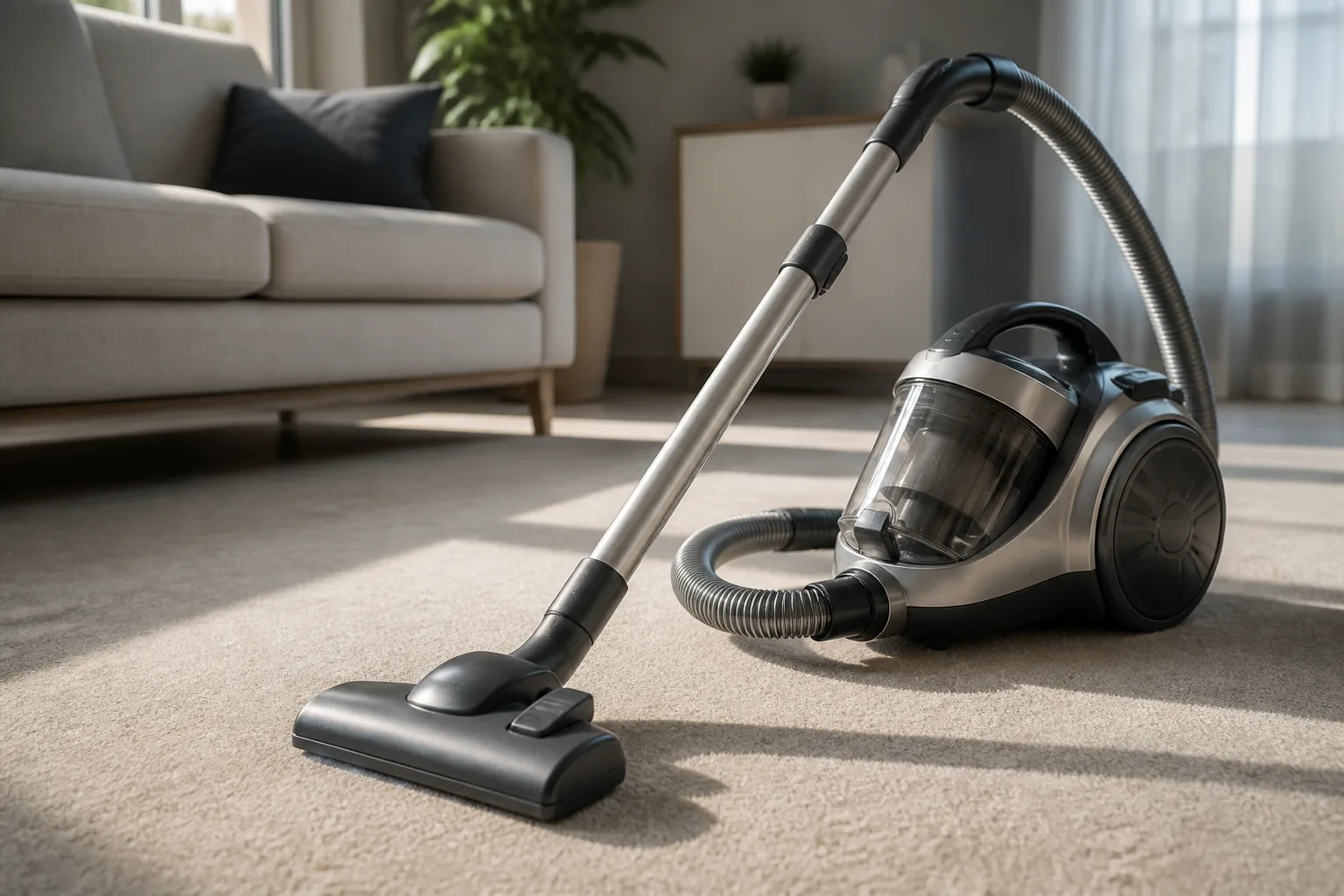
Vacuuming is a useful maintenance step for carpet and rugs; match the attachment to the surface.
Choose products by task, surface, and label
A cleaner should solve a specific problem on a specific material. Dish detergent can remove food grease from washable dishes; a bathroom cleaner may loosen mineral deposits or soap film; a wood-floor product may be formulated for a sealed finish. That does not make one of these products safe for every surface, so check the manufacturer’s care directions and the cleaner label before use, especially on natural stone, unsealed wood, coated screens, or specialty finishes.
If you want to compare products with ingredient and performance criteria, the EPA Safer Choice program provides a voluntary label for products that meet its standard. The label is a screening aid, not proof that a product is harmless in every circumstance or appropriate for every material. Even a product carrying a third-party or government label must be used as directed.
Avoid treating home-made mixtures as automatically safer. Vinegar, baking soda, ammonia, bleach, and other household substances have different properties, and an improvised mixture can damage a surface or create a hazardous reaction. The EPA cautions that some household chemicals can be hazardous and that bleach mixed with ammonia can produce toxic chloramine gas.
Disinfect only when the situation calls for it
For routine home care, cleaning with detergent and water is usually enough. Add disinfection when someone is sick, when a person at home has a weakened immune system, or when official guidance for a specific exposure calls for it. Clean the surface first unless the disinfectant label gives a validated one-step direction for the soil and use involved.
Choose a product whose label lists the surface and use site you need. For a claim against a particular germ, check the product’s EPA registration and label directions; the EPA explains how to identify registered products and read use directions. The key detail many people miss is contact time: a disinfectant may need to keep the surface visibly wet for a stated number of minutes. Wiping it dry too soon can mean the directions were not followed.
Use only the labeled amount and method. Do not apply surface disinfectants to people, food, or pets, and do not fog or spray a product in ways the label does not permit. Keep children and pets away during use and until the label says the treated area can be used again; if a household member has asthma or chemical sensitivity, consider whether the product is necessary and follow current clinical or product guidance.
Prevent cross-contamination with a simple cloth system
You do not need an elaborate color code, but you do need separation. Keep distinct cloths for kitchen food-contact areas, bathroom fixtures, and general dusting; if you prefer colors, make the assignments obvious to everyone in the home. Never use a cloth on a counter after it has touched the toilet, floor, rubbish bin, or raw-meat juices.
Fold a cloth into quarters so you can expose a clean face as you work, and switch to a fresh one when it is visibly dirty or saturated. Rinse a mop or brush when the task requires it, but do not assume a quick rinse disinfects the tool. Launder reusable cleaning cloths with detergent, dry them fully, and store them clean and dry; check the fabric-care label so high heat does not damage a tool that requires gentler handling.
The room order helps too: clean bedrooms and living areas before bathrooms, and leave toilet cleaning and floors until late in the session. If someone in the home is ill, follow the relevant public-health advice for cleaning and handling shared items rather than improvising a stronger chemical routine.
Adjust the routine for illness, children, pets, and sensitivities
During an illness, focus on the surfaces people touch often and the areas the sick person uses, while following current CDC guidance for that illness. Use the recommended product for the actual pathogen and surface, observe contact time, wash hands after handling soiled items, and avoid sharing personal towels. A blanket disinfection of every wall, floor, and object is not a substitute for the measures that matter for a specific infection.
For households with young children, older adults, or people with weakened immune systems, ask the person’s clinician about any added precautions if general guidance does not address the situation. Keep chemicals in original containers behind child-resistant storage where possible, and never leave an open bucket or spray bottle unattended. For pets, do not use surface disinfectant on fur or paws; keep animals away from wet treated surfaces and follow veterinary or label instructions about when the area is safe to re-enter.
If fragrances or cleaners trigger symptoms, reduce unnecessary products, choose lower-odor options when suitable, ventilate as directed, and avoid aerosolizing products. The EPA Safer Choice label may help compare formulated products, but sensitivity varies; seek medical advice for recurring or severe symptoms instead of trying to diagnose the cause through repeated product substitutions.
Protect delicate materials and electronics
Universal “all-purpose” claims have limits. Natural stone can be etched by acidic products; some finishes react to abrasives or solvents; unfinished wood may absorb water; and a screen’s coating may be damaged by an unapproved wipe. When in doubt, check the material or appliance maker’s care instructions and test an inconspicuous spot with the proposed method before treating a large area.
For electronics, unplug equipment when the manufacturer says to do so, keep moisture away from ports and seams, and use only the approved cloth or wipe. For food-contact surfaces, check whether the product requires a potable-water rinse. For floors, use a cleaner and water level suited to the finish; a dull or sticky result can signal residue or product incompatibility rather than a need for more cleaner.
Some tasks are better referred to a specialist: extensive water intrusion, suspected hazardous contamination, valuable antique finishes, or a stain that has penetrated padding may need professional assessment. Stop if the surface changes color, becomes tacky, or loses its finish during a spot test; continuing can make the repair more difficult.
When time is short, use a minimum viable reset
If the week has gone sideways, do not try to make every room perfect in one session. Choose actions that restore safe, comfortable use: remove food waste, wash dishes, clean a visibly dirty food-preparation surface, clear the toilet and sink, gather laundry, and vacuum or sweep the main path. These steps reduce immediate mess without requiring a complete deep clean.
Then pick one additional task based on the largest problem: a bathroom that needs attention, a spill on the floor, or dust in a room used by someone with respiratory symptoms. Put the next unfinished job on a specific day or attach it to an existing habit, such as wiping the shower after the last use or starting bedding laundry before breakfast. A small reset completed consistently is more useful than a demanding plan that keeps getting postponed.
Common cleaning mistakes that waste effort or add risk
The biggest safety mistake is mixing products. Never combine bleach with ammonia, vinegar, toilet-bowl cleaner, or another product; chemical reactions can release harmful gases. U.S. Poison Control advises people not to mix household cleaning products and explains the risks of bleach mixed with acids or ammonia. If a mixture produces fumes, leave the area for fresh air and contact emergency services or Poison Control according to symptoms and local guidance; do not stay to clean up while breathing the fumes.
Other common missteps include spraying more product than the label calls for, using disinfectant on dirty surfaces without pre-cleaning, wiping it away before its contact time, and assuming “natural” or strongly scented means safer. Using one rag everywhere spreads soil rather than saving time, while using too much water on a floor can damage it. Fix the method first; buying another product rarely solves a sequencing or surface-compatibility problem.
Conclusion
A sustainable home cleaning routine starts with a few priorities: remove visible soil, clean high-use areas regularly, match products to surfaces, and disinfect only when the situation calls for it. A short daily reset and a flexible weekly rhythm make those priorities easier to remember without turning every day into a deep-cleaning day.
Keep the kit small, separate cloths by task, follow labels, and adjust the schedule when household needs change. If a week gets away from you, restore the kitchen, bathroom, laundry, and main walking paths first, then resume one manageable task at a time.



