When Are Peonies in Season? A Local Bloom Guide
Find out when peonies bloom where you live, how cultivar and spring weather shift the season, and how to stagger varieties for a longer display in your garden.
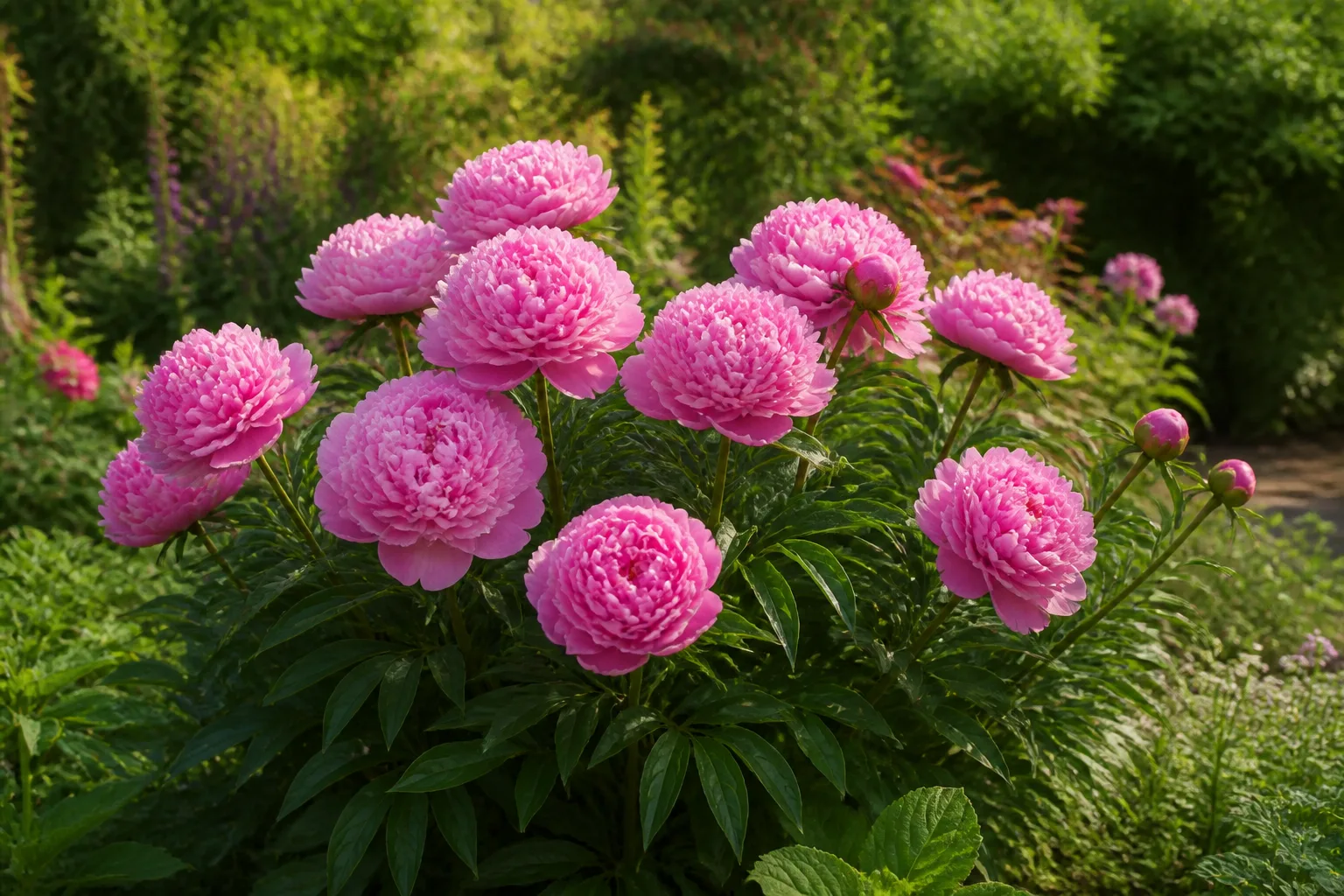
Peonies usually flower in late spring and into early summer, but there is no dependable date that applies to every garden. Your local spring, the cultivar’s bloom class, and the kind of peony all matter; a warm spell can advance the show, while a cool spring can hold it back. If you want to catch a particular plant in flower, follow its buds and your local garden’s past bloom notes instead of planning around a national calendar.
The quick answer: late spring into early summer, locally timed
In a temperate garden, peony season is a succession rather than a single weekend. Some peonies flower near the start of the local late-spring display, while other varieties open after those first flowers fade. A garden planted with a deliberate mix can hold flowers longer than one planted with a single cultivar.
Penn State Extension describes a seven-to-eight-week sequence for a thoughtfully mixed planting in USDA Zones 6 and 7, beginning near the end of April and running into early June. Treat that as an example for those zones and a succession of different peonies—not as a universal calendar or the lifespan of one plant. In other locations, latitude, elevation, exposure, and the pace of spring produce a different window. Penn State Extension
For one established peony, flowers generally come and go much faster. Epic Gardening describes a typical show of roughly a week to 10 days, with heat shortening the display and cooler conditions helping flowers last longer. The exact span varies with cultivar, sun, wind, and rain, so the first open flower is a useful signal to enjoy the plant now rather than a promise that the whole shrub will remain in bloom for weeks. Epic Gardening
Why peonies do not follow one calendar
The phrase “peony season” hides several moving parts. A flowering date is the result of the plant’s inherited bloom timing interacting with its location and that year’s weather; a label such as “late season” identifies the variety relative to other peonies, not a fixed week on the calendar.
That distinction matters if you are planning a garden visit, ordering flowers, or trying to choose plants that bloom in sequence. A date that works for a garden several states away might be early or late for yours, even when both places appear to share a similar hardiness zone. Use printed dates only as a starting point, and prefer local bloom records or advice from a nursery that grows the varieties nearby. These month descriptions assume Northern Hemisphere gardens. In the Southern Hemisphere, the broad seasons are reversed, so use local grower timing rather than converting a North American date mechanically; cultivar sequence and that year’s weather still shape the display.
Early, midseason, and late are relative bloom classes
Peony sellers often describe cultivars as early, midseason, or late. These classes are meant to sort a collection by the order in which its cultivars tend to flower under comparable conditions; they are not a promise that an early selection will always open in a named month or before every other peony in every climate.
The useful question at purchase time is not just “Is this early?” but “Early compared with which peonies, and where was that timing observed?” When possible, ask whether the variety has performed reliably in your region. A locally grown example, a nearby public garden’s bloom report, or a record kept by a neighbor can help translate a catalog description into a more realistic expectation.
Plant type also affects the sequence
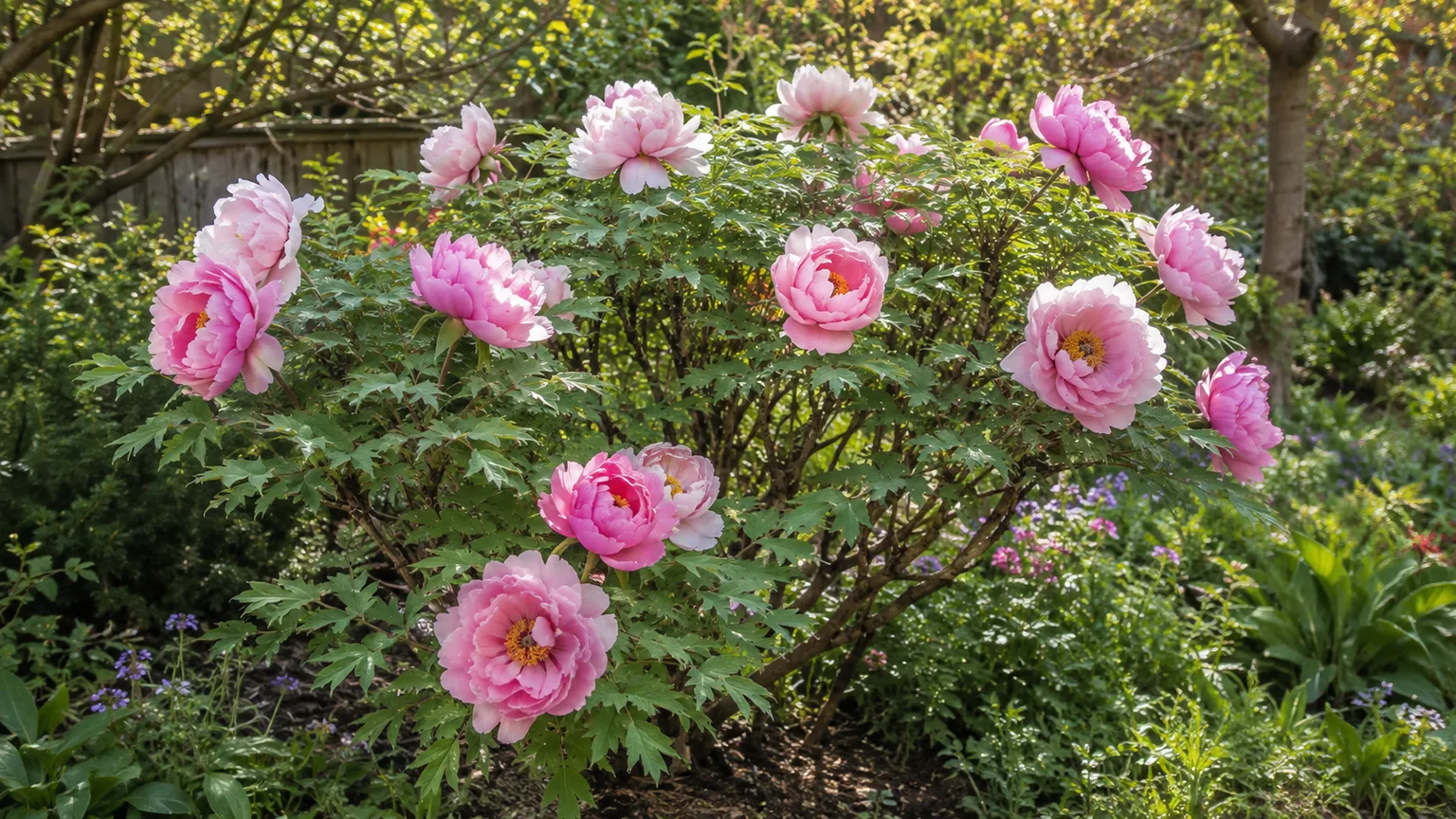
Garden peonies include herbaceous plants that die back to the ground, woody tree peonies whose stems remain through winter, and Itoh or intersectional hybrids that combine traits of the two. Woodland species add another group for shaded conditions. Because these groups and their cultivars do not all flower together, identifying what you own can make a season estimate more useful.
In Penn State Extension’s example sequence, woodland peonies open first, followed by tree peonies, herbaceous species, and then intersectional hybrids. That is a helpful planning pattern, not a rigid rule: there is overlap among cultivars, and local weather can compress or rearrange the visible handoff. Fine Gardening similarly places many tree peonies ahead of herbaceous types and notes that Itoh varieties often overlap with herbaceous peonies. Fine Gardening
Read peony season through your local climate
A broad regional label is less precise than the weather around the plant. A south-facing wall warms earlier than an open north-facing bed; a slope, urban courtyard, coastal garden, and high-elevation site can each move spring along differently. Nearby plants may leaf out and flower at different times for the same reason.
For a practical forecast, look back at two or three recent seasons in your own yard, if you have notes. Record when shoots first emerged, when the first buds showed color, and when the first flowers opened, along with any unusually warm, cold, or wet spell. Those observations do not create an exact prediction, but they can tell you whether your peonies usually open before or after other familiar signs of spring in your garden.
Warmer springs and mild-winter regions
A warm spring often brings peonies forward, and a run of hot days can make open flowers pass quickly. In a mild-winter region, do not assume that a warmer climate automatically means a longer or easier peony season: peonies generally suit temperate-to-cold climates, and cultivar performance depends on local growing conditions. Penn State Extension lists suitable cultural conditions in Zones 3–8, but that range is a broad hardiness guide, not a flowering calendar or a guarantee for every cultivar at its warm edge. Penn State Extension
If winters are mild where you garden, choose varieties recommended by growers or public gardens in a similar climate. A local source can tell you whether the issue is bloom timing, winter suitability, or a cultivar that simply does not perform consistently there. Avoid using a zone number alone to conclude that every peony offered for sale will flower well in your garden.
Cooler regions, elevation, and delayed springs
Cooler areas and higher-elevation gardens often reach the peony display later than warmer lowland sites, but the calendar shift changes from year to year. Late snowmelt, a shaded exposure, or a slow spring may keep growth behind, while a stretch of mild weather can speed it up. A late date is not automatically a sign that the plant is unhealthy.
The local sequence is more informative than comparing your garden with a distant one. Watch which early perennials or flowering shrubs normally open just before the peonies, then use those plants as a rough seasonal marker. If the peonies’ shoots and buds are developing normally, a later opening may simply reflect your site’s climate and this year’s weather.
How weather changes the bloom window
Spring temperature affects the pace at which shoots and buds develop. A sustained mild stretch can move plants forward; cold conditions can slow growth, and a late freeze can damage tender shoots or flower buds that have already emerged. Weather does not affect every cultivar identically, so a garden containing several bloom classes may not shift as one uniform block.
Once flowers open, heat, direct afternoon sun, wind, and heavy rain can shorten the attractive display. Epic Gardening notes that cool conditions help flowers last longer, while heat can quickly end the show. If an exposed plant opens during a sudden hot spell, enjoy those flowers promptly; shade from a building or nearby tree can change the local exposure, but do not relocate an established peony just to chase a short-term bloom window. Epic Gardening
The weather can also produce a misleading season. A bud may swell but stall during cool weather, or it may open quickly during a warm spell. Track what the buds are doing instead of assuming that the same number of days always separates emergence from flowering. For a garden open to visitors or an event, build in flexibility and check local gardens’ current bloom reports close to the date.
How long each peony plant flowers
A single plant normally gives one seasonal flush, not a repeating summer-long series of blooms. Individual flowers open over a short period, and many herbaceous cultivars finish their strongest display in about a week to 10 days; several plants or side buds can make the total time a particular clump looks colorful somewhat longer. Heat and hard rain can narrow that window, while cool weather can preserve open blooms for longer.
This is why two statements can both be true: peony season in a diverse planting may stretch across many weeks, while a particular bush may have only a brief peak. Penn State’s seven-to-eight-week example refers to a succession of different flowering peonies in Zones 6 and 7. It should not be read as one plant holding flowers from April through June. Penn State Extension
A few cultivars have side buds that open after the main flower, extending that plant’s display somewhat. That is still part of its one seasonal flowering period, not reliable reblooming later in summer. Deadheading improves appearance and prevents seedpod development if you do not want seed, but it does not usually make a peony produce another flush that year.
How to extend the display across the garden
The most reliable way to extend the peony show is to select plants with different bloom timings, then let local conditions determine the exact dates. Even then, flowering can overlap or bunch together in a warm year, and a sudden heat wave can shorten the visible season. Think in terms of a longer chance to see peonies, not an uninterrupted guarantee.
Choose cultivars in three bloom classes
Start with at least one locally recommended early, midseason, and late cultivar rather than buying several plants solely because their flower colors differ. A varied cultivar set gives you a better chance of having successive blooms than a bed made up of one variety. If space is limited, two varieties with noticeably different local flowering times are more useful for extending the season than two cultivars that open together.
Ask the nursery what bloom class means in your area and whether the timing is based on the same species or type you plan to grow. A seller’s “late” label may refer to a season at their location, which can sit earlier or later than yours. Make a short note of each cultivar’s name and the year’s first-bloom date; after a few years, you will have a more useful reference than a generic chart.
Build a realistic succession, not a guaranteed date range
Choose the site and plant spacing for mature plants first, then position cultivars so the flowers can be seen together from the path or window. Peonies need room and suitable light; squeezing plants into a dense border to fit more bloom labels can create competition and restrict airflow. The University of Wisconsin–Madison Division of Extension recommends full sun—about six to eight hours of direct light—and well-drained soil for garden peonies, with spacing that accounts for their mature size. Wisconsin Horticulture Extension
Staggering bloom classes works best when the plants are also healthy and correctly situated. Tall, double-flowered herbaceous varieties can need support as buds grow heavy, so put rings or supports in place while shoots are still short rather than forcing them over developed stems. Penn State Extension notes that varieties with large, full flowers and long stems are more likely to need staking than shorter, sturdier forms. A plant that is supported before a rainstorm is easier to enjoy than one that has opened beautifully and then collapsed onto the path. Penn State Extension Do not divide a healthy clump just to make the display longer or multiply plants quickly. Peonies do not need routine division, and a new division can take time to flower; when space allows, adding a distinct cultivar at proper mature spacing is a better way to build a succession without interrupting the established plant. Wisconsin Horticulture Extension
Predict opening by watching the buds
A bud-stage check is more useful than trying to count down to a fixed date. New shoots appear first, followed by foliage and buds that enlarge over time; as a bud swells and begins to show its petal color, the plant is moving closer to opening. The speed of that change depends on cultivar and weather, so inspect plants every few days during a warm spell and weekly when development is slow.
Keep a simple record with three observations: first visible shoot, first colored bud, and first open flower. Add the cultivar name, location, and any unusual heat or cold. Next year, this makes it easier to distinguish a naturally later cultivar from a plant that is unusually delayed, and it helps you decide when to visit a public garden or buy stems for a particular occasion.
For a garden visit, use recent local updates rather than a date copied from a national article. Botanical gardens and peony growers sometimes publish seasonal bloom reports; those reports are most useful when they come from a site with a climate and exposure similar to yours. If you are planning an event, schedule around a broader period and have another flowering plant ready as a backup, since no garden can promise an exact day. Think of your notes as a local window rather than a promise: after a few years, the earliest and latest first-flower dates show when to start checking. If you have no records, follow one familiar shrub or perennial that usually flowers shortly before your peonies. Step up from weekly checks to every few days as buds show color, and look daily during an unusually hot spell. For a planned visit, ask which peony types are flowering now; a report that says only “peonies” may cover tree, herbaceous, and Itoh plants at different stages.
Why a peony may not bloom on schedule
A peony with lush leaves but no flowers may be affected by more than the weather. Before adding fertilizer, check how recently it was planted or divided, how much sun it receives, and—if it is an herbaceous peony—whether its crown was set too deep. Correcting the cause is more likely to help next season than feeding a plant that already has adequate growth.
Establishment and planting depth
Newly planted, moved, or divided peonies can take time to settle and may flower lightly or skip a season while establishing. Digging, transplanting, or dividing immediately before the expected season will not make the plant bloom sooner; it can interrupt its normal growth. Let a recent transplant establish rather than repeatedly moving it because it missed its first display.
For herbaceous peony roots, planting depth is especially important. Wisconsin Horticulture Extension advises positioning the buds roughly one to two inches below the soil surface; when those buds are buried too deeply, flowering can be poor. Do not apply that exact instruction indiscriminately to every type: Penn State Extension gives different planting depths for bare-root tree peonies depending on whether the plant is grafted or growing on its own roots. Check the instructions for the plant form you have. Wisconsin Horticulture Extension Penn State Extension
Light, weather damage, and foliage care
Too much shade can reduce flowering, particularly for common herbaceous and Itoh garden peonies. If nearby trees have grown and now block much of the day’s sun, the plant may keep producing leaves while setting fewer blooms. Pruning trees or moving a peony is a long-term decision; confirm the shade pattern across the season before changing the site.
A late frost can injure exposed buds, while a hot, dry spell can speed the display and stress a recently planted clump. Poor drainage also weakens peonies over time, and heavy nitrogen feeding may favor foliage over flowers. Wisconsin Horticulture Extension recommends avoiding excessive nitrogen and warns that waterlogged soil can cause root problems. If the plant is healthy but flowerless, make one change at a time and observe the following season rather than applying several interventions at once. Wisconsin Horticulture Extension
After flowering, keep healthy foliage on herbaceous peonies through the growing season. The leaves support the plant as it prepares for the next year; cutting the entire clump down as soon as petals drop removes that foliage too early. Savvy Gardening’s pruning guidance distinguishes removing spent blooms from cutting back stems and leaves, which is normally left until the plant dies back later in the season. Savvy Gardening
What to do after the flowers fade
Once a flower has faded, remove the spent head if you want a tidier plant. Cut the flower stem back to a healthy leaf rather than shearing away the green canopy. If the petals are simply falling, you can also leave the plant alone; deadheading is primarily a cleanup choice, not a way to trigger another round of flowers.
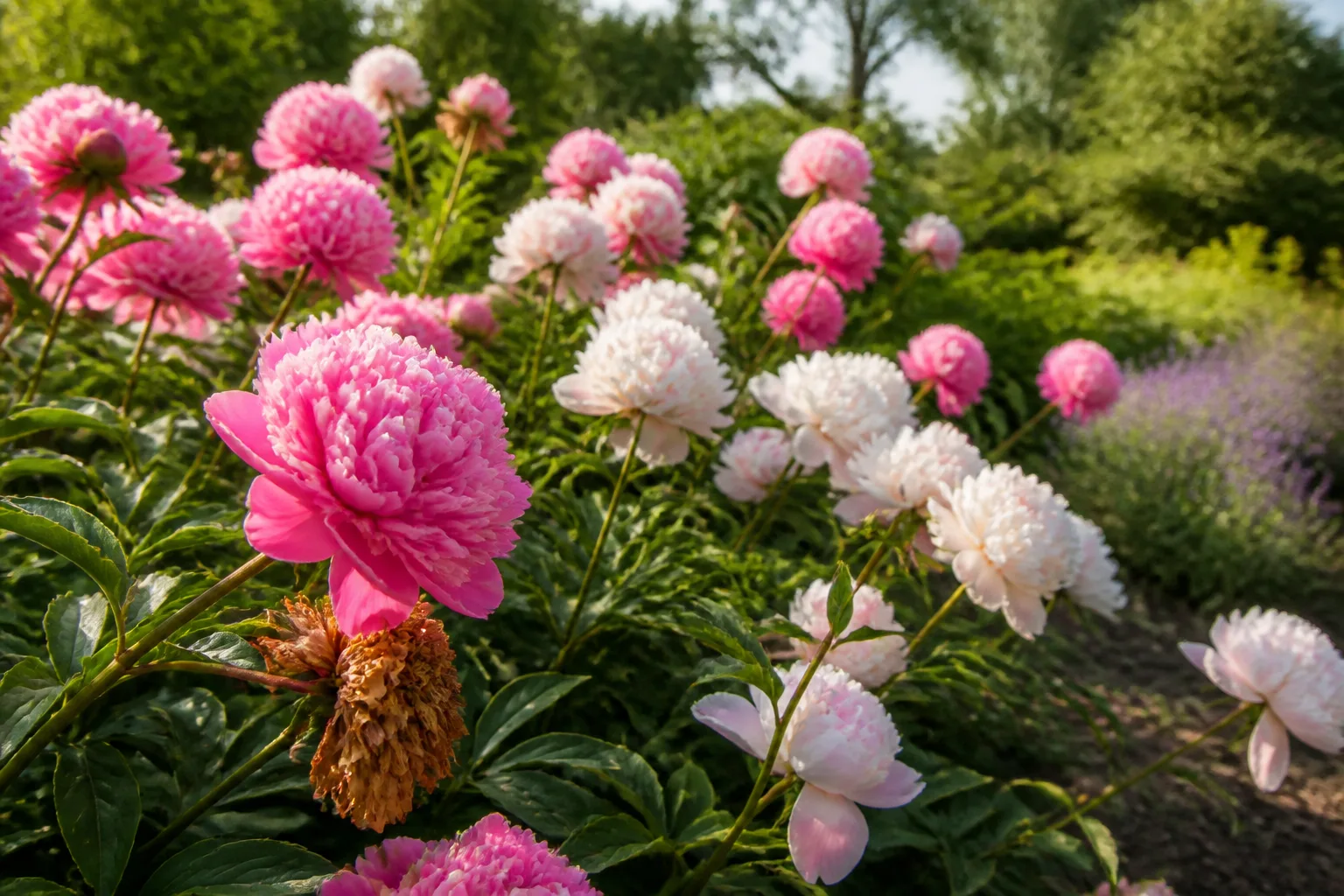
Keep watering newly planted peonies during dry weather while they establish, and avoid leaving them in soggy soil. Established plants generally need less intervention, but healthy leaves still matter after bloom. When herbaceous foliage has died back in fall, remove it near ground level and clear away debris, especially if disease was present; keep woody stems on tree peonies rather than treating every type as an herbaceous clump. Wisconsin Horticulture Extension Savvy Gardening
If you cut flowers for a vase, do so in moderation and leave enough leafy stems to support the plant after the display. For timing a garden walk or arranging a planting, the best use of a short bloom season is to notice the buds early, identify your cultivar, and enjoy each stage while it is open. A peony’s foliage remains part of the border after flowering, even when the flowers are gone.
Conclusion
Peonies are generally a late-spring to early-summer flower, but the right answer for your garden depends on cultivar, plant type, local climate, and the weather that spring. A single plant has a short display; a well-chosen collection of early, midseason, and late varieties can create a longer succession, although the calendar will shift from year to year.
Use local garden reports and your own bud-stage notes to make the next season easier to predict. If a peony misses its usual flowering time, check establishment, planting depth, light, drainage, and frost damage before changing anything. Keep the foliage healthy after bloom, and let the plant’s own cycle—not a fixed date—set your expectations.



