How to Prevent Bugs From Getting in Through Packages
Prevent bugs from getting in through packages with a one-minute inspection, safer unpacking routine, food-package rules, and clear escalation steps.
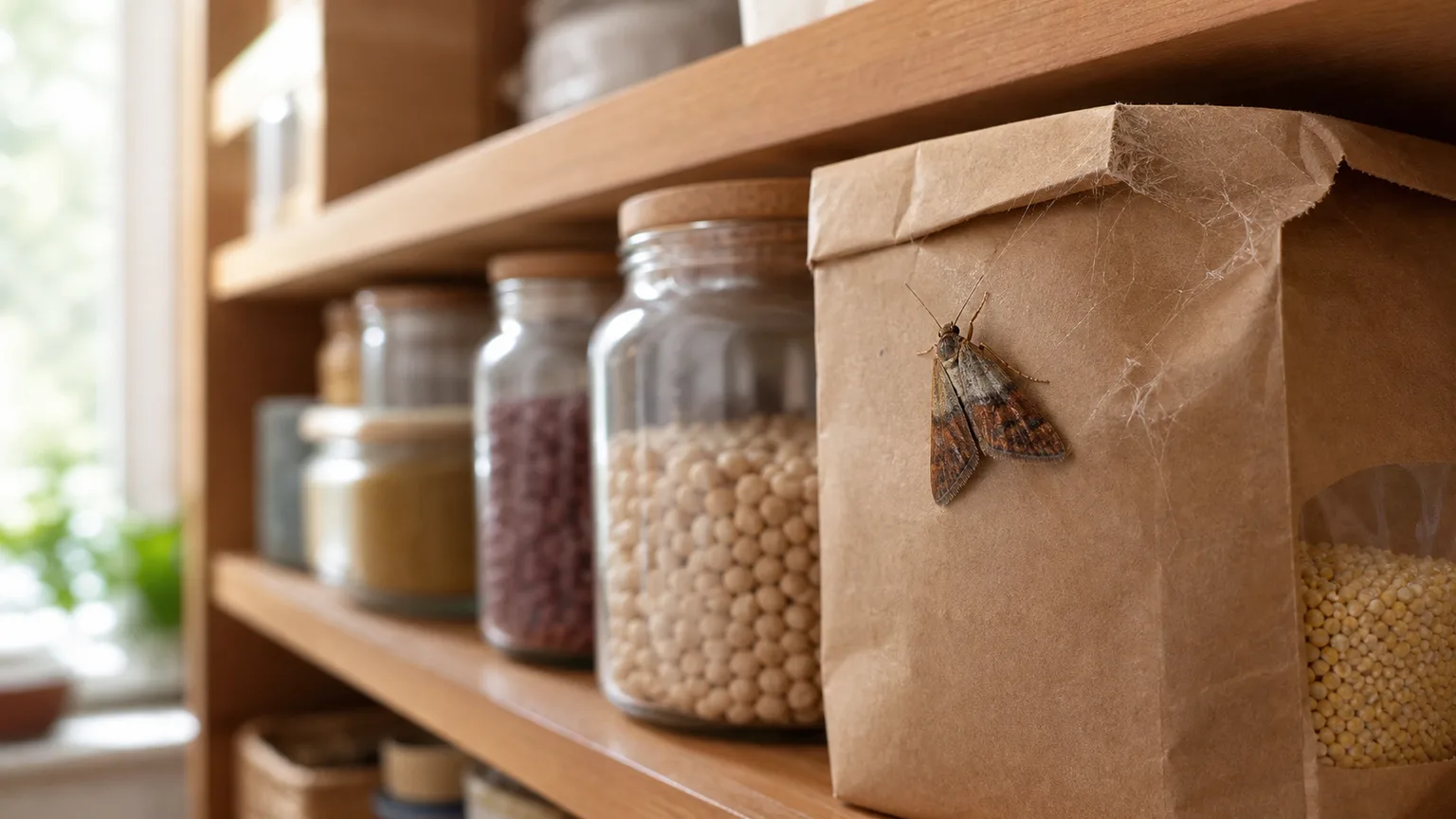
The safest package routine is simple: inspect deliveries before they cross the threshold, open suspicious boxes on a hard surface, move the contents away from the packaging, and remove cardboard promptly. That routine lowers the chance of bringing in roaches, ants, spiders, rodents, or stored-food pests without turning every delivery into a forensic investigation.
There are two different problems hiding inside the phrase “bugs in packages.” A pest may hitchhike on the outside of a box or in a seam, or the item inside—especially flour, cereal, spices, pet food, or birdseed—may already contain eggs or larvae. The second route is often the more important one for pantry pests, so the best plan protects both your doorway and your food storage.
The short version: look, open, transfer, remove
For an ordinary, dry, intact parcel, use this four-part routine:
- Look at the package outside or in the garage. Check corners, flaps, tape lines, and the surface underneath.
- Open it on a clean, hard surface. A porch table, garage floor covered with a washable mat, or plastic tote works better than a kitchen counter.
- Transfer contents one at a time. Put food in clean, sealed containers; keep textiles and used goods separate until you inspect them.
- Remove the packaging the same day. Break down clean cardboard for recycling or place suspicious material in a tightly closed trash bag.
This is a risk-reduction routine, not a guarantee. A clean-looking box can still contain a tiny egg, and a bug spotted after delivery may have come from a plant, grocery bag, drain, window, or an existing pantry source. The goal is to catch the evidence at the easiest control point: before the package is mixed with the rest of your home.
Why packages can carry pests
Packages pass through warehouses, loading areas, trucks, returns departments, and delivery staging spaces. The 2023 review in Biological Invasions describes pallets, crates, spools, and other wood packaging material as part of the global movement of goods, with risk from organisms that infest the material and from pests that contaminate it after treatment. That does not mean every parcel is dangerous; it explains why a supply chain creates several opportunities for a pest to encounter packaging before the last-mile delivery.
Corrugated cardboard also gives small insects protected folds and air spaces. Paper filler, torn labels, damp corners, and the gap beneath a flap are easier for a small insect to use as shelter than a smooth, dry plastic mailer. The peer-reviewed packaging-supply-chain review is mainly about plant-pest pathways and commercial wood packaging, so it should not be read as a household infestation rate. Its useful lesson for homeowners is narrower: inspection matters because shipping materials are handled and stored in many environments before they reach you.
The National Pest Management Association’s package guidance similarly focuses on gnaw marks, droppings, eggs, outdoor opening, prompt box disposal, and professional help when a home infestation is suspected. Those measures are practical because they interrupt the chain before a hidden pest finds a warm room, food, or another hiding place.
Hitchhikers are different from infested contents
An outside hitchhiker is usually associated with the packaging: a spider in a corner, an ant in packing paper, a cockroach nymph in a flap, or a rodent sign near a pallet or bulk delivery. The first response is containment and removal of the packaging, followed by inspection of the item.
An infested content is different. Pantry moths and beetles may be inside dry food before you receive it, especially in grain products, flour, pasta, cereal, spices, nuts, dried fruit, pet food, or birdseed. The box may be perfectly clean while the food liner contains a hidden life stage. UC Integrated Pest Management explains that pantry pests are commonly introduced in infested food packages and that eggs and larvae can be easy to overlook.
That distinction changes the decision. Throwing away the outer box will not solve a pantry pest problem if the source is an unopened bag of birdseed. Conversely, freezing or discarding every item in a clean, sealed non-food parcel is unnecessary. Inspect the material that can actually support the pest.
Which deliveries deserve extra scrutiny
Not every parcel needs the same level of attention. Use the package’s material, contents, condition, and history to set the inspection level.
Dry groceries, pet food, and birdseed
These deserve the highest food-related scrutiny because stored-product pests feed on dry plant and animal materials. University of Georgia Extension’s bulletin on stored-product pests lists cereals, flour, rice, pasta, spices, nuts, dried fruit, pet food, birdseed, rodent bait, dried flowers, and seed-filled decorations among the materials that can support different beetles and moths.
Look closely at bags, folded seams, paperboard sleeves, and the narrow space between an inner liner and an outer box. A box of cereal or a bag of flour can appear unopened while the pest is already inside the food. Transfer is useful for containment, but it does not make a suspicious food item safe; check it first and discard it if you see evidence.
Pet food and birdseed deserve their own rule: store them in a tight-lidded hard container away from the kitchen if possible. They are easy to forget in a garage or utility area, and an infestation can keep producing insects even when the kitchen shelves look clean.
Cardboard, returns, and damp paper
Give extra attention to boxes that are crushed, wet, softened, torn, or stored outside for a long time. Damp paper can attract moisture-associated pests, while damaged edges create more hiding places. A returned parcel, a box from an outdoor delivery area, or a shipment packed with loose paper has more exposed material to inspect than a clean poly mailer.
Do not keep a stack of boxes “for later.” Even when there is no visible insect, flattened cardboard left in a basement, garage, or pantry becomes shelter and makes future inspection harder. If the box is clean, flatten and recycle it promptly. If it has live pests, droppings, webbing, egg cases, or unexplained holes, seal it before moving it to an outdoor trash receptacle.
Used furniture, mattresses, clothing, and fabric décor need a separate, more cautious routine because bed bugs are associated with seams, folds, joints, and upholstery—not with dry food. Keep secondhand items outside or in an isolated garage staging area until you can inspect them with a flashlight. Do not carry a suspicious upholstered item through several rooms while deciding what to do.
Inspect the package before you open it
Inspection works best on a bright, uncluttered surface. Keep a flashlight, a clear trash bag, and a washable tray or plastic tote nearby. You are looking for patterns and evidence, not trying to identify every insect to species at the doorstep.
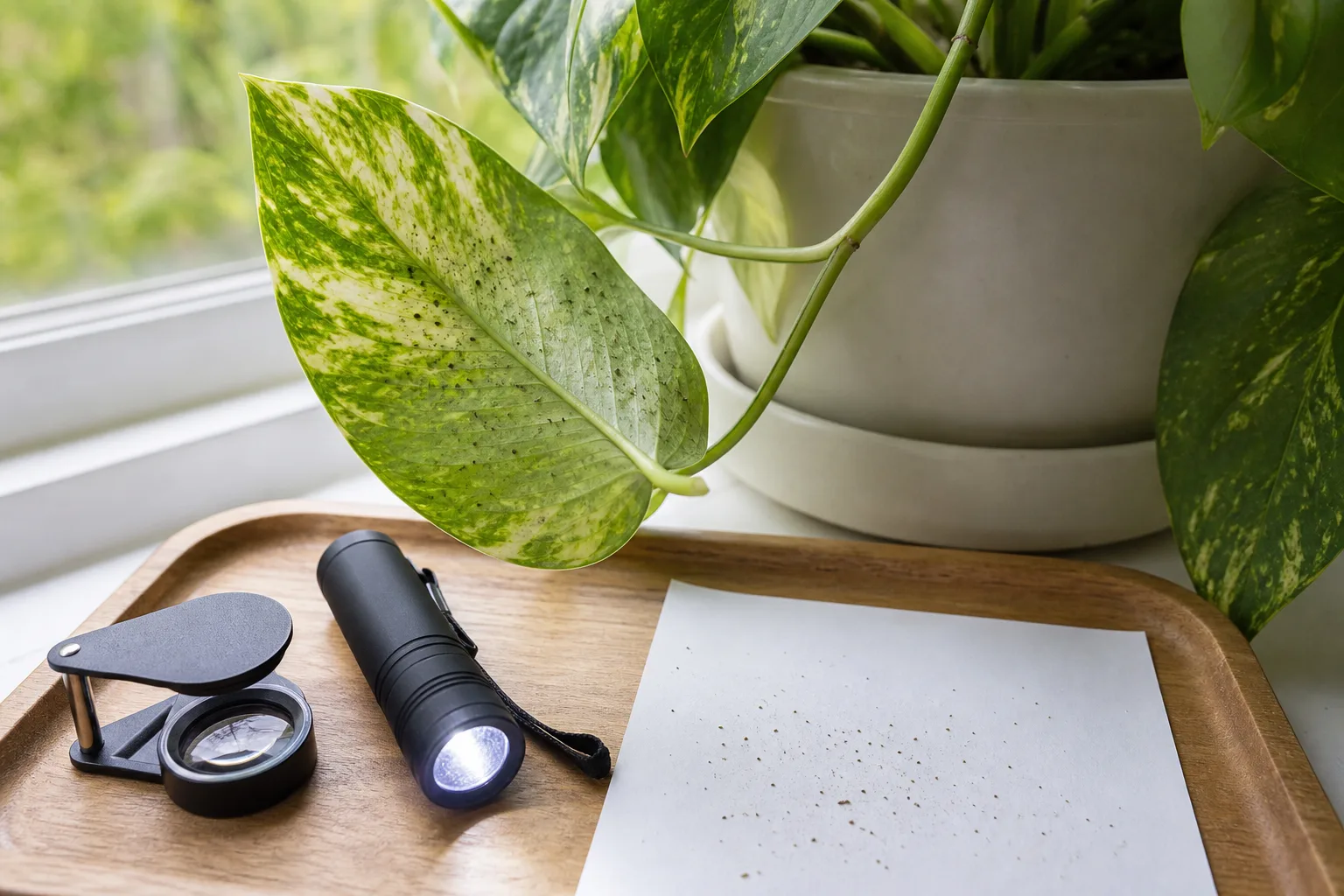
Exterior red flags
Check all six faces of the box, then turn it over and inspect the bottom. Pay particular attention to:
- live insects, egg cases, or tiny moving specks
- droppings that look like pepper, pellets, or dark smears
- gnaw marks, holes, shredded paper, or chewed cardboard edges
- silk webbing, cocoons, shed skins, or clumped material
- dampness, moldy odor, grease marks, or a crushed corner
- insects emerging when the parcel is left still in bright light
Inspect the seam where tape meets cardboard, the folds under the top flaps, the corrugation at a crushed edge, and the surface touching the porch or garage floor. A flashlight held at a low angle can make webbing, droppings, and loose debris easier to see than overhead room light.
One sign is not a diagnosis. A dead ant may have landed on the parcel, and a dark mark may be road grime. But live insects, repeated signs, a damaged food package, or multiple clues should move the parcel into the “open outside and isolate contents” category.
Interior evidence
Open the box without shaking it over a kitchen floor. Lift out paper filler and each item separately, keeping the contents on the inspection surface. Look inside folds, around labels, beneath cardboard sleeves, and at the junction between an outer box and an inner bag.
For dry goods, check for silk webbing, clumps, powdery residue, larvae, small beetles, holes, shed skins, or a stale or unusual smell. Pantry pests can be small and larvae may remain hidden in the product. Some weevils develop inside whole kernels, so a smooth-looking bag of grain does not rule them out.
The life cycle is another reason not to rely on a single glance. UGA Extension explains that stored-product pests pass through egg, larval, pupal, and adult stages; the larval stage is often concealed in food while adults are the stage people notice flying or crawling. If you find moths on a wall or beetles near a window, inspect food and non-food dry materials rather than assuming the visible adult is the source.
A low-mess unpacking routine
Use the following routine for deliveries that are intact but contain food, paper, textiles, or a used item:
- Choose the receiving point. Work outdoors in dry weather, in a garage, or on a hard surface near the door. Do not use a bed, sofa, carpet, or kitchen counter as the first staging area.
- Photograph suspicious evidence. A quick photo of holes, droppings, webbing, or a live insect helps with retailer claims and later identification.
- Open the package slowly. Keep the box inside a clear bag or beside a closed trash bag if you already see evidence. Avoid scattering filler.
- Separate packaging from contents. Put food in a clean tray, textiles in a washable bin, and hard goods on a surface you can wipe.
- Inspect before storing. Do not place a new bag of flour beside older flour, or a new bag of birdseed beside an open one, before checking it.
- Close the exit routes. Seal questionable food or packaging before carrying it anywhere. Keep a suspicious used item in the garage until you have decided whether it can be cleaned, treated, returned, or discarded.
- Remove cardboard promptly. Break down clean boxes for recycling. Seal infested boxes and take them to an outdoor trash receptacle.
For clean routine mail, this does not need to become elaborate. A quick look at the seams and immediate removal of the box is enough for most households. Increase the routine when the parcel is wet, damaged, food-filled, used, or coming into a home that has recently had pantry moths, beetles, roaches, or bed bugs.
What to do when you find a pest
Stop moving the package through the house. Close the room or outdoor bin area, keep children and pets away from the material, and decide whether the evidence is associated with the packaging or the contents.
If the insect is loose but the item looks clean, capture it with clear tape or a small container if you can do so without spreading it. A photograph is often more useful than a guess. Do not reach for a household spray before you know whether the pest is on food, in a textile, or simply an outdoor visitor.
Food and consumables
Discard food when you find live insects, larvae, egg cases, webbing, holes, frass, shed skins, or an unexplained change in odor or texture. Do not taste-test a questionable product. Seal the item in a bag before placing it in an outdoor trash receptacle so larvae or adults cannot crawl back out into the pantry.
The safest response to an infested food package is source removal, not surface treatment. UC IPM advises removing infested food, cleaning food-storage areas, and storing susceptible products in tight containers; it does not recommend insecticides for pantry pests. If one bag is clearly infested, inspect neighboring packages and the same product category, especially older opened goods.
For a food item with no evidence but a high-risk history, such as a long-stored bag of flour or seed, transfer it to a sealed container only after inspection. If you want an extra precaution for infrequently used dry goods, extension guidance supports cold storage for some susceptible foods. That is a prevention option, not a rescue method for visibly contaminated food.
Nonfood items
For hard, washable goods, wipe the item and the receiving surface, then remove the outer packaging. For washable clothing or linens, keep them contained until laundering according to the care label. For used furniture or upholstery, inspect seams, joints, undersides, and nearby packaging before bringing it into living areas.
Books, baskets, dried arrangements, seed-filled décor, and sentimental objects can be harder to discard. UGA Extension describes freezing as a possible treatment for some non-disposable infested items, but its guidance depends on the freezer reaching and holding a sufficiently low temperature for the required time and on the item not insulating the pest. Do not improvise heat, chemical fumigation, or a pesticide treatment on an item that may be damaged or unsafe. When the object is valuable, get advice from a pest professional, conservator, or extension office.
Electronics should be isolated rather than sprayed. Keep the item in a dry, contained area and contact the retailer or a qualified technician if you suspect a pest has entered the housing. Liquid, oil, and aerosol products can damage electronics and create a larger safety problem than the original insect.
Clean the receiving area and protect the pantry
If the package showed no evidence, ordinary cleaning is enough: remove loose packing debris, wipe the surface, and empty the recycling or trash. If you found a pantry pest, vacuum cracks, corners, shelf edges, and the area where the box sat; then empty the vacuum contents in a sealed bag outside. Wash hard surfaces with soap and water when the material allows.
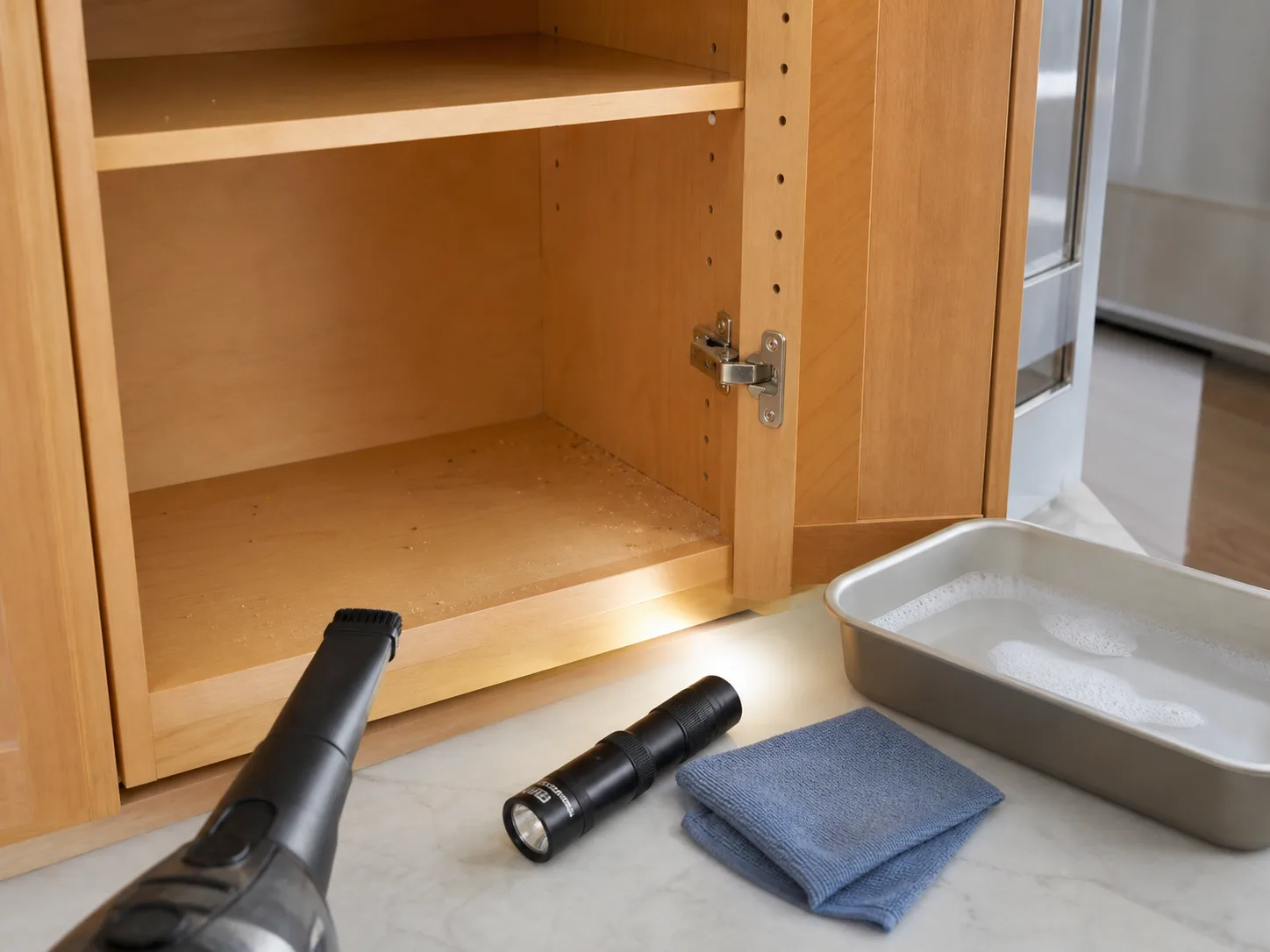
The cleaning step matters because eggs, pupae, crumbs, and spilled dry food can remain after the visible insect is gone. NC State Extension’s management guidance emphasizes prevention, sanitation, sealed storage, stock rotation, and prompt removal of infested products. It also notes that obscure items—not only the pantry shelf—can support pests.
Move opened flour, grains, cereal, spices, nuts, dried fruit, pet food, and birdseed into airtight glass or hard-plastic containers. Date them when practical and use the oldest stock first. Do not pour new product on top of old product in the same container without washing and drying it first; the old container may carry eggs or residues.
Traps and pesticides: use the right tool
Traps are useful when you need information. A labeled pantry-moth or stored-product-pest monitor can tell you whether activity continues after cleanup and where to focus the next inspection. It cannot prove that the box was the source, and it cannot replace removing infested food.
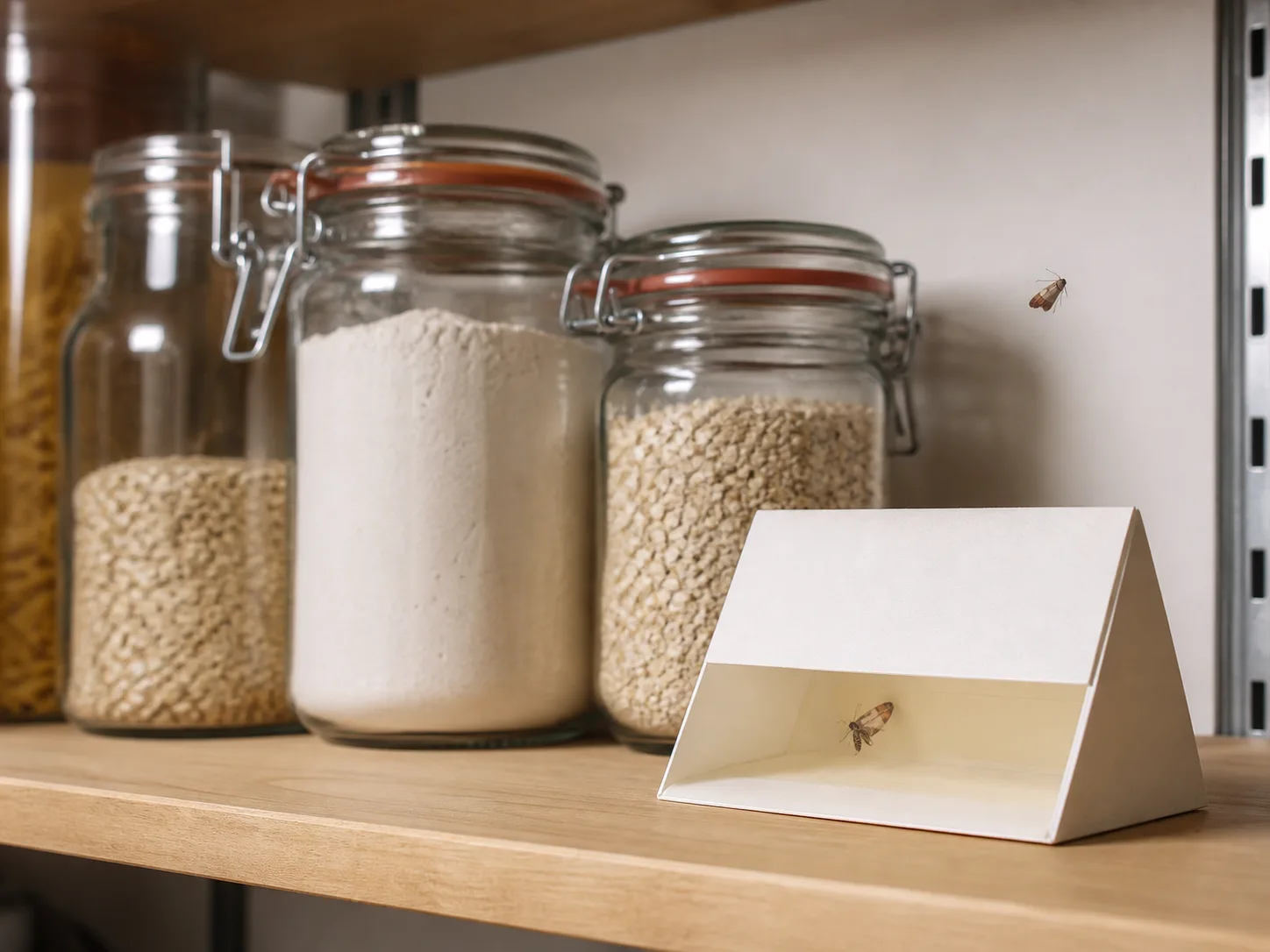
Trap specificity matters. A pheromone trap designed for Indianmeal moths will not reliably monitor every beetle, and a trap that catches one male moth does not mean the entire population is gone. Place and replace monitors according to the product directions, keep them away from children and pets, and record the date and location of each catch.
Avoid spraying insecticide on food, inside food packages, or across pantry shelves without a product and situation that specifically allow it. UC IPM states that insecticides are not recommended for pantry pests, while UGA Extension warns that insecticides alone are unlikely to solve the problem if infested material remains. A spray may kill visible adults while the larvae continue developing inside a forgotten bag.
The same “identify, remove the source, clean, monitor, then escalate” logic is useful around plants and other household materials. Gardening Know How notes that container pests may arrive in nursery pots, reused potting soil, garden soil, or produce, so not every insect found near a delivery belongs to the delivery. Diagnosis prevents unnecessary treatment of the pantry or the plants.
If pests keep appearing after the box is gone
Repeated sightings are more important than one stray insect. If moths or beetles appear again over the following days or weeks, inspect the entire storage system rather than checking only the parcel that first raised suspicion.
Start where you see the adults, then work outward. Pantry moth larvae can leave the food item and pupate in shelf gaps, ceiling corners, or cardboard folds. Small beetles can move through cracks and may be easier to find by lightly shaking a food container over a pale surface, as UGA Extension recommends for detecting hidden insects.
Search overlooked food and plant sources
Check these sources even if the original delivery was discarded:
- opened flour, cereal, pasta, rice, grains, spices, nuts, dried fruit, and baking mixes
- pet food, birdseed, rodent bait, treats, and feed stored in a garage or utility closet
- dried flowers, potpourri, seed-filled ornaments, wreaths, and craft materials
- crumbs or spills in drawer tracks, shelf-pin holes, cabinet joints, and under appliances
- dead insects, rodent caches, or forgotten food in an attic, wall void, crawl space, or shed
- newly purchased houseplants, reused potting soil, and produce if the insects are associated with plants rather than stored food
If the evidence is a crawling beetle on a shelf, do not assume it is a bed bug or a roach. If it is a moth near a light, do not assume the nearest box is the source. Save a specimen or clear photograph and use an extension diagnostician or qualified pest professional when identification changes the treatment.
For bed-bug evidence on used furniture or textiles—live bugs, shed skins, or dark spotting in seams—keep the item isolated and avoid carrying it from room to room. For rodent evidence such as gnawing, droppings, or nesting material, keep people and pets away from the area and seek local professional guidance for safe cleanup and exclusion.
Your one-minute package checklist
Save this short version near the door:
| Check | What to look for | First action |
|---|---|---|
| Outside of box | Holes, gnaw marks, droppings, webbing, dampness, live insects | Keep it outside or in the garage and open on a hard surface |
| Seams and flaps | Egg cases, shed skins, insects, debris in folds or corrugation | Photograph evidence; contain the packaging |
| Dry food | Webbing, clumps, larvae, beetles, holes, odd odor | Do not eat; seal and discard the item if evidence is present |
| Textiles or used goods | Insects, skins, spots, or activity in seams and joints | Isolate until inspected, cleaned, returned, or professionally treated |
| Clean ordinary parcel | No evidence and intact packaging | Transfer contents, break down the box, and remove it promptly |
| Repeated sightings later | Moths, beetles, roaches, or droppings after cleanup | Inspect overlooked food and storage sources; monitor and escalate if activity continues |
The routine should become faster, not more anxious: look, open, transfer, remove. Keep a flashlight and one sturdy bin where deliveries arrive, and make prompt cardboard removal part of unpacking rather than a weekend chore.
Conclusion
Packages can provide a route for pests, but the risk is manageable when you match the inspection to the delivery. Pay closest attention to dry food, pet food, birdseed, damp or damaged cardboard, returns, used furniture, and textiles. Remember that pantry moths and beetles often arrive inside an infested product, while roaches, ants, spiders, rodents, and bed bugs are more likely to be associated with hiding places in packaging or used goods.
Inspect before the parcel enters the house, open suspicious deliveries on a hard surface, separate contents from packaging, discard contaminated food in a sealed bag, clean the receiving area, and move dry goods into tight containers. If pests keep appearing, stop blaming the last box and search the whole storage system—including pet food, birdseed, dried décor, plants, soil, and forgotten food—before choosing a treatment.