What to Do With Excess Lawn Clippings After Mowing
What to do with grass clippings after mowing? Match the batch to your lawn, compost pile, garden, or local yard-waste program with practical safety checks.
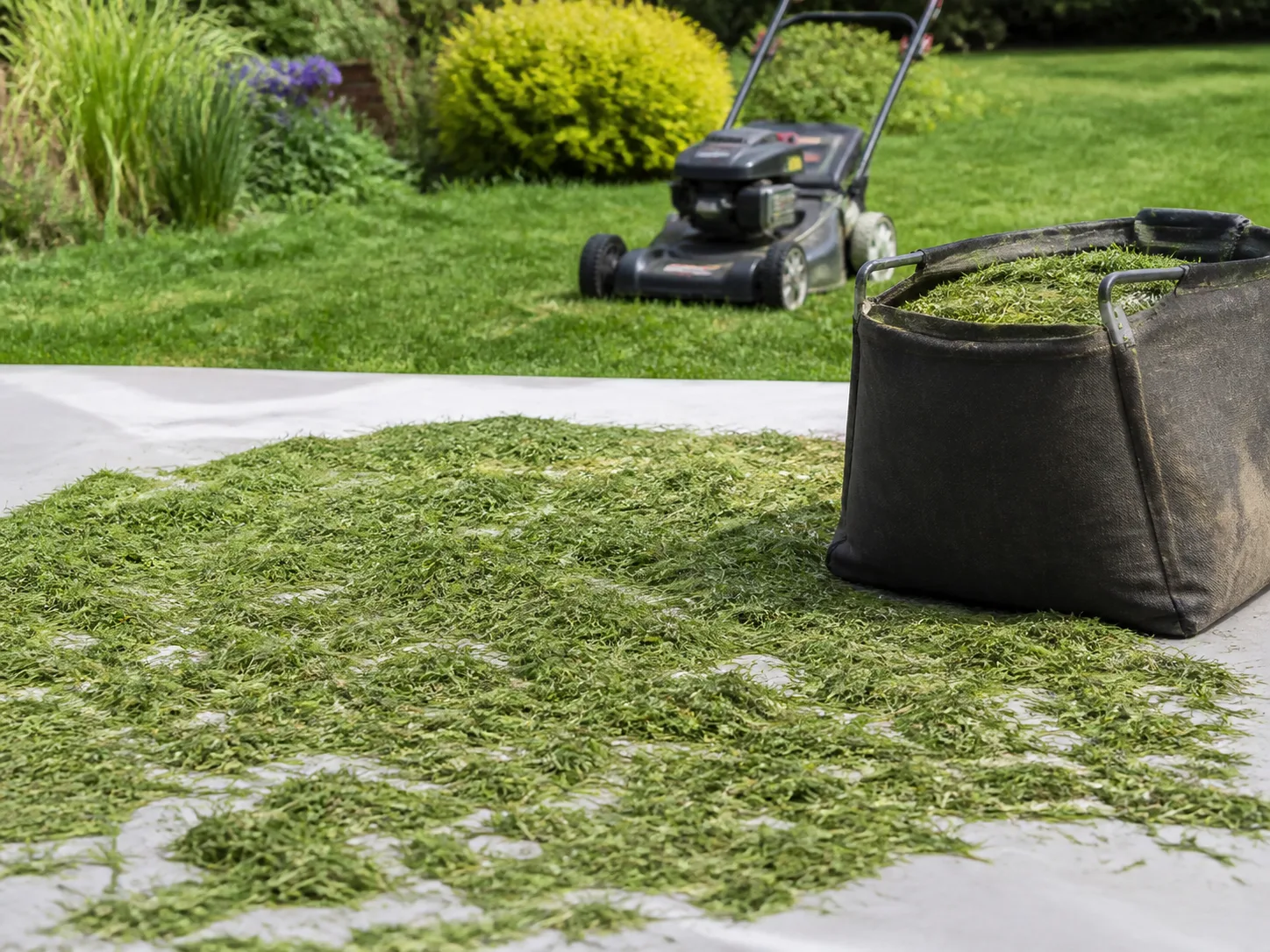
When the mower bag fills faster than you can empty it, do not dump the entire load in one heap and decide later. Grass clippings are useful only when their destination matches their condition: short, clean pieces can feed the lawn they came from; a large dry batch can be composted or saved for later; wet, treated, diseased, seed-heavy, or contaminated material needs a more careful route.
Start by asking two questions: Are these clippings short enough to disappear into the turf, and do I know what has been applied to this lawn? Those answers usually narrow the choice to a quick pass with a rake, a compost pile, a small garden use, or your local yard-waste program. The goal is not to find a use for every blade at any cost. It is to avoid creating more work or spreading a problem while keeping sound plant material in a useful cycle.
First Decide Whether the Clippings Are Truly Excess
“Excess” can mean two different things: a normal layer left after mowing, or a pile that is visibly sitting on top of the grass. Those are not interchangeable. Short clippings distributed across the lawn usually need no cleanup, while long windrows and slick clumps can shade the turf and trap moisture.
Penn State Extension explains that returning turfgrass clippings recycles nutrients and reduces the need to remove and dispose of them. In a three-year Kentucky bluegrass study, the clippings contained 46 to 59 percent of the nitrogen applied as fertilizer. That finding shows why grasscycling can matter, but it is not a promise that every lawn can skip a fixed share of fertilizer: the result came from a particular grass and study, and a lawn’s actual nutrient needs depend on its soil, growth, and maintenance history (Penn State Extension’s turfgrass-clipping guidance).
Leave Short, Even Clippings on the Lawn
If the mower has chopped the blades into small pieces and they have fallen evenly between the standing grass, leave them. They will decompose in place, return organic material and nutrients to the turf, and save you from lifting, bagging, and hauling something the lawn can use. A mulching mower can make this easier, but careful mowing with a standard mower can also leave a manageable amount when the lawn is cut before it gets far ahead of you.
The one-third rule is a useful mowing guardrail: avoid removing more than about one-third of the grass blade at once. When the lawn grows quickly in spring or after rain, mowing intervals may need to shorten; the calendar alone does not determine when clippings become a problem. Penn State’s recommendations emphasize frequent mowing and the correct height for the turf species, while GrowVeg’s practical harvesting advice also recommends taking about one-third of the length so leaf residue does not build up in a heavy surface layer. Keep the cut high enough for your grass type rather than scalping the lawn just to reduce clippings.
Do not confuse short clippings with thatch. Thatch is a tightly interwoven layer of stems and roots between green blades and soil; fresh grass leaves break down much faster and do not cause thatch by themselves. The cleanup trigger is the visible mat: if clippings cover the turf in thick strips, rake them apart or collect them rather than leaving the grass underneath buried.
Collect Bulky, Wet, or Seed-Bearing Clumps
Collect or redistribute clippings that lie in windrows, especially after mowing a lawn that had become too tall. A pile that blocks light at the base of the grass can leave a pale or yellow patch even when the turf was healthy before mowing. Once the clumps have dried, they are easier to pull apart and spread thinly over open turf or carry to a compost pile.
Wet clippings compress into a heavier, airless mat. If you already mowed before a shower, wait until the surface dries, then rake the clumps into a thin layer or collect them. Do not keep mowing across a wet ridge in hopes that it will vanish: the mower can smear it into the canopy or distribute the thickest material unevenly.
Seed heads call for a different decision. If you see mature heads from an unwanted annual grass or weeds, do not spread that batch through a clean bed or lawn. Mowing can distribute seed-bearing material, and a home compost pile that does not reliably heat throughout may not destroy every viable seed. Keep the clippings contained and choose a municipal yard-waste route only after checking that the program accepts that material.
Check the Batch Before Reusing It
Before you carry a mower bag to the garden or compost bin, sort out what is in it. A mower does not know the difference between grass, seed heads, diseased leaves, pet waste, and anything else lying in its path. A brief inspection can spare your garden a weed problem or prevent questionable material from entering a pile that will later be spread around edible plants.
Review the Lawn’s Treatment History
If you know the lawn was recently treated, read the actual product label and follow its directions for clippings, composting, and use around garden plants. Penn State Extension’s turfgrass guidance specifically cautions against placing clippings around trees, shrubs, or garden plants after broadleaf herbicide treatments such as 2,4-D, MCPP, or dicamba. The allowed interval and handling instructions depend on the product, so a generic “wait a week” rule is not a safe substitute for the label.
If you do not know what was applied or when, keep that batch out of edible beds and do not add it to home compost intended for food gardens. Drying changes the water content; it does not establish that a herbicide residue has broken down. Ask the applicator or lawn-care company for the product name and application date. If you cannot verify them, leave the clippings on the treated turf only if the label permits, or ask your local yard-waste facility how it handles treated grass.
The same care applies when clippings come from a neighbor, commercial property, or a hired lawn crew. A clean-looking bag does not tell you whether the lawn was treated. If the source is unfamiliar, treat the batch as unknown rather than using it where plant sensitivity or food safety matters.
Separate Disease, Seed Heads, and Contaminants
Keep clippings from visibly diseased patches separate from healthy material. Do not spread them to other turf or ornamental beds simply to empty the bag. Penn State’s home-composting guidance lists plant material with visible disease or insect infestation among materials to leave out of a backyard pile; some pathogens can survive an ordinary cool compost process. Follow local extension advice for the specific turf problem, and use the disposal route it recommends.
Look for weeds with mature seed heads, pet waste, spilled oil or fuel, road grit, plastic, and other debris. Remove obvious nonplant material rather than burying it in compost or mulch. Clippings contaminated with pet waste should not go into a home compost pile used around food crops. When the material is mixed with something you would not want in a garden, do not try to rescue it by adding browns or drying it first.
Keep separate batches separate if you can. If a bag holds mostly clean grass and only a small amount from a treated or diseased area, do not assume the questionable portion becomes harmless through dilution. Route that small batch according to its treatment or disease issue and use the clean material on its own.
Choose the Best Destination for Extra Clippings
For a surplus of clean grass, the most useful destination depends on what you have room and time to manage. A small, dry batch can be useful in a garden; a full mower bag is usually easier to compost or deliver to a yard-waste program. If you mow regularly, grasscycling may prevent the next surplus altogether.
Compost Most Clean Surplus Batches
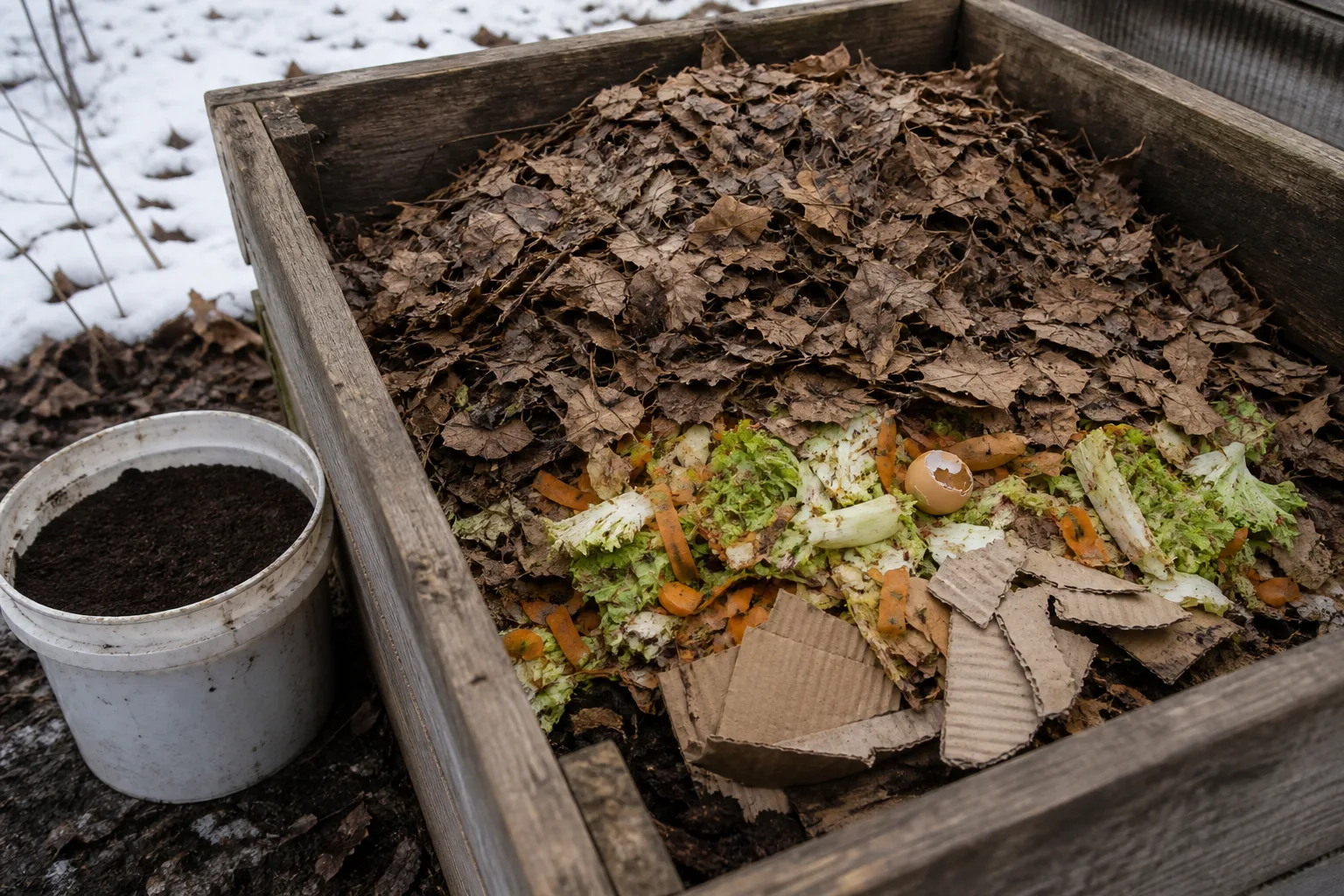
Composting is a good default when the lawn is clean and the clippings will not fit back into the turf. Fresh grass is a “green,” or nitrogen-rich, ingredient. Balance it with dry leaves, shredded plain cardboard, straw, or another carbon-rich “brown” so the grass does not collapse into a dense, sour-smelling layer. Add clippings in mixed layers rather than dumping an entire bag in a single wet mass.
Penn State Extension’s home-composting guide recommends a carbon-to-nitrogen ratio of roughly 25–30 to 1 and offers a layering example of six inches of brown material followed by two inches of green material. That is a guide to building a workable pile, not a precise kitchen recipe for every bin; moisture, particle size, and how often you mix the pile change what the right balance feels like in practice (Penn State’s home-composting guide).
Fresh clippings contain substantial water, so a mound of grass can become oxygen-poor even when its ingredients are technically compostable. If you have mostly grass and no dry leaves, spread the clippings out first to lose some moisture, store them briefly, or wait until you can add enough dry material. Gardening Know How describes the same failure mode: freshly cut grass can mat, limit aeration, and make a compost pile slow or unpleasant unless it is mixed or turned (Gardening Know How’s guide to composting lawn grass).
Use a Small Amount as Garden Mulch
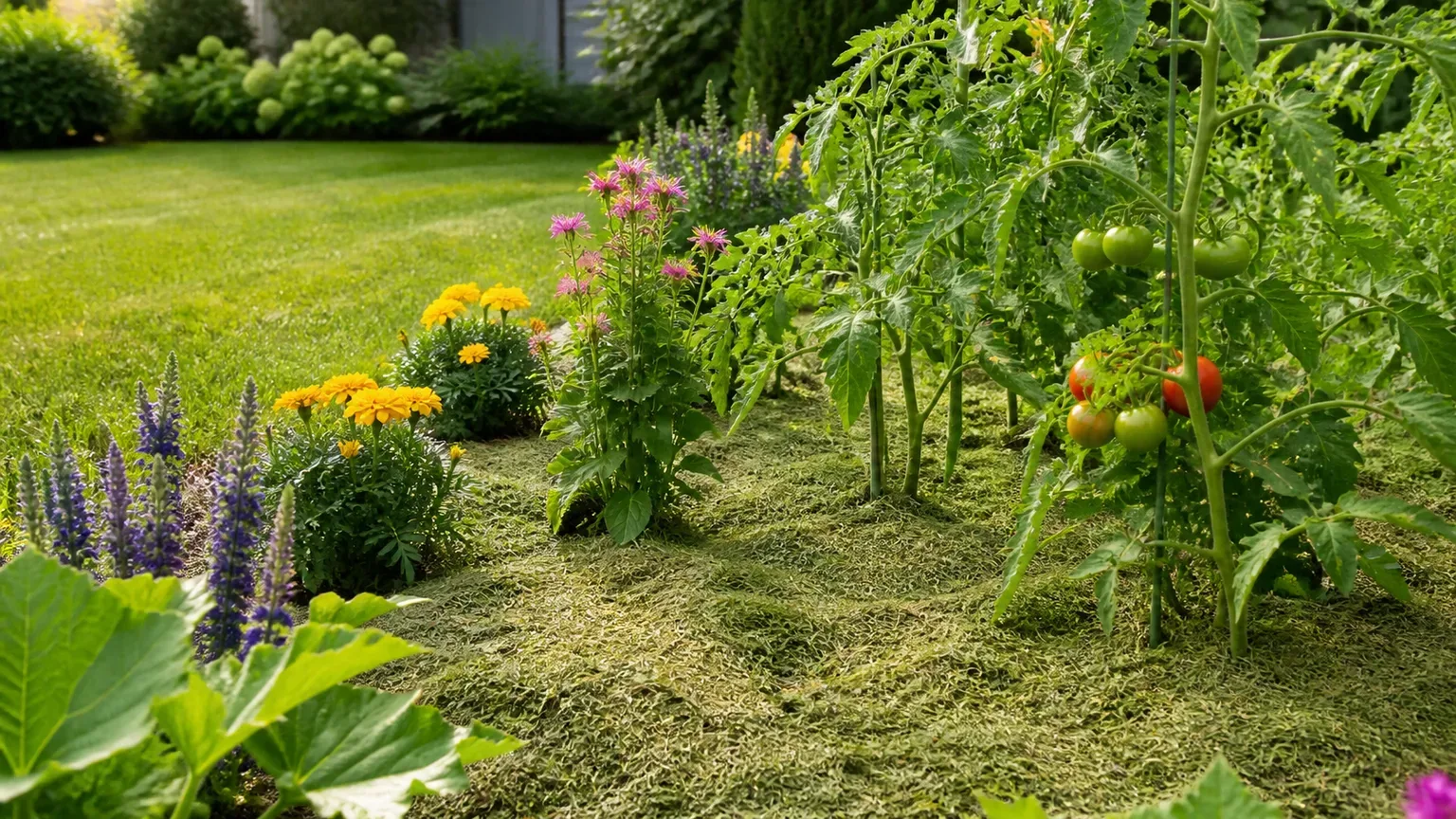
Clean clippings can also become a temporary surface mulch where you can keep the layer loose and inspect it. They are especially convenient when you have a small batch, an established bed, and time to spread the material rather than empty it in a heap. Do not use an unknown or recently treated lawn source around food crops, and do not apply clippings carrying mature weed seeds.
Grass breaks down much faster than bark or wood chips, so it needs more frequent attention and may mat if it is applied wet or too deeply. For the exact layer, placement, and crop-specific limits, see our guide to using grass clippings as garden mulch. If the surplus is larger than a few manageable handfuls, composting or local collection may be less fussy than turning your whole vegetable bed into a grass-drying area.
Dry and Store Clippings You Will Use Later
You do not need to use the entire bag on mowing day. If you have a clean batch but no immediate place for it, spread it in a thin layer on a tarp, driveway, or other clean surface where rain will not soak it again. Rake or turn the material once or twice so the underside is not trapped against the ground. When it feels dry and loose rather than cool, sticky, or clumped, move it into a container that stays dry but does not encourage it to heat or rot.
Dried clippings are easier to transport and meter into compost a little at a time. You can also hold them until garden beds need a light mulch layer. Store only material you know is clean, keep it separate from finished compost and potting supplies, and check the pile if it becomes warm, damp, or musty. A closed plastic bag full of fresh grass is not a good storage method; it holds moisture and compresses the batch.
If the clippings are already slimy or sour-smelling, do not seal them up and wait for a better day. Spread them thinly in a ventilated place to dry if they are otherwise safe to reuse, or remove them to an accepted yard-waste collection route. Drying can fix excess moisture and compaction; it cannot remove weed seeds, disease concerns, pet waste, or pesticide uncertainty.
Use Local Yard-Waste Collection for Large Loads
When there is more grass than your lawn, compost pile, and garden can use, check your municipality, county, or hauler for a yard-waste drop-off or collection service. Before loading the car, confirm whether it accepts grass clippings, whether it is seasonal or resident-only, how material must be contained, and whether treated or diseased grass is excluded.
Rules vary even among nearby places. Fairfax County, Virginia, lists grass clippings as yard waste and says residents may use reusable containers or paper yard bags; it also warns that plastic bags may not be collected. Carver County, Minnesota, likewise identifies grass as compostable yard waste but directs residents to check city eligibility, site hours, accepted materials, and delivery instructions. Those are local examples, not a universal packaging rule. Follow your own service’s current instructions rather than assuming a brown bag, plastic bag, or loose load is accepted (Fairfax County yard-waste guidance; Carver County yard-waste options).
Community collection is particularly useful if you lack a backyard pile or have a seasonal flush of clippings after rain. Call or check the local program page before you make the trip: some sites accept ordinary grass and leaves but have restrictions on bag types, contamination, or service-area residency. Keep the clippings out of storm drains and waterways while you wait for pickup; do not leave a wet mound where runoff can carry it off the driveway.
How to Compost Grass Without Making a Smelly Mat
Use this simple sequence when you have a clean excess batch:
- Loosen or dry the grass. If the bag is wet and compressed, rake the clippings out on a tarp or work them apart before adding them. You want loose pieces, not a dense green carpet.
- Add dry browns first. Make a base from shredded dry leaves, plain cardboard, straw, or another carbon-rich material. A dry layer absorbs moisture and creates air spaces.
- Add a modest layer of clippings. Spread the grass across the brown material rather than tipping the whole mower bag into one corner. If the pile still looks like mostly grass, stop and find more browns before adding another load.
- Cover the green with browns. This helps keep the surface from staying wet and reduces odor. For a small bin, it is easier to add grass in several modest batches than to correct one overfilled, airless pile.
- Check moisture and air. The center should feel damp, not dripping. If the material has a sour smell or forms a solid pad, mix in dry leaves or cardboard and turn it so air reaches the clippings.
Penn State’s guide describes compost as moist like a damp rag and recommends turning to make air spaces and move outer material into the center. Compost speed depends on how the pile is built and maintained; do not promise yourself that every grass-heavy batch will finish in a fixed number of weeks. Use the material when it is dark, crumbly, earthy-smelling, and no longer recognizable as fresh clippings, and give coarse or unfinished pockets more time.
How to Dry, Hold, and Move a Surplus Batch
Large bags get heavy because grass is mostly water. If you cannot compost or spread the batch immediately, drying it before storage makes the next step easier and lowers the chance of a compressed, sour pile. Work on a clean surface away from street runoff, and keep the material separate from clippings that have an unknown treatment history.
Spread a shallow layer rather than a tall heap. If the forecast is dry, sunlight and airflow will do much of the work; if rain is expected, move the tarp under cover or use a surface that drains without sending grass into a ditch. Turn the layer so it dries evenly. The material need not become brittle dust; it just needs to stop sticking together in wet mats.
For transport, use the container your service allows and avoid overfilling it. If you are carrying clippings to a compost pile across the yard, a tarp or wheelbarrow makes it easier to keep the load contained. If a yard-waste program requires paper bags or reusable bins, let the clippings drain and dry enough to avoid tearing paper bags or leaving a wet slurry in the container, but follow the program’s instructions about what it will accept.
When Reuse Is the Wrong Call
Do not try to turn every questionable batch into compost or mulch. Clippings from a lawn with unknown herbicide use, a heavily diseased patch, pet waste, spilled chemicals, or a visible load of mature weed seeds are not automatically safe because they are plant material. These conditions change what the clippings can be used for and, in some cases, what a local facility will accept.
If the lawn was treated, consult the product label or the applicator and honor any restrictions on collecting, composting, or using clippings around plants. If the disease is spreading or the type is unclear, ask a local extension office how to manage those clippings; ordinary home compost may not get hot enough or stay hot long enough to sanitize every problem. For contaminated grass, use the waste authority’s directions for that contaminant rather than placing it in a curbside organics bin by assumption.
Grass clippings do not help bare patches grow new grass by themselves. They contain no seed unless seed-bearing heads are present, and a layer of clippings may block light or smother seedlings if spread over a newly seeded area. Keep them off seed rows and germinating turf. If your goal is to repair a bare lawn, prepare the soil and use suitable grass seed instead of treating clippings as a substitute.
Fix Common Grass-Clipping Problems
The lawn has long rows of clippings after mowing. Let the material dry, then rake it into smaller, thinly scattered layers. If the rows are thick enough to hide turf, collect some rather than trying to spread one heavy load across the entire lawn. On the next cut, mow more often or take down an overgrown lawn gradually over multiple mowings.
The compost smells sour or feels slimy. The pile likely has too much wet green material or too little air. Pull the grass apart, add dry leaves or shredded cardboard, and turn the pile. Do not add water until you have checked whether the center is already saturated; a damp, earthy pile does not need to feel soggy.
The garden mulch clumps into a slick sheet. Break the sheet up and remove the thickest patches. Give the surface time to dry before deciding whether a small, airy amount can stay. If the clippings are from an unknown or treated lawn, remove them from the garden rather than trying to thin them into a safer layer.
You collected more than any home use can handle. Stop stockpiling. Contact your local yard-waste program or hauler and ask about accepted grass, bags, hours, fees, and contamination rules. If that service does not take the material, ask where your county or city sends residents with excess yard waste; do not assume ordinary trash pickup is legal or available for yard material in your area.
A Quick Destination Guide for Each Batch
| Clipping batch | Best next step | Avoid |
|---|---|---|
| Short, dry, evenly chopped pieces | Leave them on the lawn to decompose | Raking up every normal mowing as a default |
| Long but clean clumps | Let them dry, then disperse or compost with browns | Leaving a dense windrow over healthy turf |
| Clean, loose surplus | Add gradually to a balanced compost pile | Dumping a full wet bag into one spot |
| Small clean amount for an established bed | Apply a light, loose surface layer | Covering stems, seed rows, or foliage |
| Mature weed seed heads or visible turf disease | Contain and follow local extension or yard-waste guidance | Spreading through beds or a cool home pile |
| Recently treated or unknown-source grass | Check the product label, applicator, or facility before reuse | Assuming dry grass is automatically residue-free |
| Very large household surplus | Contact municipal or hauler yard-waste service | Guessing the accepted bag or pickup rules |
Use the table as a first sort, not as a replacement for the product label or local waste rules. The same mower load can contain a mix of clean and questionable material, and the most reliable choice is to keep known batches separate before they are combined.
Grass-Clipping Myths That Cause Extra Work
“Every clipping should be bagged.” No. Penn State and county recycling guidance describe grasscycling as a normal way to return nutrients to turf. If pieces are short and spread evenly, bagging them adds work without improving the lawn.
“Leaving clippings always creates thatch.” Thatch is a mat of persistent stems and roots, not simply last week’s chopped blades. Short leaf clippings decompose quickly, while thick clumps can temporarily smother the turf. If a lawn has an actual thatch layer, diagnose and manage that separate condition rather than blaming ordinary grasscycling.
“Grass clippings are fertilizer, so more is better.” Clippings recycle nutrients, but an overgrown or overfertilized lawn is not a target to imitate. The right mowing height and frequency depend on grass type and conditions, and the nutrient content of a batch is not a measured fertilizer analysis. Keep clippings as one part of sensible lawn care; use a soil test and local recommendations if the lawn has a persistent nutrient problem.
“A compost pile will fix any unsafe batch.” Composting is a process, not a guarantee that herbicide residues, weed seeds, pet waste, or plant pathogens disappear. Start with material that is appropriate for the intended use and check exact product restrictions before a treated batch goes near compost or a food garden.
Conclusion
For ordinary mowing, leave short clippings that disappear between the grass blades. When a storm-delayed cut, seed heads, or wet turf leaves a large pile, collect it, inspect it, and then choose among a balanced compost pile, a small and carefully placed mulch use, dry storage, or your local yard-waste service.
The condition of the batch matters more than the label “grass clippings.” Clean grass is a reusable resource; wet clumps need air; treatment history determines where the material can go; and local collection rules determine how to hand off what you cannot use. Make that quick sort before the next mowing and most excess clipping problems become a manageable yard task rather than a smelly heap.



