How to Remove Rust Stains from Toilets, Tubs & Sinks
Learn how to remove rust stains from toilets, tubs, and sinks with surface-safe cleaners, clear steps, chemical warnings, and fixes for marks that return.
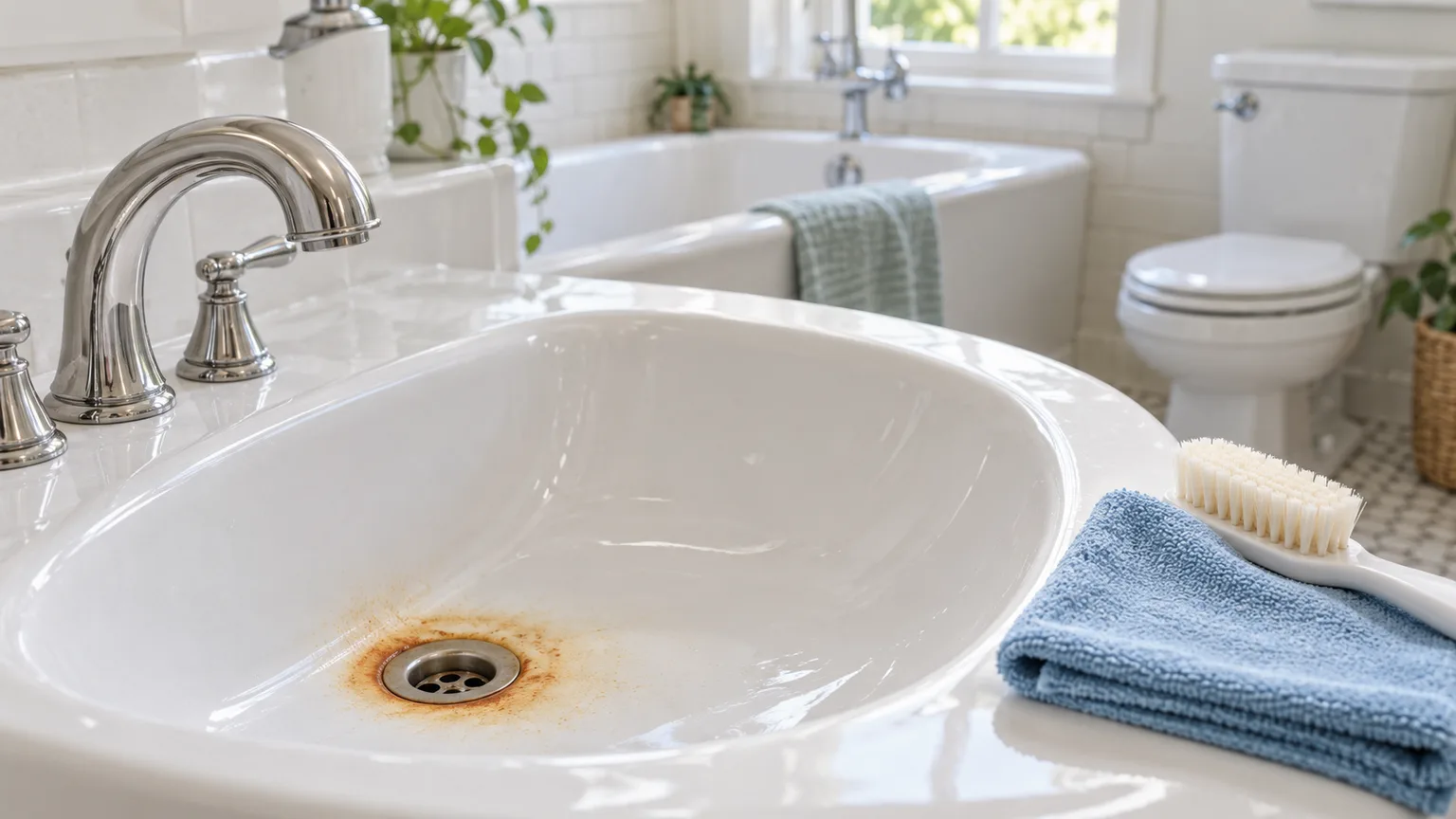
An orange ring at a toilet’s waterline, a rusty halo around a sink drain, or a brown spot on a tub usually responds to a rust-specific cleaner. The catch is that the “right” cleaner depends on what the fixture is made of: glazed porcelain tolerates a different approach than acrylic, chrome, natural stone, or an older enamel finish.
Start by checking the fixture manual or manufacturer’s care page, then read the cleaner label for that exact surface. Use one product at a time, test it in a hidden spot, keep to the stated contact time, and rinse thoroughly. A cleaner that removes the stain can still damage a finish if it is too acidic, left on too long, or scrubbed with an abrasive.
Confirm the stain and the fixture material
Rust is iron oxide: iron from water or a nearby metal object reacts with oxygen and moisture, leaving an orange, red-brown, or tea-colored mark. Stains often collect at drains and waterlines because droplets sit there, but color alone does not prove the mark is rust. Identifying the pattern first prevents you from using a harsh rust remover on a stain it cannot fix.
Is it rust, mineral scale, or a different orange mark?
Rust often looks like a thin orange-brown film, a ring at the waterline, or a stain beside a metal can or razor. If it returns after the fixture is used, iron-bearing water or a corroding plumbing part may be feeding it. A chalky white or gray crust is more likely mineral scale; a slimy pink-orange film may be a surface biofilm rather than iron oxide.
Wipe a small area with a damp white cloth. A dry, powdery deposit that softens with water may be mineral residue; a slick film that smears is not a reason to reach for an acid rust remover. If the stain is rough, pitted, or appears to be beneath the glaze, it may be damage to the finish rather than removable surface rust. Cleaning can remove the deposit, but it cannot restore missing glaze.
Match the treatment to the surface
“Porcelain,” “enamel,” and “acrylic” are not interchangeable labels. Porcelain is a fired ceramic with a hard glaze; porcelain enamel is a glass-like coating over metal; acrylic and fiberglass tubs have softer, more scratch-sensitive surfaces. If you do not know which you have, search the fixture model number or contact its manufacturer before using an acidic or abrasive product.
Porcelain toilets and vitreous-china sinks
Glazed porcelain and vitreous china are generally more resistant to household cleaning than plastic or plated finishes, but the glaze can still scratch or etch. A toilet brush or soft nylon brush is usually a safer first tool than a pumice stone, metal scraper, or scouring pad. For a sink, use a soft sponge or cloth and keep cleaner away from the faucet finish unless its label also permits that material.
For a rust-marked toilet, use a cleaner labeled for rust and for toilet bowls, then follow its directions exactly. A product approved for porcelain or fiberglass is not automatically approved for every nearby surface, such as brass trim or a coated faucet. The current product page for CLR Calcium, Lime & Rust Remover lists porcelain and fiberglass among its uses, while also excluding cast iron, natural stone, brass, copper, aluminum, galvanized metal, and painted or coated surfaces; that is a useful reminder to check both surfaces and label conditions.
Enameled, acrylic, and fiberglass tubs
An enameled tub may be porcelain enamel over cast iron or steel. Even if the visible surface looks like porcelain, do not assume a cleaner is safe for the base material or an older, worn glaze. KOHLER advises against abrasive cleaners on its enameled cast-iron sinks, and Martha Stewart’s enamel-stain guidance also stresses soft tools and material-safe products.
Acrylic and fiberglass are easier to scratch than glazed ceramic. Follow the tub maker’s care instructions, and use a soft damp cloth or sponge if permitted; Sterling’s acrylic-bath care guidance specifically warns against abrasive materials such as brushes and scouring pads. A cleaner that is safe on one fiberglass tub may not be safe on every acrylic, refinished, or coated surface, so spot-test and do not let the product sit longer than its label allows.
Chrome, natural stone, and unknown finishes
Protect the drain, faucet, overflow plate, and decorative trim while treating a nearby stain. Chrome plating can be scratched or dulled, and acids can attack some metals and coatings. Martha Stewart’s chrome-cleaning guidance recommends starting gently and avoiding abrasive tools; use only a rust remover that explicitly lists the exact metal finish.
Do not apply an acidic rust remover to marble, limestone, travertine, or another natural stone. Acids can dull or etch stone and may damage sealers; the same is true of many coated or refinished surfaces. If the stain crosses a seam or a surface you cannot confidently identify, ask the fixture maker or a stone-care professional rather than guessing.
Choose the least aggressive cleaner that can work
For a fresh, light mark on a surface whose maker permits mild acids, a small amount of plain distilled white vinegar or lemon juice may loosen the deposit. Apply it to a cloth rather than spraying broadly, leave it on only briefly, then wipe, rinse, and dry. This is a cautious trial for a small surface stain, not a universal recipe or a substitute for the fixture’s care instructions.
Skip homemade combinations that add salt, scouring powder, baking soda, or another cleaner to the acid. Coarse particles can scratch a glaze or tub surface, and combining an acid with an alkaline powder consumes some of the acid instead of making a stronger rust remover. Do not use “cleaning vinegar” just because its higher acidity sounds more effective; more acidity also increases the chance of damaging a finish.
When a mild acid can help
Use a mild acid only after confirming that the fixture material tolerates it and no other cleaner remains on the surface. Keep the liquid on the stain rather than letting it run over the faucet, grout, stone, or caulk. If the stain lightens but remains, rinse and reassess before repeating; if the finish becomes dull, rough, or discolored, stop immediately.
Vinegar is not a magic fix for every orange toilet ring. It may work on light deposits, but old, layered rust often needs a product specifically formulated and labeled for bathroom rust. If vinegar does not make a visible difference after a short, label-safe trial, repeated long soaks are unlikely to be the best next step.
When to use a labeled rust remover
For a persistent stain, choose a rust remover whose current label names both the stain and the surface. Check the “do not use” list as carefully as the “safe for” list. The Good Housekeeping Cleaning Lab notes that rust removers vary by surface, ingredient, and application method, and recommends testing an inconspicuous spot before a full application in its rust-remover testing and use guide.
Use the product’s dilution and dwell time rather than copying a recipe from another brand or page. For example, current CLR product directions call for a small-area test, a specified dilution for many hard-surface jobs, a short contact time, and thorough rinsing; the manufacturer’s toilet instructions may differ. Product formulas and labels change, so the bottle in your hand is the final instruction.
Set up safely before applying cleaner
Put on the protective equipment listed on the product label, open a window or run the bathroom exhaust fan, and move towels, bath mats, toiletries, and children or pets out of the work area. Keep a clean wet cloth and rinse water nearby so you can remove drips promptly. If the product calls for eye protection or gloves, use them; do not rely on a strong smell as a warning system.
Before applying an acid, identify what was used on the fixture during the last cleaning. Rinse away the previous product thoroughly, and do not treat an area that still has bleach, chlorine-based toilet cleaner, or another chemical on it. Poison Control explains that mixing bleach with an acid can release chlorine gas; acids include vinegar and some rust or toilet-bowl cleaners. Never combine products, even if one seems to have been diluted.
Read the label all the way through before opening the bottle. Confirm the cleaner is intended for that fixture, whether it must be diluted, how long it can stay wet, what to do if it splashes, and how to rinse it. Use only enough to cover the mark, keep it off incompatible nearby surfaces, and close the container before you start scrubbing.
Remove rust from a sink or tub without scratching
- Remove the source of contact rust. Take away any metal can, razor, or wet tool resting near the mark. If the stain is beneath the object, clean the item’s footprint and dry the surface so the spot does not reform while you work.
- Rinse away loose soil. Use water and a soft cloth to lift soap residue and grit. Grit trapped under a sponge can scratch a glossy surface, so rinse the cloth often rather than rubbing dry debris across the finish.
- Spot-test the chosen product. Apply the smallest amount to a hidden area of the same material. Follow the label’s contact time, rinse it completely, and inspect after it dries; a wet surface can hide dulling or color change.
- Treat only the stain. Apply the approved cleaner with a damp cloth, soft sponge, or the applicator specified on the label. Keep the surface wet only for the stated dwell time, then use light pressure. Do not scrub harder as a substitute for giving a product its labeled time.
- Rinse and dry. Flush the area with plenty of clean water, wipe it dry with microfiber, and check the finish in good light. If a second application is permitted, repeat the label steps; do not extend the first dwell or leave a cleaner to dry.
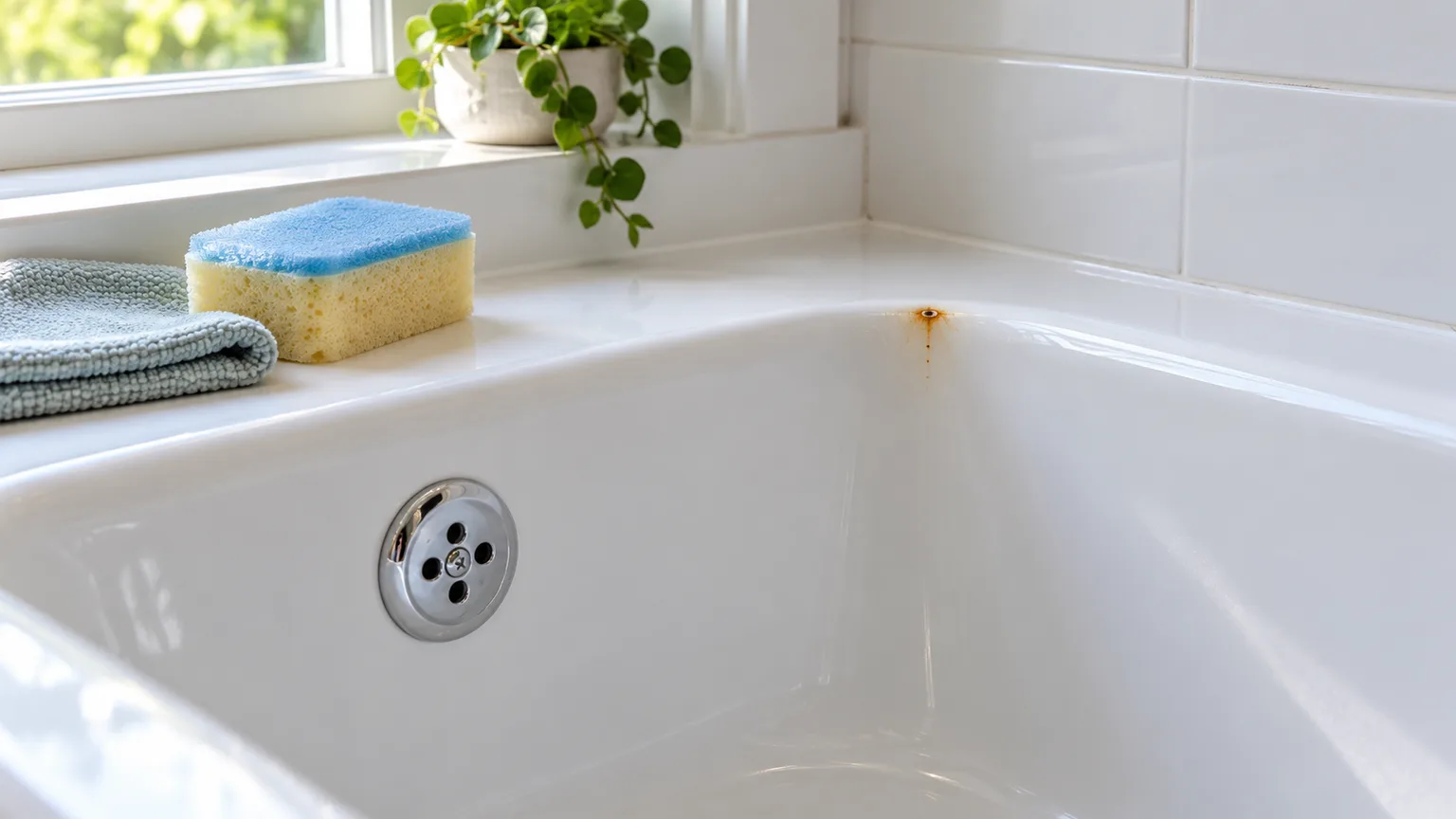
The photo-worthy “scrub until it disappears” approach is where finishes get damaged. If the surface feels rough or the spot is not improving after a correctly applied treatment, stop and look for scale, etching, or a damaged glaze instead of switching to steel wool or a stronger acid.
Remove a rust ring from a toilet bowl
Start with a product labeled for rust and toilet bowls. Put on the label-required gloves, ventilate the room, flush the bowl if another cleaner is present, and make sure the bowl is thoroughly rinsed before using the rust remover. Some products work best after lowering the water level so the cleaner reaches the ring without dilution; do this only if the product instructions call for it and you know how to use the toilet’s shutoff valve safely.
Apply the rust remover where the orange ring sits, including under the rim if the label permits use there. Let it work for the exact labeled time, scrub gently with a toilet brush, and flush or rinse as directed. Never add bleach tablets, disinfectant, drain cleaner, or another toilet product while the rust remover is in the bowl. The CLR manufacturer’s rusty-toilet directions illustrate a short, controlled treatment followed by brushing and a flush, but another product may require a different sequence.
If the ring is below the waterline and the label requires a concentrated application, follow that exact product’s toilet instructions; do not assume that a liquid intended for a sink can be poured into a bowl undiluted. Keep the product away from the seat, tank lid, metal hinges, and nearby finishes unless they are listed as compatible. When finished, flush as instructed and leave the room ventilated.
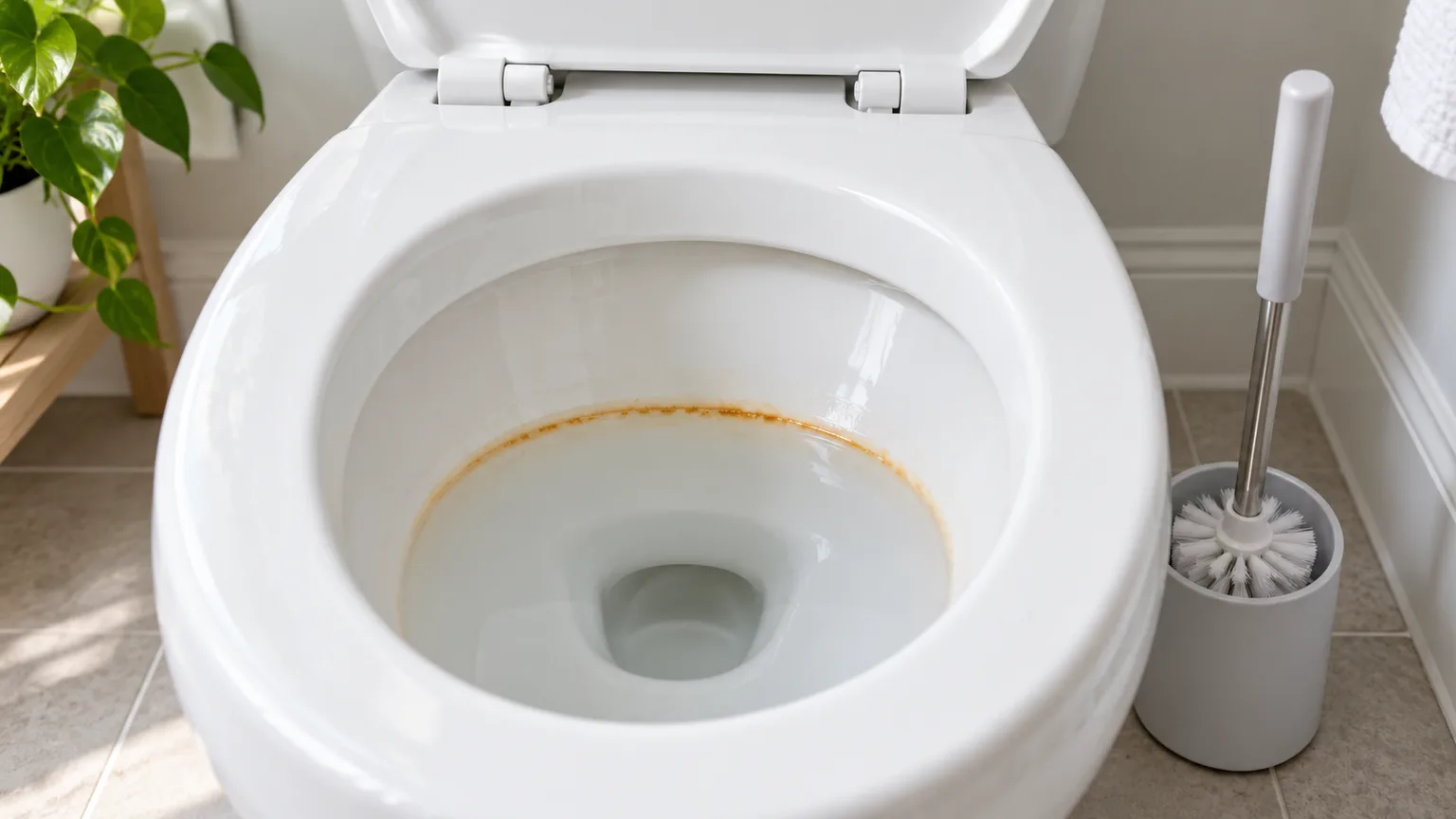
Avoid scraping the bowl with a metal tool. A wet toilet brush or a toilet-safe nonabrasive tool is a lower-risk first choice; pumice should be treated as a surface-specific abrasive, not a harmless shortcut. Use it only if the toilet maker explicitly approves that tool for the particular glaze and the stone is kept wet; never use pumice on acrylic or fiberglass.
If the stain remains after the first treatment
Rinse the surface completely before deciding what to do next. A pale orange shadow may be iron trapped in microscopic scratches, mineral scale covering the rust, or an etched patch that looks like a stain. Do not layer a second cleaner over the first one; first remove residue, let the fixture dry, and reassess the material and the product label.
If the first labeled application lightened the mark and the directions allow repeating, make one repeat treatment at the stated concentration and contact time. If it did nothing, switching to a stronger product without rechecking the surface can turn a small stain into a permanently dull spot. Compare the product’s approved surfaces with the tub or sink model, then ask the manufacturer if the material is uncertain.
Stop if the glaze is chipped, the enamel is pitted, the tub coating is worn, or the stain seems to sit beneath the finish. Iron can collect in damaged areas, and no cleaner can repair that damage. A fixture-refinishing professional may be able to advise on a sound but stained finish; if the surface is cracked or leaking, repair takes priority over appearance.
Avoid these methods and chemical combinations
- Never mix bleach with vinegar, rust remover, toilet-bowl cleaner, or another acid. Poison Control warns that bleach plus acid can produce chlorine gas, which can irritate or injure the eyes and respiratory system. Do not use bleach as the rust treatment, and do not apply an acid on top of a cleaner that may contain bleach.
- Do not mix a rust remover with any other household cleaner. Products may react even when the combination is not obvious from the front label. Use one product, rinse thoroughly, and only then move to a different method if the label permits.
- Avoid steel wool, wire brushes, metal scrapers, and gritty scouring pads. They can scratch porcelain glaze, enamel, acrylic, and chrome. Scratches catch soil and can make future marks harder to remove.
- Do not use pumice on acrylic, fiberglass, chrome, natural stone, or an unknown finish. On porcelain, use it only if the fixture maker approves it, and keep the tool and surface wet.
- Do not leave acid cleaners on longer because the stain looks stubborn. A long soak can etch a finish or damage a coating; follow the dwell time exactly and rinse promptly.
- Do not pour rust remover into a toilet tank or water heater unless that specific appliance manufacturer and product label both direct you to do so. Cleaners meant for a bowl or surface can damage valves, seals, metal components, or other internal parts.
If an accidental bleach-acid mixture creates fumes, leave the bathroom and get to fresh air immediately; do not stay to clean it up. Poison Control advises ventilating the area only if you can do so without re-entering an unsafe space, and seeking urgent help for breathing trouble, chest pain, or severe symptoms. In the United States, contact Poison Control at 1-800-222-1222 or use its online tool for exposure guidance.
Find and fix the source so stains do not return
Cleaning removes the mark that is already on the fixture. It does not remove iron from the water supply or repair corroded plumbing, so a stain can reappear after a few flushes or showers. Use the pattern of the marks to decide whether you need a better cleaning routine or a water and plumbing investigation.
Water-borne iron or plumbing corrosion
If several fixtures develop orange rings, or if water from a cold tap looks yellow or rusty in a clear glass, the cause may be iron in the water, corrosion in plumbing, or a recent change in the supply. A stain that appears in multiple bathrooms is less likely to come from a single shaving can. Private-well owners should arrange water testing through an appropriate local or state-certified laboratory; municipal customers can ask the water utility whether there has been flushing or maintenance nearby.
If only hot water looks discolored, or staining began after a water heater or plumbing repair, ask a plumber to inspect the relevant pipework and heater rather than putting a bathroom acid cleaner into the system. A water softener addresses hardness minerals, but it is not a guaranteed fix for every iron problem. Choose filtration or iron treatment based on a water test and a qualified installer’s recommendation; otherwise, you may buy equipment that does not address the actual source.
Localized metal transfer and tank parts
If one small mark appears exactly beneath a metal can, razor, or metal-footed accessory, remove the object and dry the shelf or tub ledge. A rust ring from contact may stop once the source is gone. Store shaving products and aerosol cans in a dry cabinet or on a plastic or ceramic tray that does not trap standing water.
If a toilet ring reforms quickly in just one toilet, inspect the tank only if you can do so without disturbing the mechanism. Rusty screws, corroded metal components, sediment, or a deteriorating part may need replacement with a toilet-compatible component. A plumber can identify whether the problem is the tank hardware, supply line, or incoming water; avoid replacing parts or pouring a cleaner into the tank as a guess.
Keep rust from forming again
During routine bathroom cleaning, wipe the sink bowl, tub ledges, and other water-catching surfaces dry when practical. Remove metal containers from wet surfaces, fix dripping faucets that leave the same spot wet all day, and clean light orange marks early with a material-approved product before residue accumulates. These steps reduce repeat contact stains, though they cannot correct iron arriving with every flush.
For recurring water-borne stains, keep a simple log: which fixture is affected, whether the stain follows hot or cold water, when it returns after cleaning, and whether the water looks discolored in a clear glass. Share that pattern with the water utility, well-testing lab, or plumber. A targeted diagnosis is more useful than repeatedly changing household cleaners.
Conclusion
Remove rust with a product that names both the stain and the fixture material, apply it for the labeled time, scrub only as gently as the finish permits, and rinse thoroughly. Porcelain, enamel, acrylic, fiberglass, chrome, and natural stone each have different limits, so no single acid or abrasive method is safe everywhere.
Keep bleach and acid cleaners completely separate, and never use a product longer or stronger than its directions allow. If the orange mark keeps returning, check the water and plumbing source; if the finish is rough or pitted, stop cleaning and address the damaged surface.



