African Violets vs. Orchids: What to Grow This Spring
Thinking of replacing an orchid? Compare its bloom cycle and care with African violets, then follow a practical spring routine for light, water, and feeding.
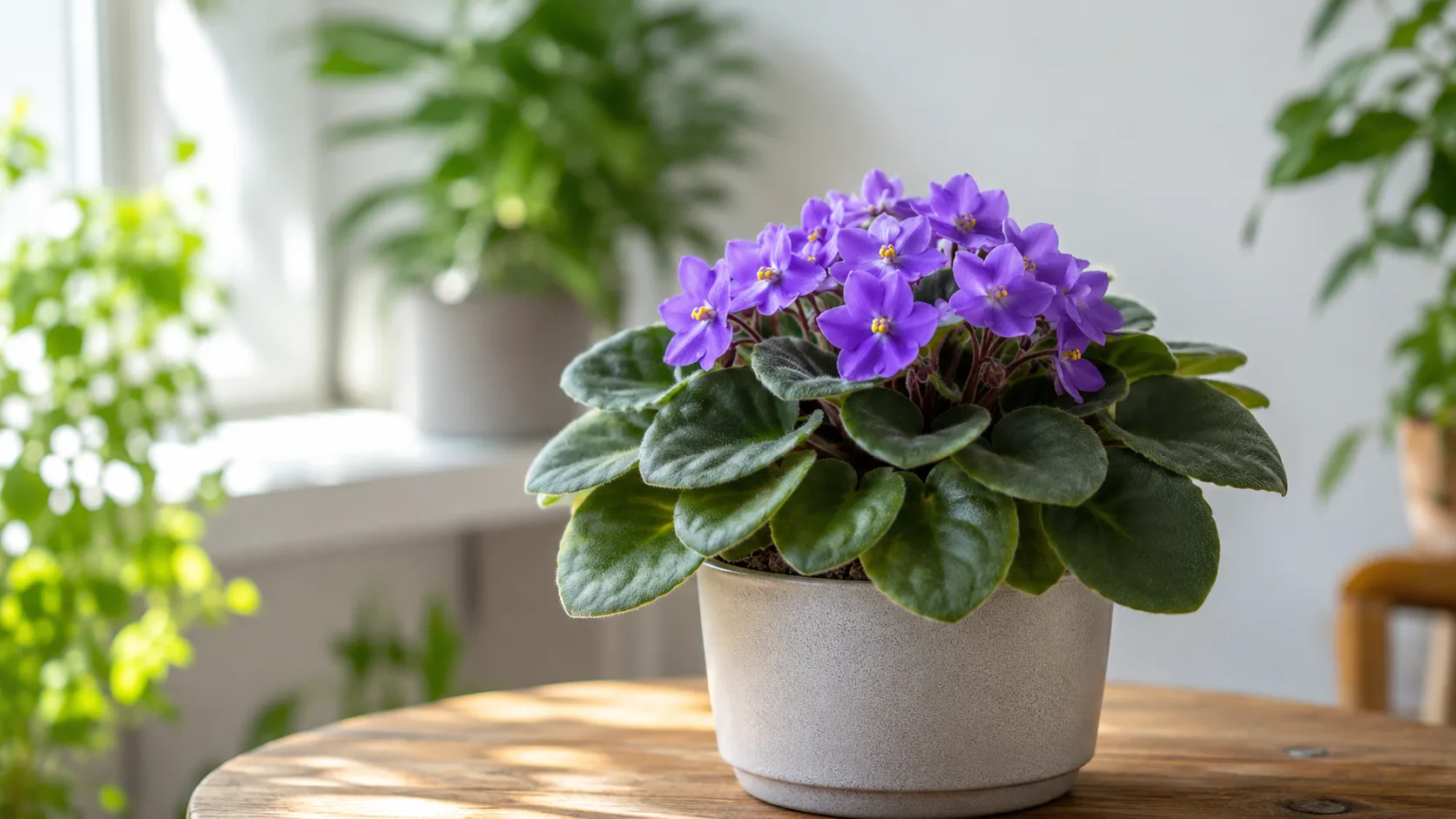
If you want a compact houseplant that can send up fresh clusters of flowers more than once a year, an African violet may suit your spring windowsill better than another orchid. That does not make violets effortless or orchids impossible: violets need useful light and steady moisture, while many common moth orchids can keep one display for months and rebloom with patient care.
The useful question is not which plant is universally easier. It is which kind of flowering, potting setup, and routine fits your room. Keep a healthy orchid if you enjoy its sculptural flowers; choose a violet if you want a small rosette, more frequent chances for color, and a plant that grows in a fine, airy mix rather than chunky orchid bark.
The spring choice: repeat color or a long orchid display
A flowering orchid and an African violet create different kinds of indoor color. A Phalaenopsis, the familiar moth orchid sold in grocery stores and garden centers, carries flowers along an arching spike; those flowers can remain attractive for a long stretch. Better Homes & Gardens reports that moth orchid blooms may last four months or longer, and its current orchid overview notes that some varieties can bloom every year or more than once a year. The idea that orchids flower just once and then sit idle for the rest of the year is too broad.
African violets work more like a compact flowering rosette. Under suitable conditions, they can produce successive clusters, but the plant may pause between flushes, and a new plant or a violet in poor light may take time to flower. Think of the advantage as more opportunities for repeat bloom, not a promise of flowers every week. Better Homes & Gardens and Gardenia both describe orchids as a varied group, with care and flowering shaped by the type.
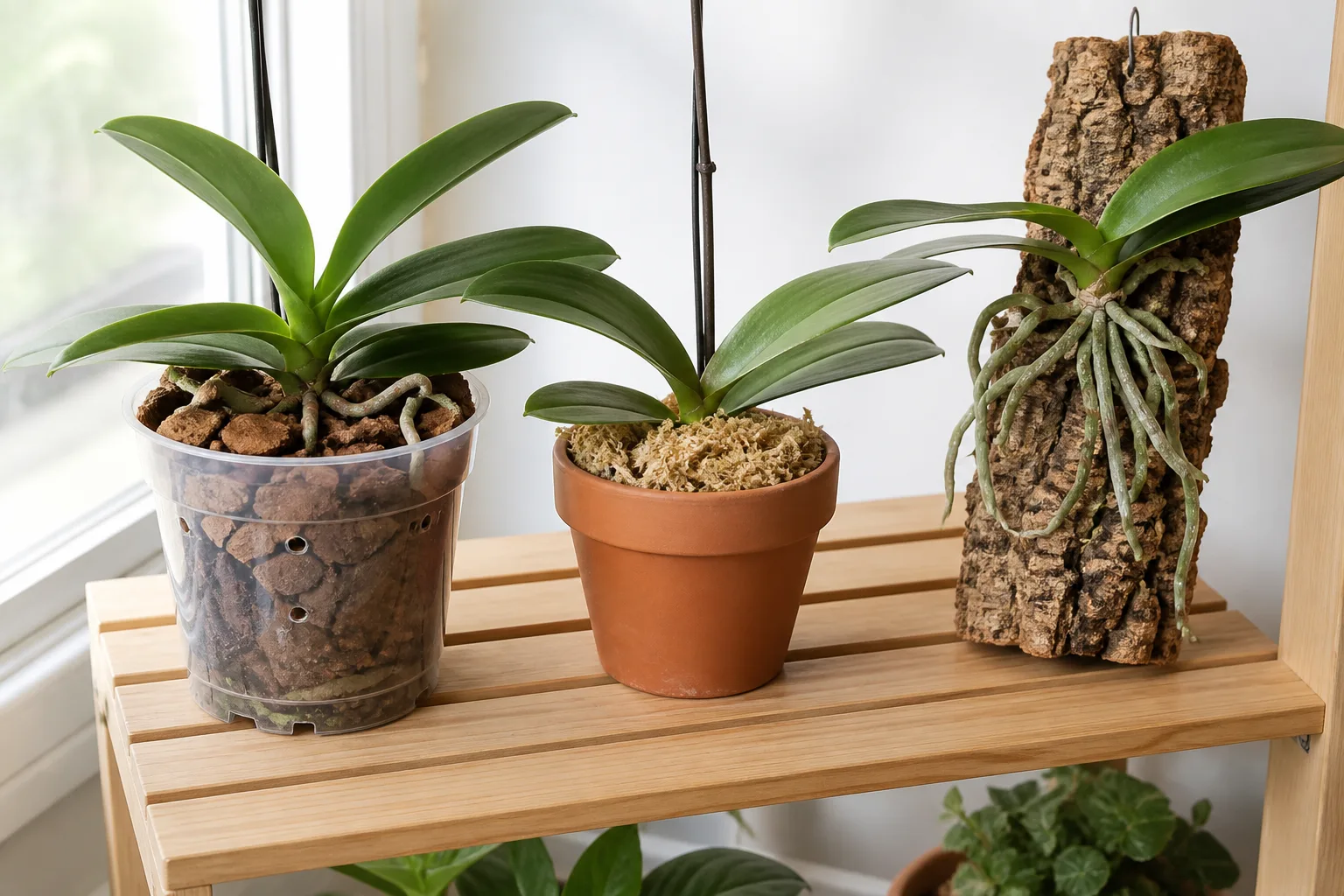
Spring is a sensible time to add a violet because brighter days make it easier to find a good growing spot and support new growth. It is not a deadline to discard an orchid or repot a plant that is doing well. If your orchid is healthy and you like its long-lasting flowers, keep it; you can add a violet alongside it and learn which routine you prefer.
What African violets offer in a small space
African violets stay relatively compact and bring flowers close to the foliage, so a small table, desk, or bright shelf can hold one without needing a floor-sized plant stand. The range is wider than the familiar purple supermarket variety: flowers may be white, pink, red, lavender, blue, or patterned, and leaves can be ruffled, scalloped, quilted, or variegated. UGA Extension describes varieties from miniatures only a few inches across to large plants more than a foot wide.
The trade-off is that fuzzy leaves and a shallow crown make watering technique visible. The roots still need both water and air, and a violet left in dense, wet soil can decline just as an orchid left in soggy medium can. Their advantage is a manageable indoor scale and flexible potting options, not immunity to mistakes.
When keeping the orchid is the better call
Keep the orchid if it is thriving, if you value a single long flower display, or if you already know how to water its medium. Moth orchids can be straightforward once their roots get bright filtered light, a thorough drink, and a chance to dry toward the next watering. Other orchids have different needs, so identify the plant before borrowing a Phalaenopsis schedule for a Dendrobium, Oncidium, or another genus.
Orchids are also a better fit if you prefer checking a clear pot or bark rather than keeping a fine mix lightly moist. The schedule depends on the orchid, medium, container, temperature, and airflow; neither bark nor moss should be watered by the calendar alone.
Choose a violet when you want recurring blooms and are willing to check moisture more often. If your only available space is dim, neither plant is likely to flower well; a small LED grow light can make a violet possible, but a foliage plant is a better choice if you want very little upkeep.
Spring light makes or breaks violet flowering
Set an African violet in bright, filtered light: an east-facing window is a useful starting point, while a bright south- or west-facing window may need a sheer curtain as the sun strengthens in spring. Avoid pressing the leaves against cold glass at night or leaving them in direct midday sun. Rotate the pot a quarter turn every week or two so one side does not lean toward the window.
Use the leaves as a practical light check. Long, weak leaf stems and a dark, stretched rosette suggest the plant needs more light; pale, bleached, or scorched patches suggest the window is too intense. A compact plant with healthy leaves but few flowers may also need brighter conditions, though temperature, pot size, and feeding can contribute.
Artificial light is a reliable alternative if you do not have a suitable window. UGA Extension recommends controlled fluorescent light for violets; with an LED, follow the fixture’s distance instructions, use a timer, and give the plant a consistent day-and-night cycle. UGA Extension’s growing guide explains both window and artificial-light options.
Water by the potting mix, not the weekday
Check the surface and weight of the pot before watering. When the top layer has begun to dry and the container feels lighter, water thoroughly with room-temperature water until a little drains from the bottom; then empty the saucer. If the mix is still cool and damp or the pot feels heavy, wait and check again rather than adding a small splash every day.
Top and bottom watering can both work. For top watering, direct the spout onto the mix and keep water from sitting in the crown, where the leaves meet. For bottom watering, stand the pot in a shallow amount of water until the mix feels moist near the surface, then remove it and let excess drain. Do not leave a standard pot sitting in a full saucer.
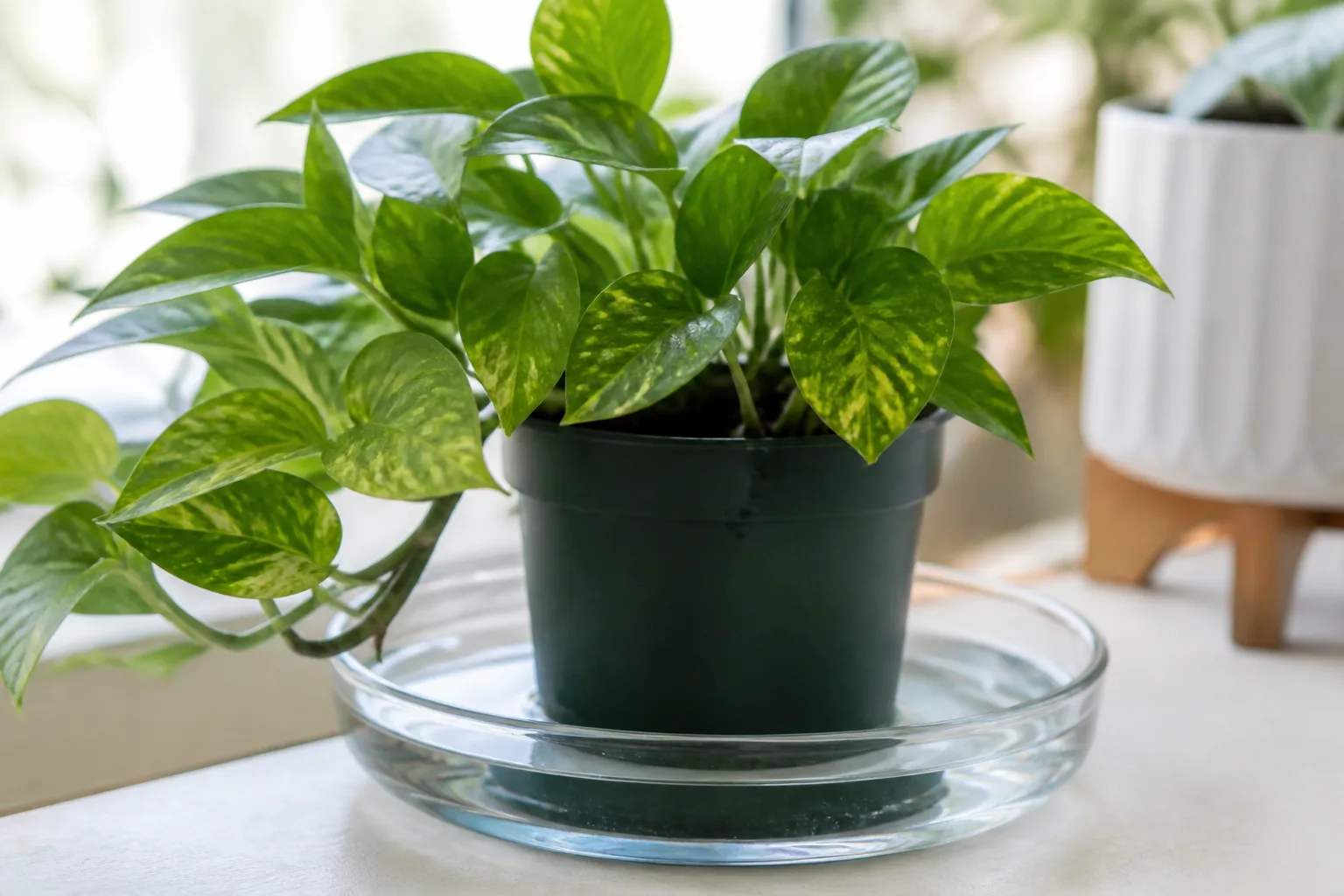
Bottom watering is useful when the rosette spreads over the rim, but it does not rinse fertilizer salts from the mix. Purdue Extension recommends occasional top watering to flush salts, especially for plants kept on a wick. If you see a crust at the soil line, flush with room-temperature water and let the pot drain fully.
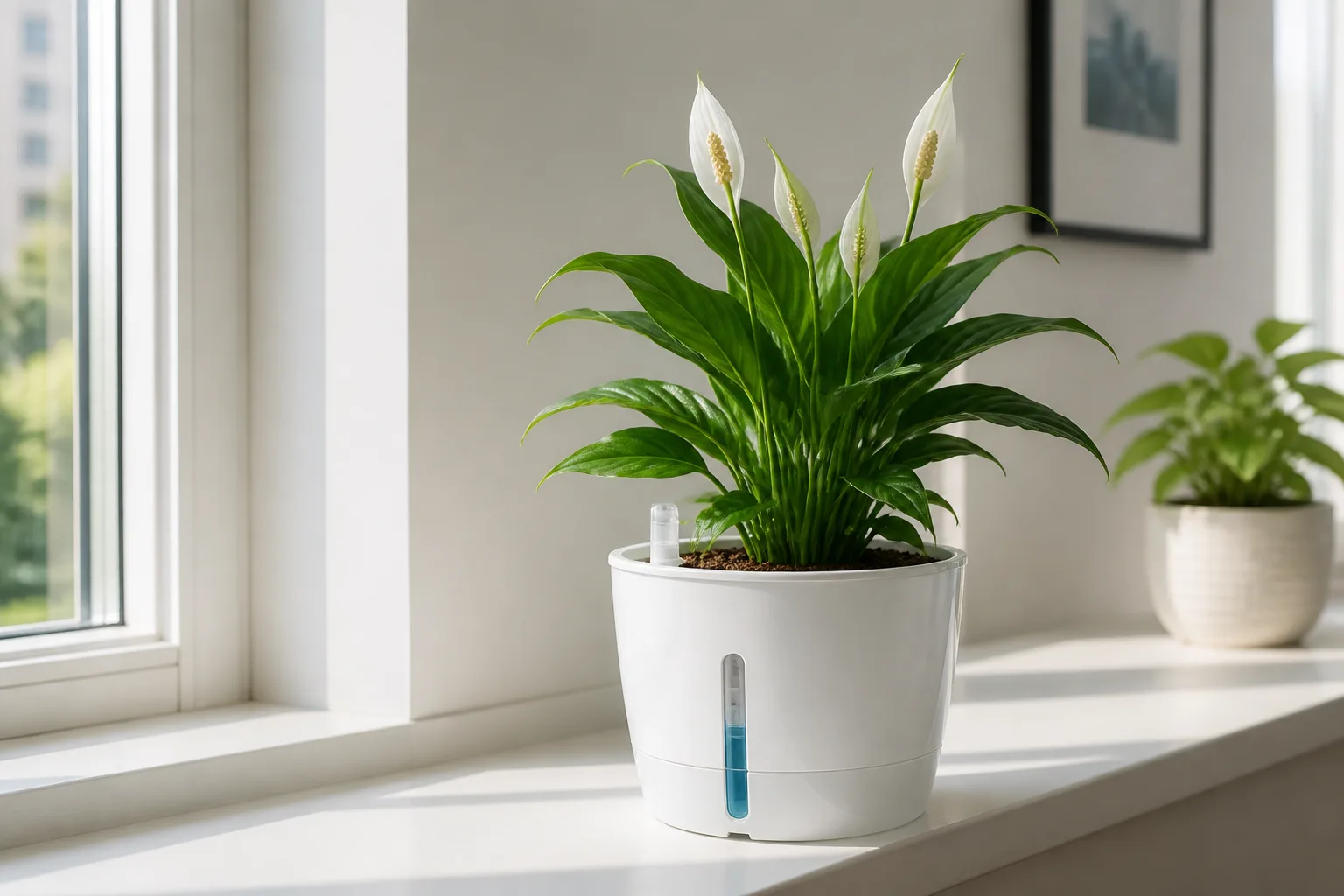
Self-watering pots are optional. A wick can reduce daily checking, but the mix must stay airy and the reservoir should not keep the roots saturated. First learn how quickly the mix dries in a regular pot; Purdue Extension’s guide describes wick watering and why periodic top flushing matters.
Choose an airy mix and a snug pot
Use a commercial African violet mix or another light, porous potting mix that holds some moisture without packing tightly around the roots. If a standard houseplant mix feels dense or stays wet for many days, blend in extra perlite or choose a mix sold for African violets. Do not use garden soil indoors: it compacts in a small pot and can stay short of air after watering.
The container needs a drainage hole. A decorative cachepot is fine if you lift out the nursery pot for watering and empty any water below it. Avoid a container so large that a small root system sits in a wide ring of damp mix.
Violets flower best when the root ball is not surrounded by excess soil. When repotting is needed, refresh the old mix and move up only one modest size if roots have filled the pot. Repotting into a much larger container does not make a plant grow flowers faster; it can leave the unused mix wet for too long. UGA Extension recommends loose, well-drained media and containers with drainage, while experienced grower Kevin Lee Jacobs also notes that an oversized pot can delay flowering in his African violet growing notes.
Temperature and humidity: keep the room comfortable
African violets do not need a greenhouse to grow in a home. Ordinary indoor humidity can be adequate, though higher humidity often supports fuller growth. If heating or air conditioning makes the room very dry, group plants together or use a room humidifier; avoid misting the leaves as a substitute for raising room humidity.
Keep the plant away from cold drafts, a chilly pane at night, and hot air blowing from a heater. A stable room around 65 to 75°F is a practical target for a typical home, and prolonged heat can reduce growth and flowering. UGA Extension notes that violets grow and flower under a range of home humidity conditions, while Purdue emphasizes avoiding cold stress and keeping temperatures suitable for growth.
A pebble tray is optional. If you use one, set the pot on stones above the waterline; it may modestly raise nearby humidity but will not correct a dry room by itself. Keep the crown dry and use room-temperature water.
Feed lightly when new growth begins
If the violet is actively making leaves or flower buds in spring, begin a modest feeding routine with a complete, water-soluble fertilizer. Use the product label as the upper limit; starting at half strength is a conservative approach because African violets can be sensitive to fertilizer salts. A small amount supplied consistently is more useful than alternating neglect with a strong dose.
Do not feed a dry root ball, a plant declining from rot, or a violet just moved into fresh mix. Water first if the mix is dry, and hold fertilizer while roots recover from repotting. A plant growing slowly in winter usually needs less than one growing under lights.
If leaves become unusually dark and lush but flowers remain absent, do not automatically add a high-phosphorus “bloom booster.” First check light, pot size, and whether the mix is staying too wet. Excess fertilizer can burn roots or add salts, and more fertilizer cannot replace the energy the plant gets from adequate light. Both Purdue and UGA Extension advise following fertilizer directions and avoiding salt buildup.
Make a low-risk spring reset
Spring care works best as a series of small adjustments. If the violet spent winter in a dim room, move it closer to a bright window over several days rather than shifting it straight into strong afternoon sun. If it already sits in a bright south- or west-facing window, watch for hotter direct rays and add a sheer curtain or move the pot back as the season changes.
Let the plant acclimate before repotting or changing its watering method. A recently purchased violet may already be flowering in a small grower pot; if the leaves are firm and the mix drains, keep that setup for now. Remove the sleeve, confirm the drainage hole is open, and place a saucer underneath. Repot sooner only when the mix is compacted, the roots are declining, or the container cannot drain.
Over the next two or three weeks, note how quickly the pot gets lighter and how the leaves respond. Water when the mix approaches dry, then begin light feeding once new growth appears. Change one condition at a time so you can tell what helped.
A simple first-month routine
In week one, choose a bright spot out of harsh afternoon sun, confirm the pot drains, and let the plant settle. Do not repot a healthy, blooming violet just because the season changed.
For the next few weeks, check the mix every few days until you learn its drying pace; room temperature, window exposure, pot size, and mix all affect the interval. Turn the pot occasionally, remove faded flowers, and empty standing water. By week four, begin diluted feeding only if new growth is active. Healthy roots and leaves count as progress even before another flower cluster appears.
The simplest sustainable setup is a draining pot, a saucer that is emptied after watering, a bright filtered window, and a reminder to check the mix. A wick reservoir may help if you travel or tend to forget watering, but test it while you are home before relying on it for an extended absence.
Troubleshoot the plant before changing everything
If lower leaves yellow one at a time while the center continues to grow, remove the old leaves and check whether the potting mix is drying between waterings. If several leaves soften or yellow together and the mix stays wet, stop watering and inspect the drainage before assuming the plant needs fertilizer. Root problems often begin below the surface, so look for a persistently heavy pot, a sour smell, or roots that are dark and mushy.
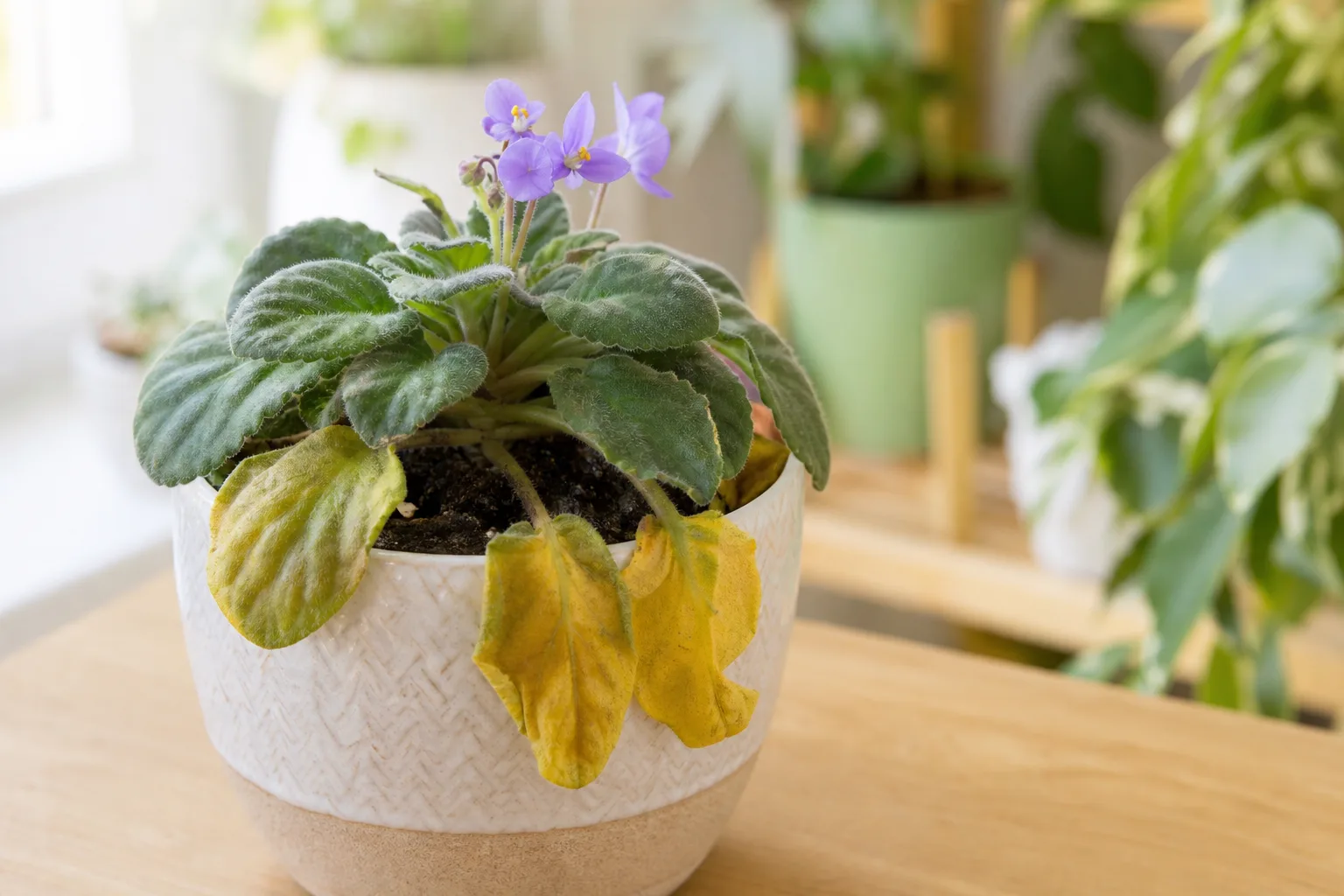
If the crown itself feels soft or leaves at the center pull away easily, keep water out of the rosette and check for crown rot. If the plant wilts while the mix is dry and the pot is very light, water thoroughly and let it drain; do not leave it soaking overnight to compensate. A violet can wilt from both overly dry and overly wet roots, so moisture and drainage are more useful clues than the appearance of drooping alone.
Brown or pale patches can follow strong sun, cold exposure, or water much colder than the foliage. Check where damage appears and whether it is spreading before changing the whole routine; if new marks continue, inspect for pests or lesions.
Get flowers back by checking light first
When a violet looks healthy but stops flowering, check the light before pruning roots or buying more fertilizer. A dark rosette with long leaf stems usually needs brighter conditions; a pale, tightly curled rosette can signal too much direct sun or heat. Adjust one factor, then give the plant several weeks to respond.
Next check pot size, watering, and crown shape. An oversized pot, soggy mix, or crowded multiple crowns may reduce flowering; remove only obvious side shoots, and do not strip healthy leaves to force blooms. A young or recently repotted plant may need time to restore roots and leaves before setting buds, so keep conditions steady if new growth is healthy.
Deadheading, grooming, and propagation
Remove a flower stem when its blossoms fade by pinching or snipping near the base without cutting into the crown. Take off yellow outer leaves with a clean tool and lift dust with a soft brush; avoid rubbing fuzzy leaves or packing debris into the center.
Most violets look balanced with one central rosette. Leave side shoots for a fuller multi-crown plant or separate them when large enough to handle; dividing is optional, not a monthly chore.
Leaf propagation is rewarding but slow. A healthy leaf with its stalk can root in moist, airy medium under bright indirect light; ventilate a covered container if condensation stays heavy. UGA Extension notes that a cutting may take around ten months to flower, so buy a blooming plant if you want flowers this spring.
Choose a healthy violet at the store
Look for a compact rosette with firm leaves, some open flowers, and buds. Check fresh center growth and leaf undersides for insects or webbing. Dark, limp leaves, sour-smelling soil, or a crown buried in wet mix are warning signs.
Choose drainage or keep the nursery pot inside a decorative cover. Let the violet adjust before changing containers, and prioritize clean foliage and balanced growth over the plant with the most flowers that day.
You do not need a rare variety for a satisfying display. A standard violet may be easier to manage than a miniature whose small pot dries quickly; match the plant to your space and confirm you have suitable light before buying.
Match the plant to the home and the grower
Choose an African violet if you have bright filtered light, want compact foliage with repeat chances for flowers, and do not mind checking soil moisture. A draining pot and mix-based watering make the routine manageable; a wick can reduce checks but still needs monitoring.
Keep or choose an orchid if you enjoy its flower spike and longer display, and are comfortable learning its medium. A common Phalaenopsis can be manageable once the pot drains and roots are watered according to how quickly the medium dries.
If your orchid has lost its flowers, check its roots and medium before deciding it has failed. You can add a violet for more frequent color without discarding a plant that is still healthy.
Conclusion
African violets are a strong spring choice when you want a small indoor plant that can flower in repeated flushes, but they are not an automatic upgrade for every orchid owner. They need brighter light for reliable flowering than many people expect, a light mix that drains, and moisture that stays even without leaving the roots saturated.
Start with the light and pot you have, learn the mix’s drying rhythm, and make one adjustment at a time. Keep a healthy orchid if you enjoy its long display; add a violet if the compact shape and repeat blooms suit your home. That choice gives you a realistic expectation of both plants—and a better chance of enjoying flowers without turning houseplant care into a daily rescue mission.