How to Remove Coffee Stains From Clothing Safely
Blot, rinse, pretreat, and wash coffee-stained clothes with a fabric-safe method. Get clear advice for old stains, lattes, delicate garments, and laundry labels.
The quick answer
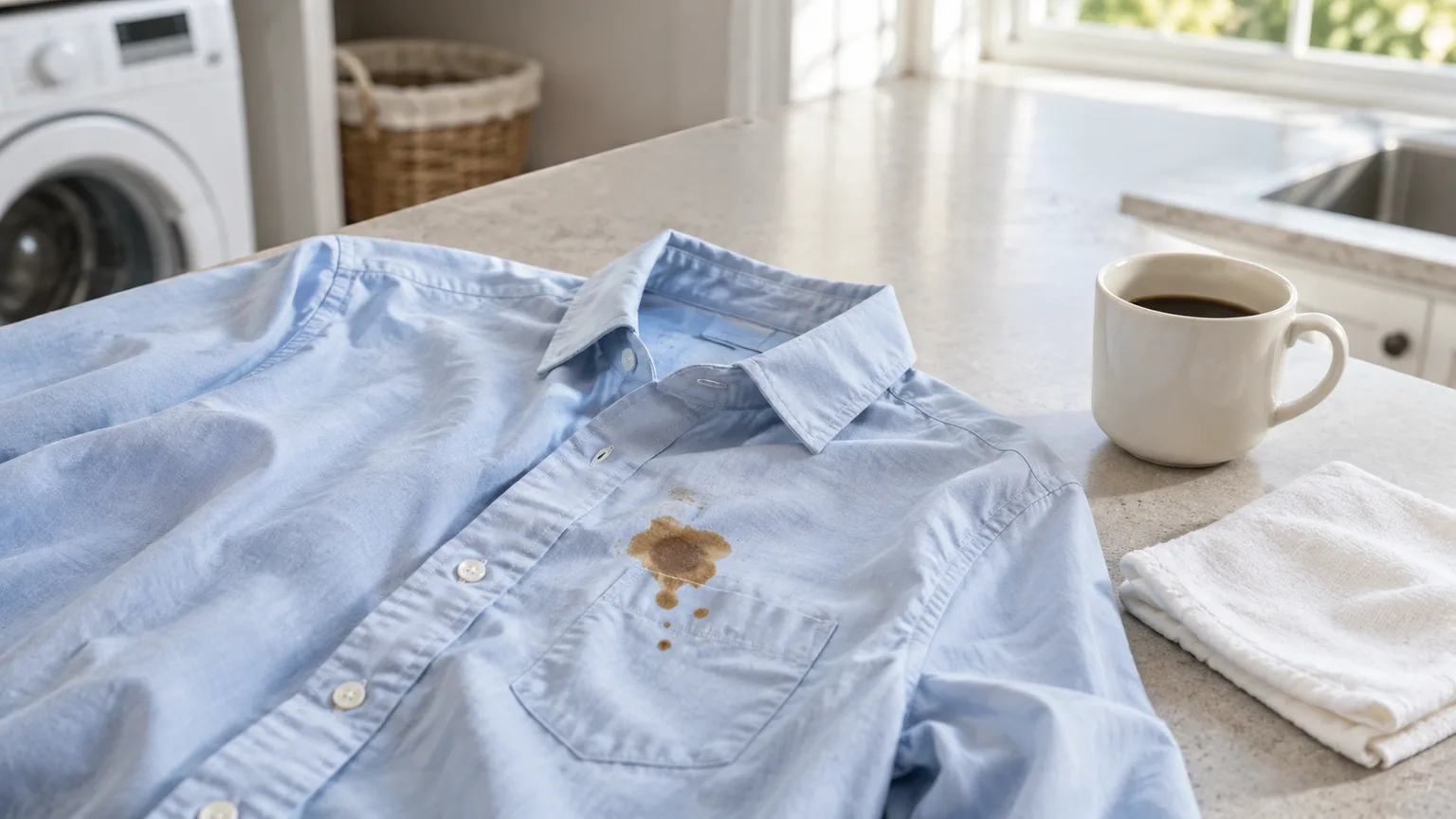
For a washable garment, lift off any coffee you can without rubbing, flush the stain from the back with cool water, work a little liquid laundry detergent or a fabric-safe pretreatment into the mark, and wash according to the care label. Check the stain while the garment is still damp. If you can still see brown, do not machine-dry it; repeat the treatment first.
That sequence works for most fresh spills and gives dried stains a sensible first attempt, too. The main exception is the garment itself: silk, wool, rayon, embellished clothing, vintage pieces, and anything labeled dry-clean-only may need a professional cleaner instead of a wet home treatment. The label and a hidden-area test matter more than a universal stain recipe.
Fresh spill: stop it spreading
Start by lifting the garment away from other clothes or upholstery so the wet spot cannot transfer. Blot the coffee with a clean white cloth or paper towel, pressing and lifting rather than scrubbing. Work from the outer edge toward the center, and switch to a clean section of cloth as it absorbs coffee. Rubbing can spread the liquid and drive it farther into the yarns.
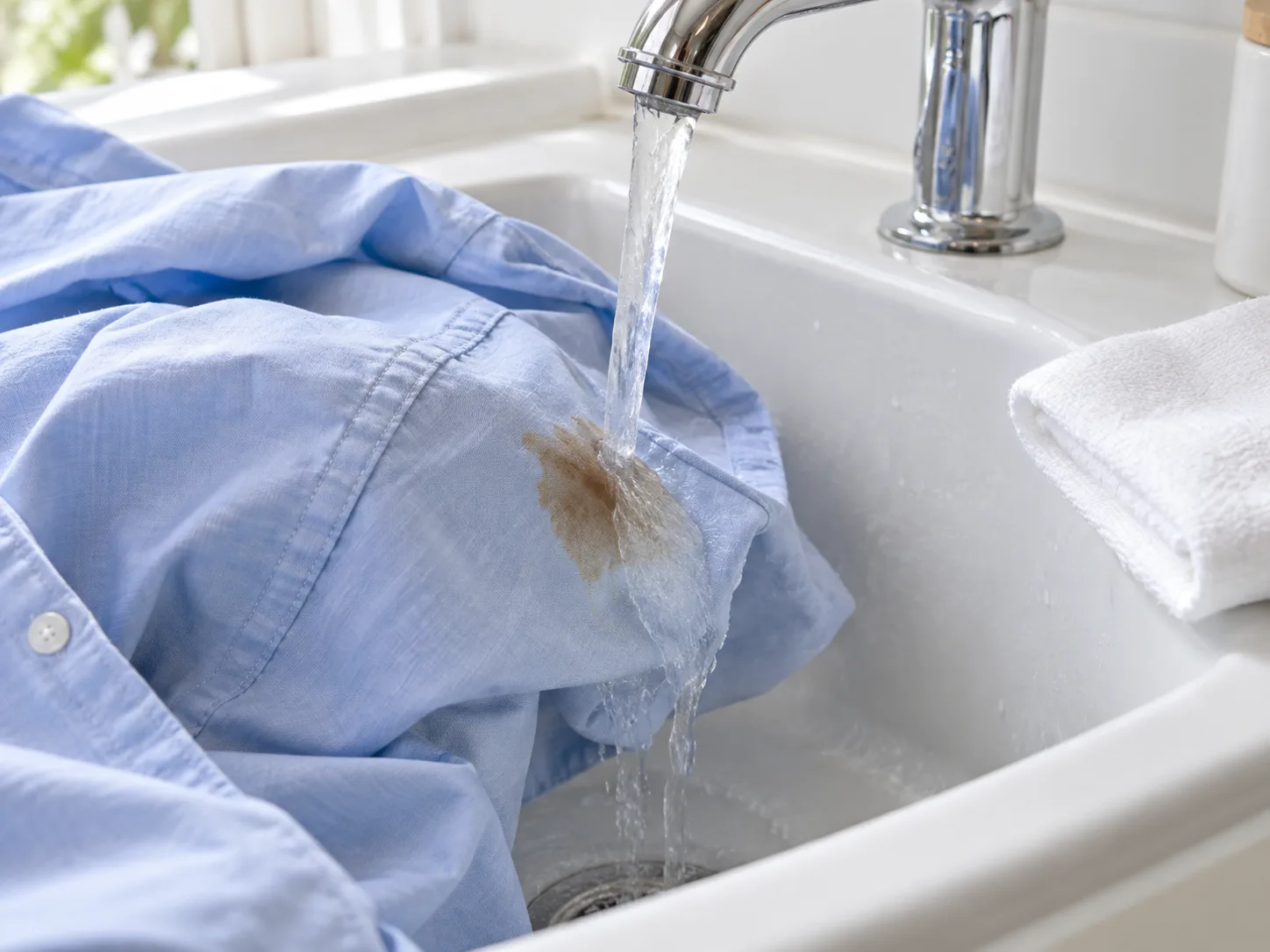
If the fabric is washable, turn it inside out and let cool water run through the back of the stain. That pushes coffee back toward the surface instead of forcing it deeper through the garment. Keep rinsing until the runoff becomes much lighter; you do not need to hold the shirt under a tap for an arbitrary number of minutes. If you are not near a sink, blot first and keep the stain from drying until you can rinse and pretreat it.
That order matches the coffee-specific advice in Martha Stewart’s stain guide, which recommends blotting instead of rubbing and rinsing with cold water before using a treatment. The point is to lift what is still on the surface before choosing a cleaner, not to scrub harder.
Step by step: treat washable clothing
After blotting and rinsing, check the care label before adding a cleaner. For a colorfast, washable shirt, apply a small amount of liquid laundry detergent to the stain and gently work it through the fabric with your fingertips. For a stubborn mark, use a laundry stain remover whose label says it is suitable for that fabric and color. Follow its stated contact time; do not let a pretreatment dry on the garment unless its instructions specifically allow that.
This is a better default than reaching for several pantry ingredients at once. FabricLink’s coffee-and-tea stain chart recommends following the garment label, pretreating, and washing at the hottest temperature safe for the fabric. It cautions against bar or natural soap, which can make some stains harder to remove. Use a laundry detergent labeled for clothes, not a bar of hand soap or an untested solvent.
Pretreat before the washer
Let the detergent or stain remover sit only as long as its packaging directs. If the product has no stated dwell time, work with a modest amount, rinse or wash promptly, and avoid leaving concentrated cleaner to dry in the fibers. For an older stain, a short soak in cool or lukewarm water with laundry detergent can loosen the residue before washing; refresh the water if it turns brown.
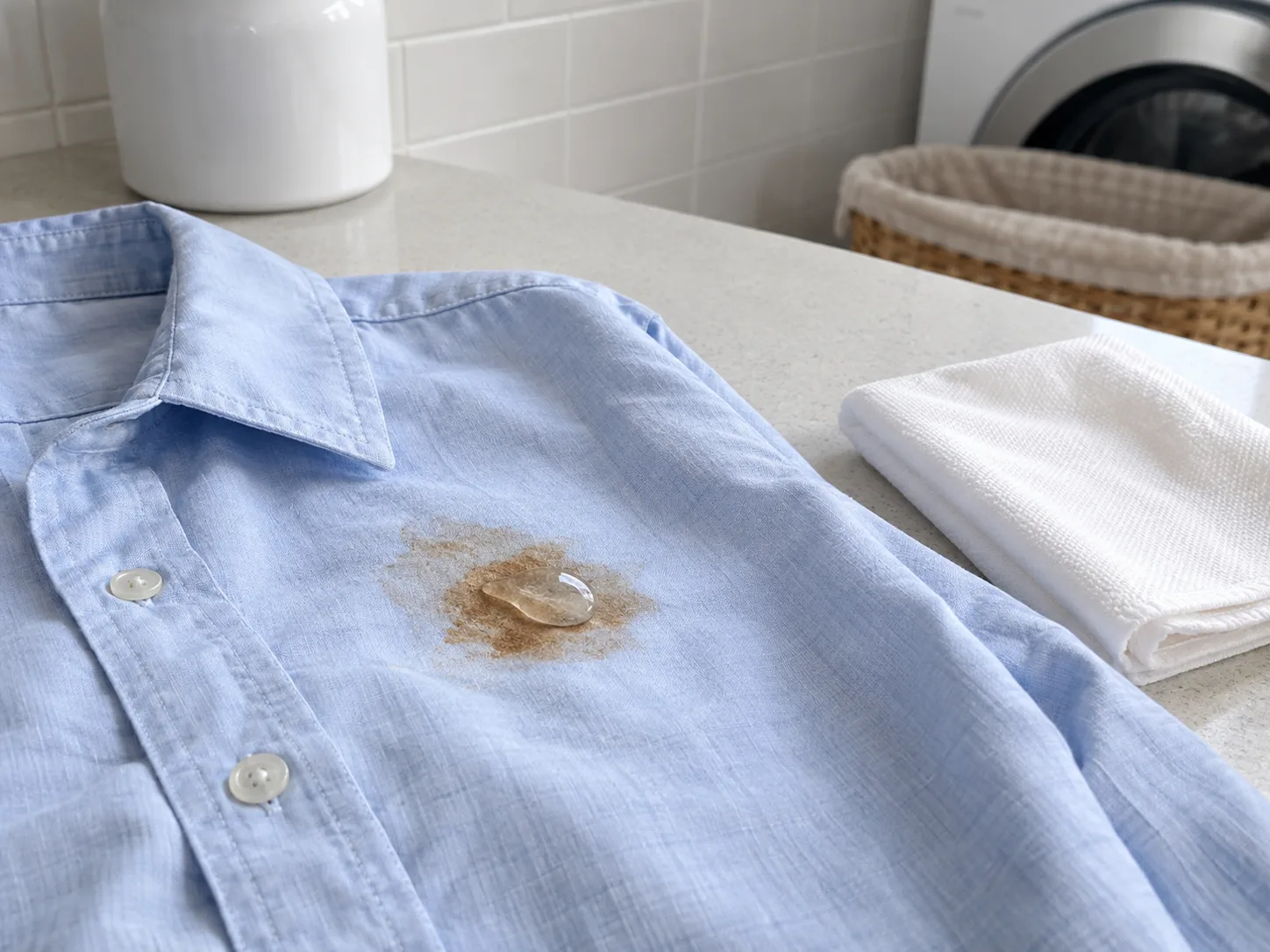
Put the garment in a wash load with enough room for water to circulate and use the detergent dose listed for the load, rather than pouring extra detergent directly into the machine. If you are treating more than one item, separate new dark or bright garments from whites as you normally would. A heavy dose is not a shortcut: detergent left behind can make a washed area look dull or attract soil later.
Choose a wash temperature by the care label
Use the warmest wash temperature permitted by the garment label and the stain-remover directions. The first flush is cool because it helps move a fresh spill out of the cloth gently; the later wash temperature is a separate choice based on fiber, dye, garment construction, and product directions. Cotton may tolerate warmer water than a stretch blouse or a delicate knit, but the fiber name alone does not override the label.
After the cycle, inspect the stained area before using a dryer, iron, or steamer. Tide’s coffee-stain instructions likewise say to follow the care label and repeat treatment if coffee remains before drying. If the mark has vanished, dry the item as its label allows. If a faint ring remains, pretreat and wash again instead of hoping heat will finish the job.
Dried or old coffee stains
A dry stain is harder because the coffee has had time to dry within the yarns, but that does not make the garment automatically ruined. First check that the item is washable, then wet the mark thoroughly with cool water. Apply liquid laundry detergent or a compatible stain remover and let it work for the label’s recommended time. For a washable, sturdy item, soaking in a basin of cool water with detergent can help rehydrate the residue before another wash.
Do not start by scraping the surface with a blade or scrubbing with a stiff brush. Those actions can fuzz a knit, abrade a printed design, or distort a fine weave without removing what is inside it. Instead, gently massage the cloth against itself or use a soft cloth to blot. Rinse, inspect from both sides, and repeat the pretreatment if a brown shadow is still present.
If the stain has already been through a hot dryer, try the same careful rewet-and-pretreat approach once or twice, but set expectations: heat can make removal more difficult, and some marks may not come out completely. Avoid escalating to chlorine bleach or an improvised chemical mix. If the garment is valuable, dark, delicate, or still visibly stained after a couple of sensible cycles, a cleaner is the lower-risk next step.
Coffee with milk, cream, or sweetener
A latte or sweetened coffee leaves more than a thin black-coffee mark. Blot the liquid promptly, then rinse the affected area with cool water and use a laundry detergent suitable for the garment. Do not press the garment into a hot wash before removing as much of the spill as you can; milk and cream leave additional residue that may need detergent and a thorough rinse.
Check the area after washing, especially if the drink contained syrup, flavored creamer, or a large amount of sugar. A sticky feel, lingering scent, or darker edge can mean residue remains even when the brown color looks faint. Repeat the detergent treatment and wash according to the care label. Do not treat a pale ring with perfume, fabric softener, or more coffee-removal products layered over one another; rinse out the first product before trying another.
For a spill on a structured jacket, silk blouse, wool coat, or garment with lining, beads, or glued trim, skip the soak. Blot gently, keep the item dry if its label requires professional cleaning, and tell the cleaner whether the coffee contained dairy or sweetener. Those details help them choose a treatment for the whole stain rather than just its brown color.
Match the method to the fabric
“Clothing” covers fibers that react differently to water, agitation, and heat. A cotton T-shirt may handle a normal wash while a silk blouse can lose color or texture from the same spot treatment. Read the care label first, test any new product on an inside seam, and stop if the test area changes color, sheen, or feel.
Cotton, linen, and durable blends
For washable cotton and linen, the blot-rinse-detergent-wash-inspect sequence is usually straightforward. After testing colorfastness, use liquid laundry detergent or a compatible pretreatment, then wash at the hottest temperature the label allows. The FabricLink general stain rules recommend working from the underside of the stained area toward a clean absorbent cloth, testing stain removers on a hidden part first, and laundering washable items after treatment to remove residues.
Linen wrinkles easily and can have a looser weave than a T-shirt, so handle it gently even when its label allows machine washing. Press with a clean cloth rather than scrubbing the mark, and do not use a stiff brush to force cleaner through the weave. If the garment is dark, printed, or specially finished, color-test the treatment even if the fiber itself seems sturdy.
Polyester, nylon, and other synthetics
Treat polyester, nylon, acrylic, and stretch blends with the same basic sequence, but be conservative about heat. Rinse cool, pretreat with a product approved for the garment, and choose the wash setting printed on the label. A warm kettle pour is not a safe universal fix for synthetics: fabrics that include elastane or special finishes may be heat-sensitive even when a plain polyester shirt tolerates a warmer wash.
Avoid pulling the fabric taut while wet and do not use a hot iron to check whether the mark has disappeared. Synthetic fibers can retain an oily or detergent residue, so rinse thoroughly and inspect the cloth before drying. If the stain remains after a label-safe wash, repeat the same pretreatment rather than switching immediately to strong bleach.
Silk, wool, rayon, and delicate items
For silk, wool, cashmere, rayon, acetate, vintage garments, and items with embroidery or glued embellishments, the care label should decide the next step. A “dry clean” or “dry clean only” label is a warning against soaking the whole garment or applying household stain removers without advice. Even a small water mark can change the appearance of some delicate fabrics.
If the label allows hand washing, test the detergent in a hidden place and use the gentlest temperature and motion it specifies. Blot; do not scrub, twist, or brush. When the stain is on a high-value piece or the label is unclear, stop after blotting and take it to a professional cleaner. Explain what spilled, when it happened, and every product already used.
White, colored, and printed clothes
On white cotton, a coffee shadow can be especially visible, but white does not automatically mean bleach-safe. Start with detergent and the garment’s normal wash instructions. If a stain remains, consider oxygen bleach only if both the garment label and the product label allow it for that fiber and finish. Mix and use it exactly as directed, and rinse or wash the item afterward.
Chlorine bleach is a narrower option, not a general coffee-stain cure. It can yellow or weaken some fibers and strip color from prints, trim, logos, and even garments that look white but contain a blend. Do not apply it to just one small spot if the product instructions require an even treatment; uneven bleaching can leave a pale patch that looks worse than the original stain.
For colored or patterned clothes, test detergent and stain remover on an inside seam and let the test area dry before judging it. A wet fabric can hide a small dye change. If the garment bleeds color, the test spot lightens, or the printed surface feels tacky, stop and consult a cleaner rather than repeating the product over a larger area.
Treat a spill when you are away from home
At a café or on a commute, the goal is to remove excess coffee and keep the fabric from drying—not to complete the whole laundry process in a restroom. Blot with a clean napkin or cloth, working from the edge inward. If plain water is available and the garment is washable, dampen a clean cloth and press it to the back of the stain, then blot again with a dry section.
Club soda can serve as a convenient liquid for blotting if that is what you have, but carbonation is not required. Do not scrub with salt, sugar packets, or a rough paper towel; these can grind particles into the weave or leave residue. Avoid using hand sanitizer, perfume, or an unknown cleaning wipe on colored clothing because alcohol, fragrance, or other ingredients may affect a dye or finish.
Once you are home, rinse from the reverse and follow the regular pretreatment and wash steps. If the item is dry-clean-only, blot without soaking it and take it to a cleaner promptly. Mention that the spot is coffee and identify whether it was black coffee or a milk-based drink; do not wait for the stain to become a large, dry ring before asking for help.
Cold or hot water: what actually matters
Use cool water for the first rinse of a fresh spill, then wash at the warmest temperature allowed by the garment and product labels. This two-stage approach avoids a common mix-up: “rinse cold” and “wash warm” can both be sound advice because they refer to different parts of the process. If the label specifies cold washing, stay with cold water throughout.
Some cleaning guides describe pouring boiling water through a coffee mark on sturdy fabric. That method is not necessary for most shirts and is easy to misuse: a kettle can burn you, and a high temperature can damage heat-sensitive fibers, elastic, dyes, or finishes. If you choose a hotter wash for sturdy washable cotton, use the washer setting the label permits rather than pouring boiling water from a height. A garment label takes priority over a generic stain chart.
Real Simple’s coffee-stain article describes a boiling-water method alongside its lower-temperature approaches. Treat that as an option for suitable sturdy fabric, not a rule for every garment; the safer all-purpose method remains a cool first rinse followed by a label-safe wash.
Why a stain may remain after washing
Check the mark in bright natural light while the garment is damp and again after it air-dries. Coffee can leave a pale tan outline that is hard to see under warm indoor lighting, while leftover detergent or fabric softener can make an area look gray or feel stiff. Look at both sides of the fabric and compare the treated section with an unstained area of the same garment.
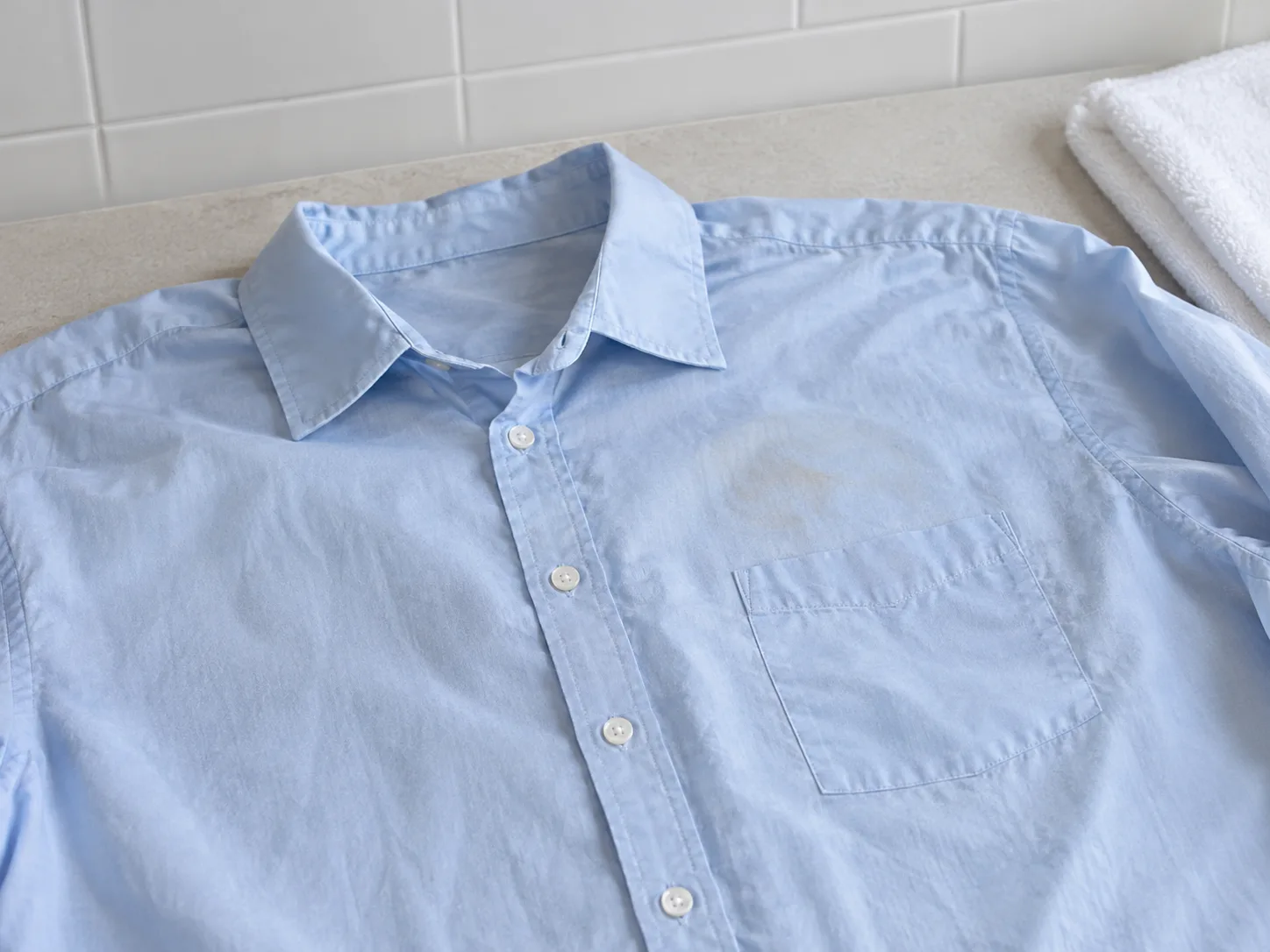
If you still see brown, wet the area, reapply the same compatible pretreatment, and wash again. If the mark is gone but the fabric feels soapy, rinse or rewash without adding another cleaner. If the color or texture has changed, further stain treatment may worsen the damage; stop and ask a cleaner whether the difference is residue, a dye change, or fiber damage.
Do not use a dryer to “see what happens.” Heat is not a diagnostic tool, and once a remaining stain has been dried repeatedly, recovery can become harder. Tide advises repeating its wash process before machine drying when the stain remains; the safest general habit is to inspect first and dry only after the coffee is gone.
Home remedies: what to use and skip
The useful first-line supplies are simple: cool water, a clean white cloth, liquid laundry detergent, and a stain remover approved for the fabric. Club soda is fine for blotting when it is handy, but plain water performs the essential rinse. A laundry product formulated for textiles has directions and fabric-use information; a random kitchen or bathroom cleaner does not.
Skip abrasive scrubbing with baking soda, salt, or toothpaste on delicate or dark fabric. These powders and pastes can leave grit, abrade fibers, or lighten a dye, and they do not replace washing out the stain. Vinegar may be mentioned in household recipes, but it is not needed for a routine coffee spill; test any proposed treatment first and rinse it out before applying another product.
Martha Stewart’s coffee-stain guide also lays out dish-soap, baking-soda, and diluted-vinegar options. If you choose one, follow the garment and product directions, test an inconspicuous area, and use only one treatment at a time; a simple textile pretreatment is easier to control on an unfamiliar fabric.
Never mix bleach, ammonia, vinegar, or stain removers together. Use one product at a time, follow the label, and rinse before changing methods. FabricLink’s general stain guidance specifically cautions against mixing stain-removal products and recommends testing a remover on a hidden part of the garment. If a product label says not to use it on silk, wool, leather, or a particular color, do not try to make it work by shortening the contact time.
When to use a professional cleaner
Take a dry-clean-only garment to a cleaner, especially if it is silk, wool, tailored, lined, beaded, vintage, or expensive. Also ask for help if the stain covers a large area, the dye is unstable, the garment has a special finish, or you have already tried a couple of careful treatments without improvement. A cleaner can assess the fiber and finish before applying a solvent or wet-cleaning method.
Blot away excess liquid, but do not soak the garment or keep layering home remedies on it. Point out the exact stain and say when it happened. Mention whether the coffee had milk, cream, sugar, or syrup and name any detergent, stain remover, bleach, or vinegar already applied; undisclosed products can change how a professional treats the spot.
Conclusion
For most washable clothes, coffee stain removal comes down to a calm sequence: blot, flush from the back with cool water, pretreat with a compatible laundry product, and wash by the care label. Inspect the garment before heat, repeat treatment if a brown shadow remains, and give delicate or dry-clean-only clothing to a professional. That approach removes the coffee you can lift while protecting the fabric you want to keep.