When and How to Prune Rhododendrons
Learn when to prune rhododendrons, how to deadhead without damaging new shoots, and how to reshape an overgrown shrub while protecting future blooms.
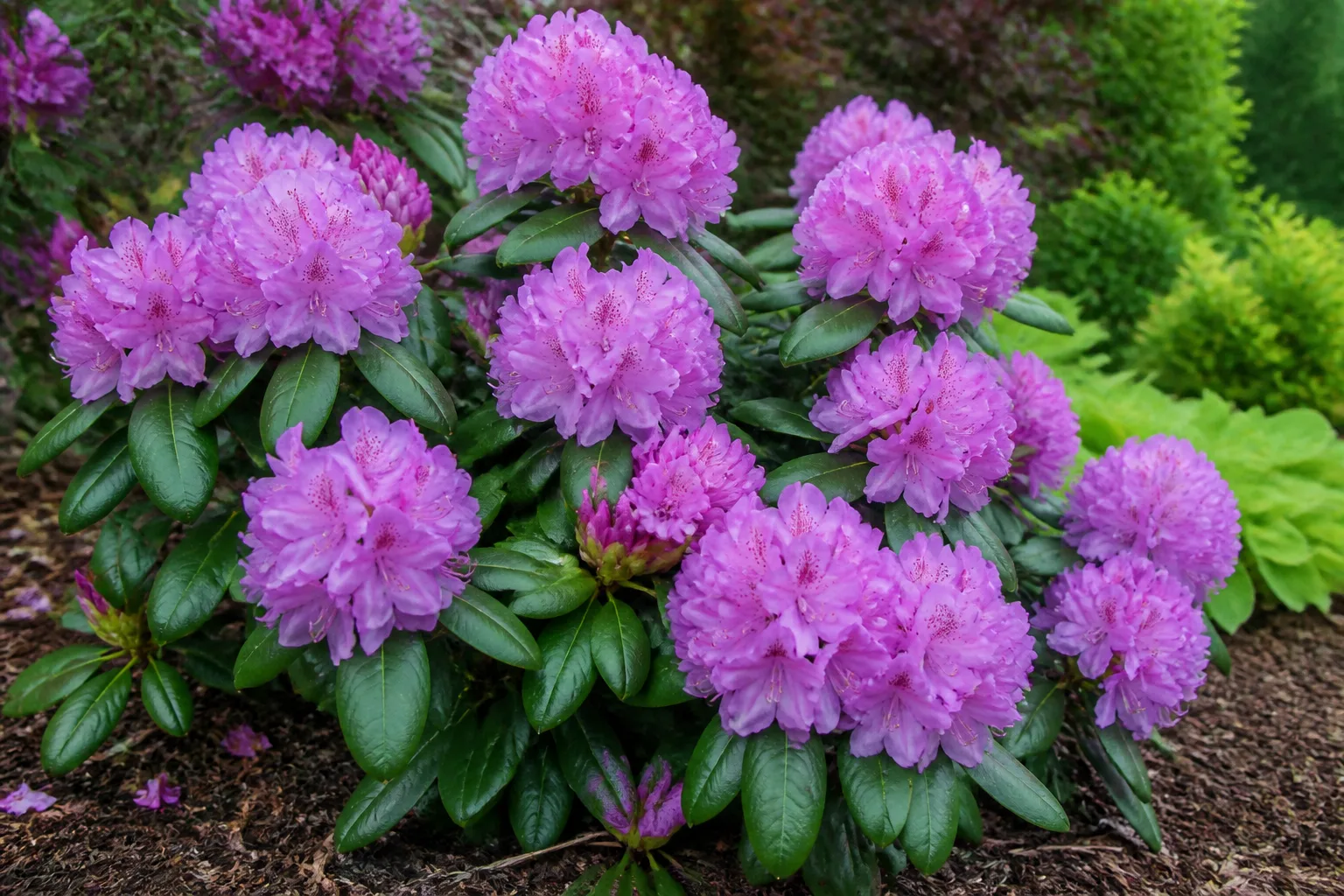
Rhododendrons are often better left alone than clipped on a schedule. A healthy shrub in the right space can flower for years with only occasional cleanup, but a few well-placed cuts can correct crossing branches, remove winter damage, and keep a plant from crowding a path or window. The trick is to decide what you want the cut to accomplish before you reach for the pruners.
For ordinary maintenance and shaping, prune soon after the flowers fade. That gives you a chance to enjoy this year’s bloom and leaves the plant time to produce shoots and set next year’s flower buds. Dead wood can be removed whenever you notice it, while major renovation needs a separate decision: some rhododendrons recover from old wood, but response differs by type and a severe cut may cost you a season or two of flowers.
The quick answer: prune after flowering for routine work
The simplest calendar rule is to prune a rhododendron after its flowering period, not on a fixed date. Depending on the species, cultivar, and climate, that might be spring or early summer. Once the flower clusters have faded, remove dead or damaged wood and make any modest shaping cuts before the plant has started forming next season’s buds.
Rhododendrons flower on older growth. Their next spring’s flower buds begin developing in late summer, so a late-season haircut can remove buds that are already in place. The Royal Horticultural Society notes that buds start forming in late summer, and its pruning guidance places spring-flowering rhododendrons among shrubs that are best pruned immediately after flowering. (RHS growing guide; RHS evergreen-pruning guide)
That does not mean a shrub will die if you prune at another time. It means the goal matters. A dead limb that could fall on a person or break more branches should come out promptly; a routine cut to reduce height can usually wait until after bloom. If you can live with fewer flowers next spring, late-winter shaping is also possible, but it is a deliberate trade-off, not the standard window for light maintenance.
Read the plant before you choose a cut
Look at the whole shrub first, then inspect one branch from its tip to where it joins a larger stem. Rhododendron branches often finish each flush of growth with a whorl of leaves, and the flower truss sits at or near the tip. Those visible landmarks help you avoid removing more than you intended: a cut below several leaf whorls may shorten a branch substantially, while removing a full branch at its origin opens space inside the plant.
Also check whether your plant is evergreen or deciduous, compact or tall, and smooth-barked or rough-barked. “Rhododendron” covers a large and varied group that includes azaleas, and not every cultivar responds equally to hard pruning. The RHS says many respond well to hard cutting, especially deciduous azaleas and rough-barked kinds, while other horticultural references caution that recovery varies. Treat that difference as a reason to test a small section before cutting the entire plant back.
Notice the plant’s health and growing conditions as well. A rhododendron already weakened by drought, waterlogged roots, disease, or recent transplanting has less margin for a drastic loss of foliage. If the shrub is yellowing, wilting, or dropping leaves, diagnose the underlying problem before treating size with a saw. Pruning can improve structure; it cannot repair a failing root system or unsuitable site.
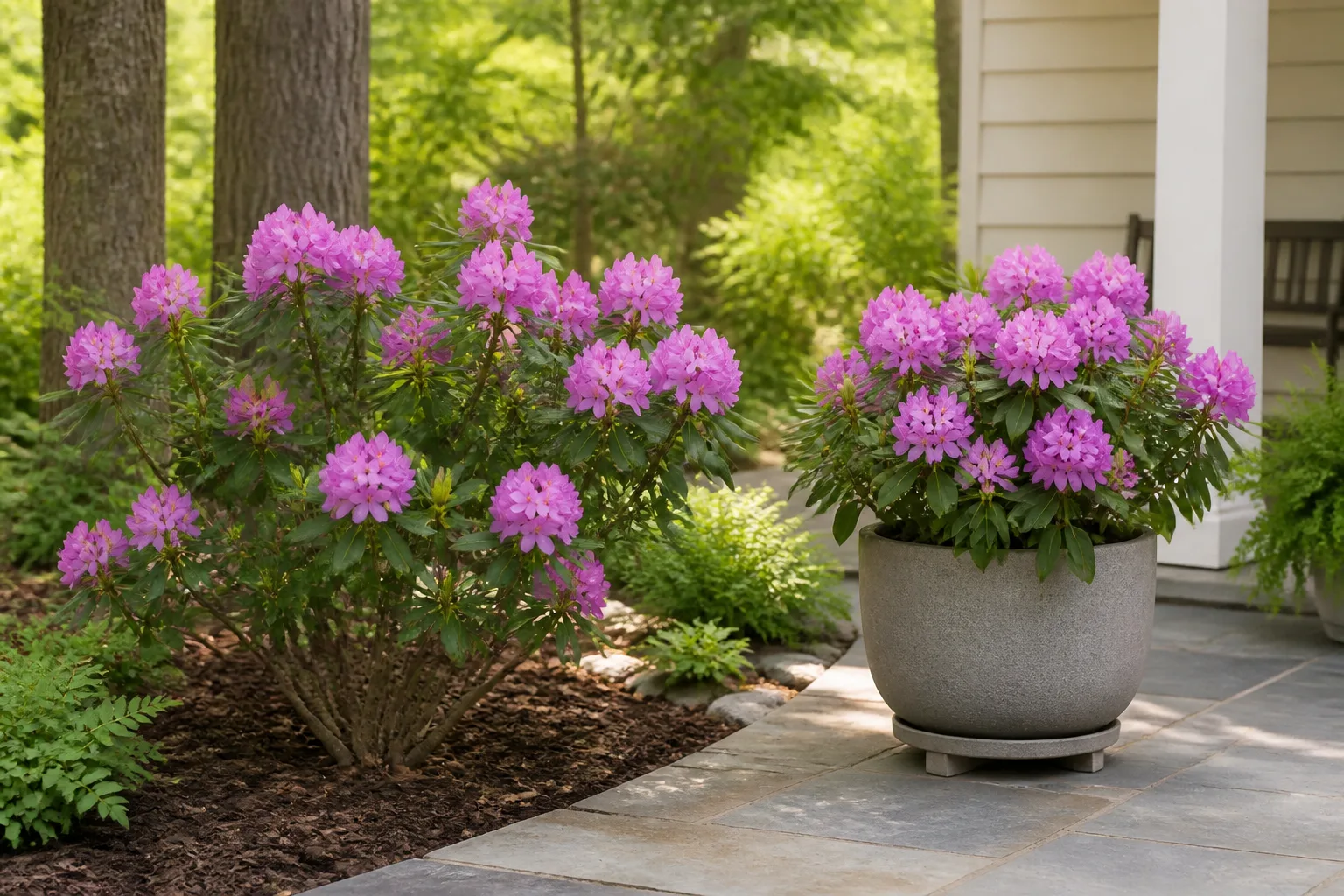
Read the whole shrub’s natural outline and the space it needs to occupy before choosing a cut.
Choose the right pruning goal
“Prune it back” is not a specific goal. Decide whether you are removing a hazard, cleaning up spent flowers, balancing an otherwise healthy shrub, reducing its size, or rebuilding an old framework. The closer your goal is to basic cleanup, the less of the plant you need to remove; a shrub that has outgrown its location may call for staged renovation or replacement rather than repeated cuts that never solve the space problem.
Maintenance and deadheading
Maintenance means removing dead, diseased, broken, or badly placed branches and, if you choose, spent flower clusters. It is useful for nearly any plant that needs it, but it is not an annual requirement. Some rhododendrons drop their flower stalks cleanly or set little seed, so deadheading adds time without a meaningful benefit. Others hold brown trusses that look untidy or set seed, making removal worthwhile for appearance and to reduce seed production.
Do not deadhead just because a gardening calendar says to. Check the base of a faded flower cluster: new leaves or shoots may already be expanding beside it. If the truss snaps off cleanly without taking the new growth, pinching can be quick; if it resists, use small pruners and make a precise cut. Fine Gardening recommends removing the old truss just above the new flush and notes that some small-leaved cultivars do not need deadheading at all. (Fine Gardening: three ways to prune rhododendrons)
Natural shaping
Shaping means adjusting a few branches so the shrub keeps its natural outline, rather than making it into a tight ball or flat-topped hedge. For a branch that is simply too long, trace it inward to a healthy side branch or a leaf whorl positioned where you want growth to continue. A cut just above a useful leaf whorl can encourage buds there; removing an entire unwanted branch back to its point of origin reduces crowding without stimulating a cluster of shoots at an arbitrary spot.
Use shaping to improve balance and preserve the plant’s broad, layered habit. Step back often and look from several sides; a shrub can look level from the front while one side has been stripped bare. If the plant blocks a window, remove or shorten selected stems that cause the problem instead of shaving every branch to the same height. A rhododendron is not a boxwood hedge, and repeated shearing often leaves a dense shell of foliage around a shaded, bare interior.
Renovating a leggy shrub
Renovation is a much stronger intervention for a large, sparse, or badly overgrown plant. It removes older framework branches to prompt new growth from dormant or latent buds lower on the stems. This can restore a more compact structure, but it may expose bare wood, reduce flowering, and leave an uneven look while new shoots develop.
Before renovating, ask whether the shrub is worth preserving and whether it has enough light, water, and space to recover. A plant that is large because it was planted too close to the house may simply become too large again. If the cultivar is unknown, the shrub is in poor health, or losing flowers would be unacceptable, choose gradual thinning or seek advice from a local extension office or experienced rhododendron grower.
Best time to prune rhododendrons
The post-bloom window
For routine pruning, start once the last meaningful flower trusses have faded. In many gardens this is late spring or early summer, but a late-blooming variety in a cool region may finish later than an early variety in a mild climate. Follow the shrub’s bloom rather than a month printed in a generic schedule.
The University of Maine Cooperative Extension describes two legitimate windows for an overgrown rhododendron: late winter and immediately after bloom. It favors post-bloom work when the gardener wants a more selective, natural shape and wants to preserve the flowers. UC Marin Master Gardeners similarly recommend late spring or early summer, after bloom and before July in their local conditions. This timing gives you a practical default, while the local climate and plant’s actual bloom remain the better guide. (University of Maine Extension; UC Marin Master Gardeners)
When late-winter pruning is a reasonable trade-off
Late winter, while a plant is dormant, can be useful when you need to see the branching framework clearly or have planned a major size reduction. The University of Maine Extension points out the central trade-off: dormant heading cuts can control height, but they remove the flower buds that would have opened that spring and may concentrate dense new growth near the cut ends. The shrub can still be pruned; you are choosing structure over that season’s display.
If you make a substantial renovation cut, use a window recommended for your cultivar and local climate. Some nursery and society guidance favors early to mid-spring just before growth starts for hard renovation, while routine shaping remains best just after bloom. Those recommendations are not identical because they address different goals. Follow the goal, not a blanket claim that all pruning must happen on one date. (Russell Nursery pruning advice; Midwest Chapter, American Rhododendron Society)
Why late-summer and fall pruning are risky
Avoid routine size reduction in late summer and fall if next spring’s flowers matter to you. Buds are developing then, and shortening stems can remove them before winter. Late pruning can also encourage tender growth that has little time to mature before cold weather, depending on the climate and how strongly the shrub responds.
An exception is a broken or diseased branch that should not remain. Remove the affected portion to sound wood even if the timing is inconvenient; then clean the tool before moving to another plant. A dead branch is not a flower bud, and preserving a hazard or active disease for the sake of calendar perfection is not useful gardening.
Tools and setup for clean cuts
For flower trusses and pencil-thin shoots, use sharp bypass hand pruners that fit your hand. Loppers give better leverage on thicker branches, and a narrow pruning saw handles stems too large for loppers. Anvil pruners tend to crush rather than slice thin green stems, so bypass blades are usually the more precise choice for live rhododendron growth.
Before you begin, decide where the removed material can go and whether you can reach the branches safely from the ground. Do not climb onto a ladder while reaching into a dense shrub with a saw. If the plant is tall, tangled, close to power lines, or has large limbs that could fall unpredictably, hire a qualified professional instead of improvising overhead cuts.
Start with clean blades and keep them sharp; a clean cut is easier to place and less likely to tear bark. If you remove diseased tissue, disinfect the blades between cuts or at least before pruning another plant. University pruning guidance emphasizes avoiding torn edges and keeping cuts properly placed. On a larger branch, locate the slightly swollen branch collar where it joins a parent stem and cut just outside it. Do not leave a stub, and do not cut flush into the trunk. (Penn State Extension pruning guidance; Fine Gardening pruning guide)
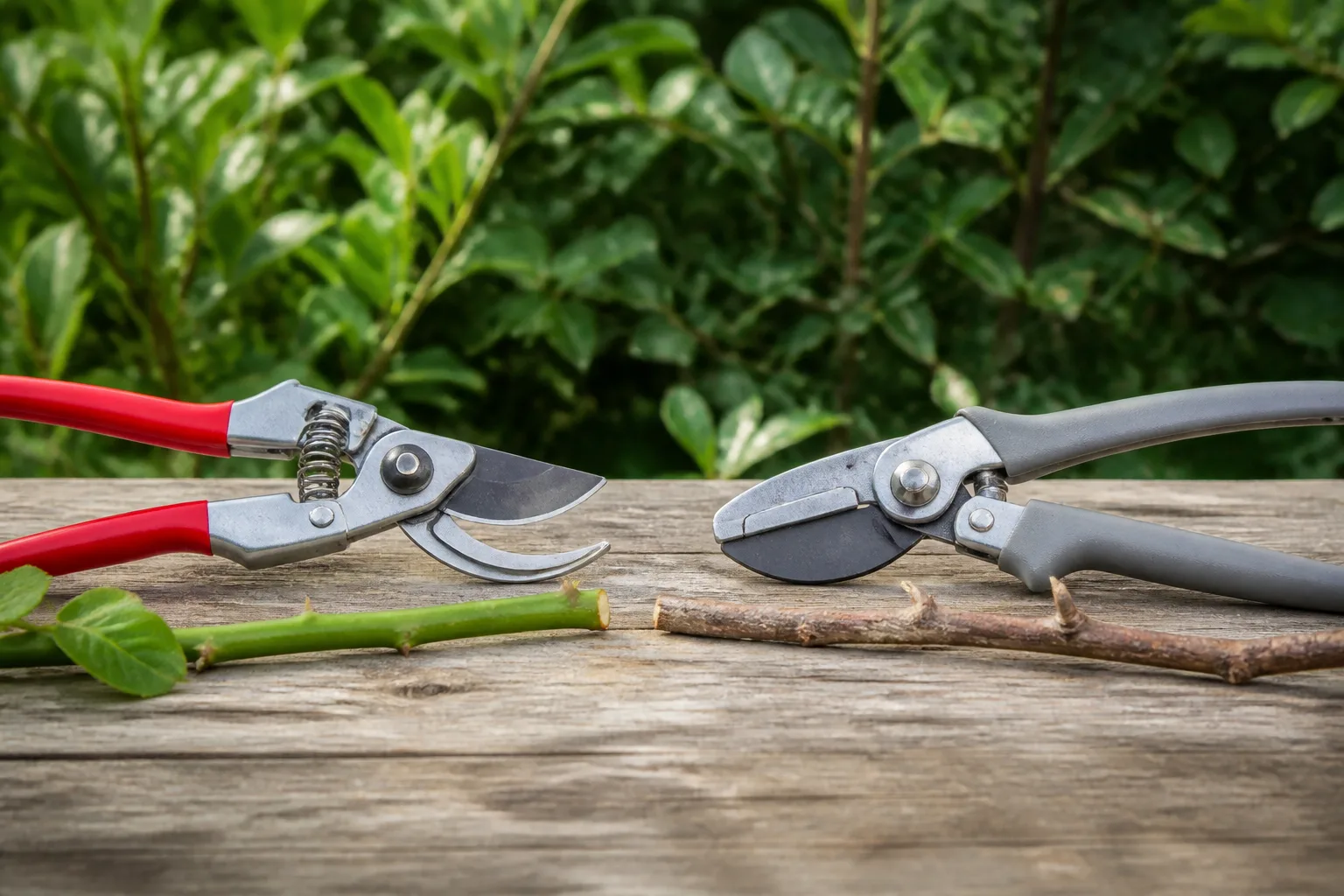
Bypass pruners make a clean slicing cut on live, small stems; use loppers or a pruning saw for larger wood.
How to prune without damaging the framework
Think in terms of three cuts: a deadheading cut removes an old flower cluster, a thinning cut removes a whole branch at its origin, and a reduction cut shortens a stem back to a suitable side branch or growth point. Each has a different purpose. Most established shrubs need a few targeted thinning and reduction cuts, not a blanket haircut.
Remove spent flower trusses carefully
Wait until the flowers have faded, then find the base of the truss and the fresh shoots below it. Hold the cluster steady and either pinch it off if it releases easily or snip its stem just above the new growth. Do not cut through the emerging leaves or the small buds at their base; those shoots extend the branch and carry the next round of growth.
Work around the shrub in a slow loop instead of stripping one side first. If your plant has a dense canopy, move a branch gently to see the junction before cutting. Leave trusses that have already fallen away naturally, and skip deadheading altogether if the flowers disappear cleanly or the shrub is too large to reach safely. Deadheading is optional cleanup, not a cure for poor flowering caused by shade, drought, or damaged buds.
Thin dead, diseased, crossing, and misplaced growth
Start with dead, broken, or clearly diseased branches. Trace a damaged stem downward until the wood is firm and healthy, then remove it at a suitable side branch or branch collar. Dead wood often snaps or has no living buds; if you are uncertain whether a stem is alive, lightly scratch a small patch of bark or wait for nearby buds to break before making an irreversible cut.
Next, remove branches that rub against each other, grow into the center, or lie on the ground. Choose the weaker or less well-positioned branch and remove it at its origin rather than shortening both ends. This opens the interior to air and light without turning the outer canopy into a clipped shell. The UC Master Gardener guidance for rhododendrons recommends thinning and releadering cuts to remove crossing branches and, where necessary, reduce height or width.
Do not remove every inward-pointing twig just because it points inward. Some interior growth fills the plant’s structure and protects branches from sun exposure; the goal is to resolve actual congestion or friction. Stop after a few cuts and reassess how the shrub looks from the path, window, and garden side.
Shorten a branch without shearing the whole canopy
When one stem extends too far, cut it back to a living lateral branch or a leaf whorl that points in a useful direction. Make the cut close enough to the chosen growth point that you do not leave a long bare stub, but do not damage the bud or cluster of leaves. If the stem is thick, use a reduction cut to a side branch that is large enough to take over as the new end; avoid leaving a tiny twig to support an oversized branch.
For many rhododendrons, follow a branch inward to the last whorl you want to keep, then cut a short distance above that cluster. This can encourage growth near the cut. It is a heading-style reduction and can produce several shoots, so use it selectively where you want branching—not on every stem at once. If you want to make the canopy less dense, remove a whole stem to its origin instead.
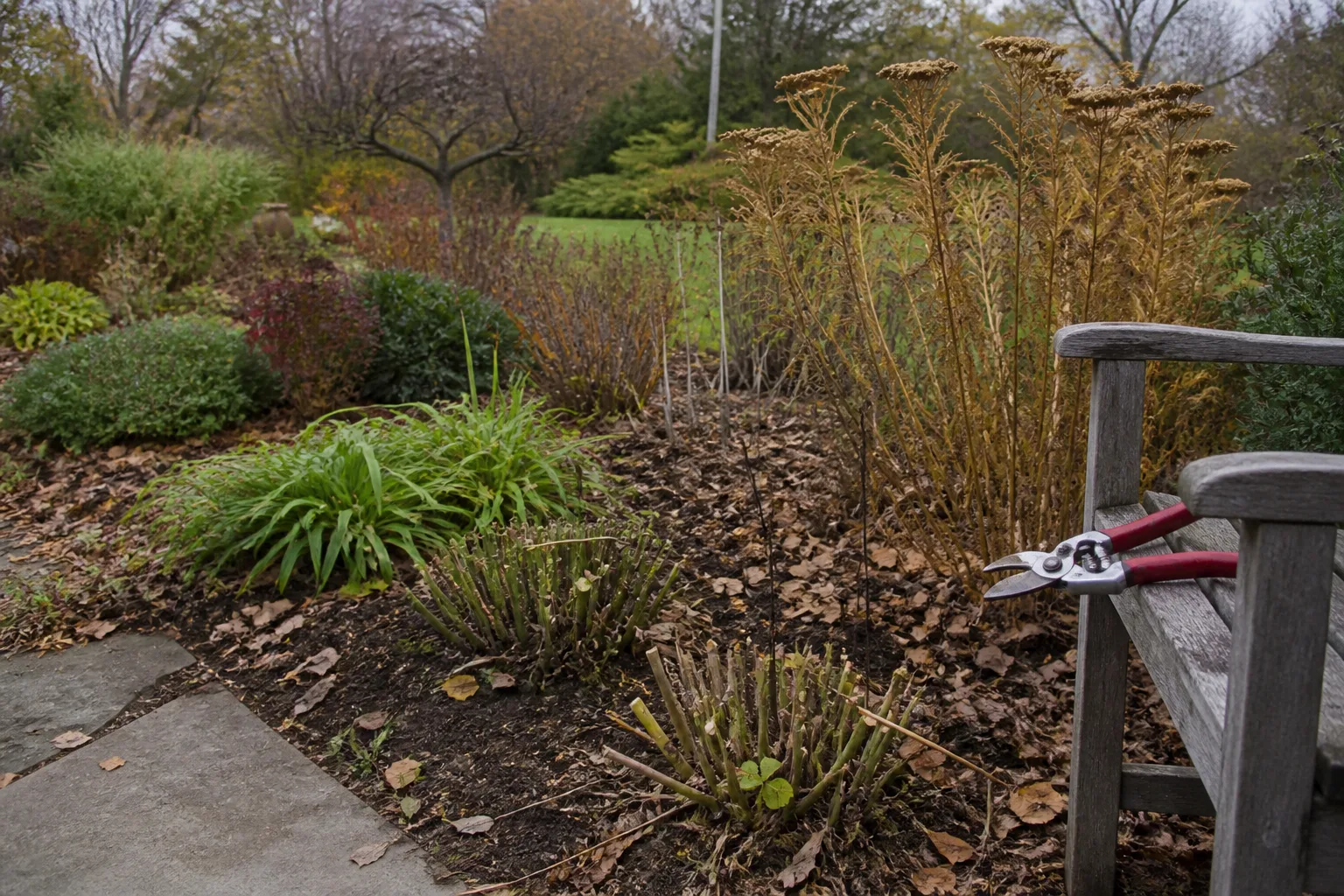
Selective cuts preserve a shrub’s varied natural outline better than clipping every tip to one plane.
How to renovate an overgrown rhododendron
If the shrub is only slightly too large, begin with the most intrusive stems and spread the work across two or more post-bloom seasons. The University of Maine Extension describes gradual thinning over three to four years as one way to maintain a balanced appearance while reducing an old shrub. That approach also lets you see whether new shoots are emerging from retained branches before you commit to removing more.
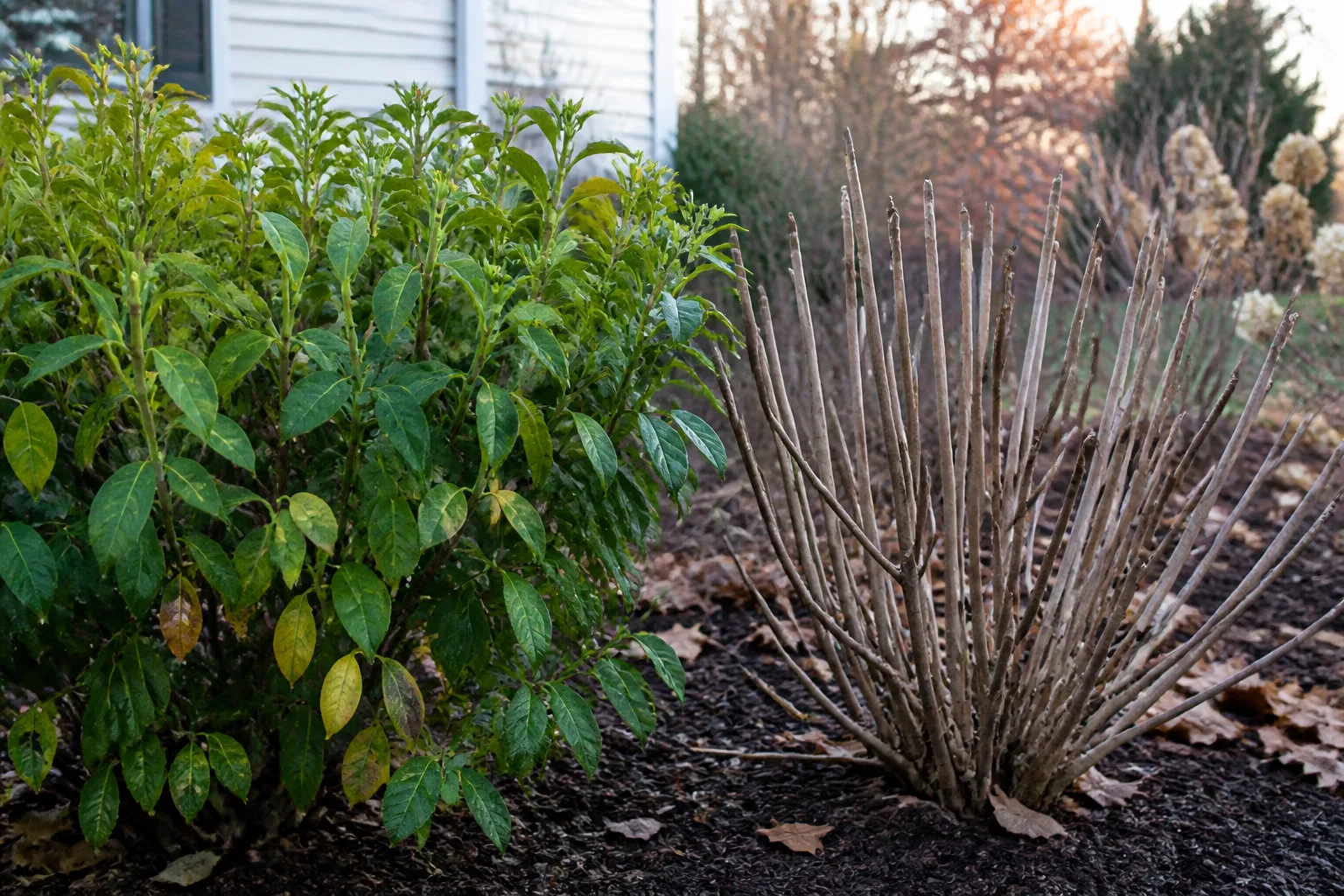
A hard renovation can leave a shrub looking sparse while its new framework develops; retain live growth where possible.
For a true rejuvenation cut, identify the main framework stems rising from the base. Decide how much height and width you can accept in the temporary bare stage, then shorten a limited number of those stems at staggered heights. A natural outline usually looks better than cutting every trunk to a straight line. Make each cut just above a visible dormant bud, bud cluster, or healthy lateral if one is present; retain as much sound leafy framework as possible.
Some mature rhododendrons can send shoots from latent buds on older wood, but this is not a guarantee for every plant. Fine Gardening recommends testing one main branch by cutting it back hard and watching for a response before treating the whole shrub the same way. The RHS also notes that hard-pruning response is better in deciduous azaleas and rough-barked rhododendrons than in some smooth-barked types. If the test branch stays bare, preserve the remaining framework and change the plan.
Cutting a rhododendron nearly to the ground is a last resort, not the starting point. A weak plant can fail to recover; a vigorous one may regrow but take years to regain a full shape and flowering canopy. The Midwest Chapter of the American Rhododendron Society advises older shrubs be reduced in stages and notes that new growth may emerge at different points along the stems. This variation is exactly why you should leave several live stems and avoid making an all-or-nothing cut based on someone else’s successful specimen. (Fine Gardening; Midwest Chapter, American Rhododendron Society)
If your plant is so large that the only way to make it fit is to remove nearly all its foliage every few years, consider replacing it with a naturally smaller cultivar in a better location. Repeated severe pruning can keep a mismatched shrub alive while leaving it perpetually sparse. The best pruning plan sometimes begins by admitting the plant and site are not a good long-term match.
Aftercare and realistic recovery
Once pruning is finished, gather and discard diseased leaves or stems rather than leaving them caught in the canopy. Water the root zone if the soil is dry, then maintain even moisture during dry spells; a rhododendron should not sit in saturated soil. A loose mulch layer can moderate soil moisture and temperature, but keep it away from the base of the stems.
Skip the impulse to compensate with a heavy dose of fertilizer. Pruning does not automatically create a nutrient deficiency, and excess fertilizer can damage roots or force soft growth. If the plant already has a diagnosed nutrient issue or poor soil, follow a soil test and local extension advice instead of feeding by guesswork. After severe renovation, give the shrub a full growing season to show where it is responding before making more structural cuts.
Expect different outcomes from different types of pruning. Deadheading and light shaping should not leave a healthy plant looking stripped; dormant shaping may cost the coming flower display; renovation can take more than one season to rebuild a compact canopy. A few branches may produce shoots while others stay quiet. Keep the useful new growth, remove competing shoots selectively once their direction is clear, and resist reshaping the entire plant again before it has had time to respond.
If the shrub fails to flower after pruning, consider more than timing. Pruning after late-summer bud formation is one cause, but drought while buds are developing, excessive shade, winter injury, or cultivar maturity can also affect the bloom. The RHS recommends steady watering during dry periods from July onward because dry conditions can interfere with flower buds. Track what you removed and when; that simple note often explains the next spring’s display better than guesswork.
Conclusion
For routine rhododendron pruning, wait until the blooms fade, then remove only the stems that serve a clear purpose. Deadhead carefully above new shoots, take dead or crossing branches back to a sound junction, and shorten long stems to a useful lateral or leaf whorl instead of clipping the entire surface.
Reserve major renovation for an overgrown shrub that is healthy enough to recover and a gardener who can accept a temporary loss of flowers and shape. Because hard-pruning response varies, test one branch or work in stages before removing the whole framework. That measured approach protects the flowers you want to keep and gives the plant a fair chance to rebuild.



