Should You Prune Tomato Plants? When It Really Helps
Should you prune tomato plants? Learn when pruning improves access and airflow, when it can reduce fruit or expose tomatoes, how plant type changes the call.
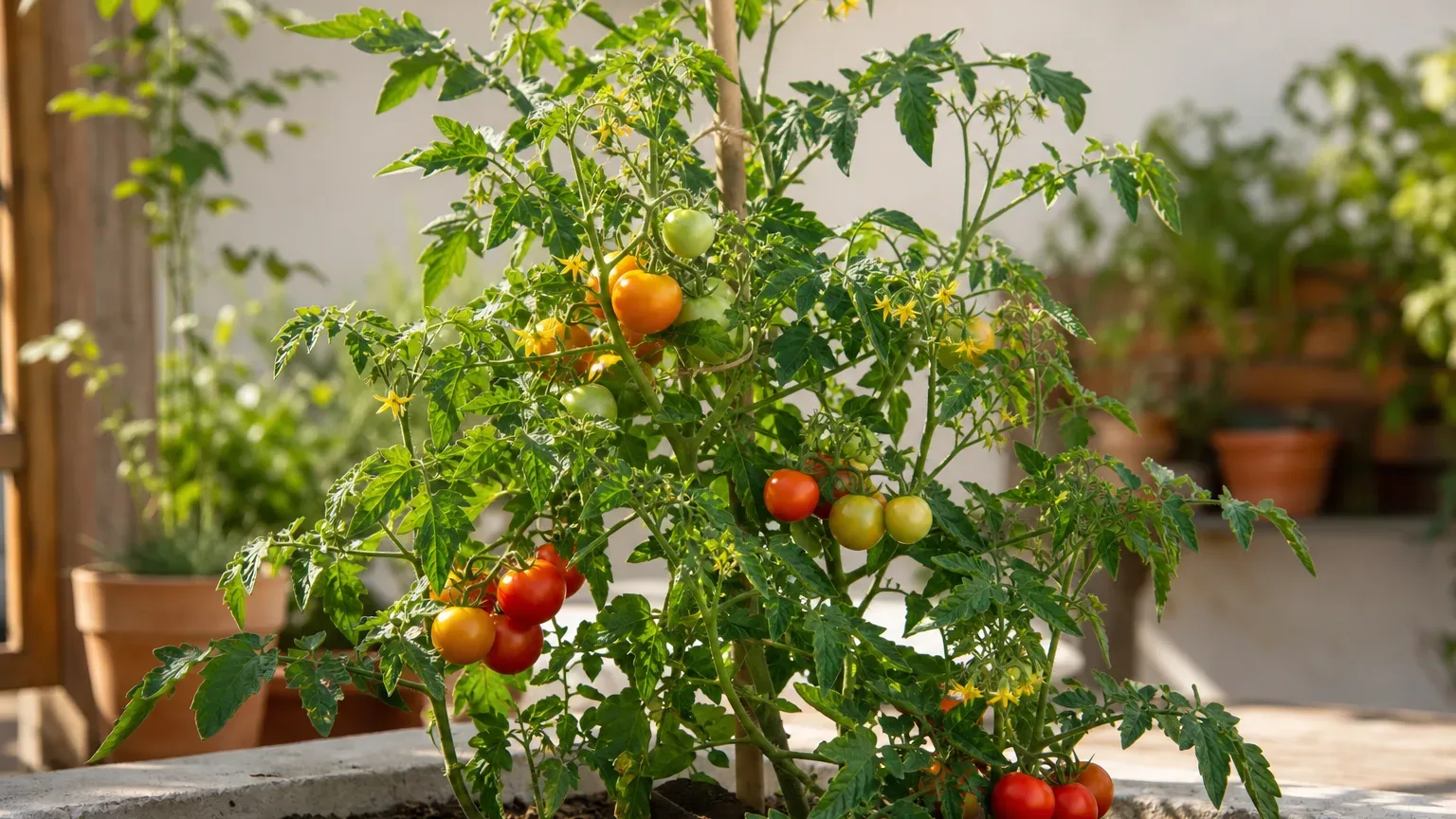
You do not have to prune every tomato plant. Pruning is useful when it solves a specific problem: foliage is resting on soil, a vine is too crowded for its support, damaged leaves need to come off, or an indeterminate plant needs to stop setting new growth before frost. If the plant is healthy, supported, and producing well, leaving it alone can be the better choice.
The first distinction is the kind of cut. Removing a low leaf, cutting a diseased branch, pinching a sucker, and topping a vine are all called pruning, but they do different jobs and have different costs. A tomato sucker can become a fruiting stem, and healthy leaves feed the plant while shading fruit; pruning does not simply redirect a fixed pot of energy from leaves into tomatoes.
A practical rule is to prune for structure and sanitation, not because a bare plant looks tidy or because someone promises larger harvests. Your variety, support, spacing, climate, and goal—an early flush, a long trickle of fruit, easier picking, or less disease pressure—should determine how much you remove.
The short answer: prune for a clear reason
Prune a tomato plant when a particular leaf or stem is creating a problem you can name. A lower branch lying against damp soil, a diseased leaf that should be removed, or an indeterminate vine escaping its support are concrete reasons. “I want more tomatoes” by itself is not a reliable reason to remove healthy growth; the harvest response depends on the variety and training system.
For many backyard growers, the best routine is modest: keep the plant supported, remove foliage that touches the soil, take out dead or clearly diseased material, and make only the extra cuts needed to keep a crowded plant accessible. On a determinate variety, that may be all season’s pruning. On an indeterminate variety trained to a narrow stake or string, it may include choosing a limited number of main stems.
If you are deciding about a sucker specifically, use the plant’s growth habit and support system before cutting. The LeafyPixels guide to whether and how to prune tomato suckers explains sucker identification and stem choices in more detail; the decision here is whether the whole plant benefits from less growth at all.
What pruning changes—and what it cannot promise
A tomato plant makes leaves and stems that collect light, and it makes flowers and fruit along its growing structure. Removing one of those stems changes the plant’s architecture: fewer branches may be easier to tie, inspect, and harvest, while more branches keep more leaves and potential fruiting sites. The outcome is a trade, not a simple transfer of energy that guarantees a bigger crop.
Pruning can make fruit easier to find and can reduce the number of stems a support must carry. Some training systems favor fewer, larger fruit and a more manageable vine; a fuller, less-pruned plant may carry more fruiting branches but take more space and be harder to keep open. These are tendencies shaped by cultivar, light, water, nutrition, spacing, and season length—not a promise about the total weight or flavor of your harvest.
University extension guidance reflects those different production systems. UNH Cooperative Extension explains that removing suckers reduces potential yield while increasing airflow in its basket-weave system, while overhead training can use one or two leaders for a longer harvest. Iowa State Extension likewise distinguishes determinate and indeterminate plants and warns that an overly open canopy can expose fruit to sunscald. UVM Extension describes airflow and fruit quality as potential benefits, and notes that pruning may speed ripening in cold climates; those are conditional outcomes, not promises for every garden. Use the objective of your setup—not a blanket “prune for more”—to decide.
Fewer stems can mean more control, not automatically more tomatoes
If you train an indeterminate vine up a stake or vertical string, limiting it to one or two leaders creates a plant that is easier to attach and inspect. That can be useful in a narrow bed, greenhouse, or closely spaced row. But every leader you remove would otherwise have had leaves and potentially flowers, so a more controlled plant is not automatically a more productive plant by weight.
A cage changes the calculation because it can hold a wider canopy and several stems. In that situation, selective thinning may be enough: remove branches that cross into a neighbor, block the center so badly that you cannot inspect it, or repeatedly break under their own weight. Savvy Gardening’s practical comparison describes leaving more branches on caged or cherry tomatoes when space and support allow, while training large-fruited indeterminates more selectively; that is an approach to adapt, not a universal formula.
Airflow is useful, but it is not a disease cure
A dense canopy can trap humid air and leaves that stay wet for long periods are more vulnerable to some common tomato diseases. Raising foliage off the soil also reduces contact with soil and the chance that rain or irrigation splashes soil onto lower leaves. Those conditions make selective pruning and good spacing useful parts of prevention, especially where summers are humid or plants are grown close together.
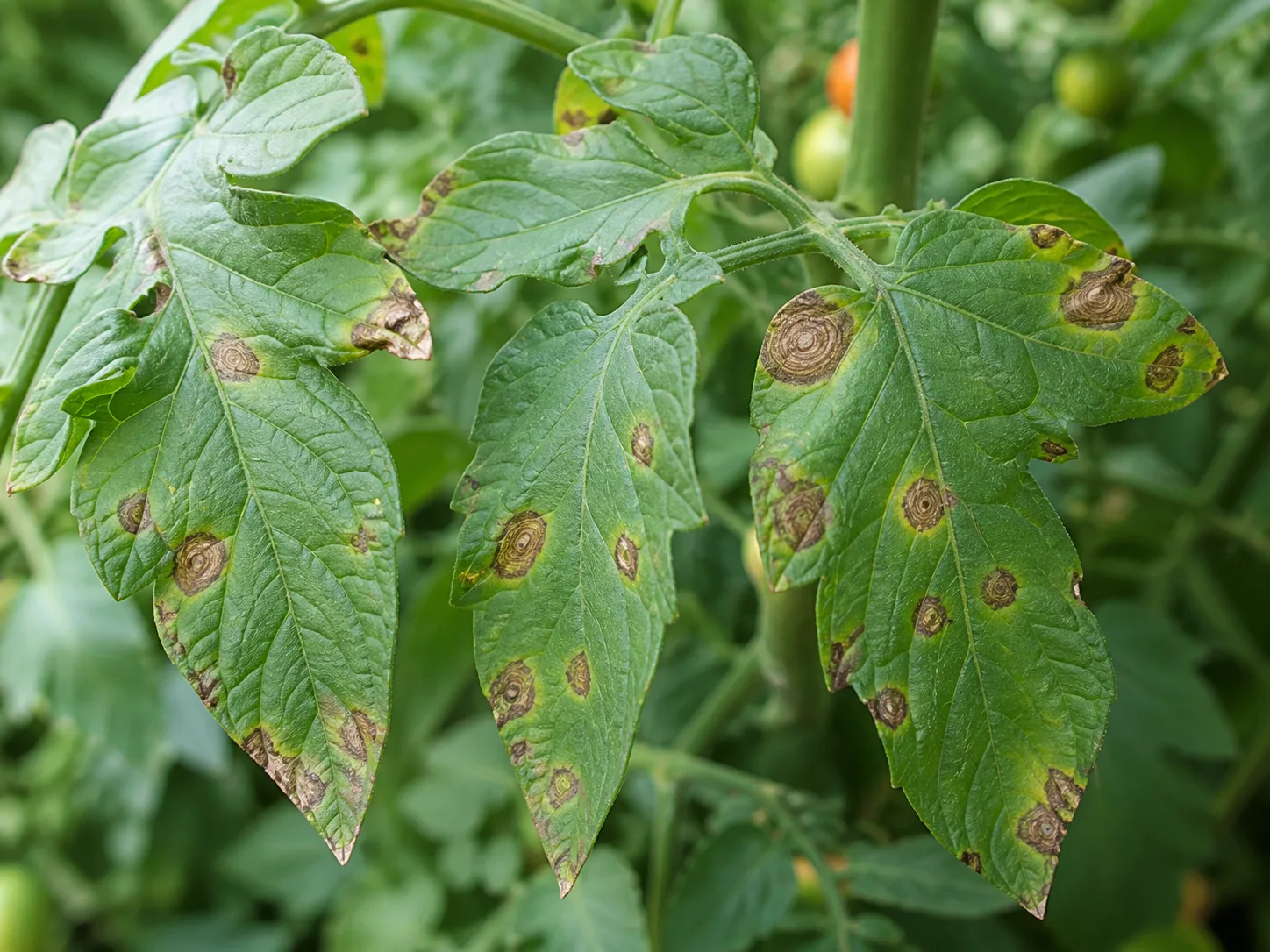
Pruning cannot cure early blight, Septoria, or another infection already established in the plant. If a leaf has distinct spots, yellowing, or a spreading lesion, identify the likely problem before deciding whether to remove one leaf or take a larger action; disease names can look similar, and stripping healthy foliage will not fix the underlying conditions. For disease prevention, combine sensible cuts with adequate spacing, mulch, watering at the soil, crop rotation where practical, and cleanup of infected material.
The University of Minnesota lists spacing, pruning, rotation, and watering at the base as cultural practices that can help manage tomato diseases. These measures reduce favorable conditions; they do not make a garden disease-proof. If you are seeing fast-spreading lesions, stem damage, or symptoms on multiple plants, consult a local extension diagnostic resource rather than repeatedly trimming at random.
Start with the tomato’s growth habit
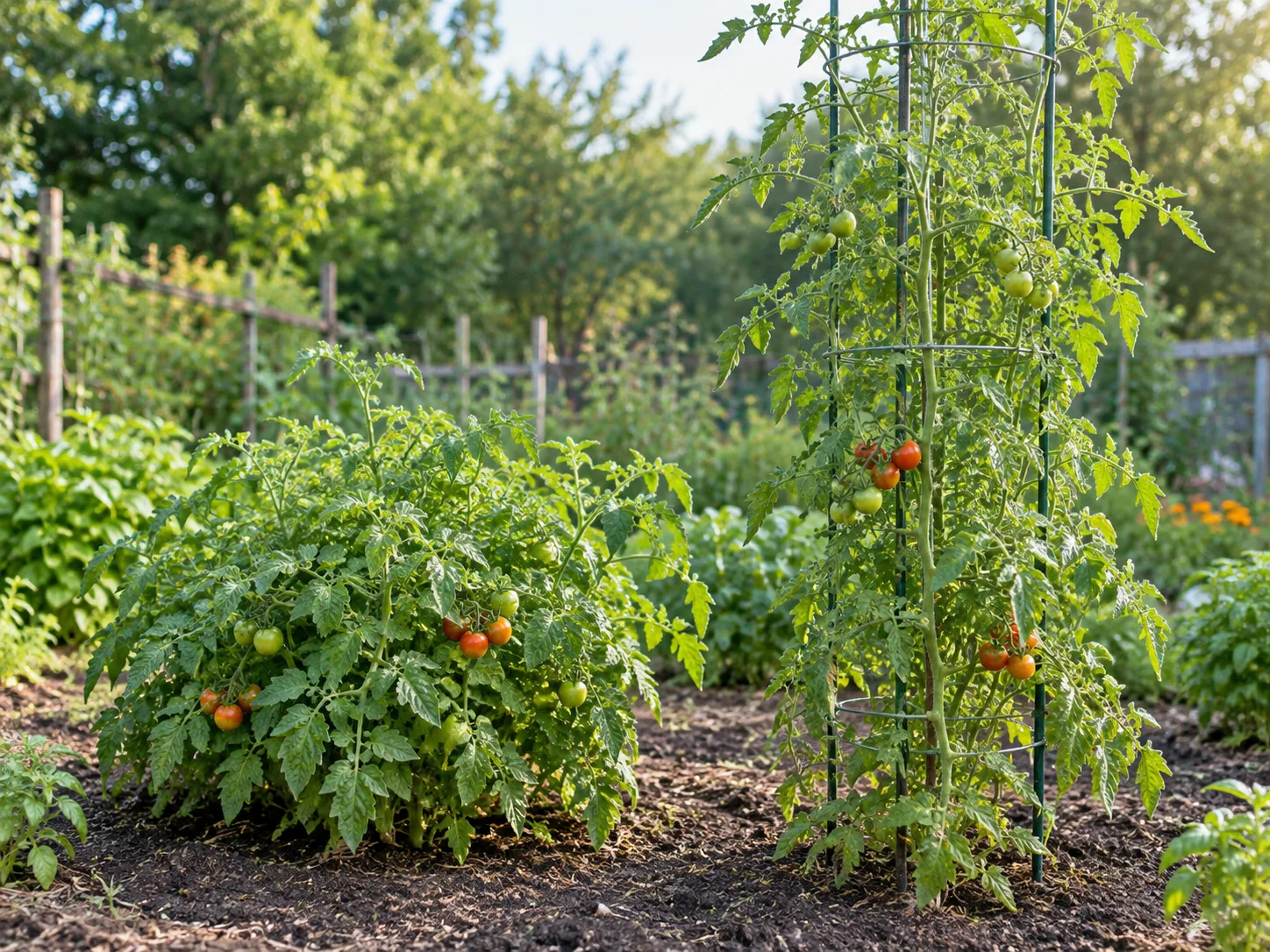
Check the variety label, seed packet, or reliable cultivar description before you settle on a pruning plan. Determinate tomatoes finish their main growth after forming a terminal flower cluster and tend to set much of their crop over a shorter period. Indeterminate varieties continue extending and making flowers while conditions allow, often until frost; semi-determinate cultivars sit between these patterns.
The names do not tell you how large the fruit is. Some large-fruited and cherry tomatoes are indeterminate, but there are exceptions, so do not infer growth habit from fruit size, a bushy appearance, or a single internet photo. If the label is missing, observe the plant and prune conservatively until you can identify it; avoid removing several healthy branches based on a guess.
Determinate plants usually need a light hand
A determinate plant has a more bounded growth pattern and often concentrates its harvest into a shorter window. Its side branches are part of the plant’s fruiting structure, so repeated sucker removal can discard flowers and fruiting sites the plant would have used. The safe default for most home gardeners is to leave healthy upper growth in place and limit pruning to soil-contact foliage, broken stems, or clearly diseased material.
Some extension instructions do recommend removing lower suckers for particular supported systems. For example, Iowa State advises removing suckers up to the first flower cluster, while Minnesota says bush tomatoes do not need pruning or trellising; these are different contexts and neither supports stripping a determinate plant routinely. If your variety has a specific training recommendation, follow it, but do not keep removing new shoots above the first fruit cluster without a clear reason.
This is especially important when you are growing a compact determinate plant for a concentrated harvest or canning. The plant’s compactness is a feature, not a defect to prune away. Give it a suitable cage or other support if it needs help carrying its crop, then remove only material that is dead, damaged, or creating a genuine contact or access problem.
Indeterminate plants can benefit from planned training
Indeterminate tomatoes keep producing stems and flowers through the growing season, so a gardener may choose to train a manageable number of leaders. This is most useful when the support is narrow, the planting space is tight, or an excessively dense center prevents tying, picking, and inspection. If you have a large cage, wider spacing, and a plant that remains healthy, you can allow more stems and prune less aggressively.
The key is to choose the shape before the plant becomes an unmanageable tangle. A vertical string or single stake typically works best with fewer leaders because every stem needs its own path and secure attachment. A sturdy cage or a trellis designed for multi-stem growth can carry a broader canopy, but the support must remain stable as fruit and foliage gain weight.
Fine Gardening describes training indeterminate tomatoes to different numbers of stems and notes that fewer stems reduce space needs while changing fruit size and quantity. The exact number is a management choice; it is not a universal rule. Start with what your support can hold, leave enough leaf cover for the fruit, and reassess as the plant grows.
Cuts that usually earn their place
The most defensible cuts solve direct contact, sanitation, or structure problems. These cuts do not require you to reshape every branch. Look at the whole plant first, then remove the smallest amount that accomplishes the job; you can always reassess a week later, but you cannot reattach a healthy branch once it is gone.
Lift foliage that touches the soil
Leaves resting on soil or hanging just above mulch are more exposed to soil splash and stay in a humid zone close to the ground. Remove or tie up only the lowest foliage that repeatedly contacts the surface, and make sure a stake, cage, or mulch layer is doing its part. Iowa State suggests removing lower leaves and side shoots from the bottom 6 to 12 inches, especially if they touch or nearly touch soil; treat that range as guidance for its home-garden recommendations, not a requirement to remove every leaf at a fixed height.
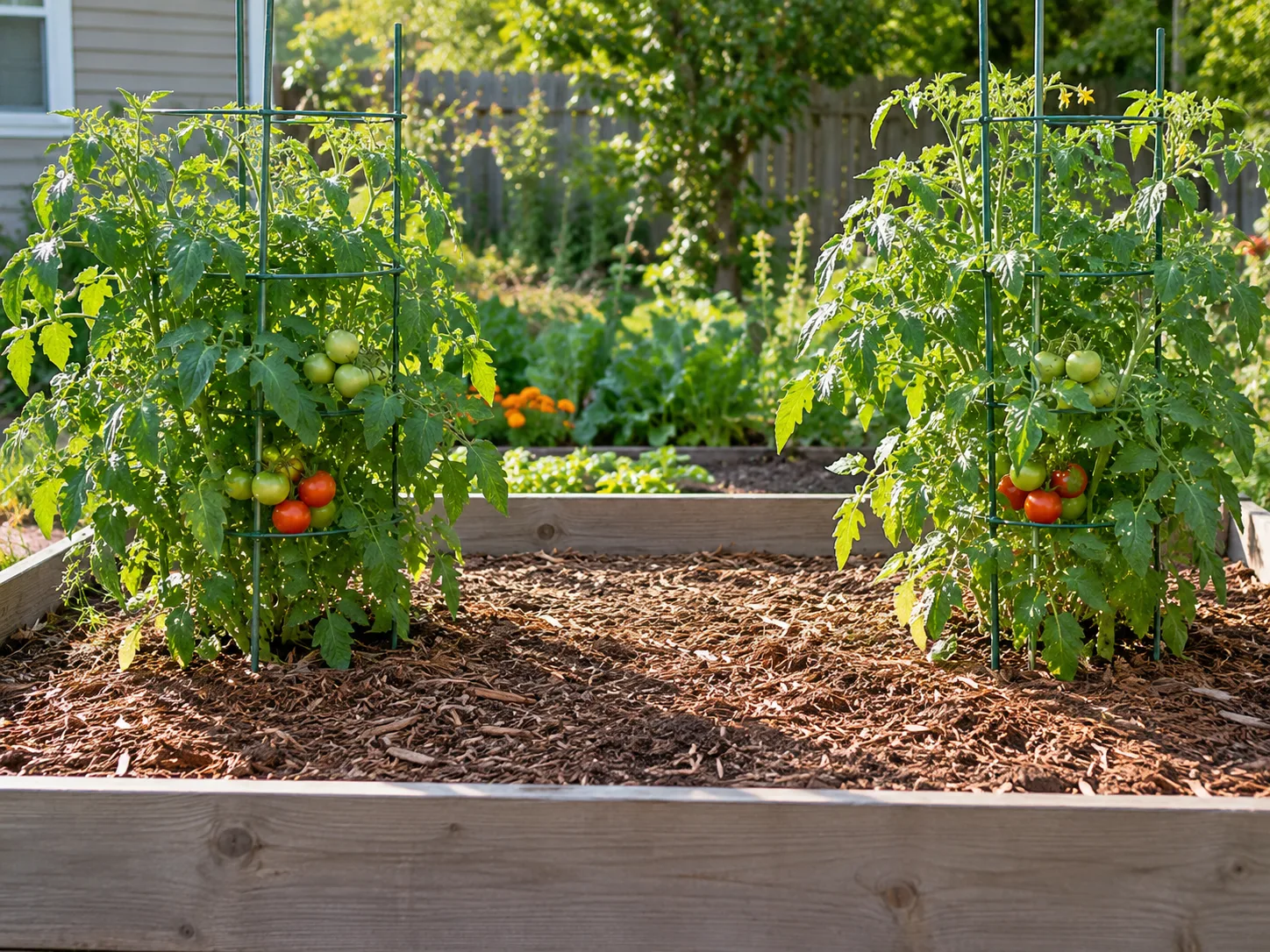
A leaf that is low but healthy and clean does not necessarily need to go immediately. If removing it would leave a large bare area or expose the lowest fruit to direct sun, improve support and mulch first, then prune gradually. The goal is less contact and easier air movement near the soil, not a naked stem.
Remove damaged or clearly diseased leaves carefully
Dead, broken, heavily spotted, or collapsed leaves can be removed so you can inspect the rest of the plant and prevent damaged material from remaining in the canopy. Work when foliage is dry, use clean, sharp shears for woody or large stems, and avoid dragging suspect leaves through healthy plants. If you cannot tell whether a mark is disease, sun damage, or normal aging, take a photo and seek a diagnosis before removing a large portion of the canopy.
Dispose of diseased tissue according to local guidance and do not assume that pruning the visible leaves has eliminated an infection. Some pathogens spread through splashing water, contaminated tools, or plant debris, so sanitation and watering habits matter alongside the cut. Clean tools between plants when disease is suspected, and do not prune wet plants if you can wait for drier conditions.
Thin only growth that blocks support or access
On a crowded indeterminate, remove a branch when it cannot be tied without rubbing another stem, repeatedly grows into a neighboring plant, or makes ripe fruit and pests impossible to inspect. These are functional reasons: they improve access and reduce tangling. Do not thin solely to make the plant look symmetrical, because leaves that seem excessive may be supporting fruit or protecting it from strong sun.
When a branch is healthy and already carrying fruit, consider tying it outward or adding support before cutting it off. A soft tie, wider cage, or additional stake may preserve a productive branch while solving the access problem. Cut only if the plant cannot be managed safely with support, or if the branch is damaged or infected.
When healthy leaves are doing important work
Tomato leaves are not decorative clutter. They capture light for growth, and the canopy protects fruit from intense direct sun. Removing too much foliage can slow the plant, expose fruit to sunscald, and leave the remaining branches carrying a crop with less leaf area around it.
This is why “open the center” should not become “strip the plant.” If fruit is visible through large gaps at midday, the canopy may already be too thin for a hot, bright site. In a cooler, humid place with dense vines, selective thinning can help; in a heat wave or exposed container, preserve healthy leaves unless there is a compelling reason to remove them.
The University of Minnesota Extension identifies sunscald as damage that occurs when tomato fruit gets too much sun, causing pale spots that may later decay. Iowa State similarly cautions that removing too much foliage exposes fruit to sunburn or sunscald. If fruit begins developing pale, firm patches on the sun-facing side, stop thinning and restore shade with the plant’s remaining growth or a temporary shade cloth during extreme heat.
Keep a protective canopy around developing fruit
Avoid removing all the leaves near a fruit cluster just because they cast shade. The leaves around and above fruit contribute to photosynthesis and act as a buffer against sudden hot sun; selective removal of one leaf that blocks a walkway is different from exposing an entire cluster. Keep enough foliage across the plant to cast broken, moving shade during the hottest part of the day.
If lower leaves show disease but fruit is directly exposed, prune the affected leaves in stages and preserve healthy leaves elsewhere. Do not keep cutting solely to make fruit color faster: ripening depends on variety, temperature, maturity, and the season, while removing too much leaf area can stress the plant. For late-season management, topping is a separate decision for indeterminate plants, not a reason to strip leaves from every tomato.
Match pruning to the support and growing conditions
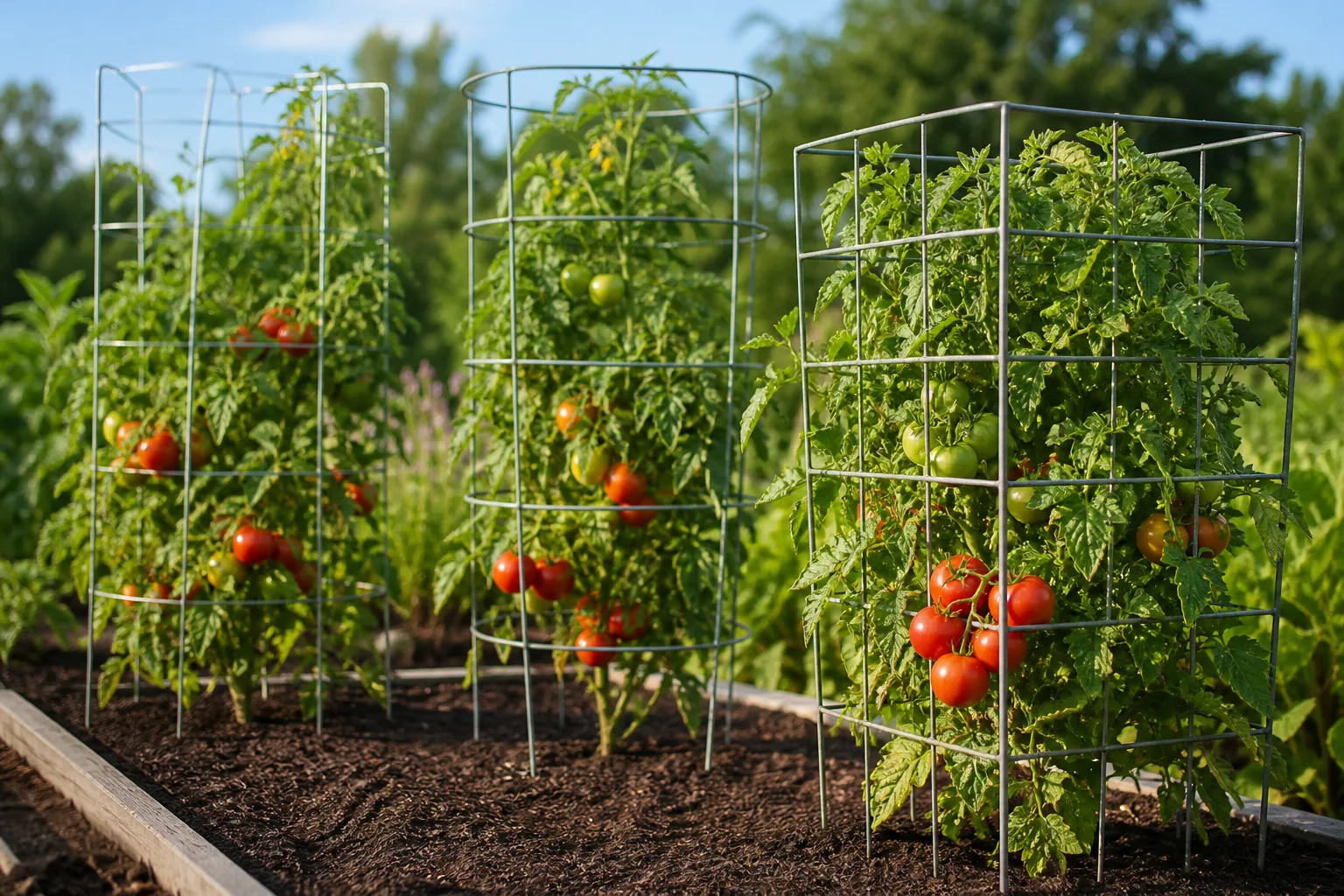
A tomato is easier to manage when the plant’s form matches the support. Before removing a healthy stem, check whether you can redirect and secure it instead. Pruning often saves space and work in a tight vertical system, while a wide cage can accommodate more growth with fewer cuts.
A stake or string calls for a narrower plant
With a stake or vertical string, a plant trained to one or two leaders is usually simpler to tie and inspect than a mass of crossing stems. Choose a small number of strong, well-placed shoots and remove only the competing growth that will not fit the system. Keep ties loose enough to avoid constricting the stem, and add support before heavy fruit pulls a branch down.
Vertical training is not automatically superior to a cage; it is a space-saving choice that requires more regular attention. If weekly checks are unrealistic, select a roomy cage or wider spacing rather than adopting a pruning plan that depends on removing every sucker promptly. A delayed, aggressive cleanup can leave large wounds and remove substantial leaf area at once.
A roomy cage can hold more stems
A sturdy, wide cage gives branches several routes upward and can support a fuller plant. This works well when you want more fruiting sites and the plants are spaced far enough apart to avoid a solid wall of foliage. You can still remove stems that cross the center or collapse beyond the cage, but you may not need to remove every sucker.
A flimsy or short cage changes the decision: the problem may be inadequate support, not excessive plant growth. Add a stronger cage, stake, or crossbar if the plant is beginning to lean. Cutting off healthy stems to compensate for an undersized support is a poor trade when a sturdier structure could keep the crop intact.
Prune conservatively through the season
Early in the season, identify the variety and install its support before the plant is heavy. For an indeterminate plant that you intend to train narrowly, select your leaders while shoots are small; for a determinate plant, leave its productive structure mostly intact. Remove soil-contact and damaged foliage as needed, and perform discretionary pruning on a dry day when the plant is not wilted from heat.
Make small rounds of cuts rather than a major one-time stripping. Iowa State recommends avoiding removal of more than about one-third of a plant’s foliage at once; use that as a conservative upper limit, not a target to reach. A smaller cut is better if the plant is stressed, the weather is hot, the fruit is exposed, or you are uncertain about the diagnosis.
Near the expected first frost, an indeterminate plant may still be making new flowers that will not mature in time. Some growers top the vine about a month before frost so it stops extending and concentrates on existing fruit, but that timing depends on local weather and the maturity of fruit already set. Determinate plants have a different growth pattern and generally should not be topped as though they were endless vines; if frost is imminent, harvest and frost protection may matter more than routine pruning.
Conclusion: let the plant tell you what to cut
Pruning tomato plants is worthwhile when it makes a specific job easier or reduces a real risk: keeping foliage off soil, removing infected or broken growth, fitting an indeterminate vine to its support, or ending new growth when the season is nearly over. It is optional for many healthy plants, particularly determinate varieties and indeterminates growing comfortably in roomy cages.
Before making a cut, ask what problem it solves and what the plant loses with that branch. If it is a fruiting stem or healthy shade around developing tomatoes, keep it unless space, disease, or support gives you a concrete reason to remove it. A supported, well-spaced plant with enough healthy leaves is often more useful than a perfectly tidy one.



