Should You Prune Tomato Suckers? When and How to Prune
Tomato suckers can become fruiting stems. Find out when pruning helps, when to leave them, how to make clean cuts, and what to do with removed shoots.
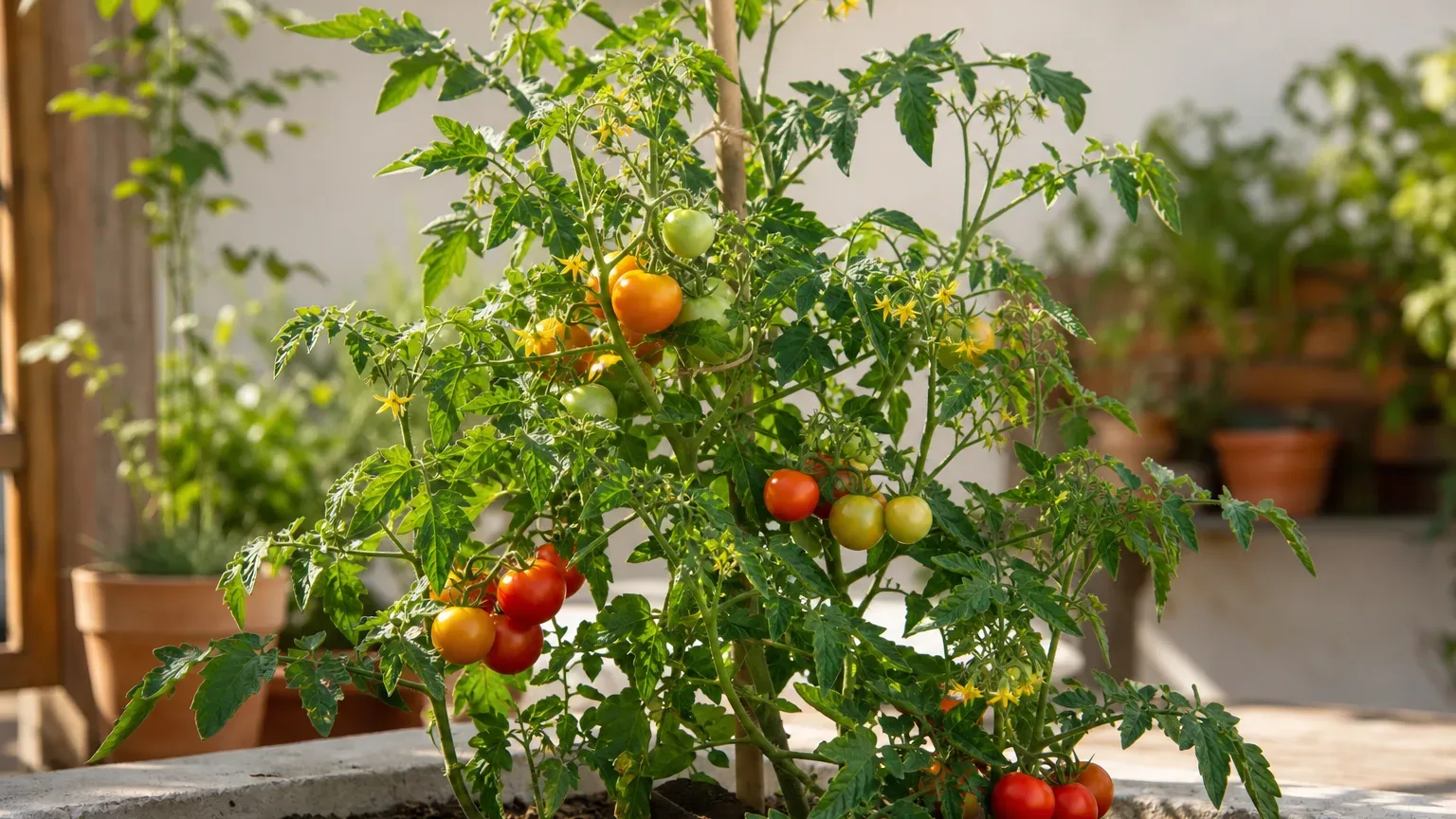
You do not have to remove tomato suckers. They are side shoots that can grow into stems with leaves, flowers, and fruit, so every one you cut also removes potential growth. Pruning is most useful when you are training a vigorous indeterminate tomato up a stake or string and want fewer, easier-to-support stems; it is usually unnecessary on a determinate bush tomato.
The right choice depends on the plant’s growth habit, the support around it, and how much room you have. A well-supported plant with an open canopy may need little attention, while an indeterminate vine crowded onto one stake can become a tangled, heavy mass if every sucker is left to grow.
The Quick Answer: Prune for a Reason
Start by checking the variety label. For a determinate tomato, leave suckers in place and limit cleanup to damaged or soil-touching leaves; for an indeterminate plant trained vertically, choose one to three main stems and remove the extra shoots that will crowd that plan. If the plant is growing in a large cage with room to spread, you can keep more stems and prune selectively.
Sucker removal can make a plant easier to tie, inspect, and harvest, and a more open canopy may dry faster after rain. It does not guarantee more tomatoes: each removed shoot is also a possible fruiting branch, so the practical benefit is control and airflow, balanced against some lost fruiting potential. University of New Hampshire Extension explicitly notes that removing suckers reduces potential yield while increasing airflow.
If you are unsure, make the least irreversible choice first: remove only shoots that touch the soil, rub against a neighboring stem, or clearly cannot fit inside the support. You can remove a small sucker next week; you cannot put a cut stem back.
Know Your Tomato Type Before You Cut
Determinate and indeterminate describe growth habits, not fruit size or flavor. A seed packet, nursery tag, or variety listing is the most reliable place to check; names such as “bush” and “vine” are useful clues, but labels are better than guessing from one young plant. Some varieties are semi-determinate, so treat the label’s guidance as the starting point and prune conservatively if you are uncertain.
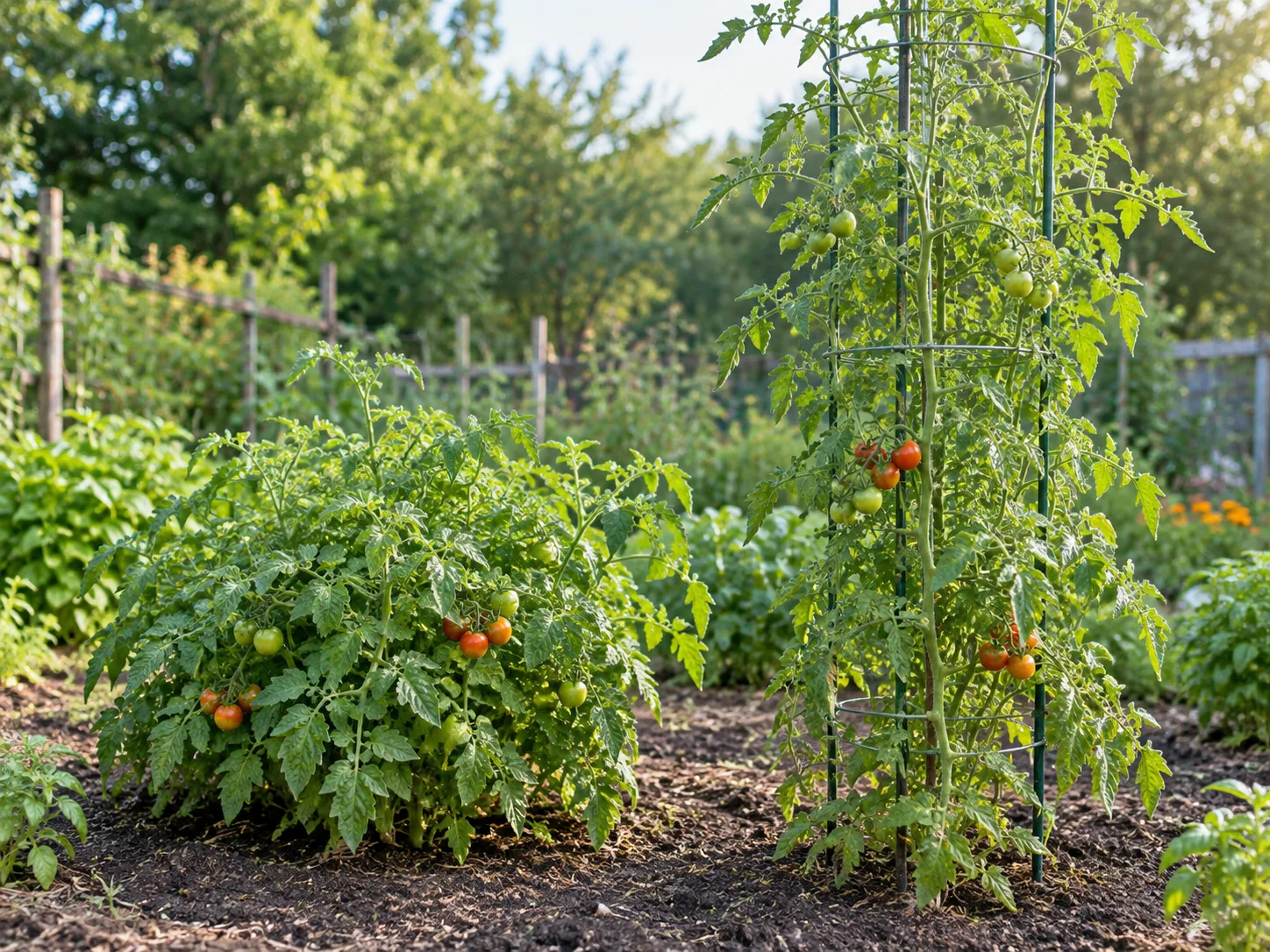
Determinate tomatoes
Determinate plants grow to a more limited size, then set much of their crop over a shorter period. Their branches are part of the plant’s planned fruiting structure, so routine sucker removal can remove flowers and reduce the harvest, especially if you keep cutting after the plant has started setting fruit. The practical default is to leave their suckers alone and use a cage or other broad support.
You can still remove leaves or stems that are diseased, broken, or close enough to the soil to be splashed with dirt. That cleanup is different from shaping the plant by removing healthy side shoots. University of Vermont Extension recommends minimal pruning for determinate tomatoes, while Cornell’s tomato-training guidance says that removing all suckers from a determinate plant can leave it short with few fruits.
Indeterminate and semi-determinate tomatoes
Indeterminate tomatoes keep extending, flowering, and fruiting while conditions allow, often until frost or other stress ends growth. Their suckers can become full branches, so gardeners who train them vertically often remove some to keep the plant within the support and make the canopy easier to manage. A cherry tomato, for example, may tolerate a fuller multi-stem shape better than a large-fruited variety trained on one narrow stake.
Semi-determinate varieties sit between those habits, and cultivar descriptions can differ. If the plant is labeled semi-determinate, or if you cannot confirm its type, avoid aggressive pruning until you see how it grows; remove only the lowest problem growth and any shoots that interfere with the support. North Carolina State Extension describes how determinate plants fruit over a shorter window while indeterminates continue producing, which is why the same pruning plan does not fit both.
Find a Sucker Without Cutting a Flower Truss
A tomato sucker, also called a side shoot, emerges in the angle between the main stem and a leaf branch. Follow the main stem upward until you see a leaf attached at a node; the small new shoot growing from that same junction is the sucker. If you let it grow, it will develop its own leaves and may eventually flower and set tomatoes.
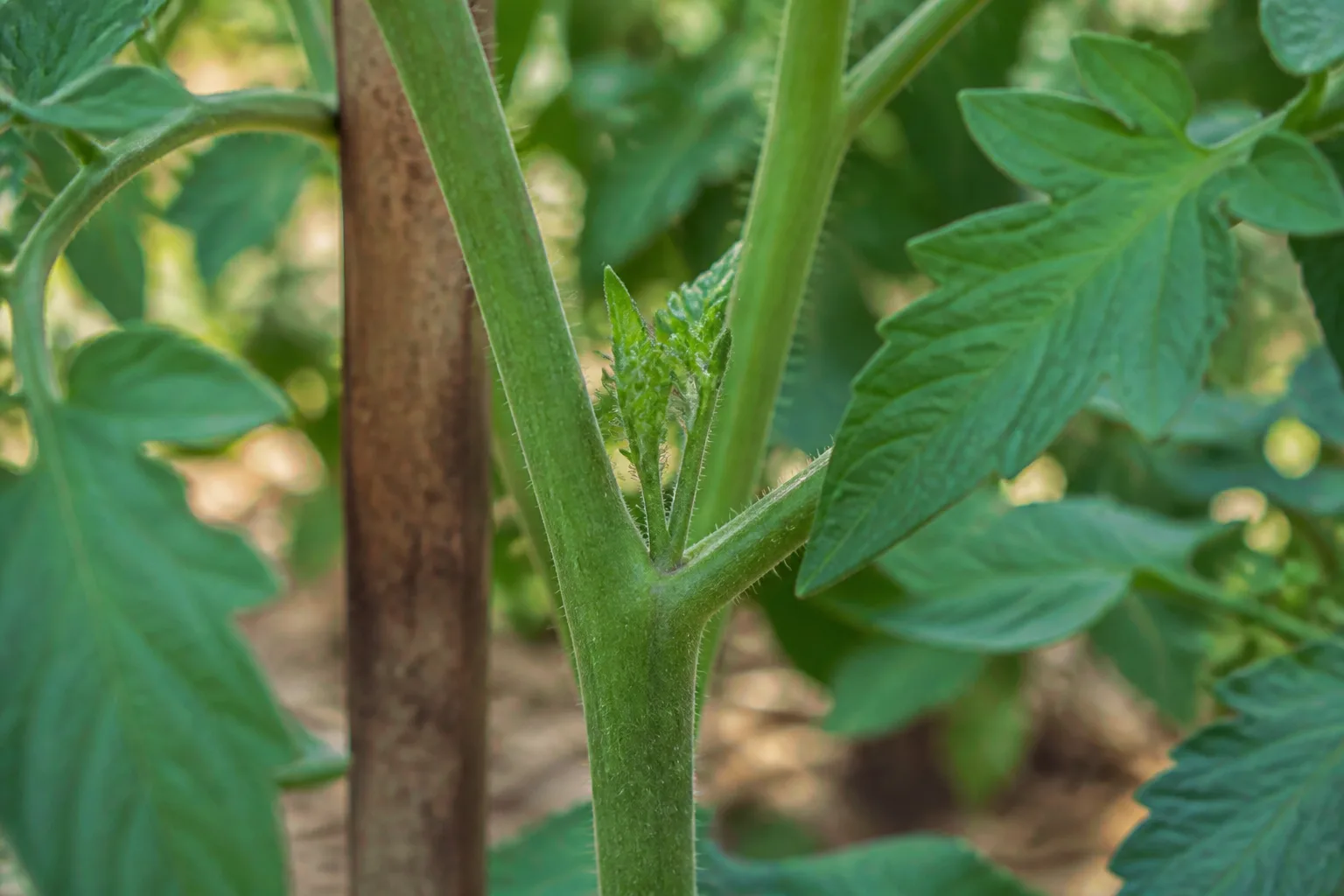
Do not mistake a flower truss for a sucker. A flower truss carries several buds or blossoms on short stalks, while a sucker begins as one leafy shoot with a growing tip; removing a truss removes flowers directly. When the plant is small and the junctions are crowded, pause and trace each shoot back to where it begins before pinching anything. Iowa State University Extension describes suckers as shoots in the leaf axil and recommends identifying the main stem first.
What Pruning Changes—and What It Does Not
The most reliable reason to prune is to shape the plant. Fewer stems are easier to tie to a stake or string, less likely to sprawl into a walkway, and simpler to inspect for ripe fruit and pests. Opening a dense canopy can also improve air movement and help leaves dry sooner, a useful consideration where foliage stays wet or fungal disease is common.
Pruning is not a switch that sends a fixed amount of “energy” from leaves into fruit. Leaves make sugars that support growth, and a sucker is not a parasite: it can become a productive stem. Removing it may reduce the number of fruiting sites while changing the size, timing, or accessibility of the remaining crop; the result varies with the variety, growing conditions, and how many stems you remove.
That is why advice about bigger tomatoes needs a condition attached. Training a large-fruited indeterminate to fewer stems can reduce crowding and may favor a smaller number of fruits, but it is not a promise of a heavier total harvest. Cornell’s example makes the trade-off concrete: a pruned plant may carry fewer tomatoes that are somewhat larger, while an unpruned plant may carry more fruit and become harder to manage.
Choose a Stem Plan That Fits Your Support
Decide how many stems the support can safely hold before deciding which suckers to remove. A stem becomes heavier as its leaves and fruit develop, and a branch that fits on a young plant can later lean, rub, or break if it has no path through the cage or trellis. Match the number of leaders to the spacing and strength of the support rather than pruning to a universal number.
Spacing gives you another useful limit for a trained row. North Carolina State Extension suggests trellised rows can be managed at roughly one stem for every 8 to 12 inches of row; its example works out to about two stems on each plant spaced 2 feet apart and three for plants 3 feet apart. Treat that as a starting point for a supported row rather than a rule for containers, cages, or sprawling plants.
Then let the actual canopy correct the estimate. If neighboring leaves interlock before the first fruit clusters have room, keep fewer leaders; if stems remain well separated and every branch can be tied and inspected, you can retain more. The practical limit is how many leaders the support can carry and how much light and access remain through the center, not how many shoots a young plant happens to have.
Choose a second or third leader by both vigor and direction. The sucker just below the first flower cluster is often a convenient choice, but if it points into a neighboring plant or cannot be tied without crossing another stem, choose a better-positioned healthy shoot or keep fewer leaders; a well-placed second stem is more useful than one chosen by location alone.
One or two leaders on a stake or string
On a plant tied to a single stake or grown up a vertical string, one leader is the simplest shape: keep the main stem and pinch out the side shoots as they appear. A two-leader plant keeps the main stem plus one strong sucker, often the shoot immediately below the first flower cluster; tie both stems separately so neither twists around the other. New Hampshire Extension describes this one- or two-leader approach for trellised plants and recommends removing small suckers before they exceed about two inches.
Two stems create more leaf area and fruiting sites than one, but they also need more room and stronger support. In rows, a Florida weave or similar stake-and-twine system can hold several plants in a shared structure; do not assume that the same one-stem rule used in a greenhouse string system is necessary for every backyard row.
More stems in a cage or open bed
A sturdy tomato cage has space for more branches than a narrow stake. You can leave several well-placed suckers, then remove only those growing inward through the center, tangling with another plant, or making the cage top-heavy. Small-fruited indeterminate varieties are often allowed a fuller shape when the cage is wide and the plant spacing is generous.
Plants grown to sprawl have a different problem: a bushy canopy can stay crowded and close to damp soil, and pruning every side shoot may be impractical. Give the plant room, mulch to limit soil splash, and focus on unhealthy or ground-touching foliage rather than chasing every new sucker. Savvy Gardening’s field-based guide describes adjusting sucker removal to the variety and support method, including leaving more growth on caged cherry tomatoes.
How to Remove a Tomato Sucker Cleanly
For a chosen training plan, remove unwanted suckers while they are small and tender, roughly one to three inches long. At that stage they usually pinch off with little force; waiting until they are thick makes the cut larger and increases the chance of bending the main stem or tearing nearby tissue. A weekly look during fast growth is often enough to catch them before they become branches.
Work when the plant is dry and not wilted from heat. Hold the sucker near its base and bend it gently sideways until it snaps; keep your other hand on the main stem so it does not flex. If the shoot is too tough to pinch, use clean, sharp bypass pruners and make one neat cut close to the junction without nicking the main stem.
Clean tools between plants, especially if you have seen disease or are pruning plants from different beds. Iowa State Extension advises disinfecting hands and pruning equipment to reduce accidental disease spread; a clean cut and clean tool matter more than making a large number of cuts quickly. Avoid handling wet, diseased foliage and then moving directly to a healthy plant.
Some gardeners use “Missouri pruning” when they want to restrain a sucker but keep extra leaf cover: pinch off its growing tip while leaving a leaf or two on the side shoot. This is more fiddly because the shortened shoot can branch again, but it can be useful where fruit needs shade or the plant otherwise looks too bare. Fine Gardening’s pruning guide explains the difference between removing a sucker at its base and pinching only its tip.
A Simple Routine for the Growing Season
Do not start by stripping a young transplant. Wait until it is established and you can see the first flower cluster and the shape of the plant; then decide which stem or stems you intend to train. Removing shoots before that structure is obvious can mean cutting off a branch you would have wanted to keep.
After the first pass, check the plant about once a week during active growth. Pinch only the new shoots that conflict with the stem plan, and tie or clip the leaders as they lengthen. If you miss a week, the plant is not ruined; reassess the current canopy and make a selective correction instead of removing every large branch at once.
Keep lower foliage that is healthy and doing useful work, but remove leaves that lie on the soil or are already diseased. Illinois Extension distinguishes this bottom-leaf cleanup from sucker removal and recommends it for both determinate and indeterminate plants after establishment. Mulch and watering at the soil surface can further reduce soil splash without requiring a bare lower stem.
Should You Remove a Sucker That Has Grown Large?
Not automatically. A large sucker may already have flower clusters or small fruit, and removing it now costs more than pinching a tiny shoot; it can also leave a larger wound and suddenly expose fruit that had been shaded. If the stem is healthy and the plant has room for it, tie it into the support and let it stay.
Remove a large branch only when it has a clear problem, such as severe crowding, a broken connection, or growth that cannot be supported safely. Use clean pruners, support the branch with your free hand, and cut in stages if its weight could tear the main stem. If you are deciding between a crowded plant and an abrupt heavy cut, tying the branch outward is often the gentler first move.
Keep Enough Leaves to Shade the Fruit
Leaves are not just clutter. They supply the plant with sugars and shield developing fruit from intense direct sun; severe pruning can leave tomatoes exposed to sunscald, which appears as pale or damaged patches on the sun-facing side. This risk matters most in very sunny, hot conditions and after a plant loses leaves to disease or accidental damage.
Do not strip foliage simply to make every tomato visible. Keep healthy leaves around and above fruit clusters, especially on the west or south-facing side in a hot garden, and remove foliage gradually so you can see how the canopy responds. Iowa State Extension warns against removing every sucker when it leaves too little leaf cover, and Wisconsin Extension recommends stopping sucker pruning one to two weeks before the first expected harvest so protective canopy can regrow.
If you already removed too much and fruit is suddenly exposed, stop pruning and give the plant stable moisture. A temporary shade cloth during the hottest part of the day can reduce direct exposure while new leaves develop; do not wrap the plant tightly or keep foliage wet overnight. The goal is to restore shade and airflow together, not to force a bare, perfectly tidy stem.
Late-Season Topping Is a Different Cut
Removing suckers means taking selected side shoots out of leaf axils. Topping means removing the growing tip at the end of a main stem, so the plant stops extending and setting new flowers; the cut is usually considered only for indeterminate tomatoes near the end of the season, when new fruit is unlikely to ripen before frost.
If frost is approaching, count backward roughly four to six weeks and consider topping only stems that already carry fruit with a realistic chance to mature. Cut just above the highest useful fruit cluster with clean pruners, and do not top a healthy plant early just to keep it short. Iowa State Extension’s tomato-pruning guidance advises against early topping and notes that determinate plants can lose yield when their growing tips are cut.
Root a Healthy Sucker If You Want Another Plant
A healthy sucker can be rooted as a cutting instead of composted. Put its cut end in clean water, keep the leaves above the waterline, and place it in bright indirect light; once roots are about an inch long, pot it into moist container mix and ease it into stronger outdoor sun over several days. Savvy Gardening describes this method and notes that rooting takes about a week in favorable conditions.
Propagation is most useful early enough in the season for the new plant to establish and fruit before cold weather. In a short-season garden, a cutting taken late may root successfully but still produce little before frost, so rooting every sucker is not a reliable way to extend the harvest. The new plant is a clone of the parent, which is useful if you want another plant of the same variety, but it also carries the same growth habit and any disease present in the cutting.
If You Pruned Too Much, Pause and Let the Plant Recover
One accidental sucker cut usually is not a crisis. If you remove the growing tip of the main stem by mistake, let a strong side shoot below the cut become the replacement leader and tie it up as it grows. If you removed several branches, stop shaping the plant for now and allow new growth to fill the canopy.
Keep watering consistently at the soil rather than compensating with extra fertilizer, and monitor exposed fruit for sun injury. If the plant is badly diseased, avoid using cuttings from it to start new plants; otherwise, healthy new shoots can replace some of the lost foliage over time. The best correction is usually patience and a lighter hand on the next visit.
Conclusion
Prune tomato suckers when they interfere with a useful stem plan, not simply because every side shoot is supposedly stealing food. Leave most suckers on determinate plants; on indeterminate tomatoes, choose a leader count that fits the stake, string, cage, or available space, and remove only the shoots that work against it.
Make early, selective cuts, preserve enough leaves to shade fruit, and stop if the plant is already open or stressed. If you can explain why a particular sucker needs to go—support, crowding, airflow, or access—make the cut; if not, it can keep growing and may give you more tomatoes.



