Can You Use Pasta Water for Plants? Risks and Rules
Can you use pasta water for plants? Learn when unsalted water is fine, why salted water is risky, and what to do if you already poured it.
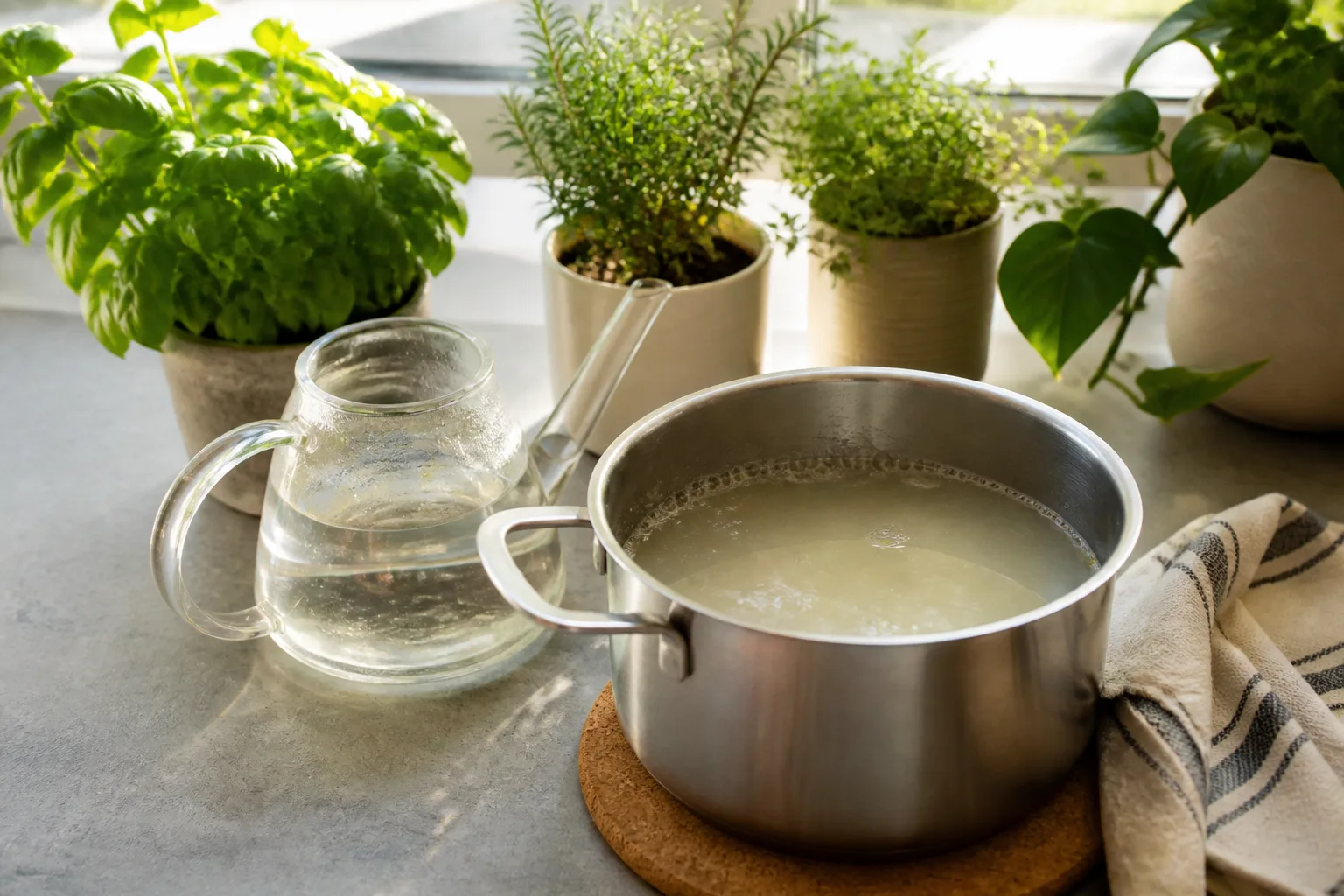
You can use pasta water on plants only when it is plain, unsalted, cooled to room temperature, and used occasionally. Treat it as optional irrigation, not as fertilizer. If you salted the water, added oil or sauce, or cannot remember what went into the batch, skip the garden and drain it instead.
The deciding issue is the batch, not the pasta shape. A small amount of plain water used once is a different situation from regularly pouring salty cooking water into a little houseplant pot. Here is how to tell the difference, what to do if a plant already got a salty pour, and which water-saving habits are more predictable.
The short answer: do not use salted pasta water
Pasta water is not automatically a plant tonic. A safe batch has no added salt, oil, butter, sauce, broth, or other seasoning; it has cooled fully; and the pot or soil can drain normally. Even then, the plant is receiving mostly water with variable traces of dissolved starch and minerals—not a measured fertilizer dose.
| What is in the water? | Use it on plants? | Why |
|---|---|---|
| Plain pasta water with no salt or other additions | Occasionally, after cooling | It can provide irrigation, but no proven fertilizer rate |
| Salted pasta water | No | Salt adds sodium and chloride to the root zone; the dose is unpredictable |
| Water with oil, butter, sauce, broth, or dairy | No | These ingredients leave residues and do not have a reliable plant-safe application rate |
| Water that is still hot | No | Hot liquid can injure roots; wait until it reaches room temperature |
Do not try to make a salted batch safe by adding tap water. Dilution lowers the salt concentration in each cup, but it does not remove the salt from the batch; if you pour the diluted batch into the same pot, the total salt load is still there. Because home recipes vary in how much water and salt they use, there is no dependable household ratio that makes salted pasta water safe for every plant.
What pasta water actually leaves behind
As pasta cooks, some starch moves into the cooking water. How cloudy or starchy the liquid becomes depends on factors such as the pasta-to-water ratio and cooking time, so one pot of leftovers cannot stand in for another. Serious Eats’ side-by-side cooking tests show that this starch can thicken and bind a sauce; that useful kitchen effect does not establish a useful nutrient dose for a plant.
The water may also contain small amounts of minerals leached from the pasta, but the amounts are not labeled or consistent. That makes “pasta water is fertilizer” too strong a promise: you cannot tell from its cloudy appearance how much nitrogen, phosphorus, or potassium it contains, or whether the mix is appropriate for a particular plant.
Starch is not a complete fertilizer
Starch is a carbohydrate, not a balanced plant-food formula. Soil organisms can break down organic material, but that indirect pathway does not mean a plant can use pasta water in place of the nutrients supplied by compost or a labeled fertilizer. The outcome depends on the recipe, water volume, substrate, microbes, and plant—not on a reliable dose printed on a packet.
There is also no need to put starch into every pot to “feed” its soil. In a container that stays wet, repeated additions of cloudy organic water may leave residue at the surface and contribute to conditions that favor visible mold or fungus gnats. That is a possibility, not a guaranteed result: consistently damp potting mix, poor airflow, and weak drainage are more useful things to investigate if a plant develops surface growth or gnats.
Salt is the risk that changes the answer
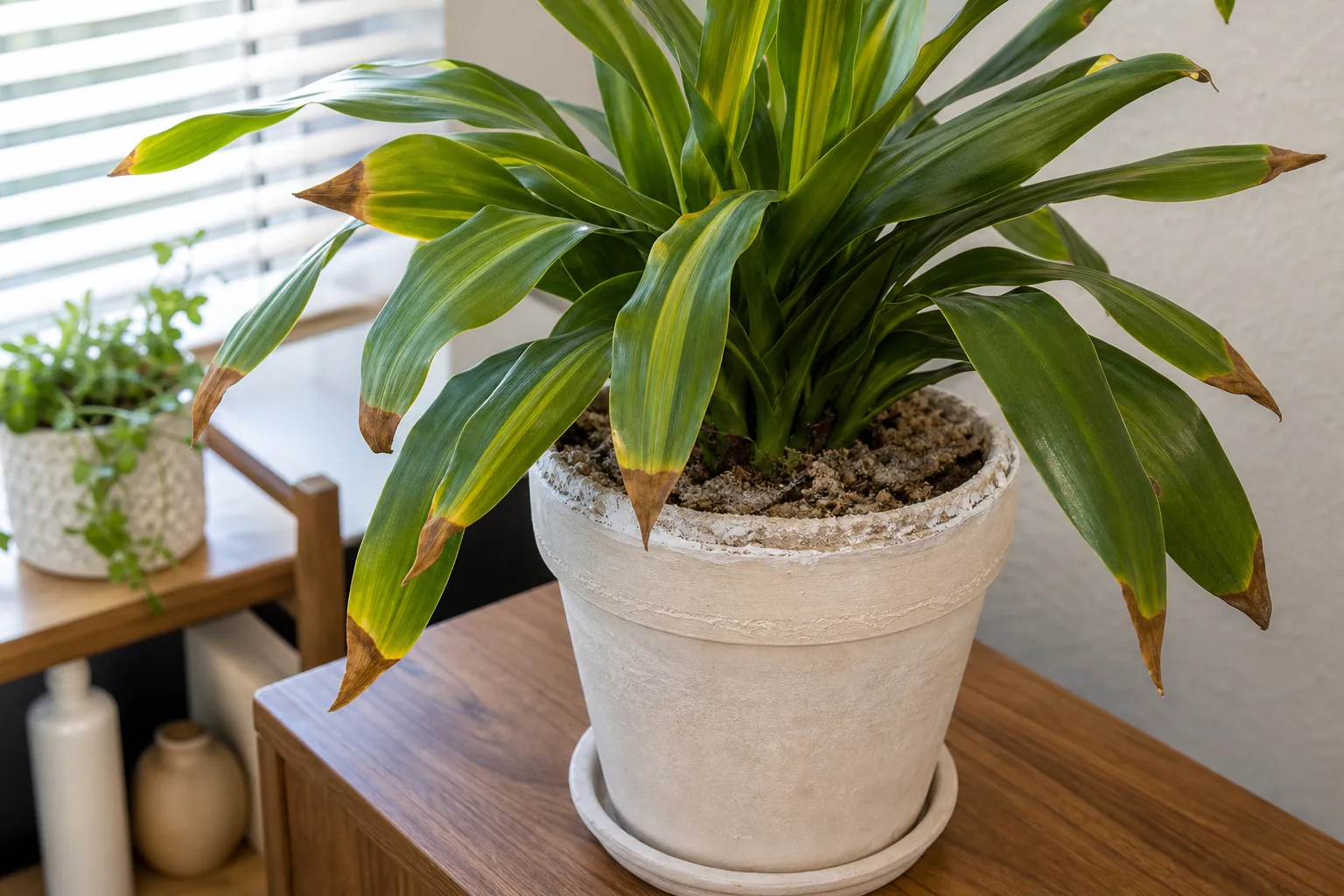
Table salt is sodium chloride. Once dissolved, it travels with the water into the root zone; as water is used by the plant or evaporates, salts can remain and build up. The University of Minnesota Extension explains that excess salts can dehydrate plants and interfere with soil water movement. Salt stress can show up as brown leaf edges, weak growth, or wilting, though each of those symptoms can have other causes too.
The LSU AgCenter’s garden guidance makes a useful distinction: risk comes from excess salt accumulating over time, and houseplant containers have little soil to buffer or move those salts through. That does not mean one accidental splash will kill a plant. It does mean salted pasta water is an unnecessary, concentrated, and hard-to-measure addition—especially when you repeat it.
Is unsalted pasta water safe for plants?
If the water was truly unsalted and has no other ingredients, an occasional use is generally a reasonable way to reuse water rather than discard it. It is most sensible for an established plant that already needs watering, in a pot with drainage or in a garden bed that drains well. You do not need to save it for a special “feeding day,” and plain water remains the simpler default.
Keep expectations modest. Unsalted pasta water will not make a plant grow faster by itself, correct a nutrient deficiency, or replace the plant’s normal watering routine. A small bowl will not meaningfully change garden water use either; treat reuse as a minor conservation habit, not a way to meet a bed’s full irrigation needs.
Cool it completely and apply it to the soil
Let the pot cool until the water is at room temperature. Hot water can damage roots, while icy water is an unnecessary temperature shock for indoor plants; BHG’s houseplant-watering guidance likewise recommends room-temperature water and checking the pot’s actual moisture before watering.
When a safe batch is ready, pour it slowly onto the potting mix at the base of the plant. Do not mist leaves with starchy water. For a houseplant, use it only when the mix is dry enough for that plant and let excess water drain; do not pour it into a saucer and leave the pot sitting in it. If the soil is still damp, store no warm cooking water for later—use plain water at the next watering instead, or discard the batch.
Which pasta water should you discard?
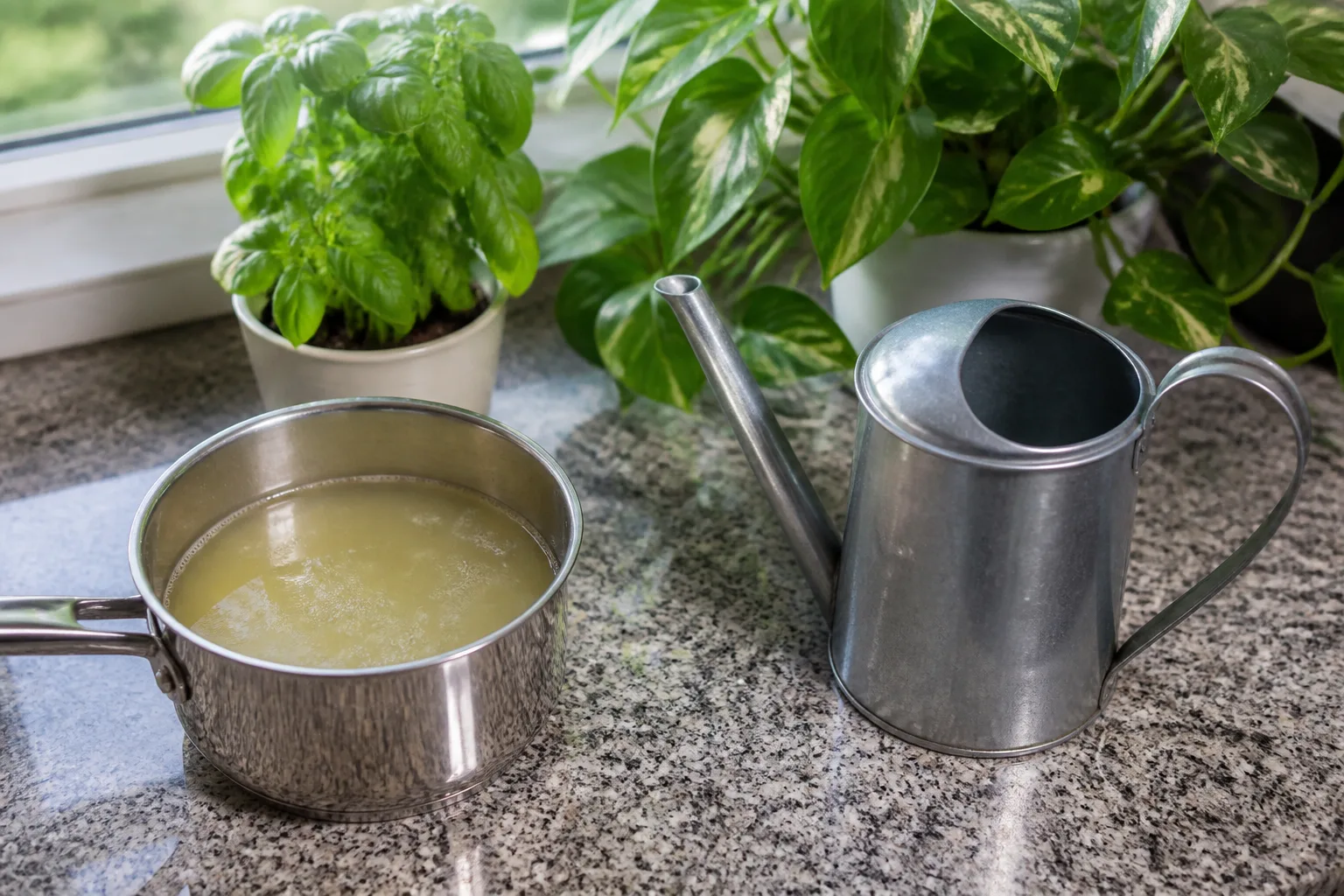
Discard water if you salted the cooking pot, even if it tastes only mildly salty. A taste test does not tell you a plant-safe concentration, and pasta can absorb some of the salt while the remaining water’s concentration varies with recipe and evaporation. If you are unsure whether salt was added, choose clean water instead of gambling on an unknown dose.
The same conservative rule applies to pasta cooked with broth, bouillon, oil, butter, cream, or sauce. Those liquids contain ingredients beyond plain water and starch, and you cannot infer a safe application rate from the recipe. Do not pour them on edible plants, seedlings, or houseplants just to avoid waste; dispose of them in the kitchen sink or another suitable household waste stream.
Plain, unsalted water from boiling an egg is also not a dependable calcium treatment. Unless salt or other ingredients were added, it is simply a possible occasional source of room-temperature water; do not count on it to correct a nutrient problem or replace fertilizer. The same logic applies to unsalted vegetable or potato water: it may be reused as water, but it is not a controlled plant-food recipe.
Houseplants and garden beds have different risk profiles
The ingredients do not become plant-safe simply because a plant grows outdoors. What changes is the size and drainage of the root zone. A large, established garden bed has far more soil than a small pot, and rainfall can move some soluble salts downward when the soil drains freely; an indoor container gets no rain and concentrates every repeated addition in a much smaller space.
That is why an occasional plain batch is a low-stakes choice for a garden, while routine use in a houseplant is harder to justify. The RHS notes that reused household water varies in quality and that some plants in its short-term greywater trials showed salt stress after repeated use. Those trials were about greywater, not pasta water, so they do not prove plain pasta water causes the same effect; they reinforce the practical point that water composition and duration matter.
Why a small pot needs more caution
A small container has limited soil volume and a finite number of drainage paths. Salts from fertilizer, hard or softened water, and other inputs can accumulate there even without pasta water, which is why regular watering should follow the plant’s needs and excess runoff should leave the pot. If you use plain pasta water once, alternate with ordinary water rather than making starchy water the plant’s routine supply.
Be especially conservative with pots that have no drainage holes, dense or compacted mix, or roots already stressed by soggy soil. Adding any extra liquid to a pot that is still wet can prolong poor aeration, so do not use pasta water just because it is available. The BHG guide recommends watering according to the mix’s moisture and allowing runoff to escape; those basics matter more than choosing a clever water source.
Why one pour in a garden bed is less concerning
If a small amount of salted water accidentally reaches a well-drained outdoor bed, do not panic or dig up the plant. One exposure is not the same as repeatedly irrigating with salty water. Stop using that batch, avoid adding more salt, and let the bed drain; natural rainfall can help move soluble salts through soil when drainage is good.
That lower risk is not permission to dump a full stockpot of salty water onto a single shrub or vegetable row. Salt-sensitive plants and small raised beds still have a limited root zone, and salts can remain where they are deposited. For a large spill or repeated use, use clean water to help leach salts only if the soil drains freely; if the area stays saturated, address drainage before adding more water.
What to do if you already used salted pasta water
Start with the amount, the plant’s setting, and whether the soil is already wet. A few tablespoons poured once into a large outdoor bed usually calls for no emergency treatment. A whole pot of salted water poured into a small houseplant container deserves more attention, but immediately flooding an already soggy pot can trade a salt concern for root stress from waterlogging.
For a container with drainage holes and a free-draining mix, let the immediate runoff escape and empty the saucer. If the soil is not saturated and the salted pour was substantial, flush the root zone with clean, room-temperature water so it can drain out; do not let the pot stand in the runoff. LSU AgCenter guidance for household containers affected by excess salt recommends flushing with fresh water to leach salts, while also emphasizing the small soil volume in pots.
If the pot has no drainage, the mix is waterlogged, or the liquid included oil or broth, do not keep pouring water into it. Remove the plant’s inner pot from any decorative cachepot if possible, let it drain, and consider replacing the mix if a large amount of salty or greasy liquid remains trapped. Watch new growth and overall vigor over the next few weeks; brown tips alone do not identify salt damage, so also check light, watering, fertilizer, and root condition before treating.
Better ways to save water for your plants
If your goal is conservation, start with water that does not need a complicated safety test. Rainwater collected in a clean barrel is useful for many plants, and water collected while waiting for the tap to warm can be saved in a clean container for the same day. Do not store warm, food-contaminated water for days; RHS guidance on household water reuse recommends using stored greywater promptly because quality can decline.
Pasta water is a small bonus, not the highest-impact water-saving step. Use a watering can rather than spraying foliage, water the root zone, group plants with similar needs, and mulch outdoor beds so moisture evaporates more slowly. A slower, deeper watering when the soil is actually dry is more useful than making extra trips with a questionable liquid.
Reuse water that needs no special screening
Catch clean tap water in a basin while you wait for a comfortable temperature, then use it on a plant that is ready for water. You can also save rainwater for ornamentals or garden beds, provided your collection system is clean and your local conditions make it appropriate. These options do not contain pasta starch, recipe salt, or sauce residue, so they are easier to use consistently.
If you want to save water from cooking vegetables, use only a plain unsalted batch with no oil or seasoning and let it cool completely. The RHS guidance on reused household water is a reminder not to treat every liquid from a kitchen or bathroom as interchangeable: contaminants and salts change what is safe, and edible crops need extra care when water may carry pathogens.
Reduce demand with better garden watering
Check soil moisture before watering instead of following a fixed calendar. For houseplants, feel the potting mix or lift the pot; for outdoor plants, check below the dry surface layer. The BHG watering guide explains that plant type, light, season, and container all affect how often a houseplant needs water.
In beds and borders, mulch exposed soil, direct water to the root zone, and adjust irrigation for rain and heat. University of Minnesota Extension’s discussion of salts in high-tunnel soil describes how rain can help leach soluble salts from open soil, while covered growing spaces retain them. The broader lesson for a home garden is simple: use water efficiently, but do not assume every leftover liquid is an upgrade over a clean source.
Use real fertilizer for plant nutrition
If a plant needs feeding, choose a fertilizer made for that plant type and follow the product label’s dilution and frequency. A measured fertilizer contains specified nutrients; pasta water has no guaranteed nutrient analysis, and extra fertilizer is not the right fix for brown leaf edges, weak growth, or yellowing until you know what is causing the symptom.
For many garden beds, mature compost is a better soil-building input than a homemade liquid because it adds stable organic matter over time. For houseplants, use a suitable complete fertilizer only during the plant’s active growth period and at the label rate. Keep the jobs separate: give plants water when they need it, and provide nutrition only when their growing medium and care plan call for it.
Conclusion
Plain, unsalted pasta water cooled to room temperature can be used occasionally as irrigation, but it is not fertilizer. Salted pasta water should not go on plants, because the sodium and chloride add an unpredictable salt load—especially risky when repeated in a small container. Oil, sauce, broth, and other seasonings are reasons to discard the batch too.
If you already poured a little into an outdoor bed, one mistake is unlikely to demand drastic action. For a substantial pour into a draining pot, use clean water to leach salts only when the mix can drain and is not already saturated. For dependable plant care, water according to soil moisture, capture rain or clean tap water, and use a labeled fertilizer when a plant actually needs nutrients.



