15 Fence Line Landscaping Ideas for Any Yard
Plan a better fence garden with 15 practical ideas for sun, shade, privacy, drainage, narrow yards, and low-cost updates that will not outgrow the space.
A fence line is a long, narrow design problem. It may be the first thing you see from the kitchen, a hot strip beside a driveway, a shady edge under trees, or a neglected boundary where grass never grows well. The most affordable solution is not to fill every inch with plants. It is to decide what the strip needs to do, then spend on the few elements that make that job easier.
Before buying anything, measure the usable width from the fence to the path, patio, or property line. Note the hours of direct sun, where rain runs, whether a mower or gate must pass, and which side owns the fence. A narrow bed that stays accessible and fits mature plants will look better for longer than a crowded row of inexpensive plants.
Start with the job your fence line needs to do
Most fence landscaping falls into one or more of four jobs: soften a hard surface, screen a view, hold soil and water, or create a usable edge. A low pollinator border may be perfect for an open rail fence but useless if you need year-round privacy. Gravel may solve a muddy access route but feel harsh beside a seating area. Decide the job first and the style second.
Check sun, soil, access, and property boundaries
Spend one ordinary day observing the strip. Morning sun and afternoon sun are different conditions, and the soil beside a fence can be unusually dry because a roof, fence cap, or tree canopy intercepts rain. Digging may also be restricted by utilities, concrete footings, irrigation, or a neighbor’s roots, so call the appropriate utility-locating service before making a long run of holes.
Keep plants far enough from the fence that you can paint, stain, repair, and inspect it. Use the plant’s mature width, not the size of the nursery pot, to calculate spacing. If the fence sits on a shared boundary, discuss overhanging branches, irrigation, and future access before you install anything that will eventually cross the line.
For a reliable baseline, compare plant tags with University of Minnesota Extension guidance on planting trees and shrubs and your local extension office’s recommendations. Their emphasis on mature size, site conditions, and planting technique is more useful than a generic list of “best fence plants.” For mulch depth and placement, Penn State Extension’s landscape-plant guidance is a useful reference; mulch should protect soil without touching trunks, stems, or fence boards.
1. Build a narrow pollinator border
A 2- to 4-foot strip of flowering perennials can make a plain fence feel intentional without requiring a full garden makeover. Repeat a small palette of plants—such as regional asters, coneflowers, bee balm, yarrow, or ornamental grasses where they suit the site—in loose groups rather than planting one of everything.
The U.S. Forest Service pollinator-gardening guidance is a helpful reminder to provide a succession of blooms and to avoid treating a pollinator border as a single-season flower display. Plant for the local climate, include shelter and water when appropriate, and avoid pesticides that would undermine the habitat you are trying to create.
The budget advantage is repetition and patience. Buy a few larger anchor plants for instant shape, then fill gaps with divisions, seeds, or smaller plugs from a reputable local source. Leave a clean mown or mulched edge so the border looks designed while plants establish, and choose species listed as native or well-adapted in your region rather than trusting a generic pollinator mix.
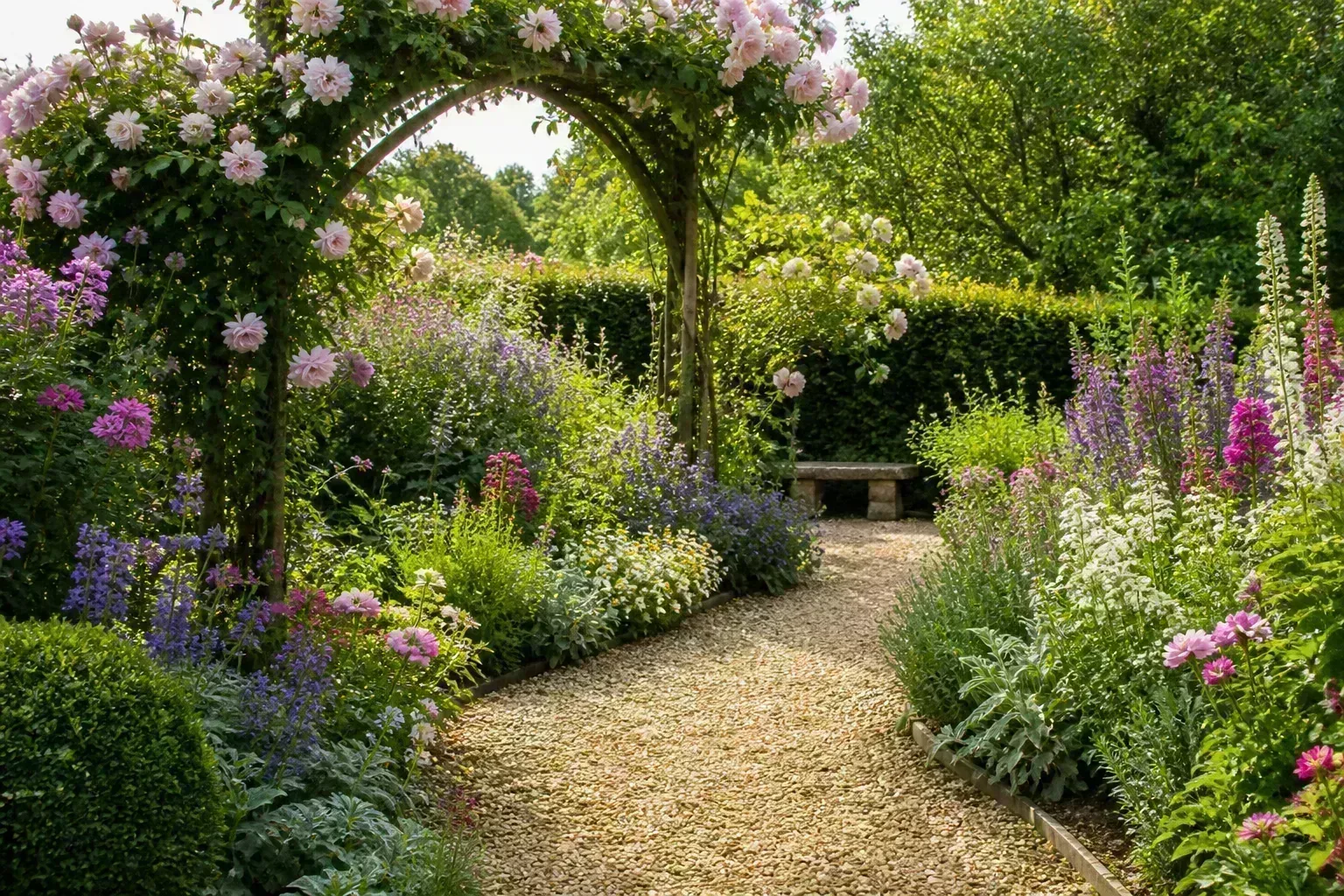
2. Layer a privacy planting instead of a single hedge
A solid row of the same shrub is fast to understand but expensive to replace when one plant fails, and it can become a wall of pruning. A more resilient screen uses a tall back layer, a middle layer, and a low front layer, with enough space for air movement and maintenance.
For example, a regionally appropriate evergreen or small tree can provide winter structure, flowering shrubs can occupy the middle, and grasses or perennials can cover the foreground. Do not place every plant at the same distance from the fence. Staggering the planting makes the border look fuller while allowing you to reach the fence.
Privacy is also a timing decision. A small shrub is cheaper and often establishes better than a huge specimen, but it will not provide an instant screen. If you need coverage this year, combine a trellis or temporary panel with plants that will mature into the long-term layer rather than paying for a dense hedge that outgrows the bed.
3. Curve an inexpensive bed away from the fence
A curved edge can make a short fence feel less rigid, and it costs little if you mark the line with a hose before buying edging. A shallow curve is easier to mow and plant than a series of tight waves. Keep the back of the bed broad enough for the mature plants and the front edge visible from the main viewing angle.
Use one material—reclaimed brick, locally available stone, steel edging, or a crisp spade-cut edge—to separate the bed from lawn. The edge is not decoration alone: it keeps mulch or gravel in place and gives the eye a finished boundary. If the soil is wet, do not build a raised border that redirects runoff toward a foundation or a neighbor.
4. Add a trellis for temporary vertical coverage
A freestanding trellis can add height without forcing you to plant a row of large shrubs. It is especially useful beside a gate, patio, or narrow side yard where you want a visual screen but still need access to the fence.
Choose the vine for the climate and the support, not just the flower color. Annual vines can provide one-season coverage while you test the site. Perennial vines need a sturdy, repairable support and regular training; vigorous climbers can pull on weak panels, enter gutters, or become difficult to remove. Keep the trellis slightly in front of the fence so air can circulate and the fence can still be inspected.
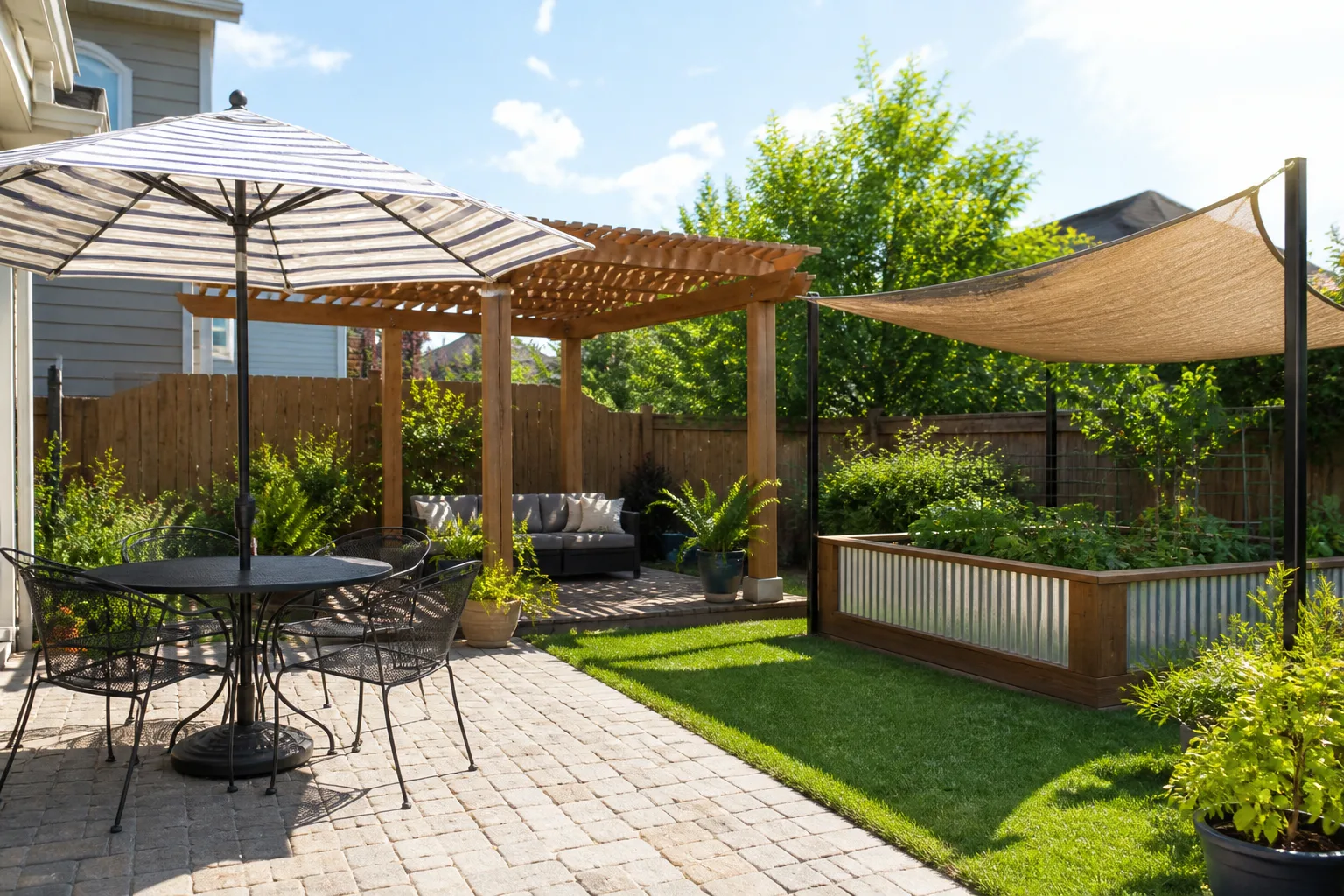
5. Use a flowering shrub rhythm along an open fence
Open rail fences pair well with shrubs whose flowers or foliage can be seen from both sides. Instead of planting a continuous hedge, repeat three or five shrubs at generous intervals and weave lower perennials between them. The gaps keep the border less formal and reduce the number of plants you must purchase at once.
Choose shrubs based on mature width, bloom season, and pruning habit. Panicle hydrangeas, weigela, azaleas, or other familiar choices may work in the right climate and soil, but no shrub is universally easy. A plant tag that says “full sun” does not mean it will tolerate reflected heat from a fence, and a moisture-loving shrub may struggle beside a dry foundation edge.
6. Paint and plant an old fence
Sometimes the cheapest fence-line improvement is a careful repair and a new color. A deep green, charcoal, warm brown, or muted blue can make foliage stand out and disguise mismatched boards. Clean and repair the fence first, use a coating suited to its material, and protect nearby soil and plants from overspray or spills.
Paint does not solve rot, leaning posts, or trapped moisture. Leave the bottom edge from touching constantly wet soil or mulch, and do not bury the fence to hide a gap. Once the background is quiet, a small number of bold plants can create more impact than a crowded bed: one shrub, a repeated grass, and a few seasonal flowers may be enough.
7. Make a gravel-and-stone dry border
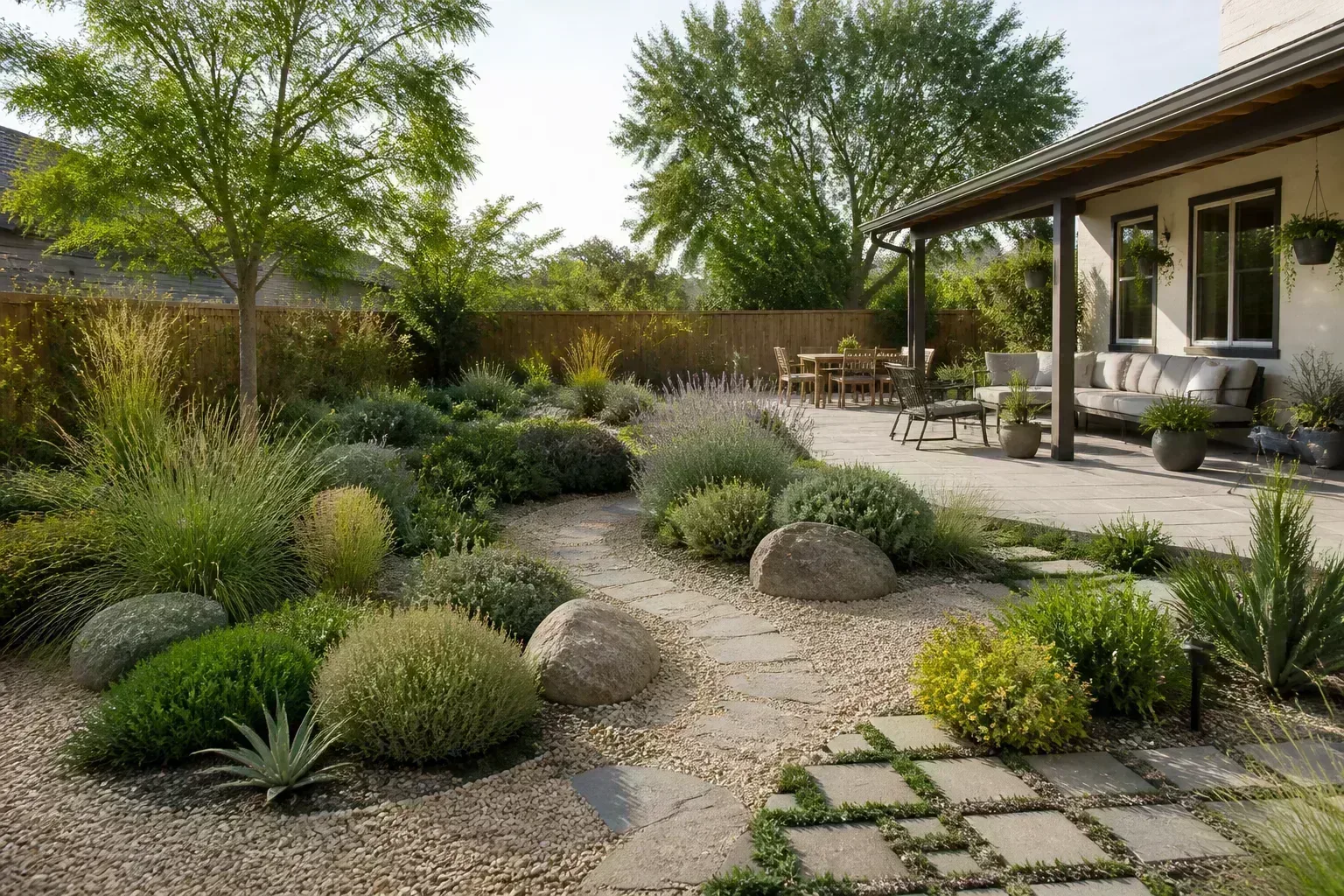
Gravel is practical beside a shed, driveway, gate, or fence that creates a muddy runoff line. A stable base, a contained edge, and a consistent stone size matter more than buying decorative gravel. Place large, level stepping stones where people walk, and keep loose stone out of gate swings and drainage inlets.
This is a poor choice for every fence line. Gravel can migrate into lawns, heat up beside a south-facing fence, and become uncomfortable for bare feet or play. In a dry, sunny strip, combine it with drought-tolerant plants that need sharp drainage; in a wet strip, solve the water movement first instead of covering standing water with rock.
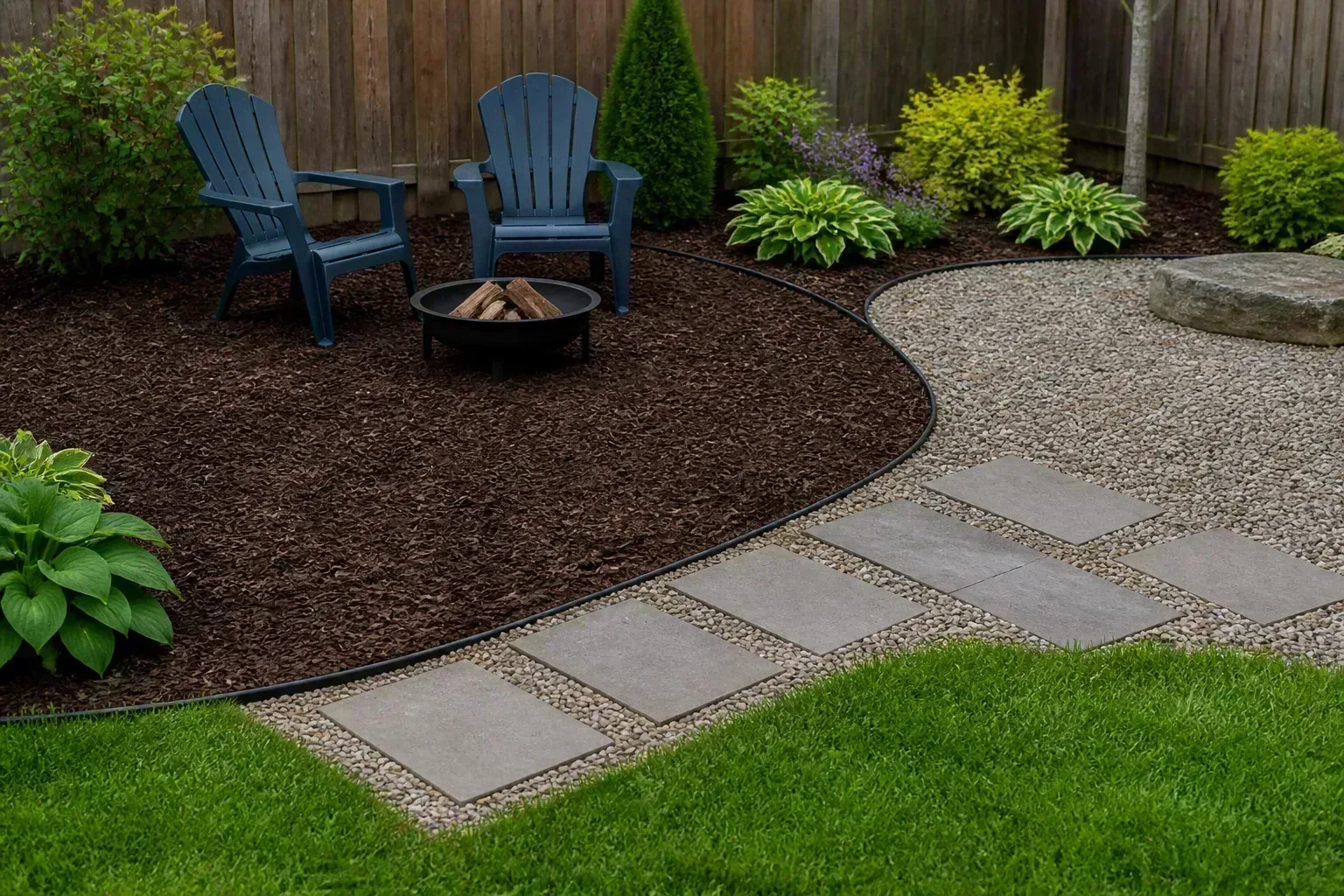
8. Try a shade garden beneath trees
Grass often fails along a fence because tree roots, shade, and dry soil stack the odds against it. A shade garden can turn that difficult strip into a deliberate transition using ferns, sedges, woodland perennials, shrubs, and a restrained layer of leaf mulch.
First identify whether the shade is dry or moist. Plants that tolerate cool, damp shade may fail under a mature tree where roots remove water quickly. Start with small plants, water during establishment, avoid piling soil against trunks, and leave enough open space to see the fence and remove fallen branches.
9. Edge the fence with herbs or vegetables
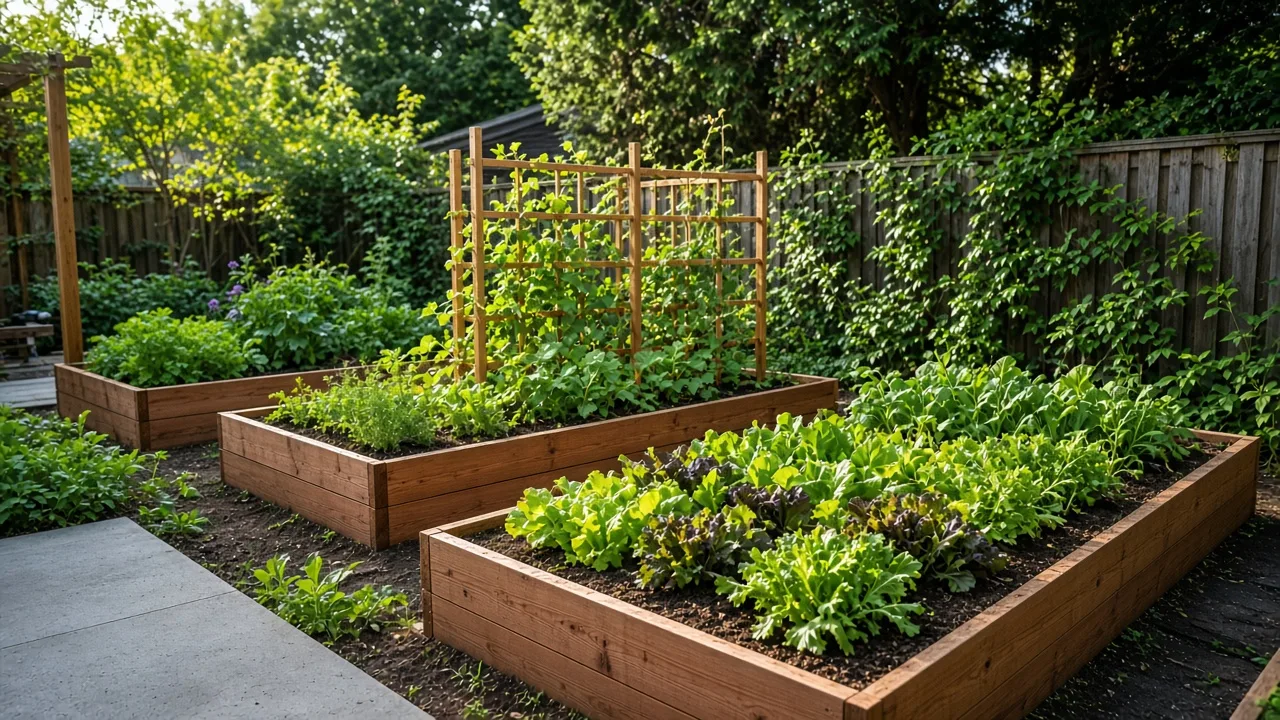
A sunny fence can become a productive border with herbs, compact vegetables, or flowers that attract beneficial insects. Raised beds or large containers are useful where the existing soil is compacted, contaminated, full of roots, or difficult to amend. A path on the garden side keeps watering and harvesting from turning the strip into mud.
Do not place edible beds where fence treatments, road splash, or a neighbor’s routine pesticide use could create a contamination concern. Keep mature vines and tall crops from blocking gates or leaning heavily on panels. A few well-used beds are more economical than a long garden that becomes a weedy obligation in midsummer.
10. Use low hedges and small trees in layers
Layered structure gives a fence line a finished look even when flowers are between seasons. A low hedge or mounded shrub can define the front, while a small ornamental tree or narrow evergreen provides height at selected points rather than along the entire boundary.
This layout depends on restraint. Check mature canopy width and root behavior before planting near paving, drainage, or the fence footing. A tree that is “small” at the nursery may still become too wide for a 3-foot strip, and repeated topping is not a substitute for choosing the right plant.
11. Create a cottage-style mixed strip
For a softer, informal look, combine a structural shrub with plants of different heights, leaf shapes, and bloom times. Roses, catmint, lady’s mantle, salvias, grasses, and bulbs can suggest a cottage garden when they suit the climate, but the underlying design still needs repetition and a clear edge.
Keep the palette to a few recurring colors and textures. Otherwise, a long fence becomes a collection of unrelated plants that bloom briefly and look empty afterward. Fill the lowest layer with mulch or a reliable groundcover while perennials grow, and edit plants that repeatedly flop into paths or require more water than the site can provide.
12. Use evergreen structure selectively
Evergreens can provide the winter backbone that flowering borders lack, but a continuous evergreen wall is rarely the cheapest or lowest-maintenance answer. Use a few narrow specimens to mark a gate, anchor a corner, or frame a view, then connect them with lower plants.
Choose cultivars that fit the available width at maturity. Never assume a plant can be kept narrow forever with shears. In snowy regions, allow room for plowed snow and avoid placing brittle branches where roof runoff freezes; in hot regions, protect young evergreens from reflected heat while they establish.
13. Turn the fence into a living wall
A fence can support hanging pots, small shelves, or modular planters where in-ground planting is impossible. This works best for a short feature near a door, not for covering an entire boundary with heavy containers. Use hardware rated for the load when soil is wet, and leave a gap so water does not remain trapped against wood.
Containers dry faster than garden beds, especially against a sunny fence. Grouping them helps with watering, but it does not eliminate the work. Use drought-tolerant plants for a hot, exposed wall and shade plants for a north-facing or tree-covered wall; do not let the visual appeal of a living wall hide its seasonal maintenance cost.
14. Replace a fence section with a planted boundary
Where privacy and security are not essential, a planted boundary can be more welcoming than a continuous fence. A low hedge, mixed shrub border, or curving perennial bed can define space while keeping views open. This is useful at the front of a property or between a patio and lawn.
Treat it as a boundary, not a barrier. Plants will not keep pets, children, or wildlife out unless the design includes a real gate or fence. Choose thorny, toxic, or dense plants carefully around play areas, and check local rules if the planting sits near a sidewalk or sight line.
15. Combine seating, screening, and a path
The strongest fence lines often do three jobs at once. A compact gravel or mulch pad can hold a bench, a trellis can screen the seat, and a planted border can soften the route from the house. This uses the fence as a backdrop without asking plants to provide all the privacy immediately.
Build the circulation first. A path that is too narrow will force people into the bed, while a chair placed where rain falls from a roof edge will be uncomfortable no matter how attractive the planting looks. Keep the main route firm, provide a clear gate approach, and let the garden occupy the leftover space rather than the other way around.
How to build the cheapest version first
Use a phased plan so the first weekend produces a finished-looking result. Mark the bed, remove only the weeds and turf you must, improve the soil where the chosen plants need it, and install the edge before buying a large number of plants. Mulch exposed soil while the design fills in, but keep mulch away from fence boards and plant crowns.
The lowest-cost sequence is usually: define the edge, solve water, add one structural feature, plant repeated small groups, then fill gaps over time. Salvaged stone, divided perennials, seed-grown annuals, and locally sourced compost can reduce the initial bill, but do not reuse lumber, soil, or plant material if you cannot confirm that it is clean and safe.
Compare the total cost, not the price of a single plant. Include delivery, edging, soil amendments, irrigation, replacement plants, pruning tools, and the time needed to maintain a long strip. A $40 shrub that needs weekly pruning and repeated watering may cost more over three years than a $12 perennial that suits the site.
Fence-line mistakes that become expensive
The most common mistake is planting too close. A row that looks sparse on installation day can become a pruning tunnel in two seasons, while a shrub pressed against a fence stays damp and blocks inspection. Follow the mature-width guidance on the tag, then add working room where you need to paint, mow, or walk.
Another mistake is using plants to hide a structural problem. Repair a leaning post, rotten board, broken gate, or drainage failure before adding a screen. Never rely on a vine to stabilize a failing fence, and do not allow roots, mulch, or irrigation to keep wood permanently wet.
Finally, avoid assuming “low maintenance” means “no maintenance.” Every living border needs establishment water, weed control, and occasional editing. Gravel needs raking and containment, evergreens need space, and pollinator gardens need a seasonal cleanup plan. The affordable design is the one you can realistically keep healthy and accessible.
Conclusion: choose one job and phase the border
You do not need a new fence or a complete landscape renovation to improve a fence line. Start with the strip’s real job—privacy, softness, drainage, habitat, access, or a place to sit—then make one strong move: a crisp edge, a trellis, a repeated planting, or a small gravel pad.
The best budget border becomes better in stages. Give plants room to mature, keep the fence repairable, and reserve money for water and maintenance rather than spending it all on instant size. A modest design that fits the site will outlast a crowded row of bargain plants and look intentional in every season.