Spanish Lavender Care: Better Blooms, Less Root Rot
Grow Spanish lavender in the right sun and soil. Compare pots and beds, prune safely, propagate cuttings, choose cultivars, and plan for winter.
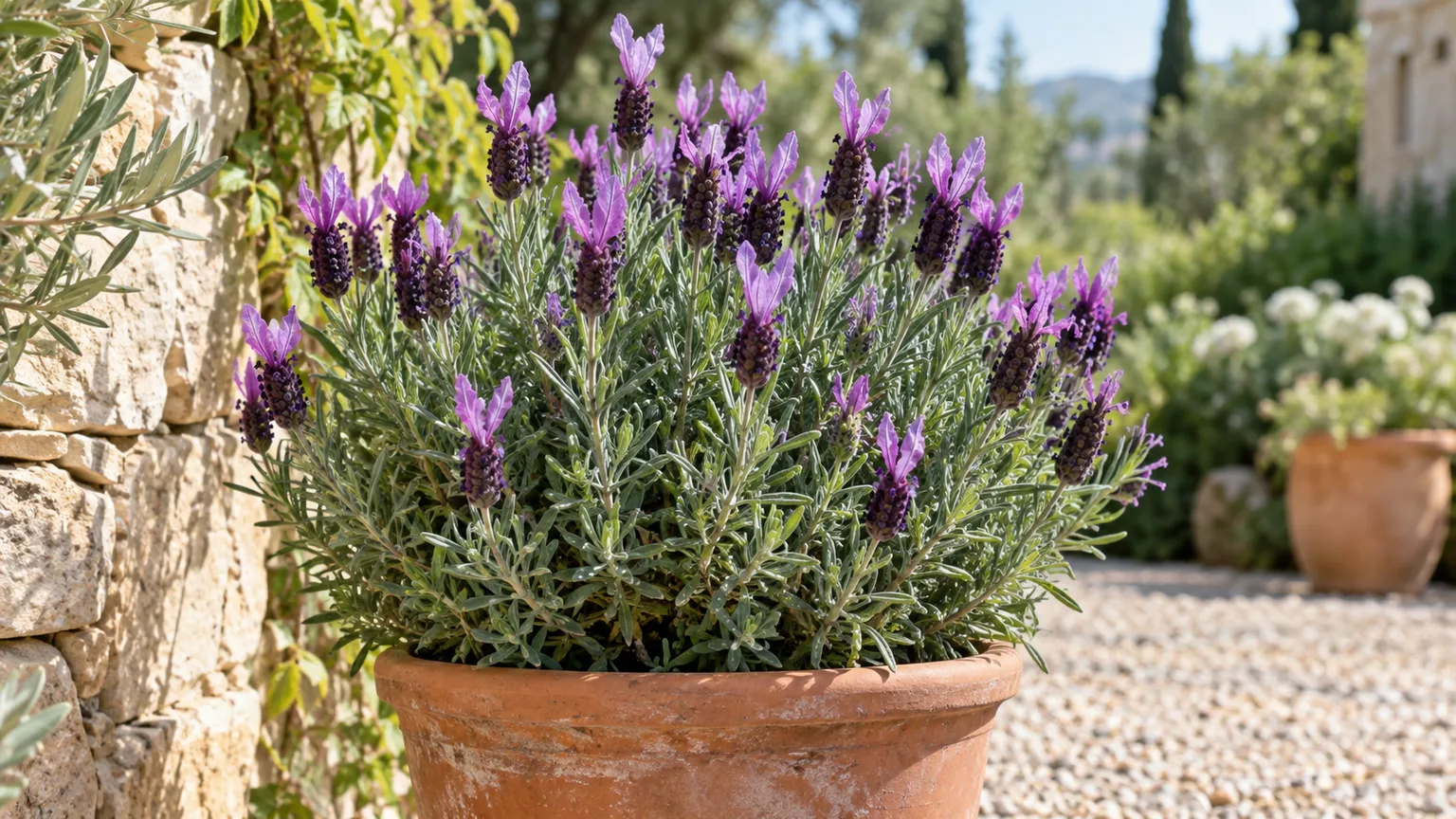
Spanish lavender (Lavandula stoechas) is the lavender with a tuft of showy bracts perched above each flower head. It thrives in sun and sharply drained soil, but it is less forgiving of cold, wet winters than many gardeners expect. Choose a cultivar suited to your climate, keep water moving through the root zone, and prune only where green growth remains.
The main care mistake is treating all lavender alike. Spanish lavender is a compact Mediterranean shrub that can flower through spring and summer in a warm climate, yet the same plant may struggle in a cold, rain-soaked bed. A container is useful when drainage or winter protection is uncertain; it is not a way to compensate for too little sunlight.
Spanish Lavender at a Glance
| Growing factor | Practical target |
|---|---|
| Botanical name | Lavandula stoechas |
| Mature form | Compact, woody evergreen subshrub; often about 18–36 inches tall and wide |
| Light | At least 6 hours of direct sun; more sun generally supports better flowering |
| Soil | Lean, gritty or sandy, and freely draining |
| Water | Water new plants while they establish; let established soil dry between deep waterings |
| Bloom season | Usually spring into summer; timing and repeat flowering vary with climate and cultivar |
| Cold tolerance | NC State Extension lists the species for USDA Zones 8–9; cultivar and winter conditions matter |
| Best use | Sunny borders, gravel gardens, slopes, and containers with drainage |
These figures are a starting point, not a guarantee for every named cultivar or site. The most reliable signal is whether the plant has strong sun, roots that do not stay wet, and enough protection from local winter extremes. NC State Extension describes Spanish lavender as a sun-loving, drought-tolerant Mediterranean subshrub and cautions that it can die if cut back to the ground. NC State Extension
Identify Spanish Lavender Before You Buy
Look for a rounded cluster of narrow gray-green leaves and upright stems topped with short, dense flower heads. Spanish lavender is also sold as butterfly lavender, bract lavender, or topped lavender. Labels sometimes use “French lavender” loosely, so check the botanical name: L. stoechas is different from English lavender, L. angustifolia, and from French lavender, L. dentata.
Bracts, flower spikes, and scent
The purple, pink, or white “ears” are bracts, not petals. The actual flowers are the small florets packed into the oval head below them. This shape is the quickest way to distinguish Spanish lavender from the long, narrow flower spikes typical of English lavender. Its fragrance is aromatic but can be more resinous or camphor-like than the sweeter scent many people associate with culinary lavender; grow it primarily as an ornamental unless a cultivar is specifically sold for another use.
Match the Site to Spanish Lavender’s Climate Limits
Spanish lavender is adapted to hot, dry summers and performs best where rainwater drains quickly away from its crown. A sunny slope, gravelly border, raised bed, or open patio can suit it. A low spot that holds winter rain, a shaded bed, or a frequently irrigated lawn edge is a poor match even if the summer weather is warm.
Treat hardiness zones as a starting point
NC State Extension lists L. stoechas for Zones 8–9. A bylined Garden Design guide gives a broader range for some cultivars, which is a reminder to check the plant label and local nursery advice rather than assume every Spanish lavender tolerates the same low temperature. NC State Extension Garden Design Hardiness zones describe average annual extreme winter lows; they do not account for cold rain, waterlogged roots, wind exposure, or a sheltered courtyard.
If you are near the edge of the plant’s range, grow it in a movable container or take cuttings before winter. In a warm zone with wet winters, drainage may be the greater risk than cold. In a colder zone with dry winters, a protected site can help, but it cannot make a tender cultivar reliably hardy.
Plant in the Ground or in a Container
Plant in spring after hard frost risk has passed and the soil is workable. Fall planting can work in mild regions if roots have time to establish before cold weather; where winter is severe or wet, spring gives the plant a longer establishment window. Set the root ball at the same depth it grew in its nursery pot, firm soil gently around it, and leave the woody crown exposed to air.
Use the mature width on the plant tag to space shrubs so air can pass between them. Spanish lavender often reaches roughly 1½–3 feet across, though cultivar size varies. A crowded plant stays damp longer after rain and is harder to prune without cutting into neighboring growth.
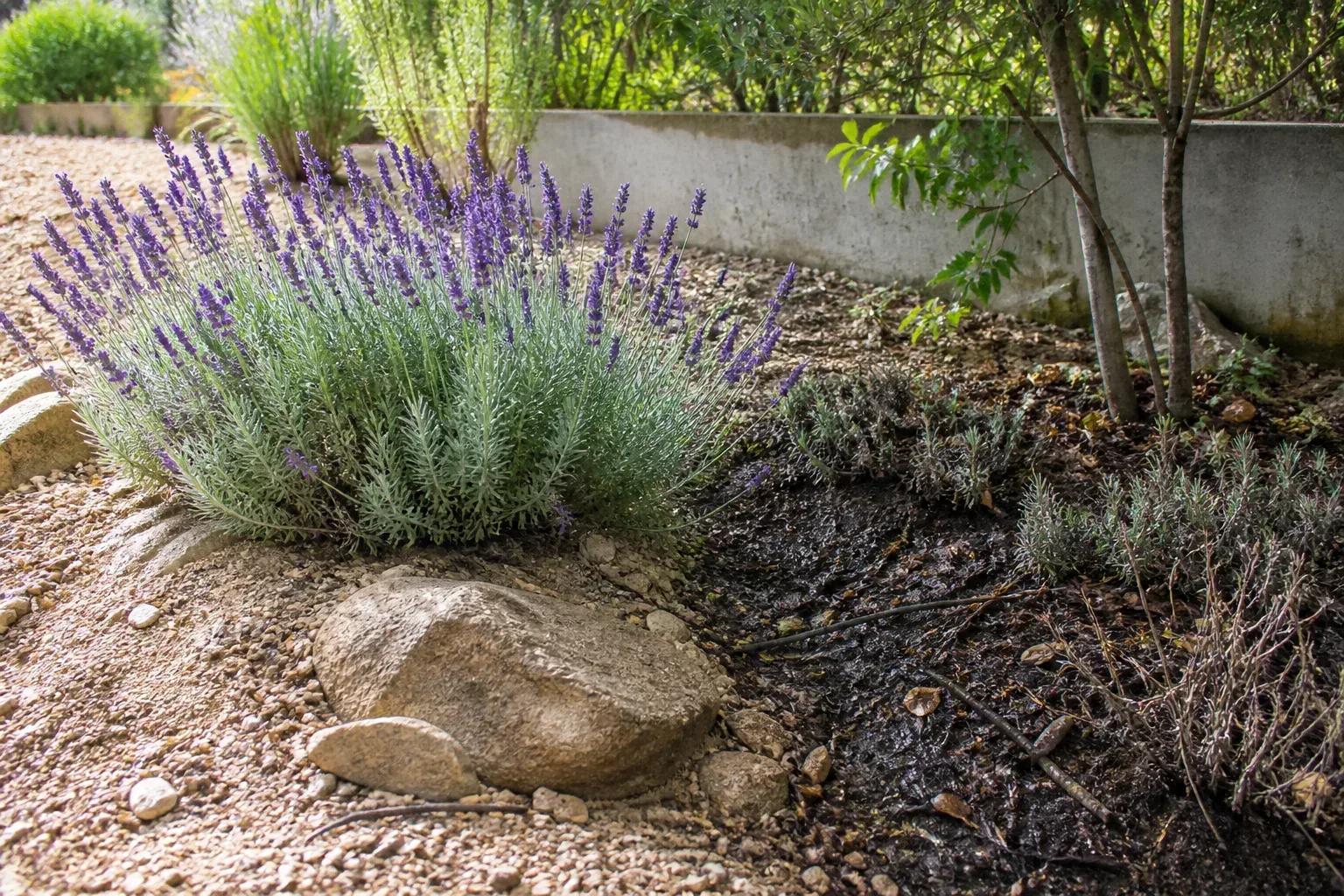
Containers are a practical choice if your garden soil remains wet, your winters fall below the cultivar’s range, or you want to move the plant to a sheltered spot. Choose a sturdy pot with several open drainage holes and a diameter only a few inches wider than the root ball. Terracotta dries quickly and suits rainy climates or growers who tend to overwater; plastic holds moisture longer and needs closer attention in cool weather.
Use a gritty, fast-draining potting mix rather than dense garden soil. A commercial mix for Mediterranean plants or ordinary potting mix amended with coarse perlite, pumice, or horticultural grit can work. Raise the pot slightly on feet, and empty any saucer after watering or rain. Roots should not sit in runoff.
Fix drainage before planting
If a planting hole fills with water after rain or irrigation, do not try to solve the problem by mixing a small amount of fine sand into clay. That can leave a dense, heavy soil with even less useful structure. Plant on a broad raised mound, use a properly built raised bed, select a naturally draining part of the garden, or choose a container. Keep thick organic mulch away from the crown; a thin gravel mulch can reduce splash without trapping moisture against the stems.
Give the Plant Sunlight and Airflow
Give Spanish lavender at least six hours of direct sunlight daily. Morning-to-afternoon sun supports a compact shape and more flower stems; light shade may keep a plant alive, but it often leaves stems stretched and bloom sparse. If an established plant has plenty of leaves but few flowers, first check the hours of direct sun before adding fertilizer or pruning harder.
In humid regions, leave space around the plant and avoid placing it where sprinklers repeatedly wet the foliage and crown. Airflow does not cure a saturated root zone, but it helps foliage dry and lowers the conditions that favor leaf and stem diseases. Indoors, Spanish lavender is difficult to keep as a permanent houseplant: a bright window may still provide less direct sun and airflow than an outdoor patio. Bring a container inside for winter protection, then return it outdoors when conditions allow.
Water by Root Stage and Pot Condition
Water a newly planted shrub thoroughly around the root ball, then let the surface soil begin to dry before watering again. During its first growing season, check more often during heat, wind, and long dry spells because young roots have not spread far into surrounding soil. The goal is even establishment without keeping the crown continually damp.
Once established in the ground, Spanish lavender tolerates dry weather. Water deeply during a prolonged drought if the plant is showing genuine stress, then allow the soil to dry again. Do not use a weekly schedule as a substitute for checking rainfall, soil texture, and drainage. In a cool or rainy season, the plant may need little or no supplemental water.
Potted plants dry faster because their roots are confined and exposed to warm air. Before watering, feel the mix a couple of inches below the surface and lift the pot if you can: a noticeably lighter pot and dry mix indicate that it is time to water. Soak until water exits the drainage holes, then let the pot drain freely. A pot that stays wet for days needs a sunnier, more ventilated position or a more open mix, not another watering.
Keep Fertilizer Light or Skip It
Spanish lavender usually needs no routine fertilizer in a garden bed. It is adapted to lean soil, and rich compost or frequent high-nitrogen feeding can produce soft leafy growth at the expense of flowers. If the plant grows poorly, check sun, drainage, roots, and winter damage before assuming it needs food.
Container mix loses nutrients over time, but feeding still should be restrained. If a potted plant has healthy roots and active growth yet looks pale, use a light dose of a balanced fertilizer according to its label during the growing season. Do not fertilize a waterlogged or drought-stressed plant, and do not increase the dose to force more blooms.
Prune Without Cutting Into Bare Wood
Prune after a main flush of flowers fades, while the plant still has visible leafy growth. Remove the spent flower stems and lightly shape the green outer growth, usually taking no more than about one-third of the leafy portion at a time. The exact month depends on when your plant blooms; use the flower cycle and local frost calendar instead of a fixed date. NC State Extension advises light shearing after summer bloom and warns that cutting the plant to the ground can kill it. NC State Extension
Lavender often does not resprout reliably from old, leafless wood. Before making each cut, find a small cluster of green leaves below it. If a branch is bare and woody all the way to its base, leave it rather than cutting it back to a stump. For an overgrown plant, reduce only the leafy growth over more than one season; if the center is entirely woody and the plant is declining, replacing it may be more successful than a severe renovation.
Deadhead to extend the display
For a tidier plant, snip a spent flower stem back to a leafy joint. In a warm, long season, removing the first faded heads can encourage another flush, but rebloom is not guaranteed: cultivar, sun, heat, and remaining growing time all matter. Leave some flower heads if you want seed or prefer to leave late blooms for insects; deadheading is an option, not a plant-health emergency.
Avoid a hard haircut late in fall. New shoots stimulated just before cold weather may not harden off, and a deep cut leaves less foliage to protect the plant. Clean, sharp pruners make a neat cut and reduce crushed stems.
Propagate Cuttings or Start Seeds
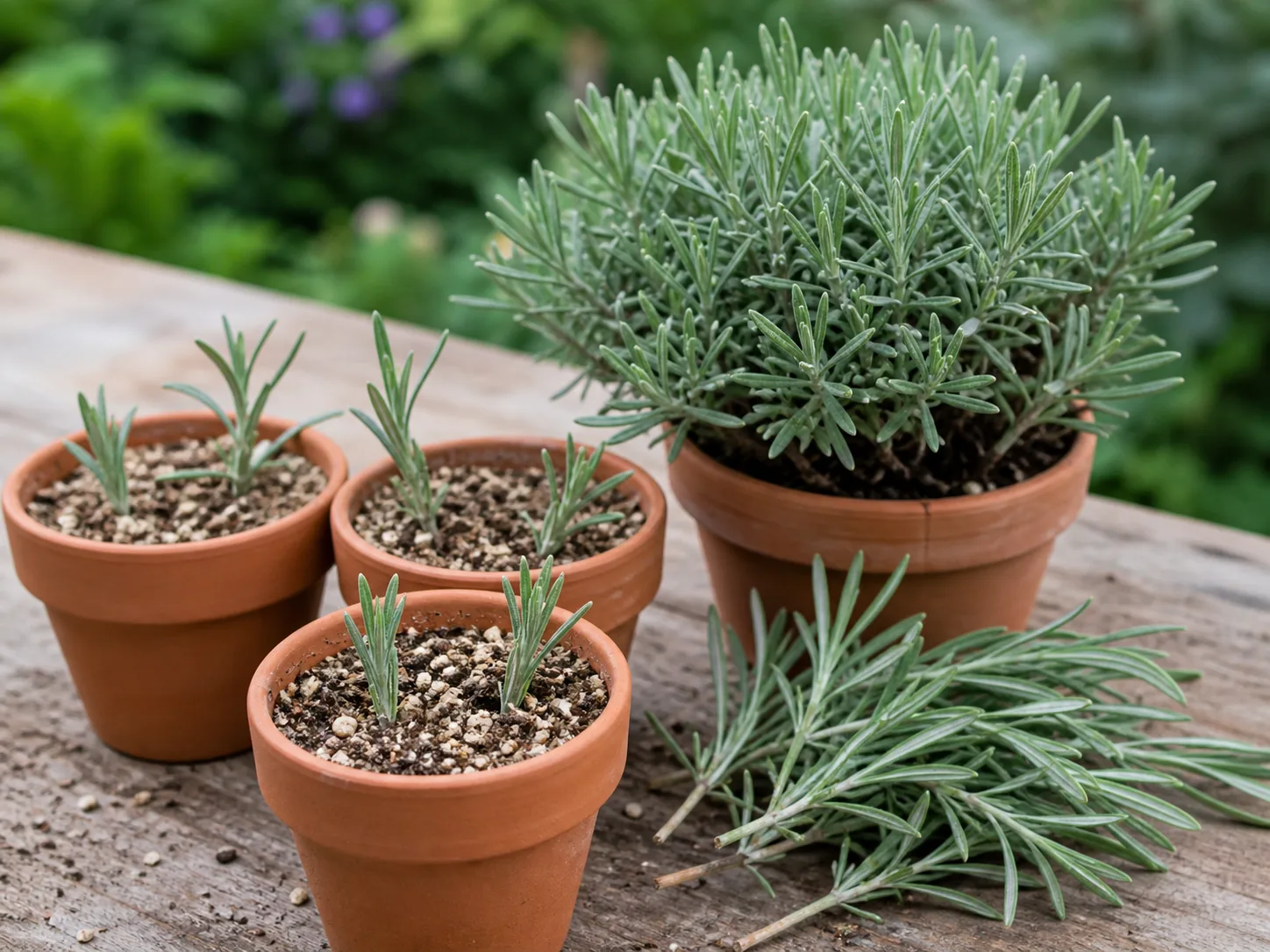
Stem cuttings are the better choice when you want a new plant to resemble a named cultivar. Take several 3–4 inch non-flowering shoots from healthy current-season growth in late spring or summer. Remove the lower leaves, place the bare end in a small pot of damp, open propagation mix, and keep it in bright light out of harsh midday sun. Keep the medium lightly moist, not saturated, and give the cutting airflow; a sealed plastic cover can trap too much moisture in a humid room.
Check for resistance with a gentle tug after a few weeks rather than repeatedly pulling the stem out. Once roots hold the cutting, pot it into a gritty mix and let it grow on before exposing it to hot sun or cold nights. Taking more than one cutting is sensible because not every cutting roots.
Choose a method for your goal
| Method | Best when | Trade-off |
|---|---|---|
| Stem cuttings | You want to preserve a named cultivar or color | Requires a healthy parent plant and a few weeks for rooting |
| Seed | You want to raise several plants and can wait | Germination may be slow or uneven, and seedlings may differ from the parent |
| Division | A plant has naturally separable rooted sections | Woody older shrubs may resent disturbance; not the first choice for every specimen |
Start seed indoors in a clean seed-starting mix, cover it only lightly, and keep the medium damp but not waterlogged in a warm, bright place. Germination timing varies, so do not discard a tray after only a few days. If you are growing a named cultivar for its particular bract color or shape, use a cutting or buy a labeled nursery plant: seed-grown offspring may not come true. NC State Extension lists seed, stem cuttings, and division as propagation options; practical guidance from Nature and Garden also compares these methods and favors taking cuttings from current growth. NC State Extension Nature and Garden
Select a Spanish Lavender Cultivar
Choose by mature size, flower color, and local hardiness information rather than the name alone. ‘Anouk’ is a compact choice often sold for containers and borders. ‘Kew Red’ is known for wine-red to rosy flower heads with pale bracts. ‘Alba’ has white flowers, while ‘Regal Splendour’ has long flower heads topped by prominent purple-pink bracts. ‘Bandera’ selections are offered in several colors and are often bred for compact growth.
Nursery names and size descriptions can vary, and a cultivar’s color does not guarantee a different hardiness range. Ask whether the plant has overwintered outdoors locally, especially if your site is near the cold edge of Spanish lavender’s range. For an exposed or wet winter garden, choose a container-grown plant you can move or select a more cold-hardy lavender species instead.
Prepare Spanish Lavender for Winter
In mild areas within the cultivar’s hardiness range, keep outdoor plants in their best-drained position and avoid fall pruning that removes too much leafy growth. A light layer of mulch can buffer roots during cold snaps, but keep it off the crown and use a material that will not hold water against the stems. Burlap can reduce wind exposure in a severe cold spell, but it does not make waterlogged soil safe.
Move container plants to a bright, sheltered, frost-free place before a hard freeze if they are not reliably hardy where you live. A cool greenhouse, bright unheated sunroom, or protected porch is usually more useful than a warm, dark room. Water much less often in winter, checking that the root ball is not staying wet; do not leave the pot standing in a catch tray. Inspect for pests before bringing it near other plants, then reintroduce it to outdoor sun gradually after frost risk passes.
If indoor space is limited, take several cuttings before cold weather and overwinter the smaller plants. This is often easier than carrying a large pot and gives you a backup if the parent shrub is damaged. In climates with persistent freezes, treat Spanish lavender as a seasonal container plant rather than assuming it will return outdoors each spring.
Diagnose Weak Growth, Yellow Leaves, and Root Rot
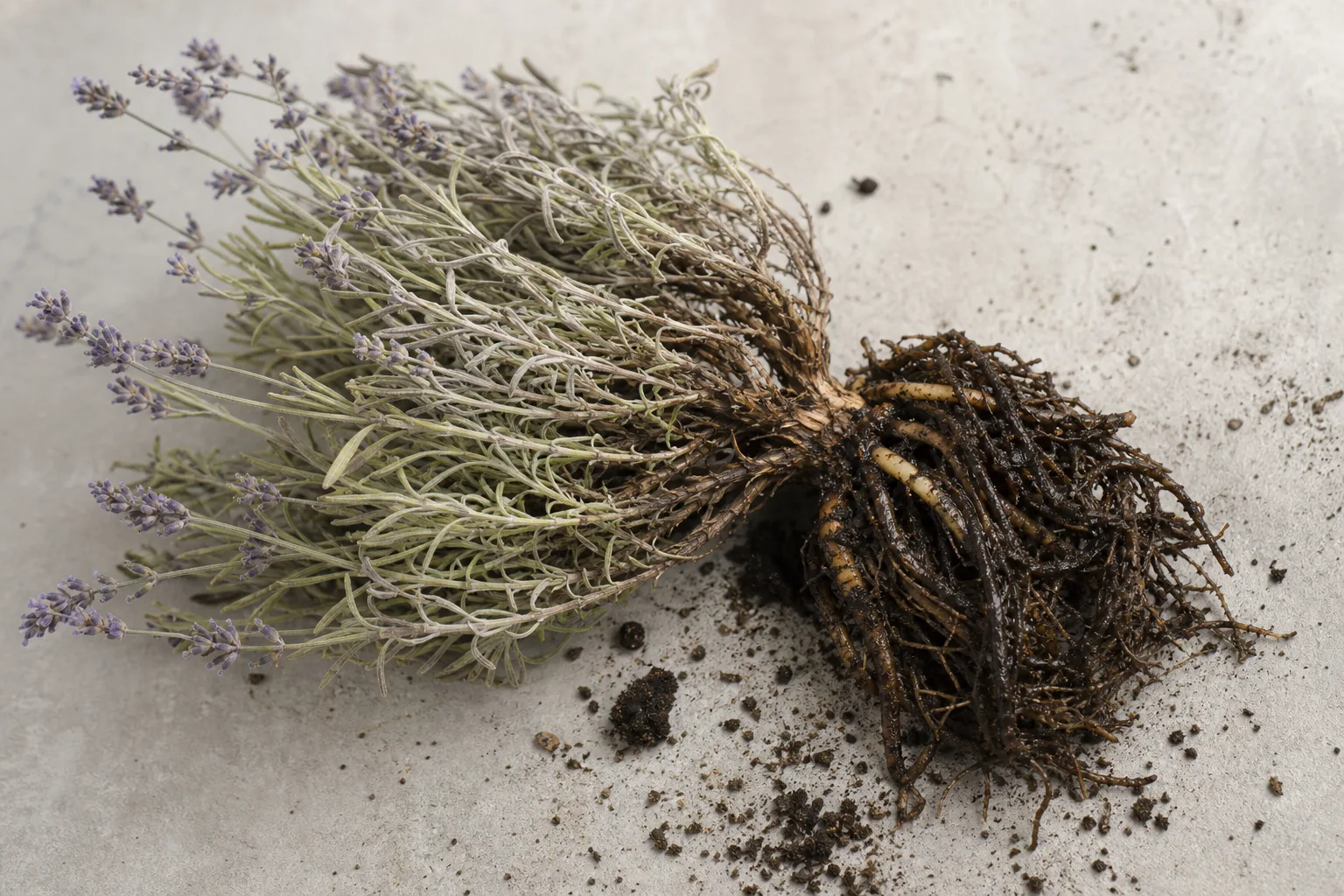
Yellow or drooping leaves do not prove that a plant needs water. Check the soil first. If the root zone is wet, smells sour, or stays wet long after rain, stop supplemental irrigation and inspect the crown and roots. Healthy roots are firm; dark, soft, decaying roots point toward rot. Improve drainage, remove only clearly dead roots with clean pruners, and replant into a dry, open mix if enough healthy roots remain. A shrub whose crown has collapsed may not recover.
If the soil is dry well below the surface and the plant is newly planted or in a pot, give it a deep drink and recheck its condition the following day. If leaves yellow while the soil drains well, look at sunlight, recent cold exposure, and fertilizer history. Sparse flowering commonly follows shade or excessive feeding; more fertilizer will not fix either cause. NC State Extension notes root rot in poorly drained or overwatered soil and recommends good air circulation in humid conditions. NC State Extension
Most established plants have few serious pest problems. Check for aphids or whiteflies on fresh growth and for spittlebug foam on stems. A small infestation can often be washed off with a directed stream of water. If symptoms spread or a pest keeps returning, identify it before using a product; follow the label and avoid applying treatments to flowering plants when pollinators are active.
Protect Pets From Chewing the Plant
The ASPCA lists lavender as toxic to dogs, cats, and horses, with nausea and vomiting among the signs; its entry identifies English lavender (Lavandula angustifolia). It does not establish a separate risk rating for Spanish lavender on that page, so do not treat the listing as species-specific evidence. ASPCA Animal Poison Control If an animal chews the plant, contact a veterinarian or animal poison-control service for advice rather than waiting for symptoms. In homes with plant-chewing pets, place the pot where they cannot reach it.
Conclusion
Spanish lavender rewards the gardener who gets the site right before planting: strong direct sun, lean soil, and a root zone that drains promptly. Water more attentively while a new plant establishes, then let established soil dry between deep drinks; containers need more frequent checks but still must drain completely.
Prune after flowering only into green growth, and use cuttings when you want to preserve a cultivar. Treat hardiness as local and cultivar-dependent, especially where winter is both cold and wet. If the plant turns yellow or droops, check moisture and roots before reaching for fertilizer or more water. Those few decisions do more for a long-lived, flower-covered shrub than a rigid care calendar.