How to Grow and Care for Sweet Pea Shrub
Grow sweet pea shrub in a sunny, sheltered site with sharp drainage. Get practical advice on watering, light pruning, containers, cuttings, and common problems.
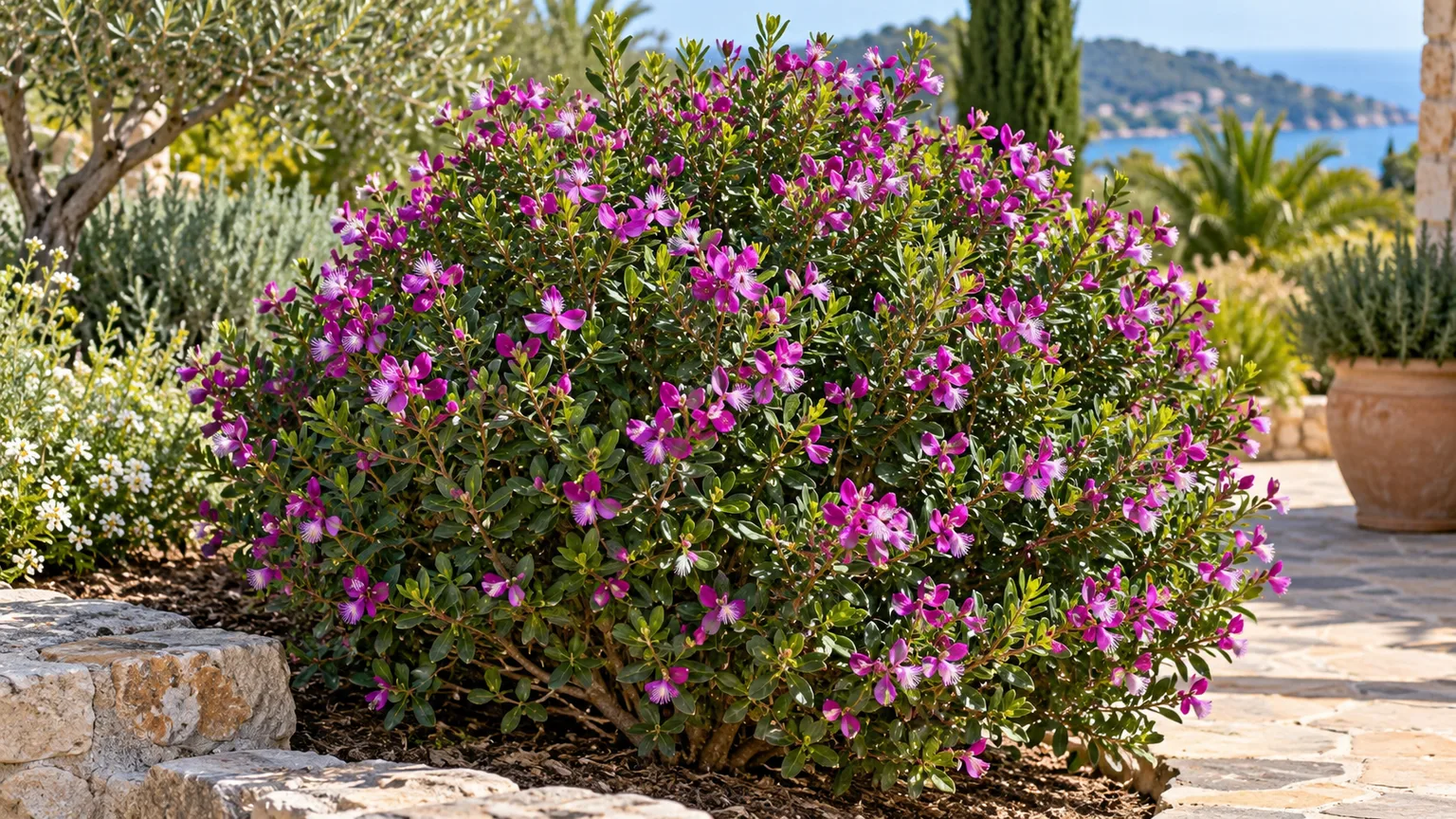
Sweet pea shrub (Polygala × dalmaisiana) is an evergreen ornamental grown for small oval leaves and clusters of purple-pink flowers that resemble sweet peas. It suits a warm, sheltered garden where you want a relaxed, flowering shrub; the main decisions are whether your winters are mild enough for an in-ground plant, how to keep its roots from sitting wet, and how much you can trim without sacrificing flowers.
A useful starting point is to treat it as a subtropical, frost-sensitive shrub unless your local nursery can confirm that the exact plant sold in your area is reliably hardy. It responds well to sunlight and light shaping, but it is less forgiving of cold, soggy soil, and severe pruning into old bare stems than a generic low-maintenance label might suggest.
Identify Sweet Pea Shrub Before You Plant
The botanical name on the label matters because “sweet pea” is used for plants that have very different growth habits. The RHS profile identifies the shrub as Polygala × dalmaisiana: a bushy evergreen with dark, oval leaves and reddish-purple, pea-shaped flowers, generally listed at about 1 to 1.5 meters in height and spread. It is in the Polygalaceae family, not the pea family; the name describes the flower’s look, not a shared plant type. (Royal Horticultural Society plant profile)
Distinguish the Shrub, the Vine, and Dwarf Polygala
Sweet pea shrub is not the annual sweet pea vine (Lathyrus odoratus), which climbs with tendrils and is usually grown from seed for its cut flowers. The shrub has woody stems, stays self-supporting, and is sold as a landscape or patio plant. If you are shopping online, check the botanical name and the product photo rather than relying on “sweet pea” in the listing title.
A second source of confusion is dwarf sweet pea shrub, usually sold as Polygala fruticosa. It is a separate, more compact species, and the common names may appear interchangeably on nursery tags. If you have a small patio or want to overwinter the plant in a bright protected space, the dwarf form may be easier to manage, but confirm its mature size and exact name with the seller before you buy.
| Label or name | What you are buying | Practical distinction |
|---|---|---|
| Polygala × dalmaisiana | Sweet pea shrub | Woody, evergreen shrub; allow roughly 3–5 feet of room, depending on conditions and pruning. |
| Polygala fruticosa | Dwarf sweet pea shrub | Related but different; generally a smaller choice for containers. |
| Lathyrus odoratus | Annual sweet pea | Climbing flowering vine, not a shrub. |
Check Your Climate Before Choosing a Permanent Spot
Sweet pea shrub has a subtropical background, but climate notes for the genus can be misleading if they are applied to the wrong species. The RHS rates P. × dalmaisiana as tender and recommends growing it in a conservatory or greenhouse maintained at a minimum of 5–7°C (41–45°F), or in a container outdoors during summer. By contrast, USDA Agricultural Research Service material discusses P. myrtifolia, a related species, as suited to USDA Zones 9B to 11. Those are not interchangeable plant records, so neither a broad zone label nor the survival of one plant through a brief cold snap is a guarantee for your specimen. (RHS growing guidance; USDA Agricultural Research Service account of P. myrtifolia)
If your garden has regular freezes, a movable pot is the safer choice. Set it outside for the warm months, then bring it to a bright, sheltered, frost-free place before cold weather arrives; do not wait until leaves blacken or the root ball freezes. In a mild coastal or subtropical microclimate, a protected in-ground planting may work, but the exact cultivar, exposure, drainage, and duration of cold all matter.
Before planting, ask a local nursery which Polygala it sells and what winter losses it has actually seen nearby. In California, the California Invasive Plant Council lists P. myrtifolia as a watch plant; that listing is for the related species, not automatic proof that every P. × dalmaisiana selection is invasive. Still, gardeners in the region should check current local guidance and avoid allowing any uncertain plant to seed or spread until its identity and status are clear. (California Invasive Plant Council profile)
Give the Shrub Sun, Shelter, and Room to Branch
Choose full sun for the most flowers, or light partial shade if afternoon heat is intense. The RHS lists both full sun and partial shade, with a sheltered position; a warm wall or protected patio can help in a marginal climate, but avoid a pocket where heat reflects from paving all afternoon and leaves wilt repeatedly.
Give the plant enough space for light to reach its inner branches. A crowded shrub often becomes thin on the shaded side, and planting it tightly against a wall can make an already loose habit look lopsided. Set it where you can see the flowers and reach the stems for occasional shaping without having to prune it into a rigid hedge.
Prepare Sharp-Draining Soil and Plant at Root-Ball Level
Drainage is more important than trying to create a narrowly “perfect” pH. The RHS profile lists chalk, loam, and sand as suitable soil types and specifies well-drained conditions, with acid, neutral, or alkaline pH accepted. In a garden bed, choose a spot where rain does not pool; if the soil stays slick and saturated for a day after ordinary rain, improve the bed broadly or choose a raised position rather than putting a gravel layer in the bottom of a planting hole. (RHS plant profile)
Plant in spring after the soil has warmed, or at the start of the mild growing season in a frost-free region. Dig a hole about as deep as the root ball and wider than it, loosen circling roots gently, and set the shrub so the top of its root ball is level with the surrounding soil. Backfill with the excavated soil; a little mature compost can help a poor bed, but heavily amending one small hole can create a water-holding pocket that roots may not want to leave.
Water the plant in to settle soil around the roots, then spread a thin organic mulch over the root zone while keeping it off the woody stems. Mulch reduces rapid surface drying, but it cannot fix a site that drains poorly. If the planting spot remains wet, shifting the shrub is a better correction than repeatedly withholding water until the outer root ball dries out.
Water by Root-Zone Moisture, Not by a Fixed Schedule
Newly planted shrubs need closer attention than established ones because their roots have not yet spread beyond the nursery root ball. During the first growing season, check the soil several inches down every few days in hot, dry weather and water deeply when that root zone is becoming dry. Rainfall, wind, temperature, and soil texture change the interval, so “once a week” is only a reminder to check—not a rule to water regardless of conditions.
Once established, water during prolonged dry spells, then let excess drain away. The plant should not sit in a constantly wet root zone; yellowing accompanied by soft stems, a sour smell, or persistently wet soil points toward poor drainage or overwatering. A shrub that wilts in dry soil needs a thorough soak, while one wilting in wet soil needs better drainage and time for the root zone to breathe, not another drink.
Container plants dry faster, especially in sun and wind. Lift the pot occasionally to learn the difference between a freshly watered container and a dry one, and check the mix with a finger before watering. In winter, growth slows and the RHS recommends watering sparingly; keep the root ball from drying to dust, but do not leave the pot standing in water or follow a summer watering routine indoors. (RHS cultivation guidance)
Feed Lightly When Active Growth Begins
If the shrub is growing in reasonably fertile ground, start with soil preparation and observe the plant before reaching for fertilizer. Pale, weak growth can come from low light, cold, damaged roots, or poor drainage as well as a nutrient shortage. Fertilizer cannot repair roots that are waterlogged, and extra nitrogen may encourage soft leafy shoots at the expense of a compact shape.
For a container plant, use a balanced liquid fertilizer at the label rate while it is actively growing, then reduce or stop feeding as growth slows. The RHS recommends monthly balanced liquid feeding during growth for greenhouse-grown plants. Treat that as a modest maintenance routine, not an invitation to apply several products at once; skip a feeding if the plant is stressed, newly repotted, or sitting in saturated mix. (RHS cultivation guidance)
Prune for Shape Without Removing the Next Flush
Sweet pea shrub blooms over a long season in warm regions, so a hard calendar cut can remove developing buds or leave too little foliage for recovery. The RHS places this plant in pruning group 9, a group of late-flowering evergreens generally pruned lightly in mid- to late spring. Begin by removing dead, damaged, crossing, or badly placed shoots; then shorten only the tips that disrupt the shape. If your plant is already flowering or carrying visible buds, keep the trim especially light and accept that some flowers may be lost if you cut those stems. (RHS plant profile; RHS evergreen shrub pruning guide)
Make each cut just above a healthy leaf pair or a side branch, and step back every few cuts to check the outline. This keeps the shrub rounded without shearing it into a flat surface where only the outer shell receives light. If you want a more formal silhouette, use several light trims during active growth rather than one deep cut into leafless wood.
Rejuvenate a Leggy Shrub in Stages
A mature shrub with a few long, woody stems and flowers only at the tips may need renewal, but severe cutting is risky when you do not know how well it will break from old wood. Start by removing one or two of the oldest, least productive stems close to their origin, then reduce remaining long shoots by no more than about a third. Keep the plant watered appropriately and wait through a full growth cycle before deciding whether to remove more.
If the trunk and lower branches are bare and there is little healthy growth to retain, replacement can be more reliable than cutting the whole plant to a short stump. This is especially true in a cold-stressed plant or one growing in heavy wet soil, because the underlying problem will continue after pruning. Take several healthy cuttings before a renovation if you want a backup of the same plant.
Grow a Container Plant You Can Shelter
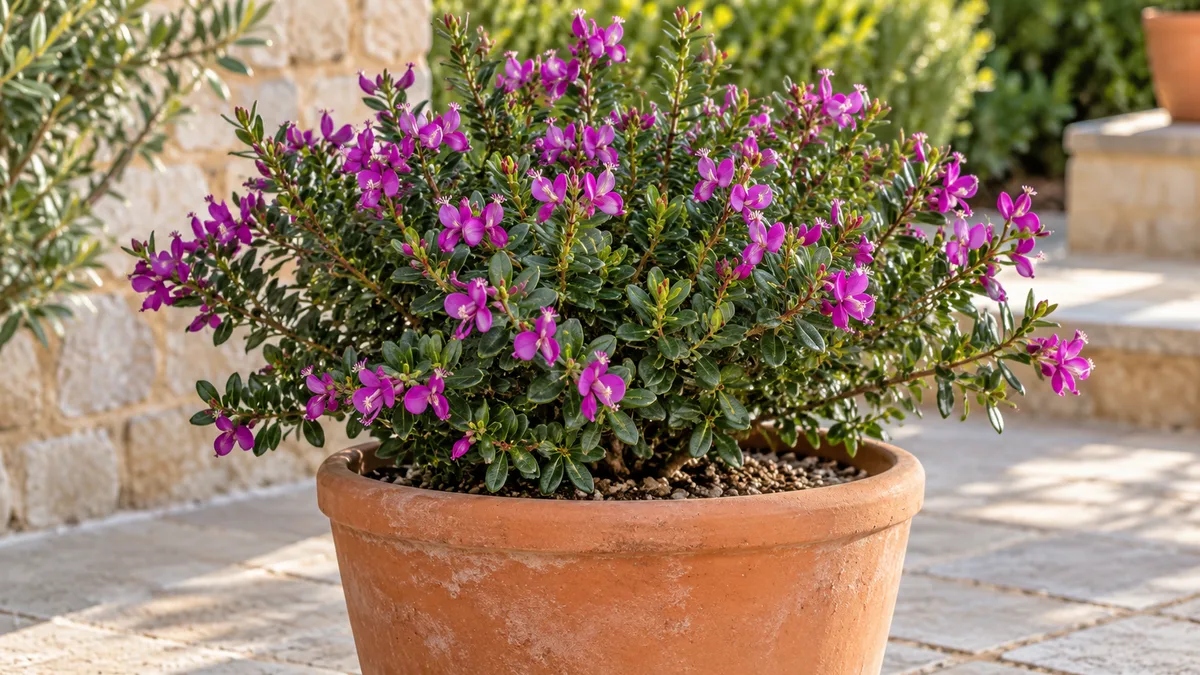
A container is a practical way to control winter exposure and soil drainage, not a way to make the shrub cold-proof. It also lets you bring the plant close to a patio or entry where its flowers can be enjoyed. The trade-off is that roots have less buffer from heat and drought, so you will need to check moisture more often than with an in-ground shrub.
Make Drainage and Winter Moves Part of the Pot Plan
Choose a sturdy pot with several unobstructed drainage holes and only a modest increase in size over the root ball. Oversized containers can hold unused wet mix around young roots; a pot that is too small dries rapidly and may topple as the shrub fills out. Use a quality peat-free container compost that drains freely, as the RHS recommends for container cultivation, and place the pot on feet if water tends to collect underneath.
Set the pot in a bright, sheltered outdoor spot during the warm season. In a climate with frost, move it to a bright greenhouse, conservatory, or other frost-free shelter before cold nights become routine; RHS guidance gives 5–7°C (41–45°F) as the minimum for protected cultivation of this hybrid. Indoors, avoid a dark corner near a heater, and reduce watering because cool or low-light conditions slow growth. (RHS cultivation guidance)
Repot when roots circle the container densely, water runs straight through without wetting the mix, or the plant dries unreasonably fast even in moderate weather. Move up one pot size and refresh the outer mix rather than jumping into a very large planter. If the shrub is already at the size you can move safely, root-prune lightly or refresh the top layer of compost instead of leaving it exposed to cold while struggling with a cumbersome container.
Propagate Reliable Plants From Cuttings
Use cuttings when you want a young plant that resembles the parent. Seed is possible, but a hybrid seedling may not preserve the exact flower color or growth habit you chose; the RHS lists spring seed sowing as an option but specifically recommends softwood cuttings in early summer or semi-ripe cuttings in mid- to late summer for this shrub. Timing depends on your climate: take the cutting when the new shoot has begun to firm up, not while it is limp and very soft or after it has turned fully woody. (RHS plant profile; RHS semi-ripe cutting guidance)
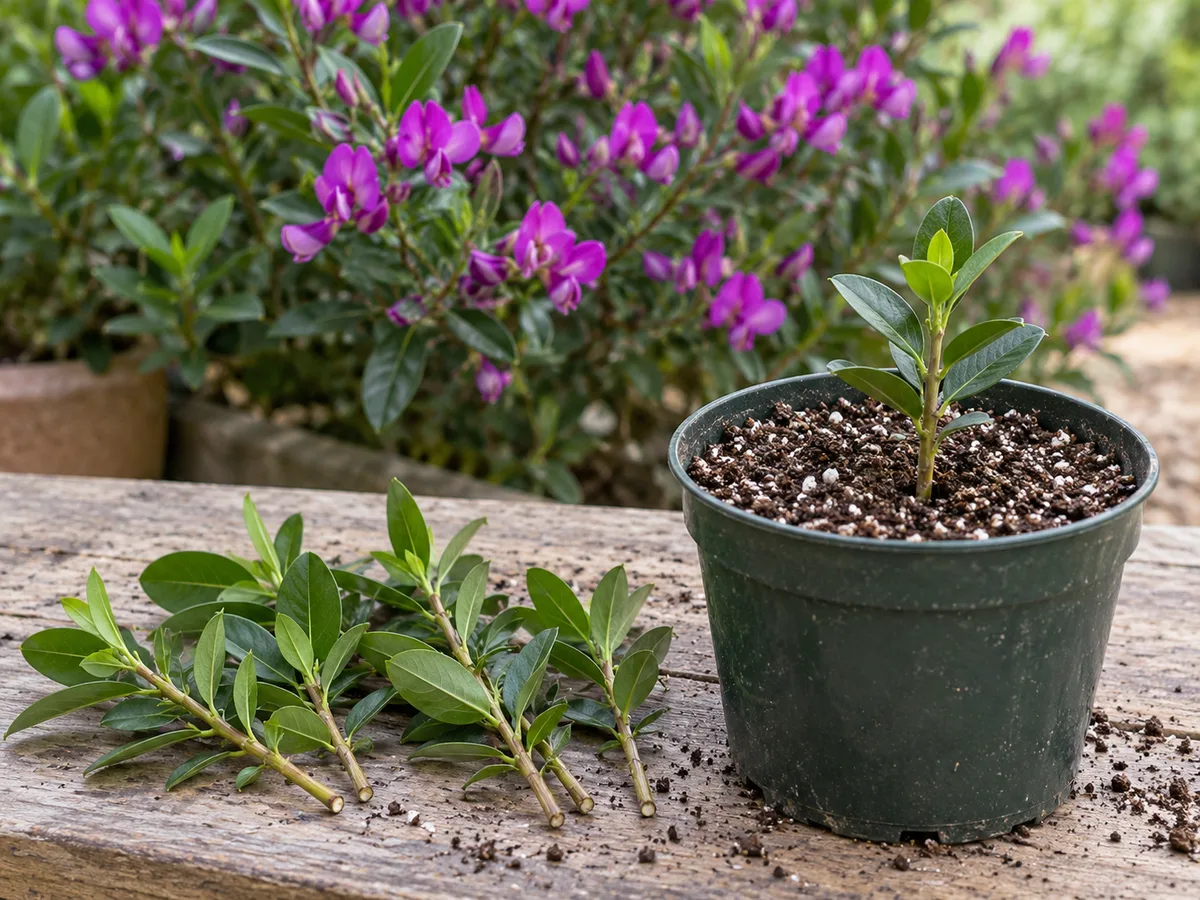
Take several cuttings because rooting success is never guaranteed. Choose healthy, non-flowering side shoots, cut cleanly below a leaf node, and keep them cool and shaded while you prepare the pot; Fine Gardening’s practical cutting guidance stresses using semi-ripe material and preventing cuttings from drying during collection. (Fine Gardening, “Propagate Your Shrubs From Softwood Cuttings”)
A reliable home method is:
- Use clean, sharp pruners to take 4- to 6-inch sections of current-season growth with several leaf nodes.
- Remove the leaves from the lowest node or two. If the remaining leaves are large, shorten them slightly to reduce water loss, but leave foliage to support the cutting.
- Insert the bare lower portion into a small pot of moistened, airy cutting mix. A peat-free propagation mix with added perlite drains better than dense garden soil.
- Cover the pot loosely with a clear bag or place it in a propagator, keeping plastic away from the leaves. Set it in bright indirect light, not direct sun, where a covered pot can overheat.
- Check often. The mix should remain lightly moist, never waterlogged; ventilate the cover if heavy condensation persists or mold appears.
- After roots form and new growth continues, remove the cover gradually and pot the rooted cutting on. Keep it protected while it develops a sturdier root system before moving it outdoors.
Gardening Know How describes the same basic softwood logic for shrubs: a short, non-flowering shoot, lower leaves removed, a moist soilless medium, and a humid but monitored cover. For Polygala, use the RHS seasonal window for the named plant and the general method as a starting point; if the cutting rots, improve air movement and drainage rather than adding more water. (Gardening Know How softwood cutting guide)
Troubleshoot Yellow Leaves, Sparse Flowers, and Pests
If the shrub looks poor, inspect the plant and its growing conditions before adding fertilizer or pesticide. Look at the newest shoots, the older interior leaves, soil moisture several inches down, and whether the plant recently experienced cold, heat, or a major pruning. One symptom rarely identifies one cause by itself.
For sparse flowering, check these factors in order: too much shade; pruning that removed flowering tips or buds; a recent cold spell; excess nitrogen; and a plant that has become old and woody. Correct the easiest environmental cause first, then give new growth a full season to respond. Moving a large established shrub can cause additional stress, so improve light gradually if possible or take cuttings before making a major change.
The RHS lists aphids and glasshouse whitefly as possible pests, particularly under glass, and describes the plant as generally disease-free. Inspect soft shoot tips and leaf undersides; a few pests can often be removed with a firm water spray or by pruning off the most affected tip. If you choose a pesticide, identify the pest first and follow the product label and local rules; do not spray flowers when pollinators are active. (RHS plant profile)
Separate a Moisture Problem From Normal Aging
Yellow leaves on the oldest shaded stems can be normal as an evergreen shrub replaces foliage, especially if the rest of the plant is firm and growing. Widespread yellowing with a wet root ball suggests drainage trouble; crisp leaf edges and dry soil point more toward drought or heat. Check moisture at root depth before changing the watering routine, because treating a wet plant as thirsty can accelerate root decline.
If the soil is wet for days, stop routine watering, clear blocked drainage, and make sure mulch or compost is not piled against the stems. For a container, empty any standing water and check that the holes are open; if the mix smells sour or stays sodden, repotting into fresh, freer-draining compost may be needed. If the soil is dry and the shrub is drooping, soak the root zone thoroughly and shelter it from the hottest afternoon sun while it recovers.
Use Sweet Pea Shrub Where Its Loose Habit Works
Sweet pea shrub looks most natural as a specimen or in a loose mixed border where its rounded but somewhat open form can be appreciated. It can work in a courtyard pot, a sheltered coastal garden, or a warm foundation planting, provided the mature spread has room and the plant will not be forced into a narrow clipped hedge. Pair it with plants that tolerate similar sun and drainage rather than placing it beside moisture-loving plants that need constantly damp soil.
Its evergreen leaves provide structure between flower flushes, while the small flowers are best enjoyed up close or as part of a mixed planting rather than as a dense, formal hedge. MyGardenLife also describes it for borders, rock gardens, grouped shrub plantings, and containers, but use those as design options only when your local climate and drainage suit the plant. (MyGardenLife sweet pea shrub profile)
Conclusion
The strongest sweet pea shrub care plan begins with the correct label: Polygala × dalmaisiana is the evergreen flowering shrub, not the climbing annual sweet pea or the separate dwarf P. fruticosa. Give it sun to light shade, a sheltered position, and soil that drains freely; water young plants as their root zones dry, then reduce attention in cool winter conditions.
Keep pruning light and deliberate. The RHS’s group 9 timing favors spring shaping for this late-flowering evergreen, while a staged renovation is safer than cutting an old shrub back to bare wood in one go. In cold regions, grow it in a container you can shelter, and take several cuttings during the appropriate growth stage if you want a backup. Those choices let the shrub keep its loose, flower-covered character without making the gardener guess at one universal schedule.



