Mulch and Termites Near House Foundations: A Guide
Does mulch attract termites or hide their routes? Learn how to set a visible foundation clearance, manage moisture, inspect a bed, and choose a safe next step.
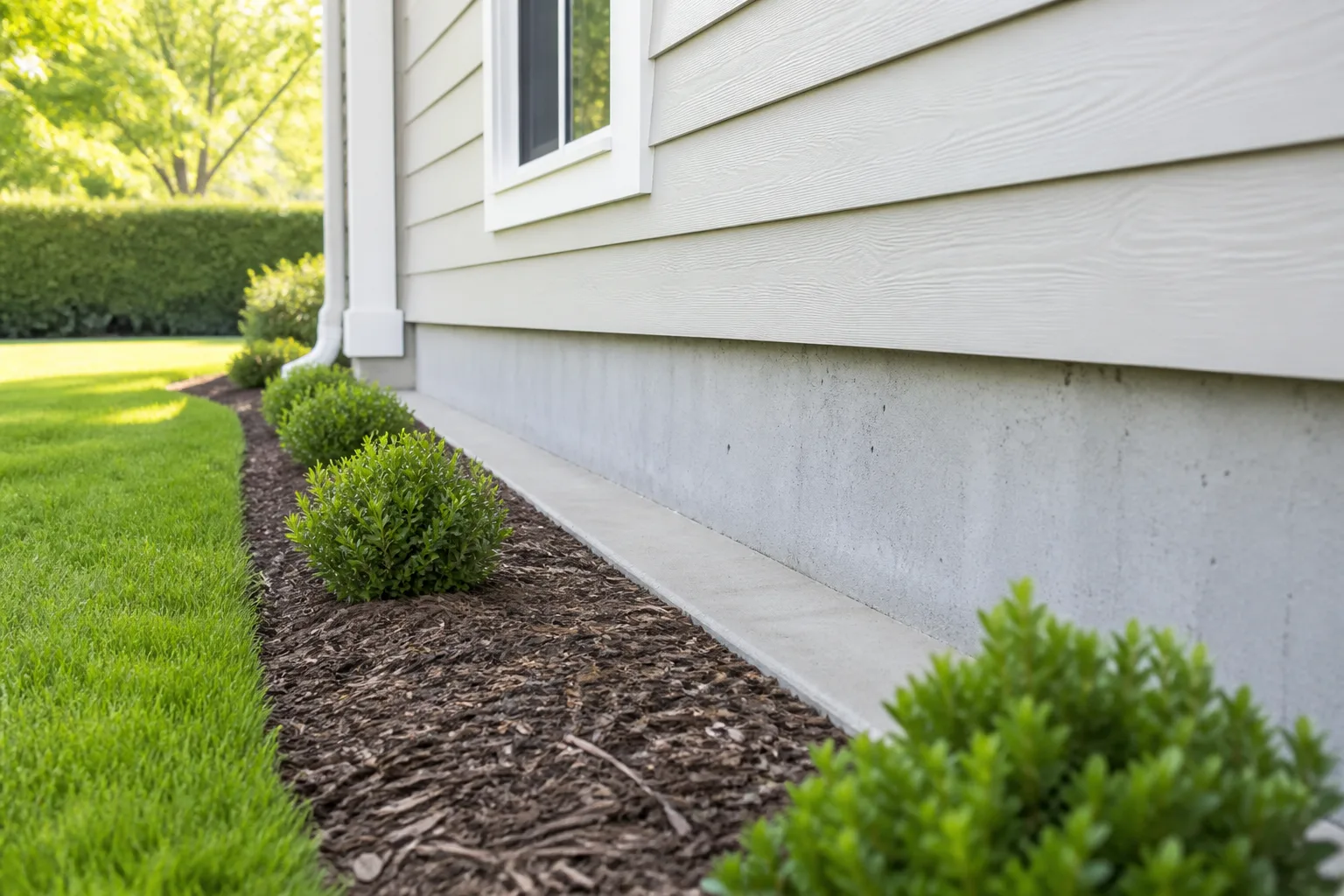
A mulched foundation bed can conserve water, suppress weeds, and give shrubs a good growing environment. It can also keep the lower wall damp, cover the edge where the building meets the soil, and make termite activity harder to see. The useful question is not whether mulch magically calls termites from across the yard; it is whether the way the bed is built makes a route easier to hide or leaves wood, moisture, and soil connected.
For most homeowners, the practical starting point is to expose the lower wall and the top of the foundation, remove mulch that touches siding or framing, correct water that pools against the house, and check what local building, extension, and termite-treatment guidance says about the required clearance. There is no single distance that is safe for every type of siding, foundation, climate, or previously treated home. A number that works for one site can cover a drainage opening, violate a cladding detail, or conceal the inspection strip on another.
The Short Answer: Mulch Changes Conditions, Not Termite Geography
Mulch does not reliably attract a new termite colony from far away. Subterranean termites already live and forage in soil; when their workers encounter a damp, protected bed, mulch may provide food if it is organic, shelter from exposure, and a place where their routes are difficult to notice. That makes mulch a risk modifier and a visibility problem, not proof that the home is infested. A Lawn Love overview of mulch and termites makes the same distinction between attracting a distant colony and supporting termites that are already foraging nearby.
This distinction matters because two common reactions can both backfire. Removing every mulch bed on the property is usually unnecessary, while assuming that a wall is protected because the mulch is cedar, gravel, or rubber can create false confidence. The U.S. Environmental Protection Agency’s termite guidance focuses on keeping the structure dry, limiting openings, keeping wood and debris away, and inspecting periodically; it does not frame one mulch material or setback as a complete treatment.
The first job is therefore a careful perimeter walk, not a pesticide purchase. Look from the top of the bed to the siding, sill, vents, door and window frames, and foundation surface. If any of those details have been buried, if soil stays wet, or if you cannot see where the wall meets the ground, fix the layout before choosing a new mulch.
Start With the House, Not the Mulch
A house’s exposure depends on the construction and condition around it. A home on a slab has different inspection points than a crawl-space house, and a bed against brick veneer differs from one against wood siding, stucco, or fiber-cement cladding. A shallow, dry bed separated from vulnerable wood is not the same situation as deep mulch piled against a damp sill.
The Clemson University Home & Garden Information Center’s Clemson University Home & Garden Information Center termite guidance recommends using mulch sparingly close to structures, keeping it from touching wood siding and door or window framing, and maintaining good drainage. Those principles are more useful than treating mulch species as a substitute for visible foundation access. For general termite identification and prevention advice, Texas A&M AgriLife Extension’s subterranean termite guide points homeowners toward research-based inspection and control information and local extension help.
Three conditions make a bed worth fixing first
Prioritize a bed when several of these are true at once: water regularly lands or drains there; mulch touches or covers wood; the grade is high enough to conceal the transition to siding or a sill; plants or edging block your view; or the home has a history of termites or a current treatment warranty. One condition alone may call for maintenance; a combination makes a stronger case for a prompt inspection and correction.
Look for practical sources of persistent wetness rather than judging moisture by the top of the mulch. A surface can feel dry on a sunny afternoon while the soil beneath it stays damp after a leaking sprinkler, clogged downspout, condensate discharge, or roof runoff. Mulch itself does not repair drainage, and a deeper layer can make the wet zone slower to dry.
How a harmless-looking layer can hide a route
Termites do not need mulch to chew through concrete. Subterranean workers may use shelter tubes, cracks, joints, concealed edges, and utility penetrations to reach wood; mulch can hide the beginning or end of that route from a casual glance. If the bed covers a treatment zone, a visible tube may disappear behind the material before anyone sees it.
This is why a concrete foundation should not be treated as an invitation to pile mulch against the wall. The concrete may not be a food source, but the edge between concrete, grade, and framing is still part of the inspection. Keep any cladding clearance, weep opening, vent, drainage detail, or termite inspection feature specified for the building visible and unobstructed.
Choose a Visible Clearance Without Guessing at a Universal Number
“Six inches” or “one foot” can be useful rules of thumb in particular settings, but neither number is a universal termite-proof line. The appropriate clearance depends on what the wall is made of, where the sill and wood framing sit, how the lot drains, how high the finished bed is, which local code or manufacturer instructions apply, and whether an earlier soil treatment or service agreement requires access. A homeowner should not use a generic landscaping measurement to cover or alter a known building detail.
Start by identifying the lowest vulnerable material, not only the top of the concrete. Expose and inspect the foundation edge, then check where siding, trim, door frames, deck ledgers, porch supports, or other wood begins. The top of the installed mulch matters: adding fresh material raises the bed surface, and repeated top-ups can quietly erase a gap that once looked generous.
Use a clearance that leaves a continuous, easy-to-see strip and does not bring mulch into contact with wood. If your local extension office, pest professional, building official, siding manufacturer, or treatment warranty gives a specific measurement, follow the guidance that applies to your house and record where it came from. If you cannot confirm which one controls, leave more of the foundation visible while you ask; do not cover the area with stone as a workaround.
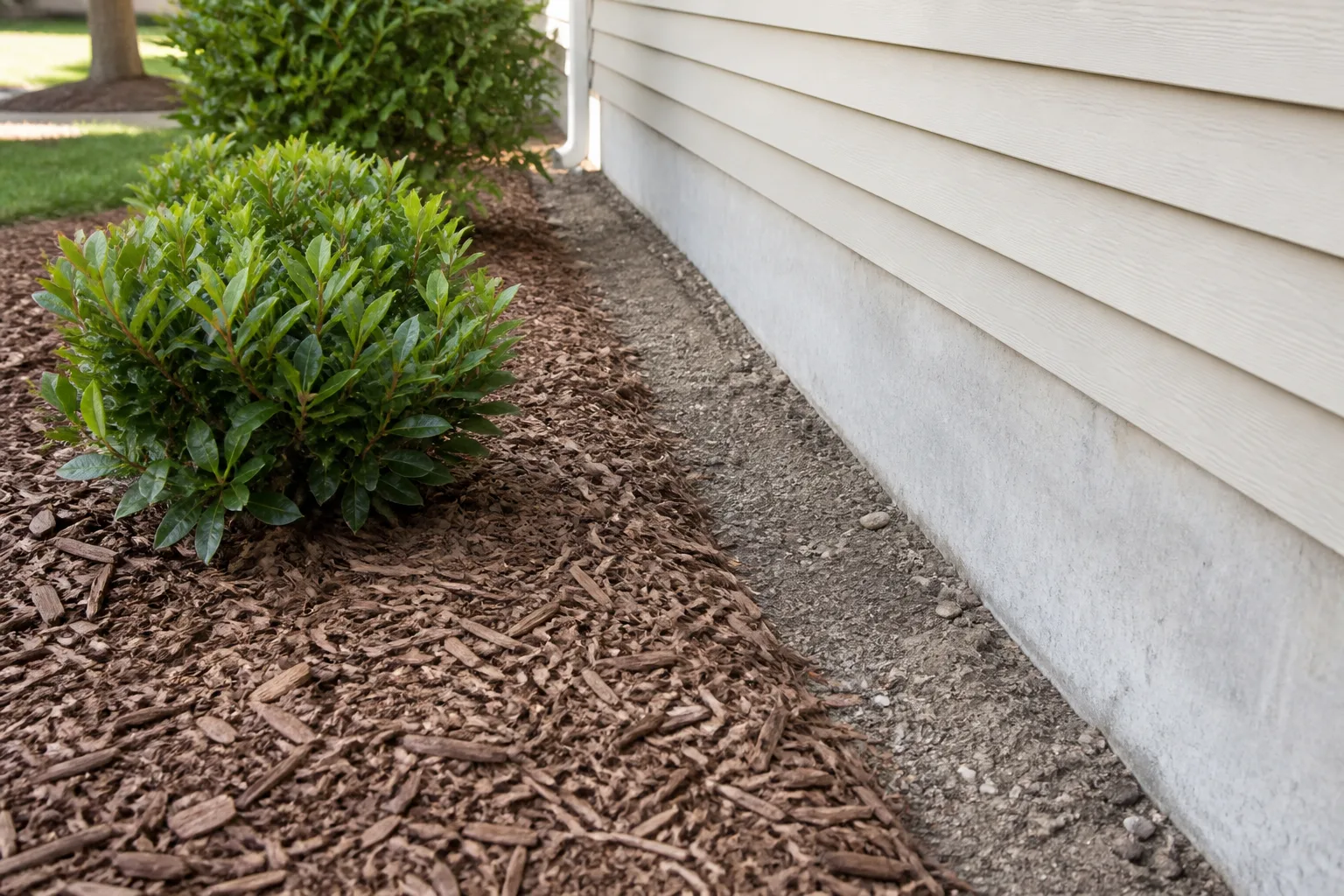
A useful way to think about the strip is as an inspection path, not a decorative border with a prescribed width. You should be able to see new mud tubes, wet patches, cracks, pest activity, and the relationship between the grade and the cladding without pulling shrubs apart. If a narrow bed cannot preserve that visibility, reduce or relocate the planting instead of continually raising the soil surface.
Why Subterranean Termites Use Mulch Beds
Subterranean termites depend on the soil environment and forage for cellulose, including dead plant material and wood. A mulch bed can hold moisture and reduce exposure at the soil surface; those are the same properties that make mulch useful to plants. Penn State Extension explains that properly applied mulch can conserve soil moisture, moderate temperature, suppress weeds, and improve soil as organic material decomposes, while excess depth and material piled against trunks create other problems.
The overlap is not a reason to treat all mulch as bad. It is a reason to locate moisture and cellulose where they benefit roots without allowing the bed to merge with structural wood or hide the foundation. In a properly drained bed, mulch can remain valuable if you keep its surface level, avoid buildup, and maintain the building’s inspection details.
Subterranean and drywood termites need different responses
Subterranean termites are commonly associated with soil colonies and shelter tubes, so foundation visibility and moisture management matter when assessing their route into a house. Drywood termites do not need a soil connection in the same way; they can infest wood above grade. The EPA’s overview notes that termite types differ and recommends using signs, inspection, and appropriate professional control rather than assuming every sighting around mulch represents the same problem.
That distinction changes what to report. A few pale workers under damp garden mulch suggest that termites are using material in the bed, but do not identify the species or establish that the home is being eaten. A mud tube running from soil onto a foundation or wood, swarmers emerging indoors, shed wings inside, or damaged framing calls for a closer structural assessment.
Can Bagged Mulch Bring Termites to Your House?
It is possible for insects or other organisms to be present in stored organic material, but a bag of mulch is not a colony in a packet. Subterranean termites rely on the colony and soil environment; an isolated worker moved with a bag is not equivalent to an established colony with a route to the house. The bigger ongoing issue is the conditions at the destination: the bed’s moisture, its connection to soil, the availability of cellulose, and whether the wall remains visible.
If you open a bag and see insects, do not assume they are termites based on color alone. Photograph them, keep the bag away from the house, and ask a local extension service or pest professional to identify them if the distinction matters. Avoid spreading a questionable load right against a foundation before you know what is in it, but there is no reason to panic about a sealed bag sitting in a dry garage.
Freshly chipped or recycled wood can also vary in particle size, decay, and moisture. Do not place a thick, wet pile of unknown woody debris over buried stumps, old roots, discarded lumber, or construction scraps beside the house. Removing those larger hidden cellulose sources is a clearer risk-reduction step than trying to find a magic mulch label.
Is Wood Mulch Riskier Than Gravel or Rubber?
Wood, bark, leaves, and straw contain cellulose, so termites can feed on them if they encounter them. Gravel and rubber do not provide that food, but a cover that shades the soil can still make a route less visible; stone does not seal a foundation or prevent an insect from traveling beneath it. Choosing a non-wood material changes one part of the picture, not the underlying access and moisture conditions.
A Lawn Love guide to mulch and termites highlights practical checks such as avoiding waterlogged beds and watching for piled-up layers. Those are useful maintenance reminders, but its simple setback recommendations should not be read as code or as a guarantee for every foundation. Similarly, Gardening Know How’s guide to bark mulch discusses the garden uses and upkeep of bark mulch; for a house perimeter, planting needs still have to fit the actual siding clearance, local pest guidance, and drainage.
Use the material that suits the plants and the site once the inspection strip is sorted. Organic mulch supports soil and root health but needs periodic depth checks. Stone lasts longer and may be easier to rake aside, but can heat up, shift, or conceal a tube. Rubber has little horticultural value for soil and is not a termite barrier. None eliminates the need to check the foundation.
Cedar and cypress are not treatment barriers
Some woods contain natural compounds or heartwood that termites may find less palatable than other material in particular tests. But retail mulch labels do not always tell you the precise species, the proportion of heartwood, or how the material has weathered. A “cedar” or “cypress” label is not the same as a continuous treated zone, and any effect can be overwhelmed by persistent wetness, hidden wood contact, or termite pressure.
If you like cedar or cypress for its color, scent, or garden performance, use it as a landscaping choice rather than a protection plan. Keep the same visible clearance, drainage, and inspection habits you would use with pine bark or hardwood. Do not skip an inspection or delay a professional call because the bed is made from a supposedly resistant wood.
Set Up a Foundation Bed You Can Maintain
First expose the wall enough to understand what is buried. Pull loose mulch away from the building, hand-clear soil or stones only where doing so will not damage a foundation coating, drain, or siding, and identify vents, weep openings, pipes, steps, and treatment markers. If the bed has been raised over time, take a photo and note the level before making a major change; deep excavation beside a foundation can disturb drainage, waterproofing, or shallow utilities.
The goal is a bed that still performs for plants while leaving a predictable inspection strip beside the structure. Use edging only if it does not trap water or create a hidden pocket against the wall. Keep shrubs trimmed enough that you can see the bottom of the stems and check behind them without wrestling through dense foliage.
Keep the layer shallow and stop stacking
Measure the mulch that is already there before adding more. Penn State Extension gives a general 2- to 4-inch range for tree mulch and cautions that deeper layers can harm roots; that is horticultural advice for landscape trees, not a universal measurement for mulch beside a house. Fine-textured material, poorly drained soil, the plant’s needs, and the site’s surface height can all change what makes sense.
Do not assume an old layer has vanished because its color faded. Organic mulch breaks down, but it can also mat and accumulate; adding a new layer over years of residue can leave the bed deeper than intended. The Penn State Extension guide to landscape mulching advises checking existing depth before topping up and removing or redistributing excess rather than piling on more. A practical maintenance cycle is to fluff a compacted surface and add only enough fresh material to replace what has decomposed.
Keep the mulch away from shrub stems, tree trunks, exposed root flares, siding, and framing. A level layer is easier to inspect than a mound, dries more predictably, and avoids burying plant tissue or the wall. If the planting needs more moisture retention than the house edge can safely tolerate, move the moisture-loving plants farther from the structure and let the closest strip remain open or use a locally recommended, easy-to-inspect surface.
Keep water moving away from the house
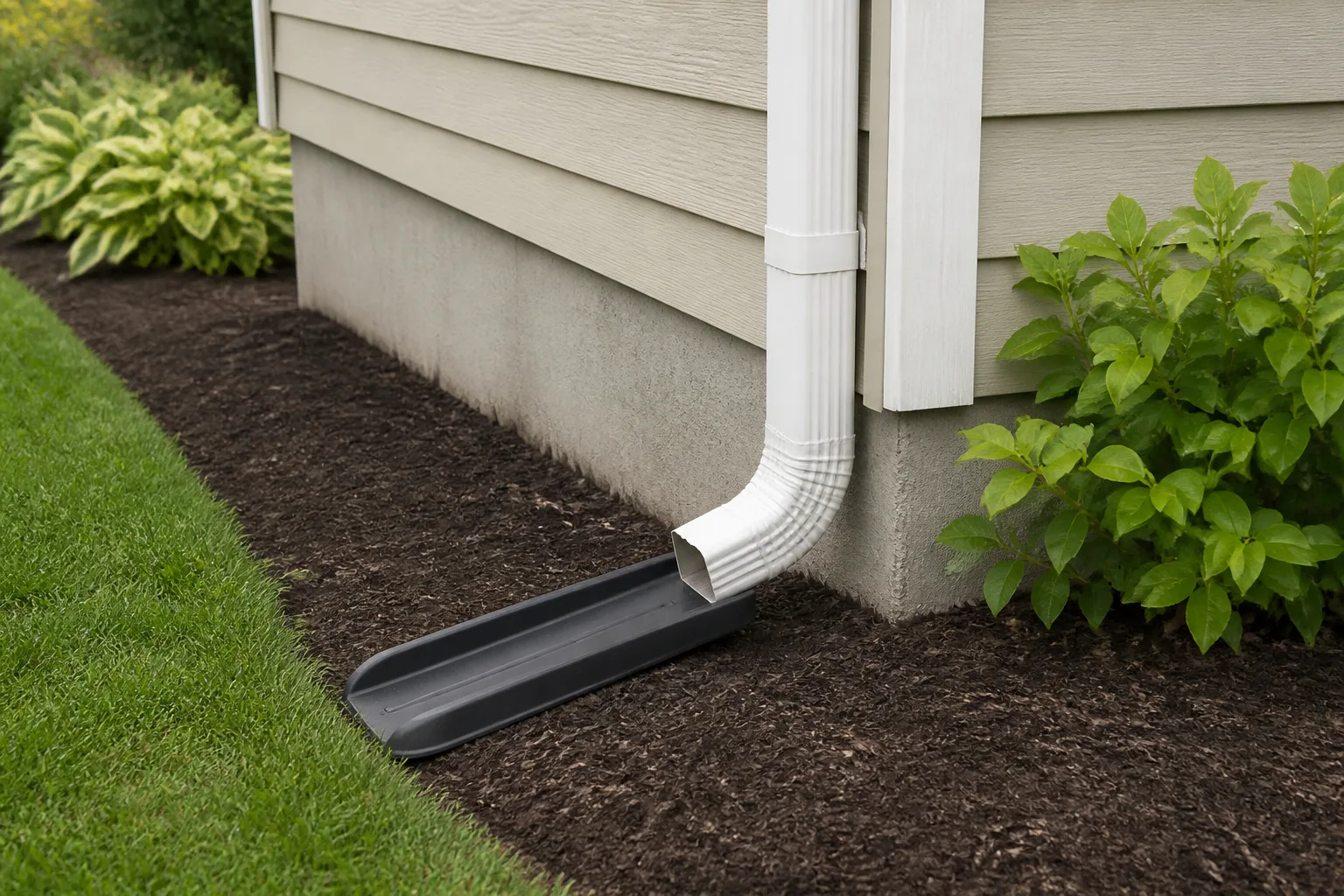
Mulch can slow evaporation, so a leaking irrigation line or downspout that empties at the wall can turn a useful bed into a persistently damp pocket. Check gutter outlets, roof valleys, hose bibs, air-conditioning condensate, sprinkler heads, and the bed after rain. Fix the source of repeated wetness instead of covering it with fresh stone, fabric, or a deeper mulch layer.
Surface grade should direct water away from the structure, but do not reshape a foundation bed by guesswork if runoff already affects a neighbor, retaining wall, basement, or shared drainage system. The EPA recommends maintaining drainage and gutters, fixing leaks, and preventing soil around the foundation from staying damp. If water repeatedly collects, map its path and ask a drainage or building professional to assess it before changing the grade.
This also protects plantings. Roots need moisture, but a bed that stays saturated can encourage root problems and decay even if termites never appear. Match irrigation to the plants, water the root zones rather than the siding, and leave enough access to confirm that the soil near the wall dries between events.
Inspect the Bed and Foundation Without Making a Mess
Walk the perimeter once when the bed is dry and again after heavy rain or irrigation changes. Use a flashlight and look along the foundation, the lower edge of siding, porch and deck connections, door and window frames, utility entries, and any place where landscaping hides a transition. Check that the clearance remains visible at the mulch surface, not just at the soil line below it.
A useful routine is to photograph each wall from the same angle every few months. That makes it easier to spot gradual mulch buildup, a new wet patch, a plant that has spread over a sill, or a missing strip of exposed foundation. A photo also gives a pest professional a clear starting point if you later find a tube or suspect damage.
Separate a clue from evidence of a structural problem
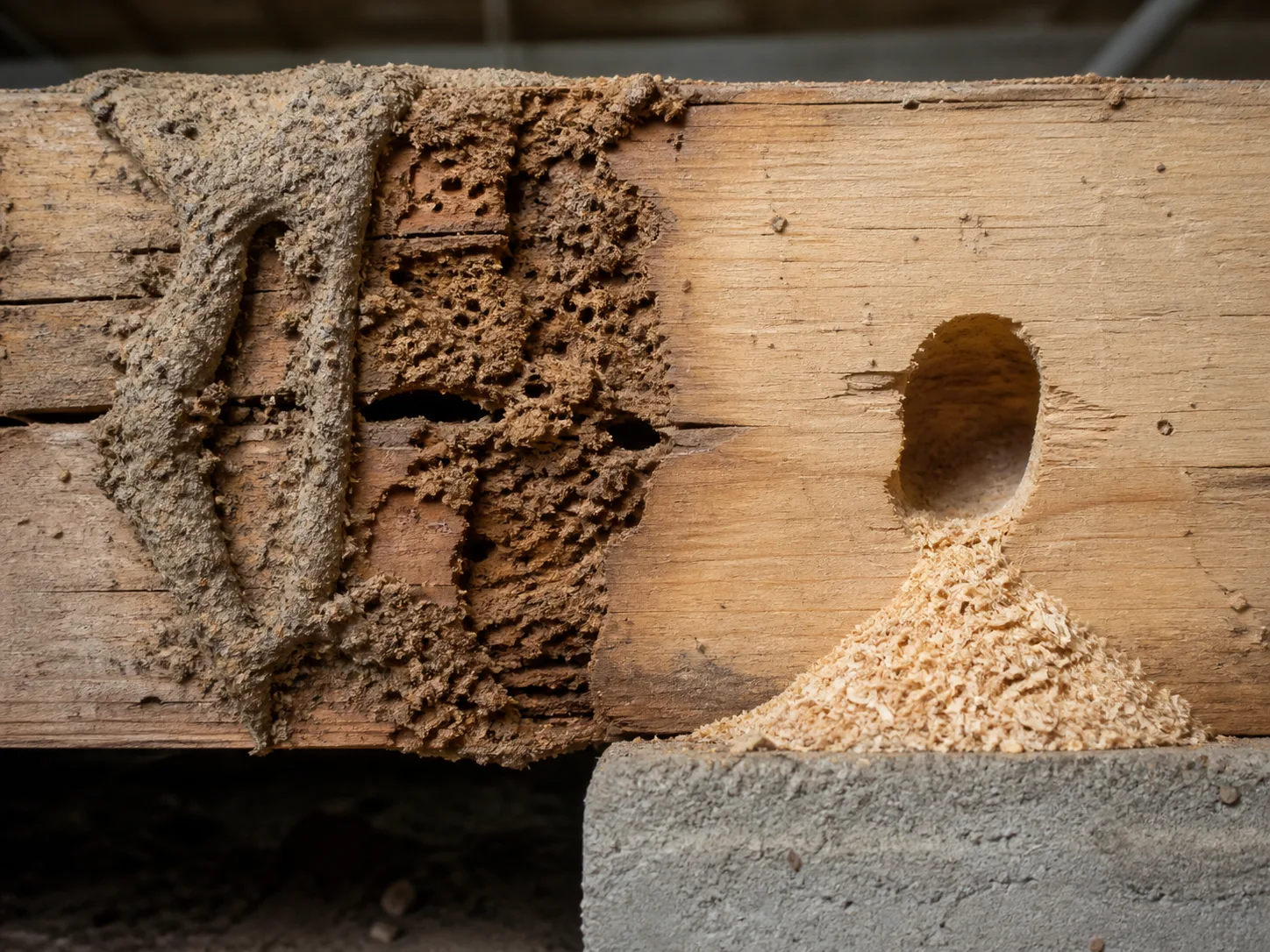
A termite seen under mulch is a reason to identify the insect and inspect the nearby structure; it is not, by itself, proof of an infestation inside the house. More consequential signs include mud shelter tubes connected to a foundation or wood, soft or hollow structural material, indoor swarmers, shed wings indoors, or damage at a sill, post, frame, or other building component. The EPA describes termites as difficult to notice because they can remain hidden in soil, tubes, or food sources, so a clean-looking mulch surface cannot certify that a home is clear.
Do not confuse dampness or fungal growth with termites. Mold, mushroom caps, decayed bark, ant activity, and termite feeding can occur in the same wet bed, but they are not interchangeable diagnoses. A winged ant and a termite swarmer can also be mistaken for each other; if the insect matters to a treatment decision, collect a clear photo or specimen safely and have it identified.
Avoid tearing apart a tube that reaches the building, scraping a wall coating, or probing soft framing with a screwdriver. Disturbing evidence can make the route harder to assess, and probing can damage finishes or wiring. Photograph what you see, record whether it is indoors or outdoors and whether the tube connects to wood, then leave the diagnosis and treatment decision to a qualified person.
What to Do When You Find Termites Under Mulch
If you find termites only in mulch that is not touching the building, keep the discovery in proportion. Photograph the location, note whether the material is wet or decomposing, and look at the adjacent foundation without pulling apart a connected tube. Remove mulch that is touching wood or hiding the wall, but do not dig along the entire foundation or spray the soil just to make the insects disappear.
Check for the sources that can keep a bed damp: a broken emitter, leaking faucet, downspout discharge, runoff from a slope, or a thick layer that has been topped up repeatedly. Correct ordinary moisture problems and remove dead wood or buried landscape debris if you can do so safely. Keep the exposed area visible afterward so a later inspection can tell whether the same spot changes.
If you find a mud tube running to the building, termites inside, or damaged structural wood, do not treat the bed as a garden-only issue. Call a licensed termite professional and describe exactly where the insects or tube were found, whether the house has had past treatment, and what type of foundation it has. Ask the professional to inspect the relevant wall, crawl space or slab edge, and to distinguish confirmed activity from a nearby outdoor colony.
Do not use household insect spray, bleach, gasoline, or an unlabelled soil drench as a substitute for diagnosis. A visible worker can die while the colony and its route remain untouched, and improvised chemicals may create hazards or interfere with a warranted treatment. The EPA says termite pesticides must be used according to their labels and that structural treatments commonly require trained pest-management professionals.
When a Licensed Termite Professional Should Inspect
Arrange a prompt inspection if a tube connects soil to the house, swarmers are emerging indoors, shed wings recur inside, wood is soft or hollow, or you see galleries or mud-filled joints in structural material. Also call when the area is inaccessible, the house has a previous termite treatment or active warranty, or you are unsure whether a visible gap is a deliberate inspection feature. Even when the only activity is outside, a professional can tell you whether the location and species justify follow-up.
Choose a licensed provider under your state’s rules and ask for a written inspection result. It should identify what was observed, where activity was confirmed or not confirmed, what areas could not be inspected, which moisture or access conditions need repair, and what treatment is proposed if one is needed. Ask whether the plan is based on a soil-applied barrier, bait stations, or another labeled method, and what monitoring, follow-up, warranty, and retreatment involve.
A good estimate will not promise that changing from wood chips to gravel will solve a structural problem. It will explain how the proposed work fits the construction, where the treatment zone is, and whether landscaping changes could disturb it. If a prior termiticide was applied, check the service agreement and ask the company before trenching, digging, or covering the treated soil.
The EPA advises consumers to verify that a pest-control company is licensed, review the product label and intended use, and understand when occupants may reenter after treatment. Keep the written plan and treatment record with home-maintenance documents; it can answer later questions about the bed, warranty, and inspection schedule. For broader plant-centered mulch placement, Penn State Extension’s mulching guide is useful, but a house’s clearance still needs to match local building and pest guidance.
Conclusion
Mulch does not automatically bring termites to a house, and a few insects in a bed do not prove that the structure is infested. The concern is a bed that stays wet, contains accessible cellulose, covers the foundation, or lets a worker’s route reach wood without being seen. Keeping mulch from touching siding and framing, preserving a visible inspection strip, limiting buildup, and sending water away address those conditions while allowing the rest of the garden to benefit from mulch.
Do not rely on a universal inch rule or a “termite-resistant” mulch label to decide what belongs beside your wall. Follow local building and pest guidance, the house’s cladding instructions, and any existing treatment agreement. If you find a connected mud tube, indoor swarmers, or damaged structural wood, photograph it and arrange a licensed inspection rather than treating the mulch alone.