Thermacell Patio Shield Review for Deck Mosquitoes
See how the Thermacell Patio Shield works on a deck, where to place it, refill costs, wind limits, safety notes, and when a fan or spray is better.
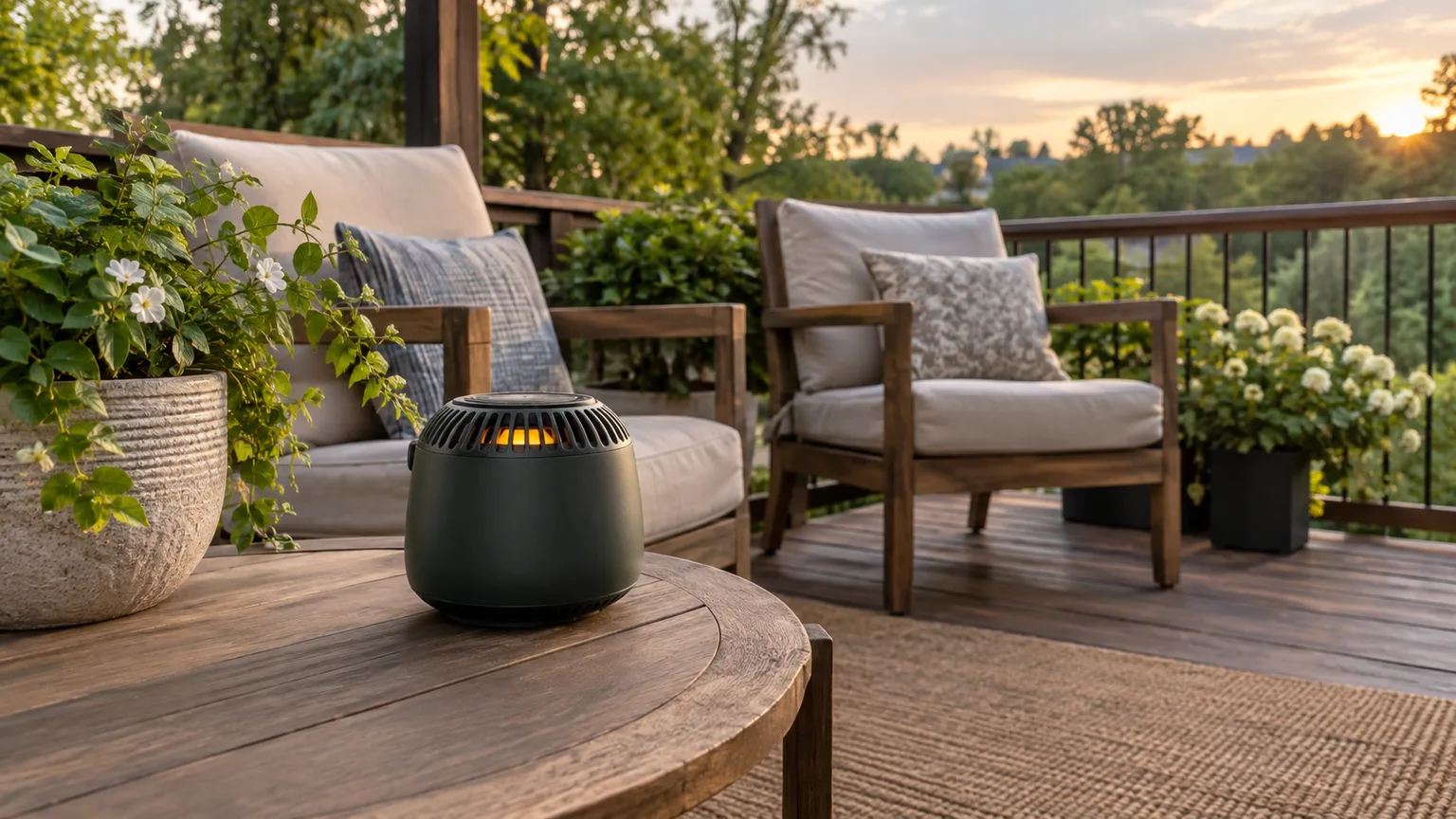
The appeal of the Thermacell Patio Shield is simple: it gives a small deck or patio a quiet, scent-free mosquito barrier without asking you to spray lotion on every guest or burn a citronella candle beside dinner. The less obvious part is that it is a localized outdoor tool, not a magic device that clears an entire yard.
That distinction is what makes the product worth considering. If your problem is a table, fire-pit conversation area, or two chairs at the end of a deck, a compact heated repeller can be a sensible layer. If mosquitoes are hatching in saucers, clogged gutters, tarps, and dense vegetation around the property, the device may make your chairs more comfortable while the yard keeps producing new adults.
The original $18 price is also best understood as an entry point, not the cost of a mosquito-free summer. A fair buying decision has to include coverage, warm-up time, fuel, repellent mats, wind, weather, and the fact that label directions control how the product is used.
The short answer: it works best as a seating-zone shield
The Patio Shield makes the most sense when you want to protect a defined place where people sit. Think of a compact dining table, a pair of lounge chairs, or the area around a small fire pit—not the whole lawn, garden, or deck perimeter.
The current Thermacell product specifications describe a nominal 15-foot protection zone, heat-activated repellent, a 10-to-15-minute ramp-up to maximum protection, and outdoor-only use. Those details explain both the product’s strength and its boundary: it can build a useful pocket of comfort, but it cannot stop mosquitoes that are breeding 30 feet away or biting you after you walk beyond that pocket.
It is a good fit for someone who wants no spray on skin, no strong fragrance, and no open candle flame on a crowded table. It is a poor fit for a windy, fully exposed deck, a large yard used for moving games, or an enclosed porch where an outdoor-only pesticide device does not belong.
What the Thermacell Patio Shield actually does
The Patio Shield is a fuel-powered spatial repellent. Instead of coating your skin, it heats a treated mat so the repellent disperses into the air around the unit. The intended result is that mosquitoes are less likely to enter the protected seating area; it is not a trap and it is not a population-control device.
The distinction matters because “repellent” and “insecticide” are often used loosely in shopping copy. You are not turning the deck into a treated surface, and you are not removing every adult mosquito from the property. You are creating a temporary area where people are less attractive or less accessible to mosquitoes while the unit is operating.
How the heated repellent mat creates a local zone
The current product page lists 21.97% D-cis allethrin as the active ingredient. It also describes the system as a heat-activated repellent that reaches maximum protection after roughly 15 minutes. That is enough information to understand the operating logic without guessing at a chemical mechanism the product label does not ask a homeowner to manage.
The practical test is not whether you can smell anything. The manufacturer describes the repellent as scent-free and smoke-free, so an invisible, quiet operating experience is expected. Look for the unit’s on indicator, allow the warm-up period, and judge protection from mosquito activity in the seating area—not from whether the device feels warm.
Because the zone is built in air, conditions matter. A solid wind can dilute or carry the repellent away from the chairs, while a wall, railing, or furniture arrangement can change how air moves through the space. That does not mean the product stops working every time a breeze appears; it means the advertised zone should be treated as a controlled-condition claim, not a guaranteed bubble in every backyard.
What comes in the box and what gets replaced
The current listing says the starter setup includes one repeller, one 12-hour fuel cartridge, and three 4-hour repellent mats. In other words, the included fuel and mats are designed to cover the same nominal 12-hour span when used as directed.
There are two consumable systems to keep track of:
- Fuel cartridge: supplies the heat source and has its own advertised runtime.
- Repellent mat: supplies the active repellent and changes color as it is used; replace it according to the product directions and its condition.
That two-part design is easy to overlook when the device is sold as a single inexpensive gadget. Put one on the deck and you have bought a device plus a refill routine. Before the first warm evening, check that the replacement package matches your exact fuel-powered model; do not assume every Thermacell cartridge or mat is interchangeable.
How much deck can one unit protect?
The answer you can defend is: one small seating area, within the manufacturer’s nominal 15-foot zone and under conditions that allow the repellent to remain around the people. Avoid treating “15 feet” as a promise that every point on a large deck will be protected equally.
The geometry of a real deck is rarely a perfect circle. Chairs, a dining table, railings, a roof, shrubs, and a prevailing breeze all shape the air. A nominal zone that feels excellent around a two-chair conversation set may feel inconsistent at the far end of a long dining table.
Measure the seats, not the entire yard
Start with the place you actually want to use. Put the chairs or table where they normally sit, then imagine the smallest zone that encloses the people rather than the largest paved surface. Place the unit on a stable surface near that group, where it cannot be knocked over and where the vents are not buried behind cushions, planters, or a wall.
For a long deck, test the device at the seating group that matters most. If you regularly split into two distant groups, one unit will not turn both into one protected room. The honest choices are to move the group closer, use a second unit only if the exact label and product directions support that setup, or protect the second group with airflow and personal repellent instead of assuming coverage will stretch.
This is also why the product is more satisfying on a small patio than in a broad yard. It solves a specific comfort problem at the point of use. The more your evening involves walking, gardening, serving food across the lawn, or moving between several seating areas, the less a single stationary shield can do.
The setup routine that gives it a fair test
Many disappointing product tests are really timing or placement tests. A fair trial removes the easy mistakes first: use a fresh compatible refill, place the device close enough to the seating group, give it time to warm up, and observe what happens when the wind changes.
Place it where air can carry the shield
As a practical starting point, put the repeller near the seating group rather than at the edge of the property. A low table or stable side table is usually more useful than a hidden corner, as long as the device remains upright and its vents are unobstructed. Keep it away from the part of the deck where someone will brush against it, and do not put it beside paper napkins, dry leaves, or other clutter that could contact a heated device.
On a breezy evening, notice the wind direction before you start. A reasonable placement experiment is the windward side of the chairs, allowing the air to move through the seating area, then adjusting if the plume is being swept past everyone. This is a practical airflow rule, not a substitute for the label or a promise that the unit can overcome high wind.
Do not point a powerful fan directly at the repeller while expecting the chemical zone to stay concentrated. A fan can make people harder for mosquitoes to land on, but it can also disrupt a small vapor zone. If you want both tools, use the fan to move air across legs and seating while keeping its strongest blast from hitting the repeller itself.
Start before the first bite and verify the indicator
Turn the unit on 10 to 15 minutes before people settle in. The warm-up window is not dead time; it is part of the product’s operating cycle. Starting after everyone is already swatting mosquitoes creates a poor first impression and can make you think the device is defective when it simply has not reached its intended protection level.
Check for the model’s on indicator, which the manufacturer describes as an orange glow in the viewfinder on the top of the unit. If there is no indicator, do not improvise by opening the device, moving a mat around while it is hot, or adding a different fuel source. Stop, let it cool as directed, and use the instructions for your exact version.
Run it only while the area is occupied or shortly before use, unless the label gives another reason to operate it. Turning it off when you leave reduces wasted runtime and prevents the device from heating unattended for no benefit.
The refill math behind an “$18” repeller
The purchase price is the easiest number to remember and the least useful number for a full-season decision. The real question is how many hours you expect to sit outside and how often you are willing to keep fuel and mats on hand.
Using the starter runtime as a simple planning unit, four hours per evening consumes one 12-hour-equivalent cycle every three evenings. If you sit out for four hours on 30 summer nights, that is 120 hours of runtime—roughly ten 12-hour-equivalent cycles before allowing for any differences between fuel and mat use.
At two hours per evening, the same 30 evenings require about five cycles. At one long eight-hour gathering, you use most of one cycle in a single day. The point is not to predict an exact receipt; prices, refill bundles, local sales, and model versions change. The point is to turn an attractive starter price into a realistic operating budget.
Fuel and repellent mats are separate consumables
A device can appear to be on while one of its consumables is no longer doing its job. The fuel cartridge may have reached the end of its stated runtime, or the mat may be spent. The manufacturer’s product page says the mat can be used until it turns completely white and that the unit can be turned on and off, but always match that guidance to the instructions included with your model.
Keep a small spare supply in a cool, dry place where children and pets cannot reach it. Do not stockpile incompatible refills simply because the package looks similar. If you travel, remember that fuel cartridges can create transportation restrictions; buy fuel at the destination rather than packing a cartridge on a passenger aircraft.
The refill routine is still easier than repeated skin application for some households, but it is not free and it creates packaging waste. If you only sit on the deck for an hour once a month, a fan and a bottle of EPA-registered topical repellent may be more economical. If you host dinner outdoors several nights a week, the convenience can justify the recurring cost.
Is it safe around people, pets, food, and plants?
Treat the Patio Shield as a pesticide device with operating limits, not as a harmless piece of patio decor. The manufacturer describes the product as outdoor-only, scent-free, smoke-free, and EPA-reviewed for safety and effectiveness around people and pets. That product statement does not mean a child should touch a hot unit, a dog should chew a used mat, or anyone should ignore the label.
The CDC’s mosquito-control guidance and the National Pesticide Information Center’s mosquito guidance both emphasize following pesticide label directions. Use the label for your exact device and refill as the controlling instruction for placement, operating conditions, storage, and what to do in an exposure. Keep fuel and mats in their original packaging, do not put them near food preparation surfaces, and wash hands after handling refills.
Outdoor-only is an important boundary. Do not use the device indoors, in a tent, in a vehicle, or in an enclosed porch. A roof over a porch does not automatically make it an acceptable location; if the space is screened, walled, or poorly ventilated, check the exact label rather than guessing from how open it feels.
Keep the repeller stable and away from fabric, dry plant debris, paper, and a child’s reach. It should not be placed where a pet can knock it over, lick the mat, or chew the cartridge. If a pet has a respiratory condition, a bird is housed nearby, or you keep an aquarium or water feature close to the seating area, choose a fan or physical screening until you have confirmed the product-specific guidance with the manufacturer or your veterinarian.
Do not spray, wipe, or pour the repellent onto deck boards, furniture, plants, clothing, plates, or skin. This is a spatial device; use it only in the way the product is labeled. For people leaving the seating zone, an EPA-registered topical repellent or protective clothing remains a separate layer. The CDC’s prevention guidance recommends using EPA-registered repellents and following their labels, especially for children.
Where it fails—and what to pair with it
The Patio Shield repels adult mosquitoes near the device. It does not empty a flowerpot saucer, drain a gutter, shorten a mosquito’s life cycle, or protect you while you walk across the lawn. The strongest plan treats the device as the last several feet of defense after the property has stopped offering easy breeding and resting sites.
Remove breeding water before treating adult mosquitoes
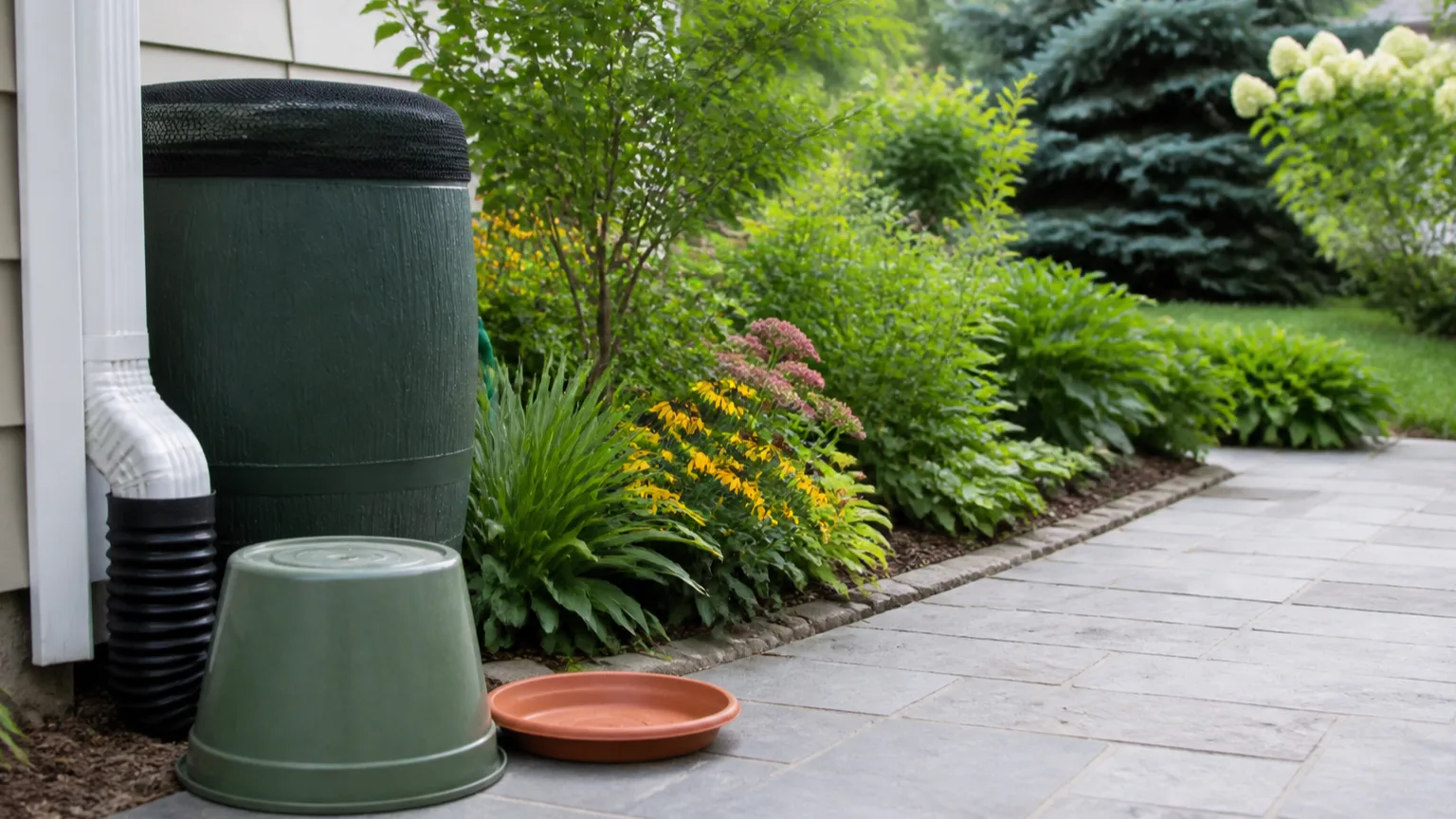
Mosquitoes can develop in surprisingly small amounts of standing water. The CDC recommends emptying and scrubbing, turning over, covering, or discarding water-holding items once a week. That includes flowerpot saucers, buckets, toys, birdbaths, tires, trash containers, and anything else that catches rain.
Walk the deck and the ground around it after rain. Check the saucers under container plants, grill and furniture covers, wheelbarrows, blocked gutters, downspout splash areas, and decorative containers. A rain barrel or pond that cannot be emptied needs a management method allowed by its label; do not add a random pesticide to water used by people, pets, fish, or wildlife.
The University of Georgia Cooperative Extension notes that many day-biting container mosquitoes stay relatively close to their breeding sites. That makes a weekly property walk unusually valuable: the mosquitoes biting you near the deck may be coming from the saucer, tarp, clogged drain, or neighbor’s neglected container rather than from a distant swamp.
Trim back dense vegetation where it presses against the deck or keeps the ground damp. This is not a reason to strip a garden bare; it is a reminder that adult mosquitoes rest in cool, humid cover. The Farmers’ Almanac’s outdoor guidance also emphasizes standing-water removal, airflow, and keeping resting areas less sheltered.
Use fans and personal protection outside the zone
An outdoor fan is the best non-pesticide companion for a deck because mosquitoes are weak fliers and moving air makes it harder for them to approach and land. Aim a box fan or oscillating fan across the seating area, especially toward ankles and lower legs, while keeping its strongest blast from directly hitting the repeller.

The Southern Living yard-control guide likewise recommends an outdoor fan as a way to create a wind wall and pairs that advice with standing-water removal and maintenance. A fan is especially useful when you are moving around, when a breeze makes the repellent plume inconsistent, or when you want to avoid using a chemical device at all.
For the path from the house to the deck, gardening area, or lawn, use clothing that covers more skin and an EPA-registered topical repellent as directed. The University of Georgia Cooperative Extension’s mosquito guidance distinguishes dawn-and-dusk biters from container-breeding day biters, so do not assume every mosquito problem follows the same schedule. If you are still being bitten outside the protected seats, you have left the zone—not necessarily proved that the unit has failed.
Patio Shield vs. the other common deck fixes
Patio Shield vs. a fan: The fan uses airflow, has no pesticide refill, and works well around ankles and seating, but it produces noise and needs electricity or a charged battery. The Patio Shield is quieter and more discreet, yet depends on fuel, mats, warm-up time, and calmer air. Combining them can work if the fan is aimed across people rather than directly at the repeller.
Patio Shield vs. topical repellent: Topical repellent travels with you and is the better choice for walking, gardening, or sitting outside the unit’s zone. A spatial repeller avoids the sticky feeling of skin products but cannot protect you everywhere. A household can reasonably use both for different parts of the same evening.
Patio Shield vs. citronella candles: Candles add light and scent, which some people enjoy, but their performance depends heavily on the immediate airflow and the distance between the flame and the people. The Patio Shield is designed specifically as a heat-activated spatial repellent, with no open candle flame and no smoke during normal operation. Neither option repairs a mosquito-breeding problem.
Patio Shield vs. whole-yard spraying: Professional or homeowner-applied adulticide treatments target mosquitoes in resting areas, but pesticide decisions carry label, runoff, pollinator, and exposure considerations. The CDC advises following label directions for outdoor adulticides and notes that mosquitoes rest in dark, humid places such as beneath patio furniture and carports. A small seating-zone tool is less ambitious than treating a property, which is also why it creates fewer expectations about controlling the whole yard.
Patio Shield vs. mosquito plants: Herbs and fragrant plants can make a seating area more pleasant, but a potted plant is not a force field. Use plants for beauty, scent, and habitat value; use standing-water removal, airflow, clothing, and a labeled repellent for bite reduction. If a plant-based claim promises to clear your entire yard, treat it as a marketing claim that needs much stronger evidence than a nice-smelling patio.
Troubleshooting when mosquitoes still get through
If you are bitten in the first few minutes, wait for the full warm-up period before judging the device. Confirm that the indicator is on, the fuel cartridge is compatible and not empty, and the mat is fresh enough to use according to the instructions.
If bites continue on one side of the seating area, look at air movement before replacing anything. The repeller may be downwind of the chairs, behind a solid object, too far from the people, or being overwhelmed by a fan or gust. Move the chairs and device together into a tighter group, test a windward position, and give the revised setup another warm-up cycle.
If the device works at dinner but fails during a stormy or gusty evening, that is a condition problem rather than a reason to place it indoors. Turn it off if water or unstable weather creates a safety issue, then use a fan, long sleeves, or an EPA-registered topical repellent until conditions improve.
If the unit produces no indicator, unusual heat, or an unexpected smell, stop using it. Let it cool, consult the exact manual and label, and contact the manufacturer if the problem remains. Never drill, refill, open, modify, or substitute parts in a fuel-powered pesticide device.
Finally, make sure the insect is actually a mosquito. No-see-ums, biting flies, fleas, and other pests may remain when a mosquito repellent is working as designed. The National Pesticide Information Center recommends confirming the pest before choosing a pesticide response; a close look at when and where the bites occur can save you from buying the wrong solution.
Who should buy it—and who should skip it
Buy the Patio Shield if your main problem is a small, repeatable outdoor seating area and you value quiet, scent-free protection without applying repellent to your skin. It is particularly practical for people who eat dinner on one deck table, sit around one fire pit, or want a discreet device that can be switched on before guests arrive.
Skip it if you want to protect an entire yard, spend the evening walking between garden beds, or live with frequent strong wind at the seating area. It is also the wrong tool if you do not want recurring fuel and mat purchases, cannot store refills securely, or need a solution for an enclosed space.
Before buying, run this checklist:
- Is the seating zone compact enough for a nominal 15-foot protection claim to be relevant?
- Can you place the device outdoors, upright, stable, and away from children, pets, food, and dry clutter?
- Will you remember to start it 10 to 15 minutes before use?
- Are you comfortable budgeting for fuel and mat refills rather than stopping at the starter price?
- Have you removed standing water and added a fan or personal protection for the parts of the yard the device cannot cover?
If the answer to those questions is yes, the product’s value is straightforward: it is a convenient final layer around the chairs. If most answers are no, spend the first $18 on a high-velocity outdoor fan, gutter cleanup, or a bottle of EPA-registered topical repellent instead.
Conclusion: use it as a seating-zone tool
The Thermacell Patio Shield earns its place on a deck when you treat it as a small, temporary shield rather than a whole-yard cure. The strongest setup is simple: remove standing water every week, place the unit close to the seats, allow the full warm-up, keep strong airflow from blasting the device, follow the exact outdoor-use label, and protect yourself when you leave the zone.
That is also the honest answer behind the appealing $18 price. The device can make a focused deck area much more comfortable, but the summer cost includes refills and the best results come from pairing it with airflow, clothing, topical repellent, and basic habitat cleanup. Buy it for the place where you sit—not for a promise that mosquitoes have disappeared from the property.