8 Things to Avoid at a Plant Store
Shopping for houseplants? Avoid eight common plant-store mistakes, get better care advice, and learn how to ask about special orders and prices.
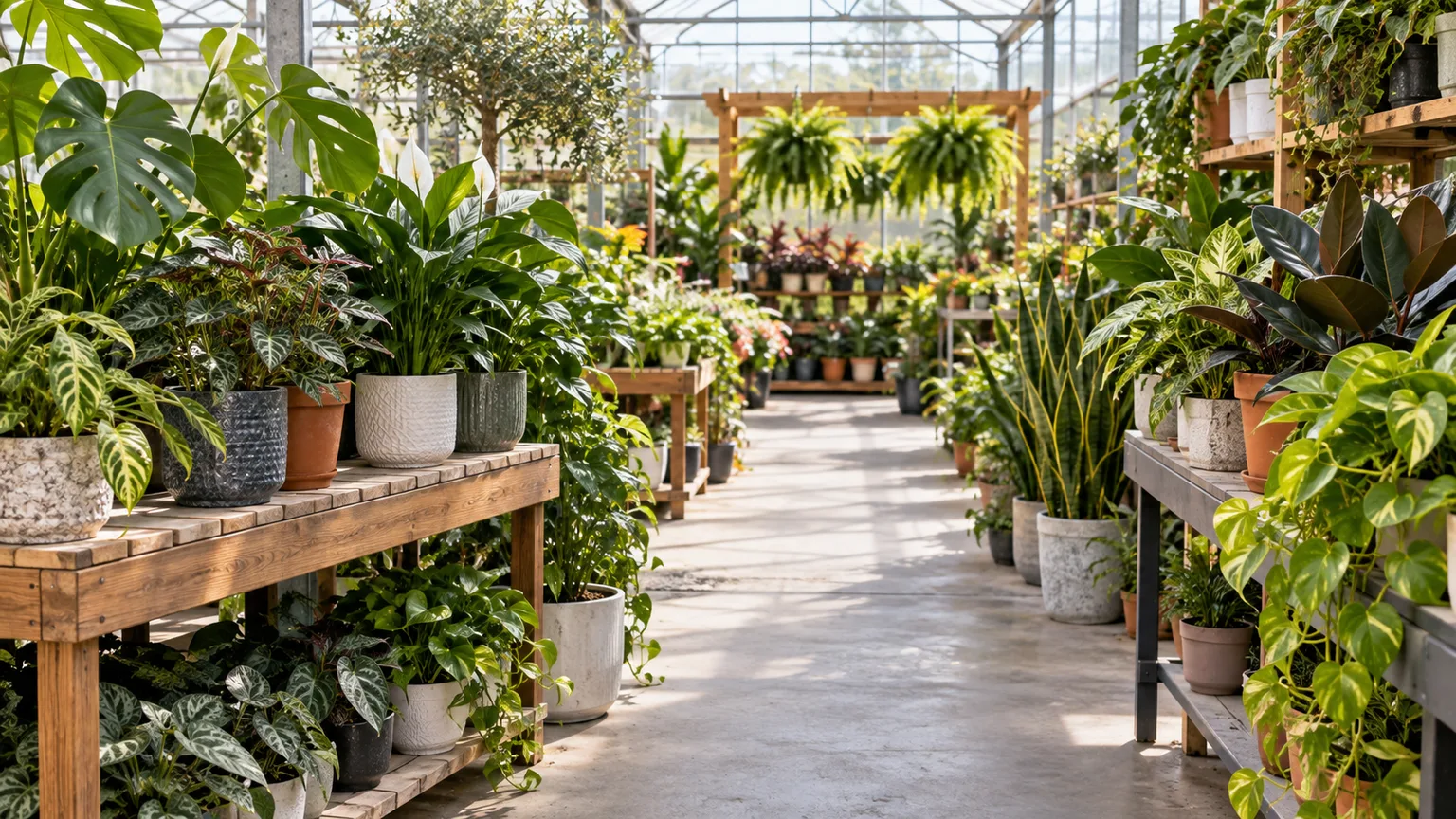
A good plant-store visit is part shopping trip, part short consultation. You are choosing a living thing for a particular home or garden, and the person helping you may be caring for stock, answering several customers, and managing orders at the same time. A little preparation makes it easier to find a plant that fits and to get useful help without turning a quick question into an awkward exchange.
“Never” is a strong word, and every shop has its own rules. The common thread is simple: treat the plants as living inventory, give staff enough information to help, and ask before doing anything that changes a display or takes time beyond a quick question.
Do a little planning before you visit
Before leaving home, take a photo of the spot where you want the plant to live. Note how far it is from a window, whether direct sun reaches it, how warm or drafty the area gets, and how much space the plant can occupy. “Bright room” can mean very different things at the window, across the room, and on a shaded shelf, so a picture and location are more useful than a vague description.
Decide how much you want to spend and what kind of care routine you can sustain. If you want a plant that can go several days between checks, say so; if you enjoy frequent watering and pruning, say that too. A budget is not an apology. It helps staff narrow choices and prevents you from feeling pressured by a plant that looks exciting but does not suit your space or spending limit.
If you are hoping for a particular cultivar, tree, or seasonal plant, call or message ahead when possible. A store may not carry every item on its website or be able to source it quickly, and the person on the sales floor may not control supplier orders. Ask whether someone can check availability and when a useful answer is likely.
1. Expect every plant to be flawless
Plants are not manufactured to identical specifications. One may lean toward the light, have a small tear from transport, or carry a leaf with an old blemish while still growing well. Rejecting a plant because it is not perfectly symmetrical can leave you overlooking the stronger specimen beside it; treating every mark as proof of neglect can also make an ordinary selection conversation needlessly tense.
That does not mean you should ignore condition. Compare several plants of the same type if the store has them. Look for firm stems, healthy new growth, and a shape that is balanced for that species. A little cosmetic damage on one older leaf is different from several yellowing leaves, widespread wilting, a sour smell from the pot, or visible insects.
The RHS guide to buying garden-center plants recommends considering overall condition and notes that some signs, such as pale or wilting foliage, can signal poor stock. Sunset garden editor Deanna Kizis’s houseplant-buying checklist similarly advises shoppers to check a plant’s setting and look for visible distress before buying. These are screening clues, not a diagnosis: a spot or drooping leaf can have more than one cause.
A quick visual health check
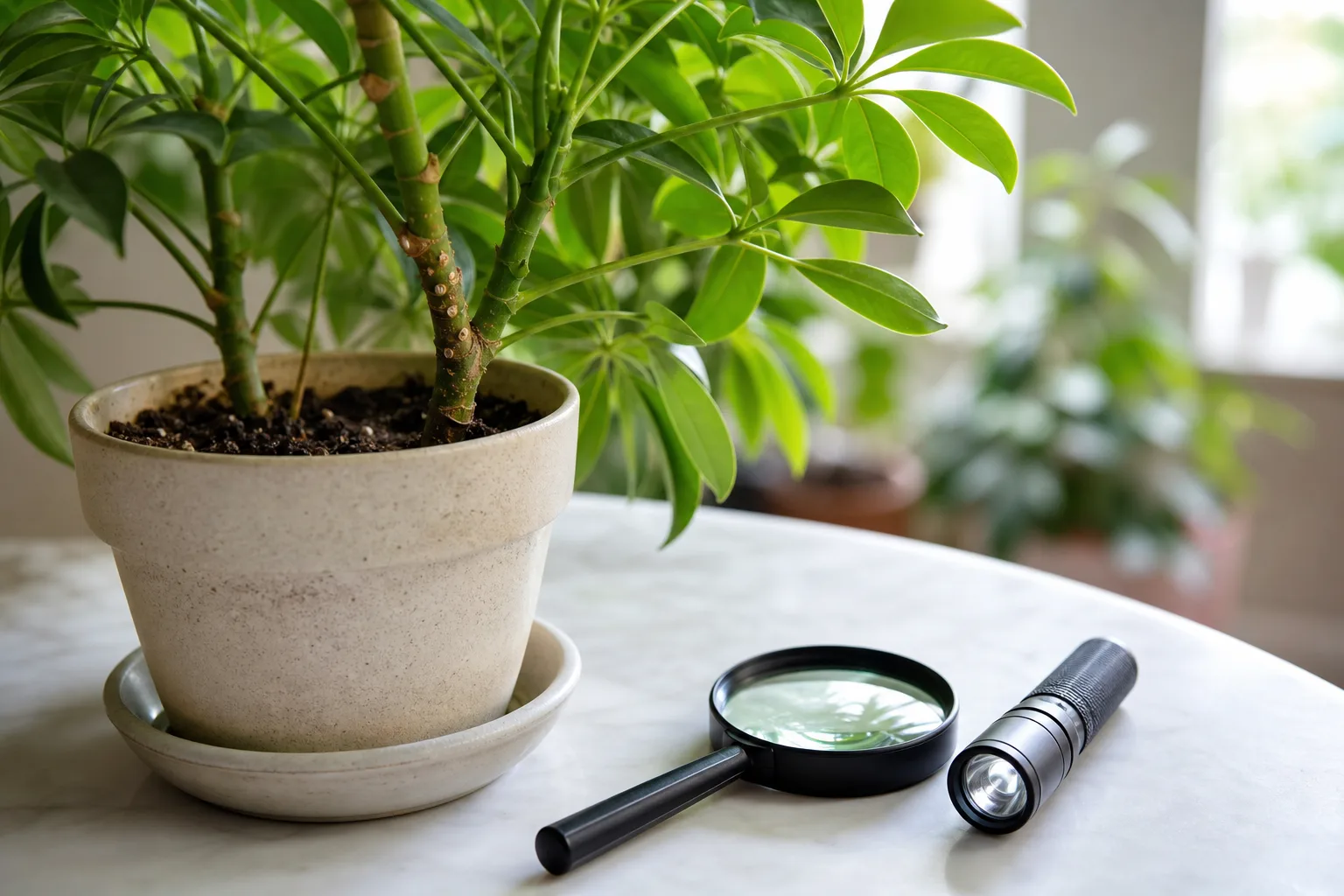
Take a slow look without pulling leaves apart. Check the top and underside of a few leaves, the newest growth, stem joints, and the soil surface. Sticky residue, fine webbing, small bumps, or tiny moving insects are reasons to pause and ask staff to take a look; they are not a reason to announce that the whole nursery is infested.
If one plant looks questionable, ask whether the staff member can help you compare it with another or explain the store’s markdown policy. Do not move it to another bench, peel off a damaged leaf, or put it in a cart with other plants while deciding. You can walk away from a plant without making the person who stocked it defend every imperfection.
2. Buy first and learn its needs later
An attractive plant is not automatically a suitable plant. A sun-loving species may struggle several feet from a dim window, while a plant that grows into a large climber can overwhelm the small shelf you had in mind. Buying without checking the basics often turns the employee’s quick sale into your later search for a rescue plan.
Plant labels are useful starting points, but their terms can be broad. “Indirect light” does not tell you exactly how far from your window a plant can sit, and a watering icon cannot account for pot size, room temperature, or the season. Use the tag to identify the plant and start the conversation, then ask one specific follow-up if a care detail will determine whether you buy it.
Larry Hodgson’s Laidback Gardener guide to buying houseplants recommends matching a plant to the conditions available at home and asking nursery staff when you need help choosing. That is a more productive question than asking whether a plant is “easy,” because easy depends on your window, schedule, and tolerance for normal leaf changes.
Bring four useful details about your home
Tell the employee where the plant will go, how much light reaches that exact spot, whether you can water regularly, and how much room the mature plant can have. Mention drafty doors, heating or air-conditioning vents, or cold windows if those affect the location. If you do not know the species yet, that is fine; the point is to describe the conditions before asking for a recommendation.
Try: “I have a shelf about six feet from an east-facing window, and I can check it twice a week. What plants here are likely to fit?” You can also ask what a plant’s mature size is, whether it needs a support, or whether the store’s potting mix is a convenience or a specific requirement. Many plants grow well in ordinary quality potting mix; some benefit from a coarser or more moisture-retentive blend. Ask what the mix is meant to do and whether there is a lower-cost option that serves the same need instead of assuming the most expensive bag is essential.
3. Treat the display like a potting bench
It is reasonable to inspect a plant before buying it. It is not reasonable to pull it from its pot, prune it, take a cutting, or move several other plants around without asking. Displays are working stock: pots may be grouped by watering needs, sunlight, or delivery batch, and a tag left behind can become separated from the plant it identifies.
Handle a pot from its sides or base rather than lifting by the stem or leaves. If you need to compare plants on a lower shelf, ask an employee to help you move them. If a pot is heavy or trailing foliage catches on neighboring plants, let staff bring it forward. A few seconds spent asking can prevent a broken stem, a spill, or a display that another customer cannot safely navigate.
The RHS says that checking roots can be useful for some container-grown plants, while also noting that a few roots emerging from a bedding-plant tray may be normal. The useful lesson is not “unpot everything”; it is that the right inspection depends on the plant. Ask first, and let staff decide whether opening the pot is appropriate for that particular item.
The same courtesy applies to tags, soil, and sale stickers. Do not pull off a label to read it and leave it elsewhere, scoop mix from a bag, or swap price tags between pots. If the tag is missing or unclear, ask staff to identify the plant or look up the listed price. If you accidentally knock something over, tell an employee rather than quietly putting a damaged item back.
4. Carry a pest problem into a busy plant store
If you have a plant with suspected pests or disease, do not carry it through a greenhouse and set it beside sale plants to ask for an in-person diagnosis. Even when the plant is yours and you mean well, moving it through a shared collection creates an avoidable contact point. Some pests are difficult to see, and a symptom that looks obvious at home may not be easy to identify in a crowded aisle.
Take clear photos instead: one of the whole plant, one of the affected area, and close-ups of the leaf surface or stem joint. Call the store and ask whether staff offer photo help, a scheduled consultation, or another way to examine a plant safely. If they do not, they can tell you that before you make a special trip with a potentially affected plant.
The RHS’s plant-health prevention guidance explains that pests and diseases can move on plant material, soil, equipment, and even clothing. USDA APHIS’s guidance for gardeners likewise advises people to watch for pests and avoid helping them spread. Those recommendations are about plant health broadly, not a special rule for retail shops, but they support a sensible courtesy: keep a suspect plant separate and ask the store how it wants you to proceed.
If you are already at the shop when you notice a pest on a plant you are considering, leave it where it is and quietly point it out to an employee. Do not handle it and then touch other plants, or tell nearby shoppers that every plant in the section is unsafe. Staff can inspect the bench and decide whether anything needs to be moved or cleaned.
5. Ask for a diagnosis with no useful context
“My plant is dying. What should I do?” asks the employee to guess the plant, the problem, the timeline, and the care routine in one step. A knowledgeable person may recognize a pattern, but they still cannot inspect roots or measure conditions from a sentence. A photo of one damaged leaf alone is often not enough to distinguish watering stress from pests, sun damage, age, or another cause.
Start with the plant’s name, where it came from, and when the problem began. Say what changed recently: a move, a repot, a cold night, a new watering routine, or a different fertilizer. Mention the light and how you decide when to water. If you do not know the plant’s name, bring the tag or describe its size, leaf shape, and growth habit rather than feeling embarrassed.
If you bought it at that store, have the date or receipt ready and explain what you are hoping to learn: whether it is normal adjustment, whether the store has a care sheet, or what the next diagnostic step should be. Buying there does not mean every employee can offer a full diagnosis on demand, but a clear question gives the shop a fair chance to help or direct you to the right person.
What to bring instead
Prepare three photos in good light: the whole plant in its location, the affected leaves from both sides, and the soil or pot if that seems relevant. Add a short timeline and your watering pattern. Avoid filters, distant shots, and a long series of guesses about what the disease might be; observations are more useful than a label you are not sure about.
Ask one question at a time, such as “Could this damage be from the cold window?” or “What should I check next?” If the issue looks serious or keeps spreading, ask whether the store can recommend a local extension service or plant clinic. A five-minute conversation can be useful, but it should not be treated as a substitute for a detailed consultation that the shop never offered.
6. Decide you have a black thumb before choosing
Being new to plants is not a character flaw. “I kill everything” may feel like a harmless joke, but it does not tell staff what went wrong before or what you want to grow now. It can also close off the more helpful conversation about light, watering habits, travel, pets, or the amount of attention you enjoy giving a plant.
Describe the constraints instead. You might say that your apartment has one bright window, that you forget to water, or that you want something compact for a desk. Those details allow an employee to suggest a few realistic choices and explain the trade-offs. A plant marketed as beginner-friendly still needs conditions that suit it; no plant is effortless in every home.
If you have had trouble before, bring one example without blaming yourself or the previous shop. “My last plant sat in a dark corner and the leaves yellowed. Is there something that tolerates that spot better, or should I move it first?” is specific and actionable. It lets the employee tell you honestly if the location itself is the limiting factor.
It is also fine to leave without buying. A helpful shop should be able to explain what might work, but you do not need to force a purchase because someone spent time answering a question. If every option needs more light or space than you have, waiting or choosing a smaller, different kind of plant may be the better outcome.
7. Make a special-order request after the window has passed
Specialty plants, selected cultivars, trees, and shrubs may be ordered in seasons when growers and suppliers have them available. A store cannot necessarily order a plant on demand, and the person at the register may not know whether a supplier still has stock. A last-minute request can still be worth making; the mistake is treating an unavailable item as proof that staff did not try.
Ask what lead time is realistic and whether the shop keeps a request list. Availability can change with the season, supplier inventory, minimum quantities, shipping, and the plant’s condition when it arrives. Some stores can source one item; others may only order by a tray, case, or shipment. Policies differ, so get the expected price and any deposit or cancellation terms before asking the shop to proceed.
How to make a useful special-order request
Bring the exact plant name if you have it, including the cultivar or variety, a photo for identification, the quantity you want, your target date, and your maximum price. Tell the staff member whether you would consider a similar substitute. If you need a certain size, flower color, or hardiness range, say which detail is essential and which one is flexible.
Try: “I’m looking for this cultivar, ideally one plant around this size before early spring. Could you check whether your supplier can get it? If not, I’d consider these two alternatives.” Then ask when to follow up. A clear request gives the employee information to check and lets you plan around an honest “not this season.”
If the request is for a large tree or a landscape project, ask early enough to compare options and delivery logistics. Do not assume the shop can hold an item indefinitely, call repeatedly for an update that has not been promised, or blame the employee if the supplier cannot fill the order. If timing matters, agree on when and how the store will contact you.
8. Expect a specialty shop to match every chain-store price
Plants with the same common name can still differ in size, pot volume, cultivar, condition, and time spent in the store. A low price is useful information, but it is not a complete comparison if one plant is half the size or one seller includes delivery, repotting, or after-sale support. Equally, a higher price does not automatically mean better quality. Look at the actual plant and ask what is included before deciding.
Independent shops and large retailers may buy, stock, and care for plants differently, so their prices will not always line up. You can compare prices without turning the conversation into a demand for a match. Ask whether the marked price is current, whether the plant has been reduced, or whether a smaller size is available. Do not ask staff to justify the shop’s entire business model while they are helping you choose a plant.
The same applies to soil and accessories. A specialist mix may have a useful texture for a particular plant, but “specialty” on a bag is not a reason to buy it blindly. Ask what ingredient or property matters, whether the plant can use a general houseplant mix, and what the store’s least expensive suitable option is. If you buy a plant and plan to use a different mix later, ask whether there is a reason to wait before repotting.
Discounts and advice are services, not things you can assume every shop owes every visitor. If a plant is visibly damaged, ask politely whether it is already marked down; do not remove leaves or tags to create a reason for a discount. If you want detailed care support after buying from another seller, be transparent about that and ask whether the shop offers a paid consultation or has a public care resource.
How to ask for help and keep the visit useful

If staff are serving a line, unloading a delivery, or on the phone, wait until they are free or ask when a good time would be. Open with your budget and the decision you need to make: “I have a low-light desk and want a compact plant under $25. Could you point me toward two options?” That is easier to answer than “What should I get?” followed by a long list of preferences revealed one at a time.
For a care question, give the plant name and one concrete condition. For a diagnosis, use the photos and timeline above. For a special order, give the exact name and date you need it. If the employee does not know, accept “I’m not sure” as an honest answer and ask whether another staff member or resource could help. Different employees have different experience, and a cashier should not be expected to know every species on the sales floor.
Keep the conversation collaborative. You can disagree with a suggestion, ask what makes one plant a better fit, or decide not to buy. The useful exchange is not about proving that you already know the answer; it is about finding enough reliable information to make a decision you can live with.
If a new plant struggles after you get home
A plant can change after a move, and that change does not by itself prove that the store sold you a bad plant. Take a dated photo, keep the receipt and tag, and note how the plant was transported and where it has been kept. Check the shop’s posted return, exchange, and plant-guarantee terms; some stores offer support, while others do not, and conditions may apply.
Contact the shop with a calm summary: when you bought it, what changed, what you have checked, and what you would like to know. If the plant has pests, keep it separate from your collection and send images before bringing it back. If you suspect a defect or a policy applies, ask how staff want to inspect it. That gives the store facts to work with and avoids putting an affected plant beside fresh stock.
The same evidence-first approach helps whether the answer is a replacement, care adjustment, or referral elsewhere. A plant that declines after purchase is frustrating, but blame cannot identify the cause. Dates, photos, and a clear request can.
Conclusion
The best plant-store visit does not require expert knowledge. Know the conditions you can offer, inspect plants gently, ask before moving or opening anything, and give staff enough context to answer your question. If a plant or order is not a fit, it is fine to wait or walk away. Clear expectations and ordinary courtesy make it easier for you to choose well—and easier for employees to help.