7 Things You Should Never Do When Decorating With Plants
Decorating with plants can look effortless, but light, drainage, scale, and access matter. Avoid seven common mistakes and build displays plants can thrive in.
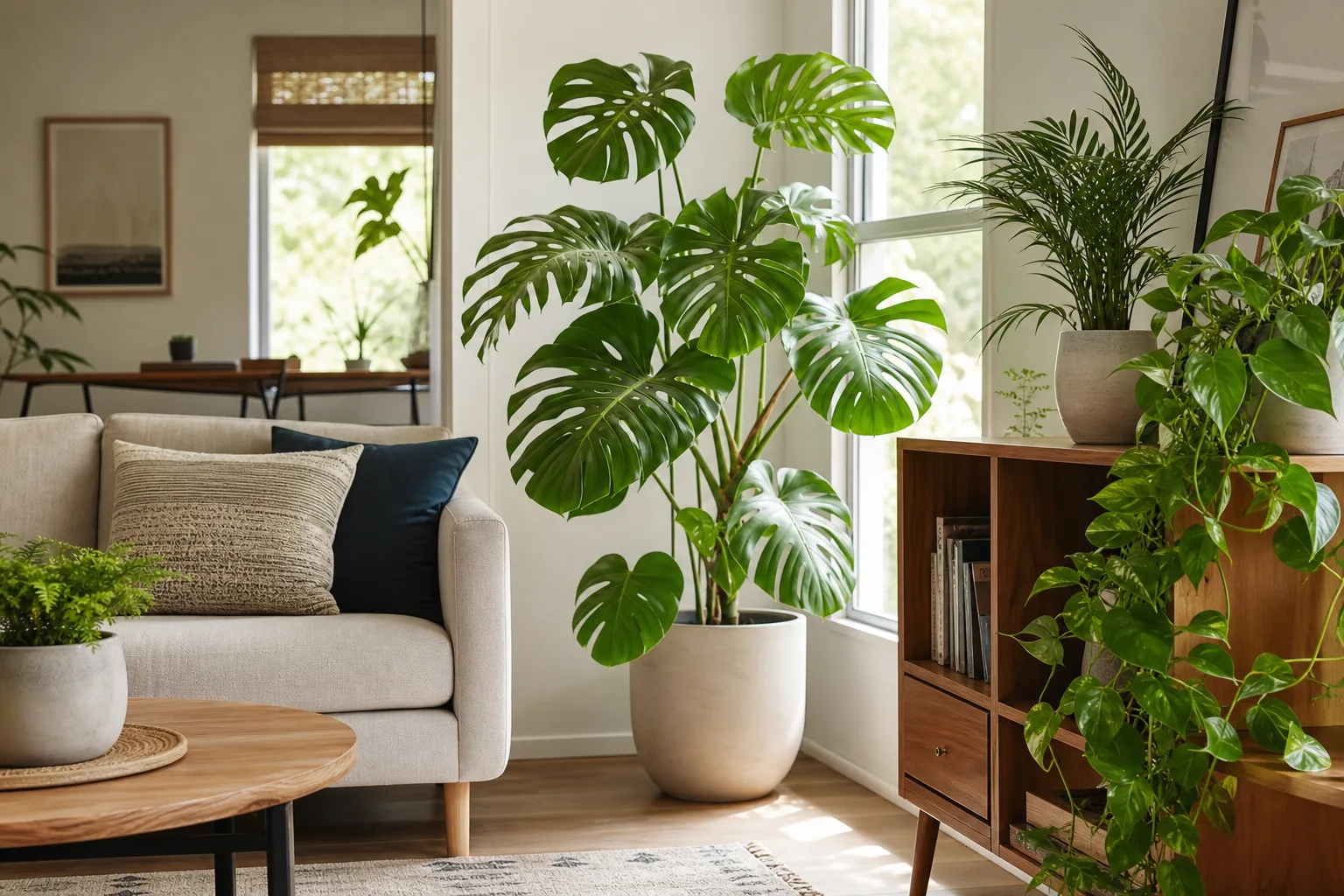
A houseplant can make a room feel finished, but the best-looking spot in a photo is not always a workable home for a living plant. A sunny window, a decorative pot, a high shelf, and a lush group can each create problems if they make the plant hard to grow or care for.
Start with the conditions you can’t fake: suitable light, a way for extra water to leave the root zone, and enough room to reach the plant. Then decide how its height, pot, and foliage fit the room. This order keeps decorating with plants from becoming a cycle of moving, repotting, and replacing them.
Put plant health ahead of the styling plan
Think of a plant display as a small indoor landscape. Every plant needs a place where its light and watering needs can be met, and every container needs a practical way to catch or drain water. Styling choices—matching pots, hanging baskets, plant stands, or color themes—come after those basics.
That doesn’t mean you need to turn a room into a greenhouse or abandon a design idea. It means adapting the idea: move the plant nearer a window, choose a species suited to the available light, use a removable grow pot, or reduce the number of plants in a group. The useful question is not only “Does it look good here?” but “Can I keep it healthy and maintain it here?”
1. Don’t choose a spot before checking its light
A plant may look right beside a sofa or on a bookcase and still receive too little light there. “Bright room” is a human impression, not a reliable measure for a plant. Window size, nearby buildings, curtains, overhangs, the direction the window faces, and the plant’s distance from the glass all change what reaches its leaves.
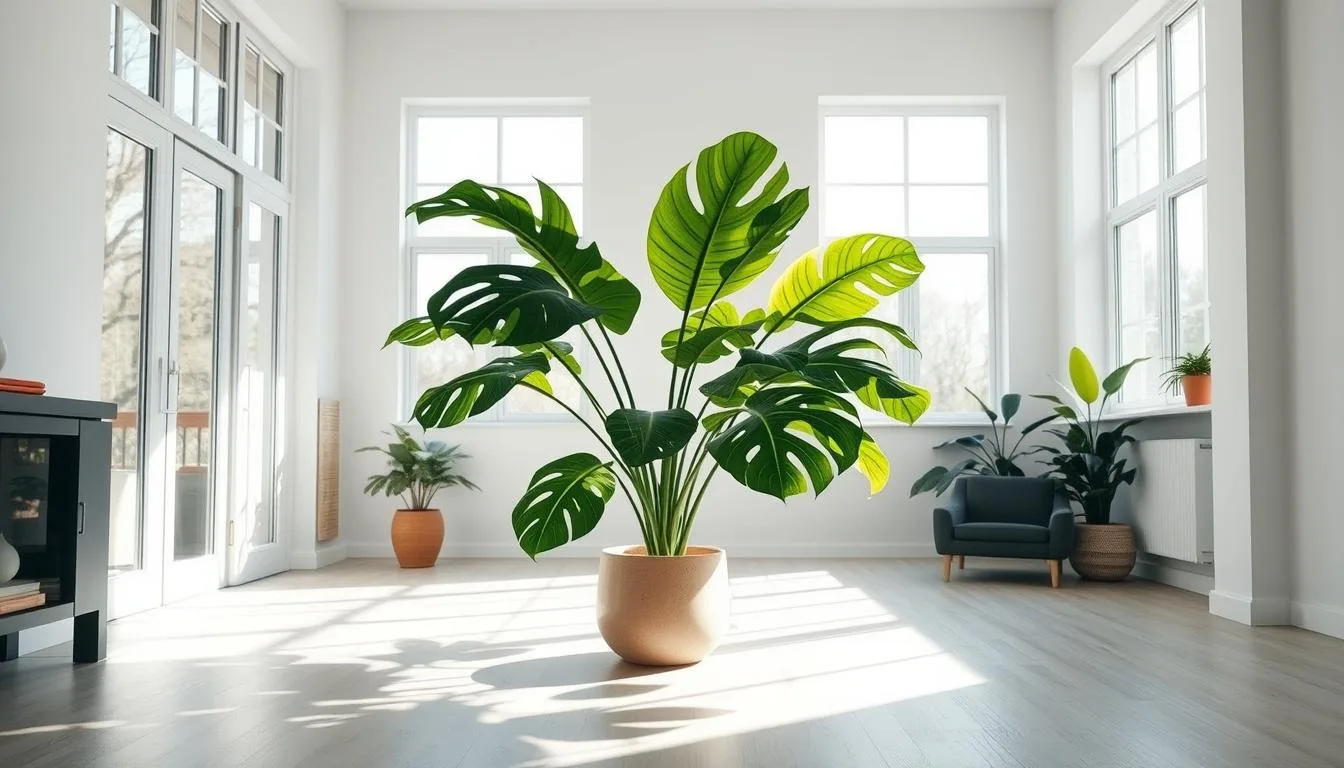
Purdue Extension notes that natural light can drop sharply as a plant sits farther from a window, and that houseplants differ in their light requirements. House Plant Journal’s guide by grower Darryl Cheng makes the same practical point: judge the light at the plant itself, including how long direct sun reaches it, rather than labeling the whole room “bright” or “low light.” (Purdue Extension, House Plant Journal)
A plant described as tolerant of low light still needs light to grow; it may simply cope with less than a sun-loving species. A dark hallway with no window is not a suitable permanent home for most foliage plants. If you want greenery there, choose a plant that can handle the measured conditions and consider a properly placed grow light, or rotate a plant into the space temporarily while it spends most of its time in better light.
Read the actual window, not the room label
Look at the spot at different times of day and again when the season changes. Notice whether direct sun lands on the foliage, whether the view of open sky is blocked, and whether a sheer curtain softens strong rays. A light-meter reading can add useful context, but a careful observation is better than assuming that every east, west, or north window behaves the same in every home.
Choose the plant after checking the site, not the other way around. For example, a bright living-room corner may suit a sun-loving plant, while the same room’s bookcase several feet back may call for a more shade-tolerant choice. If a plant starts stretching toward the window, making smaller leaves, or losing color, treat that as a reason to reassess placement rather than adding more decorative pieces around it.
2. Don’t let decorative pots hold standing water
A ceramic cover pot can hide a plain nursery container, but it can also hide a pool of runoff. If water remains at the bottom after watering, roots may sit in saturated conditions; spilled water can also stain wood, damage finishes, or leave a ring on a shelf. The container’s appearance does not tell you whether the root zone is draining properly.
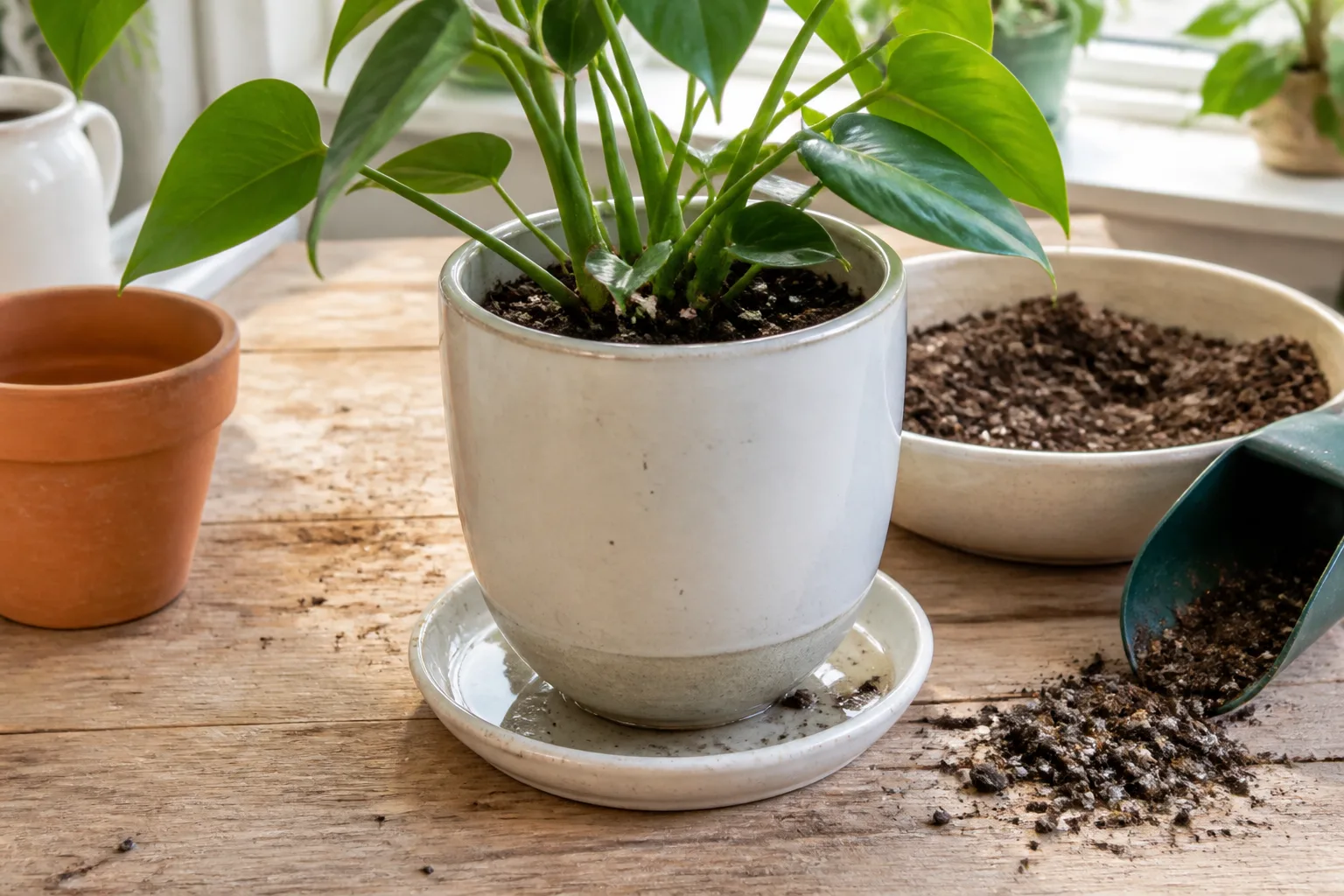
Nebraska Extension advises growing houseplants in containers with drainage holes, and Purdue Extension recommends discarding excess drainage water rather than leaving the pot standing in it. A decorative cachepot is useful when it acts as an outer sleeve, not as a hidden reservoir that you forget to empty. (Nebraska Extension, Purdue Extension)
Make the grow pot removable
Keep the plant in a nursery pot or another inner pot with open drainage holes, then place that pot inside a decorative cover pot. When it needs water, lift it out, water it over a sink or tub, and let it drain until the flow slows. Empty any water in the cover pot or saucer before returning the plant. If the inner pot is too heavy to lift safely, use a watertight saucer under it and check the saucer after watering.
If you prefer a single decorative pot, choose one with drainage and protect the surface beneath it with a saucer or plant mat. Test the setup with a small amount of water before placing it on a delicate shelf. A layer of stones inside a pot with no outlet does not replace a drainage hole; it only takes up space below the soil. When a pot must remain in place, water slowly and check the bottom rather than relying on a fixed schedule.
3. Don’t repot only to hide a nursery pot
A nursery pot is often a perfectly useful growing container. It has drainage holes, is easy to remove for watering, and lets you change the room’s look by swapping the outer pot. Repotting every new plant into the container that matches the furniture can disturb roots, create extra work, and leave you with a larger pot that holds more wet mix than the plant can use.
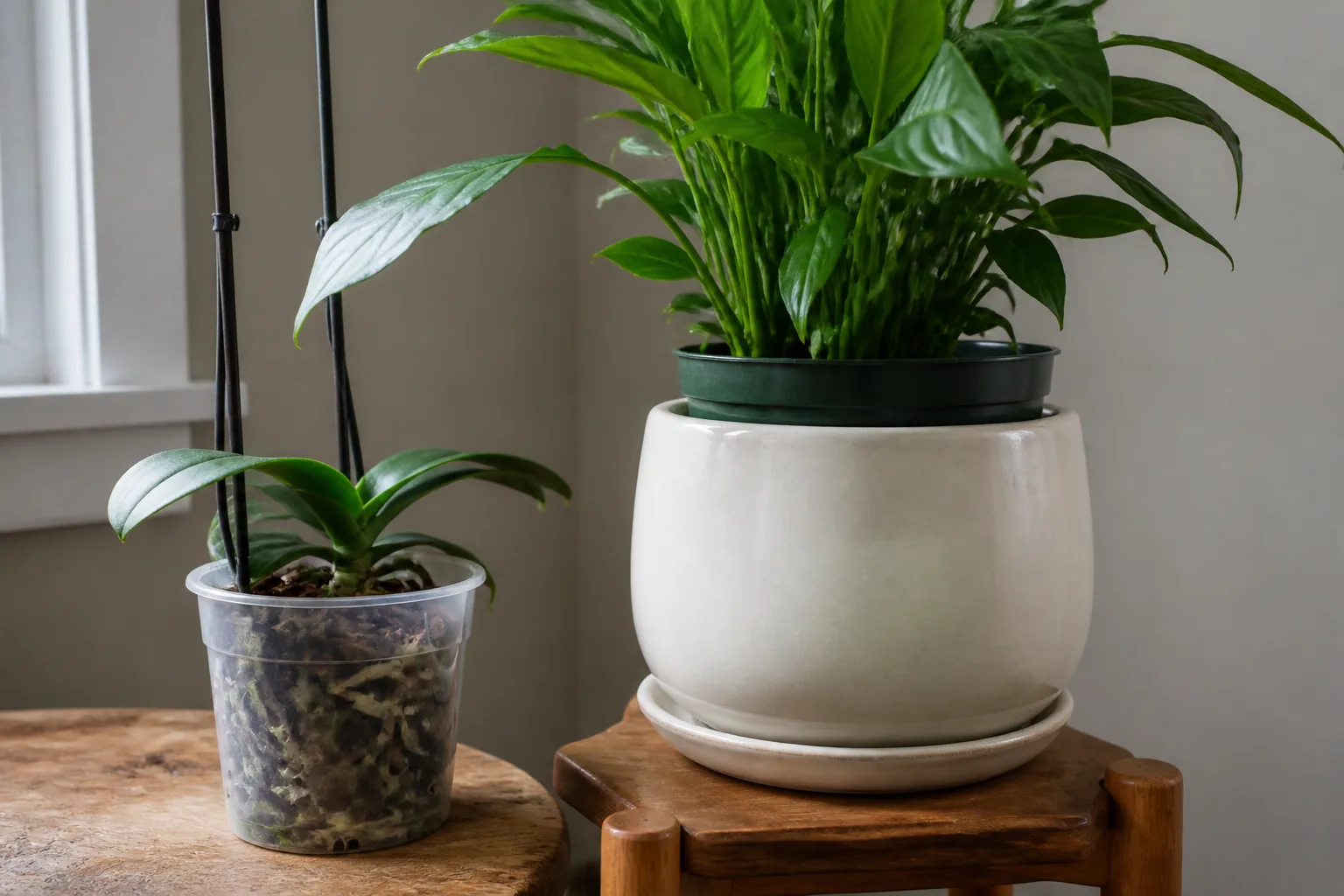
Instead, treat the nursery pot as the functional inner container and the ceramic, woven, or metal vessel as a removable cover. Check that the inner pot sits high enough to lift out without spilling soil, and that there is space beneath it for water to drain without the base soaking in runoff. A stable riser can help with a deep cover pot, as long as it doesn’t block the drainage holes or make the plant wobble.
Repot when roots and the current container say it is time
Repot when the plant has outgrown its pot, the potting mix has broken down, or watering has become difficult because the root ball fills most of the container. A few roots at a drainage hole do not automatically mean an emergency. Look for a pattern: roots circling densely, water passing through without wetting the mix, a plant drying unusually fast, or growth slowing during its normal growing season.
When it is time, move up only enough to give the roots room and choose a pot with drainage. A decorative pot several sizes larger may look grand, but excess soil around a small root system can stay wet longer. Keep the old container until the plant has settled into its new one; you may want to reuse it for propagation or another plant. The goal is to repot for the plant’s root space and the potting medium, not to make every container match on moving day.
4. Don’t hang plants where care or safety becomes difficult
Hanging a trailing plant can free a table and add a vertical line, but height doesn’t make a display automatically safe or successful. A basket can be too far from usable light, too near a curtain or door, or positioned where vines brush people as they pass. A difficult watering routine often turns an attractive hanging plant into one that gets missed.
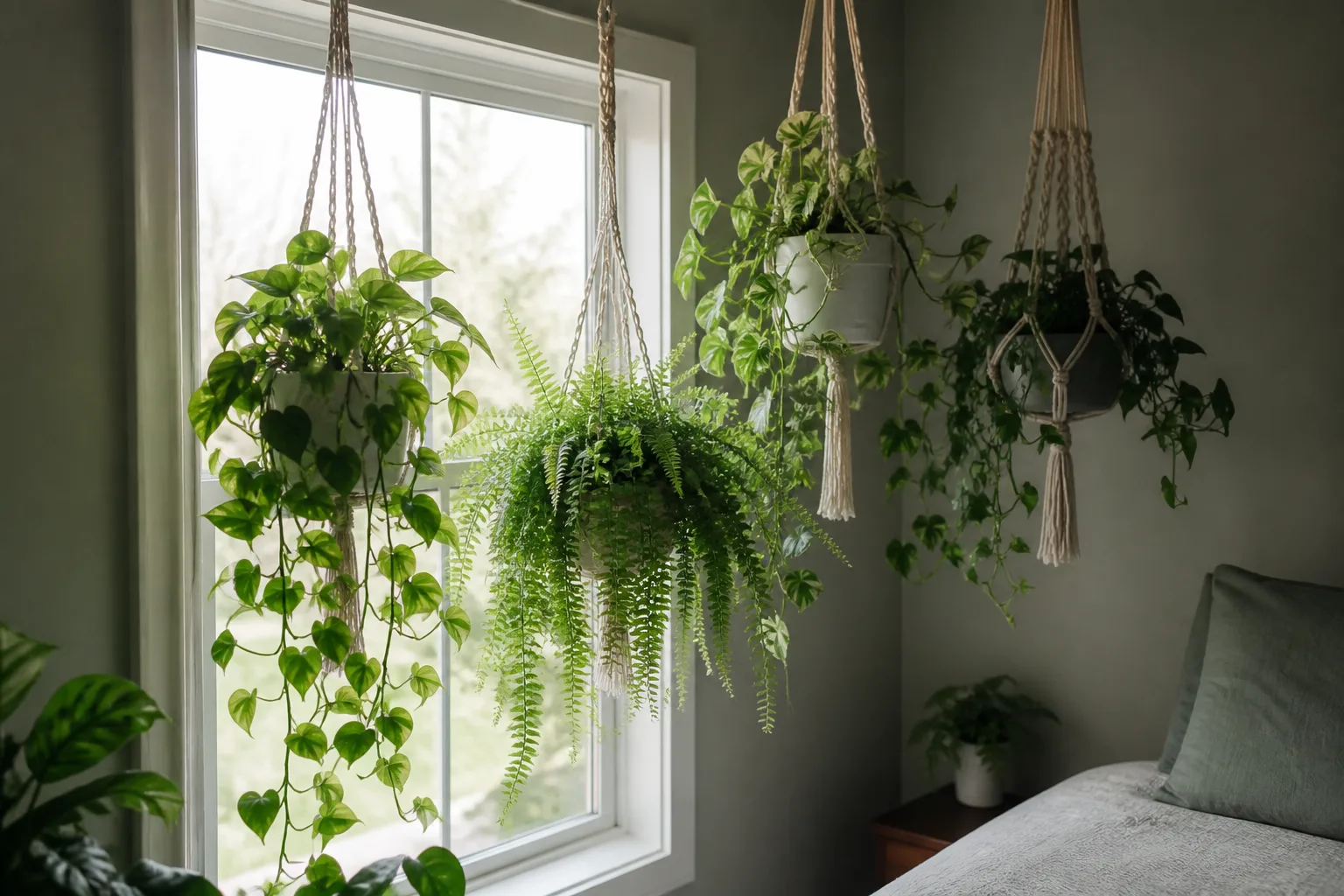
Before installing a hook, check that the ceiling or wall can support the planter and the plant’s full weight after watering. Use hardware appropriate for the material and anchor it securely; a small hook meant for a lightweight decoration is not a substitute for a properly rated plant hanger. Keep the basket clear of walkways, fans, heaters, and anything that could snag trailing stems, and make sure you can reach it without standing on unstable furniture.
Check the light, load, access, and surroundings
Purdue Extension suggests hanging baskets or shelves when window-sill space is limited, but the new location still needs to meet the plant’s light needs. A plant near the ceiling may receive less useful light than one lower down, depending on the window and room. Confirm the light at the leaves, not just the fact that the basket is near a window.
Plan the watering route before hanging the basket. If it is too awkward to remove or water in place without soaking the floor, choose a lighter pot, a drip-catching liner, or a lower position. In a home with pets, check the exact plant by its common and botanical names in the ASPCA toxic and non-toxic plant database. Height alone does not make a plant safe if leaves can fall or a vine can be reached.
5. Don’t crowd every plant into one dense display
A full plant corner can feel lush, but squeezing pots together may block light, hide leaves and soil from inspection, and make ordinary care harder. You should be able to see where a plant begins and ends, lift or water each pot without moving several others, and notice a change before it spreads through the display.
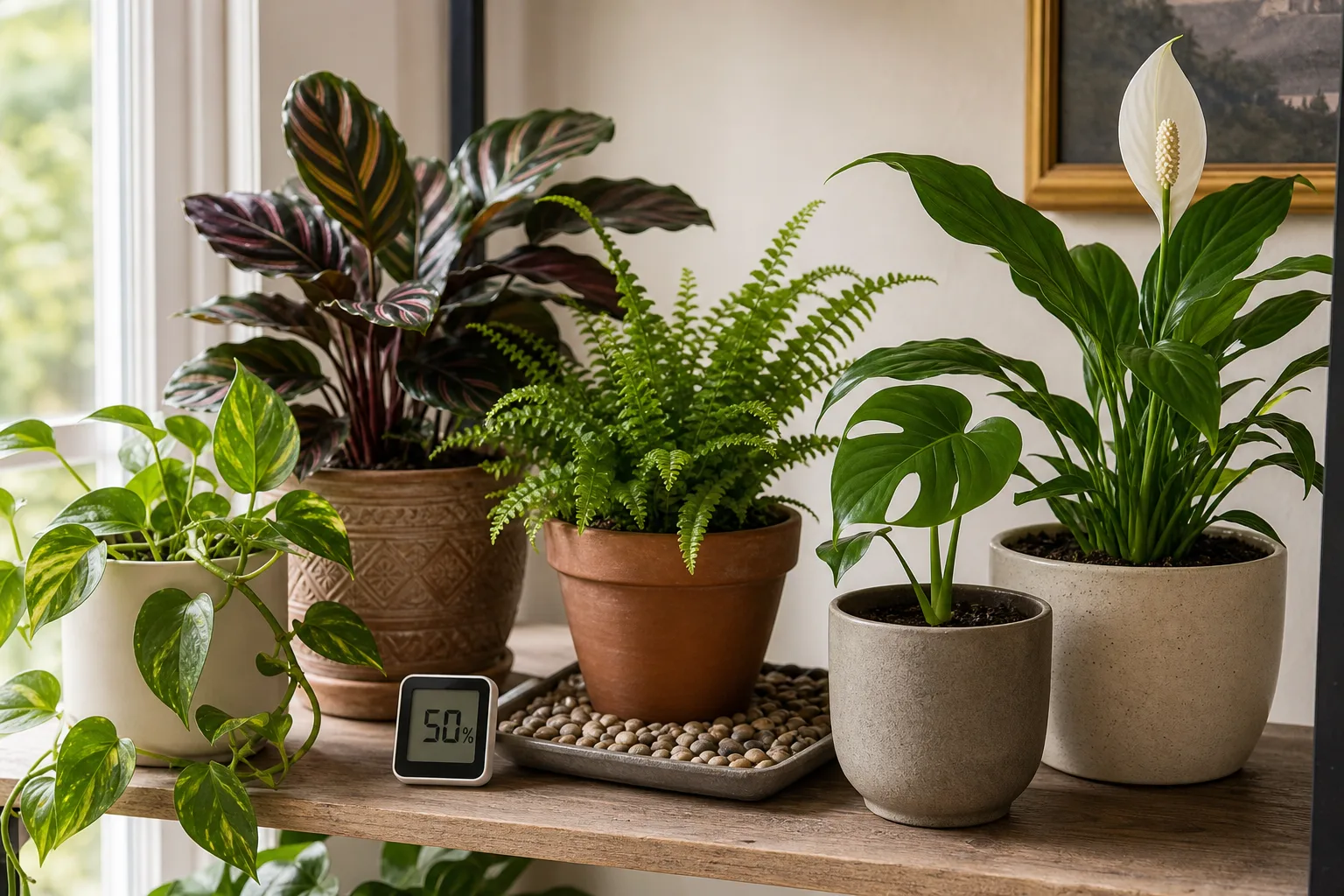
There is no universal spacing number for every houseplant. A small succulent, a fern with arching fronds, and a mature floor plant need different amounts of room. Leave enough clearance for the plant’s current leaves and expected growth, and give yourself space to turn the pot, remove dead foliage, and inspect for insects. Grouping can be visually tidy without letting leaves press continuously against one another.
Group by compatible care needs, then layer the heights
Start a group with plants that can tolerate similar light and watering conditions. You don’t need identical species, but a plant that wants stronger light should not be pushed behind a larger shade plant, and a thirsty plant should not force you to overwater a drier-growing neighbor. Savvy Gardening’s apartment-plant guide likewise treats mature size and available light as useful filters before choosing plants for small spaces. (Savvy Gardening)
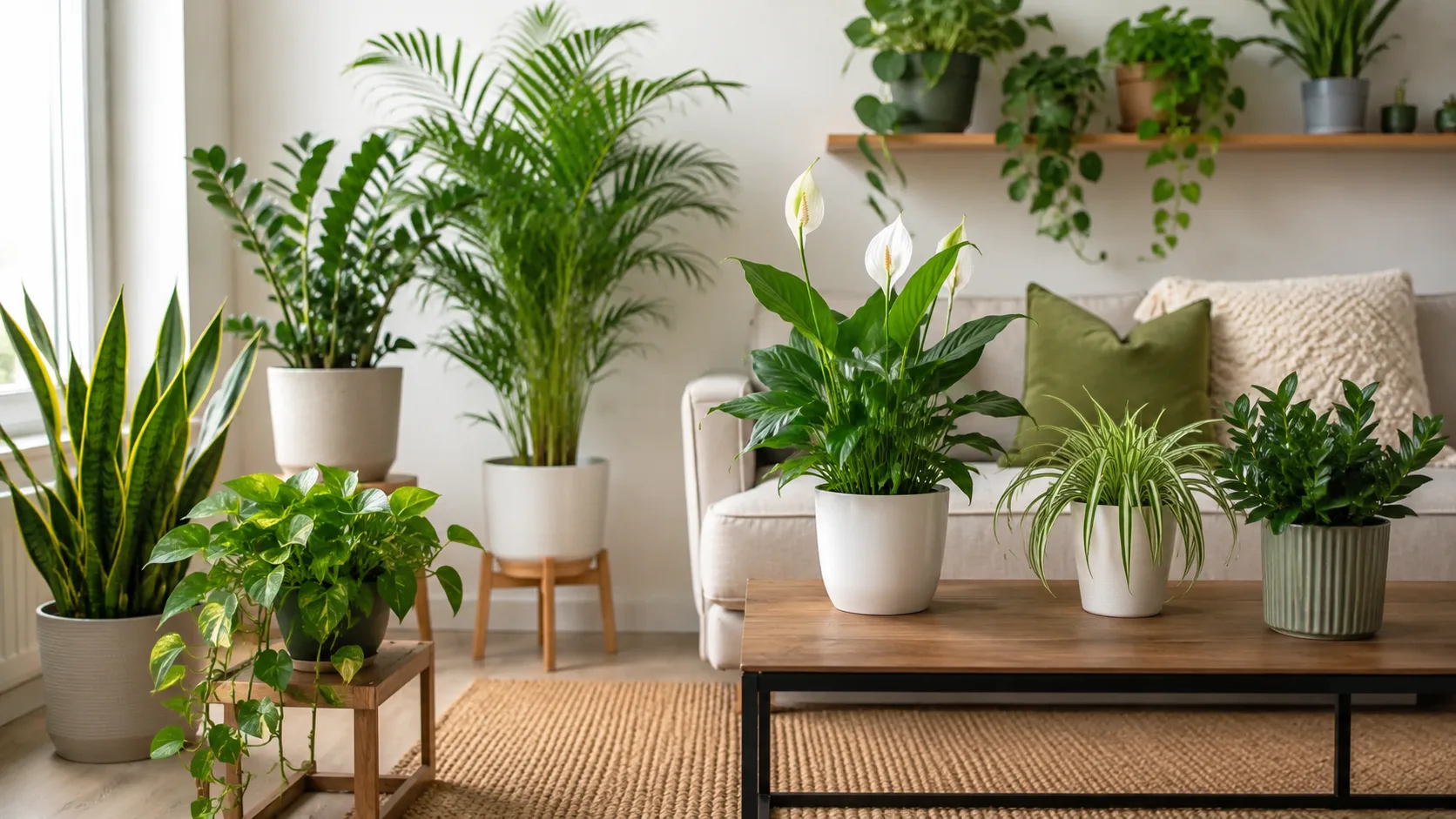
Once the plants are in workable positions, vary their heights with a sturdy stand, a low table, or a trailing plant on a shelf. Keep the tallest or most sculptural plant where it can be seen, then use smaller pots to fill the middle and lower levels. Leave a clear route to each pot. If the arrangement only works when every plant is wedged into a tight cluster, it is too dense for easy care.
6. Don’t use one pot size and one plant height everywhere
When every plant sits in the same pot on the same surface, the arrangement can look like a row of identical objects. It also makes it harder for a larger plant to read as a focal point or for a small plant’s details to be seen. Repeating a pot color can make a room feel coordinated, but repeating the exact size and height often flattens the display.
Use scale deliberately. A large floor plant can anchor a corner, a medium plant can sit on a stable stand, and a smaller plant can occupy a shelf or table where it is easy to reach. The plant’s mature size matters as much as its size at purchase: don’t buy a wide-growing specimen for a narrow sill and expect careful pruning to solve the mismatch indefinitely.
Build a focal point with supporting plants
Choose one main plant or one grouped display to carry the visual weight in the room. Give it enough breathing space to be noticed, then add a few smaller plants that repeat one or two features—perhaps a planter material, leaf shape, or color. The result feels intentional without requiring every shelf and windowsill to be full.
Vary the plant silhouettes as well as the heights: upright leaves beside a rounded form, or a trailing vine near a compact plant. You can keep containers within a shared palette while varying their shape or texture. Before adding another plant, step back and ask whether it fills a real gap or simply makes the collection larger. Negative space is part of the arrangement, and it also leaves room for leaves to expand.
7. Don’t choose plants by color alone
Colorful foliage can make a plant display feel more personal, but a beautiful leaf pattern is not a care label. Some plants with vivid or variegated foliage need stronger light than a solid-green plant; others hold their color in moderate light. Buying for a pink leaf or red edge without checking the plant’s conditions can turn a design choice into a struggling plant.
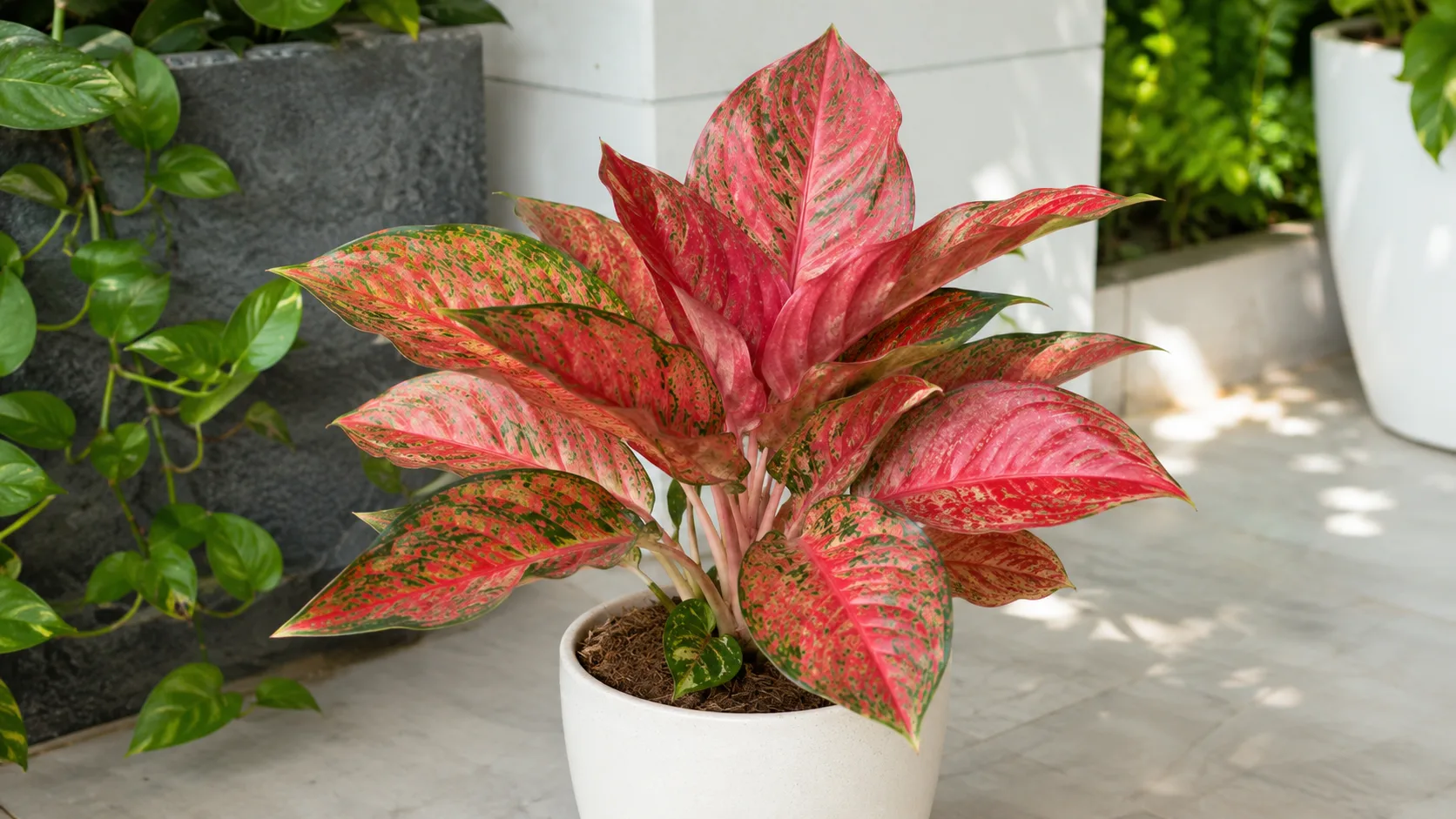
Purdue Extension notes that plant light needs vary considerably: its indoor-plant guidance contrasts sun-demanding crotons with philodendrons that tolerate lower light. Use color as one filter after you know the light at the intended spot, not as the reason to put an unsuitable plant in a dark corner. (Purdue Extension)
Add color and texture after matching plant needs
Build contrast from several sources instead of asking foliage to do everything. Leaf color, variegation, shape, and surface texture can all add interest; so can a pot, plant stand, or nearby textile. For a calm look, repeat one accent color in two or three places and let green remain the background. For a more eclectic display, mix patterns but keep the care conditions compatible.
If a plant’s color fades or new growth looks different, first reassess light, watering, and the plant’s normal growth pattern. Don’t move every plant into direct sun because one colorful cultivar prefers brighter conditions. And in a home with pets that chew leaves, check the species before buying; the ASPCA database is a starting reference, not a substitute for veterinary advice if a pet eats a plant.
Reset a display with five quick checks
Use this short audit before buying another plant or rearranging a shelf:
- Light: Is the light suitable at the leaves, including seasonal changes?
- Drainage: Can excess water leave the growing pot, and can you empty it?
- Access: Can you water, turn, prune, and inspect every plant without dismantling the display?
- Space and stability: Will the mature plant fit, and can shelves, stands, and hooks support the setup safely?
- Composition: Once the first four work, do height, pot finish, leaf shape, and color feel balanced?
If one check fails, change the setup before adding more decor. Move the plant, swap its location with a better-matched species, replace a sealed pot with a cachepot arrangement, or reduce the group. A practical display is easier to keep beautiful because it is easy to maintain.
Conclusion
Decorating with plants works when the styling serves the plant and the room at the same time. Choose for the real light, keep water moving out of the root zone, repot only when there is a growing reason, and make hanging or grouped displays easy to reach and safe to maintain.
After those basics are handled, use height, container shape, foliage color, and negative space to create the look you want. You don’t need a crowded collection or a matching set of expensive pots. A few well-placed plants with room to grow will usually make a stronger display—and a more livable home—than greenery arranged for appearance alone.