13 Types of Corn to Grow in Your Garden
Learn how sweet, dent, flint, flour, and popcorn differ, then choose a corn variety for your garden, avoid cross-pollination surprises, and harvest it well.
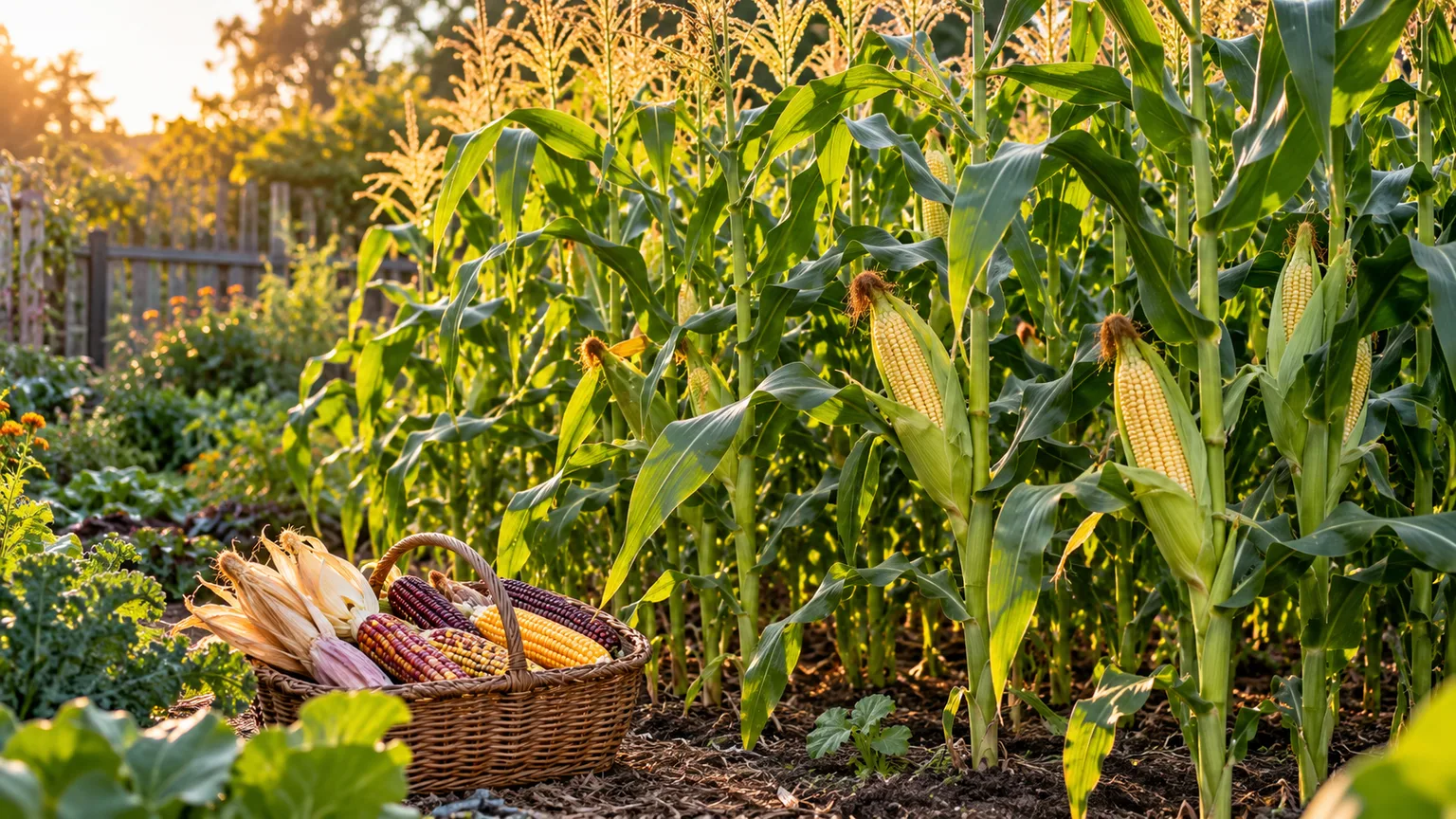
If you want tender ears for a summer meal, choose sweet corn. If you want kernels to pop, dry corn for flour, or colorful ears to display, choose a different kind. The name “corn” covers several crops with different kernel structures, harvest stages, and uses, so a packet’s photo or color is not enough to tell you what you will get.
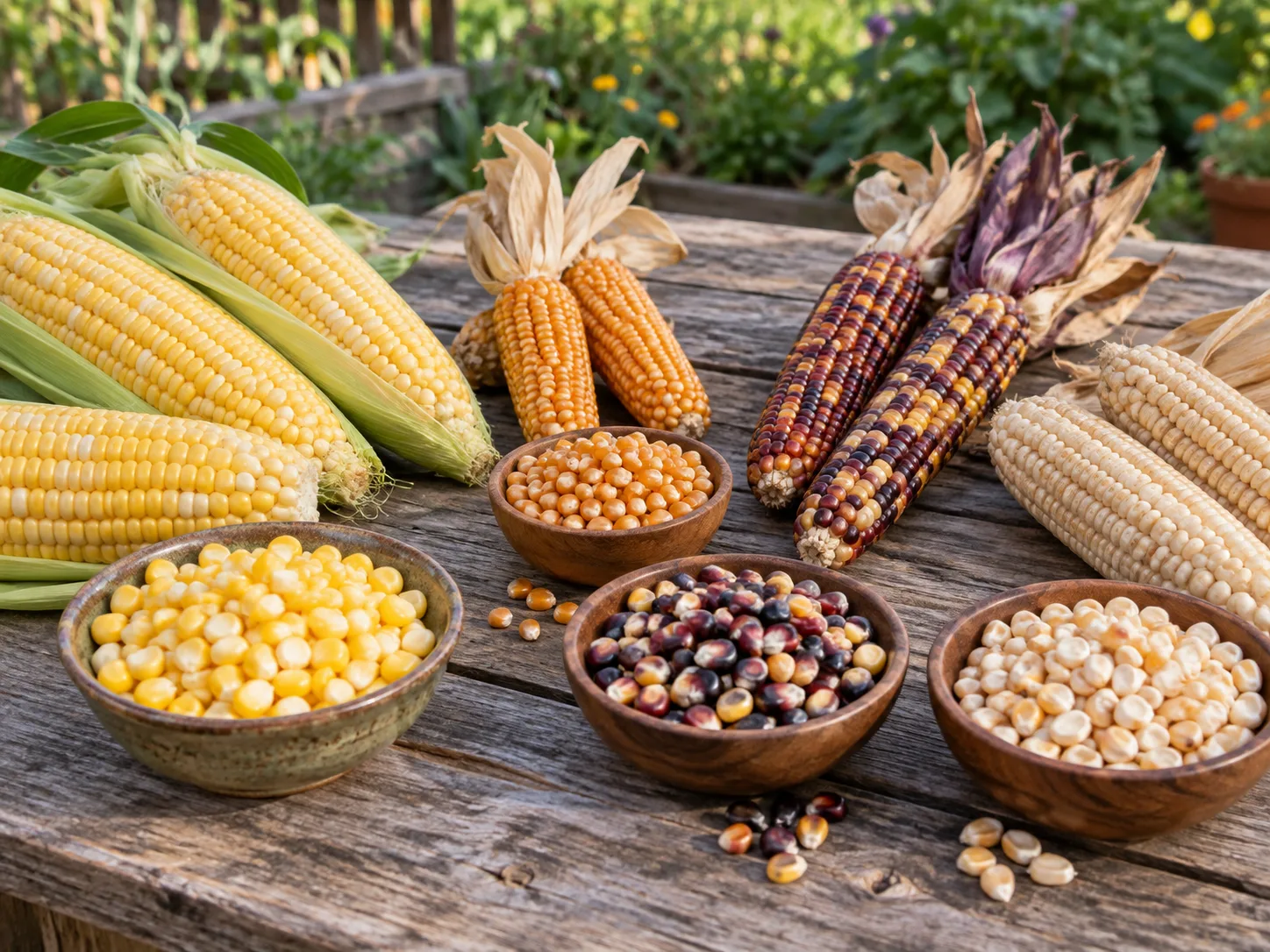
There are five familiar grain classes—sweet, popcorn, dent, flint, and flour—plus less common waxy and pod corn. Within those classes, cultivars vary in sweetness, color, season length, and whether they are open-pollinated or hybrid. This guide puts those labels in order, then gives you 13 useful seed choices and a practical way to grow more than one type without spoiling the harvest you want.
How corn types differ
Corn and maize are names for the same species, Zea mays. The familiar classes are not simply color varieties.
They reflect differences in the kernel’s starch, the hard outer pericarp, and genes that affect how the kernel matures. Those traits determine whether a crop is best picked immature for fresh eating, dried for storage, ground, or popped. Earth@Home: Evolution’s maize overview explains the role of hard, glassy endosperm versus softer, floury endosperm in the major grain classes.
That distinction also explains why “field corn” is a broad use label, while dent is a specific kernel class. A home seed catalog might group dent and flint varieties together as dry or field corn even though their mature kernels behave differently when ground. Likewise, popcorn has a hard shell and is often treated as a specialized flint corn, but a flint ear is not automatically good popcorn; the kernel needs the right structure and moisture to pop reliably.
Sweet corn uses a different harvest plan. Its kernels are picked in the soft milk stage, when a cut or punctured kernel releases milky juice, before the kernels dry and become starchy.
Within sweet corn, labels such as standard sugary (su), sugary enhanced (se), and supersweet (sh2) refer to sweetness-related gene groups, not separate species. For a gardener, the key practical difference is the variety’s flavor, maturity, and how it should be kept apart from other corn while pollen is moving.
Kernel color is its own trait. Yellow, white, red, blue, and multicolored ears can occur across more than one class, and color alone does not tell you if a variety is sweet, grindable, or suitable for popping. A colored ear advertised for decoration may still be edible or grindable when mature, but its seed description should tell you the intended use and whether it needs a long season to dry.
Five familiar corn classes
Sweet corn: pick young for the table
Sweet corn is the type to grow for corn on the cob, fresh kernels, freezing, or canning. Its sweetness comes from inherited differences in how quickly sugars turn to starch.
Standard sugary cultivars often have a classic corn flavor but lose sweetness more quickly after picking; sugary-enhanced and supersweet choices can retain sweetness longer, although the exact result depends on cultivar, harvest timing, and handling. Grow Organic’s comparison of sweet, dent, and flint corn is useful for understanding the end-use distinction and current seed options.
Sweet corn can be yellow, white, or bicolor, and heirloom varieties can carry other colors when fully mature. Do not choose by color if the main goal is a full, early crop: compare the seed packet’s days-to-maturity estimate with your local frost-free season and check whether the cultivar is su, se, or sh2. A short-season variety that reliably reaches the milk stage is a more practical bet than a long-season showpiece if your summer is brief.
Popcorn: dry it before you pop it
Popcorn is grown for mature, dry kernels, not for eating as tender green corn. Each kernel has a hard outer shell around starchy material; when the right amount of moisture is trapped inside and the kernel is heated, pressure builds until the kernel expands. The ear is usually smaller than an ear of sweet corn, but a handful of homegrown kernels can be a satisfying crop if you can leave the plants standing long enough for the ears to mature and dry.
The color of a popcorn kernel does not predict the color of the popped flake. Red, blue, or black kernels can pop pale, because the outer pericarp color is not the same as the expanded flake’s interior. Popcorn that fails to pop may be too damp, too dry, or simply a cultivar that is not well suited to popping; let a test batch dry and condition before deciding the harvest is a failure.
Dent corn: a dry grain with many uses
Dent corn is named for the shallow hollow that forms at the top of each kernel as it dries. Its mix of hard and soft starch makes it useful for meal, hominy, feed, and processed foods. In a home garden, it is a space commitment: the ears need to mature on the stalk and dry before you shell them, so it is less convenient than sweet corn if you want a quick summer harvest.
Dent corn can be yellow, white, red, or mixed in color. A sturdy dry-grain cultivar can be a good choice if you want to mill your own meal or save a crop for winter, but “field corn” on a label does not always mean the kernels will make the precise texture you want. Read the use description and look for specific culinary guidance when your goal is hominy, masa, or a finely ground flour.
Flint corn: hard kernels and vivid ears
Flint corn has a hard, glassy outer kernel with a relatively small soft center. It is valued for color, storage, grinding, and traditional dishes; depending on the variety and how it is processed, the meal can have a coarser, more substantial texture than flour corn. A hard kernel may tolerate storage well once thoroughly dried, but color does not guarantee a particular flavor or cooking performance.
Flint corn often appears in fall displays as “Indian corn,” but it has culinary uses beyond decoration. Native Seeds/SEARCH describes flint varieties such as Onaveño and Southern Maíz Blanco alongside food uses including grits, polenta, atole, and nixtamalized hominy. Its overview also points out that some regional landraces combine flint and flour traits, a useful reminder that crop diversity does not always fit neat catalog categories. (Native Seeds/SEARCH: Types of Corn)
Flour corn: a finer grind
Flour corn has a larger share of soft, floury starch, so dried kernels are easier to grind into fine meal. It is a strong choice for readers who want homegrown cornmeal or want to explore blue-corn dishes, but it is still a dry-grain crop: the ears must ripen and dry before the kernels are ready to shell and mill. Some flour corns can be eaten at the milk stage, but they are not as sweet as sweet corn.
Colorful kernels can make dramatic ears, while the meal itself may be lighter than the ear suggests because much of the color is in the thin outer layer. Native Seeds/SEARCH identifies Hopi Blue and Tohono O’odham 60-Day as flour-corn examples, and describes how flour and flint traits can overlap in landrace varieties. Choose a named variety for its documented use, regional adaptation, and harvest timing, not just its photograph.
13 types and varieties to consider
The word “type” is used loosely on seed packets. Some entries below are kernel classes or sweetness groups; others are named cultivars within those groups. The table deliberately separates the label from the garden use so you can choose seed for a meal or a harvest plan instead of treating all corn as interchangeable.
| Corn choice | Class or group | Best fit in a home garden | What to plan for |
|---|---|---|---|
| Standard sugary (su) | Sweet corn | Classic fresh ears with traditional flavor | Pick promptly at milk stage; sweetness fades after harvest. |
| Sugary enhanced (se) | Sweet corn | Fresh eating with a little more sweetness retention | Follow the packet’s isolation directions if another sweet group is nearby. |
| Supersweet (sh2) | Sweet corn | A sweeter fresh-eating choice and a longer wait before flavor loss | Seed can be sensitive to cool, wet soil; give it warm conditions and check the cultivar notes. |
| Golden Bantam | Open-pollinated sweet corn | A historic yellow sweet corn for gardeners who want an heirloom | It is not a long-holding supersweet; eat or preserve ears soon after picking. |
| Country Gentleman | Open-pollinated sweet corn | White, shoepeg-style kernels and a distinctive heirloom ear | Check the supplier’s maturity estimate and seed-saving instructions. |
| Honey & Cream | Bicolor sweet corn | A familiar yellow-and-white fresh-eating option | Treat the name as a cultivar label; verify the specific packet’s gene group. |
| Cherokee Long Ear | Popcorn | A colorful dry crop for popping and autumn display | Allow ears to mature and dry before shelling; store only dry kernels. |
| Dakota Black | Popcorn | Dark kernels for a decorative ear and a popping crop | Kernel color does not determine flake color; test pop after drying. |
| Glass Gem | Flint corn | Jewel-toned ears for display, with dry-grain potential | Long-season timing and the supplier’s intended harvest use matter. |
| Painted Mountain | Open-pollinated dry corn | A colorful grain choice marketed for shorter-season gardens | The days-to-maturity estimate is local-condition dependent; plan for complete drying. |
| Hopi Blue | Flour corn | Blue flour corn for meal and traditional whole-kernel preparations | It needs the full dry-grain cycle; check regional seed stewardship guidance. |
| Tohono O’odham 60-Day | Flour corn | A flour-corn option described for a shorter season | “60-Day” is a variety name, not a promise that every garden harvests in 60 days. |
| Waxy corn | Specialty maize | Gardeners curious about sticky, amylopectin-rich starch or regional food uses | It is not a standard sweet-corn substitute; buy seed specifically identified as waxy. |
The sweet-corn examples Golden Bantam, Country Gentleman, Honey & Cream, and several modern hybrids appear in Grow Organic’s home-garden variety guidance. It describes Painted Mountain as a colorful dry corn associated with shorter-season growing, and lists Glass Gem, Cherokee Long Ear, and Dakota Black among specialty options. These are useful starting points, not endorsements of every seed seller or a guarantee that the same cultivar performs equally in every climate. (Grow Organic: Heirloom Corn Varieties to Grow at Home)
Match your choice to the harvest you want
For fresh eating and short seasons
Start with a named sweet-corn cultivar and check three things on the packet: days to maturity, sweetness group, and whether it is suited to your region. Days-to-maturity estimates are usually counted from sowing or transplanting as described by the supplier, and weather can shift the actual date. A longer season may support a later, larger ear; in a short summer, an early cultivar can be a safer choice even if its ears are somewhat smaller.
If you want a few weeks of fresh ears rather than one large glut, you can stagger plantings of the same cultivar. Use modest intervals that fit the maturity window and leave enough warm growing weather for the final sowing. This extends harvest without introducing another pollen type, which is simpler than planting three sweetness groups in a tiny patch.
Sweet corn is picked young and eaten quickly. If the plot is far from the kitchen or you prefer to pick a day ahead, look for a cultivar marketed to retain flavor after harvest and chill ears promptly after picking. No gene group removes the value of correct harvest timing: when kernels have passed the milk stage, an otherwise excellent variety can taste starchy.
For dry grain, grinding, or color
Choose popcorn when popping is the main goal, and choose flour or dent corn when you want meal, grits, or another dry-kernel use. Flint is a flexible category when you want decorative ears and are willing to check whether your named variety has culinary instructions. As a broad rule, flour corn favors finer meal, while flint’s hard outer layer lends a coarser texture; a particular landrace may combine both traits.
Do not choose a dry corn solely because the ear is beautiful. Your growing season must allow pollination, grain fill, and drying, and wet autumn weather can slow the final step. If you cannot keep ears on the stalk long enough to dry, ask the seed supplier whether harvest-and-finish-drying is realistic for that cultivar in your area.
Saving seed is a separate decision from simply growing an heirloom. A named heirloom may be open-pollinated, but corn pollen moves between plants, and seed saved from a hybrid does not reliably reproduce the parent.
University of Maine Cooperative Extension’s seed-saving guide explains why isolation matters for cross-pollinated crops. If seed saving is a main goal, choose an open-pollinated variety and research its isolation requirements before the tassels emerge.
Avoid cross-pollination surprises
What pollen changes on the ear
Corn is wind-pollinated. Tassels at the top release pollen, and each strand of silk connected to a developing kernel needs to receive pollen for that kernel to fill.
That is why a poorly pollinated ear has bare gaps: it is usually a pollination-timing or pollen-distribution problem, not a signal that the plant needs more fertilizer after the fact. The Seed Collection’s corn-growing guide shows how silk and tassel timing determines a full ear.
Pollen from a different corn cultivar can affect the kernels being formed that season, not just the seeds you might save for next year. The University of Minnesota Extension cautions that popcorn can cross-pollinate sweet corn and alter the flavor of the current sweet-corn crop; an unintended cross can also produce mixed traits in seed grown later. The details vary by the types involved, so the practical lesson is to plan for pollen overlap instead of assuming that a seed packet’s label keeps its crop genetically isolated. (UMN Extension: Saving Vegetable Seeds)
How to fit reliable pollination into a small bed
If you have room for only one block, grow one corn variety at a time. Several short, closely spaced rows arranged as a square or rectangle give pollen more chances to land on silks than one long narrow row.
The exact row and in-row spacing depends on the cultivar and your growing method; follow the packet, then preserve the block shape rather than stretching it into a line. Virginia Cooperative Extension’s sweet-corn guide recommends planting at least three short rows, preferably four, because corn is wind-pollinated.
If you plant more than one type, the easiest separation is time: choose varieties whose tasseling and silk emergence do not overlap. Staggering sowing dates is only a tool, not a guarantee, because cultivars mature at different rates and weather can speed or slow development. Check plants as they approach tasseling; if pollen is shedding from one block while silks are fresh on another, the bloom periods overlap regardless of what the calendar says.
Distance and physical barriers can reduce pollen movement, but isolation depends on cultivar and flowering dates. Virginia Cooperative Extension’s sweet-corn guide describes 250 feet or a two-week maturity gap as isolation guidance for sweet-corn types; check the seed source for the requirements of your varieties if seed purity matters. If you cannot prevent nearby corn from flowering at the same time, grow one type or buy new seed each year rather than relying on saved seed to come true.
Growing and harvesting corn at home
Warm soil, block planting, and steady moisture
Corn is a warm-season crop, so cold soil can delay emergence and expose seed to rot. Use your seed supplier’s planting guidance and wait until the ground is warm enough for the cultivar; Virginia Cooperative Extension recommends 65°F soil for extra-sweet varieties.
Direct sowing avoids root disturbance; follow the packet’s depth and spacing, and arrange several short rows in a block so wind reaches the silks. Virginia Cooperative Extension’s sweet-corn guide recommends at least three short rows, preferably four, to support pollination.
Choose a sunny site with fertile, well-drained soil and water consistently while stalks grow and ears fill. Corn needs adequate moisture during the stretch from tasseling through silking and kernel fill; a dry spell then can interfere with silks and reduce kernel development.
Water at soil level when practical, and avoid trying to rescue an under-pollinated ear with a late fertilizer application. Strong leaves and regular moisture set up the crop; pollen reaching silks completes the kernels.
Corn’s height also matters when planning the bed. Put it where mature stalks will not shade shorter crops that need sun, but do not turn the windward edge into a very thin row that pollinates poorly.
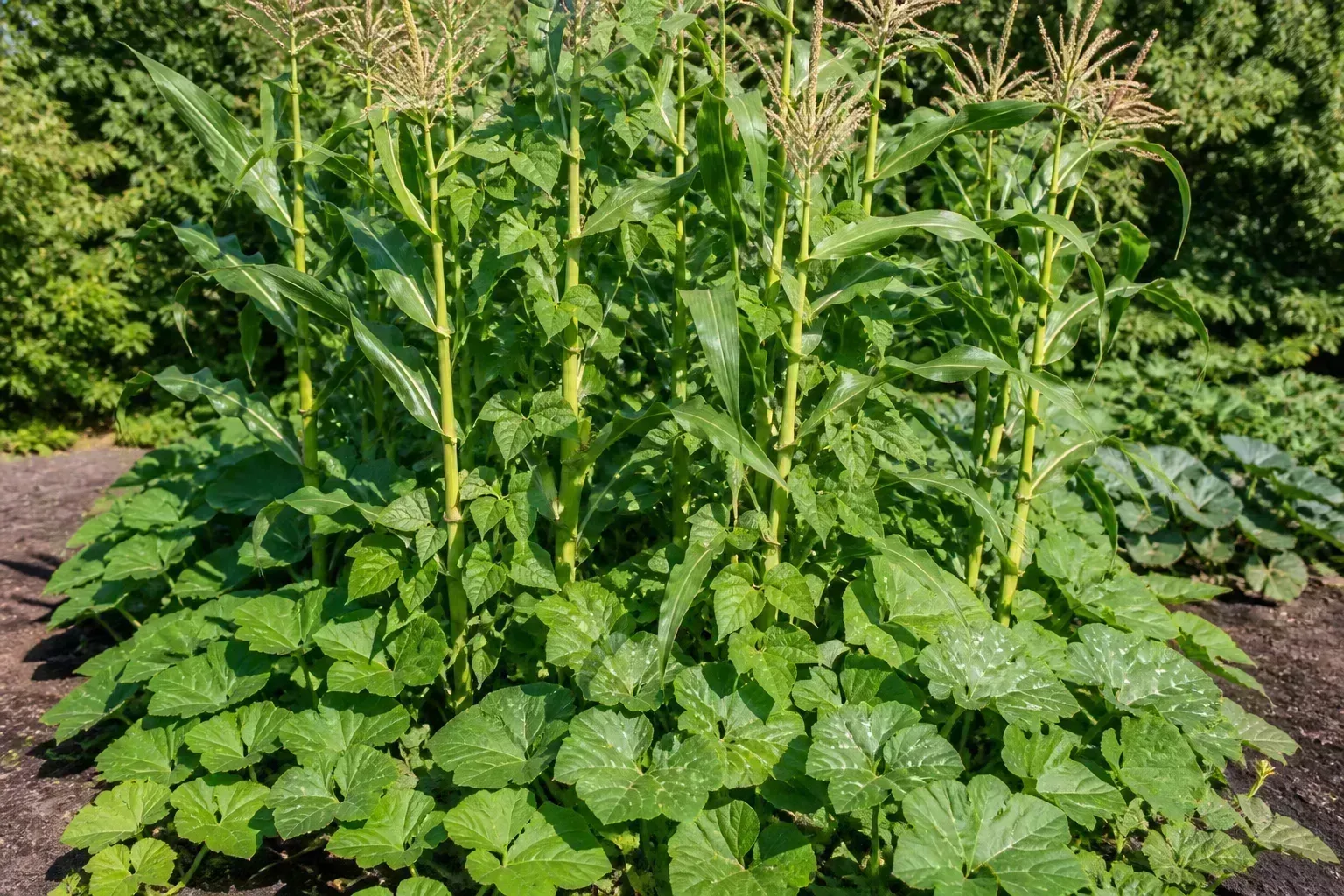
A compact block or a few neighboring short rows is a useful compromise for most home plots. If you are trying the Three Sisters arrangement, remember that squash and beans add their own spacing and timing needs; establish corn early enough to support climbing beans, and do not let the companion planting crowd out the pollination block.
Harvest each type at the right stage
For sweet corn, look for silks that have turned brown and dry, a filled ear that feels firm through the husk, and plump kernels. Peel back a small section of husk and press a kernel with a fingernail: milky juice signals the milk stage, while watery liquid suggests it is early and a dry or doughy kernel means the best fresh-eating window has passed. Harvest promptly and cool or preserve the ears; sweetness is most noticeable when the crop is picked at the right stage and handled quickly.
For popcorn, dent, flint, and flour corn, leave ears on the stalk until kernels are mature and the husks dry and papery, if the local weather permits. If autumn rain threatens, harvest mature ears and finish drying them in a warm, airy place; do not seal damp ears in a bin where moisture can linger.
Shell a test ear only when it feels dry, then check a small batch before putting the whole popcorn harvest into storage. If it does not pop, allow more drying and test again rather than assuming the colorful seed was the wrong class.
Dry grain should be stored only after it is thoroughly dry, in clean containers protected from moisture and pests. Label each lot with the cultivar and harvest year, especially if you grow more than one kind. Keep seed you may plant next season separate from grain you plan to mill or pop, and remember that a cross-pollinated ear may not produce the same type of plant as the seed packet promised.
Two specialty types: waxy and pod corn
Waxy corn is a specialty type whose starch is rich in amylopectin, which gives it a sticky quality when cooked or processed. It can be grown in a home garden, but it is not the choice for ordinary sweet corn on the cob unless the seed source specifically describes a fresh-eating use.
Earth@Home includes waxy maize among the main kernel classifications, while Native Seeds/SEARCH notes that indigenous landraces may combine kernel traits rather than fit tidy bins. For a small plot, consider waxy corn if you have a specific culinary use and can source seed with clear growing instructions.
Pod corn is unusual because each kernel is enclosed in its own leaf-like husk. It is a striking botanical curiosity, but those husks make the kernels awkward to uncover and it is not commonly grown for food.
If you want dependable harvests, choose a named sweet, popcorn, flour, flint, or dent cultivar first; treat pod corn as an experimental crop rather than a substitute for a common garden variety. These less familiar types belong in a complete corn guide because they explain why “corn” is a wider family of uses than the ears sold for summer meals.
Conclusion
Pick corn by the harvest you actually want: sweet corn for tender fresh ears, popcorn for a dry kernel that pops, and dent, flint, or flour corn for different dry-grain textures and uses. Use the named choices as a shortlist, then verify maturity, pollination group, and local growing notes on the seed packet. A variety that suits your season and cooking plans is more valuable than a colorful ear that cannot finish before your weather turns.
Give the crop enough warmth and a block-shaped planting so wind can move pollen from tassels to silks. If you want more than one corn type, stagger their flowering windows or grow one variety at a time; if you want to save seed, protect that choice before pollen starts moving. That small amount of planning helps you pick the right corn, get fuller ears, and bring the harvest into the kitchen at the stage it was bred for.



