Humus in Soil: Benefits, Meaning, and How to Add It
Learn what humus in soil means, how it differs from compost and topsoil, and how organic matter supports roots without replacing a soil test in garden beds.
Humus in a sentence
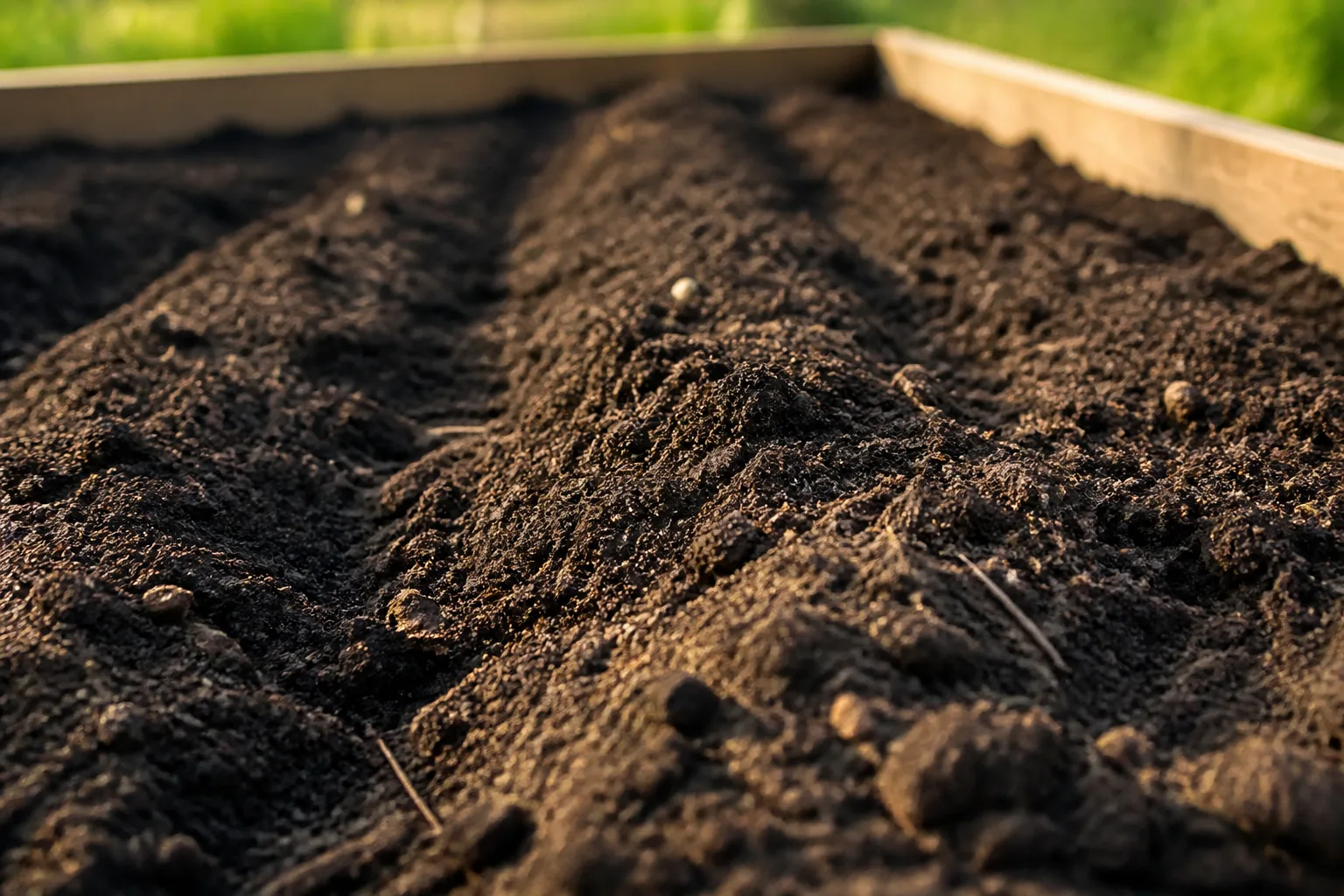
In everyday gardening, humus is dark, well-decomposed organic material in soil, formed as plant and animal residues are broken down. It is one part of a larger soil-organic-matter story, not a special fertilizer that roots absorb directly or a guaranteed ingredient in a bag labeled “humus.”
The useful takeaway is simple: feed the soil with suitable organic materials and let soil life process them. You can improve structure, water behavior, and nutrient cycling over time, but you do not need to chase a mystical substance or a fixed “humus percentage” to grow a healthy garden.
Humus and soil organic matter are related, not identical terms
Garden references often use humus to mean the dark, stable-looking material left after extensive decomposition. Soil organic matter (SOM) is the broader term: it can include recognizable leaves and roots, partly decomposed pieces, living organisms, microbial residues, and more processed carbon compounds. Some horticultural references use “humus” and “soil organic matter” almost interchangeably; the Royal Horticultural Society’s guide to organic matter explains why the vocabulary can confuse gardeners.
Some soil scientists have challenged the old picture of humus as one chemically unique, permanently stable material. In a widely discussed article, Lehmann and Kleber in Nature argue that soil organic matter is better understood as a continuum of decomposing compounds, with persistence shaped by soil conditions and interactions rather than by a single indestructible “humus” substance. That is an influential scientific framing, not a reason to treat ordinary gardening language as useless; it means a garden label should not be mistaken for a precise scientific measurement.
For a gardener, use humus-rich as a loose description of soil with plenty of processed organic matter and a favorable crumbly structure. A soil test generally measures organic matter or related properties, not a neat, isolated humus layer. Cornell Cooperative Extension treats texture, organic matter, and pH as distinct basics to understand when managing a site, rather than as interchangeable descriptions.
How organic matter becomes humus
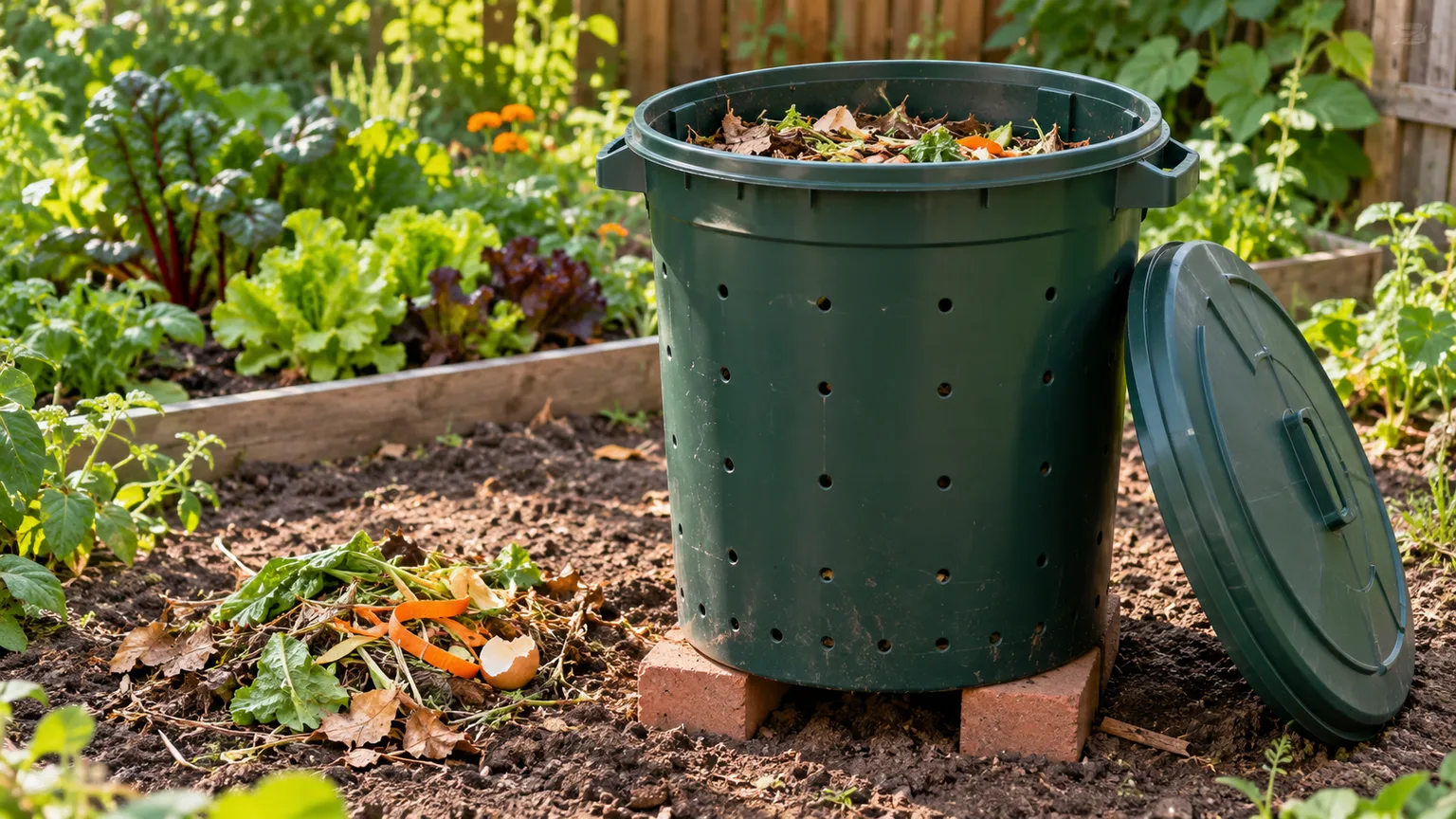
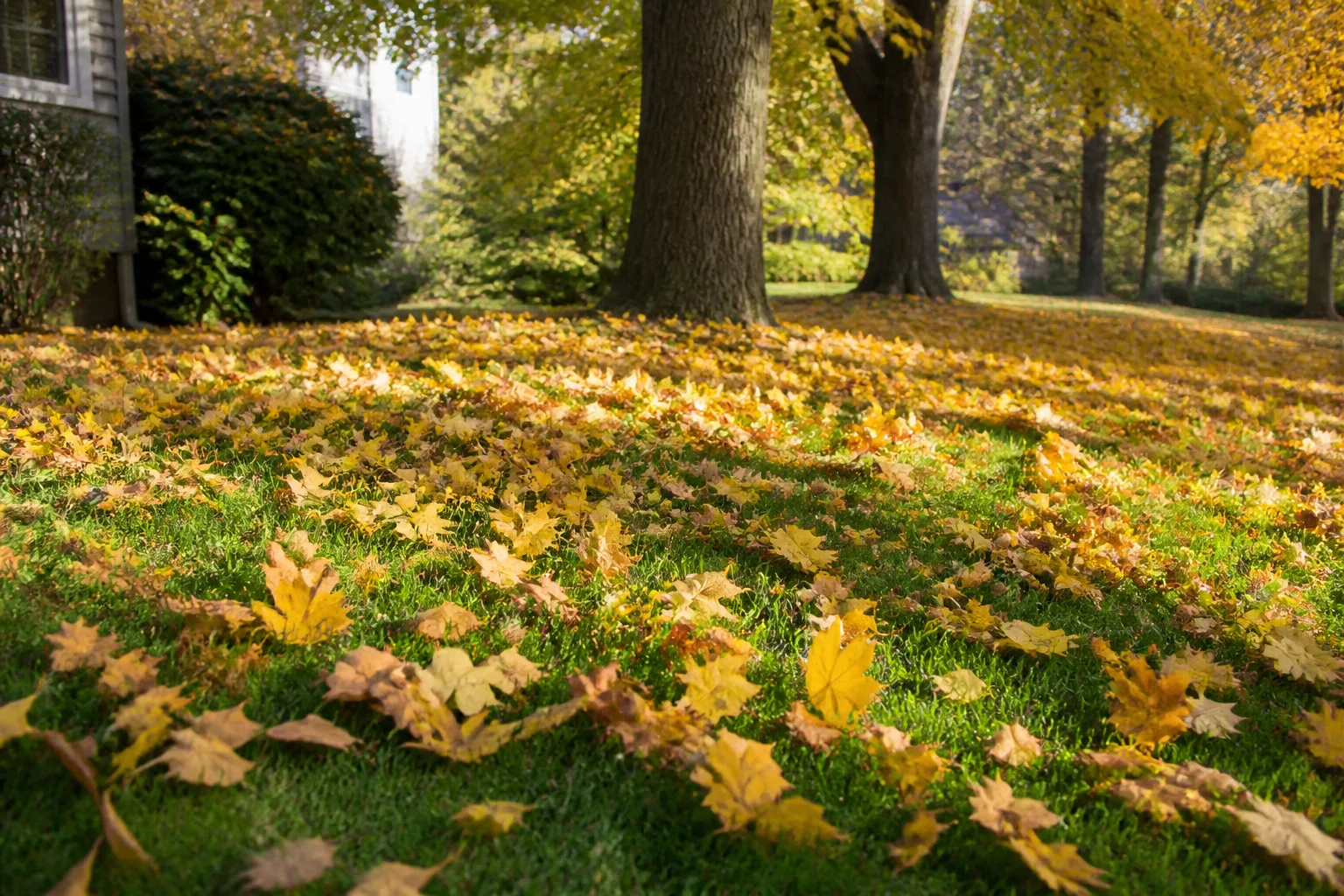
The process begins with inputs: fallen leaves, fine roots, dead stems, animal residues, compost, and other once-living material. Fungi, bacteria, earthworms, insects, and other decomposers fragment and transform that material; they consume some of its carbon and nutrients, return others to the soil, and leave a changing mix of organic compounds behind.
Decomposition is a continuing cycle
There is no switch that turns a leaf or a compost pile into a finished, permanent substance on a particular date. The speed and products of decomposition depend on moisture, oxygen, temperature, the material’s chemistry, particle size, and the organisms present. Fine, moist, aerated plant matter may break down much faster than dry woody pieces; saturated, airless material can decompose differently and develop unpleasant odors.
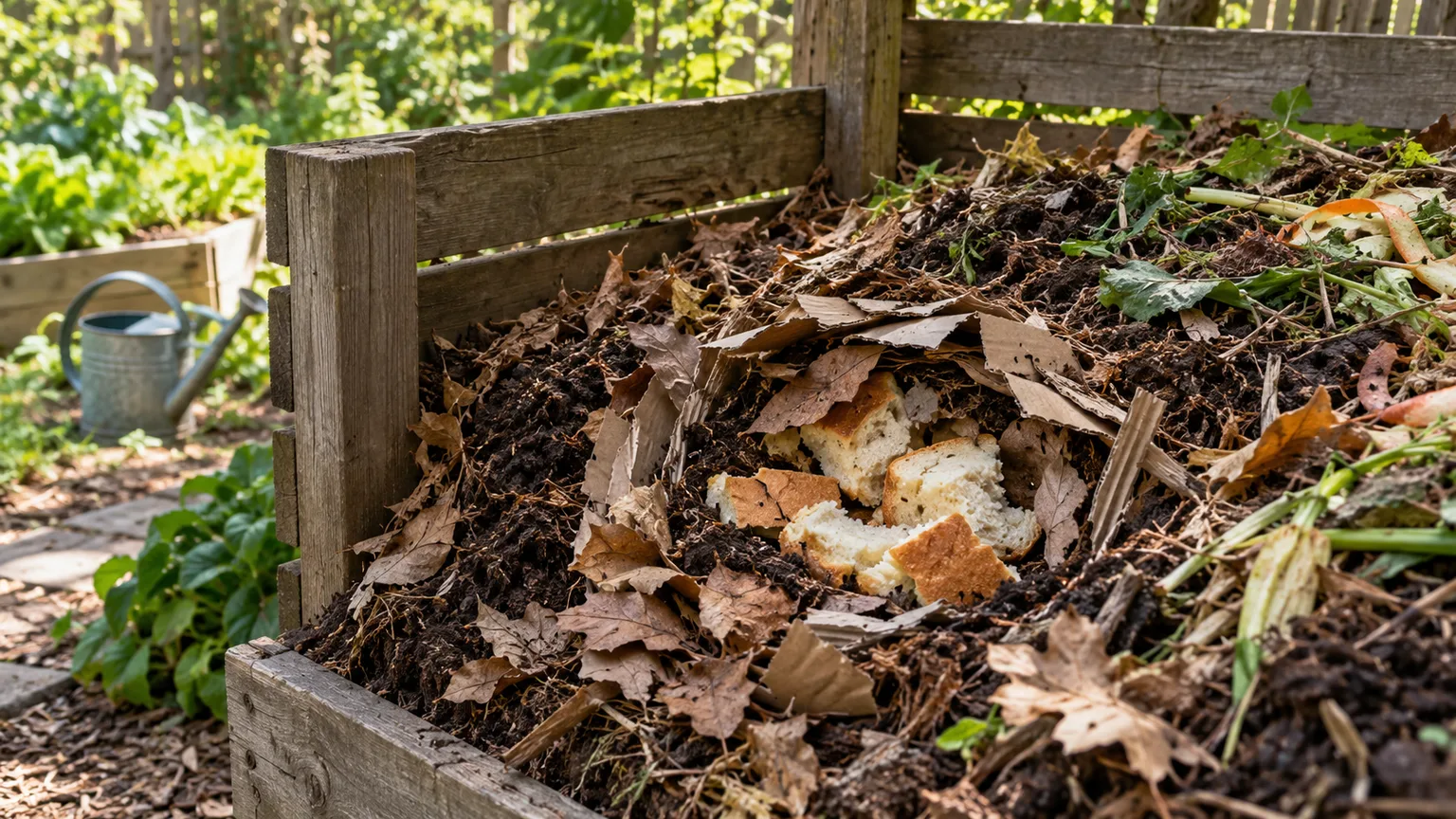
Compost is therefore best thought of as a managed product made from decomposing organic inputs. Once added to soil, it can continue changing as organisms use it and some of its components become associated with mineral particles or aggregates. The RHS notes that free organic matter from recent residues, manure, and compost can decay relatively quickly, while some material becomes longer-lasting in association with soil minerals.
That distinction explains why “make humus” is not a one-week garden project. Instead of trying to manufacture an instant end product, keep a steady supply of appropriate organic inputs in the garden and protect the soil environment in which roots and decomposers work.
What humus does for garden soil
Organic matter affects several soil functions at once. As it decomposes, it contributes nutrients and food for organisms; as it interacts with mineral particles, it can help form stable aggregates and improve the pattern of pores that lets roots access both air and water.
Its water effect depends on the soil you start with. In sandy soil, organic matter can help hold water and nutrients that might otherwise drain rapidly; in heavier soil, better aggregation and pore space can improve water movement and root aeration. N.C. Cooperative Extension describes these contrasting benefits and the role of soil organisms, while also emphasizing that organic matter is continually added and consumed.
Think of it as a soil conditioner and nutrient-cycling resource, not a complete plant food. Compost and manure can contribute nutrients, but the amount and release rate vary with the source and maturity. If a plant has a nutrient deficiency, adding organic matter without checking pH, fertility, drainage, or the actual cause may not correct it.
More organic matter also does not make every site well-drained. Compaction, a high water table, a hardpan, or a poorly designed container can still keep roots waterlogged. Organic inputs can improve soil structure over time, but they cannot replace drainage correction or a site-specific soil test when the problem is persistent.
Humus vs. compost, manure, peat, and topsoil
These words describe different things. The table is a practical guide; product labels and local definitions can vary, so check the ingredients and intended use rather than relying on a “black gold” claim.
| Term | What it describes | How to use the distinction |
|---|---|---|
| Humus | Informal gardening term for highly decomposed organic material in soil | Treat it as a description of soil condition, not a guaranteed bagged ingredient |
| Compost | Organic material decomposed under managed conditions | Use mature compost as an amendment or mulch, according to the crop and soil |
| Manure | Animal waste, sometimes mixed with bedding, at varying stages of decomposition | Prefer well-composted or well-rotted material; follow local food-safety guidance |
| Peat | Partly decomposed plant matter accumulated in waterlogged settings | It is a distinct material used in some growing media, not the same as garden humus |
| Topsoil | The upper soil layer, or a product sold to replace or build that layer | It contains mineral particles as well as organic matter; texture and quality vary |
Humus vs. compost
Compost is something you can make or buy; humus is more often used to describe organic material after it has been extensively decomposed and incorporated into soil. Finished compost can contribute to a soil’s organic matter and continue to change after application, but a bucket of compost is not identical to all the organic matter already in a garden bed.
Bagged “humus” is not a standard recipe. It may be compost, composted bark, a blend, or a soil conditioner sold under a broad label. The RHS describes organic matter as a range of possible inputs, which is why the ingredient list and intended use are more informative than the front-of-bag name. Check whether a material is intended for an in-ground bed or a container, and avoid assuming that dark color proves it is mature, nutrient-rich, or safe for every plant.
Humus vs. manure
Manure is an input that can add organic matter and nutrients; its properties change as it decomposes. Fresh or incompletely composted manure may be too strong for young roots, contain viable weed seeds, or create sanitation concerns, especially around crops eaten raw. The RHS advises using well-rotted materials for soil improvement and cautions that incompletely decomposed sources need different handling.
If you use manure, source it responsibly and follow local extension recommendations for timing, crop type, and any required interval before harvest. Do not spread fresh manure next to a ready-to-pick salad crop simply because it is “natural”; the word organic does not guarantee that a material is safe or appropriate.
Humus vs. peat and topsoil
Peat forms from plant remains that accumulate under wet, low-oxygen conditions. It may appear dark and organic, but it is not the same thing as mature compost or the humus-like material gardeners mean when describing a well-developed mineral garden soil. Peat is also a growing-media ingredient with distinct water and environmental properties, so choose it only for a product’s intended use.
Topsoil is not synonymous with humus either. A natural surface layer contains mineral particles, roots, organisms, and organic matter; a delivered “topsoil” product can be sandy, clayey, screened, blended, or low in organic matter. Ask for a source and analysis before buying a large load, especially if you are filling a raised bed or replacing soil around edible plants.
Does your garden need more organic matter?
If a bed crusts, erodes, dries unusually fast, or remains dense and difficult to work, organic matter may be part of the answer. But those symptoms are clues, not a diagnosis: poor structure can result from repeated traffic on wet soil, compacted construction fill, unsuitable texture, poor drainage, or a mismatch between the plant and the site.
Start with the site’s history and the plants’ performance. Do you remove all leaves and clippings, disturb the bed deeply every season, or grow nutrient-demanding crops without returning any residues? Conversely, have you already added several layers of compost, manure, or rich topsoil? The second garden may need restraint rather than another amendment.
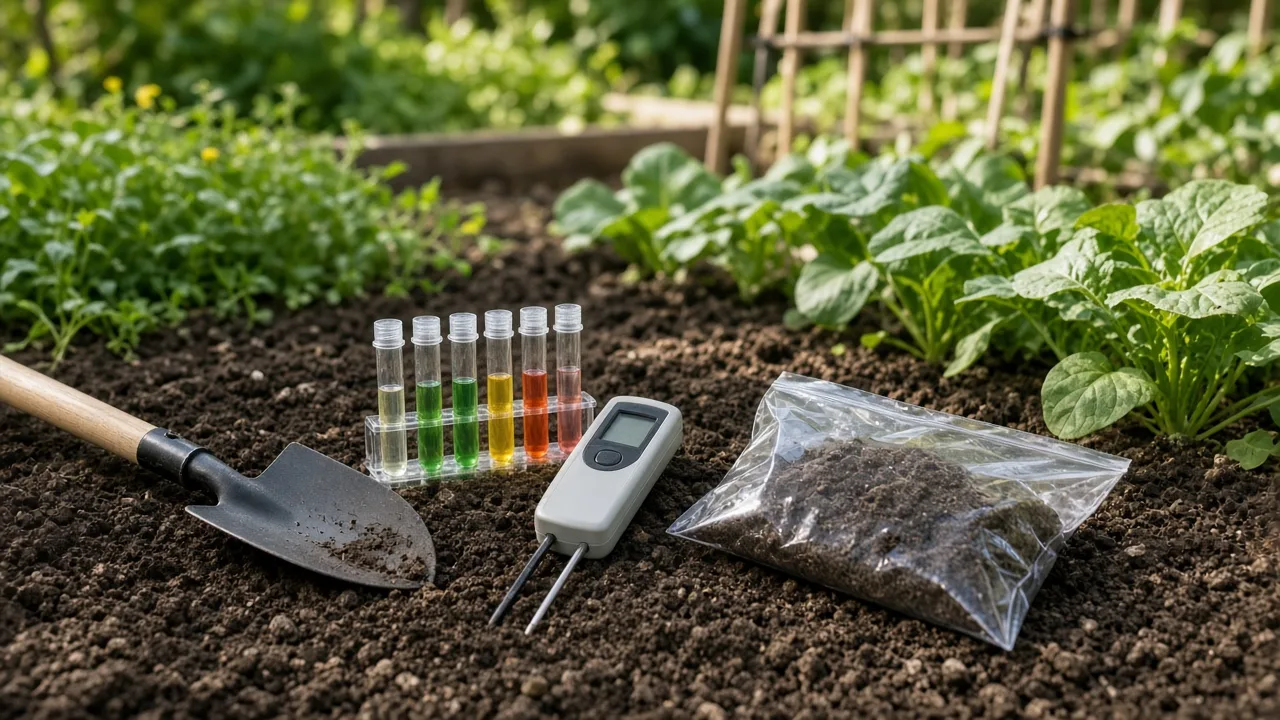
For a persistent problem, test a representative sample through a local extension or soil laboratory. Follow its sampling instructions and separate areas with different uses or histories instead of mixing unlike beds into one sample. Cornell Cooperative Extension notes that soil properties can vary even within a small site; its healthy-soils guidance recommends keeping your goals in mind and using appropriate samples to guide management.
Before you buy an amendment, write down what you want to change. If soil dries too quickly, a compost mulch and better surface cover may help; if a bed stays saturated, first investigate compaction, grade, or drainage. If plants struggle despite reasonable watering, a lab report can separate a pH or nutrient issue from a structure problem. This short diagnosis prevents the common cycle of adding compost every time a plant looks stressed.
How to build soil organic matter
Choose a source based on the job, not on which product claims the highest “humus” content. A vegetable bed may benefit from finished compost before planting; a perennial border may need a surface mulch that decomposes slowly; a lawn may be better served by returning fine clippings than by spreading a thick layer of compost.
Add mature compost or leaf mold
Use finished, stable compost when you want a relatively uniform organic amendment. It should be cool, earthy-smelling, and largely free of recognizable fresh scraps; if a pile is hot, sour-smelling, or full of undecomposed material, let it finish curing before placing it around active roots. Leaf mold, made primarily from decomposed leaves, is often a gentle soil conditioner and mulch, though it usually contributes nutrients differently from a nutrient-rich compost blend.
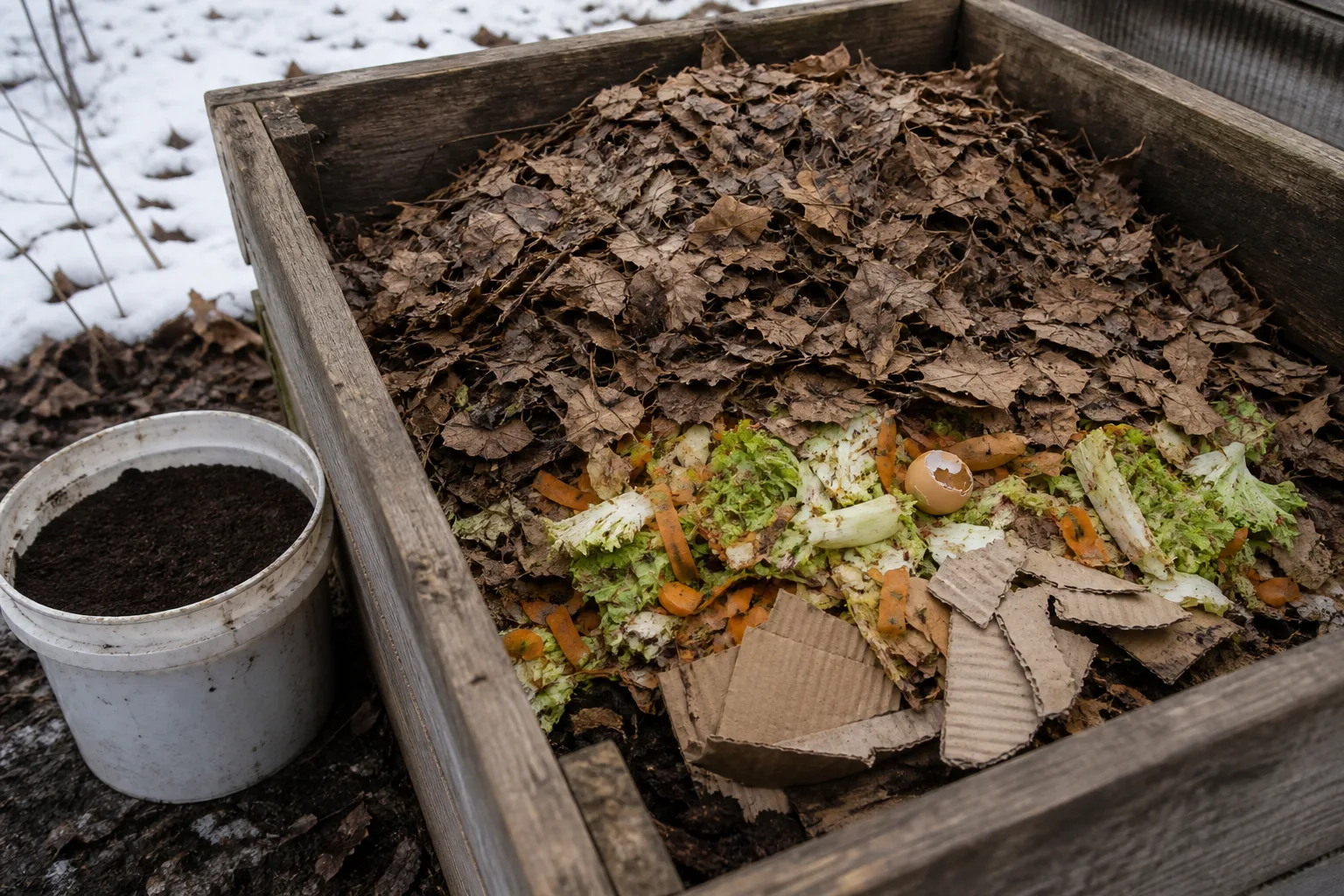
For an established bed, spread compost evenly over the surface or use it as a thin top-dressing around plants, keeping it away from crowns and stems. If you are preparing a new bed, blend modest amounts into the root zone only when the soil is workable; do not dig when it is waterlogged, and avoid turning the soil deeply every year just to bury organic material. Repeated deep disturbance can damage aggregates and expose organic matter to faster decomposition.
If you buy bulk compost or municipal green-waste compost, ask about feedstock and quality testing where available. A clean smell and dark appearance cannot reveal salts, nutrient levels, maturity, or possible herbicide residues; the RHS guidance on using organic matter specifically flags weedkiller residues as a concern with some municipal composts. A reputable supplier and an appropriate soil test are more useful than a label promising “100% humus.”
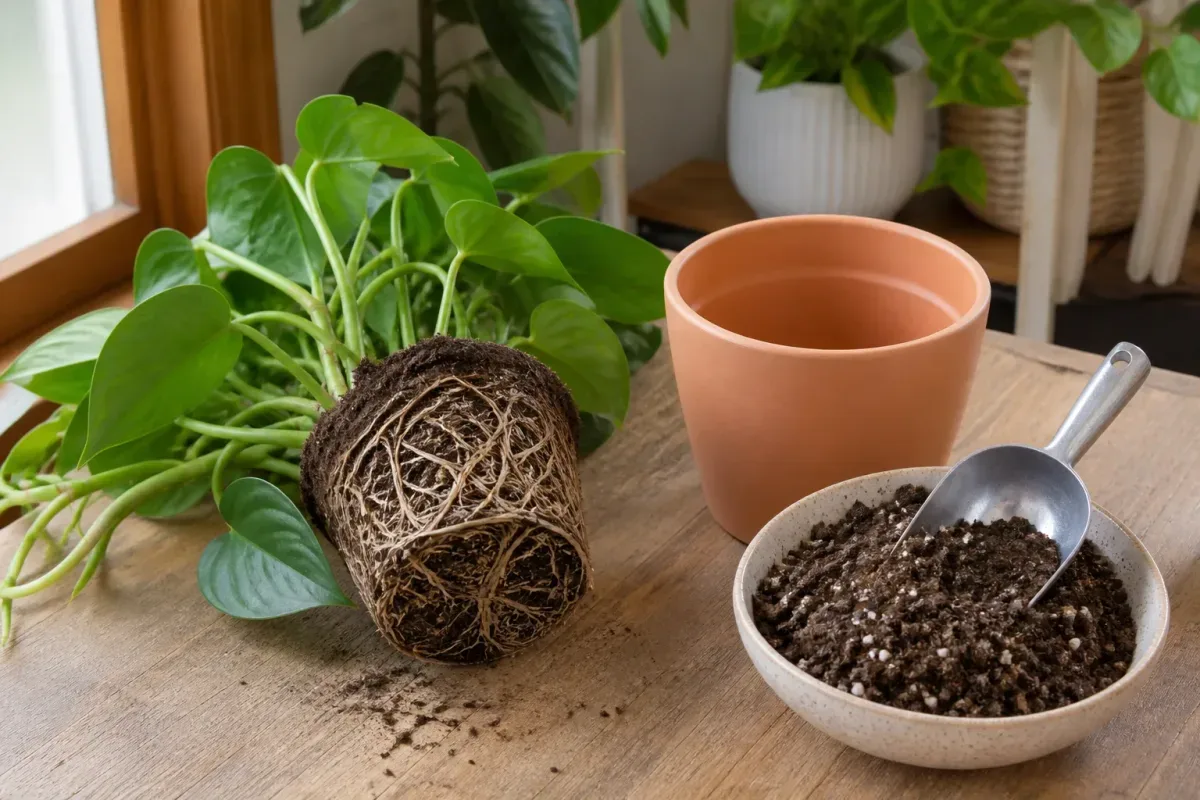
Container plants need a separate decision. Outdoor mineral soil, even when rich in organic matter, can settle and reduce air space in a pot; container roots depend on a mix engineered to drain and re-wet predictably. Use a potting mix formulated for the plant, and only blend in compost when the mix’s instructions or reliable crop-specific guidance call for it.
Keep suitable plant residues in the cycle
Leaves, disease-free plant debris, and grass clippings can return organic material where they grew. Shred or mow leaves so they settle into a thin layer; on a lawn, too much whole-leaf cover can block light and air, so mulch them finely or collect excess leaves for a compost pile or leaf-mold bin.
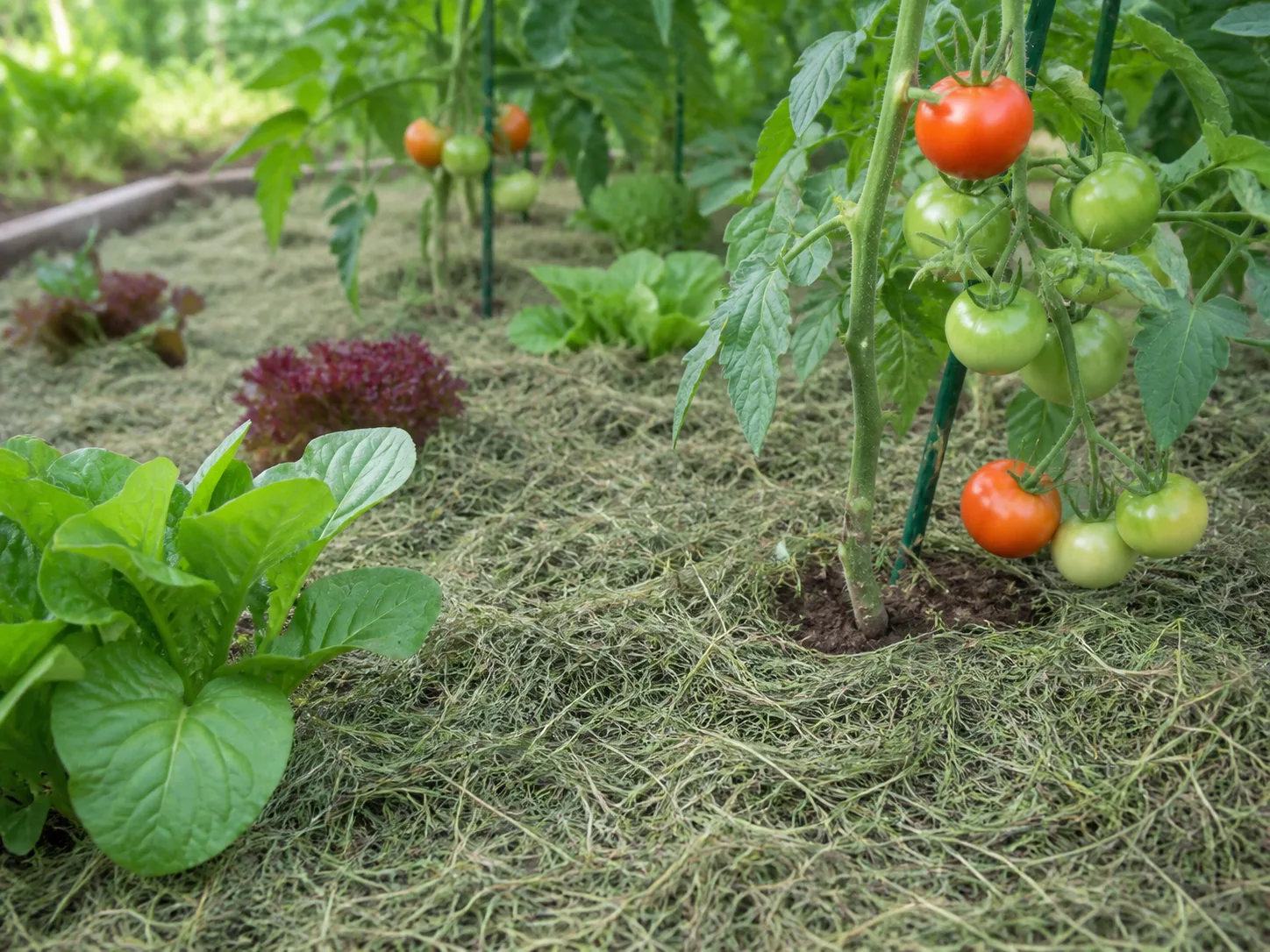
Return grass clippings only in thin, dryable layers rather than dumping a wet mat against stems. Leave diseased plant material out of home compost unless the pile reaches a process that reliably manages the pathogen, and do not return invasive weeds or mature seed heads to a cool pile where they may survive. The right destination depends on the material and your composting system.
Use mulch and cover crops strategically
Mulch protects the soil surface while it breaks down, reducing raindrop impact, evaporation, and weed germination. Organic mulches such as leaf mold, finished compost, or shredded leaves gradually feed soil life; coarse wood chips are often useful on paths and around established shrubs, but they are usually better left on the surface than mixed through the active root zone.
The distinction matters because decomposers working on high-carbon woody material can temporarily draw available nitrogen near the point where the material is mixed into soil. This is not a reason to remove every wood-chip mulch or to add nitrogen automatically; it is a reason to use coarse chips as a surface layer, keep them clear of plant crowns, and avoid digging large volumes into a vegetable bed just before planting. The RHS specifically notes that uncomposted woody waste is better used as a mulch because mixing it into soil can deplete nitrogen temporarily. Notcutts’ soil-improvement guide also recommends surface mulching for established borders where the soil does not need to be disturbed.
In vacant beds, a cover crop can keep roots in the soil and return plant material when cut or incorporated at the appropriate stage. Select a species and termination method suited to your climate, planting calendar, and crop rotation; a vigorous cover crop left too long can become difficult to manage or delay the next planting. The point is living cover and planned residue return, not adding the same amendment to every bed.
How much should you add?
There is no universal “humus dose.” A rate depends on whether the material is compost, leaf mold, manure, or mulch; how wet and dense it is; whether it will be dug in or left on top; what is already in the bed; and what you plan to grow. That is why generic directions such as “add several inches every year” can overdo it in a small bed or in soil that already has high nutrient levels.
The RHS gives example rates for soil improvement and separately recommends a thicker surface layer when mulch is intended to suppress weeds. Those are useful horticultural starting points in their context, not a reason to ignore local test results or material instructions. If you do not know what your bed needs, begin modestly with mature compost, keep it out of direct contact with stems, and reassess before adding another substantial layer.
For a new garden or unusually poor soil, work in stages rather than trying to transform the whole profile in one season. A soil test can indicate organic matter, nutrient status, and pH, but the report’s interpretation and recommendations are tied to the lab’s method, region, and intended crop. Compare like with like over time; a percentage from one lab or soil type is not automatically a target for another.
Mistakes that slow soil improvement
The first mistake is treating a dark amendment as a cure-all. Compost can improve soil, but it does not fix standing water caused by a drainage problem, correct every pH issue, or supply a predictable fertilizer dose. If leaves are pale or growth is poor, check moisture, roots, pH, light, and nutrient status before piling on more organic matter.
The second is mixing fresh, carbon-rich material into the root zone. Fresh sawdust, bark, and wood chips are useful in some surface-mulch jobs, but they can temporarily tie up nitrogen where decomposers are actively breaking them down. Use mature material when mixing into soil, or keep coarse material on the surface and give it time.
The third is assuming that every organic input is safe and balanced. Manure, municipal compost, and commercial soil conditioners vary in nutrient content, salts, maturity, and potential contaminants. Ask for sourcing information, use a soil test when repeated applications are planned, and take extra care if soil is used for edible crops or children’s play areas.
The fourth is confusing more organic matter with better drainage in every situation. In a compacted, saturated bed, adding compost may help gradually but cannot substitute for relieving compaction, correcting grade, selecting suitable plants, or addressing a water table. Avoid working saturated soil: digging it wet can compact and smear it further, making the structure problem worse.
The fifth is chasing a fixed percentage. Numbers such as 3–6% appear in horticultural guidance, but the appropriate level depends on soil, climate, measurement, and land use. A high organic-matter result is not automatically better if it reflects excess amendment, nutrient accumulation, or a soil that is unsuitable for the plants you are growing.
How to tell whether soil is improving
Look for several indicators together: water soaks in rather than running off, the surface does not crust as readily, a handful of moist soil holds together lightly and then crumbles, roots explore the bed, and plant residues disappear gradually. Earthworms and other visible soil life can be encouraging signs when conditions suit them, but their presence alone does not prove that nutrients or pH are right.
Color is a poor stand-alone test. Dark soil may contain organic matter, but it can also be naturally dark mineral soil or a heavily amended product; pale soil can still support healthy plants. Likewise, a homemade jar test can show broad differences in mineral texture but does not measure organic matter or nutrient availability.
For a meaningful trend, take samples from the same management area in a similar way and compare laboratory results over time. Keep a simple record of what you applied, when you applied it, and how the bed behaved. That makes it easier to distinguish gradual improvement from a temporary flush of nutrients or a change caused by rainfall and planting conditions.
Conclusion
Humus is a useful gardening word for well-decomposed organic material in soil, but soil organic matter is the broader, more practical category to manage. Compost can help build it, yet no bag can instantly reproduce the biological processes and structure of a healthy soil.
For a garden bed, choose mature, appropriate material; return suitable leaves and clippings; protect bare soil; and use a soil test when a problem or repeated amendment makes guessing risky. A steady, measured approach improves the root zone without treating “more humus” as a goal in itself.