14 Rose Landscaping Ideas You Should Try This Spring
Make roses work in your landscape with 14 spring ideas, plus practical checks for sunlight, mature size, climbing supports, containers, and walkways.
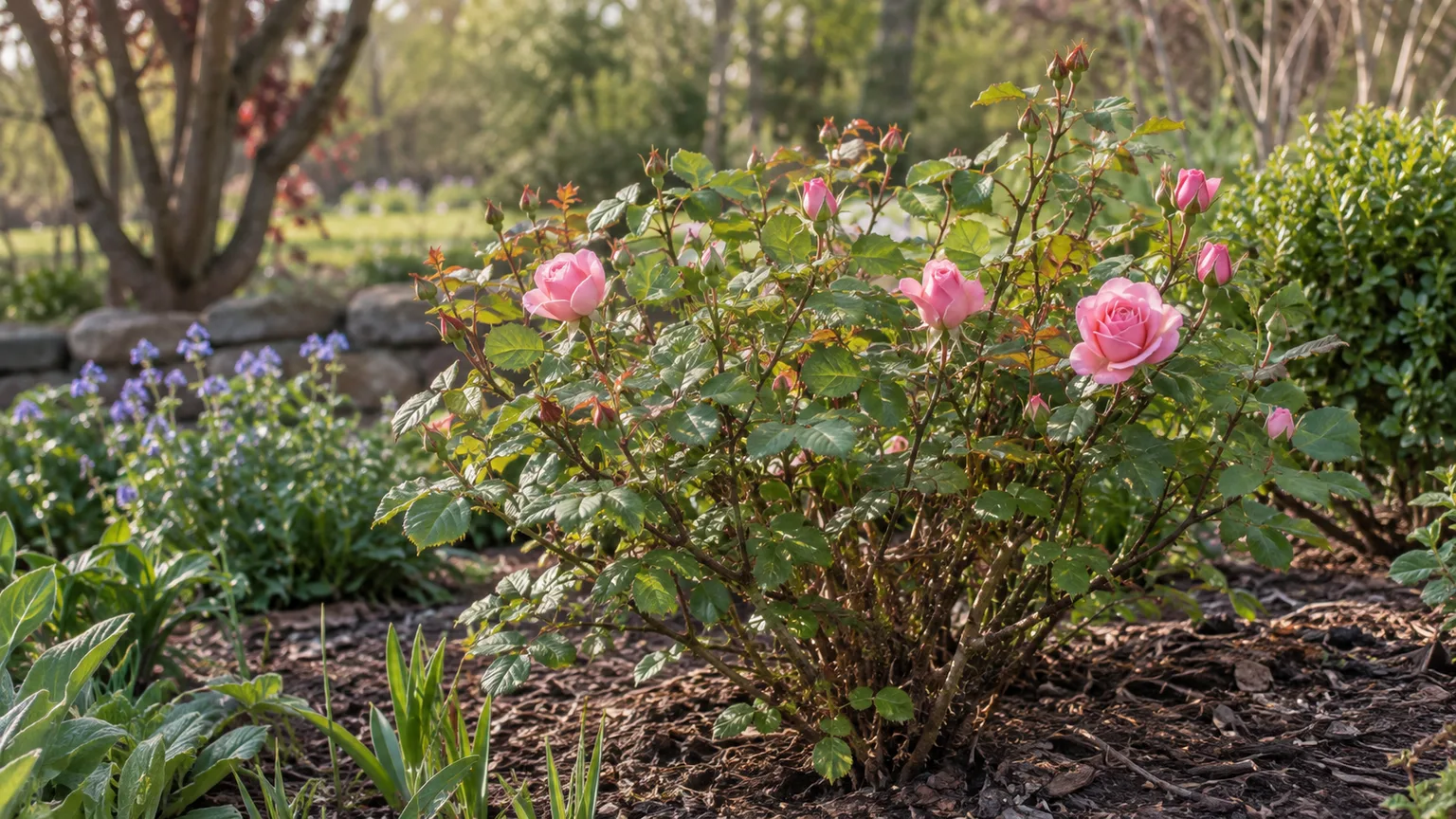
Roses can frame a doorway, draw a visitor down a path, soften a fence, or turn a sunny patio corner into a garden. The difference between a planting that looks intentional and one that becomes a thorny maintenance job is usually not the flower color; it is whether the rose’s eventual size and growth habit suit the spot.
Before buying, check how much direct sun the bed receives, where water goes after rain, what people need to walk past, and whether a climbing rose will have a sturdy support. Then choose a landscape role. These ideas range from a single patio pot to a full mixed border, with the practical details that help each one work beyond the nursery photo.
Start with the rose’s job and the site
Roses are not one interchangeable shrub. A compact patio rose, a rounded landscape shrub, a low ground-cover type, and a vigorous climber occupy different amounts of space and ask for different upkeep. Clemson Cooperative Extension notes that roses range from miniature plants only inches high to climbing types that can reach dozens of feet; it also emphasizes sun, air circulation, and well-drained soil as key landscape conditions (Clemson Cooperative Extension’s rose guide). Check the mature height and width for the named cultivar before laying out the bed.
For the strongest flowering, plan for a sunny position rather than assuming a rose will thrive in the darkest spot left over. Clemson recommends six to eight hours of direct sun, while the RHS gives four hours as a general minimum for many planting positions; that difference is a useful reminder that cultivar, climate, and what you mean by “good performance” matter (RHS rose-growing guide). When in doubt, choose a rose rated for your local conditions and favor a brighter, open site with air movement. Avoid a low pocket that stays waterlogged, and be cautious beside a hot west-facing wall where reflected heat can stress foliage and dry soil quickly.
There is no single spacing number that fits every rose border. Use the cultivar’s listed mature width and decide whether you want separate rounded plants, a loose repeating row, or a drift that eventually touches. Mark each plant’s expected canopy on the ground with a loop of hose or stakes; then check that branches will not block a gate, brush passersby, or hide a window. A little open soil between young roses is easier to mulch than a bed that starts overcrowded.
14 rose landscape ideas that also work
1. Frame the front entrance
Use a pair of roses to make a doorway feel settled into its landscape. If the bed is wide and sunny, two similar shrub roses on either side of the walk create a clear entrance without needing identical topiary shapes. In a narrow entry, use one compact shrub or a large container on the side with the most room; a balanced composition does not require squeezing a thorny plant into both corners.
Keep the mature outline away from the door swing, steps, utility meters, and the walking line. A white or pale rose can stand out against darker siding, while a saturated pink or red can echo a door or nearby perennial. If the entrance is shaded for most of the day, do not select a rose just because it matches the paint; use a shade-tolerant plant for that location and place the rose where it can receive more sun.
2. Repeat shrub roses along a fence or driveway
A loose row of the same shrub rose can make a long boundary feel deliberate and give a driveway a softer edge. Repetition is easier on the eye than a different color at every post, and it simplifies later pruning because the plants share a similar habit. Leave enough room behind the row to reach the fence for repairs and to work around each bush without leaning into thorns.
Do not space the shrubs by the size of the pots you buy. Use each plant’s expected mature spread, then adjust for the effect you want: nearly touching canopies create a continuous mass, while visible gaps keep individual forms legible. If you need year-round privacy, roses alone may disappoint, especially if the chosen class loses leaves or becomes open at the base. Treat them as seasonal color in front of a more dependable screen rather than promising they will block every view.
3. Edge a garden path without crowding it
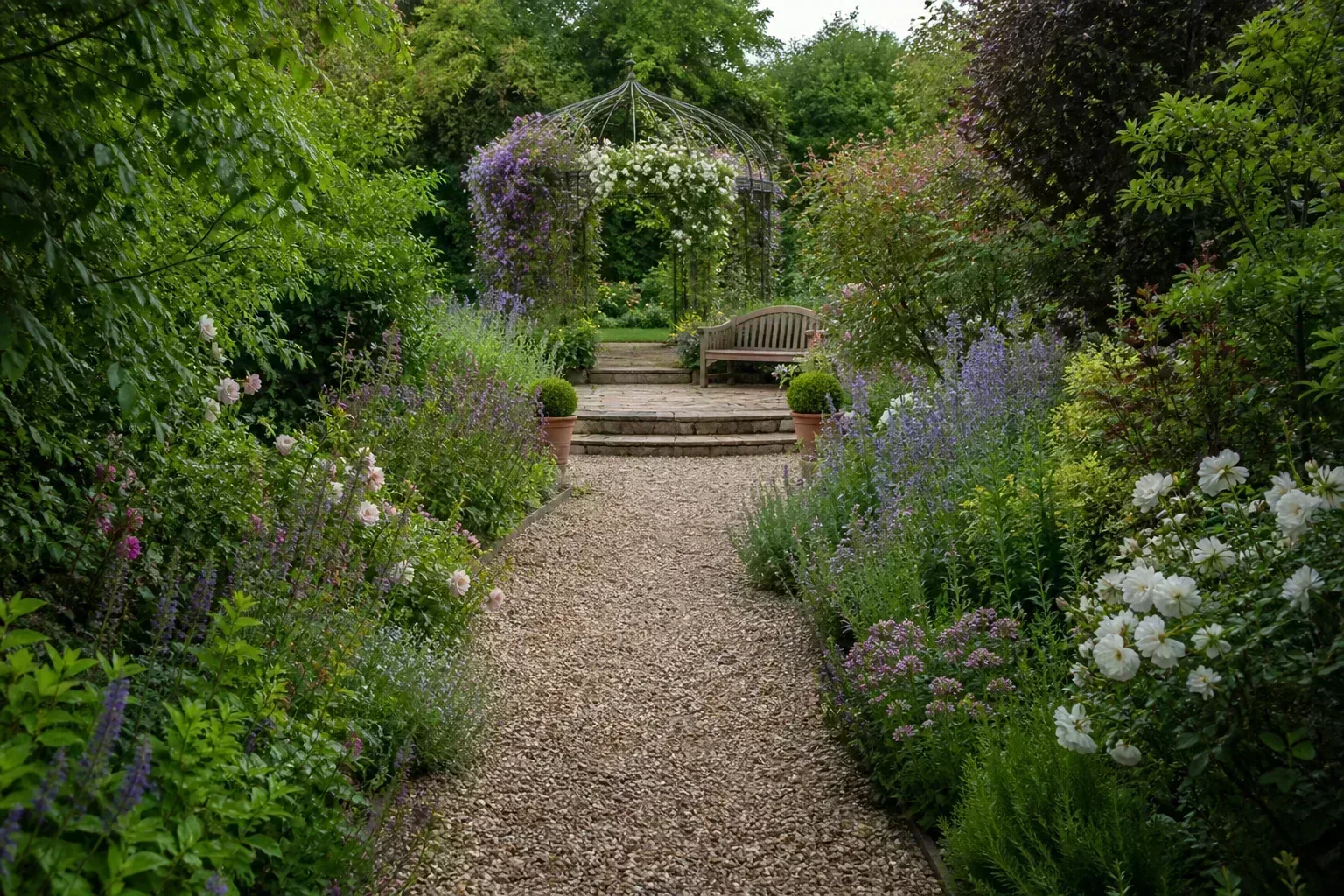
Roses make a memorable path border, but the walking experience matters as much as the bloom. Put thorny canes where a person will not brush them at shoulder or leg height, and measure the path at its narrowest point after imagining the mature branches leaning outward. Low-growing, rounded landscape roses are usually easier beside a walk than tall, arching types with long canes.
For a formal look, repeat one compact variety at measured intervals and use a clean edge such as brick or stone. For a cottage path, let the rose groups appear in wider drifts, with lower perennials between them. Do not plant roses where fallen petals and thorny pruning debris will make steps slippery or difficult to sweep; a path that is easy to maintain will stay welcoming longer.
4. Build a cottage-style mixed border
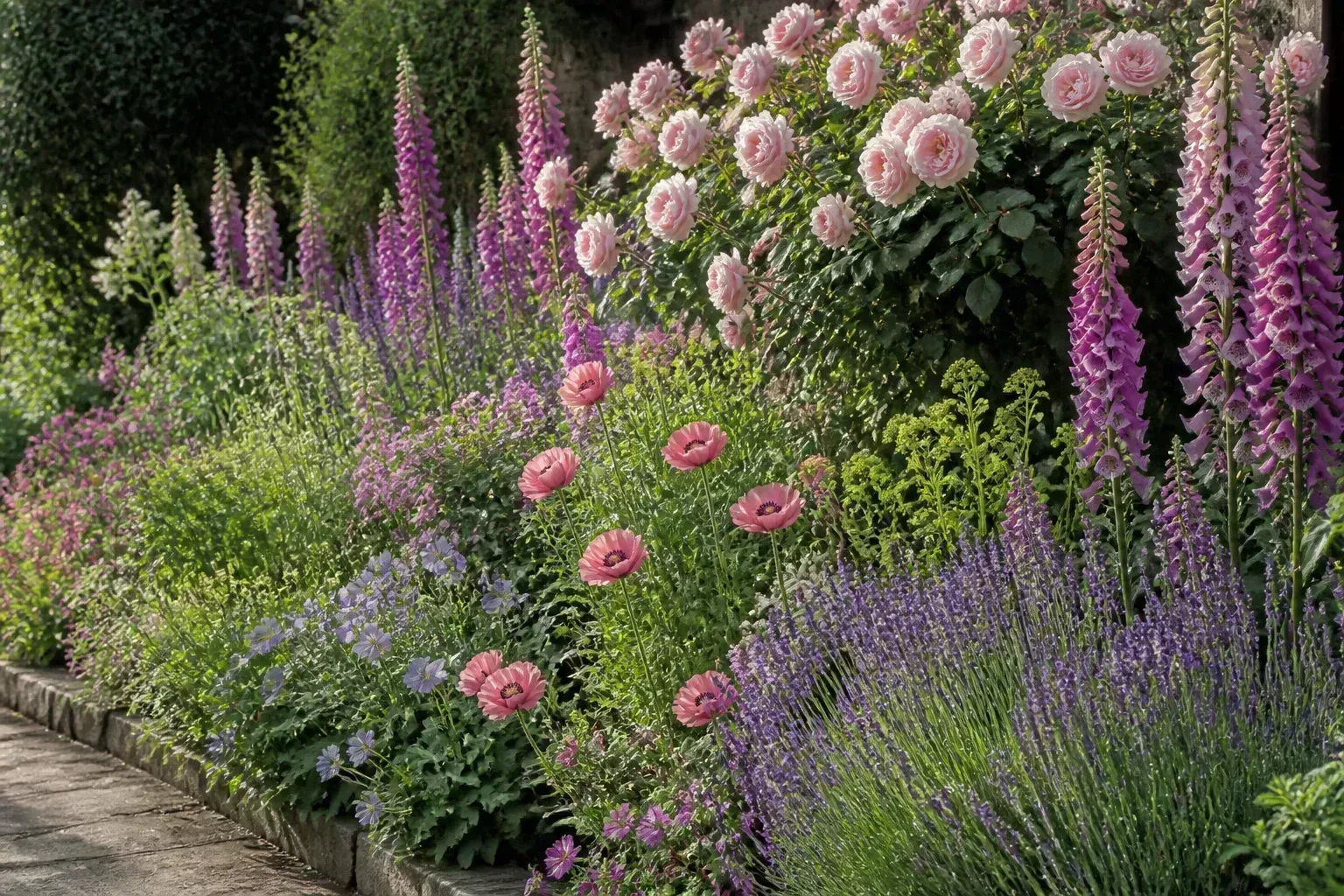
Rather than lining up roses by themselves, weave them into a border with plants of different heights and flower shapes. Place the rose where it can be seen as a focal shrub, then use lower perennials at the front and taller spires or airy forms behind it. The RHS cottage-garden guide pairs roses with a relaxed mix of traditional perennials and notes that rose habit should suit the available height and position (RHS cottage-garden plant guide). Garden designers interviewed by Homes & Gardens likewise recommend thinking in layers and keeping the border’s plants matched to their site rather than treating “cottage” as a reason to crowd everything together (Homes & Gardens’ cottage-border advice).
Choose companions that want broadly similar light and moisture, but do not pack them tightly against the rose’s crown. A rose needs room for air to move through its branches and for you to reach the base when watering, mulching, or pruning. If the rose is the tall element, let the underplanting stay low enough that its shape and lower foliage remain visible. Repeat a few companion plants across the bed for cohesion instead of collecting one of everything.
5. Train a climbing rose on a freestanding trellis
A trellis lets a climber add height without placing a heavy rose directly against the house. Choose a support that is anchored for the mature plant and can tolerate wind and wet foliage. Set it where the rose receives enough sun, and leave working space behind or beside the structure so you can tie canes and remove old growth without fighting the fence.
Roses do not attach themselves to a wall like ivy. Guide flexible canes across the support and tie them loosely with soft garden ties, leaving room for stems to thicken. Training several main canes more horizontally can encourage flowering shoots along more of the plant rather than leaving blooms only at the top. The cultivar determines the eventual reach and the pruning approach, so confirm both before choosing a short trellis or a narrow screen.
6. Grow roses over an arbor or pergola
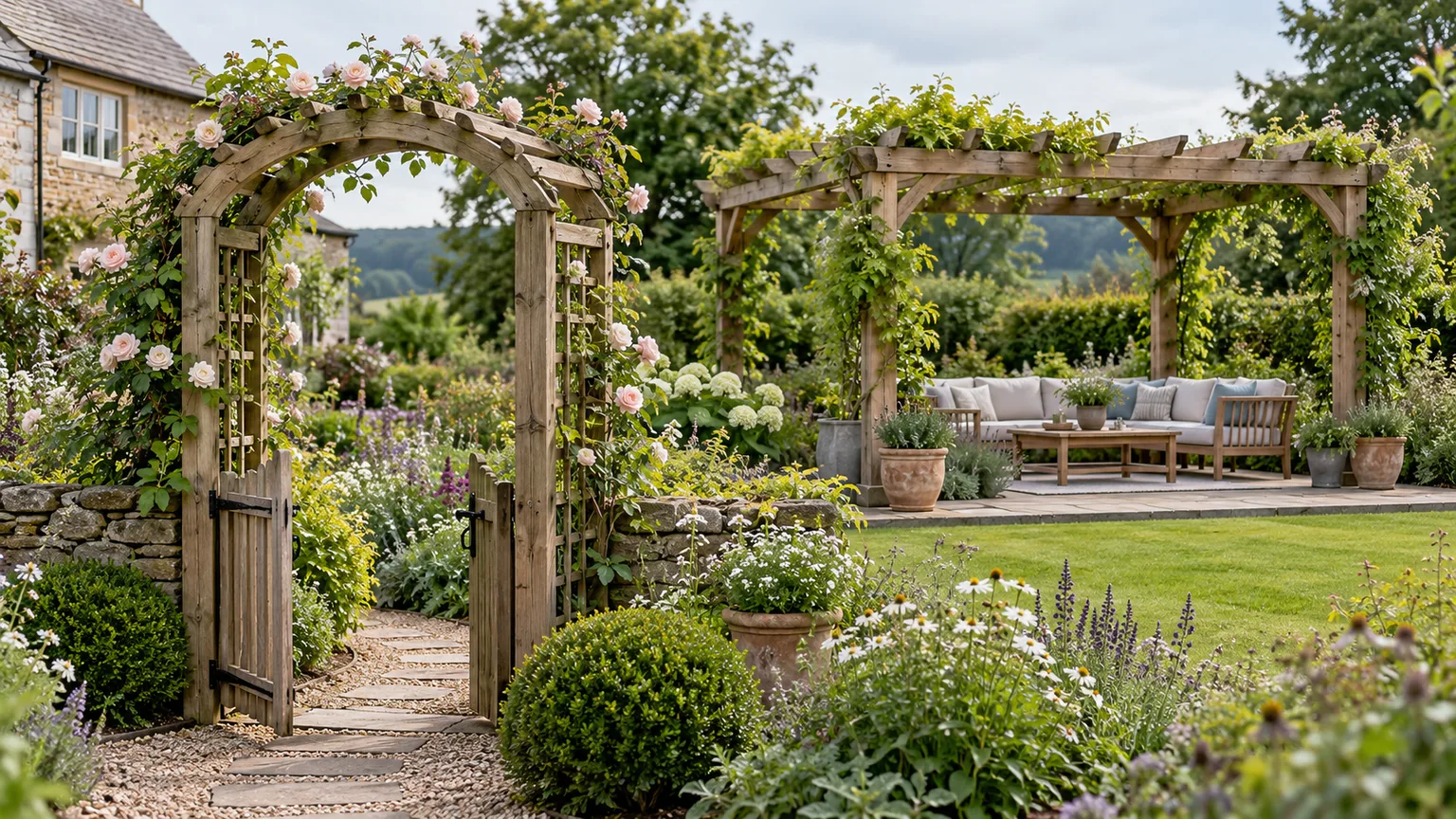
An arbor can turn a gate or transition between garden rooms into a focal point; a pergola can give a seating area a planted ceiling. Use a climbing rose only if the structure is solid enough for a mature woody plant and its wind load. A pergola is not automatically a rose support: thin decorative members may not hold the canes, and the plant’s growth can complicate painting or repairs.
Train the rose along the sides first and decide how much overhead coverage you actually want. Dense growth over a narrow walkway can snag clothing, block light, or make routine pruning awkward. Keep the canes away from gutters and rooflines, and do not place a thorny arch where people have to pass close beneath it. One well-positioned climber often looks more graceful and is easier to manage than a rose on every post.
7. Soften a blank patio wall
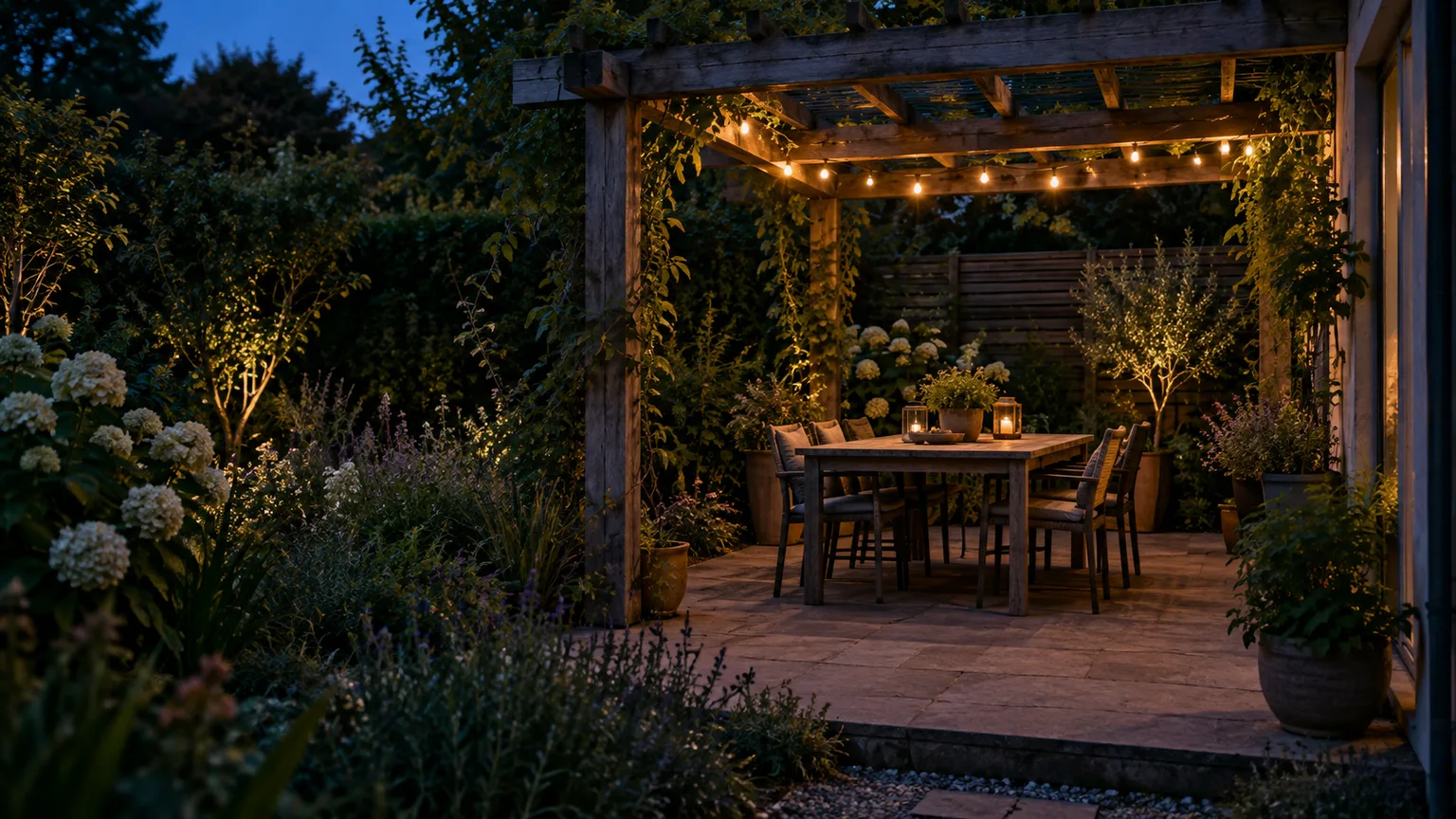
If a sunny wall makes a patio feel bare, a climbing rose on a trellis can give it texture and seasonal color. Leave a small gap between the support and the wall so air can circulate and you can reach behind the canes. Before drilling, check the wall material, locate services, and decide whether the support should be freestanding; do not attach a heavy plant to cladding or masonry with fixings that are not rated for the load.
Walls create microclimates. A sheltered wall can help a rose in a cool area, while a sun-baked wall may reflect enough heat to dry the root zone faster than the rest of the garden. Check the soil moisture near the base and avoid planting where roof runoff dumps water in one spot. A container beside the wall can make a useful trial if you are unsure whether the exposure suits the cultivar.
8. Make a rose container the patio focal point
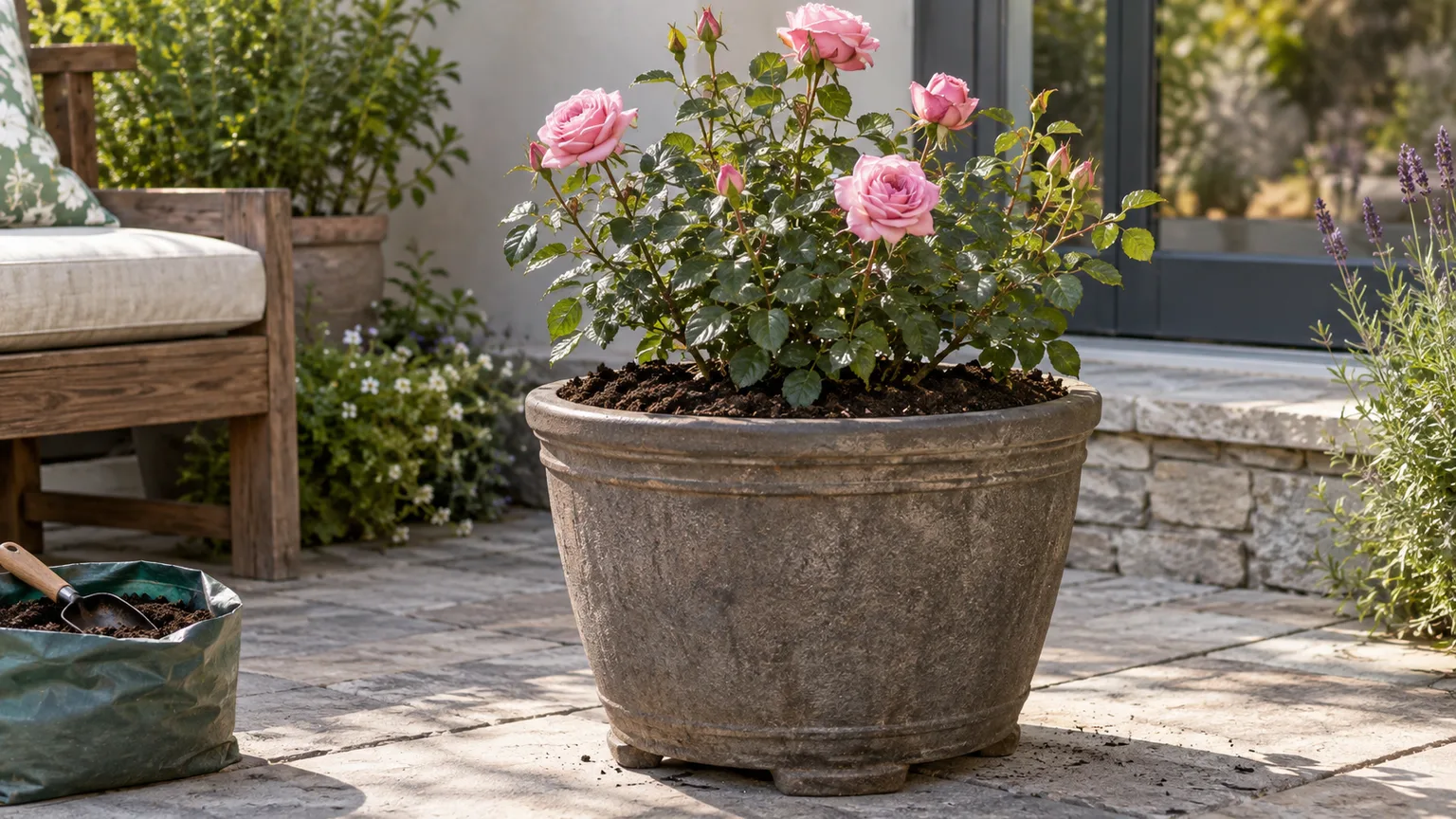
One substantial rose in a pot can bring flowers close to a table, bench, or doorway where you can see and smell it. Choose a compact patio or miniature type for the container rather than assuming any shrub rose will remain small. The RHS lists patio and miniature roses among suitable container subjects and recommends deeper pots for more vigorous types; its guidance also stresses drainage and the extra watering attention containers need (RHS guidance for growing roses in containers).
Use a pot with drainage holes and enough depth and volume for the cultivar’s root system. Position it before filling, because a large planted container can be difficult to move. In hot or windy weather, container soil dries faster than a bed, so plan to check it regularly rather than relying on a fixed weekly schedule. A saucer that holds water against the roots can create a different problem, so empty standing water after watering.
9. Dress up a shed or garden-gate entrance
Treat a shed door, side gate, or potting-area entrance as a small destination. A single shrub rose in a broad bed can soften the structure; two containers can mark the opening where the ground is paved. A pale bloom can brighten dark timber, while a strong color can connect the shed to a nearby border. Repeat one material or hue from the house so the garden feels connected rather than like a separate display.
Keep access practical. Leave room to open the gate fully, carry a wheelbarrow through, and reach the shed wall for maintenance. If the entrance is shaded by the building for most of the day, use containers to test a brighter position or choose another plant for the ground-level shade. The goal is to make the route more pleasant without turning the only work entrance into an obstacle course.
10. Use one compact rose in a small courtyard
In a small yard, a single rose can provide enough flower and fragrance without consuming every planting space. Place a compact shrub in a sunny corner or use a pot near a wall, then let the rest of the design come from paving, a seat, and one or two foliage plants. The RHS notes that limited spaces can still be designed vertically and that containers make it possible to grow plants where there is no open soil; BBC Gardeners’ World similarly treats paths, boundaries, and seating as parts of the layout rather than afterthoughts (BBC Gardeners’ World garden-design guide).
Do not scale a full-size climbing rose down by pruning it constantly. Read the plant label and choose a cultivar whose mature width fits the courtyard. A small paved space also reflects heat and can be breezy, so protect the pot from severe drying and leave an accessible place to water. One healthy, well-placed shrub usually looks more intentional than several crowded roses competing for sun.
11. Let ground-cover roses spill over a bank
Low, spreading roses can soften a sunny slope, retaining-wall edge, or broad bed where a formal row would look stiff. Plant them in repeated groups that follow the shape of the ground, not in a ruler-straight line that ignores the contour. Their low habit can visually connect the top and bottom of a bank, while a few upright shrubs nearby provide contrast.
Do not treat a ground-cover rose as an instant erosion-control solution. The plant still needs suitable soil, water while establishing, and access for pruning or cleanup. On a steep or unstable bank, solve drainage and soil movement first and consider professional advice; ornamental planting alone will not correct a structural slope problem. Leave enough room between groups for air movement and maintenance, even if the finished bed will eventually look full.
12. Frame a porch, deck, or outdoor-room view
Place roses to frame a view rather than obscure it. A pair of shrub roses at the ends of a porch bed can draw the eye toward a lawn or garden focal point, while a potted rose at the edge of a deck can give the sitting area a softer boundary. Keep tall canes below sightlines from chairs and windows, and check the view from inside the house as well as from the patio.
For a deck or balcony, account for weight, drainage, and access before choosing a large container. Protect the deck surface from trapped moisture and make sure runoff will not stain siding or bother the space below. If the rose will sit beside a chair, choose a manageable form with canes that will not reach into the seating area. Fragrance is most enjoyable when you can approach the plant without brushing past thorns.
13. Echo the house or hardscape with a rose color
Use bloom color to connect the planting with a front door, shutters, brick, or outdoor cushions. A restrained palette is easier to read: repeat one rose color at several points, or combine a main color with a lighter companion and let foliage provide the contrast. Pale flowers can lift a dark corner; strong pinks and reds can hold their own against a large façade. These are design choices, not rules about which colors “go” together.
Choose the cultivar for performance first, then use color to refine the composition. A rose that is the perfect shade but needs more sun than the site receives will not deliver the look you planned. Remember that flowers may be absent for part of the year; use evergreen shrubs, grasses, edging, or a well-composed container to keep the bed from depending on one short bloom window.
14. Extend the bed’s interest beyond the main bloom
Build a rose bed around more than its first flush of flowers. Early bulbs can provide a brief spring layer before the rose reaches full size, while summer perennials and foliage plants can carry the border after the first rose flowers fade. Choose companion plants for compatible light, water, and soil rather than simply matching flower colors. If the rose is a once-blooming old garden type, let other plants carry the later season instead of expecting repeat flowers.
Leave enough open space to care for the rose and to see its shape when it is not in flower. The RHS describes roses as plants that can bloom in summer, with many repeat-flowering into autumn, but timing varies by type and climate (RHS rose-growing guide). For more resilient beds, avoid building the whole composition around a single cultivar’s bloom calendar. Use a mix of foliage, structure, and staggered flowering so the landscape remains legible before and after the roses peak.
Turn the idea into a workable spring plan
Before planting, walk the garden at different times of day and note where direct sun falls. Mark downspouts, dry spots, tree roots, foot traffic, and the route you use for mowing or carrying tools. Check drainage after rain or water the site and watch how quickly it clears. Clemson’s rose guidance calls for sun, airflow, and loose, well-drained soil; Fine Gardening’s practical advice for a new rose bed is to prepare the whole planting area rather than improving only a small hole around each plant (Fine Gardening’s rose-bed preparation article). Adapt any soil work to a soil test and local extension advice, especially on heavy or unusually acidic/alkaline soils.
Next, pick the role before the cultivar: low edge, rounded anchor, container focal point, or climbing screen. Compare mature width and height on the label, verify that the cultivar is suitable for your region, and buy the support at the same time as the climber. Lay out pots or temporary markers to check the design from the street, the house, and the main seat. Walk the route with a watering can or wheelbarrow to catch pinch points before digging.
When planting, follow the rose’s local guidance for timing and depth; bare-root and container-grown plants are not necessarily handled on the same schedule. Water new plants deeply and keep checking them while roots establish, especially if spring turns dry or windy. Mulch can reduce moisture loss, but keep it from piling directly against the canes. If the bed will need frequent spraying or pruning just to remain accessible, reconsider the cultivar or move the design before the plants mature.
After planting, keep the first season simple: maintain clear access, observe which areas dry first, tie new climbing canes before they become stiff, and remove weeds before they seed. Save the nursery label or record the cultivar name and mature dimensions. That information makes later pruning and replacement decisions far easier than trying to identify a rose by flower color alone.
Conclusion
The best rose landscaping idea is the one that fits your light, space, and everyday routes through the garden. Use a compact shrub to frame an entrance, a low form beside a path, a climber where a sturdy support belongs, or one well-sized container to bring blooms close to a seat. Start with the plant’s mature habit, then use color and companion planting to make the arrangement feel like yours.
This spring, mark the design at full size before you buy. Give the roses sun, drainage, air, and working room, and the result will look better not just in a photograph but through the years of growth and care that follow.