16 Household Uses for Lemon Juice (and What to Skip)
Find 16 uses for lemon juice around the house, plus honest limits: what it can clean, where acid can damage finishes, and when to use a labeled product.
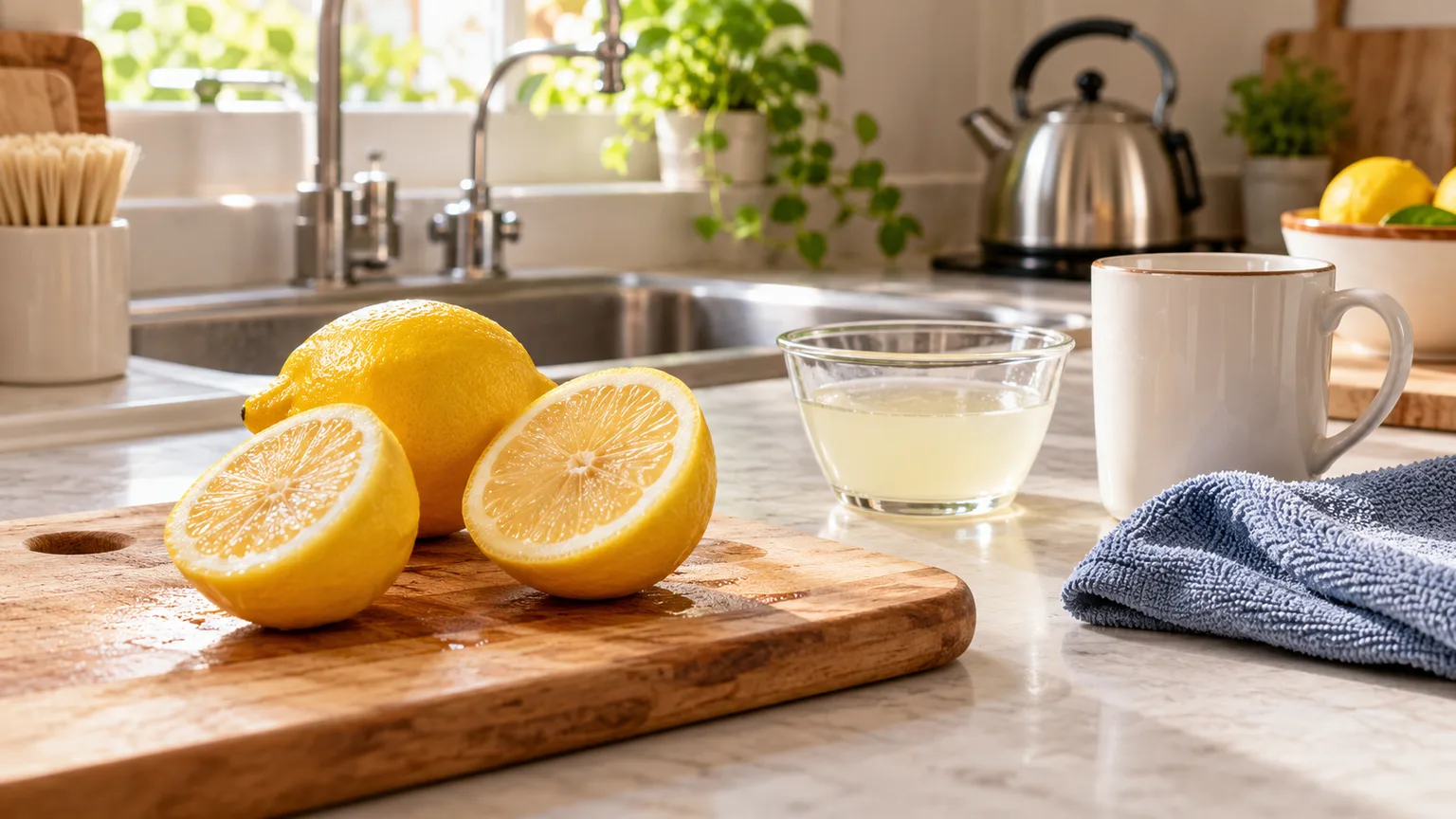
Lemon juice is useful around the house for a narrow reason: its acidity can loosen some mineral deposits and tarnish, while its scent can make a freshly cleaned space smell brighter. It is not a universal cleaner, a grease-cutting detergent, or a reliable disinfectant. The difference matters: the best lemon-juice jobs are small, brief, rinseable tasks on acid-tolerant surfaces.
The list below separates methods worth trying from familiar hacks that can waste time or damage a finish. Start with the appliance or surface maker’s instructions, test an inconspicuous spot, use the smallest amount that will do the job, and rinse and dry when the task is done. Fresh juice varies in strength and contains sugars and pulp; bottled juice is more consistent in texture but still acidic, so neither is automatically safe everywhere.
Quick rules for using lemon juice at home
Use lemon juice for light mineral scale, mild tarnish, and temporary fragrance, not for oily soil. Dish detergent contains surfactants that surround and lift grease so water can carry it away; lemon juice alone does not do that job. If a greasy pan, counter, or bin smells bad, wash with a suitable detergent first. A citrus scent over residue is masking, not cleaning.
Treat lemon juice as an acid. Keep it away from marble, limestone, travertine, and other calcareous stone: even a brief splash can dull or etch the finish, and a sealer does not make stone acid-proof. The Natural Stone Institute’s care guidance recommends mild, non-acidic cleaning for acid-sensitive stone. Use a stone-safe product or mild dish soap and water instead.
Never mix lemon juice with bleach, ammonia, drain opener, or another cleaner. In particular, acid and chlorine bleach can release dangerous chlorine gas; the CDC says not to mix bleach or disinfectants with other cleaners. If you already used a product, rinse the surface thoroughly according to its label and let it dry before choosing another product. Don’t combine products in a bucket, bottle, sink, or on the same damp surface.
For food-contact items, ordinary washing and disinfection are different jobs. The FDA recommends hot, soapy water for cutting boards, utensils, dishes, and counters; use a food-contact sanitizer when the situation calls for sanitizing. Lemon scent or sour taste does not prove a surface is safe from pathogens. A lab study of citrus juice against selected Vibrio strains is not a household surface-disinfection test; use a product with directions for the germ and surface when disinfection is needed. The CDC explains cleaning, sanitizing, and disinfecting, including when to use an EPA-registered disinfectant and why its label contact time matters. (Study abstract)
A few popular jobs belong on the “choose something else” list: lemon juice is not a predictable way to whiten an entire load of laundry, polish finished wood, or rescue paintbrushes with fully cured paint. An acid-and-oil furniture mix can leave a film, and the right way to clean a brush depends on the paint type and whether it has dried. For toilet-bowl scale, use a product labeled for the fixture and follow its label; never pour an acidic cleaner into a bowl that still contains bleach cleaner. Treating the stain or deposit with a product designed for that material is usually safer than making a stronger lemon mixture.
16 household uses for lemon juice—and where to skip it
1. Steam-loosen microwave splatters
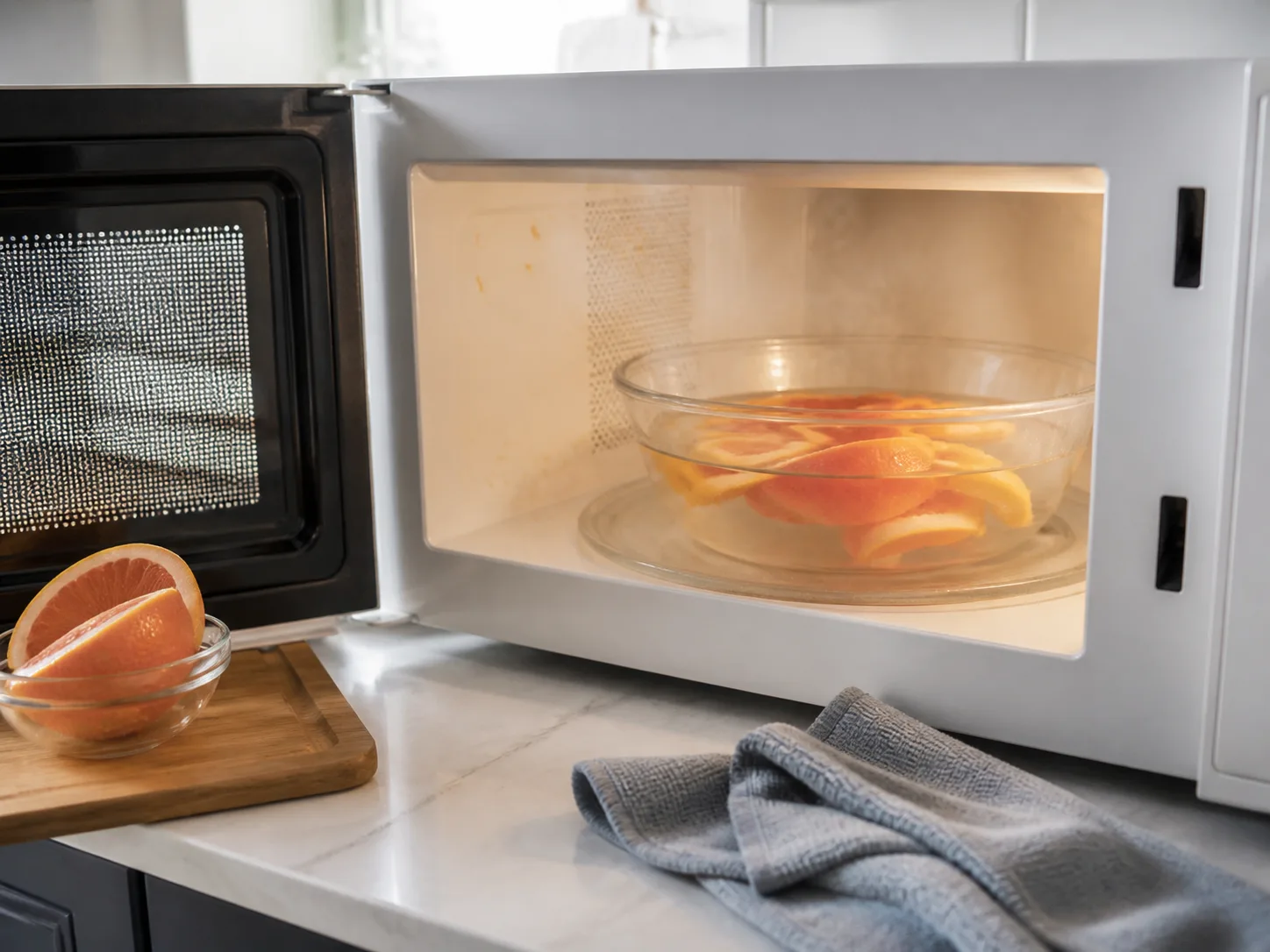
A bowl of lemon water is useful because it creates steam; the steam softens dried food so you can wipe it away with less scraping. It does not sterilize the microwave. Put about a cup of water in a microwave-safe bowl, squeeze in a little lemon, and add a slice if you want the scent. Heat until the water is steaming, switch the microwave off, and leave the door closed for several minutes so the steam can work.
Open the door carefully because hot vapor can burn, and use an oven mitt to remove the bowl after it cools. Wipe the ceiling, walls, turntable, and door seal with a soft cloth, then dry them. If splatter remains, dampen it again and wipe; don’t use a metal scrubber or flood vents. A Good Housekeeping microwave-cleaning guide describes the same steam-first principle with citrus slices or juice.
2. Descale a kettle only when its manual permits it
Citric acid can help dissolve the chalky carbonate scale that builds up as hard water evaporates. Lemon juice can work in some kettles, but models differ: a maker may specify a branded descaler, a measured citric-acid solution, or a particular rinse cycle. Check the manual before heating juice or fruit in an electric kettle, especially if the kettle has a coated interior, plastic parts, a filter, or a warranty condition.
If the manual allows lemon, use the stated dilution and soak time rather than a guessed “one lemon per pot” recipe. Empty it, rinse thoroughly, then boil and discard one full kettle of clean water if the manual calls for that step. Never leave an acid solution sitting overnight unless the maker explicitly directs it. For coffee makers, use the appliance’s own descaling procedure; lemon pulp, sugars, and residual flavor can remain in narrow channels. Good Housekeeping’s kettle advice also emphasizes checking the appliance and rinsing after an acid descale.
3. Lift tea film from glazed cups
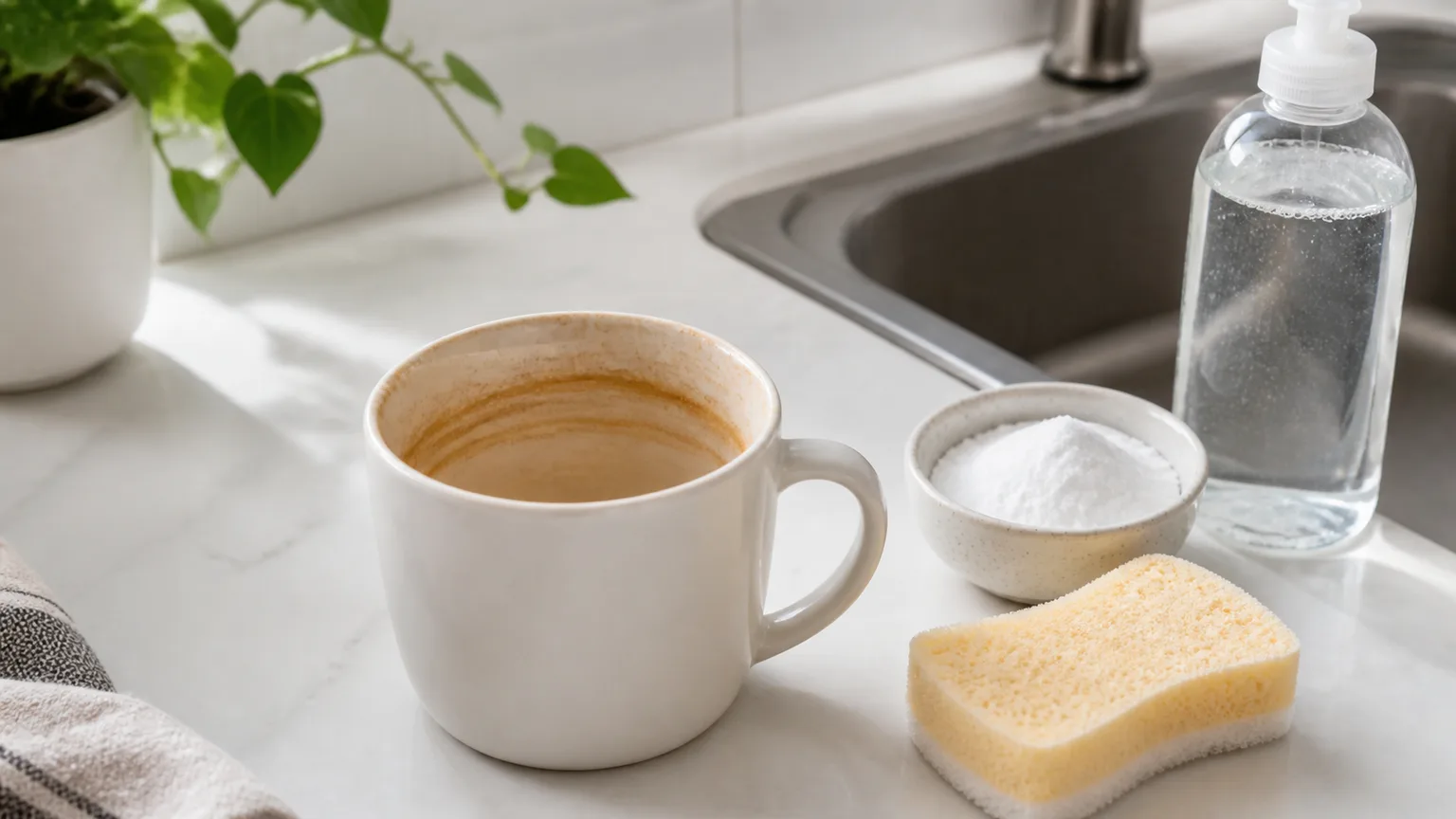
A short lemon-water soak can loosen the dull brown film left by tea or coffee on intact glazed ceramic. Add warm water and a teaspoon or two of lemon juice to the cup, wait a few minutes, then wash with dish soap and a non-scratch sponge. Rinse well so the cup doesn’t taste sour. This is a gentle first try for a light surface film, not a guarantee against a deep stain or a crackled glaze.
Skip lemon on decorated, metallic-trim, or unglazed pottery unless its maker says it is safe. Don’t pair it with salt or a scouring powder just to make the cleaning feel stronger; grit can scratch a glossy glaze, and acid won’t fix scratches. If the mark remains, a baking-soda paste or a product intended for the vessel may be more effective. For a mug used by someone ill or immunocompromised, clean it normally and follow any specific sanitizing directions rather than treating lemon juice as a germ-killer.
4. Remove mineral haze from a glass carafe
A pale ring in a glass kettle, vase, or water carafe may be mineral residue rather than a stain. If the vessel is ordinary, uncoated glass with no metal trim, add warm water and a small splash of lemon juice, let it stand briefly, then use a bottle brush and rinse until there is no scent. The acid is most helpful on mineral film; it will not dissolve every baked-on or pigmented deposit.
Check the product instructions for crystal, etched glass, decorative coatings, and insulated bottles. Some drinkware uses a special finish, and an acidic soak can affect seals or nearby metal components even when the glass itself is resistant. For a narrow-neck container, a bottle brush and dish detergent are often the safer first step. Don’t use straight juice as a leave-on polish: dissolved minerals and citrus solids still need to be rinsed away.
5. Clear scale from a compatible faucet aerator
A removable aerator with visible white scale can sometimes be cleaned with a short acid soak, provided the faucet maker approves it and the part is not plated or coated with a sensitive finish. Remove the aerator if the manual explains how, place only the removable piece in diluted lemon juice for a few minutes, then brush gently with a soft toothbrush and rinse. If you cannot remove it safely, dab a small amount on a cloth rather than tying an acidic wet bag around the whole faucet.
Chrome, nickel, brass, black finishes, rubber washers, and mixed-metal fixtures do not all tolerate the same treatment. Lemon can discolor or dull a finish if it sits too long, and a rough brush may scratch it. When in doubt, use a manufacturer-approved limescale product and follow its contact time. If flow is poor, first inspect the aerator screen for grit; scale remover will not fix a damaged cartridge or a plumbing blockage.
6. Brighten uncoated copper with a small test
A brief lemon-juice treatment can remove some surface tarnish from solid, uncoated copper. Wash away food and grease with mild dish soap first; dab juice onto a soft cloth, wipe a small hidden area, rinse promptly, and dry completely. For a removable copper cookware exterior, follow the maker’s care instructions and keep acidic cleaners off a tin-lined or other delicate interior.
Do not assume every copper-colored item is solid copper. Lacquered copper, copper plating, patinated décor, and copper sinks are intended to keep particular finishes; acid can strip or spot them. Salt adds abrasion and can leave scratches, so don’t automatically follow a lemon-and-salt hack. A Homes & Gardens guide to copper cookware recommends gentle washing, a controlled cleaning paste for suitable pieces, and thorough drying. If you prefer the darkening patina, leave it alone; tarnish is usually cosmetic.
7. Lift mineral haze from stainless cookware
Stainless steel may develop a cloudy film from minerals in water or discoloration after heating. On a pan whose maker permits acidic cleaning, a quick wipe with diluted lemon juice can help loosen that film. Rinse immediately and dry with a soft towel. If the problem is cooked-on oil, burned food, or grease, start with warm water and dish detergent, or use the cookware maker’s stainless-steel cleaner; acid is not a degreaser.
Do not use lemon as a long soak, and don’t leave it against a seam, rivet, or another metal part. Avoid the method on nonstick, seasoned cast iron, aluminum, or coated cookware unless the manufacturer specifically allows it. A stainless-colored surface may actually be a finish over another material. Try any new cleaner on a small area, and stop if the cloth picks up color or the sheen changes.
8. Freshen plastic food containers after washing
If a food container still carries a faint onion or curry smell after a proper wash, wipe the inside with a little diluted lemon juice, let it sit only briefly, then rinse and air-dry with the lid off. This can add a cleaner citrus scent, but it does not replace dish detergent, remove every food stain, or sanitize a container. The acidic liquid may also affect some plastics or lids, so follow the container maker’s directions and test an inconspicuous spot.
For orange tomato stains, a lemon wipe is usually less useful than detergent, a baking-soda treatment, or sunlight used cautiously on a compatible container. Don’t store lemon juice in plastic overnight, and don’t seal it inside with a lid; long contact is unnecessary. If the smell returns because oil or food remains in a scratched surface, replacing a badly worn container may be more effective than repeating a stronger acid treatment.
9. Deodorize a cutting board, but do not sanitize it
After washing a sturdy board with hot, soapy water, a brief wipe with lemon can help reduce a lingering food odor and leave a fresh scent. Rinse it well, stand the board on edge so both sides can dry, and condition a wooden board with food-grade mineral oil when its maker recommends it. Avoid soaking wood; prolonged wetness can promote warping and cracks.
This is a deodorizing step, not a reliable way to kill bacteria hidden in knife grooves. Wash the board after each food item, and use the board’s dishwasher or a food-contact sanitizer only when the material and manufacturer permit it. The FDA’s home food-safety guidance calls for hot, soapy water on cutting boards and utensils; it also notes that excessively worn boards should be replaced. Keep lemon juice away from bleach solution and other cleaners, and never treat a pleasantly scented board as proof that it has been sanitized.
10. Make a stovetop simmer pot for fragrance
A few lemon slices or a spoonful of juice in a saucepan of water can add a light citrus smell while the water simmers. This is fragrance, not air purification: it won’t remove smoke, mold, cooking residue, or a source of persistent odor. Use a small amount of water, keep the pan below a boil, and stay in the kitchen. Turn the burner off before the pan runs low; a forgotten pot can boil dry and become a fire hazard.
If the smell comes from a spill, trash, drain, or damp fabric, clean and dry that source first. A scent can temporarily cover a problem without solving it. For a household member sensitive to fragrance, skip the simmer pot and ventilate the room instead. Never leave a candle, burner, or hot pan unattended just to make a room smell fresh.
11. Treat a tiny rust spot on white cotton cautiously
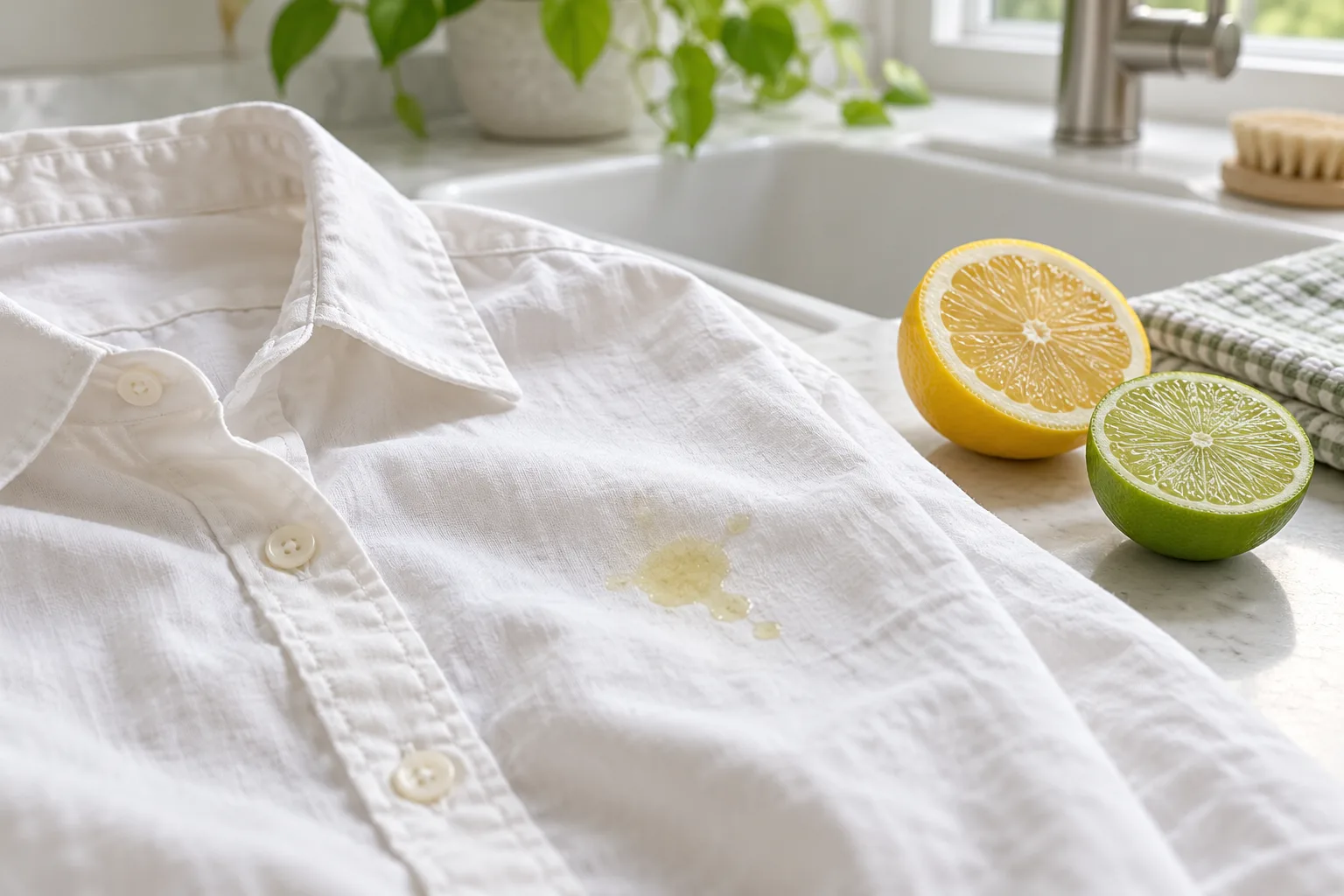
Lemon juice is sometimes used on a small rust mark in sturdy white cotton because acids can loosen some iron deposits. The result is unpredictable, though, and the wrong treatment can spread the mark or weaken and yellow the fabric. Read the garment’s care label, test a hidden seam, and blot a tiny amount of juice onto the stain rather than soaking the whole item. Rinse thoroughly before laundering, and inspect it before putting it in a dryer; heat can make a stain harder to remove.
Do not use this hack on silk, wool, delicate blends, dyed fabric, or an item labeled dry-clean only. Sunlight may lighten a garment unevenly, so don’t leave clothing outside for hours as an automatic “natural bleach” step. A textile-safe rust remover is designed for the stain and often gives more predictable directions. The American Cleaning Institute advises against sodium hypochlorite bleach on rust stains, since it can intensify discoloration. The lemon juice itself can also leave a pale spot on colored cloth.
12. Freshen a washable trash bin after cleaning
For a plastic bin that smells after a leak, empty it, wash it with dish detergent and water, rinse, and dry it fully. If a mild odor remains, wipe the clean interior with a small amount of diluted lemon juice, then rinse and dry again. The lemon supplies fragrance; it cannot remove the source if food liquid has seeped into a liner, crack, or porous surface.
Don’t put large lemon halves or peels into a garbage disposal as a substitute for cleaning. Fibrous or bulky scraps can contribute to a jam in some units, and the fresh smell does not mean grease or residue has been flushed from the chamber. Use the disposal manufacturer’s cleaning instructions; clean a removable splash guard with dish soap and a brush, and run cold water as directed. If the sink drain smells, clean the stopper and trap or address the plumbing cause instead of pouring lemon juice into it.
13. Skip lemon juice as an all-purpose window spray
Lemon-water spray sounds simple, but juice contains small amounts of sugars, pulp, and other solids that can dry into streaks. On a broad window or mirror, a purpose-made glass cleaner or a clean microfiber cloth dampened with water is usually more predictable. If hard-water spots are the problem, use a compatible descaler on the glass only, protect surrounding metal and stone, and rinse completely.
Avoid spraying lemon around window frames, coated glass, films, natural stone sills, or painted trim without checking the maker’s instructions. Citrus acid can mark adjacent materials even if the glass tolerates it. Don’t let a cleaning liquid run into a track or seal. For routine fingerprints, a little water and a dry microfiber cloth usually does less damage and leaves less residue than a kitchen ingredient in a spray bottle.
14. Keep lemon juice off marble and other acid-sensitive stone
Lemon juice should not be used to remove a stain from marble, limestone, or travertine. The acid can react with calcium carbonate in the stone and leave a dull etch mark; that is damage to the finish, not a stain that can be washed away. A sealer helps resist staining but does not make an acid-sensitive stone safe for lemon or vinegar. The Natural Stone Institute recommends a neutral cleaner or mild dish detergent and water for stone care.
If juice spills on stone, blot it immediately—don’t rub—then flush gently with water, wash with mild soap, rinse, and dry. If a dull patch remains, more lemon, baking soda, or abrasive scrubbing can deepen the damage. Contact the stone supplier or a restoration professional for an etch. “Natural” describes where an ingredient came from, not whether it is compatible with a polished surface.
15. Do not rely on lemon juice to disinfect a surface
Lemon juice may change the smell of a surface and can show antibacterial activity in particular laboratory conditions, but that is not the same as a validated disinfectant. It has no standardized concentration, organism-specific directions, or labeled wet contact time for household surfaces. Don’t use it after raw poultry, during illness, or where a high-risk person needs a disinfected surface.
For ordinary cleaning, use soap or detergent and water on a compatible surface. When disinfection is called for, first clean visible soil and then use an EPA-registered product labeled for that surface and target germ; keep the surface wet for the label’s full contact time. The CDC’s home guidance explains this distinction. A published study of citrus juices tested activity against selected Vibrio species in a controlled experiment, not a room-by-room household cleaning method. (PubMed study record)
16. Do not count on it to repel household insects
A lemon scent may be pleasant to people, but squirting juice along a baseboard is not a dependable way to control ants, spiders, or fleas. The residue can attract dirt, leave sticky spots, and damage paint or nearby stone. It also does nothing to seal an entry point or remove the food and moisture that draw pests indoors.
For ants, wipe up food residue, store sweets in sealed containers, and follow the trail to gaps that can be sealed. For fleas, treat pets and the indoor environment with veterinary or pest-control guidance; lemon juice on floors or animals is not a substitute. For any pest, identify it before choosing a control method, and follow the product label if you use a pesticide. Don’t apply lemon juice to pets or skin as a repellent.
Conclusion
Lemon juice earns a place in a small home-cleaning toolkit when the task is modest: steam can loosen microwave splatter, acid can soften a little mineral scale, and citrus can lend a clean scent after washing. The reliable routine is short contact, a hidden-spot test, a thorough rinse, and complete drying—plus the appliance or surface maker’s instructions.
Use dish detergent for grease, a compatible descaler for stubborn scale, and labeled sanitizers or disinfectants when hygiene requires them. Keep lemon away from acid-sensitive stone, delicate finishes, and bleach. A useful household shortcut should make the job easier without leaving a new stain, a damaged surface, or false confidence about germs.



