What to Do If a Wasp Gets in Your House Safely
What should you do if a wasp gets in your house? Use this calm, step-by-step plan to get it out safely, recognize nest activity, and know when to call a pro.
If a wasp is circling your living room, the safest first move is surprisingly unexciting: stop, keep your movements slow, and give it a clear route toward daylight. Do not swat, wave a towel, or sprint after it. A single wasp that wandered through an open door is usually a very different problem from steady traffic emerging from a wall, attic, or soffit.
This guide helps you sort those situations without taking unnecessary risks. You will learn how to get one wasp outside, what to do when it disappears, how to recognize signs of a nearby nest without poking around, and when a sting requires emergency care.
What to Do First When a Wasp Flies Inside
Put down whatever you are holding and move people and pets out of the immediate room if you can do so calmly. Close doors to bedrooms, nurseries, and other rooms so the wasp stays contained, then keep the room quiet and give yourself a clear retreat path.
The CDC’s guidance for a single flying stinging insect is to remain calm and still because swatting can cause it to sting. If several stinging insects are attacking, the advice changes: go indoors or into a protected space rather than trying to stand your ground (CDC/NIOSH guidance on insects and scorpions).
If it is near a window or door
Open one exterior door or window that leads directly outside, if doing so does not put you next to a visible nest. Turn off lights in the room and leave the brightest natural opening as the obvious destination. Pull curtains away from the exit, but do not flap them or make repeated passes at the insect.
Then step back and wait. Wasps often investigate light, warmth, and outdoor air on their own. Give the wasp roughly 15 to 30 minutes before trying to catch it; the exact time matters less than avoiding a frantic chase that drives it into another room.
If it will not leave
Containment is more useful than speed. If the wasp keeps circling, close the room door after everyone is out, place a towel along the bottom gap if necessary, and wait for it to land. A landed wasp is easier to manage than one moving unpredictably through the air.
If a person in the home has a history of a serious sting reaction, do not turn that person into the catcher. Keep them away from the room and ask a calm adult who is not allergic to handle the release, or call a pest professional if the insect cannot be managed without close contact.
The One Mistake to Avoid: Swatting or Chasing
Do not swat at a wasp just because it is flying close to you. Sudden movement, trapped clothing, or an accidental crush against skin can turn a passing insect into a defensive encounter. Wasps can sting more than once, and the risk is not worth gaining a few seconds.
Avoid the other common shortcuts too: do not throw objects, spray household cleaner, burn something, use a vacuum hose on a flying wasp, or spray an indoor pesticide into the air. These methods can make the insect harder to track, spread chemicals through a living space, or put you close to a suddenly active insect without solving the source.
The important distinction is one visitor versus a nest. Staying still around one wasp is sensible. If you see multiple insects entering and leaving the same crack, hear buzzing inside a wall, or discover a nest, stop treating the situation as a simple catch-and-release job.
Check the Risk Before You Approach
Before you place a glass over anything, decide whether the scene is suitable for a close approach. You do not need a perfect species identification to make this decision. You need to know whether the insect is alone, whether a nest is nearby, and whether anyone present could have a dangerous reaction.
Allergy, child, and pet precautions
Move children and pets away before opening windows or trying to release the insect. Dogs and cats may snap at a flying insect, while a child may react with a fast swat; both behaviors increase the chance of a sting. Keep pets behind a closed interior door, not simply on the other side of the room.
If anyone has a known venom allergy, follow that person’s emergency plan and keep their prescribed epinephrine accessible. The American Academy of Allergy, Asthma & Immunology explains that avoiding contact with nests and having a trained professional remove them is especially important for people with stinging-insect allergy (AAAAI stinging insect allergy guidance).
Do not approach a nest because the insect appears sluggish. Cool temperatures can slow wasps, and a nest can still be defended when the visible insects are moving slowly. Treat an insect entering a wall, ceiling, or attic as a source problem rather than a harmless stray.
Identify the Insect Without Getting Close
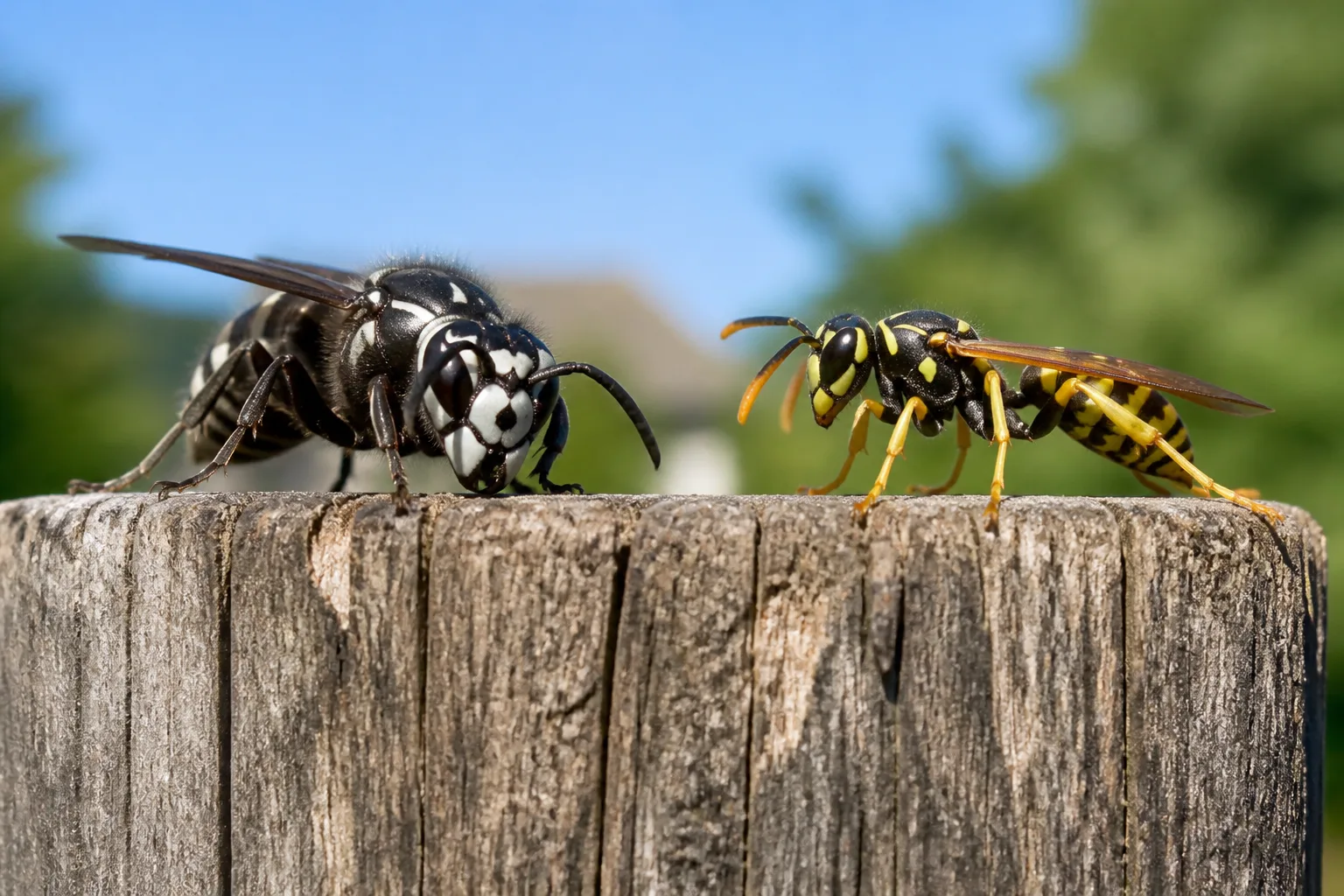
“Wasp” is a broad everyday label. Paper wasps, yellowjackets, bald-faced hornets, mud daubers, bees, and harmless flies can look similar at a glance, and exact identification is rarely necessary for getting one insect out of a room. Use broad clues from a distance, then prioritize behavior and location over color.
Wasp, bee, or fly body clues
Wasps generally have a narrow waist, relatively smooth bodies, and wings that fold lengthwise when resting. Bees tend to look rounder and hairier, while flies have only one pair of wings and a different hovering pattern. A yellow-and-black insect is not automatically a honeybee, and a large black-and-white insect may be a bald-faced hornet, which is a type of wasp rather than a true hornet.
These clues help you avoid an obvious misclassification, but do not lean close to inspect stripes or wing position. If the insect is in a room and no nest is visible, handle it as a stinging insect until it is outside.
Open comb, enclosed paper nest, or hidden nest clues
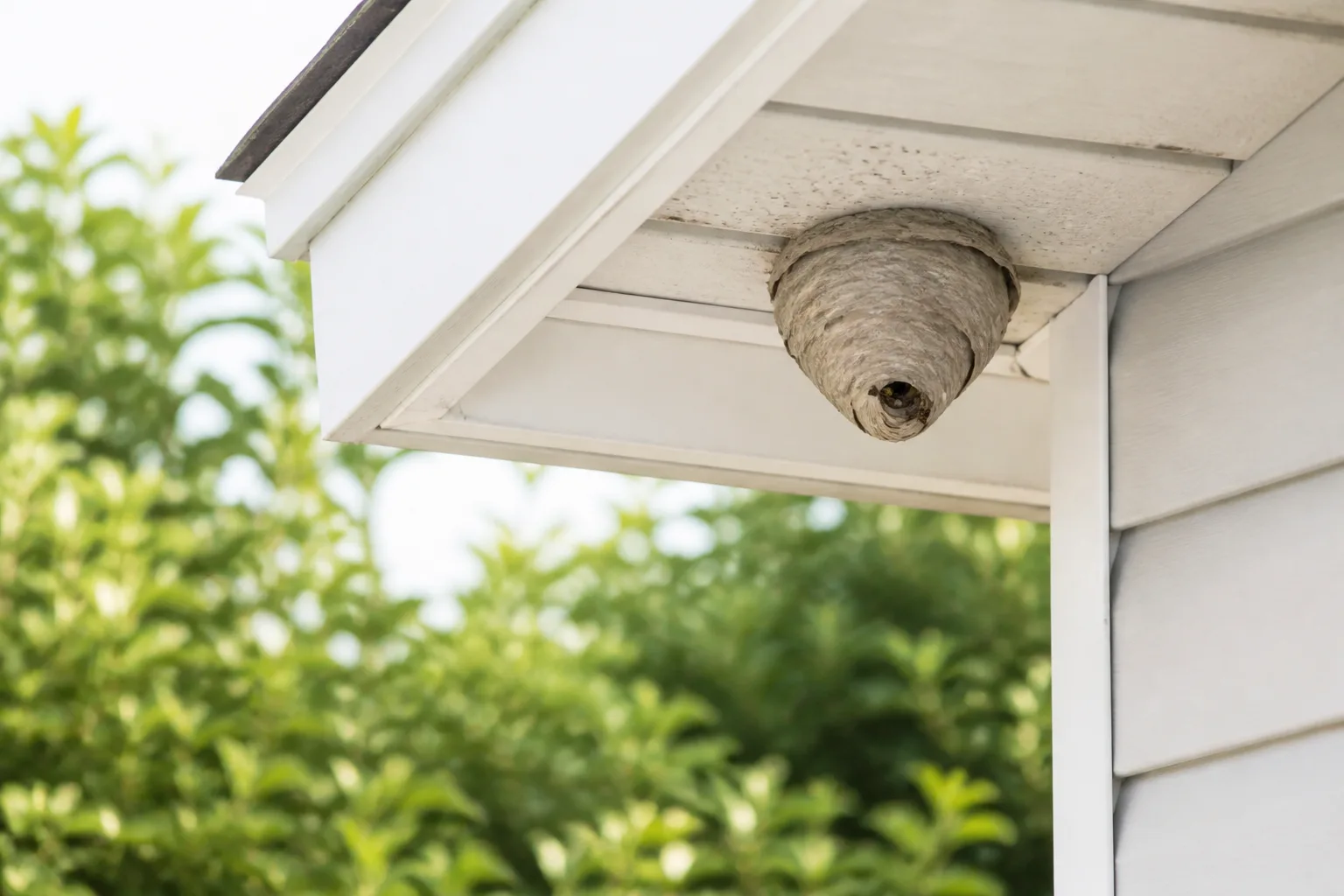
If you can see a nest from a safe distance, an open umbrella-shaped comb under an eave is consistent with a paper wasp nest. An enclosed gray paper ball or football-shaped structure in a tree, under an overhang, or near a building may indicate a hornet-type wasp. Yellowjackets commonly nest underground, but they can also use wall voids or other protected cavities.
Gardening Know How’s nest-identification guide describes these broad nest differences and also emphasizes that wasps can be valuable predators and pollinators when they are away from human activity (Gardening Know How on identifying wasp, hornet, and bee nests). The practical takeaway is not to walk closer for a better photograph. If a nest is visible and close to a doorway, play area, pet run, or window, create distance and arrange appropriate removal.
Stray Visitor or Nearby Nest?
One wasp in a house does not prove that a nest is inside. It may have entered through a door, torn screen, open window, chimney, attic vent, or small gap around an air-conditioning unit. Warm weather, bright windows, and indoor lights can also make a wayward insect easier to notice.
Repeated sightings change the calculation. Watch from indoors or from a protected position for a consistent flight path: wasps disappearing into the same siding gap, soffit, attic vent, roof edge, wall crack, or utility opening are more concerning than wasps appearing in unrelated rooms. A steady stream of insects is stronger evidence than an arbitrary number of sightings per week.
Season matters too. In many parts of the United States, social colonies grow through spring and summer and can contain far more workers by late summer. The Pacific Northwest Pest Management Handbooks note that yellowjackets and hornets can become especially troublesome in late summer and early fall, and that wall voids are among their possible nesting sites (Pacific Northwest Pest Management Handbooks on wasps and bees).
Record the location and direction of flight rather than trying to block the opening. That information helps a pest professional find the source and prevents you from accidentally sealing live wasps into a wall where they may seek another route into the house.
How to Use the Glass-and-Paper Release Method
Use this method only for a single, landed insect in an open area, with no visible nest nearby and no one at high risk in the room. Choose a clear, sturdy glass or smooth container that is large enough to cover the insect without pressing it against the surface. Also get a piece of stiff card or thin cardboard wider than the rim; flimsy paper can bend and leave a gap.
- Put on shoes and, if practical, a long-sleeved shirt. Keep children and pets out of the room.
- Wait until the wasp lands on a flat window, wall, floor, or other stable surface.
- Approach slowly from the side and place the clear glass over it in one controlled movement.
- Slide the card under the rim while keeping the glass pressed gently against the surface.
- Carry the covered glass outside without shaking it. Keep your hands away from the open edge.
- Set the container down, slide the card away, and step back before the wasp flies.
Do not use your bare hand, even if the insect appears dead. A wasp can sting when compressed, and a cold or stunned insect may become active after it warms. The extension resource Pests In The Home recommends this kind of physical control for a single insect while reserving nest removal for situations where human contact is likely (Pests In The Home integrated pest-management plan for wasps).
What to Do If You Lose Sight of the Wasp
Do not immediately assume it left. Close doors to bedrooms, bathrooms, closets, and other rooms, then search the original room from the doorway with a flashlight or daylight. Wasps commonly move toward light sources, so check windows, skylights, blinds, curtain folds, lamp shades, ceiling corners, and high wall surfaces first.
If it is not there, inspect warm or sheltered areas without moving heavy appliances or reaching behind them. Look near the tops and backs of curtains, around ceiling fixtures, behind wall hangings, near warm appliances, and around open drinks or sweet food. In colder months, a slow wasp on a windowsill may be an overwintering queen emerging from a protected space rather than evidence of a full indoor colony.
Leave the room quiet and isolated while you look. Never put your face, bare hands, or a ladder into a dark void to locate an insect. If you hear repeated buzzing or find several insects around the same opening, stop searching and arrange an inspection.
What to Do If You Find a Wasp Nest
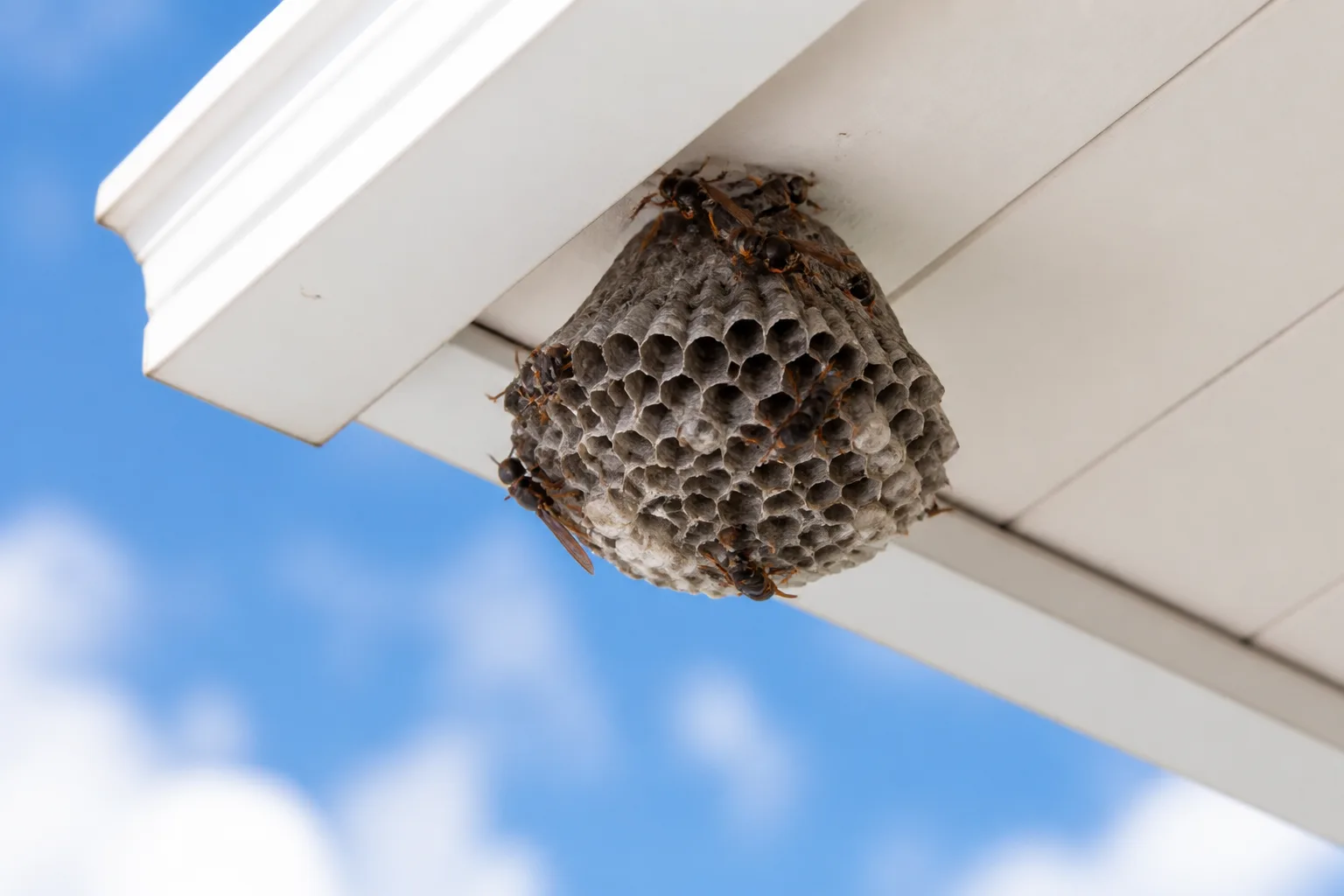
Do not knock down, poke, cover, flood, or spray an active nest on impulse. Nest-defending wasps respond to vibrations and disturbance, and the danger comes from the group rather than just the insect you can see. Keep people and animals away, close nearby windows and doors, and avoid mowing, blowing leaves, drilling, or using a ladder near the nest.
Do not seal the entrance before the colony is dealt with. Caulk, expanding foam, tape, or a towel may block the visible hole while leaving wasps inside the structure; they can then emerge through a vent, light fixture, baseboard, or another interior gap. Removal or treatment comes first, and sealing is a follow-up repair once the source is confirmed inactive.
Call a qualified pest management professional when the nest is inside a wall, ceiling, attic, chimney, soffit, roof edge, or other cavity; when it is large or hard to reach; when multiple insects are present; or when a resident has a known sting allergy. Ask what species or nest type they suspect, where the colony is located, how people and pets should be kept clear, and what follow-up repair is needed.
Why a wall-void nest needs professional help
A wall nest is not just a nest with a smaller entrance. You cannot see its size, number of openings, or the route insects use inside the structure. Spraying the visible hole may fail to reach the colony, push insects deeper into the building, or create a new exit indoors.
Professional treatment decisions depend on the product label, nest location, species, access, and the people or animals using the space. Never pour gasoline, diesel, paint thinner, or another flammable liquid into a nest or wall opening; extension pest-management guidance identifies this as dangerous and environmentally harmful. Indoor pesticide use should never be improvised from an outdoor product label.
What to Do If Someone Is Stung
Move away from the insect and the nest area first. If several insects are present, go inside or into a closed vehicle rather than swatting while running. A wasp can sting repeatedly, so getting to safety matters more than inspecting the sting immediately.
Most stings cause pain, redness, and swelling at the sting site. A cold pack wrapped in cloth can help with discomfort, and the person should be watched for changes. Advice from a clinician or pharmacist is appropriate for questions about over-the-counter pain or itch relief, especially for children, pregnancy, medication interactions, or unusual swelling.
Treat the following as an emergency: trouble breathing, throat or tongue swelling, swelling of the face, widespread hives, faintness, confusion, vomiting with other allergic symptoms, or symptoms affecting more than one body system. AAAAI describes anaphylaxis as a life-threatening allergic reaction that requires immediate epinephrine and emergency medical care; do not wait to see whether an antihistamine fixes breathing or circulation symptoms (AAAAI anaphylaxis guidance).
If the person has prescribed epinephrine and an emergency action plan, follow it immediately and call local emergency services. After any serious reaction, arrange follow-up with an allergist so the trigger can be assessed and a future plan can be made. If the person was stung inside the mouth, has many stings, or is an infant or medically vulnerable, seek medical advice promptly even if the first symptoms seem limited.
How to Prevent Another Wasp From Entering
Prevention works best as a sequence: reduce attractive food and waste, inspect likely nesting and entry points, repair openings, and monitor the pattern. The goal is not to eliminate every wasp from a yard. Wasps help control other insects and can pollinate plants; the practical goal is to keep nest-building and foraging away from household traffic.
Seal screens, gaps, vents, and door edges
After any active nest has been addressed, repair torn screens and make sure doors close against intact weatherstripping and a working sweep. Check gaps around window frames, attic vents, soffits, roof edges, chimney caps, utility penetrations, and window air-conditioning units. Use an exterior-appropriate sealant or repair method suited to the material, rather than stuffing a hole with a temporary rag.
Start with the route you observed. If the wasp came through a kitchen screen, that repair has higher priority than caulking every crack in the foundation. If insects were entering a roof edge or wall cavity, have the source inspected before closing it so you do not trap an active colony.
Manage food, waste, water, traps, and deterrents
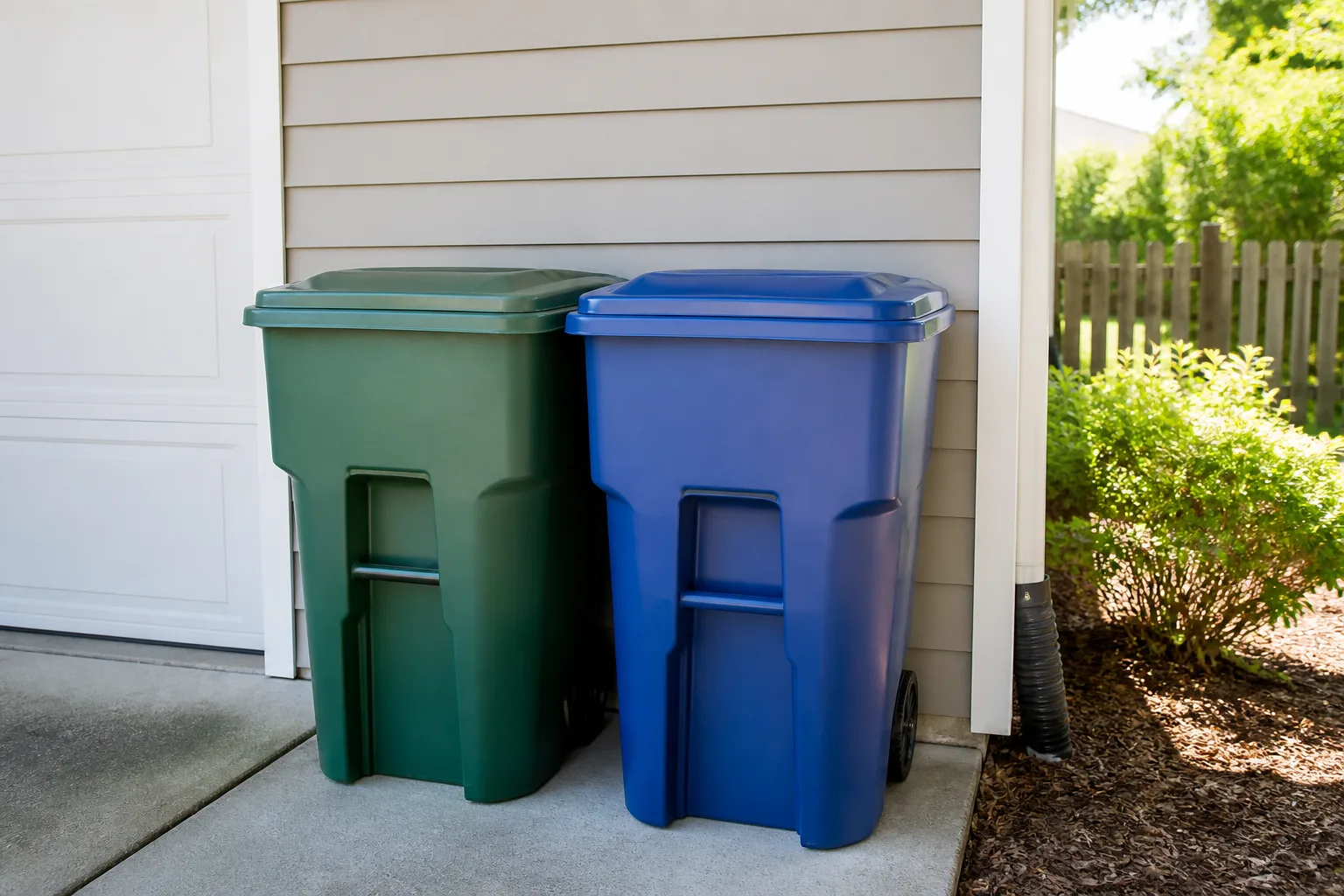
Keep sugary drinks, ripe fruit, meat scraps, and pet food covered, and wipe spills promptly. Use tight-fitting trash and recycling lids, clean residue from bins, and move outdoor waste containers away from doors and heavily used seating when possible. The extension integrated-pest-management plan calls these food and harborage changes more reliable than a single “repellent” trick.
Fix dripping outdoor faucets, plumbing leaks, and gutters that hold water near entry points. Keep flowering plants that attract many foraging insects from the narrow strip beside a doorway or children’s play area, while preserving flowers elsewhere for pollinators. This is a placement adjustment, not a reason to remove a healthy garden.
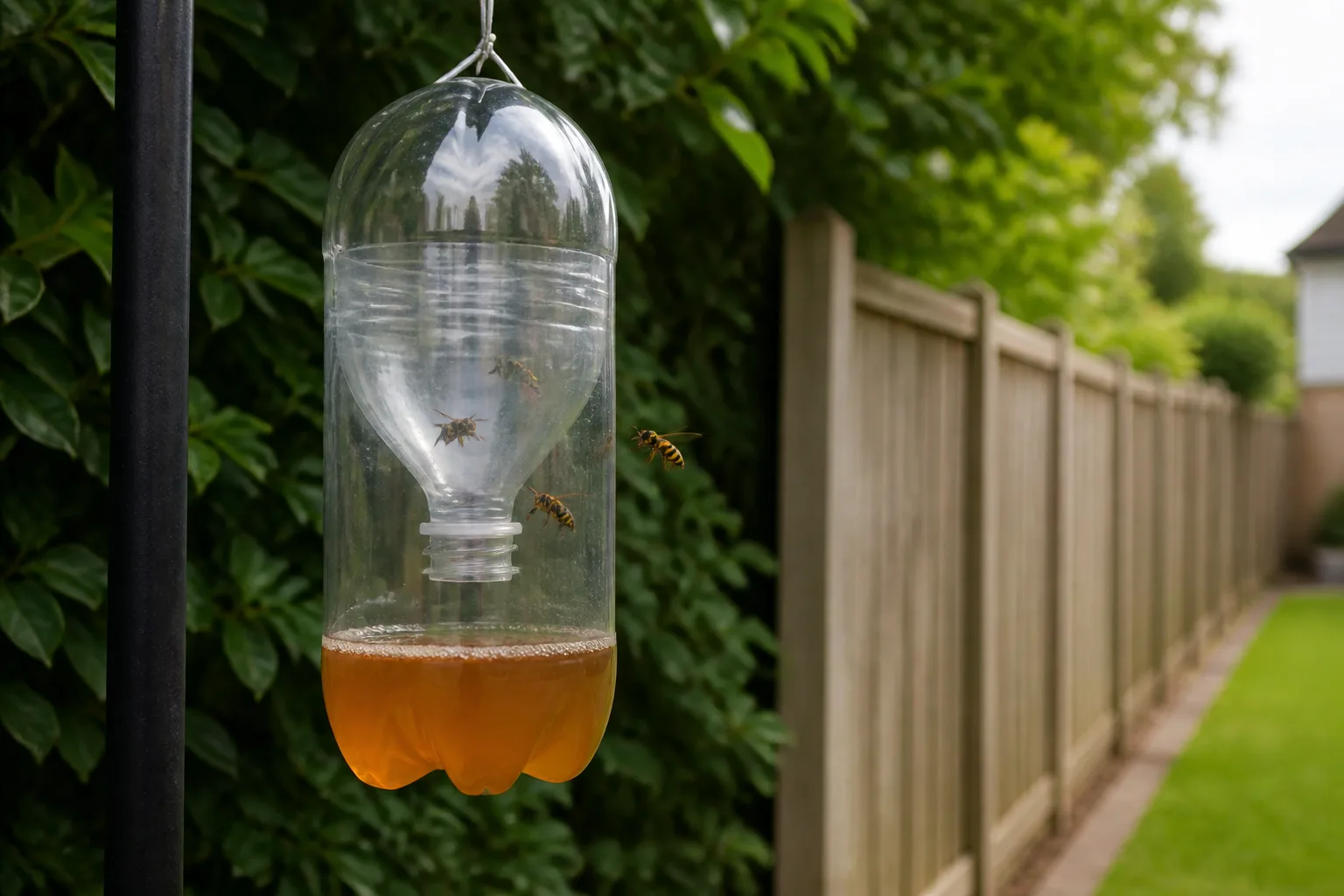
Traps can reduce some foragers temporarily, but they do not remove a colony. If you use one outdoors, place it well away from doors, patios, play areas, and pet routes; the Pests In The Home guidance recommends at least 20 feet from the house or gathering areas and out of reach of children and pets. A trap placed beside the back door can attract more wasps to the exact place you are trying to protect.
Fake nests and strongly scented plants are often presented as universal solutions. Gardening Know How notes that a decoy nest is based on territorial behavior and is not expected to work for ground-nesting types; treat it as an optional early-season deterrent, not proof that a house is protected. Mint, basil, or other plants may be pleasant additions, but no plant reliably stops an active nest in a wall or eave.
Conclusion
When a wasp gets inside, the safest response is controlled and simple: isolate the room, stay calm, create one bright exit, and wait. If the insect lands and there is no sign of a nest, use a clear glass and stiff card to release it outdoors. If you see repeated traffic, hear buzzing in a cavity, find a nest, or have an allergic person at home, skip the close approach and call a qualified professional.
Once the source is inactive, repair the screen or gap that let the wasp in, tighten food and waste habits, and place any outdoor trap far from people. The one action to avoid throughout the process is the one most likely to make a small problem dangerous: swatting at a wasp you could have calmly contained.