When to Cut Back Peonies by Type and Season
Find the right time to cut back peonies after frost or natural dieback, plus safe cut heights for herbaceous, Itoh, and tree peonies and simple cleanup steps.
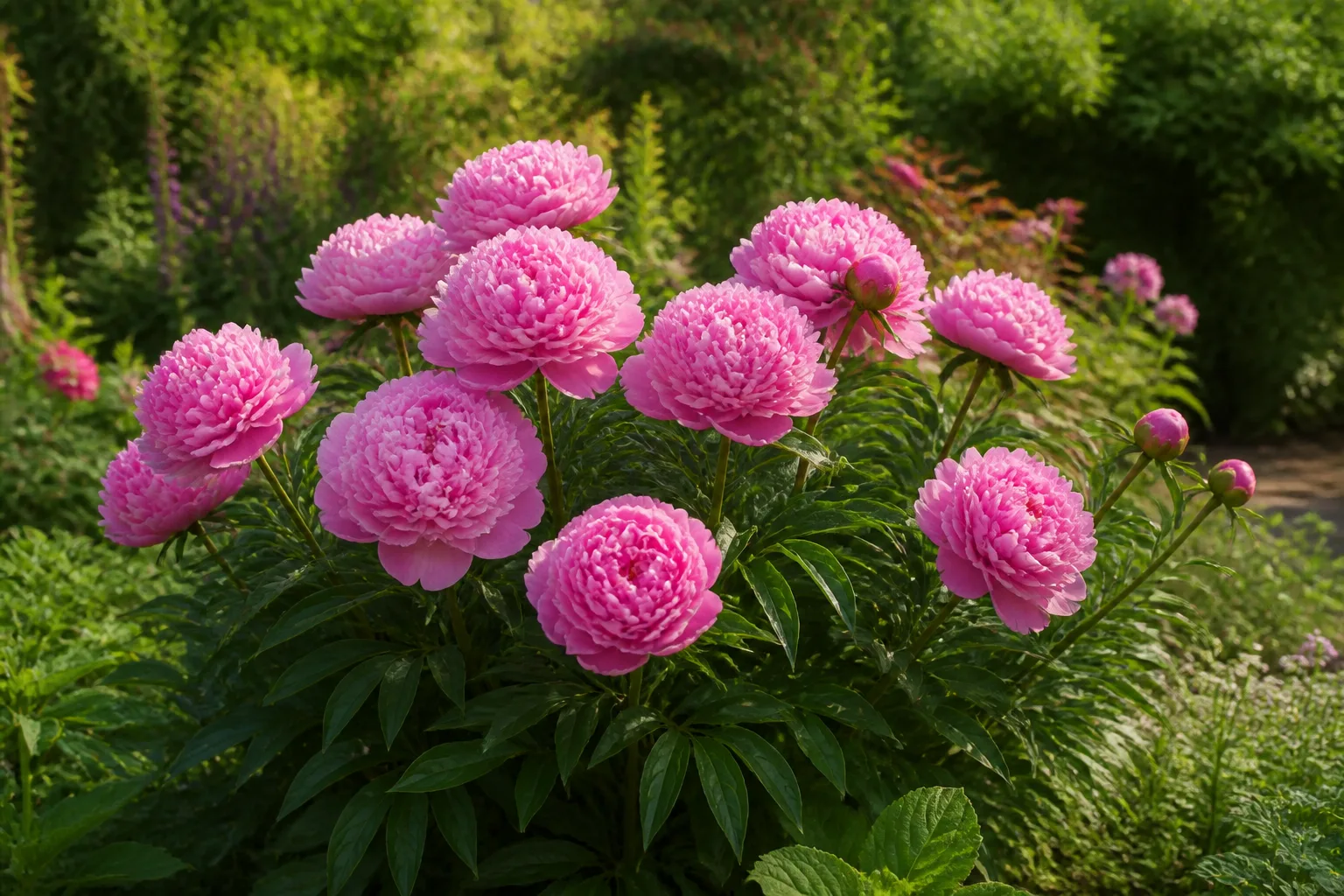
For most garden peonies, wait until the foliage has died back in fall—or until a hard frost has finished it—before cutting the stems near the ground. The key exception is diseased or completely dead growth, which can be removed earlier. Another is the tree peony: it keeps woody branches above ground, so do not shear it to the soil like an herbaceous peony.
If the leaves are still green, the plant is still using them. If they have turned yellow, brown, or collapsed after frost, the seasonal cutback is due. That cue is more reliable than a date on the calendar because frost arrives at different times from one region, garden, and year to the next.
The most useful first step is to identify which peony you have. Herbaceous, Itoh, and tree peonies share familiar flowers, but their stems behave differently in winter—and the right cut line depends on that difference.
The short answer: wait for dieback, then match the cut to the peony
Use this quick rule: remove spent flowers after bloom, leave healthy leaves through summer, then clear dead growth in fall according to the plant’s type. In a cold-winter climate, the full cutback usually follows a killing frost. Where frost is uncommon, wait until the leaves have yellowed and the stems are clearly finished for the season.
| Peony type | What to remove in fall | What to preserve |
|---|---|---|
| Herbaceous | Dead leaves and soft stems, cut close to soil level | The crown and dormant buds at the soil line |
| Itoh / intersectional | Dead top growth down to the woody base, often a few inches above the soil | Woody tissue and visible buds on the lower stems |
| Tree | Fallen leaves and loose leaf stalks after frost; dead or damaged wood when appropriate | The living woody branches and their buds |
This is not a summer haircut. Iowa State University Extension advises waiting until a hard freeze has destroyed the foliage; its Iowa timing of late October or early November is a local example, not a universal deadline. The extension also warns that cutting plants in August or early September can lead to fewer blooms than cutting them in fall.
The Royal Horticultural Society’s herbaceous peony guide likewise places the cutback in autumn after the foliage dies, while the American Peony Society’s fall-cleanup guidance separates herbaceous, woody, and intersectional plants. Together, those cues answer the question more precisely than “cut them back in October”: look at the foliage and the stem structure before you cut.
Identify your peony before you prune
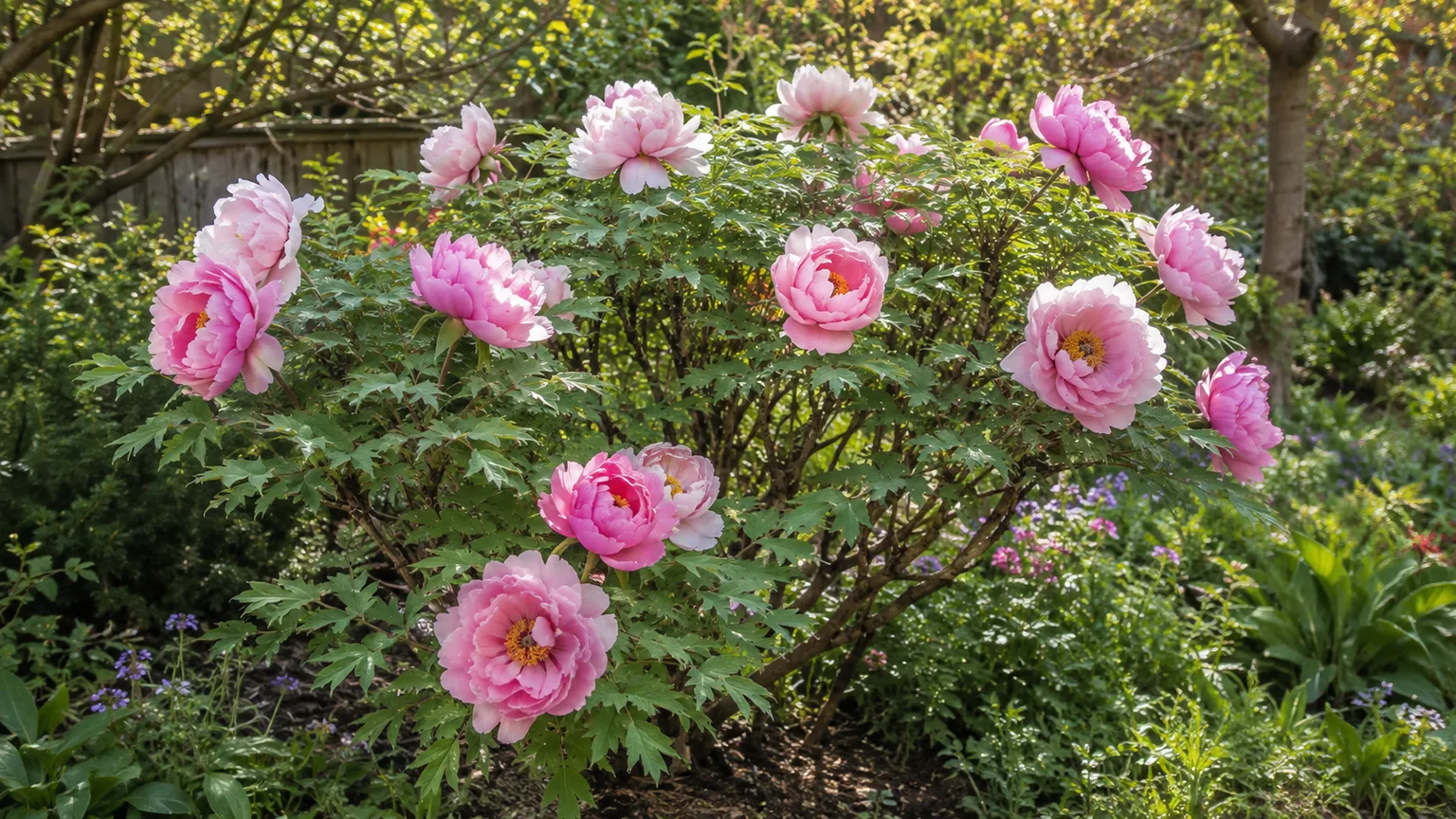
Most confusion comes from seeing a peony’s broad, leafy summer growth and assuming all peonies disappear in winter. That is true of herbaceous types, partly true of Itoh hybrids, and false for tree peonies. If you are unsure, look at the base in late summer: soft green stems that rise anew from the crown suggest an herbaceous plant; firm woody branches that remain year-round indicate a tree peony.
The plant tag, nursery record, or cultivar name can also help. If there is no label, take a photo of the base before pruning and compare it with reliable plant references; pausing to identify a plant is safer than removing a woody framework that carries next year’s buds.
Herbaceous peonies die back to the crown
Herbaceous peonies produce leafy shoots from an underground crown each spring. Those stems are not permanent branches; after the growing season they naturally yellow, dry, and collapse, and the plant rests below ground until new shoots emerge the following spring.
Once the tops are dead, cut the stems close to the soil surface and gather the leaves. Do not dig, scrape, or slice into the crown while trying to make the bed look perfectly bare. The dormant buds sit at the plant’s base, and a careful cut just above soil is all the cleanup requires.
Itoh peonies keep a short, partly woody base
Itoh, or intersectional, peonies combine herbaceous and tree-peony traits. Their soft upper growth dies back, but lower stems can be thicker or partly woody and may hold buds. The American Peony Society recommends cutting an Itoh where the growth becomes woody, often about 4 inches above ground, and preserving any side buds; that is a useful guide when the base is visibly persistent.
Other reputable guides simplify the instruction and say to cut intersectional plants down after the foliage fully dies. Because individual cultivars and stems can differ, do not force a uniform ground-level cut if you can see firm woody tissue or a healthy bud. Remove only the dead leafy growth, leaving the lowest sound section intact; if the stem is entirely soft and dead to the crown, a low cut is reasonable.
Tree peonies keep their woody framework
Tree peonies are woody shrubs, not herbaceous stems that need to be removed every fall. Their leaves drop, but the branches remain and carry buds for future growth. In autumn, clear fallen leaves and remove loose leaf stalks after frost if they come away easily; do not cut the whole plant to the ground.
The RHS tree-peony guide recommends minimal pruning: remove flowered shoots after bloom, remove dead shoots in late winter, and reserve any shape or size pruning for a specific reason. A mature, overgrown specimen may need selective renovation, but that is not routine fall cleanup. If you cannot distinguish a dead branch from a living one, wait until late winter when buds make the structure easier to read.
What to do right after peonies bloom
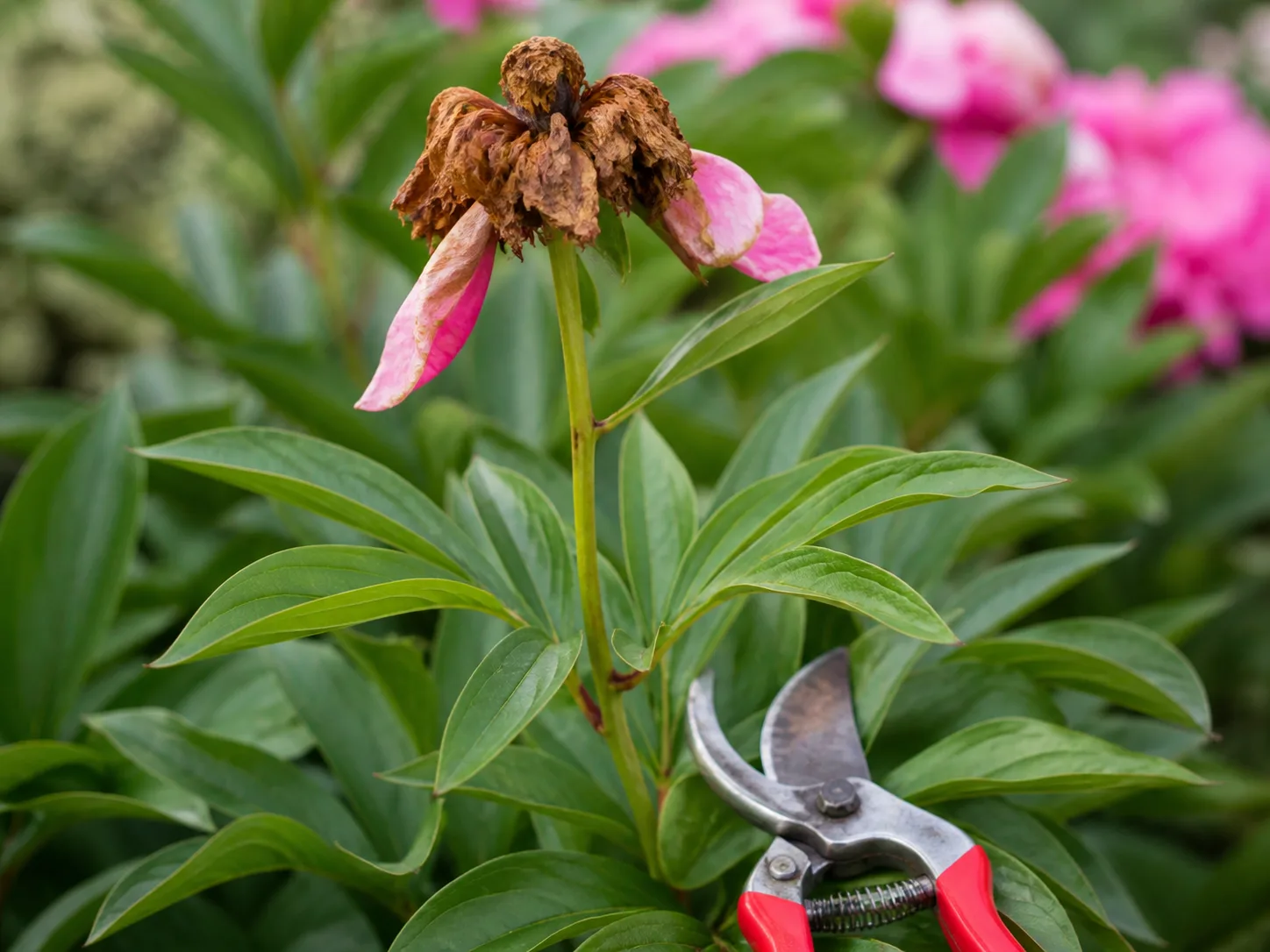
Flowering and fall cleanup are separate jobs, often several months apart. As the flowers fade in late spring or early summer, you can remove the spent flower heads for a tidier plant. Keep the healthy leaves and most of the stem; they are not finished just because the bloom is gone.
Deadheading does not make a once-blooming peony produce a second flush. It simply removes the old flower and, if you choose, prevents a seed pod from developing. If you want to collect seed or enjoy the seed heads, leaving some spent flowers is fine; it does not change the fall foliage rule.
Deadhead flowers without removing the leafy stems
Follow each faded flower stalk down to the first healthy leaf junction and make a clean cut just above it. Avoid taking a long section of leafy stem with the bloom, especially on a young or small plant with limited foliage. The goal is to remove the finished flower head, not to reshape the entire clump.
Use bypass pruners or sharp garden scissors that cut cleanly instead of crushing the stem. If several cultivars are blooming at different times, deadhead only the flowers that have faded; there is no need to cut the whole plant on one day. The RHS deadheading guide describes the general practice of cutting spent flowers back to a suitable leaf or bud, which is a helpful way to keep the cut local to the bloom.
Keep healthy green foliage through summer
Peony leaves continue to support the plant after flowering. Cutting all of them off in June, July, or early August removes working foliage during the growing season and can reduce the plant’s ability to flower well the following year. Iowa State Extension specifically notes fewer blooms may follow a cut made in August or early September compared with fall cleanup.
Some leaves may look spotted or tired by midsummer. A few blemishes do not automatically mean the plant is in danger: Illinois Extension notes that powdery mildew and leaf blotch are common, often unattractive, and generally not serious threats to peony health. Keep the green, functional parts where possible and remove only leaves that are fully dead, badly infected, or collapsing into wet debris.
Choose the fall cutback date by plant cues
In many northern gardens, the easy cue is a hard frost that turns most of the herbaceous foliage limp and brown. If a freeze arrives early but leaves remain mostly green and healthy, do not treat a light frost as a deadline; wait for the foliage to finish. Iowa State’s late-October-to-early-November timing applies to Iowa conditions, while a colder site may reach the same stage earlier and a mild site later.
A practical test is to inspect several stems rather than judging one leaf. When most foliage has yellowed or browned and the stems no longer look actively green, the plant is shutting down. Cut then, before the debris sits through a long, wet winter, especially if the peony had disease during the season.
In cold-winter gardens, use frost and leaf condition
After a killing frost, herbaceous foliage often becomes limp, dark, and easy to separate from the crown. That is a convenient moment to tidy the bed because the leaves are no longer doing much useful work. If the plant still has substantial green foliage after a light frost, give it more time unless there is a clear disease problem.
Some gardeners use the calendar as a reminder to inspect peonies, not as the final signal. Start checking in early fall, then make the cut when the plant is actually dormant. The BBC Gardeners’ World peony guide advises waiting until herbaceous and intersectional foliage has died back fully before cutting; it also cautions gardeners to mark the location because dormant crowns can be hard to see in winter.
In mild climates, wait for natural senescence
If your garden does not receive a hard frost, do not wait indefinitely for one. Let the leaves age naturally from green to yellow or brown, then remove the spent stems once the plant has clearly entered dormancy. A mild-climate garden may reach this stage later than a cold one, and the exact week can shift with cultivar, rainfall, and autumn temperatures.
If warm weather keeps the leaves green, allow them to remain. A calendar date alone is not a reason to strip them. If they are diseased, remove the affected portions selectively and revisit the plant when the rest of the foliage has finished for the season.
How to cut back herbaceous peonies safely
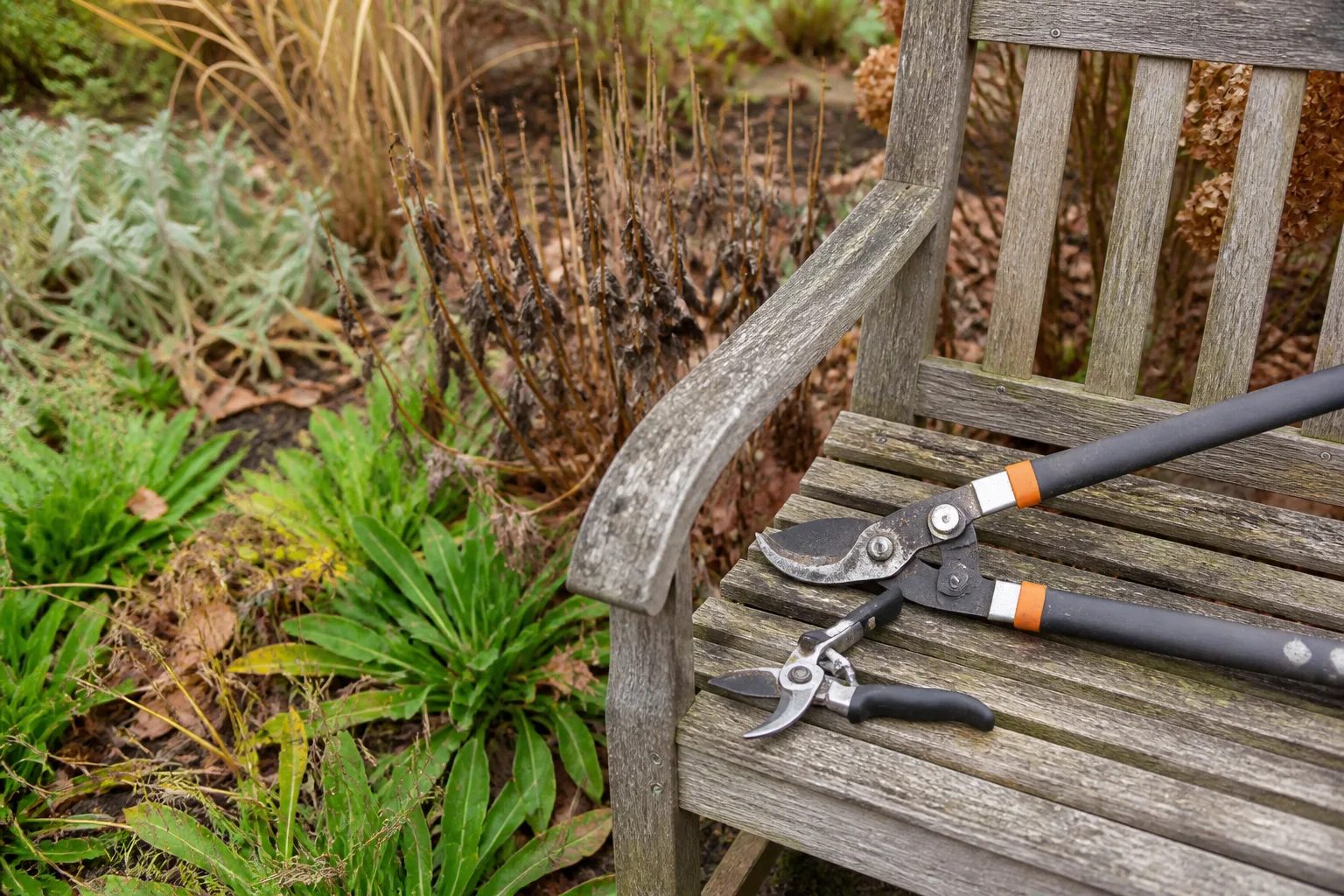
Wait for a dry day if possible, particularly if you are working around plants with leaf spots or mold. Gather clean pruners, a bucket or bag for the cut material, and gloves if you prefer them. You do not need a hedge trimmer or a heavy tool; a sharp hand pruner or garden shear gives you more control around the crown.
Work one clump at a time. Hold the stems away from nearby new shoots or evergreen plants, cut the dead tops, and collect the leaves immediately rather than leaving them around the base. The main risks are cutting healthy foliage too early, nicking the crown, and leaving disease-prone debris in the bed.
Use a clean cut near the soil without nicking the crown
For herbaceous peonies, cut the dead stems close to ground level. “Close” does not mean scraping a blade across the soil or cutting below it; leave a small stub if that is what it takes to avoid damaging the crown. When an old stem is tough, make a controlled cut instead of twisting or yanking it out of the crown.
For an Itoh peony, follow the lower stem down until it becomes firm or woody and stop above visible buds. For a tree peony, do not use the herbaceous ground-level rule on the permanent branches. The American Peony Society’s seasonal recommendations are particularly useful for these distinctions: cut herbaceous growth to the ground after it is spent, keep the woody framework, and preserve the partly woody base and buds of Itoh types.
Remove debris and handle diseased foliage carefully
Rake or pick up fallen peony leaves, not just the upright stems. If the plant showed leaf blotch, powdery mildew, or another recurring fungal problem, do not leave its foliage under the plant or mix it into a home compost pile. Illinois Extension explains that these diseases can overwinter on infected plant material and recommends removing it from the landscape rather than composting it.
Healthy, disease-free trimmings can be handled according to your local compost or yard-waste rules. When you are unsure whether a leaf is infected, keep it out of the garden bed and use household trash or an accepted municipal yard-waste service. Avoid burning plant waste unless local rules and fire conditions expressly allow it.
Clean soil and sap from the blades before moving to another plant. If you cut visibly diseased tissue, disinfect the pruner blades between plants; when disease is severe or you are cutting several affected stems, sanitize between cuts as well. This limits the chance of carrying contaminated material from one peony to the next.
When to remove diseased leaves before fall
The “leave it until fall” rule applies to healthy foliage, not to a disease that is actively spreading. Remove a fully dead leaf, a collapsing stem, or a badly affected section when you find it, especially if it is contacting healthy leaves or trapping moisture in the center of the clump. Make the cut on a dry day and keep suspect debris out of the bed.
Look for patterns rather than assuming every brown patch means the plant is dying. Illinois Extension describes peony leaf blotch as purplish-brown spots on the upper leaf surface, with darker brown tissue below; powdery mildew begins as small white patches that can spread over a leaf. Botrytis may cause young shoots to wilt or buds to brown before opening. These symptoms can help you decide what to remove, but an unfamiliar or rapidly spreading problem is a good reason to ask a local extension diagnostic service rather than guessing at a treatment.
For mild late-season spotting, do not strip every green leaf just to make the plant look perfect. The University of Maryland Extension’s peony leaf blotch advice recommends leaving green tissue that is still supporting the plant and removing diseased material after it browns or dies back. Illinois Extension’s disease guidance also notes that these diseases can overwinter on infected material. If the disease is severe, follow local extension guidance for more immediate cleanup; sanitation reduces infected debris but does not guarantee that disease will not return.
If you cut too early or missed fall cleanup
If you cut a healthy herbaceous peony down while it was still green, there is usually no corrective cut or fertilizer that can replace the removed leaves. Leave any remaining healthy foliage alone, water during prolonged dry spells, and let the plant complete the season. It may bloom less strongly next year, but a single early cut does not prove the crown is dead.
If the plant has already been cut back, avoid digging around the crown or adding a thick layer of mulch over it. The most useful step is to let the dormant plant rest and resume normal care in spring. Keep the bed marked so you do not mistake the invisible crown for an empty patch and disturb emerging buds.
If you forgot fall cleanup, remove the old herbaceous stems and leaves in late winter or early spring before new shoots emerge. Work carefully because the new red shoots can be close to the old debris. Pick up leaves from around the crown, especially if there was disease last year. Tree peony leaves that remain attached can be removed after they dry or after frost, but do not cut its woody framework simply because the leaves are gone.
What to do after the stems are down
Once the dead growth is cleared, leave the crown visible and avoid burying it with mulch or compost. If you add mulch for winter in an exposed garden, keep it light and place it around the plant rather than over the crown. Deeply covering peony buds can interfere with flowering, so a protective layer should not become a mound on top of the plant.
Mark the location with a label, small stake, or garden map before the foliage disappears. This simple step matters when you weed, plant spring bulbs, or spread compost in winter. Gardeners’ World notes that dormant herbaceous and intersectional peonies can be difficult to see after cutback, so marking them helps prevent accidental damage to the crown and new buds.
Then stop pruning for the season. The next routine cut is deadheading after flowers fade, followed by the next autumn cleanup once the foliage has finished. That rhythm keeps the plant tidy without removing its leaves before they have completed their work.
Conclusion
For a typical herbaceous peony, cut back the foliage after it has died naturally or been finished by a hard frost, then remove the stems close to the soil without cutting into the crown. Keep green leaves through summer, remove diseased growth selectively when needed, and clear fallen debris at the final cleanup.
Before making that low cut, check the plant. Itoh peonies may retain a short woody base with buds, and tree peonies keep permanent branches that should not be treated as seasonal stems. Identify the type, follow the foliage cues, and the right cut becomes a simple end-of-season task rather than a guessing game.



