Where to Cut Orchid Stems After Bloom by Orchid Type
Find where to cut orchid stems after bloom, from a green Phalaenopsis spike to a dry stalk. See the right node, base-cut method, and species exceptions.
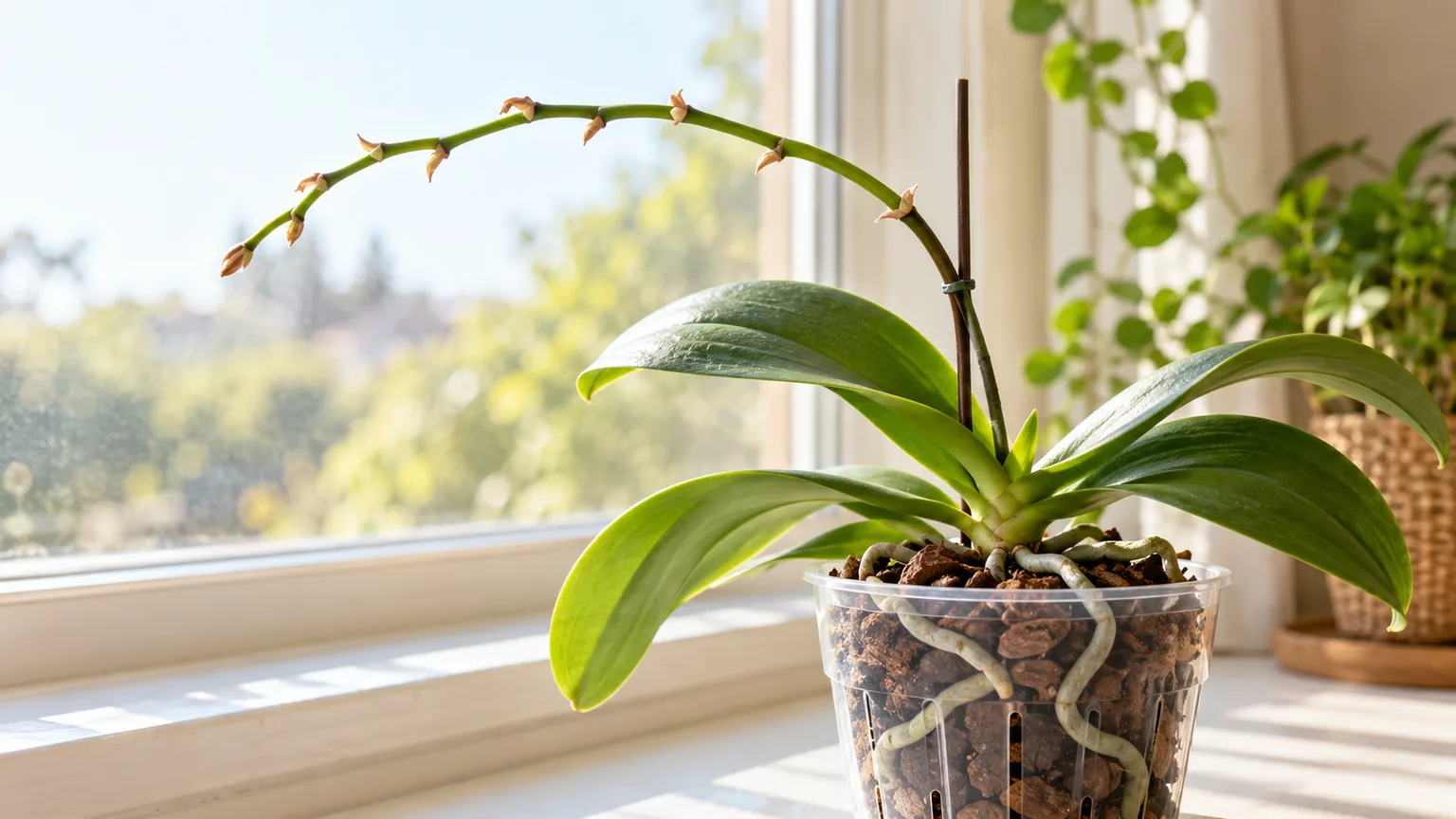
When an orchid drops its last flower, do not cut the whole upright structure just because it looks finished. First identify whether it is a flower spike, check whether it is still green, and decide whether your orchid is a type that can use an old spike again.
For a typical moth orchid (Phalaenopsis), a healthy green spike with an unused node can be shortened above that node for a chance at a smaller second branch. A fully brown, dry spike can be removed near its base; a weak plant may also be better off with a green spike removed so it can focus on roots and leaves. Other orchids follow different patterns, so the safest cut depends on the plant’s growth habit.
The quick answer: match the cut to the orchid and the spike
If you have a familiar grocery-store Phalaenopsis, use this as the starting point: leave a firm green spike alone if you are unsure, or cut above the second unused node if the plant is healthy and you want to try for another branch. Cut a completely dry, brown spike close to where it joins the plant, taking care not to nick the crown or a leaf.
That is not a universal rule for every orchid. The American Orchid Society’s spike guidance makes the deciding factors explicit: genus, unused nodes, and whether the plant can support another flush. If you cannot identify the orchid, remove only clearly dead or diseased material and leave a green spike in place until you can confirm its growth habit.
| What you see | Where to cut | Best reason |
|---|---|---|
| Common Phalaenopsis, vigorous plant, green spike with unused nodes | A short distance above the second usable node from the base | Try for a secondary branch; expect uncertainty and often a smaller display |
| Green Phalaenopsis spike, weak plant or damaged roots | Close to the base without cutting into the crown | Let the plant direct resources to recovery |
| Spike is brown and dry through most or all of its length | At the base of the flower spike | The old flowering section is finished |
| Unfamiliar orchid with a green spike | Do not cut yet | Some types flower again from old spikes or canes |
Identify the part you are cutting
“Orchid stem” is a useful everyday phrase, but an orchid has several structures that can be mistaken for one another. The thin, often arching stalk that carries buds and flowers is the flower spike or inflorescence. On a moth orchid it emerges between the leaves; a root typically comes from the lower stem, has a rounded growing tip, and may arch out of the pot.
Do not cut the plant’s crown, the compact center where new leaves emerge. A flower spike is narrower than the leaves and bears small raised joints with triangular flaps; the crown is the leaf-bearing center itself. If a new structure has just appeared and you cannot tell whether it is a root or spike, wait until the tip develops rather than making a guess with scissors.
The same caution applies to orchids that grow in a chain of thickened stems. A pseudobulb or cane stores resources and may support future growth, even after its own flowers have faded. Cut only the thin flower stalk unless you have identified a species-specific reason to remove an old cane or bulb.
Wait for the petals to fall, then inspect the spike
You do not need to prune the moment the last flower drops. Give the remaining spike a little time to show what it is doing: it may stay green, begin to yellow, or dry back from the tip. A brief wait also helps distinguish a spent flower stalk from a living one that may carry a bud, branch, or keiki.
Look at the spike from base to tip and feel only gently. Green, firm tissue is still alive; tan or brown tissue that is dry and brittle has died back. If only the tip is dry, do not assume the whole spike is dead: on a Phalaenopsis, you can cut below the dead section while preserving healthy lower nodes, provided the plant is vigorous.
Act sooner if a spike is soft, blackening, or visibly rotting rather than simply drying. Use a clean blade to remove the affected section back to firm tissue, then inspect the crown and nearby leaves for spreading damage. Do not apply a fungicide just because a normal clean cut has been made; diagnose an active disease before reaching for treatment.
For a common Phalaenopsis, decide whether to keep green growth
Most gift orchids and supermarket orchids are Phalaenopsis, commonly called moth orchids. They have broad leaves in a low fan and produce flower spikes between those leaves. A mature, healthy plant may branch from a node on a green old spike, but the second flush is optional—not a required step for good care.
The trade-off is straightforward. Keeping part of a green spike preserves a chance for quicker flowers, but the plant has to support that branch while it is also growing leaves and roots. Removing the spike at the base gives the plant a longer recovery interval and may support a more robust later display; the right choice depends on the orchid’s condition and your preference for flowers now versus recovery.
Cut above a usable node for a possible side branch
Choose this route only when the spike remains green and the plant looks strong: several firm leaves, a stable crown, and roots that are not mostly hollow or mushy. Count from the base of the spike upward and look for two lower nodes that are still unused. Cut a small distance above the second one, below any section that has dried or browned.
This cut does not make a flower appear automatically. A viable node can produce a side branch, but it may stay dormant, produce a keiki, or do nothing visible; even a successful secondary bloom is often smaller than the first. The RHS also describes cutting a moth-orchid stalk above a lower node to encourage a side shoot, while emphasizing that a stem which turns pale and dry should be removed at the base (RHS Phalaenopsis growing guide).
If the old spike has several branches, preserve only the healthy, green portions that still have useful nodes. Remove the dead branch tips cleanly and do not cut through a swollen bud or an emerging side shoot. When no unused nodes remain, a node cut has no practical target; remove the spike at the base or leave it to dry first.
Cut at the base when recovery matters more
Cut a green spike at the base when the orchid has few healthy roots, limp or badly wrinkled leaves, a recent root-loss problem, or a small plant that is still establishing. A secondary branch can take energy from a plant that needs to rebuild. The American Orchid Society notes that a second inflorescence can stress the plant and is typically less strong than the original, so allowing the orchid to recover is often the better decision.
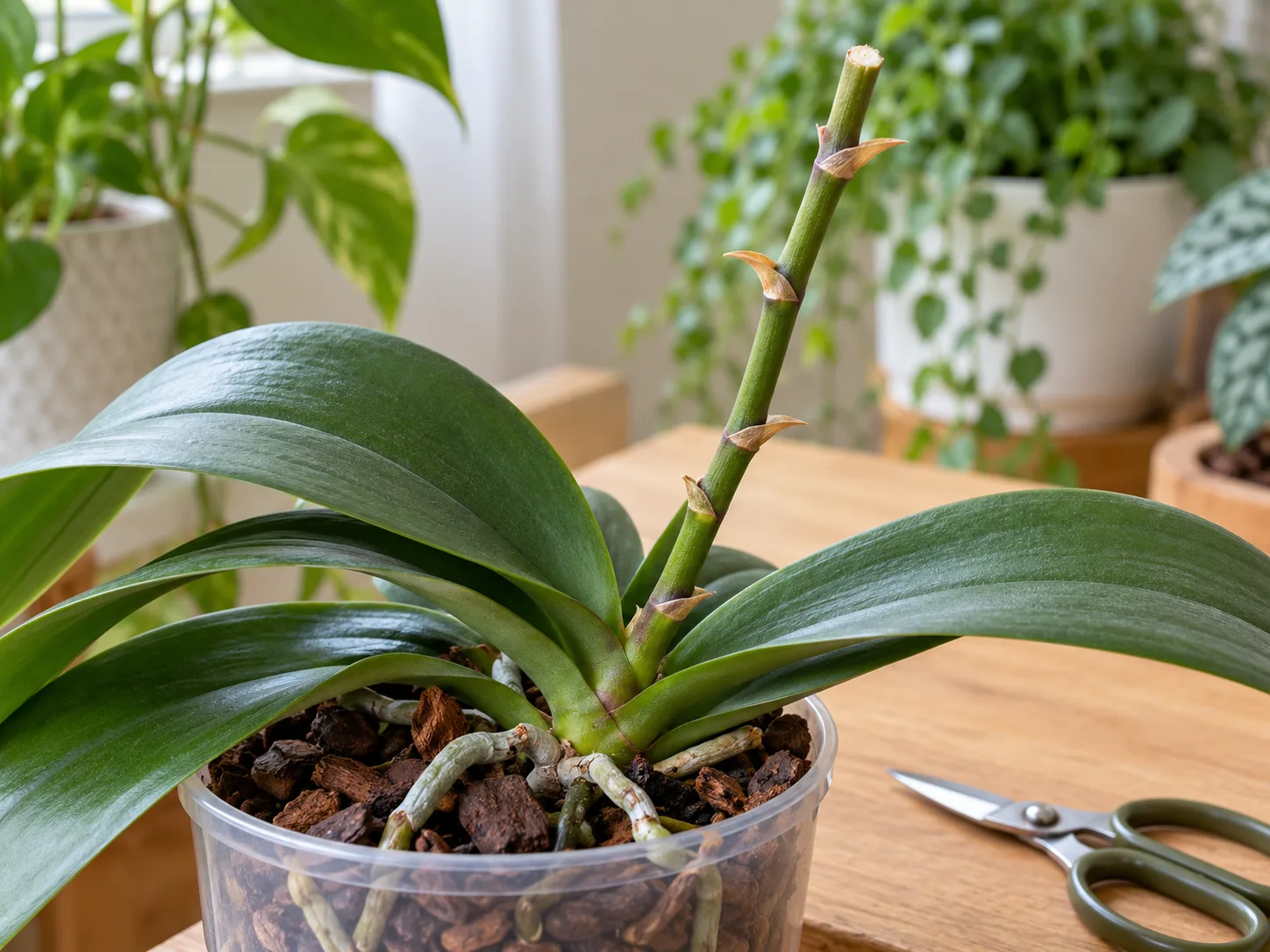
To make a base cut, follow the spike down to the point where it emerges between the leaves. Cut the flower spike close to that point without slicing into the crown, leaf bases, or central stem. If you are nervous about getting close, leave a short stub rather than risking a deeper wound; a dry stub is less damaging than a cut into the growing center.
Use the base cut as a choice, not a punishment for an orchid that looks temporarily quiet. Losing flowers does not mean the plant is failing, and keeping a spike is not always a sign of better care. If the plant is healthy but you want fewer risks and a more vigorous next cycle, a base cut is reasonable even when a node could potentially bloom.
Read an unused node before you cut
A node is a small growth point along the flower spike, usually covered by a triangular flap called a bract. On a Phalaenopsis, nodes look like slight raised joints or rings. A plump node with a bract still lying close to the stalk is more promising than a node whose bract has lifted away after already producing a branch or flowers.
Count upward from the point where the spike emerges, not down from the faded flowers. If the spike has already flowered from lower nodes, treat those as used and look above them for an unspent point. The American Orchid Society explains that a node used to grow a branch or keiki is unlikely to grow again, while lower bracts that still sit flush to the spike may remain viable.
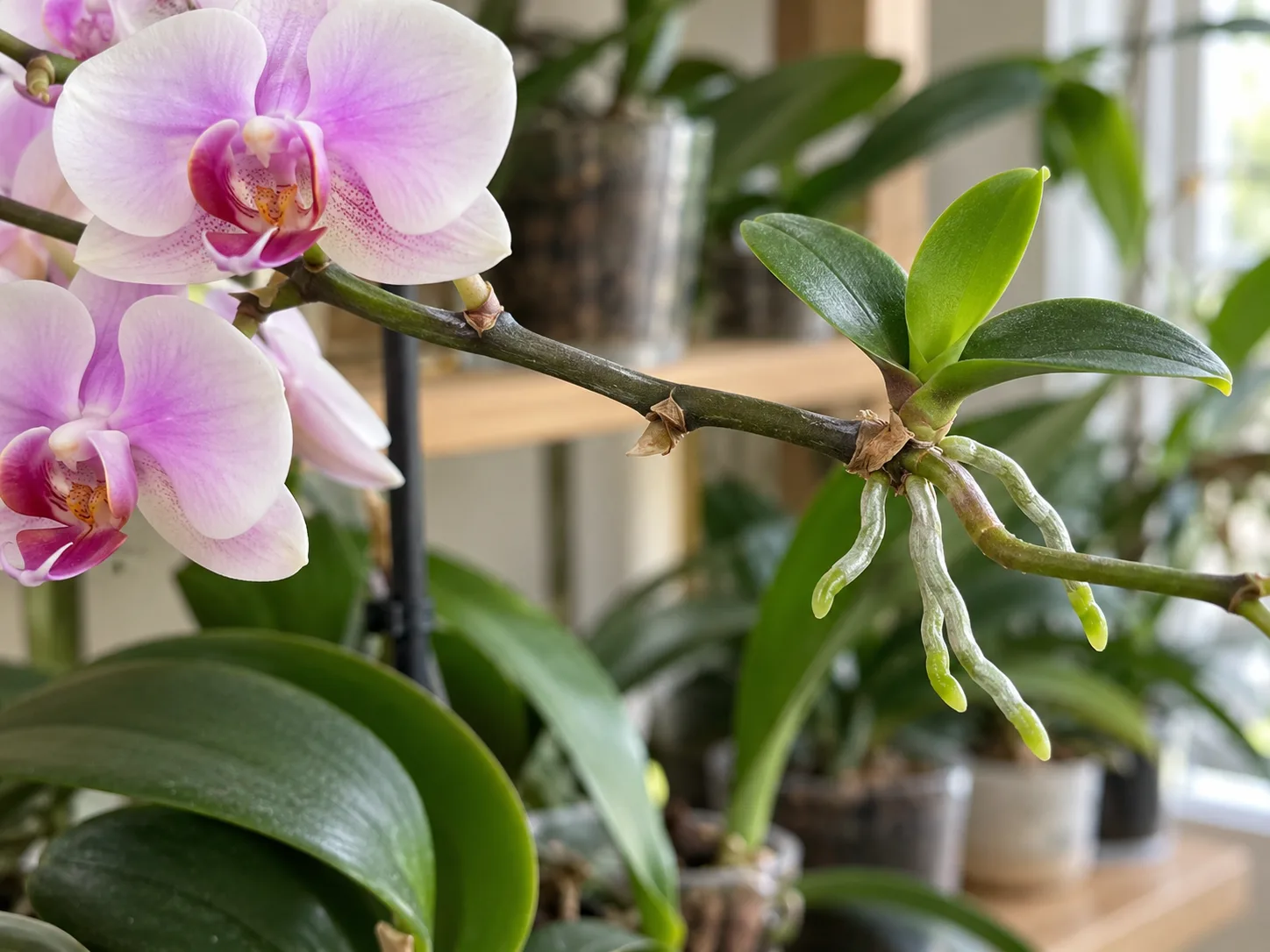
A node can grow a flower branch, but it can also produce a keiki, the small plantlet sometimes seen on a Phalaenopsis spike. That is one reason a green spike should not be cut just because the flowers have fallen. If a keiki has already formed, do not make a cut through its base; keep the attached spike until you decide whether to let the plantlet grow or remove it later.
Remove dry or damaged spikes at the base
When the entire flower spike has turned yellow or brown and feels dry, remove it at the base. The dried part will not support a new flower branch, and leaving a brittle stalk in place only keeps dead material attached to the plant. Follow the stalk to where it joins the orchid and make one clean cut just above the leaf axil.
If the spike is partly green and partly brown, trim only the dead upper section when the orchid is a Phalaenopsis and healthy lower nodes remain. Cut through firm green tissue a little above a viable node; do not leave a long dry end above it. If the browning is progressing downward or the stalk is soft rather than dry, treat it as damage and cut back to healthy tissue instead of preserving a node at all costs.
Brown spikes are not evidence that the whole orchid is dead. The leaves and roots may be healthy while the flowering structure completes its cycle. Continue ordinary care and inspect the roots and crown; a new flower spike generally comes from the plant’s normal growth cycle rather than from a dead stalk.
Other orchid types need different decisions
Orchids are a large family, and the familiar moth-orchid method does not apply to every genus. The key is to separate the disposable flower stalk from long-lived structures that store energy or can produce flowers more than once. If the plant label names a genus you do not recognize, look up that genus before cutting a green structure.
Novelty Phalaenopsis and sequential bloomers
Some novelty Phalaenopsis have short or branched spikes that keep flowering from the tip or from branches along the spike. Leave those spikes alone while they are green and actively extending; cutting at the base after the first flower falls can remove the next buds. Wait until the spike is clearly finished and drying before removing it.
The American Orchid Society also lists Psychopsis and some Dendrobiums as orchids that can flower repeatedly from the same spike. Their inflorescences can produce flowers in sequence, so an empty interval between blooms does not prove the spike is finished. Watch for remaining buds and new growth, and use the plant’s label or a genus-specific care source before pruning.
Cattleya, Paphiopedilum, and single-flush spikes
Many orchids, including much of the Cattleya Alliance and Paphiopedilum (slipper orchids), flower once from a spike. That spike normally dries after flowering and can be removed where it joins the plant. Do not treat the lack of a second bloom on that same stalk as a problem; the next flowers come from new growth on the plant.
With a sympodial orchid such as many Cattleyas, the flower stalk may emerge near a pseudobulb. Remove the thin stalk after it has finished, but leave the firm green pseudobulb and its leaves in place. Those structures can continue supplying the plant as it forms the next growth.
Dendrobiums, canes, and pseudobulbs
Dendrobiums are especially easy to mis-prune because the green cane is not the same as the flower spike. A cane may remain useful after the blooms fade, and some Dendrobiums flower again from older canes or produce new growth from the base. Cut only the narrow, spent flower stalk unless you have confirmed that the cane itself is dead and the species permits its removal.
The same caution applies to Oncidium and other sympodial orchids: old pseudobulbs may look wrinkled or less attractive while still storing resources for the connected plant. Remove a flower spike at its attachment point, not the bulb or cane beneath it. A green, unfamiliar stem is a reason to pause, not a reason to experiment with a hard cut.
How to make a clean cut
Use sharp, clean scissors, small pruning shears, or a sterile razor blade that can cut the stalk in one motion. Before starting, clear away fallen petals and inspect the whole spike so you know which nodes, branches, or buds you are keeping. Support the spike gently with one hand if needed, but avoid bending it or tugging at the point where it enters the plant.
Make the cut just above the selected node when keeping a green Phalaenopsis spike, leaving a short section of stalk above the bract. For a dead spike, cut near the base while keeping the blade outside the crown and away from leaves. A clean, deliberate cut is easier for the plant to seal than a crushed, ragged end from dull scissors.
Clean tools between plants, especially when one orchid has soft, black, or suspiciously discolored tissue. The editorial guidance from Epic Gardening also emphasizes sharp, clean tools for orchid pruning. Do not use the same unclean blade across a collection, and do not handle the new cut end repeatedly after pruning.
What a cut can and cannot do for reblooming
Cutting a green spike above an unused node can make a side branch possible; it cannot manufacture the energy, light, or seasonal cue the orchid needs to flower. That distinction is easy to miss when a plant produces a second flush quickly. The extra bloom is coming from a living node on a healthy plant, not from the cut itself acting as a flowering trigger.
A base cut also does not prevent a healthy Phalaenopsis from blooming again. It removes the old spike, so the next display must come from new growth rather than a branch on that stalk. In exchange, the plant can use the time between displays for leaves and roots, which support future flowering.
If you want another bloom, prioritize stable conditions after pruning. The RHS notes that Phalaenopsis can respond to a modest cooler period when a large healthy plant has not flowered, while the right light and warmth remain important for its growth. Do not expose a weak orchid to a sudden cold draft or force a temperature drop just to make a spike appear; cultivar, plant strength, and indoor conditions all affect timing.
For more detail on light, watering, and recovery after the flowers fade, see our orchid after-bloom care guide. The cut placement decision should still come first: a useful node is worth preserving only when the plant can support the growth that may follow.
Common cut-placement mistakes
The most common mistake is treating every orchid as if it were a grocery-store Phalaenopsis. A green spike may be an active, repeat-flowering structure on one orchid and an unused branch opportunity on another. Identify the genus if possible; if you cannot, leave green material intact until you know what it is.
Other mistakes are avoidable once you slow down for a minute:
- Cutting a green spike to the base automatically. This can remove a chance for a secondary Phalaenopsis branch or later flowers on a sequential bloomer.
- Keeping every green spike automatically. A weak or root-damaged plant may benefit more from recovery than another flush of flowers.
- Cutting the crown, root, cane, or pseudobulb. Confirm you are holding the narrow flower spike before making the cut.
- Counting used nodes as available. A node that has already flowered or produced a branch is not the same as a plump, unused node.
- Making a ragged cut with dull or dirty tools. A crushed stalk is harder to cleanly remove and unclean tools can move problems between plants.
- Expecting a scheduled rebloom. A node cut may produce no visible growth, and a base cut does not make the next spike arrive on demand.
Also resist the urge to cut lower every few weeks because nothing has happened. If the spike remains firm and green, leave it while you check plant health and identify the orchid. Repeated trimming removes viable nodes without solving the usual limits on flowering.
Quick decision guide
Use the plant’s visible condition first, then apply the genus-specific rule. This quick guide is a safe way to decide whether to trim now or wait for more information.
| Orchid and spike condition | Action | What the choice means |
|---|---|---|
| Healthy common Phalaenopsis; green spike; two lower unused nodes | Cut above the second unused node | Possible smaller secondary branch, not a promise |
| Common Phalaenopsis is weak, recently lost roots, or is still establishing | Cut the spike at the base | Prioritize roots and leaves over another flower flush |
| Entire spike is brown, dry, and brittle | Cut it near the base | Remove finished flower tissue without cutting into the crown |
| Spike is green but the orchid type is unknown | Wait and identify the plant | Avoid removing a structure that may flower again |
| Novelty Phalaenopsis, Psychopsis, or known sequential bloomer with a green spike | Leave the spike while it remains active | It may continue flowering from the tip or a branch |
| Sympodial orchid with green cane or pseudobulb | Remove only a spent flower stalk | Keep the energy-storing growth unless it is confirmed dead |
Care for the orchid after the cut
After pruning, return the plant to its normal care routine rather than changing several things at once. Keep a moth orchid in bright, filtered light, water according to the roots and potting medium, and let excess water drain. Do not compensate for the missing flower spike with extra fertilizer or a deeper watering.
Use the next few weeks to check the condition of the plant rather than to force a new flower. Firm leaves, healthy roots, and a growing leaf or root tip show progress even when no spike appears. If the plant is declining, investigate its roots and medium; a pruning decision cannot fix a root problem.
Repot only when there is a reason, such as broken-down bark, poor drainage, or unhealthy roots. A fallen flower is not by itself a repotting signal. The RHS growing guide and Gardening Know How’s Phalaenopsis post-bloom guidance both treat post-bloom care as a return to steady growing conditions, with spike pruning based on the plant and the remaining stalk.
Conclusion
For a common moth orchid, cut above the second unused node only when the spike is green and the plant is strong enough to try for another branch. Cut a fully brown, dry spike at its base, or remove a green spike there when recovery matters more than a possible smaller flush. If the orchid is unfamiliar, leave a healthy green spike alone until you know how that genus flowers.
Most importantly, make sure you are cutting the flower spike and not a root, crown, cane, or pseudobulb. A clean cut can preserve an opportunity or clear away dead tissue, but the orchid’s type and condition determine what happens next.



