When to Fertilize Peonies: Timing, Rates, and Tips
Learn when to fertilize peonies, when to skip a feed, how to follow a soil test and label, and why local timing matters more than a fixed calendar.
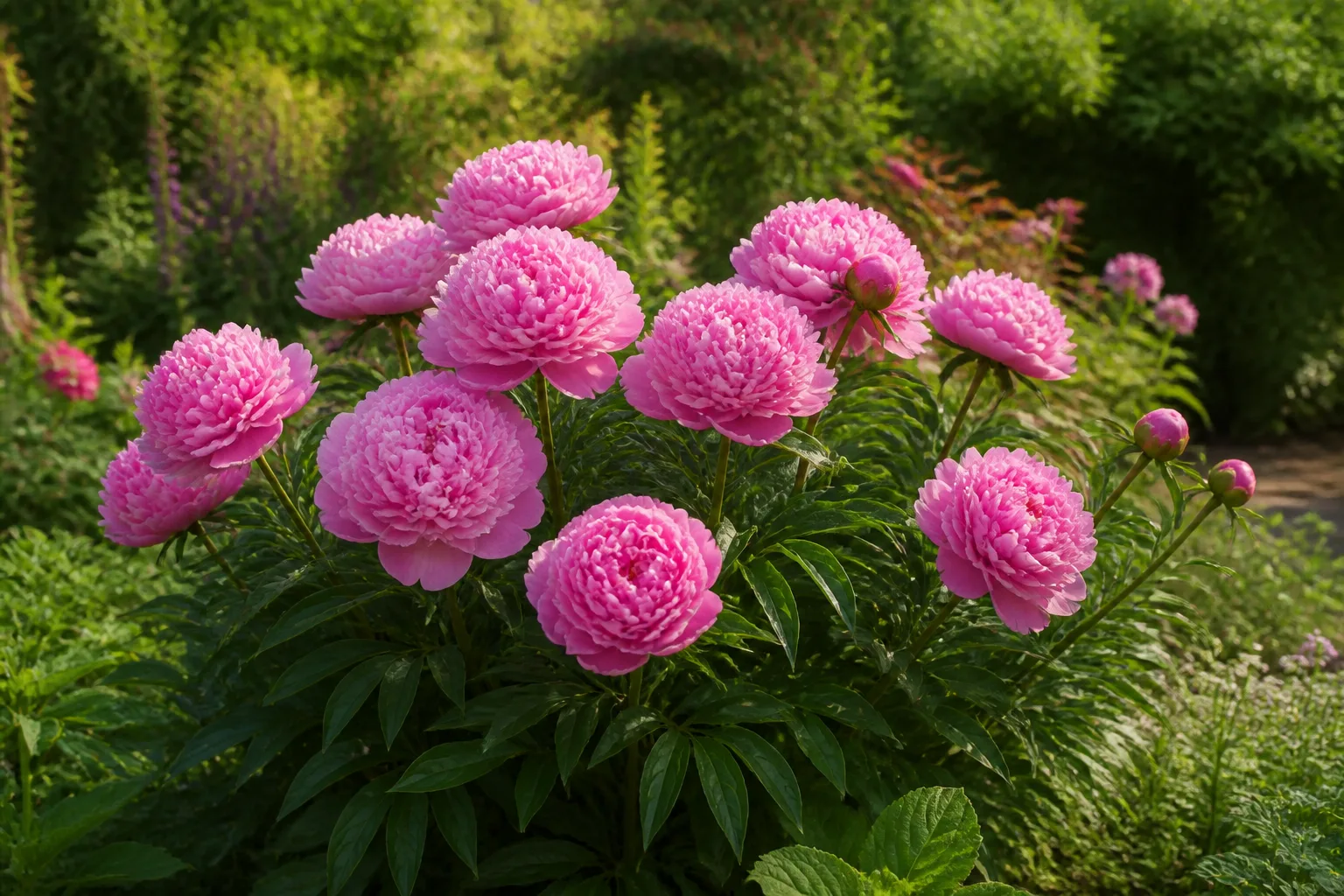
Most established peonies do not need two scheduled fertilizer applications every year. Start with the plant’s growth and a soil test; if the soil is already fertile and the peony is growing normally, adding fertilizer may waste money and create problems instead of improving blooms.
If a test or local Extension recommendation calls for nutrients, use the timing and rate for your region, the plant’s stage, and the exact product label. Recommendations range from early spring as shoots emerge to shortly after flowers fade, so there is no single calendar date or dose that applies to every peony bed.
The short answer
Fertilize a peony only when a soil test, a locally relevant recommendation, or a clear pattern of declining growth indicates that nutrients are needed. When feeding is justified, use the window recommended for your region—often spring shoot emergence or soon after flowering—rather than automatically feeding in both seasons.
Measure the product by its label rate and keep it away from the crown and tender shoots. Water granular fertilizer in as directed, then keep the root zone evenly moist without leaving the crown waterlogged. If the plant is healthy, flowering as expected, and growing in a mulched or compost-enriched bed, skip the extra feed.
Start with the plant and soil, not the calendar
Peonies are long-lived perennials, and established plants can grow well without a yearly dose of bagged fertilizer. A bed that has received compost or leaf mold over time may already supply enough nutrients; a soil test is the way to tell whether the soil needs more nitrogen, phosphorus, potassium, or a pH adjustment.
The same basic decision applies to herbaceous peonies, woody tree peonies, and intersectional or Itoh hybrids: their growth habits differ, but the type name alone does not tell you how much fertilizer the soil needs. Herbaceous and Itoh peonies die back seasonally, while tree peonies retain woody stems; use the plant’s active growth and the locally recommended schedule as cues, not a larger dose for a larger-looking plant.
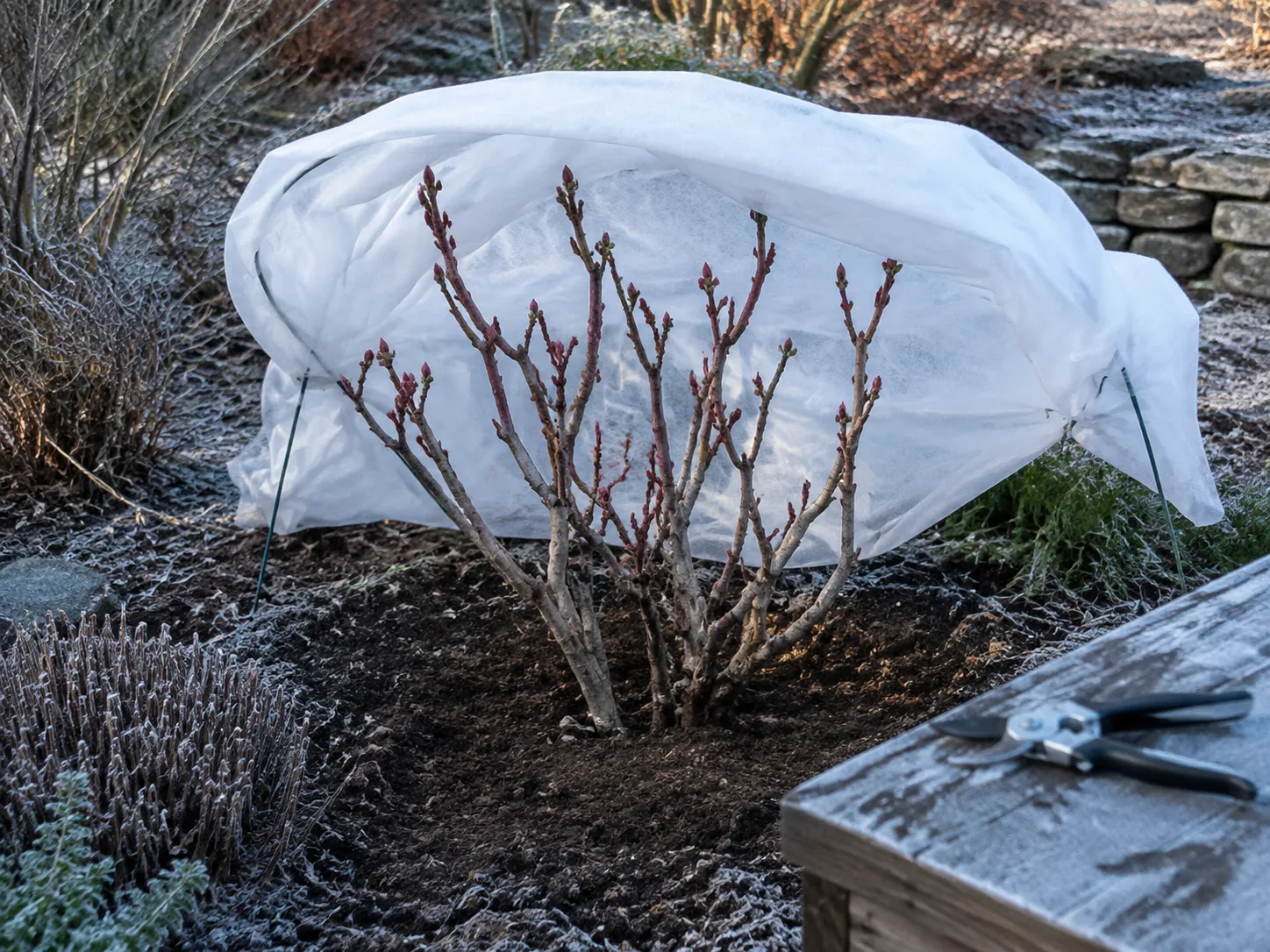
Test the root zone before buying fertilizer
A laboratory soil test measures available nutrients and pH and translates those results into amendment recommendations. Penn State Extension’s soil-testing guide describes combining samples from several spots in a garden bed; follow the instructions from your own lab, and sample the peony bed separately if it differs from the rest of the garden.
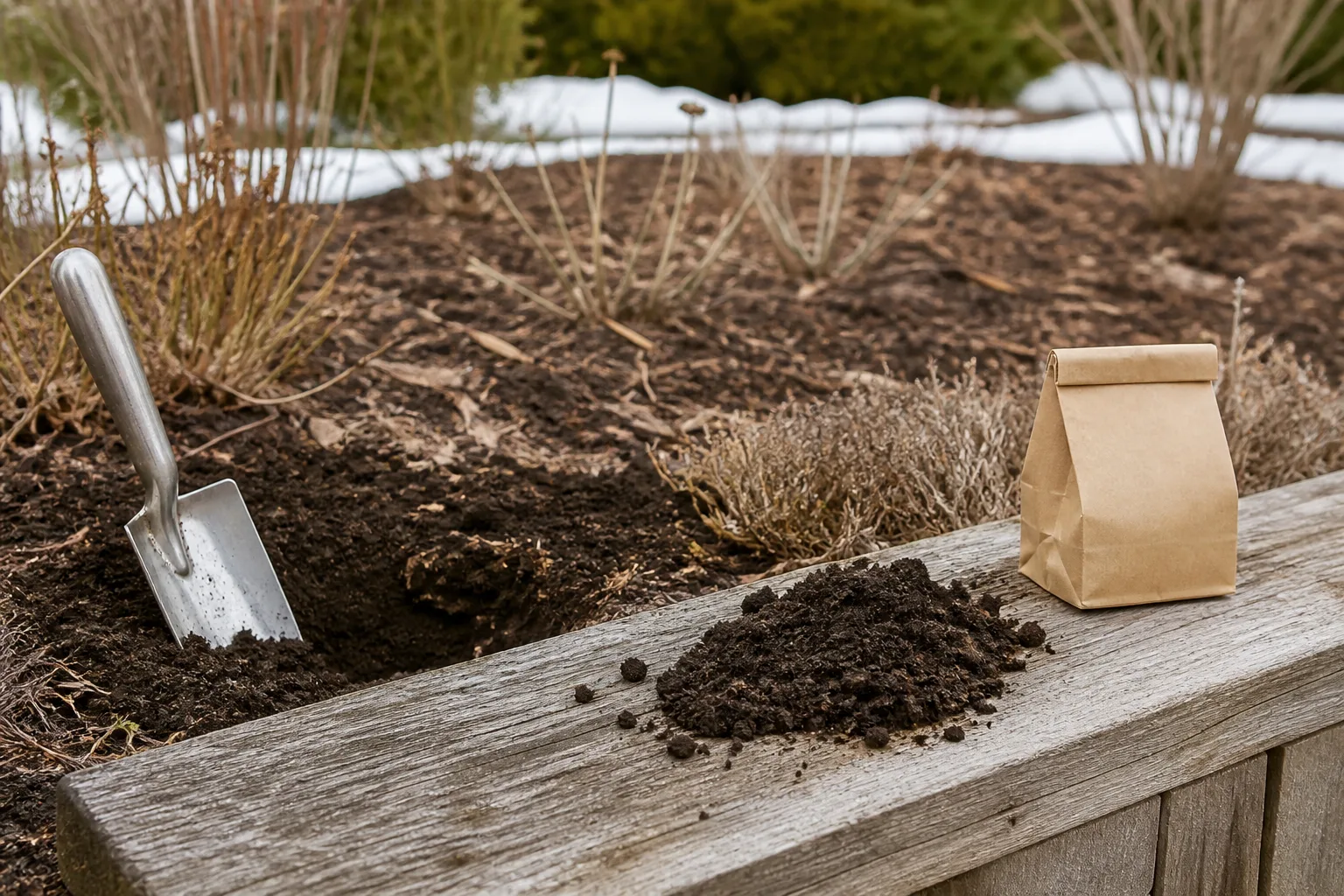
For example, Penn State recommends taking cores from 8 to 10 locations in a garden, generally 6 to 8 inches deep, then mixing them into one representative sample. A test is especially useful before adding bone meal, lime, or a high-phosphorus blend because those materials do not correct every kind of deficiency and can accumulate when applied without need. (Penn State Extension’s soil-testing guide)
Use the report’s nutrient recommendation and ask your county Extension office how to interpret it for an ornamental perennial if the report lists only vegetable or lawn categories. Testing frequency depends on soil and local practice; Penn State suggests every 2 to 3 years for sandy soils and every 3 to 4 years for clay soils, with an earlier test if a problem develops. (Penn State Extension)
When peonies actually need fertilizer
Consider fertilizer when growth is consistently weak, leaves are unusually pale, or flowering and vigor have declined across more than one season—and when a soil test supports a nutrient shortage. A single poor bloom year, a few small flowers, or a young plant that has not settled in is not enough evidence to add fertilizer.
University of Maryland Extension’s response to a peony fertilizing question makes the key distinction: a healthy, mulched peony probably needs no extra nutrition unless a laboratory test shows a deficiency. It also notes that a modest product used according to its package directions is different from applying an unmeasured dose; more is not automatically better. (University of Maryland Extension’s Ask Extension response on peony fertilization)
Recently planted or divided peonies need patience
A new peony often spends its first seasons establishing roots before it produces a reliable show of flowers. Savvy Gardening notes that the size of a planted root piece affects how long flowering takes and that some plants may need three or four years; a young peony with healthy leaves is not automatically asking for fertilizer. (Savvy Gardening’s peony fertilizing guide)
If a recently moved or divided plant is still green and growing, avoid trying to force maturity with repeated feedings. Check that the crown is not buried too deeply, that the site receives adequate sun, and that water drains; if the plant keeps losing vigor, a representative soil test is more useful than guessing at a deficiency.
Poor flowering is not proof of a nutrient shortage
When a peony has plenty of leaves but few flowers, check its growing conditions before reaching for a fertilizer bag. Insufficient sun, a crown planted too deep, poor drainage, competition from tree roots, recent planting or division, drought, and a late frost can all limit flowering even when the soil contains adequate nutrients.
Iowa State Extension’s peony troubleshooting guide explains that excess nitrogen can favor leafy growth at the expense of flowers and that poor bloom is often not caused by low soil fertility. Fertilizer cannot correct shade, lift a deeply buried crown, improve a waterlogged site, or make a newly disturbed plant mature faster; diagnose those conditions separately. (Iowa State University Extension’s guide to reasons peonies fail to bloom)
Why feeding dates differ by region and source
Peony feeding advice varies because sources address different climates, soil conditions, and products. Savvy Gardening describes two possible windows—spring when shoots are growing and shortly after flowering—while Better Homes & Gardens summarizes peony guidance that favors a light, need-based application after bloom and may include August; Iowa State’s regional guide instead gives an early-spring example as shoots emerge. (Savvy Gardening’s peony fertilizing guide; Better Homes & Gardens’ guide to fertilizing peonies; Iowa State University Extension’s Growing Peonies in Iowa)
Those differences are a reason to use local guidance, not to combine every suggested window. A calendar month shifts with latitude, elevation, weather, and cultivar; the peony’s actual stage is a better reference, and the soil test determines whether there is a reason to feed at all.
| Plant stage | What some guidance recommends | Practical decision |
|---|---|---|
| New shoots are emerging or actively growing | A light spring application, if needed | Use the local stage-based recommendation and keep granules clear of tender shoots. |
| Petals have fallen and foliage is still green | A light post-bloom application, if needed | Treat this as an alternative timing window, not a required second feeding. |
| Late summer or fall | Some guidance includes August; other regional perennial advice cautions against late feeding | Do not apply a routine dose just because the season changed; follow local Extension advice and the soil test. |
This is why an instruction such as “feed twice” is incomplete without the soil condition and product rate. A spring dose plus a post-bloom dose can become two unnecessary applications if the bed already has sufficient nutrients, while a test-driven correction should follow the timing in the local recommendation.
Spring at shoot emergence
Some regional guidance times fertilizer to the appearance of new shoots in early spring. That window is easy to identify in cool-climate gardens and lets a plant use nutrients during active growth, but young shoots and crowns can be burned by fertilizer that lands directly on them.
Do not treat “spring” as a fixed month or interpret it as permission to apply lawn food nearby. Wait until you can clearly see the peony’s growth, use the exact ornamental-plant label directions, and keep granules out of the crown. If your local Extension service recommends no routine feeding, follow that instead.
Shortly after flowering
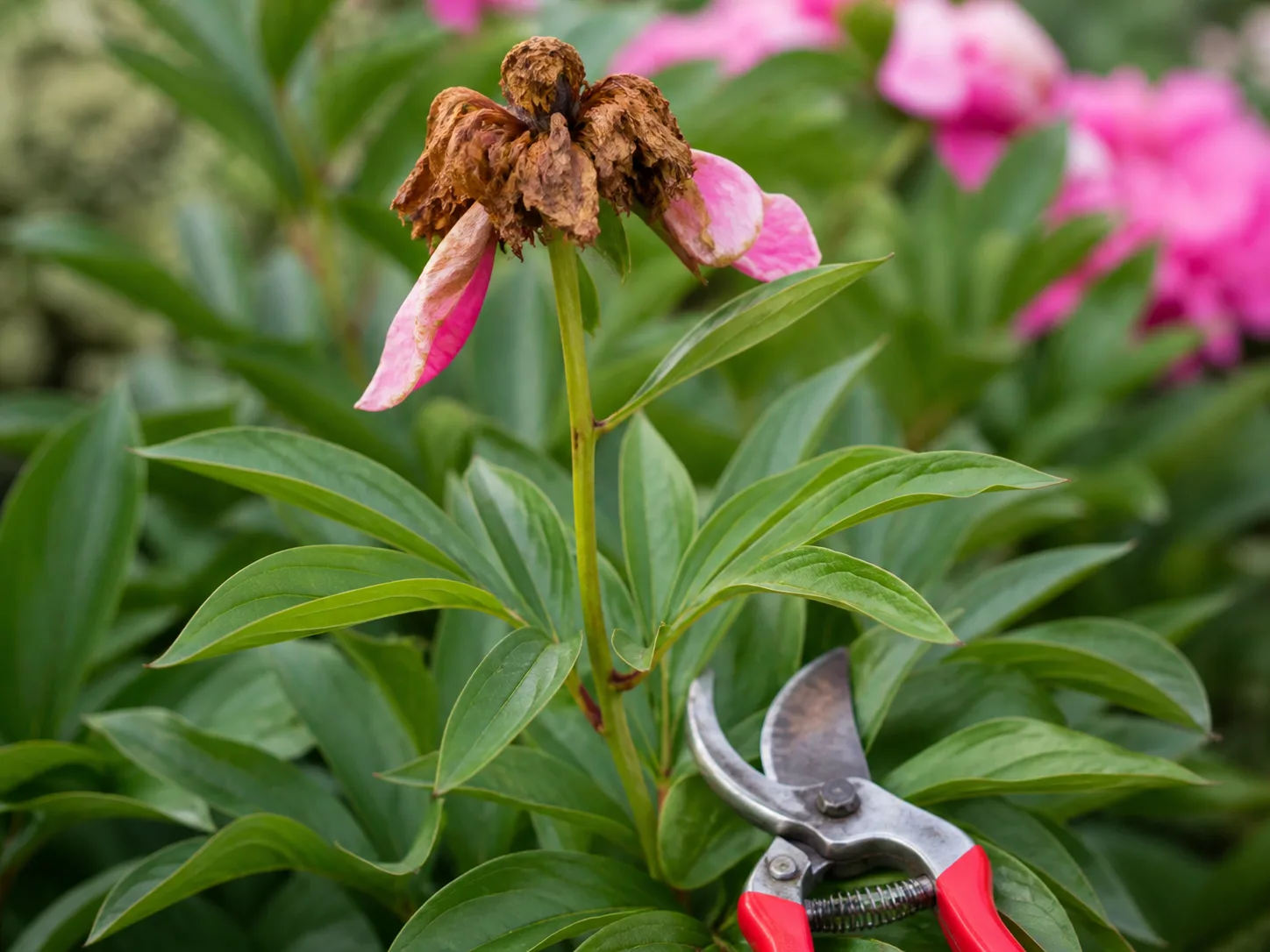
The American Peony Society lists a light application shortly after flowering when there is a reason to feed. The plant still has green leaves that continue growing for the season, and the post-bloom moment is convenient because you are already checking the clump and removing spent flowers. (American Peony Society’s care guidance)
This is a reasonable window only if the test and local recommendation support an application. Deadheading is not a signal that the plant needs fertilizer, and adding a second dose simply because flowers have finished can exceed what the soil or label calls for. Remove spent petals if you want, but leave the healthy foliage in place; peony leaves continue photosynthesizing through the growing season and help sustain the plant. (American Peony Society’s care guidance)
Late summer and fall are not automatic feeding windows
Late-summer advice is not universal: the American Peony Society includes a light late-August application only when there is a reason, while Better Homes & Gardens cautions against fertilizing after a plant has begun going dormant. This is exactly why the local recommendation and soil test should settle the question instead of a blanket spring-and-fall schedule. (American Peony Society’s care guidance; Better Homes & Gardens’ guide to fertilizing peonies)
The practical rule is not “always feed in fall” or “never feed in fall.” Do not apply a late-season dose just to prepare next year’s flowers; check your state Extension advice, the plant’s active-growth stage, and the test result. If your region’s recommendation differs from another state’s, use the one written for your conditions.
What fertilizer should you choose?
Choose a product that supplies the nutrient the soil actually lacks and is labeled for the plant or garden use. A complete fertilizer contains nitrogen (N), phosphorus (P), and potassium (K), but a peony does not automatically need all three every year, and a “bloom” or “bulb” label does not replace a soil test.
The simplest choice is often a slow-release granular product that has an appropriate rate for ornamental perennials, because it can be measured and placed around the plant. A liquid product can also be suitable when its label covers the use, but it is mixed and applied at a different concentration; never transfer a granular rate to a liquid concentrate.
Read the N-P-K numbers and full label
The three N-P-K numbers show the guaranteed analysis by percentage of nitrogen, phosphate, and potash. The first number matters for peonies because excess nitrogen can push soft leafy growth while reducing flowering, but “lower nitrogen” is not a complete prescription: the right formula depends on which nutrients the soil test says are low.
The numbers describe nutrient percentages by weight, not a dose per plant. A fertilizer labeled 5-10-5 is not automatically safer or more effective than 10-10-10 if the soil does not need its phosphorus; the amount applied and the existing soil supply matter just as much as the ratio. Product labels may also give different rates for garden beds, individual shrubs, or containers, so use the category that actually matches your planting.
Avoid using lawn fertilizer, a high-nitrogen feed, or a high-phosphorus “bloom booster” by default. If a report calls for one nutrient, choose a product and rate that supply it without needlessly loading the soil with the others. Read the label for the allowed plant type, amount per plant or area, application method, repeat interval, watering directions, and cautions around roots or stems.
Compost, bone meal, manure, and lime are not interchangeable
Mature compost and leaf mold mainly add organic matter and can improve soil structure over time. A thin topdressing may be enough for a healthy, established peony in a well-managed bed, but compost is not a calibrated substitute for a lab-recommended nutrient correction; keep it loose and away from the crown rather than burying shoots under a thick layer.
Bone meal is a phosphorus source, not an all-purpose bloom treatment. Use it only if a soil test or local recommendation identifies a phosphorus need; many gardens already contain adequate phosphorus, and repeated additions can raise levels unnecessarily. Manure can supply substantial nitrogen and salts, so do not apply fresh or untested manure against peony crowns or treat “organic” as synonymous with harmless.
Lime changes soil pH and should be used only when a test recommends it. It is not a fertilizer for flowering, and adding it without knowing the soil pH can make nutrient availability worse rather than better. (Better Homes & Gardens’ peony guide; University of Maryland Extension’s peony fertilization guidance)
How much fertilizer is appropriate?
There is no universal number of cups per peony. A measured rate depends on the product’s analysis, how much nutrient the test recommends, whether the label expresses the rate per plant or per square foot, and the size and spacing of the bed; a cup of one formulation is not nutritionally equal to a cup of another.
Follow the product label and the local soil-test recommendation together; if they appear to conflict, do not improvise a larger dose or adapt a lawn, vegetable, or container rate. Ask your county Extension office how to reconcile the recommendations, especially if a report identifies only one nutrient as low. Do not split a single labeled application into several feedings unless the label or Extension guidance explicitly says to do so.
For a bed with several peonies, do not apply a full “per plant” amount on top of a separate area-based dose. Work out the area that the label intends you to treat, account for overlapping root zones, and measure the total product before spreading it. That prevents a clump or closely spaced row from receiving repeated fertilizer where the plants share the same soil.
A regional Iowa rate example—not a universal recipe
Iowa State Extension’s Growing Peonies in Iowa gives a regional example of 1/4 cup of 10-10-10 around the plant as shoots emerge in early spring. Its instructions keep the fertilizer at least 6 inches from the crown, call for light cultivation, and say to water afterward; the guide also notes that crowns and young shoots are vulnerable to fertilizer burn. (Iowa State University Extension’s Growing Peonies in Iowa)
That is an Iowa-specific recommendation, not a universal annual dose for every peony, soil, or fertilizer. Follow your state’s advice and the exact product label; if a soil test says phosphorus or potassium is already sufficient, do not assume that a balanced 10-10-10 formula is still the right choice simply because the example uses it.
How to apply fertilizer without injuring peonies
Apply only after deciding that the soil needs nutrients and identifying the correct label rate. Spread granular fertilizer evenly through the root zone beneath the outer part of the leaf canopy, or use the placement pattern your local Extension guide specifies; leave the crown and emerging stems clear, and do not heap granules beside the plant.
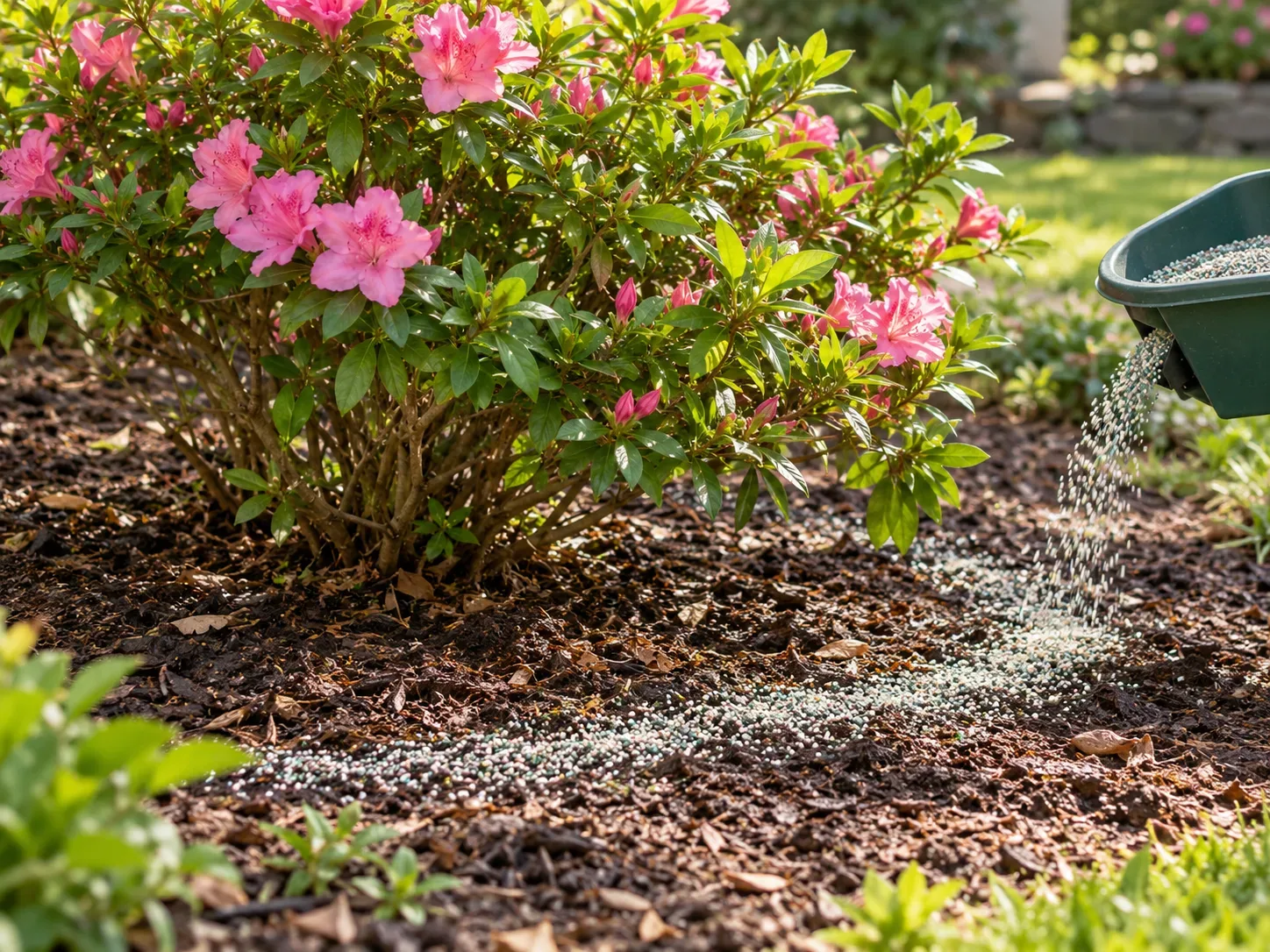
Use a small measuring cup or the product’s scoop, and avoid scattering fertilizer onto leaves or buds. If the bed contains several plants, calculate the labeled amount for the treated area rather than giving every crown a full rate on top of a bed-wide application. Lightly scratch granules into the soil only when the instructions call for it, and avoid deep cultivation that can cut shallow roots.
If granules spill on the crown or foliage, brush them away before watering. If you realize you applied more than the label rate, check the product instructions or contact your local Extension service for product-specific advice; do not automatically flood the bed, since peony roots also suffer when soil stays saturated.
Water it in and keep soil evenly moist
Water granular fertilizer in according to the label so nutrients move into the soil instead of sitting on the surface. Apply when the bed is not bone-dry, frozen, or saturated; dry roots are more vulnerable to concentrated salts, and a waterlogged bed needs drainage correction rather than more irrigation.
Afterward, maintain ordinary moisture while the peony is actively growing, adjusting for rainfall, soil texture, and heat. Do not overwater to compensate for fertilizer, and do not apply immediately before heavy rain when granules could wash away. Good drainage matters as much as a watering can: a peony needs moist soil that still drains freely.
Fix growing conditions before increasing the dose
If a peony does not bloom, check the basics in this order: how much direct sun it receives, whether its crown is planted too deep, whether water drains after rain, how old the plant is, and whether it was recently moved or divided. Then look for root competition, drought during active growth, and damage from a late freeze before deciding that low fertility is likely.
Peonies need enough light to flower, a crown at the right depth, and soil that does not remain waterlogged; fertilizer cannot compensate for any of those conditions. Newly planted or disturbed peonies may take time to settle, so feeding repeatedly while waiting can create lush foliage without solving the reason flowers are absent. Use the soil test to separate nutrient need from a site or establishment problem.
Conclusion
The best time to fertilize peonies is the locally recommended active-growth window when the soil actually needs nutrients. For some gardens that means early spring as shoots emerge; for others, local guidance may point to the period just after flowering, and healthy established plants may need no fertilizer at all.
Test before choosing a product, use the label and regional advice to set the amount, keep fertilizer off the crown and shoots, and water granular applications in. If blooms are missing, investigate light, planting depth, drainage, age, and recent disturbance before increasing the dose.