Butterfly Bush Alternatives: 5 Better Plants to Grow
Find five butterfly bush alternatives that support adult butterflies and caterpillars, with choices for dry beds, wet soil, fall color, and containers.
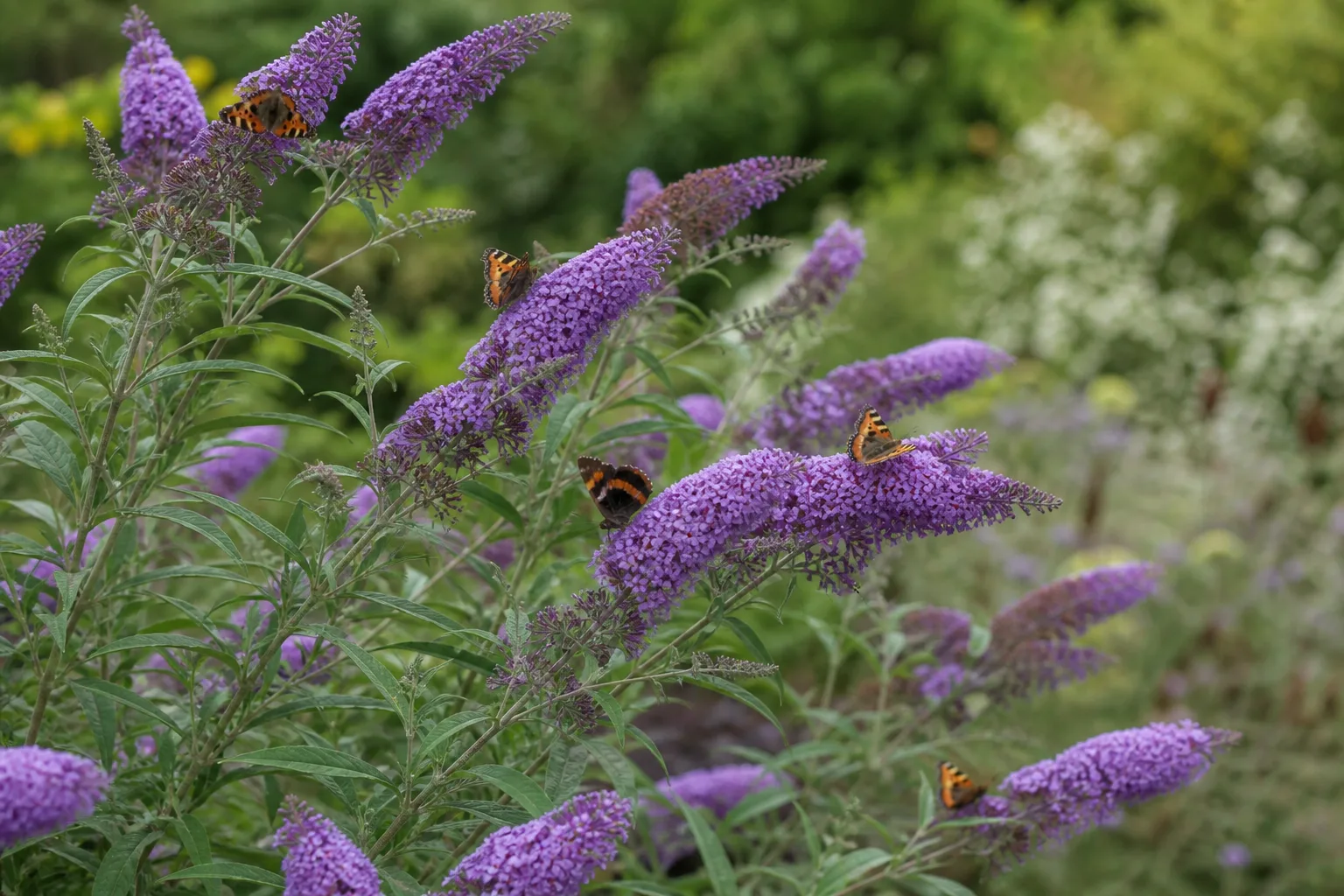
Butterfly bush (Buddleja davidii) earns its name honestly: adult butterflies visit its long, fragrant flower spikes. But if you are buying one to create a healthier butterfly habitat, the shrub has two important shortcomings. It can spread into natural areas in some regions, and its leaves do not feed the native caterpillars that must complete the butterfly life cycle.
That does not make every cultivated butterfly bush equally risky, or every garden with one an ecological disaster. It does mean the most useful replacement is not simply another plant with purple flowers. Choose plants that match your soil and climate, extend the bloom calendar, and add at least one host plant—a plant a butterfly’s caterpillars can actually eat.
The better question: what job do you need this plant to do?
Start with the job you liked about butterfly bush. Did you want a tall flowering anchor, a source of late-summer nectar, a quick hit of color, or a plant that would tolerate a difficult sunny spot? Each goal points to a different replacement, and forcing one substitute to do all four is how disappointment starts.
The five choices below are organized around those jobs. Milkweed adds a crucial host relationship, asters and goldenrod carry nectar into fall, zinnias fill gaps quickly from seed or containers, and blazing star provides upright summer color with a native wildlife connection. In a small bed, two or three of them will usually outperform five unrelated plants scattered one at a time.
Why butterfly bush is a poor default for a butterfly garden
The problem is not that butterflies visit the flowers. The problem is that a flowering shrub can look like complete habitat while supplying only one part of what butterflies need. Penn State Extension describes Buddleja davidii as a plant whose dust-like seeds can leave gardens on wind and water, while native caterpillars depend on plants such as milkweeds, asters, and goldenrods.
Washington State University Hortsense reports that a single flower cluster can produce more than 40,000 seeds, with some seeds remaining viable in soil for years. Its guidance also notes that butterflies use the nectar, but native larvae cannot survive on the foliage. Those are the two facts to keep together when you decide whether the shrub belongs in your yard (Penn State Extension’s butterfly bush guidance and Washington State University Hortsense’s butterfly bush profile).
Nectar is not a nursery
An adult butterfly needs nectar to power flight, mating, and egg-laying. A caterpillar needs a very different resource: soft or chemically suitable leaves from a host plant. The adult may sip from many flowers, but the caterpillar often cannot switch plants just because another flower is nearby.
The monarch relationship makes the distinction easy to see. The National Park Service explains that monarchs lay eggs on milkweed and that monarch caterpillars feed only on milkweed leaves. A butterfly bush may attract a monarch for a visit, but it cannot replace milkweed if your goal is to help monarchs reproduce (National Park Service on milkweed and monarchs).
This is also why a few chewed leaves are not automatically a sign that your replacement is failing. On a host plant, caterpillar feeding is the service you planted it to provide. Fine Gardening makes the same practical point in its host-plant guidance: gardeners who grow host plants must accept that some foliage will be eaten, and pesticide applications can harm the caterpillars they hoped to support (Fine Gardening’s butterfly host-plant guide).
Why escape risk depends on where you live
“Invasive” is not a universal label that behaves the same in every zip code. It depends on climate, habitat, how many plants are being grown nearby, and whether seeds can reach open ground, stream edges, rail corridors, or other disturbed sites. NC State Extension’s Plant Toolbox lists Buddleja davidii as invasive in North Carolina’s Mountain and Piedmont regions, while Washington and Oregon have their own regulatory and management histories.
The practical rule is simple: check your state department of agriculture, county extension office, or regional invasive-plant list before buying the straight species. A plant not listed in your immediate area is not proof that it can never spread there; it is only the information available on that list today. Risk is especially hard to dismiss when your garden touches a creek, woodland, vacant lot, trail, or unmanaged drainage ditch.
Before you remove or buy, check local rules and the cultivar label
If you are considering a new shrub, identify it by its full botanical name and cultivar, not just the common name on a promotional tag. The NC State profile distinguishes the straight species from specially bred cultivars and points to lower-risk, sterile groups such as Lo & Behold®. Garden Design likewise focuses on sterile or nearly sterile selections when discussing responsible cultivation, but it still notes the continuing need to provide caterpillar host plants.
“Dwarf” describes size, not fertility. “Butterfly-friendly” describes flower visitors, not whether the plant supports larvae. A label that says “low seed” is also less useful than a verifiable cultivar name and a local recommendation, especially near wild habitat or in a state with a noxious-weed rule (NC State Extension Plant Toolbox on Buddleja davidii and Garden Design’s responsible butterfly bush guide).
If you already own one, contain it while deciding
You do not have to make the decision in a single afternoon. If local guidance permits keeping the shrub temporarily, remove spent flower heads before they dry and split into seed capsules. Inspect the surrounding bed, gravel, fence line, and nearby bare soil for seedlings, and pull volunteers while the soil is moist and their roots are small.
Do not leave cut stems or flower heads beside a creek, trail, or wild edge. Washington State University specifically warns that stems may re-sprout and recommends disposing of plant material through an appropriate yard-waste service rather than dumping it where fragments or seeds can establish. If the plant is regulated, already producing volunteers, or planted against sensitive habitat, replacement is the more responsible choice.
When you remove it, cut the shrub low, dig out the root crown as thoroughly as practical, and expect follow-up shoots. Recheck the spot for at least a season or two, then plant the replacement promptly. A bare patch invites new weeds and makes it harder to tell whether a volunteer came from the old shrub or from elsewhere.
How to choose a better replacement
Think in three filters: site, season, and lifecycle. Site asks whether the bed is sunny or shaded, dry or moist, and well-drained or periodically wet. Season asks what is blooming before and after midsummer. Lifecycle asks whether the plant feeds caterpillars, supplies nectar, or simply adds structure that helps the other plants work.
Do not use hardiness zones as a substitute for a site check. Two plants can share a zone range yet disagree about drainage, summer humidity, or winter wet. Native status is useful, but “native” still needs a geography attached to it; a plant native to one side of the continent may not be the best choice for the other.
Match sun, moisture, and bloom timing
Use a quick worksheet before shopping:
| Your garden condition | Best direction from the list | What to watch |
|---|---|---|
| Dry, sunny, sharply drained bed | Butterfly weed, asters, zinnias, or a dry-site liatris | Avoid planting swamp milkweed where roots stay dry. |
| Moist or rain-garden edge | Swamp milkweed, moisture-tolerant aster, goldenrod, or marsh blazing star | Do not assume every milkweed likes standing water. |
| Small patio or rental garden | Zinnias in a container plus a host plant nearby | Annual color needs regular watering and deadheading. |
| Late-summer and fall gap | Asters and goldenrod, with liatris starting earlier | Combine bloom windows rather than planting one late bloomer. |
| Need for shrub-like height | Liatris with ornamental grass, or a verified native shrub from local guidance | Perennials will not mimic a woody shrub immediately. |
Prepare the site before planting. Remove the old root crown and volunteer seedlings, loosen only the soil you need, and avoid burying new plants deeper than they grew in their containers. Water new perennials through their first growing season; drought tolerance after establishment is not the same as drought tolerance in a fresh transplant.
Five plants to grow instead
These are five useful replacements, not a universal ranking. Choose the two or three that fit your site and combine them with locally appropriate host plants if the species you want to see has a known larval food source.
1. Regional milkweed
If your priority is supporting monarchs, start with milkweed rather than ending with a nectar shrub. Milkweed is a genus, not one interchangeable plant: butterfly weed (Asclepias tuberosa) suits a sunny, well-drained bed; swamp milkweed (Asclepias incarnata) is better for a moisture-retentive site; common milkweed (Asclepias syriaca) can spread by rhizomes and seed, so it needs more room and a gardener who accepts a naturalized habit.
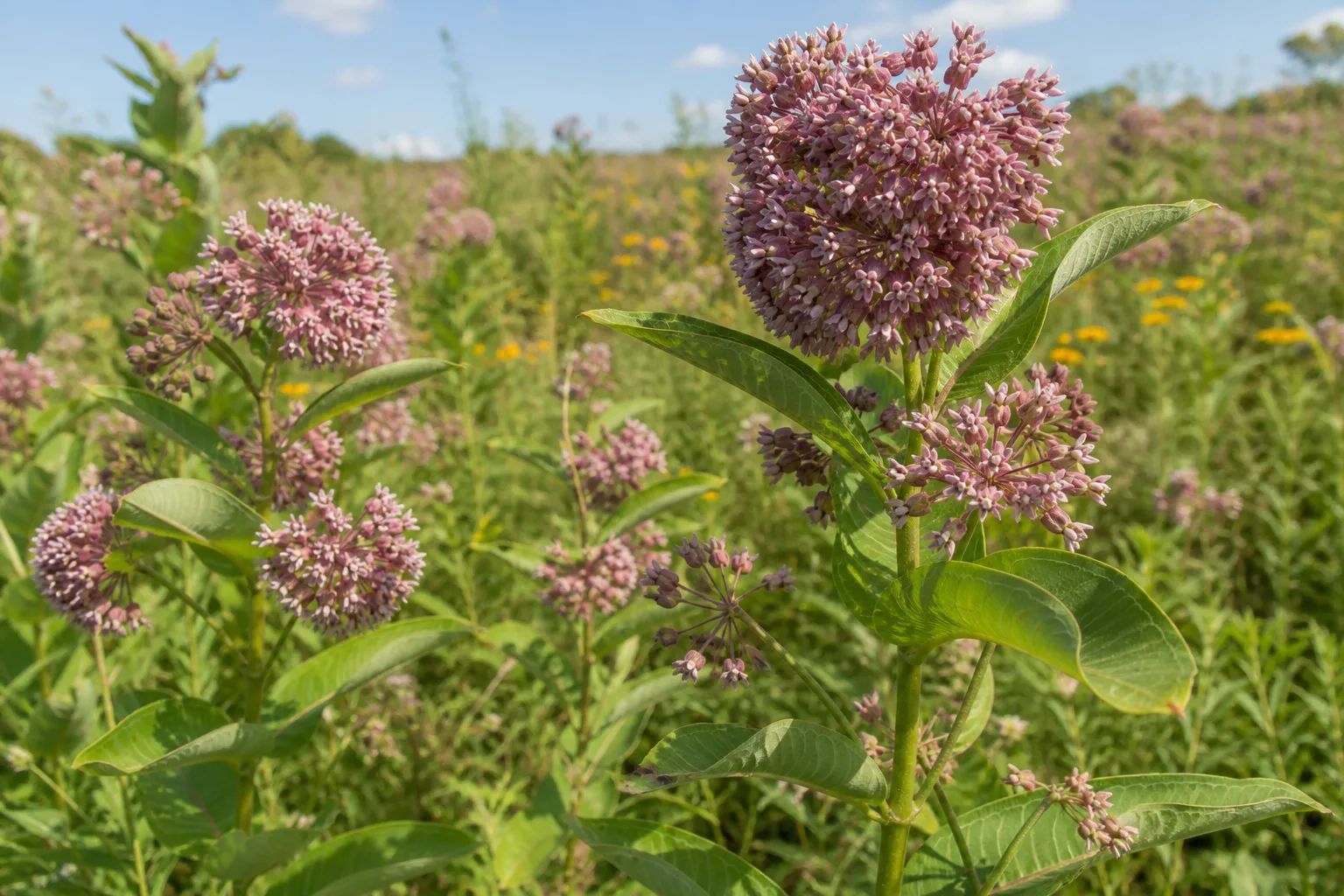
The flowers provide nectar, but the leaves are the reason milkweed belongs in this list. The National Park Service documents the monarch’s specialized relationship with milkweed, and Fine Gardening notes that butterfly weed and swamp milkweed are often easier fits for urban and suburban gardens than common milkweed because they do not spread as aggressively by rhizomes. Still, many milkweeds self-sow, so leave seed pods only where new seedlings are welcome.
Plant milkweed in a sunny drift rather than hiding one stem behind a shrub. Expect aphids, leaf holes, and caterpillar activity; identify a problem before treating it, and never choose a plant simply because its tag promises “monarchs” without naming the species and its soil preference.
2. Native asters
Native asters are the late-season insurance policy that a summer-only garden often lacks. Species in the Symphyotrichum group offer daisy-like flowers in shades of blue, purple, pink, or white and can carry nectar into late summer and fall, when many butterflies are still feeding and preparing for migration.
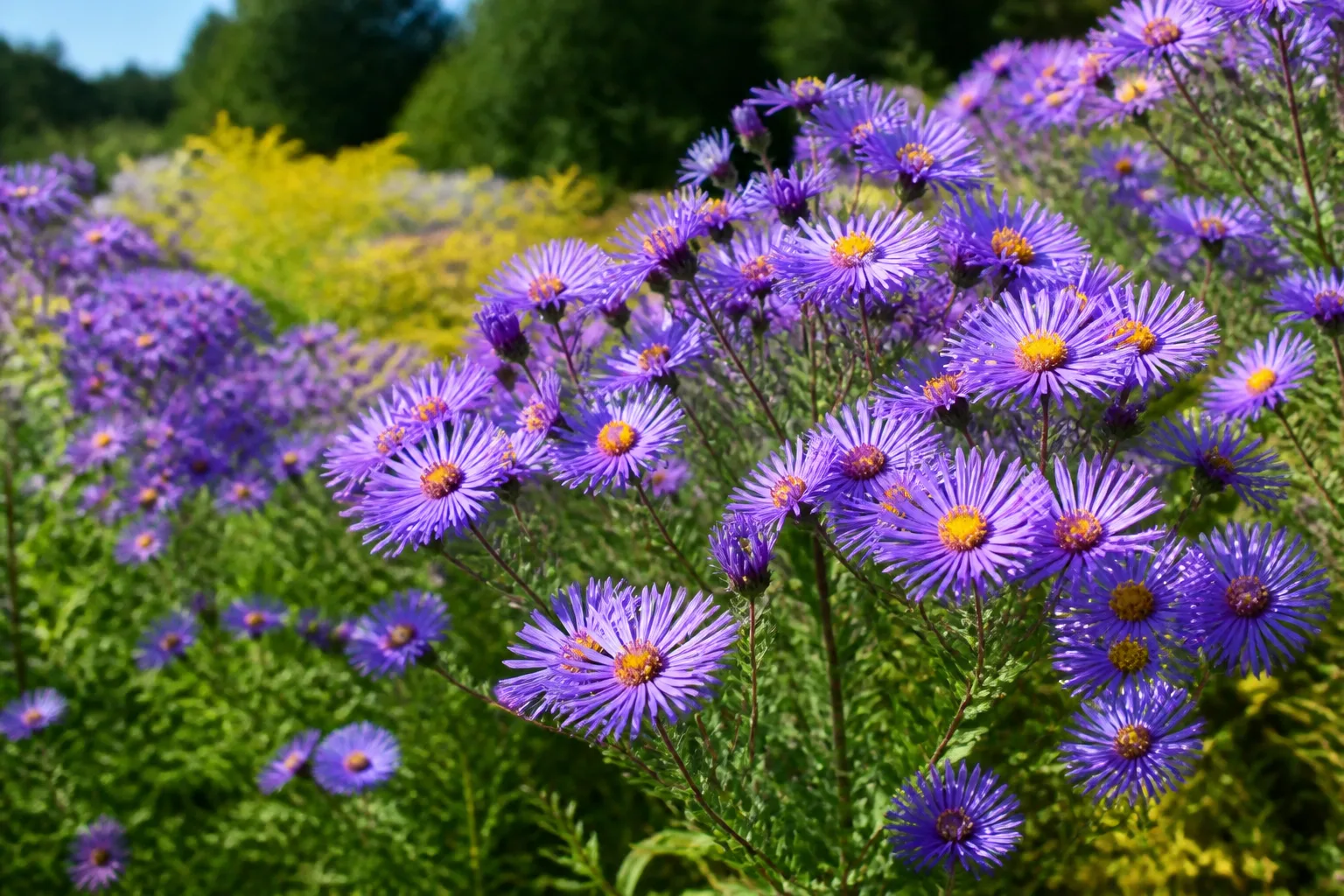
Choose an aster that fits your region and the height you can manage. A sunny bed with average moisture is the broadest starting point, but individual species vary; some tolerate drier ground while others perform best with consistent moisture. Gardening Know How lists asters as both nectar plants and host plants for several butterfly species, while Fine Gardening groups asters with other native plants that support more than adult visits (Gardening Know How’s butterfly host-plant guide).
Use asters where butterfly bush would have supplied a fall focal point, but plant several together so the bed reads as intentional. Pinching or trimming early in the season can make some tall types branch and hold a fuller shape, but do not sacrifice every flower just to make a compact mound; their late bloom is the main reason to grow them.
3. Goldenrod
Goldenrod (Solidago spp.) is one of the best ways to extend a butterfly bed into late summer and fall. Its small yellow flowers are carried in airy sprays that combine easily with purple asters, grasses, and the upright form of liatris. That pairing gives you the same strong color contrast that makes a butterfly-bush border attractive, without relying on one exotic shrub.
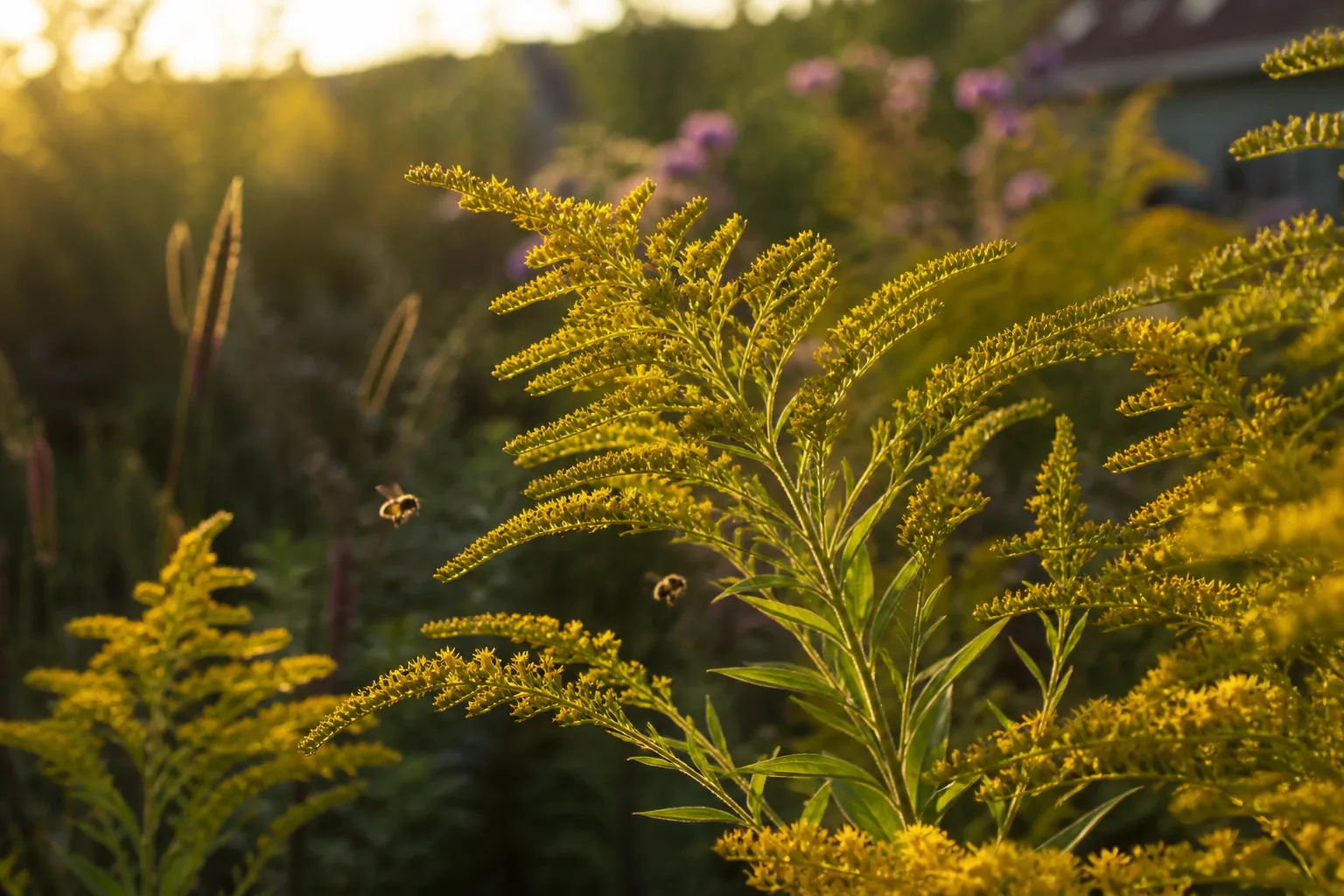
Pick a species native to your ecoregion and give it enough sun to flower well. Some goldenrods are compact clump-formers; others spread more assertively or become tall in rich soil. Read the mature height and spread on the nursery label, then place the plant where its natural arching habit can be seen instead of squeezing it into a narrow foundation strip.
Goldenrod is a nectar plant and part of a larger food web, but it does not replace milkweed as a monarch host. Think of it as the late-season fuel layer in a mixed planting. If fall allergies are a concern, ask what is actually growing in your area rather than judging the plant by its common name or by a single online claim; local extension guidance can help you choose a suitable species.
4. Zinnias
Zinnias are the fast, flexible choice when a bed needs color this season. They grow as annuals in much of the country, start readily from seed, and keep producing flowers through summer when you harvest or remove faded blooms. They also work in a large container, which makes them useful for renters, small patios, and gardeners who are still deciding what permanent perennial to plant.
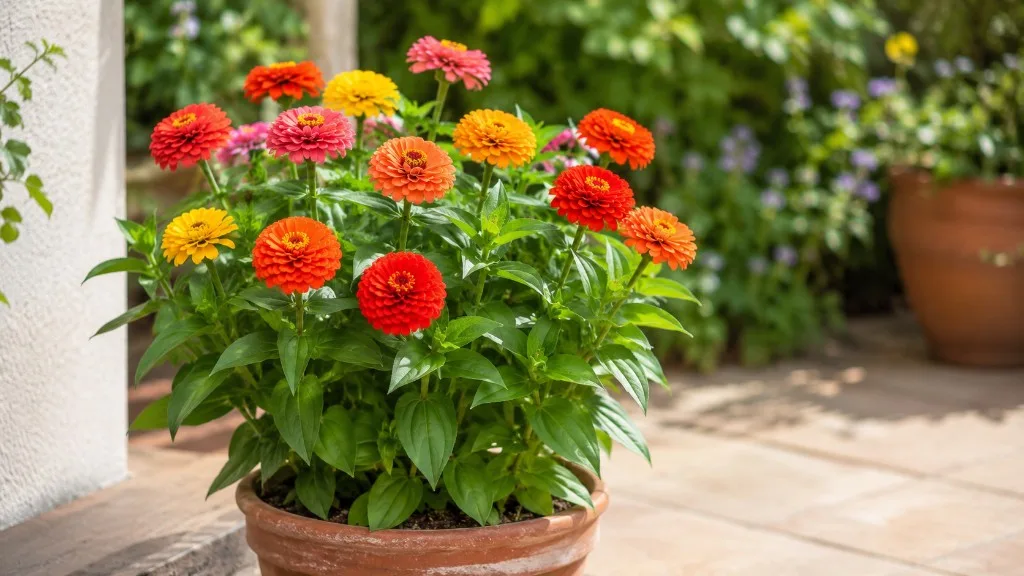
Give zinnias full sun, warm soil, good drainage, and room for air to move around the foliage. Single-flowered forms are a sensible choice for a wildlife bed because the centers are easier for insects to reach than densely packed double blooms. Gardening Know How recommends dwarf zinnias for containers and emphasizes the value of extended bloom and regional fit when planning potted butterfly gardens (Gardening Know How’s container butterfly-garden guide).
Zinnias are nectar plants, not a substitute for a caterpillar host. Plant them beside milkweed or another locally appropriate host rather than expecting a pot of flowers to support the whole lifecycle. Let a few seed heads mature at the end of the season if you want to collect seed, but remove diseased debris and do not let an annual bed become a dense, damp thicket.
5. Blazing star (liatris)
Blazing star (Liatris spp.) gives you the vertical punctuation that attracts people to butterfly bush in the first place. Purple, pink, or white flower spikes rise above a grassy clump, and the plants look especially effective in groups threaded through goldenrod, asters, and low edging plants.
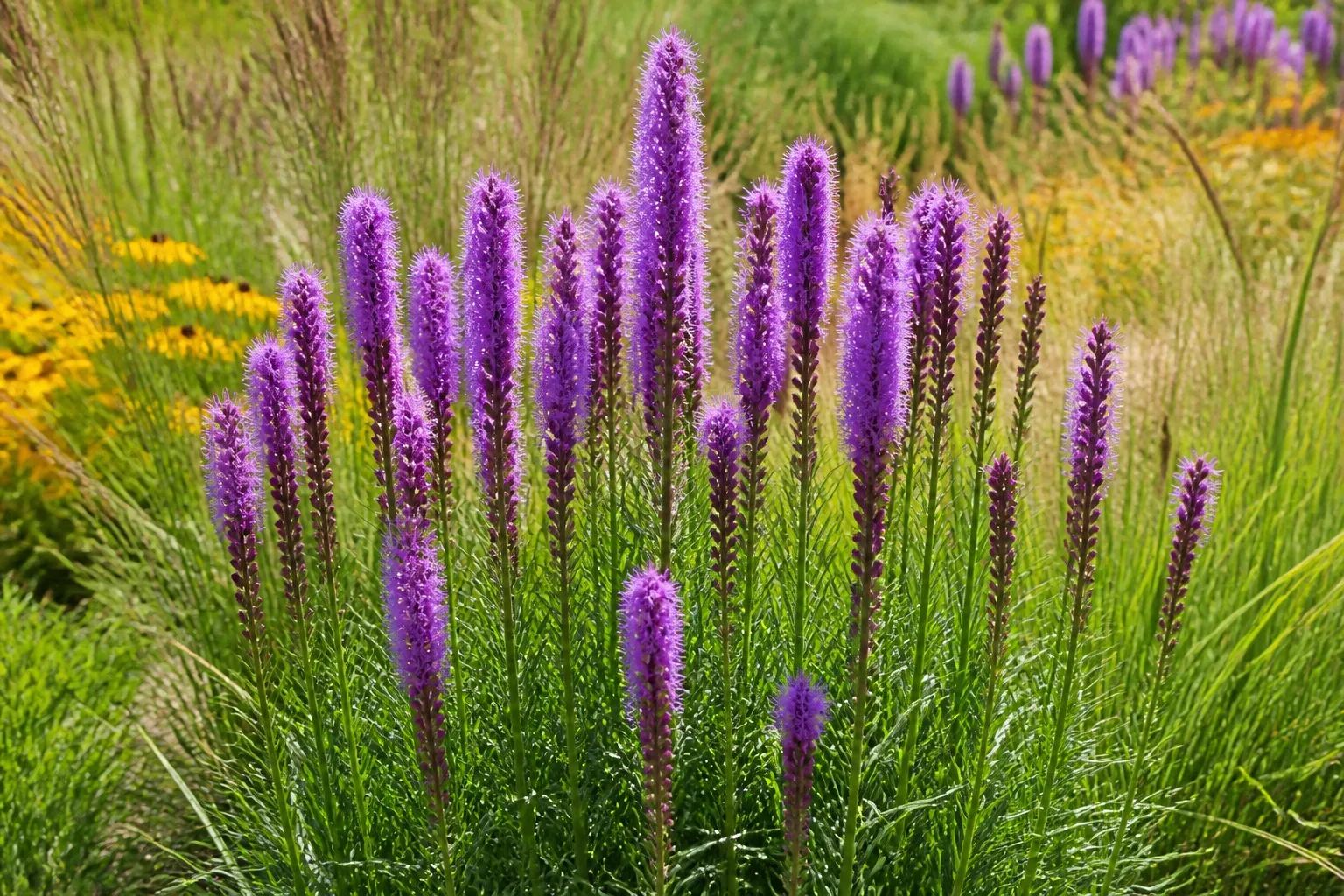
NC State’s profile of marsh blazing star (Liatris spicata) describes a low-maintenance native perennial with tall spikes, pollinator value, and a preference for average to moist, well-drained soil. It can handle summer heat and humidity, but the species is a poor choice for a bone-dry slope; for that site, compare other locally native blazing stars and follow the plant’s own moisture requirements (NC State Extension Plant Toolbox on blazing star).
Plant corms or nursery plants in full sun, and avoid crowding them into heavy, waterlogged soil. Leave some hollow stems standing over winter rather than cutting the entire clump to the ground in fall; NC State notes that dead stems can provide nesting sites for native bees. That small change adds habitat value after the flowers are gone.
A simple planting combination for continuous butterfly food
The easiest replacement plan is a three-season sequence, not a one-for-one swap. In a sunny 6-by-8-foot bed, place a clump of regional milkweed toward the middle, repeat three or five liatris plants behind or between it, add asters and goldenrod toward the back or side, and use zinnias to fill the front or a nearby pot during the first year.
This is a design pattern, not a prescription. On dry soil, favor butterfly weed, zinnias, and a species of aster or liatris adapted to drought. On moist soil, use swamp milkweed, moisture-tolerant goldenrod, and the appropriate liatris, then keep zinnias in a container where you can control watering. If your region has different native species that perform the same jobs, use them.
Make room for caterpillars, not just flowers
A butterfly garden should look slightly less perfect than a display bed. Leave a few chewed stems on host plants, keep some leaf litter in a quiet corner, and allow selected hollow perennial stems to remain until spring. The goal is not to let every plant become overgrown; it is to reserve a managed section where insects can feed and shelter without being treated as a design failure.
Plan for adults to move through the bed. A sunny, wind-protected position helps butterflies warm up and forage, while repeated drifts make nectar easier to find. A shallow saucer with stones and water below the stone tops can provide a safe drinking or puddling spot, but it must be cleaned and refreshed regularly; water is an accessory to good planting, not a substitute for it.
Avoid pesticide cleanup that erases the benefit
The caterpillars you hoped to attract may look like the “damage” that needs fixing. Before reaching for an insecticide, identify the insect, check whether the foliage is a documented host plant, and decide whether the damage is actually threatening the plant. A few ragged milkweed leaves or a chewed aster stem usually call for observation, not a blanket spray.
If a serious pest requires intervention, use the narrowest method that fits the problem and follow the product label. Do not spray open flowers or treat an entire bed because one plant has aphids. A hose blast, hand removal, pruning of a badly affected stem, or simply tolerating a temporary colony often protects more of the habitat than a broad “pollinator-safe” promise on a bottle.
If you still want a flowering shrub
A perennial border cannot instantly replace the height and woody presence of a mature shrub. If that structure is essential, ask your local extension office or native-plant nursery about shrubs suited to your region, such as buttonbush (Cephalanthus occidentalis), summersweet (Clethra alnifolia), or another locally native species that fits your soil. NC State lists buttonbush, summersweet, and Virginia sweetspire among native alternatives associated with butterfly bush, but the best choice depends on moisture, mature size, and regional range.
If you choose a verified sterile butterfly bush where it is permitted, treat it as one nectar plant in a larger habitat rather than as the habitat itself. Keep it away from sensitive wild edges, follow local rules, continue to deadhead if advised, and plant host species nearby. The strongest ecological upgrade is still to give the space to native plants that support both adult insects and their young.
Conclusion
Butterfly bush is attractive because it solves one visible problem—summer nectar—quickly. It is a weaker choice when you need a complete butterfly habitat, especially where Buddleja davidii can spread beyond the garden or where the bed borders natural land.
Replace it according to the job: regional milkweed for monarch host value, asters and goldenrod for late-season food, zinnias for quick annual color, and liatris for upright summer bloom. Check your local invasive-plant list, match every plant to the site, leave room for harmless caterpillar feeding, and build a sequence of blooms. That plan may look less like one dramatic shrub, but it does far more for the butterflies you want to keep seeing.