Where Do Spiders Hide? 5 Places to Check at Home
Where do spiders hide? Check five overlooked home zones, read webs and egg sacs, remove them safely, and close the routes that bring spiders back.
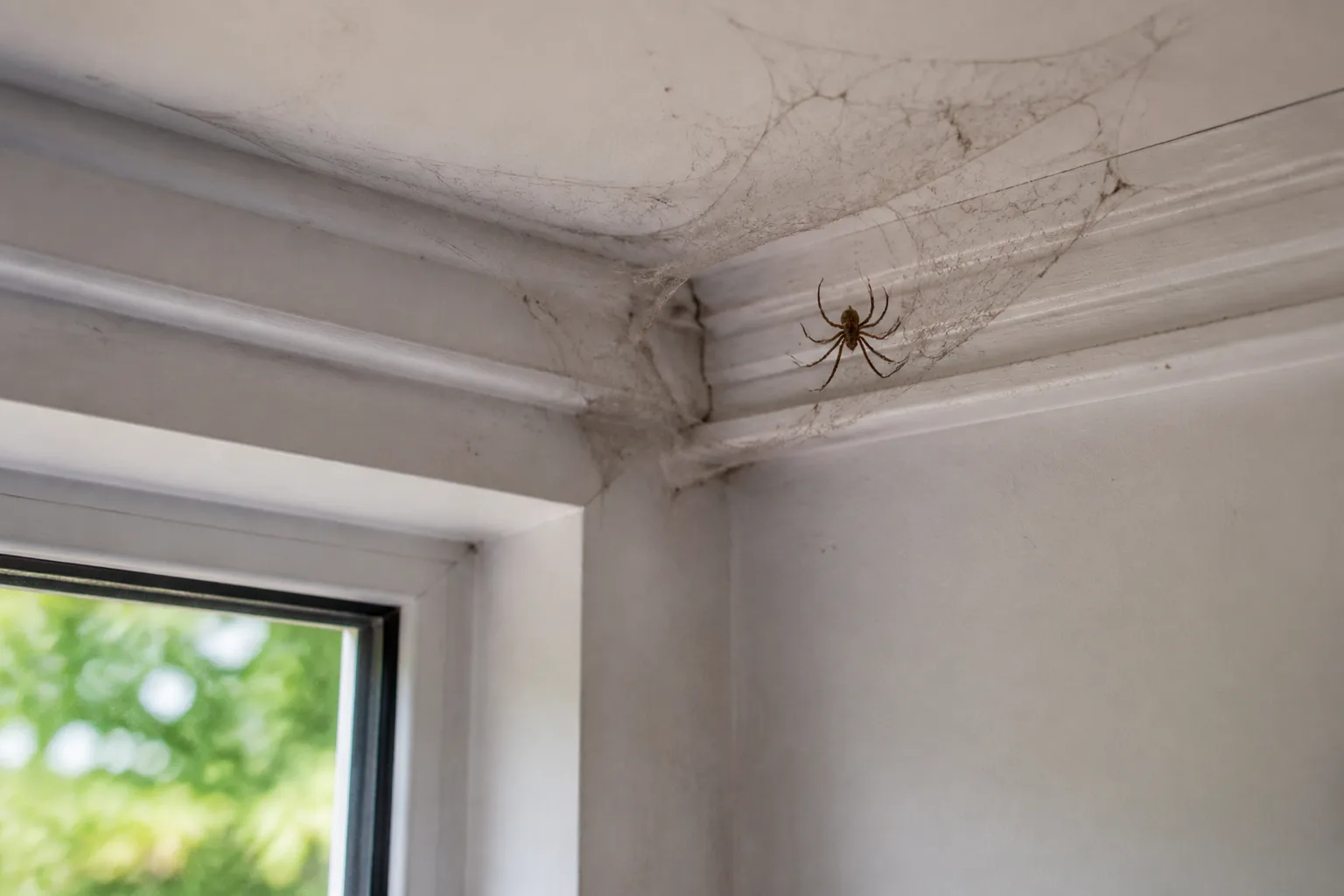
Most indoor spiders are not building a colony in the middle of your living room. They are using a quiet crack, a protected corner, or a narrow gap where small insects pass. The quickest way to find them is to follow the combination of shelter, prey, moisture, and access, not to search every room at random.
This guide covers five high-probability zones: behind appliances, around windows and doors, under low furniture and stored boxes, inside cabinets and closets, and along bathroom, basement, and crawl-space edges. It also explains how to read the evidence, remove webs and egg sacs, seal the route, and recognize the point where a persistent or medically significant spider problem needs professional help.
What a Spider Is Actually Looking For Indoors
Spiders enter or remain in homes for a fairly simple reason: the building offers a protected place to rest and a supply of insects to eat. A gap around a pipe, the back of a cabinet, or a ceiling corner can be enough if the space is seldom disturbed. Penn State Extension describes the common house spider as a frequent resident of houses and barns that builds webs in wall and window corners, floor joists, damp basements, and crawl spaces (Penn State Extension’s common house spider profile).
That does not mean a clean home has failed. A spider can arrive through an open door, damaged screen, box, firewood, or foundation gap and then leave no lasting sign. Conversely, repeated webs in the same corner can persist in a very tidy room if insects are gathering at a window or if a small structural opening stays accessible.
Web Builders and Roaming Hunters Use Different Hideouts
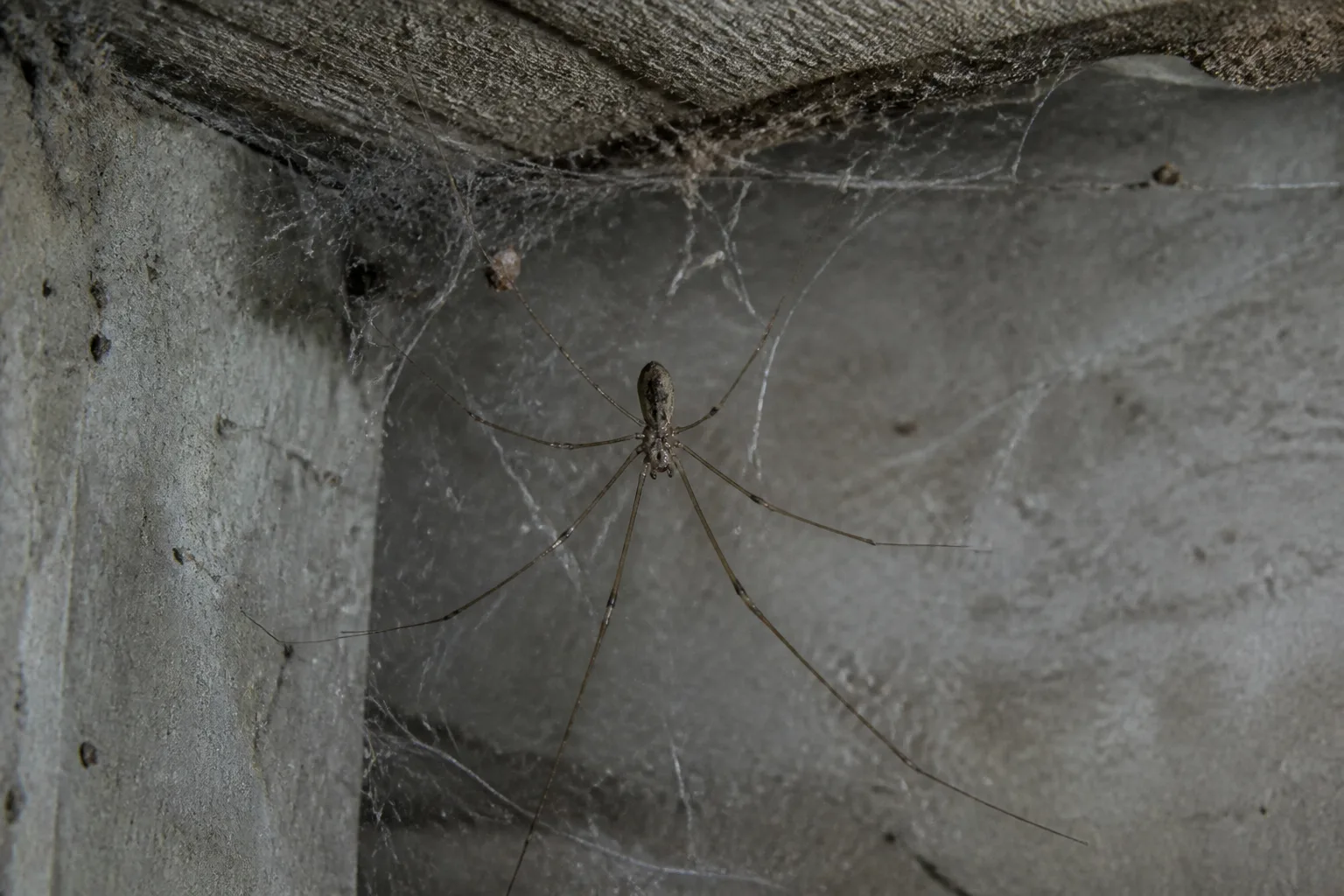
Start by deciding whether you are looking at a web builder or a roaming hunter. Cellar spiders, cobweb spiders, and funnel weavers usually stay close to a web or retreat. Their silk points toward the hiding place. Wolf spiders and jumping spiders hunt on foot, so you may see the spider without finding a web at all; a floor-level gap, storage stack, or dark space under furniture is a better lead.
The Texas A&M AgriLife School IPM plan notes that cellar spiders favor dark corners of cellars, crawl spaces, and garages, while cobweb spiders occupy messy webs in dark corners and funnel weavers make low, funnel-shaped webs near the ground (Texas A&M’s spider IPM action plan). The practical takeaway is useful even when you cannot identify the species: high, dusty silk sends you upward and outward; a fast spider with no web sends you toward floor edges and stored objects.
First Decide: Stray Visitor or Recurring Site?
One spider is usually a sighting, not a diagnosis. Most spiders are solitary, and many common house spiders spend their lives in one web rather than moving through a home as a group. A single individual after a door was open, a delivery arrived, or outdoor conditions changed calls for removal and a quick check—not an automatic whole-house treatment.
The pattern becomes more meaningful when you find multiple fresh webs, several egg sacs, repeated catches in the same monitor, many dead insects, or spiders in connected rooms. Daytime movement can also deserve a closer look, especially for spiders that normally stay hidden. It may mean the usual retreat is disturbed or crowded, but it is not proof of a particular species or a dangerous infestation.
Use the last sighting as your starting point. If the spider was on a windowsill, inspect the screen, sash, curtain folds, and exterior light outside that window. If it ran under the refrigerator, inspect the appliance edge, wall gap, crumbs, lint, and nearby pipe or cable openings. If it appeared in a bathroom, check the vanity toe-kick, plumbing penetrations, exhaust area, and any damp storage before assuming it came through the drain.
1. Behind Appliances and Under Their Edges
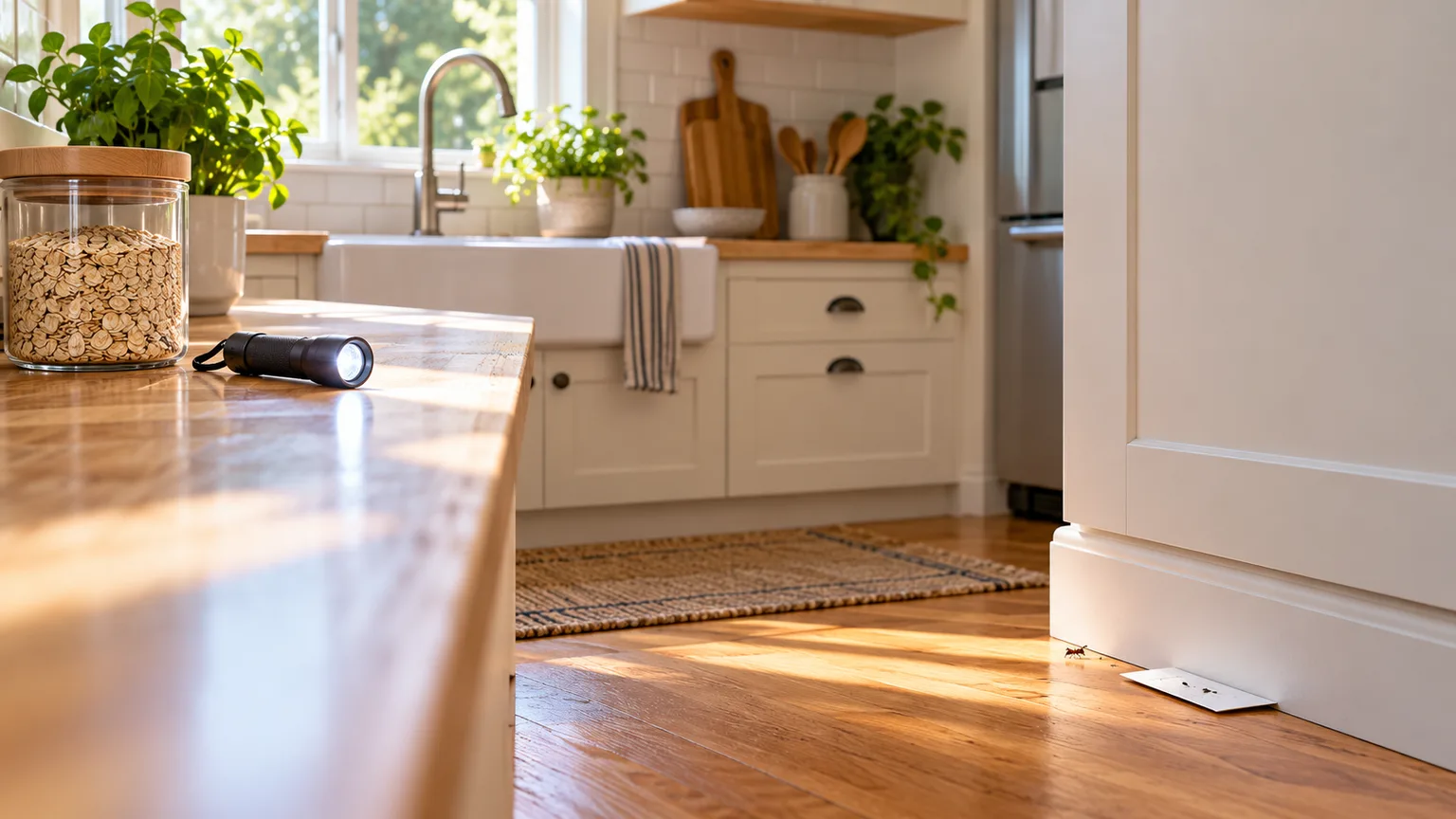
Refrigerators, stoves, dishwashers, washers, dryers, and water heaters create narrow zones that are warm, shaded, and rarely disturbed. They can also collect crumbs, grease, lint, dead insects, condensation, or small gaps around utility lines. Spiders do not need to be attracted to the appliance itself; they follow the insects that use the protected edge.
Inspect the floor line behind and beside the appliance first. Look for silk anchored to the wall, small prey insects, shed skins, an egg sac, or a trail of dust that shows where the spider can move. Check the wall-to-floor joint, the gap under a removable toe-kick, and the space where pipes or cables enter the wall. Do not put a hand into a dark gap to “see what is there.”
Use a flashlight and, when safe, a crevice tool or inspection mirror. Unplug a movable electrical appliance before cleaning only if doing so follows the manufacturer’s instructions and does not create a problem with a gas connection, water line, or refrigeration system. Never spray into motors, burners, electrical components, vents, or food-storage areas. If an appliance must be moved, get help from someone who can disconnect it safely.
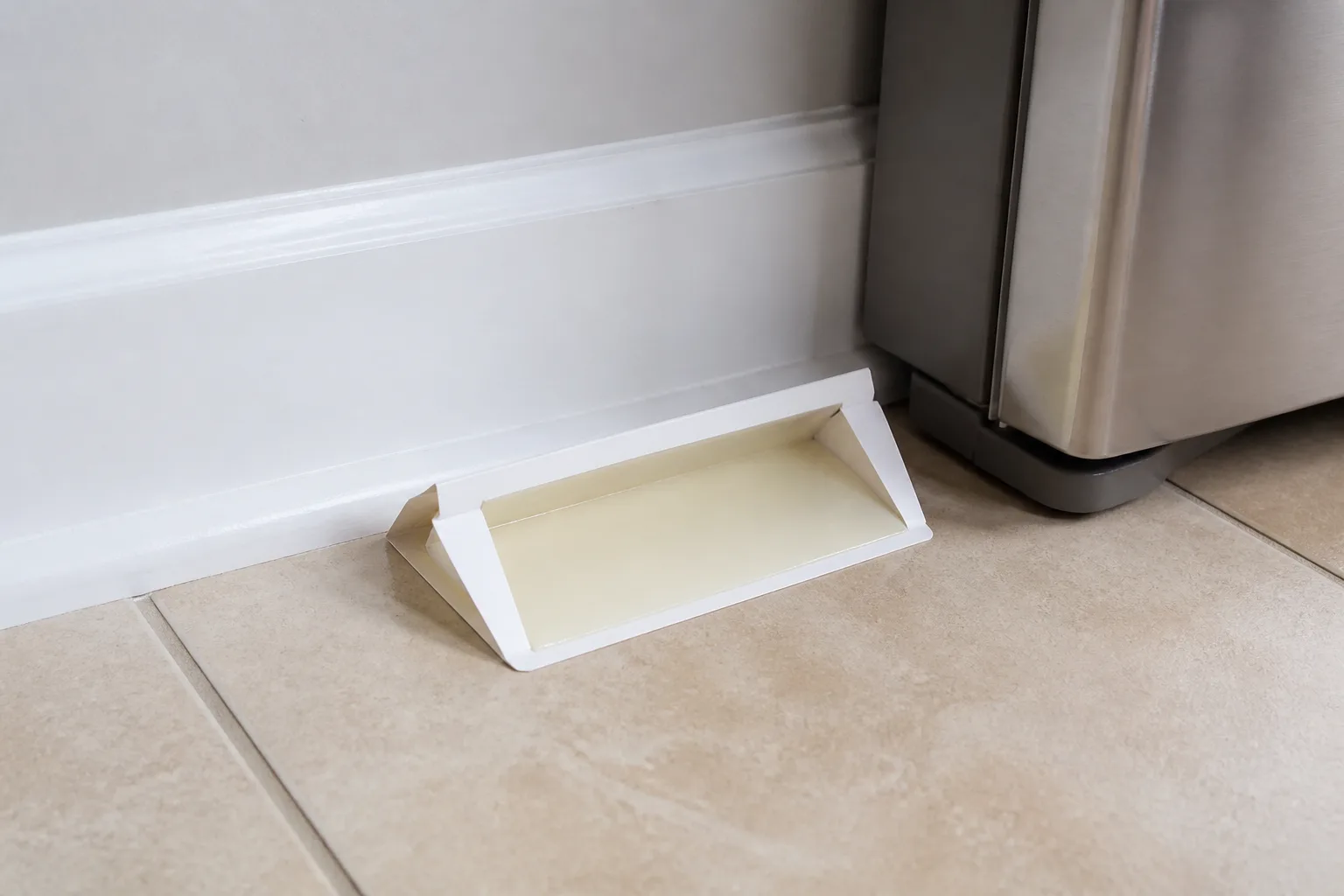
Vacuum reachable webbing and insects, wipe grease from surfaces that are safe to reach, and correct leaks or condensation problems. If sightings continue, place a sticky monitoring trap along the wall edge where children and pets cannot reach it. The goal is to learn whether the activity is coming from that zone, not to scatter traps across a room without a question they can answer.
2. Window and Door Frames, Screens, and Curtains
Windows are ideal spider real estate because they combine light, a frame to anchor silk, and flying insects gathering near the glass. Doors offer the same opportunity while also creating a direct route from outside. Inspect upper corners, the meeting point of sash and frame, behind blinds or curtains, the bottom edge of screens, and the threshold where daylight shows under a closed door.
A web on the inside of a screen suggests that insects are reaching the window while the spider remains protected. A spider repeatedly appearing on the floor beside a door points more strongly to a threshold gap, door sweep, weatherstripping failure, or a nearby exterior harborage. Inspect the outside too: dense vegetation touching siding, a porch light shining directly at the doorway, leaf litter, and stacked materials can increase the number of insects close to the entrance.
Late summer and early fall can make the problem look sudden. Farmers’ Almanac’s explanation of seasonal web visibility notes that many outdoor web-builders become larger and more noticeable late in the season, while dew outlines silk that was nearly invisible when dry (Farmers’ Almanac’s seasonal spider-web guide). That does not prove spiders are moving indoors, but it explains why a porch, window, or doorway may suddenly look much busier.
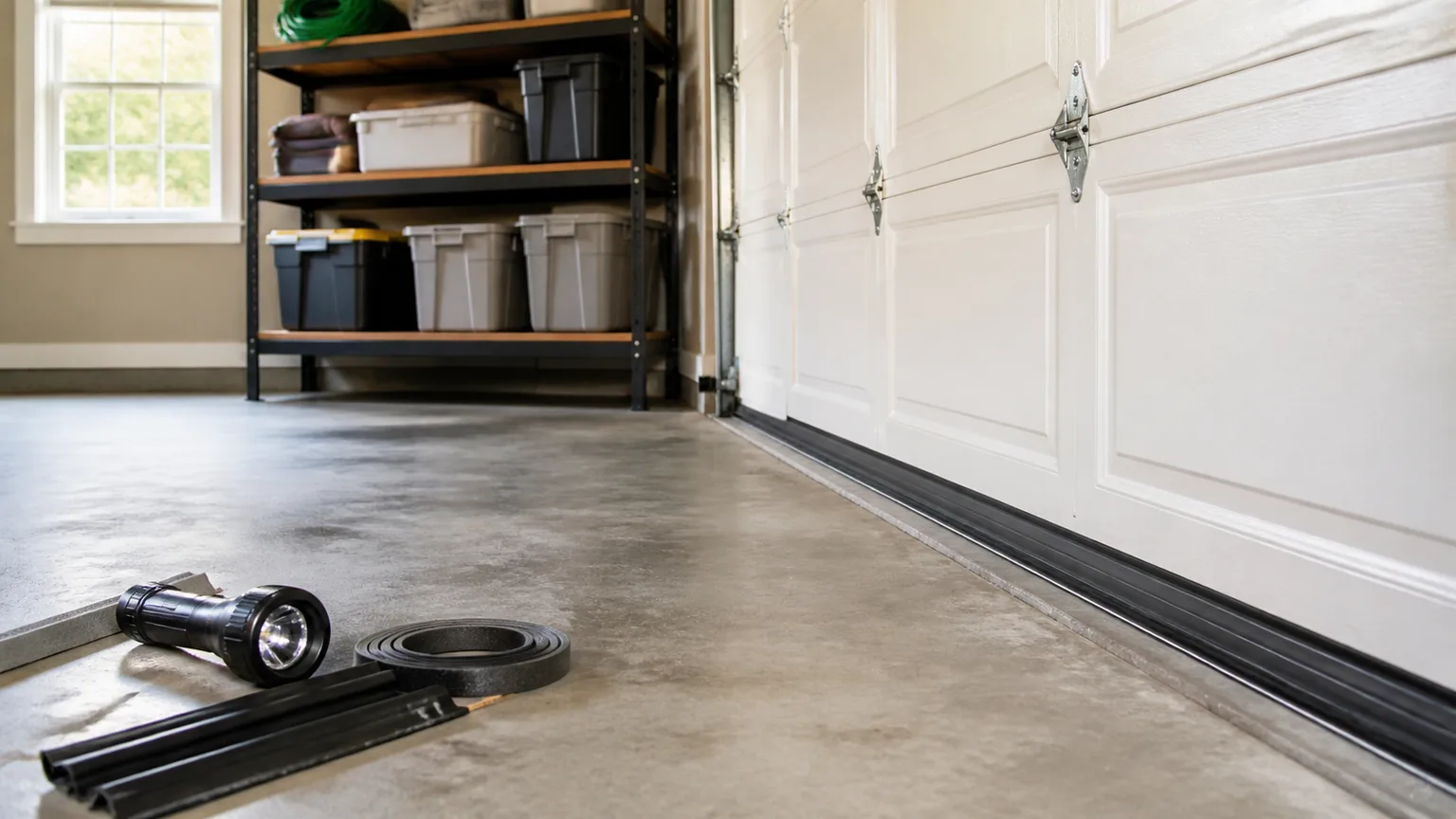
Vacuum or brush away accessible webs, wash the screen if its material allows, and patch tears rather than relying on a scent spray. Replace worn weatherstripping and install a properly fitted door sweep when the gap is at the bottom of the door. Keep exterior lights no brighter or closer to the entrance than necessary; moving a light away from the doorway can reduce the insect concentration that supports webs there.
3. Under Low Furniture and Stored Boxes
The underside of a bed, sofa, cabinet, or bookcase is protected from footsteps, dusting, and ordinary room activity. Add cardboard boxes, pet hair, dead insects, or a wall edge and you have a small, stable shelter. Spiders that hunt on foot may use the gap during the day, while web builders may anchor silk to the furniture underside or the adjacent baseboard.
Move lightweight furniture far enough to see the floor and the wall behind it. Check the back corners, underside, folds in a dust ruffle, and any object stored beneath the piece. In a closet or storage room, do not reach behind a box stack with your bare hand. Use a flashlight first, move one container at a time, and wear gloves when handling undisturbed stored materials.
Replace loose cardboard with lidded plastic bins when storage will stay in place for months. Leave a small inspection gap between bins and the wall instead of packing the corner solid. This makes it easier to spot a fresh web and avoids turning a hidden gap into a permanent, inaccessible retreat. A clear floor edge also lets a vacuum remove insects that would otherwise become prey.
If the spider was in a bedroom, prioritize the wall beside the bed, the underside of the bed frame, curtains, and the path to the closet. There is no need to dismantle the room for one harmless visitor. A short inspection followed by vacuuming and a route repair is more useful than repeatedly spraying the mattress, bedding, or carpet.
4. Cabinets, Closets, and Drawers
Deep cabinets and rarely opened drawers are quiet, dark, and full of corners. Kitchens add crumbs and flying insects; bathroom vanities add pipe openings and occasional moisture; linen closets and garages add stored fabric, cardboard, and long periods without disturbance. Check the back corners, hinge side, underside of shelves, drawer runners, and the gap where the cabinet meets the wall.
Remove contents onto a clear surface where you can see them. Vacuum the cabinet joints and wipe surfaces with a cleaner appropriate for the finish. If you find a web, look for its anchor points before wiping: a crack behind the cabinet, a pipe penetration, or an opening at the toe-kick may be the reason the same spot is rebuilt.

Do not seal a pipe opening simply because it looks untidy. First make sure there is no active leak, that the pipe can expand or move as designed, and that you are not blocking a required drain, vent, or access panel. A plumber, building manager, or qualified repair person is the right choice when the opening connects to a wall void or the cabinet base is swollen from water.
Keep food, pet food, and birdseed in closed containers, and remove recycling that is attracting flies or moths. Spiders are predators, so reducing the insects in a cabinet or pantry usually matters more than trying to make the cabinet smell unpleasant. Do not apply essential oils, powders, or pesticides to food-contact surfaces or inside drawers where residue could contact dishes, clothing, or skin.
5. Bathrooms, Basements, and Crawl-Space Edges
Bathrooms and below-grade spaces deserve one combined inspection category because the important clue is often moisture plus low disturbance, not humidity by itself. Look behind the toilet, under the sink, near the tub or shower surround, along baseboards, around floor drains, beside sump equipment, at basement window wells, and around foundation or utility penetrations.
Fix the source when you find one: a slow supply-line leak, wet cabinet floor, condensation around a cold pipe, blocked ventilation, or water entering at a foundation crack. A dehumidifier can make a basement more comfortable, but it will not close a gap or remove insects living near an exterior wall. Likewise, drying a bathroom floor does not solve a leak inside the vanity.
Use extra caution in crawl spaces. Do not enter a confined, wet, moldy, poorly lit, or structurally questionable area to chase a spider. Avoid disturbing insulation, electrical wiring, wildlife, or unknown debris. You can inspect accessible edges from a safe position and hand the rest to a qualified professional.
What Webs and Egg Sacs Tell You
Webs are evidence of a spider using a location, but they are not all the same. An old, dusty, fragile cobweb may be abandoned silk. A clean, taut web with a spider nearby suggests current use. A funnel opening at one end points to a retreat close to the floor, while a small silken sac in an upper corner may belong to a spider that leaves its shelter to hunt.
Egg sacs raise the value of a careful cleanup because they can contain many spiderlings. Penn State Extension reports that a common house spider female may make twelve or more egg sacs over her lifetime, each containing roughly 140 to 380 eggs; that is a reason to remove visible sacs rather than only wiping away the adult’s web. The number is species-specific, so do not use it to estimate every spider in your home.
The Northeastern IPM Center recommends looking behind, above, and below traffic areas, where insect prey and protected crevices overlap, and identifies vacuuming as the best defense when spiders and hatching eggs are gathering indoors (Northeastern IPM Center spider guidance). Treat the egg sac as a reason to slow down, use a tool, and dispose of the material promptly—not as a reason to handle an unknown spider.
How to Inspect a Hiding Spot Without Getting Bitten
Inspect in a deliberate order: put on shoes and gloves, bring a flashlight, clear the area from the outside inward, and look before touching. Do not put hands into shoes, gloves, boxes, wood piles, gaps behind appliances, or dark cabinet corners without checking them first. Keep children and pets out of the work area until the floor and surfaces are clear.
If you need to move an object, slide it into the light with a tool or lift it away from your body. Do not crush a spider against your skin. A clear cup and stiff card can relocate a visible, low-risk spider when you can keep your fingers away from the animal; the Extension Foundation’s household spider guidance describes this cup-and-card method for a single spider (Pests in the Home: preventing spiders). If the spider looks unfamiliar or medically significant in your region, step back and seek local identification help instead.
Sticky traps are most useful as monitoring instruments. Place one flush against a wall or in a suspected travel lane, label it with the date and location, and check it without touching the catch. A trap by the refrigerator and a trap by the basement door can tell you whether the problem is concentrated or distributed. Keep traps inaccessible to children and pets, and do not use them as a reason to reach into a dark gap.
Do not try to identify a spider from a bite alone. Oregon’s Department of Agriculture specifically cautions that its entomologists cannot identify a spider from symptoms or a bite photograph; if there is a medical concern, contact a healthcare professional rather than relying on a household diagnosis (Oregon Department of Agriculture’s spider information).
Remove What Is There: Vacuum, Capture, and Cleanup
For a visible web, use a vacuum hose, crevice tool, or long-handled duster that keeps your face and hands away from the silk. Move slowly enough to collect the web, egg sac, and nearby debris. Vacuum the baseboard, floor edge, and anchor point rather than removing only the center of the web and leaving the retreat untouched.
For one visible spider, choose between leaving it in place, relocating it with a cup and card, or vacuuming it. Leaving a harmless spider alone is reasonable when it is out of the way and the household is comfortable with that choice. Removal is reasonable when the spider is in a bed, food-storage area, child’s play space, or high-traffic route. A broad indoor spray is rarely the first response to one spider.
After cleanup, wipe reachable hard surfaces if the material allows and remove dead insects that could feed another spider. Do not saturate fabrics, electrical equipment, unfinished wood, or food-storage areas with homemade sprays. Vinegar, citrus, peppermint, and similar scent treatments may make a treated surface temporarily less appealing, but they evaporate, need repeated application, and do not reach spiders or egg sacs in a wall void. They are optional extras, not exclusion.
Empty the Vacuum and Remove Egg Sacs Promptly
If you used a bagged vacuum, seal and discard the bag promptly according to local waste rules. If you used a bagless canister, empty it outside into a closed trash bag, then clean the canister according to the manufacturer’s instructions. The Northeastern IPM Center recommends moving the vacuum outside and disposing of contents promptly when gathering spiders and hatching eggs.
Do not open an egg sac over a sink, trash can, or indoor floor to see what is inside. Treat it as potentially viable, remove it with the vacuum or a tool, and clean the tool afterward. If you repeatedly find egg sacs in the same hidden cavity, stop treating the visible silk as the whole problem and inspect the route, prey, and inaccessible space.
Keep Spiders Out by Closing the Route
Cleaning removes current evidence; exclusion reduces the next arrival. Start at the room where the spider was seen, then follow the nearest connection to the outside: screen, door sweep, foundation crack, pipe or cable penetration, dryer vent, crawl-space vent, or gap around a window. Seal small, appropriate gaps with a compatible caulk or sealant after you understand what the opening does.
Repair torn screens, fit door sweeps, replace compressed weatherstripping, and keep vents covered with their proper screens. Do not block weep holes, drainage paths, combustion-air openings, or required ventilation. Do not foam around a live electrical component or make a permanent repair to a gas appliance connection. If a gap is part of a shared wall, rental building, or utility chase, involve the property manager or qualified tradesperson.
Work From the Outside In
Walk the exterior in daylight and inspect the foundation, window wells, door thresholds, utility lines, vents, and areas where siding meets a sill or slab. Trim vegetation that touches the structure, move firewood and debris away from the foundation, and reduce dense clutter where insects and spiders can shelter. The Extension Foundation recommends tight-fitting screens, general exclusion, routine cleaning, clutter reduction, and keeping wood and debris away from the structure as parts of a whole-home approach.
Lighting deserves a small experiment, not a promise. Turn off unnecessary exterior lights for several nights or redirect them away from doors and windows. If webs decrease near that entrance, the light was likely concentrating flying prey there. If nothing changes, keep looking for a screen tear, gap, vegetation contact, or indoor insect source rather than buying a stronger bulb or adding a repellent.
Reduce the Prey and Shelter That Keep Them Nearby
Spiders are often a secondary clue. They may be present because flies, moths, gnats, beetles, or other small insects can feed in the same space. Vacuum crumbs and dead insects, keep garbage and recycling contained, repair leaks, dry damp storage, and use screens so flying prey cannot gather at windows. In basements and garages, reduce cardboard piles and leave stored bins accessible enough to inspect.
This is the indoor version of integrated pest management: sanitation, exclusion, monitoring, and targeted action before broad pesticide use. Epic Gardening’s discussion of natural pest control makes the same broader point for garden pests—mechanical and cultural controls often prevent the conditions that keep a pest cycle going, while sprays are a later and more limited tool (Epic Gardening’s natural pest-control overview). For a house, that means the best “spider repellent” is often a dry cabinet, sealed threshold, intact screen, and lower insect supply.
Do not try to eliminate every insect outdoors. Spiders are predators and can be beneficial around gardens, porches, and outbuildings. Focus on the building envelope and indoor harborage rather than fogging the yard. Texas A&M’s IPM guidance notes that interior and exterior insecticidal sprays are generally ineffective at reducing all spiders and can offer only limited repellency; if a pesticide is considered, use a product labeled for the specific site and follow its label, or hire a licensed professional.
When to Stop DIY and Call for Help
Escalate when the pattern is beyond a quick cleanup. Call a licensed pest professional or local extension service when you find repeated egg sacs, numerous fresh webs despite cleanup and exclusion, spiders in several connected rooms, a suspected widow or recluse, activity inside inaccessible wall or appliance voids, or conditions that make inspection unsafe.
Regional knowledge matters. The Texas A&M source identifies widow, recluse, yellow sac, and hobo spiders as groups that can require more careful handling, while Oregon’s agriculture department notes that spider bites are uncommon and that only a small number of local species are potentially harmful. The right response depends on species and location, so a dramatic-looking spider is not enough for a confident diagnosis and a vague “brown spider” label is not enough for treatment.
If someone may have been bitten, wash the area with soap and water, avoid squeezing or cutting the site, and seek medical advice for severe pain, spreading symptoms, breathing trouble, muscle cramping, vomiting, a rapidly worsening wound, or any concern involving a child or vulnerable adult. Do not risk another bite trying to capture the spider. A clear photo taken from a safe distance or a specimen collected without direct handling can help a professional, but medical care comes first.
Ask a pest professional to identify the likely species or group, show you the entry or harborage route, explain why the proposed treatment fits that route, and describe precautions for people, pets, food, and ventilation. Be cautious of a one-time whole-house spray offered without inspection, monitoring, or a plan to correct moisture, clutter, insect prey, and openings.
Conclusion
When you ask “where do spiders hide,” start with the last sighting and inspect the nearest resource. Behind appliances, around windows and doors, under low furniture and boxes, inside cabinets and closets, and along moist bathroom or basement edges are the five most useful places to check because they combine shelter, prey, low disturbance, or access.
Remove visible webs and egg sacs with a tool, empty the vacuum promptly, repair the route that brought the spider in, and reduce the insects or moisture supporting the site. One harmless spider rarely calls for a dramatic response. Repeated evidence, an unknown medically significant species, or an unsafe hiding place is the point to stop reaching into gaps and get qualified help.