Which Hostas Can Grow in Sun? Best Types and Limits
Learn which hostas tolerate more sun, why yellow and fragrant types cope better, and how heat, moisture, and afternoon exposure change the answer.
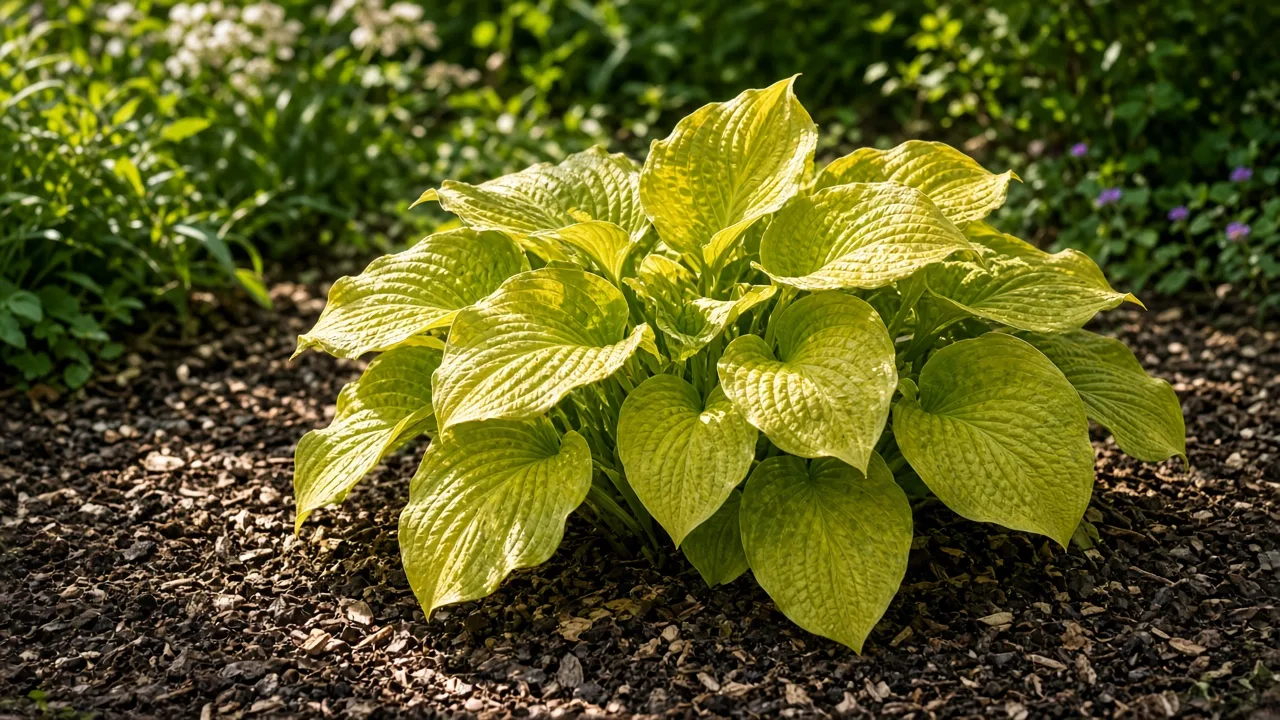
Yes, some hostas can grow in sun—but “sun tolerant” is a more useful phrase than “full-sun hosta.” Many cultivars handle a few hours of direct morning light, and selected yellow, gold, green, fragrant, or thick-leaved types can manage four to six hours in the right garden. The same plant may scorch in fewer hours if those hours arrive beside a hot wall on a dry, windy afternoon.
The reliable answer is conditional: choose the cultivar for the light, then choose the site for the heat and water demand. North Carolina Extension describes hostas as performing well in morning sun and dappled shade, with blue-leaved forms needing more shade and green-leaved forms accepting partial shade. The Royal Horticultural Society’s hosta guide similarly recommends moist soil and partial shade for most hostas, while noting that yellow-leaved cultivars and selected sun-tolerant types can take more light.
Use the guide below to decide whether your site is a good hosta site, which cultivars are sensible candidates, and what to do when the leaves tell you the exposure is too intense.
First, define the sun your garden actually gets
Do not choose a hosta from a label that simply says “full sun” or “part shade.” Watch the proposed bed during the hottest part of the growing season and record when direct light reaches the leaves. Four hours from 7 a.m. to 11 a.m. is a gentler assignment than four hours from 1 p.m. to 5 p.m., even though a sun calculator may count them equally.
Morning light arrives before the soil and surrounding masonry have stored a full day of heat. Late-day exposure combines high leaf temperature, faster evaporation, dry wind, and often reflected heat from paving, gravel, a south-facing wall, or a pale fence. The Missouri Botanical Garden’s hosta guidance emphasizes morning sun protected from hot afternoon exposure, organic soil, and a constant supply of moisture for the healthiest plants.
Look at the whole microclimate, not just the sky above the crown. A hosta under a loose tree canopy may receive bright, shifting light but still be cooler than one planted beside a driveway. Conversely, the tree-shaded plant may compete with thirsty roots and dry out sooner than the apparently more exposed plant in deep garden soil.
How many hours of sun can hostas take?
There is no universal hosta limit because “six hours of sun” does not describe light intensity, air temperature, wind, soil moisture, or reflected heat. As a practical starting point, many hostas are happiest with two to four hours of direct morning sun followed by bright shade or dappled light. Selected cultivars can handle four to six hours, especially in cool climates with dependable moisture; all-day, high-intensity sun is a trial rather than a general recommendation.
| Direct exposure | Best interpretation for hostas | Sensible first choice |
|---|---|---|
| Less than 2 hours, dense shade | Usually survivable, but flowering and gold color may be weaker | Green or blue hosta suited to shade |
| 2–4 hours of morning sun | A strong general target for foliage and manageable heat | Most green, gold, and fragrant types |
| 4–6 hours, mostly before early afternoon | Possible when soil stays evenly moist and the cultivar is robust | Gold, yellow, fragrant, or thick-leaved cultivar |
| 6+ hours in a cool, moist site | Possible for selected plants, but judge foliage quality through summer | A proven brighter-site cultivar, not an unknown blue hosta |
| 4+ hours of hot afternoon sun | High risk of fading, scorch, and repeated wilt | Add shade or choose another planting position |
The distinction between surviving and looking good matters. A hosta can remain alive while losing the blue coating that made it appealing, burning its white margins, or going dormant with damaged foliage weeks earlier than expected. If the goal is a handsome clump through late summer, judge the site by leaf quality, not by whether the crown technically persists.
Choose hostas by foliage clues
Leaf color is a useful first filter, not a guarantee. The North Carolina Extension Plant Toolbox hosta profile groups hostas into green, blue, gold, and variegated categories, while RHS guidance notes that yellow-leaved cultivars generally prefer some sun and that thicker, waxier leaves cope better with drier conditions than thin foliage.
Yellow and gold hostas
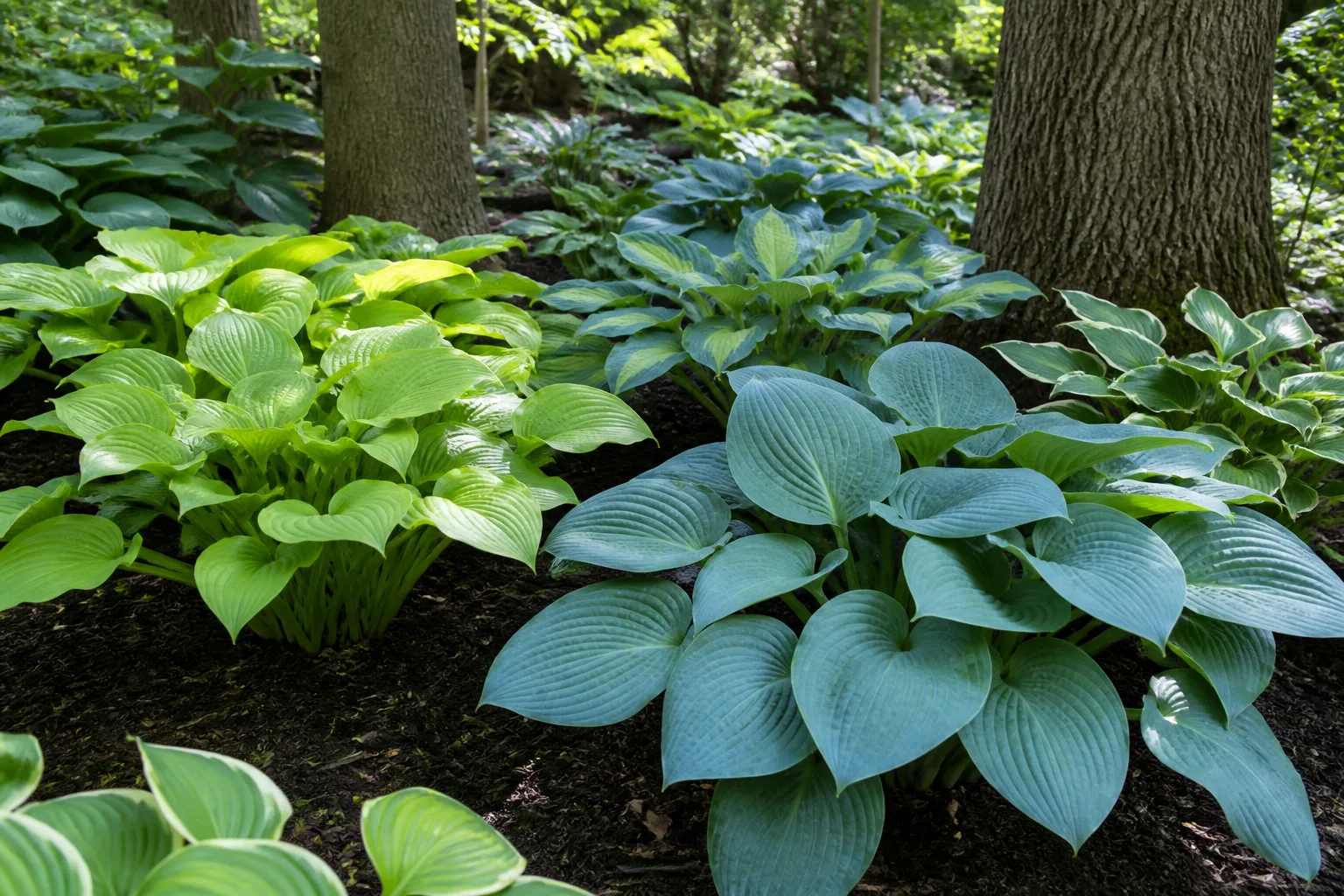
Yellow, chartreuse, and gold hostas are often the best place to start for a brighter bed. Several develop stronger color with useful light and can look greener in deep shade. Good candidates to investigate include ‘August Moon,’ ‘Gold Standard,’ ‘Gold Regal,’ ‘Sun Power,’ ‘Sum and Substance,’ and ‘Stained Glass.’
Do not read “gold” as “sunproof.” Pale foliage can still scorch when the roots dry or the leaves are exposed to hot reflected heat. A thick, corrugated leaf in moist soil is a safer bet than a thin yellow leaf in a west-facing strip beside concrete.
‘August Moon’ is especially useful where you want textured chartreuse-to-gold foliage with morning or filtered sun. ‘Sum and Substance’ brings much larger leaves and can take brighter conditions when its broad root zone has consistent moisture, but its size also means more leaf surface losing water on a hot day. Give both room, mulch, and an irrigation plan before assuming the cultivar will solve a difficult site.
Fragrant and green hostas
Many fragrant hostas have Hosta plantaginea in their background. North Carolina Extension identifies this species as fragrant and more heat tolerant than many hostas, and fragrant cultivars are often among the more useful choices for brighter sites. Consider ‘Royal Standard,’ ‘Guacamole,’ ‘Fragrant Bouquet,’ ‘So Sweet,’ or similar selections when you want flowers as well as foliage.
The cultivar still needs protection from the worst heat. ‘Royal Standard’ is a strong example of a green, fragrant hosta with a reputation for sun tolerance, but it should not be treated as a substitute for moisture or afternoon shade in a hot climate. Place fragrant plants near a path or seating area where morning light can support a good display and late-summer flowers can be enjoyed.
Home for the Harvest’s hosta coverage makes the same useful point: brighter exposure can improve foliage color on some gold and fragrant cultivars, but consistent water becomes more important as sunlight and heat increase. Use that advice as a management requirement, not as permission to plant any hosta in a dry, exposed border.
Blue hostas
Blue hostas need the most protection if you care about preserving their blue-gray appearance. The blue color is largely a waxy surface bloom, called a glaucous coating, over naturally greener leaf tissue. Strong light, heat, rain, handling, and normal seasonal wear can reduce that coating, so a blue hosta may turn greener before the plant is actually unhealthy.
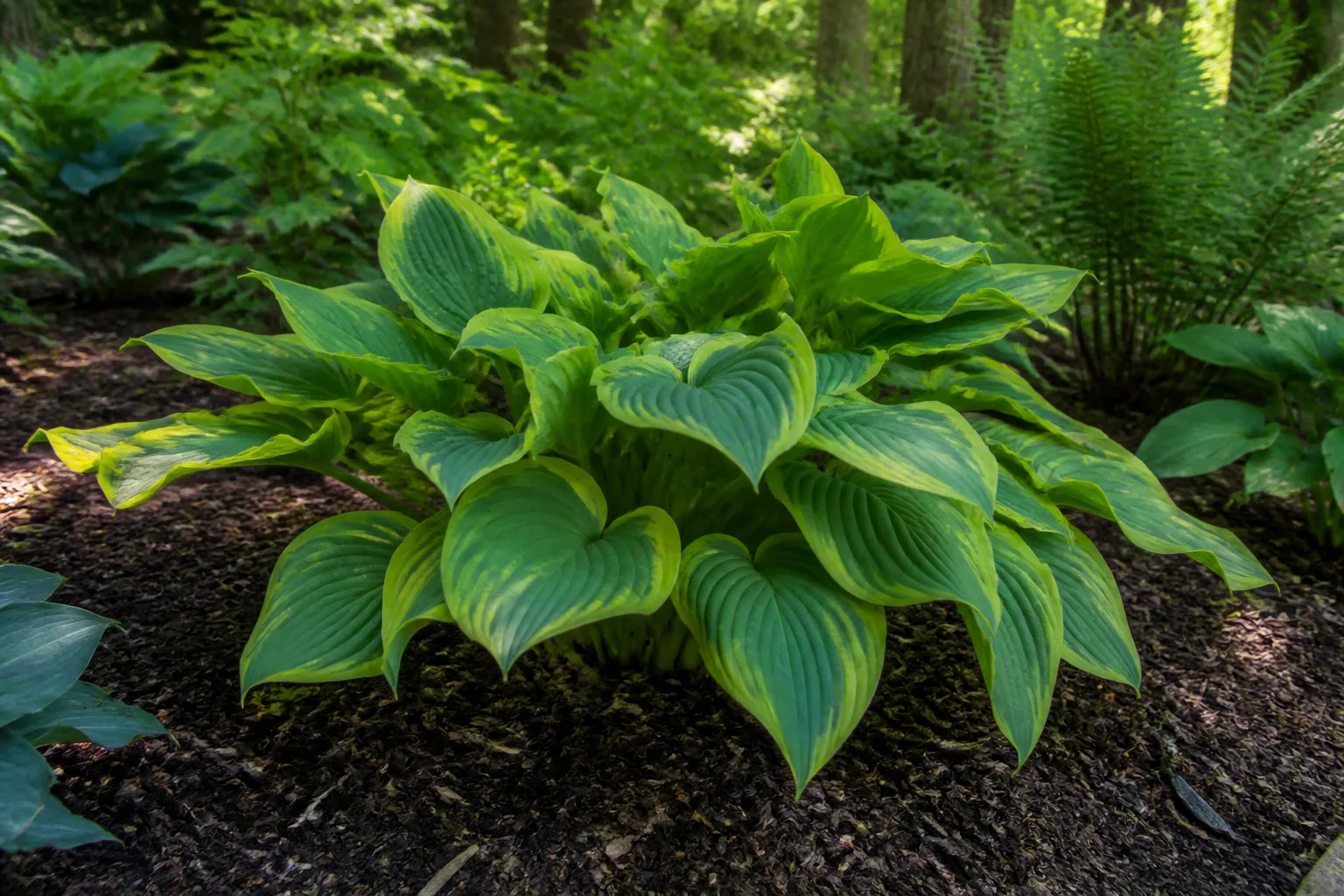
That makes two questions important: Can the plant stay alive here? and Will it keep the blue finish I bought it for? Cultivars such as ‘Halcyon,’ ‘Blue Angel,’ and ‘Krossa Regal’ are better placed in light shade, dappled light, or morning sun with afternoon protection. Some thick blue hostas can tolerate a brighter edge, but a green-looking survivor is not the same as a successful blue-foliage planting.
White-variegated hostas
White or cream tissue contains less chlorophyll than green tissue and is often the first portion to show heat or light injury. Broad white centers, thin leaves, and a hot western exposure form a particularly risky combination. A green hosta may look fine while the white sections of a variegated cultivar become tan and papery.
White-margined types with substantial leaves can sometimes handle morning sun, especially with steady moisture. ‘Minuteman,’ ‘Francee,’ ‘Patriot,’ and ‘Fire and Ice’ are useful names to research for brighter shade, but treat their tolerance as cultivar- and climate-specific. If the pale tissue burns every year, move the plant rather than adding more fertilizer or trying to keep the soil wet all day.
Sun-tolerant hosta cultivars to consider
The following shortlist is a starting point for matching a hosta to a brighter garden. It combines the foliage and flower clues used by extension and horticultural references with practical cultivar recommendations from Missouri Botanical Garden, Gardenia, Home for the Harvest, and HGTV. Start each plant in the gentlest site that still meets your design goal, then expand exposure only when the leaves stay healthy.
| Cultivar or group | Why it is worth considering | Start it here |
|---|---|---|
| ‘Royal Standard’ | Green, fragrant flowers; repeatedly cited as a sun-tolerant green hosta | Morning sun, moist bed, afternoon protection in hot regions |
| ‘August Moon’ | Gold foliage with strong texture and useful color in brighter light | Filtered sun or morning light; protect from dry heat |
| ‘Sun Power’ | Golden foliage and a naturally bright, upright presence | Morning sun or cool-climate sun with reliable water |
| ‘Sum and Substance’ | Large, thick-textured chartreuse-to-gold leaves | Spacious bed with deep, moisture-retentive soil |
| ‘Guacamole’ | Fragrant flowers and green-to-chartreuse variegated foliage | Bright shade or morning sun near a path or patio |
| ‘Fragrant Bouquet’ | Fragrance plus relatively good tolerance of brighter conditions | Morning sun with afternoon relief |
| ‘Gold Standard’ | Gold center and green margin; morning light can improve color | East-facing or dappled edge, not a dry west strip |
| ‘Stained Glass’ | Gold foliage, dark margin, and substantial texture | Part shade to selected full-sun situations with moisture |
| ‘Minuteman’ | Thicker white-margined foliage than some delicate variegates | Morning sun or filtered light; inspect white margins |
This is not a ranking from “most sun” to “least sun.” A local nursery’s mature stock can reveal more than a generic list: inspect established plants in late summer and note which cultivars still have clean margins and strong color. A plant that looks impressive in a spring sales area has not yet proved itself through your hottest, driest weeks.
Match the cultivar to your climate and microclimate
Hostas that perform well in a cool northern or maritime garden may need afternoon shade farther south or inland. North Carolina Extension recommends more shade in southern conditions to protect foliage color and reduce leaf burn, while the Missouri Botanical Garden notes that even yellow, green, and chartreuse forms can bleach or burn in extreme heat when bright sun combines with wind.
Hardiness zone is not the same as summer heat tolerance. A cultivar can survive your winter and still dislike your July exposure. Before planting, ask seven questions: When does direct light hit? How hot is the bed at midafternoon? Does wind pass through? Will the soil stay moist six inches down? Is a wall or pavement reflecting heat? Are tree roots competing for water? Will the cultivar’s mature size fit without crowding?
If the answers are mixed, use a gradient instead of an all-or-nothing decision. Put gold or fragrant hostas on the brighter outer edge, green cultivars in the middle, and blue or extensively white-variegated selections in the coolest interior. That layout lets you learn the bed’s performance without sacrificing an entire collection to the harshest pocket.
Build a root zone that stays moist but drains
Sun tolerance is closely tied to water availability, but hostas do not want swampy soil. The RHS recommends fertile soil and regular moisture, and both RHS and North Carolina Extension warn that poor drainage can damage hosta roots or crowns. The target is soil that holds water long enough to buffer heat while still draining excess water after rain.
Before planting, loosen compacted soil and add well-rotted organic matter when it suits the bed’s existing texture. Do not bury the crown under amendments or mulch. A surface layer of compost or fine organic mulch can reduce evaporation and temperature swings; RHS recommends a mulch layer around two inches, kept away from the plant crown and stems.
Containers require more attention because they heat and dry faster than the ground. Use a container with drainage holes, choose a size that can hold the mature root system, and expect a sunny pot to need more frequent checking than a hosta in a shaded border. If water runs straight down the sides or the mix becomes hydrophobic, the problem is not solved by simply watering for a few seconds more often.
The watering rule for sunny beds
Water deeply enough to moisten the main root zone, then check the soil before watering again. RHS suggests keeping the soil at least slightly damp to about six inches for hostas in the ground; in practice, dig near—but not through—the crown and use the soil itself to decide whether the plant needs water.
Drip irrigation or a soaker line is usually easier to manage than frequent shallow sprinkling. Apply water at the soil, especially during hot, windy weather, and use mulch to slow evaporation. Do not water on a rigid daily schedule when rain has already saturated the bed; roots need oxygen, and repeated saturation can create a drainage problem that resembles heat stress.
Read leaves before you add more water
The earliest warning of excessive exposure is often a change in the leaves rather than a dead crown. Look for bleached yellow or white patches, tan papery tissue, crisp brown margins, faded color, persistent hot-afternoon wilting, or foliage that declines much earlier than neighboring hostas. Damage is often strongest on the leaves facing the sun or a heat-reflecting surface.
A hosta that droops briefly during the hottest part of the day and recovers by evening may be responding to heat demand. If the soil is dry several inches down, water deeply and improve moisture retention. If the soil is already moist and the plant repeatedly wilts in the same afternoon window, reduce heat load with shade, wind protection, or relocation rather than adding water indefinitely.
Sunscald is not reversible on the damaged tissue. Protect the healthy leaves, keep the plant’s root zone stable, and accept that marked leaves may remain until the hosta goes dormant. Removing every damaged leaf immediately can reduce the plant’s photosynthetic area; trim only leaves that are mostly dead, collapsing, or unsightly enough to justify the loss.
If brown edges are not sunscald
Brown margins are a clue, not a diagnosis. The University of Minnesota Extension hosta diagnostic guide describes sunscald as bleached yellow-to-white patches that can become thin, tan, and papery, but other problems can create similar symptoms. Drought, wind, root competition, transplant stress, fertilizer salts, poor drainage, disease, and late-season decline all belong in the check.
Use the pattern to narrow the cause:
- Only the most exposed leaves are bleached or papery: investigate direct sun and reflected heat first.
- Crispy edges occur across the whole clump and the soil is dry: check irrigation, tree roots, wind, and the depth of wetting.
- A blue hosta is healthy but greener: the plant may be receiving more light than its waxy coating can preserve; that is a foliage-quality issue even if it is not a fatal injury.
- Soft yellowing, a collapsing crown, or persistently wet soil: check drainage and root or crown health instead of treating it as sunburn.
- Distinct spots with borders, streaks, or unusual mottling: use a diagnostic resource rather than assuming every mark is exposure.
Do not respond to pale leaves with a heavy dose of fertilizer. Too much fertilizer can add salt stress and soft growth without fixing a hot site. Correct the exposure and root-zone conditions first, then test soil or follow a measured feeding plan if nutrition still appears to be limiting growth.
Acclimate new hostas to brighter light
A hosta raised under shade cloth can burn when planted abruptly into a bright bed, even if the final location would be reasonable after adjustment. When you have control over the transition, move a container gradually toward stronger morning light over several days, and give a newly divided plant extra protection while its reduced root system re-establishes.
Acclimation helps leaves adjust; it does not change a shade-focused cultivar into a drought-tolerant plant. A blue hosta that is acclimated to direct light may still lose its blue finish, and a thin white-variegated leaf may still scorch in hot afternoon sun. Use temporary shade cloth or a nearby taller plant during an unusual heat spell, then judge the permanent site by the next flush of healthy leaves.
Planting timing also affects risk. RHS advises avoiding mid-summer planting when soil is hot and dry. Early spring or a suitable cool fall window gives roots time to grow before the most demanding weather, provided the plant is watered correctly and not left in saturated soil.
When and how to move a hosta
Move a hosta when it repeatedly scorches despite adequate moisture, not after one unusually hot afternoon. If the same cultivar develops severe damage every summer, the long-term answer is usually less afternoon heat rather than an increasingly complicated irrigation routine.
Prepare the new site first. Choose morning sun, bright shade, or dappled light; improve the soil if drainage or moisture retention is poor; and leave enough room for the clump’s mature width. Lift the plant during a cool period, keep as much healthy root mass as practical, replant at the same depth, and water the root zone thoroughly.
Do not pile mulch over the crown while the plant settles. Watch new growth rather than expecting damaged leaves to repair themselves. If the plant perks up and the next leaves hold their color and margins, the move solved the site problem; if it still scorches, reassess reflected heat, wind, drainage, or the cultivar itself.
Make a mixed-light hosta bed
A mixed-light bed is more forgiving than a single-exposure collection. Use the brightest morning-facing edge for gold, chartreuse, and fragrant hostas; place green cultivars where light is moderate; and reserve the coolest, most protected spaces for blue leaves and delicate white variegation.
Layer the planting with companions that match the same moisture and soil conditions, such as ferns, sedges, heucheras, or other regionally suitable perennials. A companion should not crowd the crown, block airflow, or create more root competition than the hosta can handle. Under mature trees, remember that shade and drought often arrive together.
Recheck the bed as the garden changes. A pruned branch, removed tree, new fence, or growing canopy can change the light pattern within a single season. Photographing the bed at midsummer and noting when the sun reaches each section makes next year’s cultivar decisions far easier than relying on memory.
Conclusion
The best hostas for sun are not simply the ones with a “full sun” label. Start with yellow, gold, fragrant, green, or thick-leaved cultivars such as ‘August Moon,’ ‘Sun Power,’ ‘Sum and Substance,’ ‘Guacamole,’ ‘Fragrant Bouquet,’ ‘Royal Standard,’ or ‘Stained Glass,’ then match them to morning light, dependable moisture, and protection from the hottest afternoon exposure.
Blue hostas and heavily white-variegated types deserve more shade when foliage color and clean margins matter. If a hosta repeatedly shows bleached patches, papery brown tissue, or severe afternoon wilt, check water and roots, reduce reflected heat, and move it during a cool period when the site remains wrong. A hosta is successful when it stays healthy and looks like the cultivar you chose—not merely when the crown survives.



