32 White Christmas Tree Ideas for Every Room
Find white Christmas tree ideas for every style and space, plus a simple plan for choosing lights, balancing ornaments, and avoiding a crowded or chilly look.
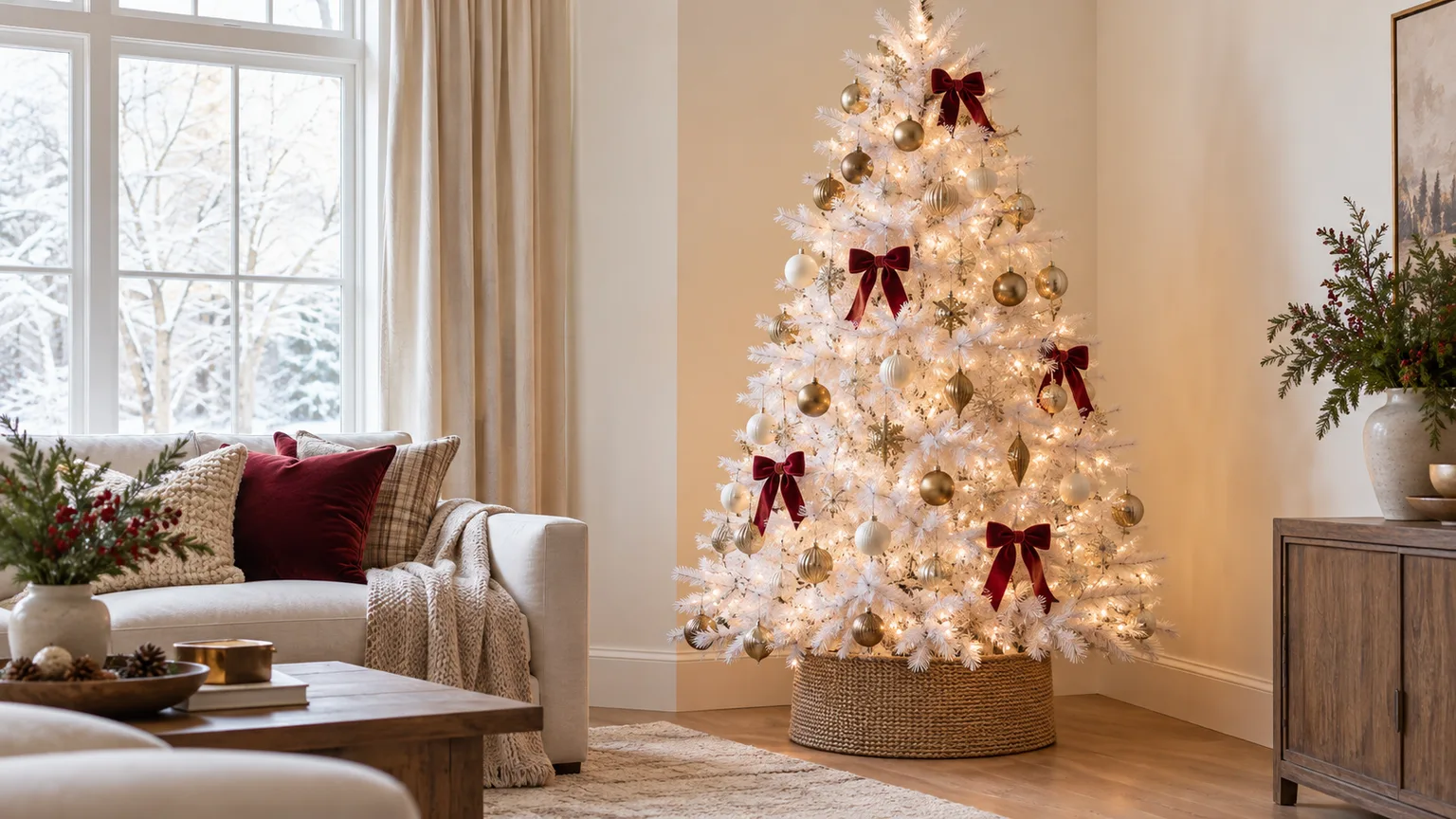
A white Christmas tree gives ornaments more contrast than a green one, but that brightness can read as icy, glamorous, rustic, playful, or quietly modern depending on the light and materials around it. The useful first choice is not “Which ornaments are trending?” but “How much white do I want, and what should the tree feel like in this room?” Answer that and you can make a few ornaments you already own look like a plan.
White artificial trees also vary more than photos suggest. Some are crisp, cool white; others lean cream. A flocked green tree keeps its underlying needles visible beneath a snow-like coating, while a manufactured white tree has white branches throughout. The finish, room light, and nearby wall color all affect the result, so compare a product’s daylight photos and measure the tree before ordering. Include the topper in your ceiling-height measurement, and check the widest branch span against the walking path.
Choose a white tree that suits the room
Start with the tree’s material and shape. A dense white tree gives you a full backdrop for ornaments, while a sparse or pencil silhouette leaves more negative space and fits tight corners. If you already own a green tree, a flocked finish can bring in the snowy look without replacing the whole tree; it will still read differently from white branches, especially where the green shows through.
Pay attention to undertone before choosing lights. Warm-white bulbs soften a bright white tree and make gold, wood, and red feel inviting. Cooler white can sharpen silver, pale blue, and clear glass, but it may feel stark beside amber lamps or creamy walls. Test one light strand before decorating, or switch on the room’s usual evening lighting while comparing options.
Tree scale matters as much as its color. Leave enough clearance for a topper, avoid blocking a door or heat vent, and make sure people can pass the tree without catching ornaments. A tabletop tree is useful on a sideboard or desk; a slim tree can fit an apartment corner; a full tree needs visible floor area so it does not look squeezed into the room.
32 white Christmas tree ideas
Color palettes that make white feel intentional
1. Warm the branches with brass and champagne gold. Mix matte brass with a few reflective champagne ornaments instead of covering every branch in mirror shine. The warm metal brings depth to bright white, and a woven collar or wood beads keep the result from feeling formal. Use one gold finish as the thread that connects ornaments of different shapes.
2. Choose cranberry red for a softer traditional look. Deep red velvet bows, berries, or a small group of red glass balls stand out clearly against white without requiring the full red-and-green palette. Repeat the color at three or four heights rather than clustering everything near the top. This gives the eye a path down the tree and helps the accent feel deliberate.
3. Go icy with silver, clear glass, and pale blue. Silver reflects the lights, clear ornaments preserve the branches’ open look, and a few powder-blue pieces supply color without turning the tree into a solid blue mass. Keep the finishes varied—matte, faceted, and smooth—so a cool palette still has texture. This scheme works best when the room’s lighting is not strongly amber.
4. Make it cozy with ivory, wood, and warm lights. A white tree can feel less chilly when you add natural surfaces: pale wood beads, knit or felt ornaments, paper shapes, and a linen tree skirt. Repeating two or three materials creates a quiet, handmade look. Keep a little white branch visible between decorations; a neutral scheme needs those pauses to stay light.
5. Use black accents for graphic contrast. Black ribbon, a few matte ornaments, or a dark star topper give white branches a crisp, modern outline. Keep black to a small share of the display so the tree does not become visually heavy, and use warm lights to soften the contrast. Repeat one dark detail elsewhere in the room, such as a frame or side-table object.
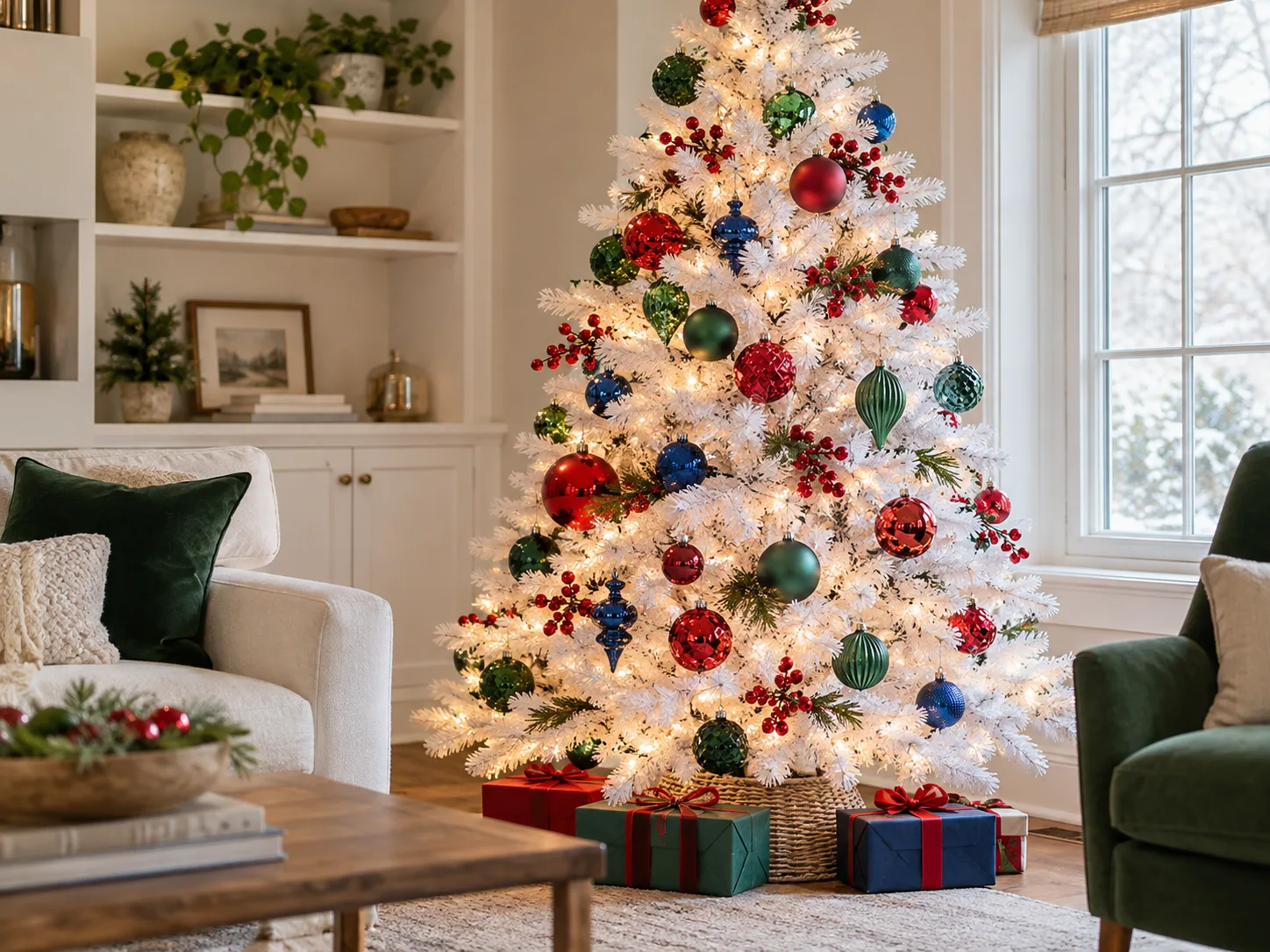
6. Build a jewel-tone tree with red, green, and blue. White is a bright backdrop for saturated color, so jewel tones can look vivid without needing a large ornament count. Choose two dominant colors and let the third appear sparingly; equal amounts of every color can become noisy. Glossy balls, velvet, and ribbed glass provide variation without adding more hues.
7. Keep it monochrome with white-on-white ornaments. Use different materials rather than different colors: paper, ceramic, matte plastic, clear glass, satin ribbon, and textured fabric catch light in their own ways. A few ornaments should sit forward on branch tips while others tuck closer to the trunk. That depth makes an all-white tree readable instead of flat.
8. Pair pale pink with silver for a gentle pastel scheme. Blush and dusty rose soften the brightness of white, while silver links the palette to the lights. Choose one pink tone and repeat it in bows, baubles, or paper ornaments rather than mixing every pastel. If your living room already has rosy accents, a small number of matching tree ornaments can make the seasonal display feel connected.
9. Add evergreen sprigs for a white-and-green contrast. A white tree does not have to abandon greenery: small faux cedar picks, dark green ribbon, or a few botanical ornaments create a sharp but familiar pairing. Keep cut greenery away from lights and heat, and use faux sprigs if you want the arrangement to remain tidy for weeks. The green is most effective when spread evenly rather than loaded onto one side.
10. Try navy and white for a tailored winter palette. Navy ribbon or a handful of dark-blue ornaments makes the branches look brighter and gives the display a more composed, less sugary feel than pale blue. Add silver or clear glass for reflection, then stop before adding a fourth strong color. This look suits a room with navy upholstery, dark frames, or a deep blue rug.
11. Give the tree a red-and-white candy-stripe rhythm. Alternate a few red-and-white striped ornaments with plain red and plain white pieces so the pattern has breathing room. A narrow striped ribbon can repeat the effect without wrapping the entire tree. Use shatter-resistant ornaments on reachable lower branches if the tree sits near children, pets, or a busy doorway.
12. Use copper and rust for a sunset-warm palette. Copper, terracotta, amber, and muted rust add warmth without relying on bright red. The earthy tones look especially balanced with warm-white LEDs and a natural basket around the stand. Keep the finish mix restrained—two shades of metal and one fabric accent are usually enough to prevent the white branches from disappearing under decoration.
Texture, materials, and personal details
13. Hang dried citrus for a translucent natural accent. Thin, fully dried orange slices glow when light passes through them and add a warm color against white branches. Let slices cool completely before stringing them, and use a light strand so the fruit does not pull down a delicate tip. Better Homes & Gardens has practical homemade ornament projects, including dried citrus and other materials you can adapt to your own palette.
14. Add paper stars and folded ornaments. White, cream, kraft, or metallic paper keeps the shapes light and easy to store. Choose pieces with enough dimension to show from across the room, then hang them at different depths rather than lining them up on the outer edge. Paper gives a white tree a personal craft element without the weight of large glass ornaments.
15. Let ribbon take the place of dense garland. Instead of spiraling one continuous strand around the tree, cut several lengths and tuck them vertically among the branches. Velvet gives a soft, rich line; wired ribbon holds a bow shape; sheer ribbon creates a lighter effect. Keep each strip short enough that it cannot drag near the floor, snag a pet, or conceal a plug connection.
16. Use oversized ornaments sparingly. Two or three large baubles can make a slim tree feel fuller and create focal points on a broad tree, but too many will hide its shape. Put the largest pieces toward the trunk where a sturdy branch supports them, then balance them with medium pieces near the tips. Large ornaments work best when the room gives you enough viewing distance.
17. Mix in family keepsakes instead of buying a full new set. A white tree makes colorful heirlooms easier to see, so you can give a few special pieces open space around them. Hang fragile or heavy ornaments deeper on stable branches, and use safer lightweight reproductions on lower tips. A restrained group of meaningful decorations usually has more character than a tree packed with newly purchased matching baubles.
18. Make a snowflake tree without coating every branch. A handful of snowflake ornaments in different sizes can create a winter theme while leaving the white branches visible. Combine flat paper flakes with a few dimensional pieces, but choose one or two shapes rather than mixing many novelty motifs. If the room is already decorated with snowflake garland or window decals, echo just one detail on the tree.
19. Choose a feather or soft-fabric topper. A plume, bow, or fabric flower can feel gentler than a heavy star on a delicate white tree. Secure it to the central support rather than relying on a thin top branch, and check that it does not tip the tree. For a more classic finish, repeat the topper’s material in smaller ornaments or ribbon lower down.
20. Carry the color to a coordinating tree collar. A basket, woven collar, folded fabric skirt, or simple wood box can visually anchor a white tree and hide its stand. Pick a base finish that repeats an existing room material; a different texture is fine, but a completely unrelated color can make the tree appear detached from the furnishings. Leave access to the stand and any cord or water reservoir.
21. Create a vintage look with glass and heirloom shapes. Reflective glass birds, clip-on shapes, old-fashioned bells, and family ornaments look at home on white branches because their silhouettes stay easy to read. Mix one reflective finish with quieter matte pieces so the display does not turn into an uninterrupted glare. Place the most delicate ornaments where they are protected from passing shoulders and playful hands.
22. Try a handmade bead or felt garland. Wood beads bring a natural note; felt balls or wool shapes add softness and a little color. Lay the garland loosely rather than pulling it taut, and use one strand as a connecting line across the branches. For a DIY approach, the paper, wood, and felt projects in the Better Homes & Gardens ornament collection offer material ideas; adjust color and size to fit your tree.
Room placement and small-space ideas
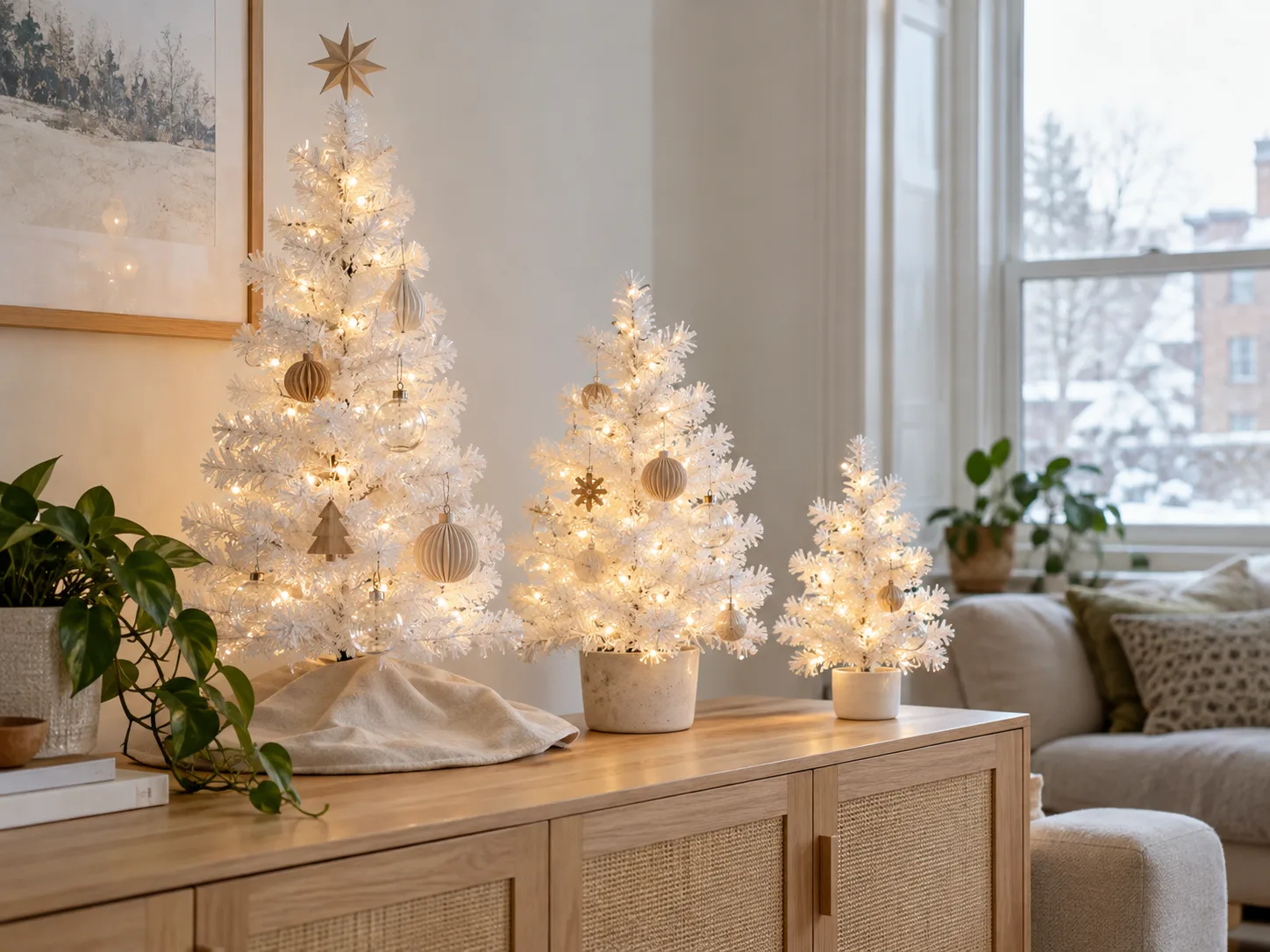
23. Group three tabletop trees at different heights. A trio works on a sideboard, mantel, or console when each tree has a distinct height and enough gap around its branches. Keep the smallest pieces plain and let one carry a few ornaments, so the group reads as a vignette rather than a miniature forest of identical objects. A shallow tray can unite the bases and protect the furniture from scratches.
24. Choose a slim white tree for a narrow corner. A pencil profile can preserve walking space in an apartment, entry, or beside a media cabinet while still giving you a full-height focal point. Measure the widest branch spread, not only the trunk; some slim trees flare near the bottom. Place the narrow side toward the walkway and turn the best-decorated face toward the room.
25. Set a small tree on a stable sideboard or desk. A tabletop tree brings the white-tree look to a bedroom, office, or rental where a floor tree would crowd furniture. Choose a heavy, flat surface and a compact base, then secure the stand so it cannot tip if someone brushes the table. Keep cords routed neatly and away from drawers, chair wheels, and the edge of the work surface.
26. Frame an entry with a tree beside the stairs. A white tree at the foot of a staircase makes a bright welcome and can visually connect with garland on the rail. Keep the tree clear of the handrail, door swing, and walking path; a beautiful setup should not narrow the route people use with bags or gifts. If the entry is tight, move the display to a landing only if the railing and passage remain unobstructed.
27. Use a pair of trees to create symmetry. Matching slim trees on either side of a window, console, or wide doorway can make the arrangement feel architectural. Keep their silhouettes and light color similar, then vary a few ornaments so the scene does not look like a store display. Two smaller trees may be easier to fit and store than one oversized tree with a broad footprint.
28. Decorate the bedroom with a narrow or tabletop tree. A small white tree near a dresser or window adds seasonal atmosphere without adding another large object to the room. Choose soft lights and a limited ornament palette so the tree complements bedding instead of competing with it. Avoid placing it where branches or cords can catch on curtains, bedding, or a heater.
29. Add a white tree to a kitchen corner or breakfast nook. A compact tree can bring holiday color to a dining nook, but keep it away from stovetops, ovens, sinks, and food-preparation areas where heat, steam, grease, or splashes can damage the decorations. Use shatter-resistant ornaments near chairs and choose a small display that does not reduce countertop or table space. A few ornaments are enough for a room that is already visually busy.
30. Put a mini tree on a serving tray for a flexible vignette. A tray makes it easier to move a small decorated tree when you need the surface for food, books, or a bedside lamp. Add one low companion object, such as wrapped empty boxes or a few wood ornaments, and leave a clear margin around the tree. The tray should be stable and large enough to catch loose glitter or needles.
31. Repeat the white tree’s palette in nearby greenery. A small wreath, garland, or vase of evergreen clippings can link the tree to a mantel, window, or banister. Keep the greenery secondary: if the tree is icy blue and silver, use a simple green wreath with a matching ribbon rather than adding another full ornament scheme. The Southern Living decorating collection shows how a few repeated colors and materials can connect separate holiday displays.
32. Make the tree a quiet focal point against a neutral room. A white tree can blend into cream walls, pale furnishings, and light rugs, especially when it has no dark accents. Give it definition with one warmer detail—a wood base, brass star, colored ribbon, or deeper ornaments—and let the surrounding surface stay simple. When the room already contains strong patterns, this quieter approach lets the tree contribute brightness without adding visual clutter.
A simple order for decorating the branches
Work from the largest decisions to the smallest. First assemble and shape the branches so gaps and the overall silhouette are visible; then test the lights and decide whether the tree needs warmth, sparkle, or both. Add ribbon or garland next because these pieces set the direction of the design and are difficult to weave in after every ornament is hung.
Place the largest ornaments before the small ones. Spread them across the front and sides, not only the eye-level area, and tuck a few slightly inward to create depth. Add medium ornaments to balance gaps, then use small pieces to finish a few bare spots. Step back and look from the doorway where most people will see the tree. If your eye keeps landing on one crowded cluster, move pieces around rather than adding more.
For a color scheme, pick one main accent and one supporting material. White already functions as the background; the tree does not need a second “base color.” A simple formula is white branches, one dominant accent such as red or blue, one linking finish such as brass or silver, and a natural or fabric texture to soften the contrast. The exact palette can change with your home: seasonal decorating guidance from Southern Living likewise treats color as something to coordinate with existing decor rather than replace it.
Finish with the topper and base. The topper should fit the tree’s width and support; a large star on a short tabletop tree can make it look top-heavy, while a small bow can disappear on a full-height tree. At the base, choose a collar that hides hardware without blocking safe access to a stand or cord. If a tree has a water reservoir, do not bury it under fabric or a basket.
Keep the display safe and easy to store
Decorating ideas should not put lights, fabric, or fragile pieces where they can cause trouble. Choose a stable stand, keep the tree outside high-traffic paths, and use indoor lights according to the manufacturer’s directions. The U.S. Consumer Product Safety Commission’s holiday decorating guidance advises consumers to look for the “fire resistant” label on artificial trees, avoid unattended candles, and never overload outlets or connect more than three sets of incandescent lights. For a white tree, that means warm candlelight should come from LEDs or flameless candles placed well away from branches—not from an open flame near fabric, ribbon, or plastic.
Inspect cords before hanging lights, and replace a damaged set rather than hiding a frayed section inside the branches. Do not pinch a cord beneath a tree stand or furniture, and turn decorations off when you leave home or go to bed. Keep extension cords and plugs away from water if you are decorating a live tree, and keep the tree clear of heat sources. The white finish does not change the electrical or fire-safety needs of the display.
Fragile glass, metal hooks, and small decorative pieces also need placement thought. Hang heirlooms out of the main traffic zone and use lightweight, shatter-resistant ornaments on lower tips if children or pets can reach them. Secure the tree if it could be pulled or knocked over, and keep small hooks, beads, and loose craft parts collected after decorating. These practical choices let the color scheme stay beautiful without making the room harder to use.
When the season ends, remove ornaments before compressing branches. Wrap fragile pieces individually, keep the topper separate, and store ribbon without tight creases. A white tree can show dirt or discoloration more readily than a dark-green tree, so follow the manufacturer’s cleaning instructions and store it in a closed, dry space away from direct sunlight. Do not use bleach or household cleaners unless the maker specifically allows them; a finish that looks white in December should not be sacrificed to an untested cleaning method.
Conclusion
The best white Christmas tree ideas start with the finish, shape, and light in your room, then add a small number of colors and textures that support them. You can go crisp with silver and blue, warm with wood and brass, traditional with cranberry ribbon, or personal with handmade ornaments and keepsakes. Choose one direction, decorate from large elements to small ones, and edit anything that hides the tree’s shape. That gives you a display that feels finished, fits the room, and is simple to enjoy and pack away.



