7 Hydrangea Alternatives for Every Garden
Find the best hydrangea alternatives for shade, full sun, privacy, pollinators, and moist soil, with honest trade-offs before you buy.
Hydrangeas are not bad plants. They are popular because their flowers are dramatic, many cultivars are genuinely useful, and the genus offers more variety than a row of identical mopheads suggests. The problem is that gardeners often plant them for the look without matching the species to the site, the water supply, or the amount of pruning they actually want to do.
If a hydrangea has failed in your yard—or if you simply do not want another predictable ball of flowers—choose the replacement by garden job first. A clematis can give you vertical color where a shrub would crowd a path. A camellia can provide evergreen structure in a mild, shaded garden. Summersweet can make a damp corner productive, while potentilla can handle a sunny border that would leave a bigleaf hydrangea wilted.
The best hydrangea alternative is therefore not one plant. It is the plant that gives you the feature you wanted without repeating the mismatch that made hydrangeas feel overrated in the first place.
Hydrangeas Aren’t Bad—They’re Often Misassigned
The phrase “hydrangea” covers shrubs with very different habits. Bigleaf and mountain hydrangeas are more sensitive to old-growth pruning and summer moisture than many gardeners realize. Panicle hydrangeas handle more sun, and oakleaf hydrangeas add foliage and fall color that make them useful even after flowering. Treating all of them as one fussy, shade-only shrub is just as inaccurate as treating all of them as carefree.
The Royal Horticultural Society’s hydrangea growing guide describes the common pattern clearly: shrubby hydrangeas prefer moist soil that drains well, do best in light shade, and may be planted in sun only when summer soil does not dry out. Its advice also separates pruning by type rather than recommending one winter haircut. The NC State Extension Plant Toolbox profile likewise notes that direct sun can increase watering needs and that pruning time depends on the variety.
That makes hydrangeas a site-specific choice, not an automatic mistake. They are a sensible pick beside a north- or east-facing foundation, in soil that holds moisture without staying saturated, or in a garden where the owner enjoys identifying the plant before pruning it. They are a poor pick for a hot reflected wall, a dry gravel bed, or a landscape irrigated only when the lawn is watered.
Flower color is another reason hydrangeas can seem more demanding than they are. Only some mophead and lacecap types shift between blue, mauve, and pink as soil acidity and available aluminum change; white, red, and green cultivars do not reliably follow that pattern. The RHS recommends testing soil rather than guessing, and notes that strongly alkaline or chalky ground can make blueing treatments unreliable. If you love hydrangeas but not the chemistry experiment, choose a cultivar for its natural color and let the soil be what it is.
There is also a design issue hiding inside the “overrated” complaint. A shrub with enormous flowerheads can dominate a small bed, obscure windows, and create a single peak of interest. Smaller flowers repeated across several seasons can be more satisfying from the kitchen window, especially when the planting includes winter stems, evergreen leaves, berries, or seedheads instead of becoming visually empty after August.
Start With the Garden Job
Before you shop, finish this sentence: “I want this plant to…” The answer changes which alternatives are useful.
For Big Summer Flowerheads
If the real goal is a large summer display, do not settle for a plant that is merely “easy.” Look for a shrub or perennial with the flower scale, bloom timing, and viewing distance you want. Panicle hydrangeas, perennial hibiscus, shrub roses, and some viburnums can deliver a strong focal point, but they differ in sun, winter hardiness, and mature size.
You may also get a better composition by replacing one oversized shrub with a layered planting: a medium shrub behind, a clump-forming perennial in front, and bulbs or annuals to bridge the weeks between bloom seasons. That arrangement often looks less repetitive than a line of hydrangeas and gives you interest before and after the main flower show.
For Evergreen Privacy
Hydrangeas are deciduous, so they cannot screen a window or patio in winter. If privacy is the real job, choose an evergreen that fits your climate, then add seasonal flowers around it rather than asking one plant to do both jobs.
Camellia is the obvious flowering option for climates where it is hardy, but it is not a dry-site shrub. Broadleaf evergreens such as some hollies, mountain laurel, or well-selected viburnums may be better depending on winter temperatures and soil. Check the mature width before planting: an evergreen hedge that outgrows its bed becomes a pruning project, not a low-maintenance solution.
For Pollinators or Native Value
“Attracts butterflies” is not the same as “supports the whole butterfly life cycle.” A nectar plant feeds adults; a host plant feeds caterpillars. If wildlife value matters, prioritize plants native to your region and add a mix of bloom shapes and seasons rather than relying on one showy shrub.
This is where summersweet, native viburnums, native clematis, ninebark, and regionally appropriate perennials can outperform a mass planting chosen only for flower color. Your local extension service or native-plant society can narrow the list to species that belong in your soil and climate, not just plants that survive somewhere with the same hardiness number.
Hydrangea Alternatives That Fit More Situations
These seven choices are not interchangeable. Each is a better answer to a different complaint: lack of vertical interest, winter bareness, wet shade, excessive watering, thin wildlife value, or a sunny site that does not suit a bigleaf hydrangea.
Clematis for Vertical Color
Clematis is the best hydrangea alternative when you want flowers at eye level without giving a shrub several feet of bed width. It can climb a trellis, fence, arbor, or obelisk, and the range is enormous: NC State describes nearly 400 species plus many cultivars and hybrids, from climbers to spreading or herbaceous forms.
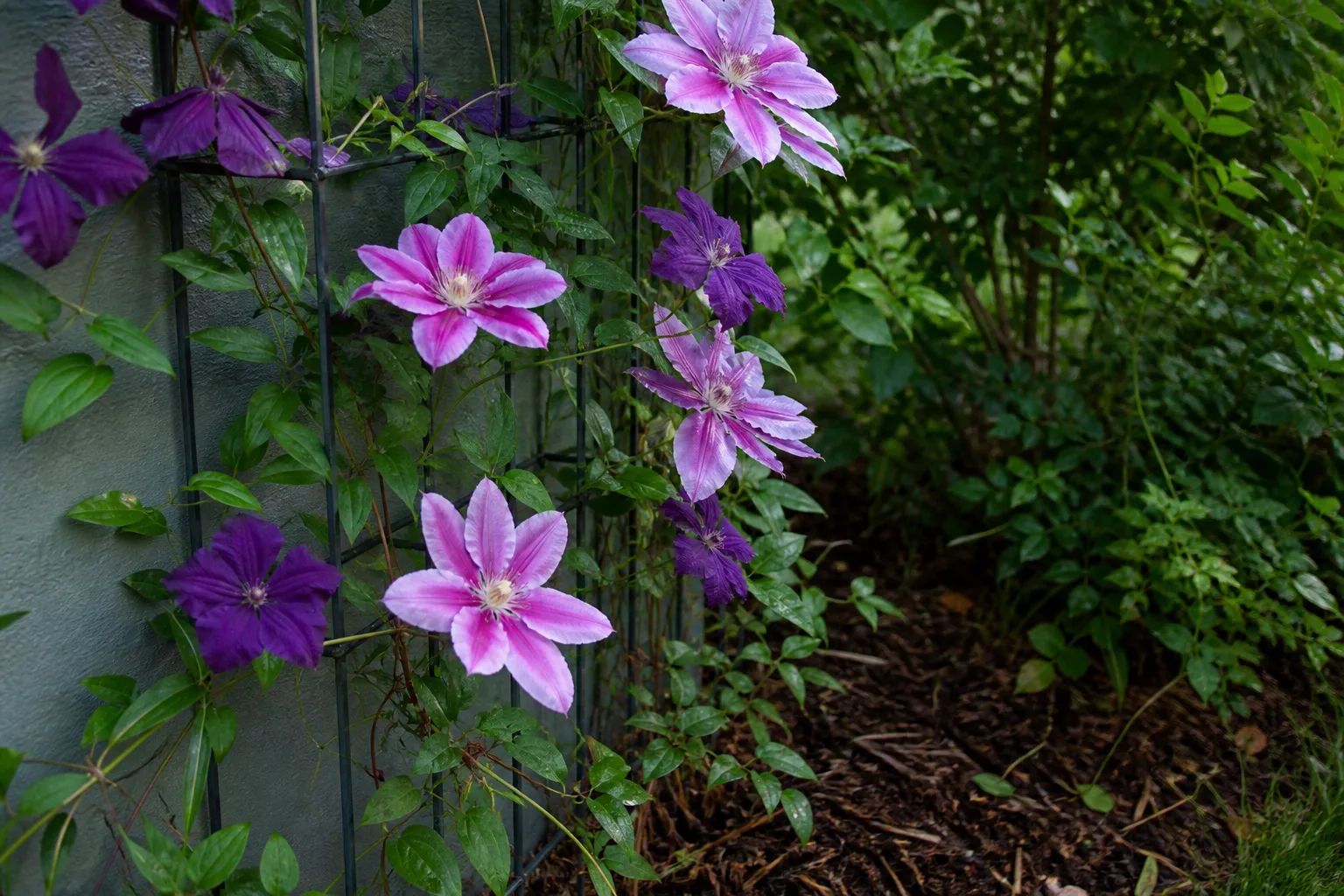
The catch is that clematis is not maintenance-free. Give most types sun on the foliage, afternoon protection in hot climates, and cool, mulched roots in moist, well-drained soil. It also needs a support that is installed before the stems become tangled. The pruning rule depends on the flowering wood: the RHS clematis pruning guide separates plants into three groups, from early bloomers that need little regular pruning to late-flowering types that are cut back hard in late winter.
Choose a clematis when your problem is lack of vertical space or a need for a longer-looking garden, not when you want a shrub that can be ignored. Avoid using it as a direct substitute in a bed that is too dry, and do not buy an unlabeled vine if you are unwilling to learn its pruning group.
Camellias for Evergreen Structure
Camellias solve the winter problem that hydrangeas cannot. Their glossy evergreen foliage gives a border weight year-round, and the flowers can arrive in fall, winter, or spring depending on the species and cultivar. Japanese camellias tend to have larger flowers; sasanqua camellias generally offer smaller, simpler blooms and a more sun-tolerant habit.
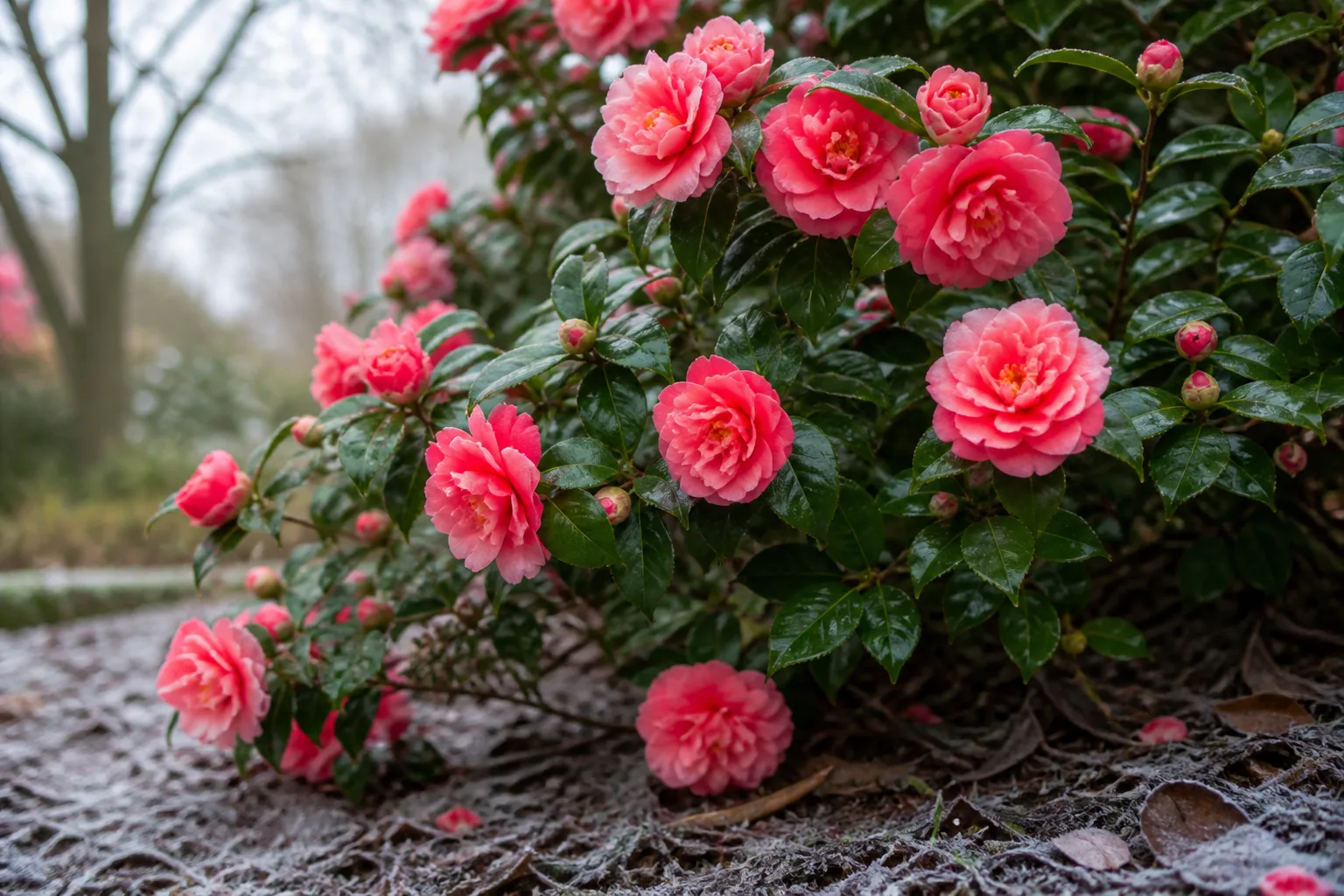
This is a strong choice for a sheltered, partly shaded garden in a mild climate. NC State Extension’s camellia profile lists hardiness roughly from Zones 6 through 9 and recommends moist, well-drained, slightly acidic, organically rich soil. It also warns that camellias do not tolerate drought and that pruning should happen soon after flowering so next season’s buds are not removed.
That last point matters: camellias are not automatically easier than hydrangeas. They trade hydrangea’s summer water demand and deciduous habit for drought sensitivity, shelter requirements, and potential pests or fungal disease. Choose them for evergreen screening and seasonal flowers, not for a neglected hot strip beside pavement.
Summersweet for Moist Shade
Summersweet (Clethra alnifolia) deserves more attention when a hydrangea is being asked to live in damp, part-shade soil. It produces upright spikes of fragrant flowers in summer, keeps a useful shrub shape, and can support a pollinator-friendly planting. Unlike a bigleaf hydrangea chosen for color-changing blooms, it does not ask you to manage flower color with soil chemistry.
NC State lists summersweet among the native alternatives to Buddleja davidii, which is a useful reminder that a replacement can be both ornamental and more regionally responsible. It is especially worth considering in the eastern United States where naturally moist soil and summer humidity make it a more logical fit than a drought-tolerant shrub.
The trade-off is that summersweet is not a plant for a dry, sunny foundation bed. Give it consistent moisture while it establishes, room for the mature clump, and enough light to flower well. If the spot is genuinely waterlogged rather than simply moist, improve drainage or choose a plant adapted to wet feet instead of hoping any flowering shrub will tolerate standing water.
Butterfly Bush Only Where It Is Appropriate
Butterfly bush (Buddleja davidii) is a fast-growing, full-sun shrub with long flower panicles and a strong nectar display. It can be a good answer for a gardener who wants summer color, heat tolerance, and butterflies rather than a rounded mophead. Its flowers arrive on new growth, so early-spring pruning is simpler than pruning an old-wood hydrangea.
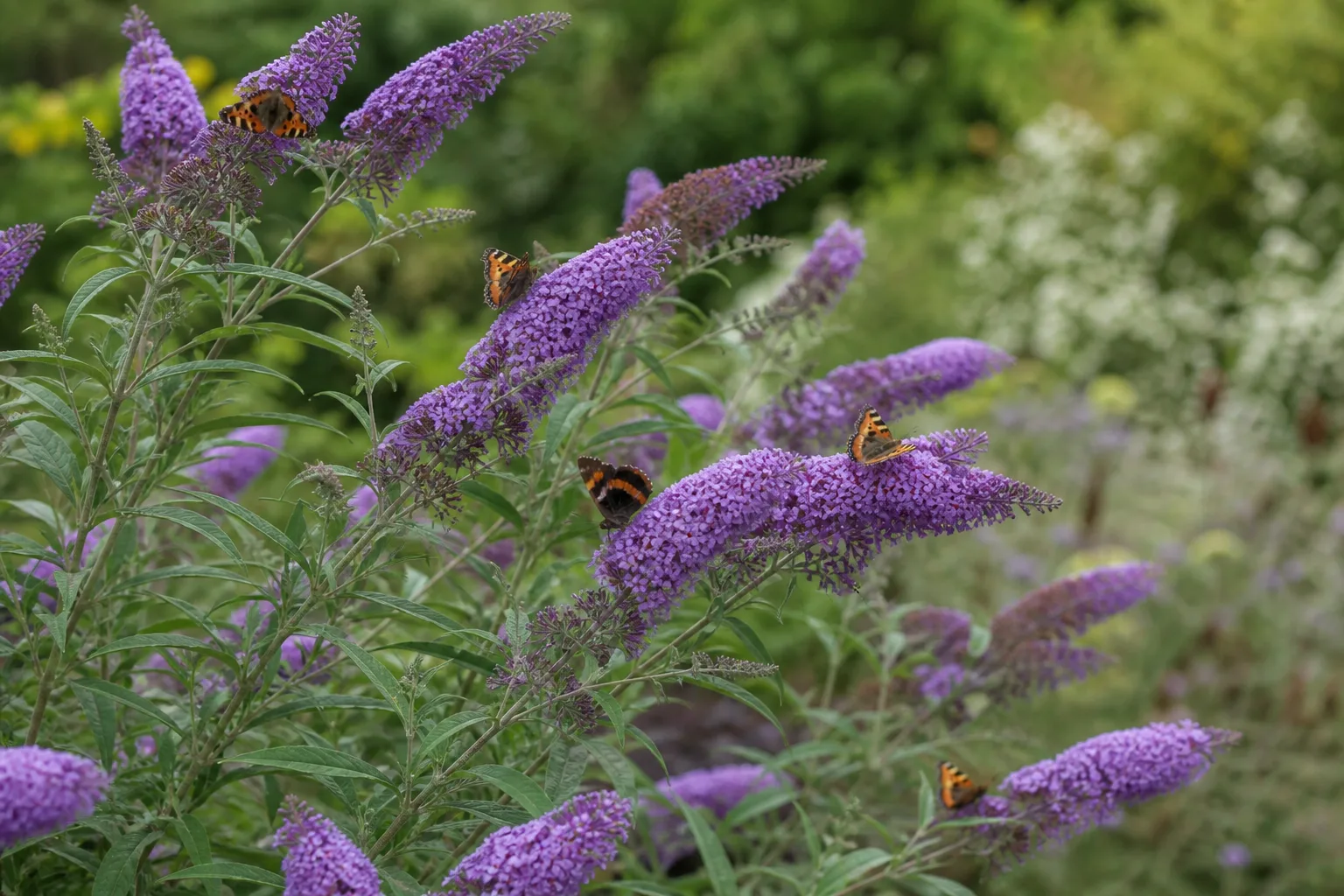
But do not repeat the shallow advice that butterfly bush is automatically a better or more ecological plant. NC State Extension’s profile describes the species as self-seeding and potentially weedy, notes that it can naturalize easily, and records invasive or noxious-weed concerns in several regions. It also points out that adult butterflies use its nectar, but native caterpillars cannot use its leaves as a host plant.
Before buying, check your state, province, or local invasive-plant list. If Buddleja davidii is a concern, look for a documented sterile or noninvasive cultivar where appropriate, or choose a native shrub such as summersweet, buttonbush, native viburnum, or Virginia sweetspire. Even where butterfly bush is allowed, deadhead it before seed forms and plant it where its eventual spread can be monitored.
Viburnum for Berries and Seasonal Structure
Viburnums are a broad group rather than one uniform plant, which is precisely why they make useful hydrangea alternatives. Depending on species, you can get fragrant spring flowers, glossy or textured foliage, fall color, berries, and a shrub or small-tree form. Some are evergreen in mild climates; others are deciduous but provide more than one season of interest.
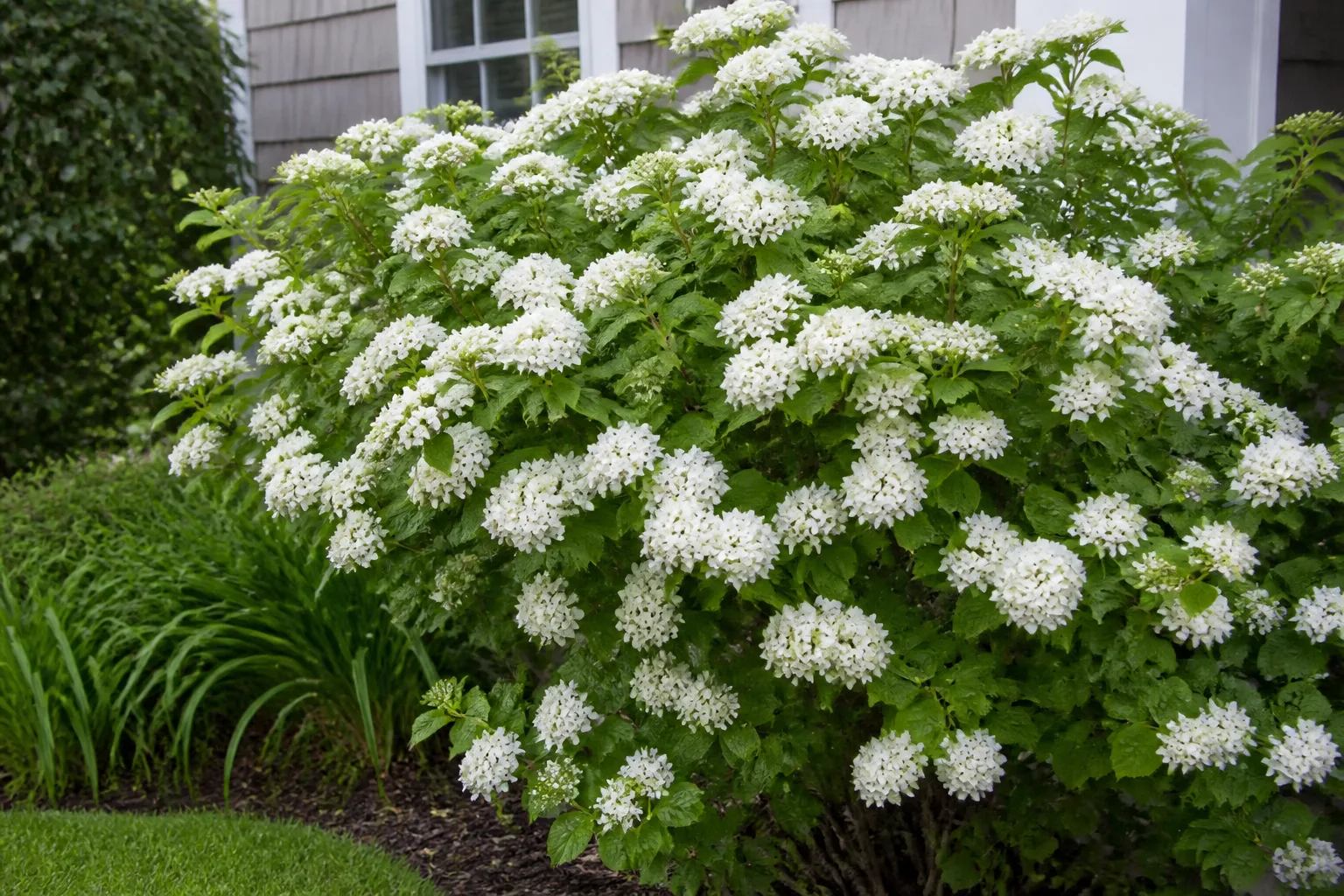
Choose a viburnum when your priority is a fuller landscape performance rather than the largest flowerhead. Many are better candidates for a mixed hedge or wildlife planting than a foundation row of hydrangeas, but the exact species determines mature size, fruiting, sun tolerance, and whether a compatible pollinator is needed for berries.
The practical rule is to shop by botanical name, not just “viburnum.” Read the full-size dimensions, look for the bloom and fruit window, and confirm the plant will not shade out a smaller bed. A viburnum that stays handsome with only selective thinning can be lower-fuss than a shrub that must be cut back every year to fit a narrow space.
Ninebark for Tougher Mixed Borders
Ninebark (Physocarpus opulifolius) brings peeling bark, rounded flower clusters, and cultivars with gold, copper, or burgundy foliage. It is a useful alternative when hydrangeas feel too soft or too repetitive and you want stronger stems and foliage contrast in a mixed border.
It is also more forgiving of cold and urban conditions than many tender flowering shrubs, although “tough” does not mean drought-proof. Give it sun to part shade, reasonable drainage, and enough space for its mature size. Selective renewal pruning is usually more attractive than repeatedly shearing it into a dense ball, and a cultivar with a naturally compact habit is safer for a small foundation bed.
Ninebark is a particularly good design choice when flowers are only one layer of the planting. The bark can carry winter interest, the foliage can carry the middle of the season, and neighboring perennials can provide the softer blooms that hydrangea fans often miss.
Spirea or Potentilla for Full Sun
If your site is sunny, hot, and reasonably well drained, spirea or potentilla may be more honest choices than a bigleaf hydrangea. Spirea offers clusters of white or pink flowers and a range of shrub sizes; potentilla stays generally smaller and flowers over a long season in yellow, white, pink, or orange depending on cultivar.
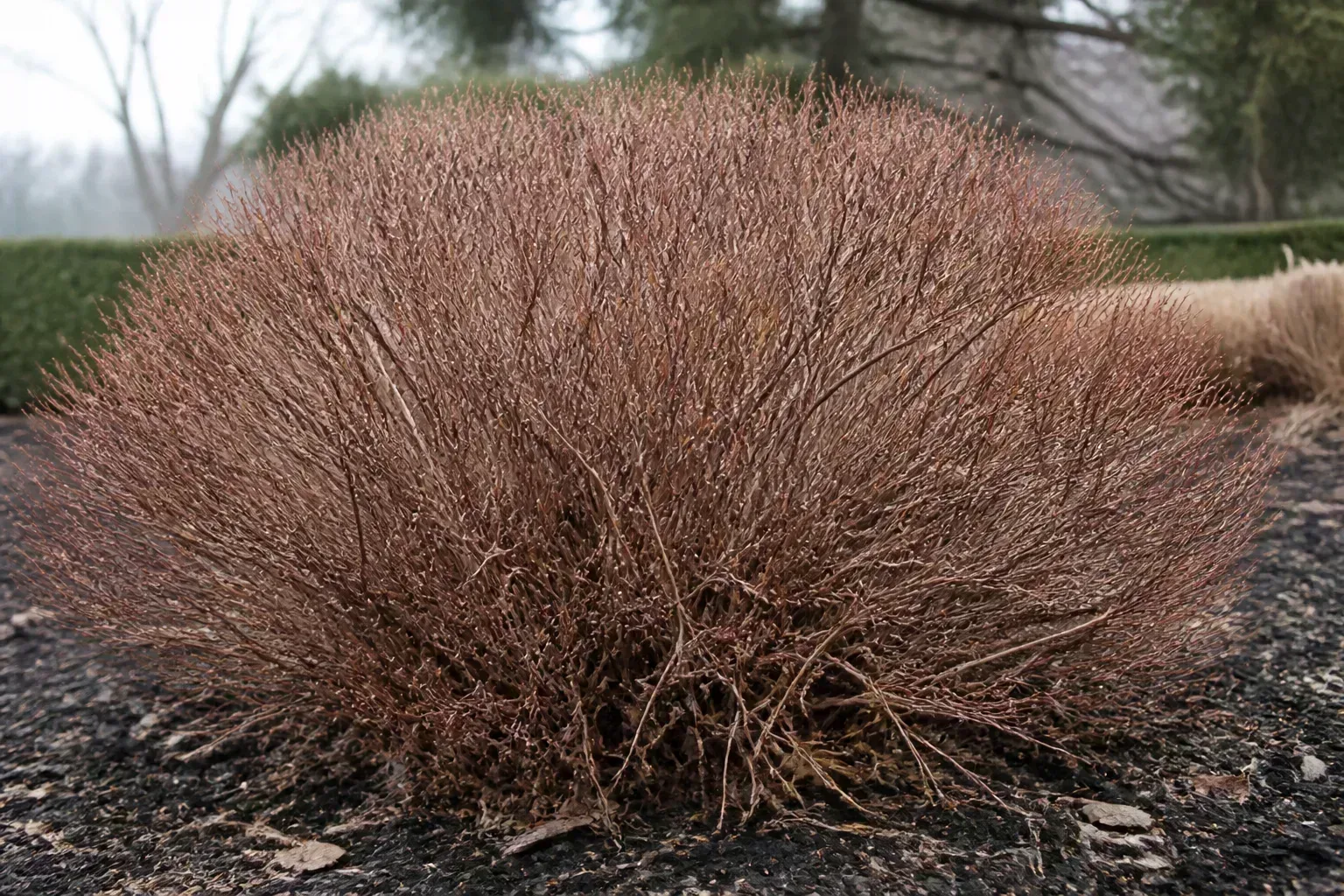
Neither one recreates the giant hydrangea flowerhead, but both can work in the real conditions that often make hydrangeas disappointing. They are useful for low borders, pollinator edges, and spaces where you want flowers without building an entire irrigation zone around one shrub. They still need watering during establishment, and potentilla in particular looks poor in chronically wet soil.
Use the mature dimensions as the deciding factor. A compact potentilla can replace a hydrangea in a narrow bed; a larger spirea can fill a broader slope or informal hedge. Prune after you understand the plant’s natural shape rather than treating every flowering shrub like a boxwood.
How to Choose the Right Swap
The replacement process should begin before the old plant comes out. A hydrangea that failed because of shade, reflected heat, a compacted root zone, or a broken irrigation pattern will not be fixed by choosing a more fashionable shrub and putting it in the same hole.
Take one soil sample and one moisture reading before you dig. A cheap moisture meter is not a substitute for observation, but pushing a finger or narrow trowel several inches into the root zone after rain and again during a dry spell will tell you more than the surface mulch. If the top looks dry while the lower soil is saturated, the problem is drainage; if the whole root zone is dry, the problem is water supply or plant selection. That distinction keeps you from “solving” a drowning shrub with more irrigation.
Match Light, Moisture, and Soil
Watch the spot on a clear day and record when direct sun actually reaches the leaves. “Part shade” can mean morning sun and afternoon shade, high dappled light beneath a tree, or nearly no direct sun beside a north-facing wall; those are not interchangeable conditions.
Then identify the water zone. Is the bed watered by a drip line, a downspout, lawn irrigation, or rainfall alone? Does it stay damp for several days after a storm, or does the root ball dry quickly? Hydrangeas, camellias, and summersweet may appreciate more consistent moisture, while potentilla and some spireas are better candidates for a drier border. A plant can tolerate the soil’s pH and still fail because its roots alternate between drought and saturation.
The BBC Gardeners’ World guide to plants for moist soil makes the same design point in practical terms: choose plants for damp conditions, improve heavy soil with organic matter, avoid compaction, and consider a raised bed when soil stays very wet. That is more useful than changing fertilizer every time a shrub wilts.
Check Mature Size and Maintenance
Write down the maximum height and width the site can hold, then compare it with the plant’s mature dimensions—not the size of the nursery pot. Include the space needed for air movement, access to windows, and a mower or path. A plant that needs annual hard pruning to stay in bounds is not low maintenance just because it grows quickly.
Ask four maintenance questions before you buy: Does it bloom on old wood or new wood? Does it need a trellis or staking? Will it need regular irrigation after establishment? Does it spread by seed, suckers, or vigorous stems? The answer often matters more than whether the flowers are pink, blue, or white.
Finally, check the exact cultivar. “Camellia,” “clematis,” and “viburnum” each include plants with different sizes and tolerances. A reliable replacement is a named plant matched to your region, not a generic label chosen because it was already flowering in the garden center.
Common Mistakes to Avoid
The first mistake is replacing a hydrangea with another moisture-hungry shrub in a dry, sunny site. If the soil dries hard in summer, choose a drought-tolerant plant after establishment or redesign the irrigation; do not assume mulch alone will make a thirsty shrub carefree.
The second is choosing butterfly bush solely because its name promises butterflies. Nectar is useful, but it is not the same as native habitat, and regional restrictions matter. Pair nectar plants with host plants and avoid a species that your local authorities consider invasive.
The third is pruning by a universal calendar. Hydrangeas, clematis, camellias, and spirea can all punish a badly timed cut in different ways. Identify the plant, learn whether it flowers on old or new wood, and make a light first cut when you are uncertain.
The fourth is designing a row of one plant when the site needs a layered planting. A medium shrub, a groundcover, and a few seasonal perennials can create a more resilient picture than seven identical shrubs. It also means one pest, disease, or weather event is less likely to flatten the entire display.
When Keeping the Hydrangea Is Smarter
Keep the hydrangea when the site already provides moist, well-drained soil, light shade, and enough room for the chosen cultivar. It may be the right plant if you value cut flowers, long-lasting dried blooms, oakleaf fall color, or a reliable summer focal point more than winter screening.
Before removing it, identify the species and review its pruning rule. A bigleaf hydrangea that was cut back in winter may need a season to recover; a plant in full sun may need mulch and a better watering pattern; a panicle hydrangea may simply need more space. The BBC Gardeners’ World hydrangea guide emphasizes that hydrangeas vary in light tolerance, flower timing, and pruning needs, so a failed bloom is not enough evidence to condemn the whole genus.
The best garden is not the one that rejects a popular plant. It is the one where every plant earns its space by fitting the conditions and contributing more than one season of interest.
Conclusion: Choose Fit Over Fashion
Hydrangeas feel overrated when their reputation is doing more work than the planting plan. They are asked to grow in hot sun, dry soil, tight foundation beds, and spaces where winter structure matters—and then blamed when they behave like plants with different preferences.
Choose clematis for vertical color, camellia for evergreen flowers, summersweet for moist shade, a locally appropriate butterfly bush for nectar, viburnum for berries and structure, ninebark for resilient foliage, or spirea and potentilla for sunny borders. If none of those fits, keep looking for a plant native or well adapted to your region. A less famous plant in the right place will give you more beauty, fewer corrections, and a garden that feels designed rather than repeated.