Why Are My Zinnias Wilting? Find the Real Cause
Why are my zinnias wilting? Check the soil, timing, stems, leaves, and pests to tell dry wilt from wet roots, heat stress, disease, and damage.
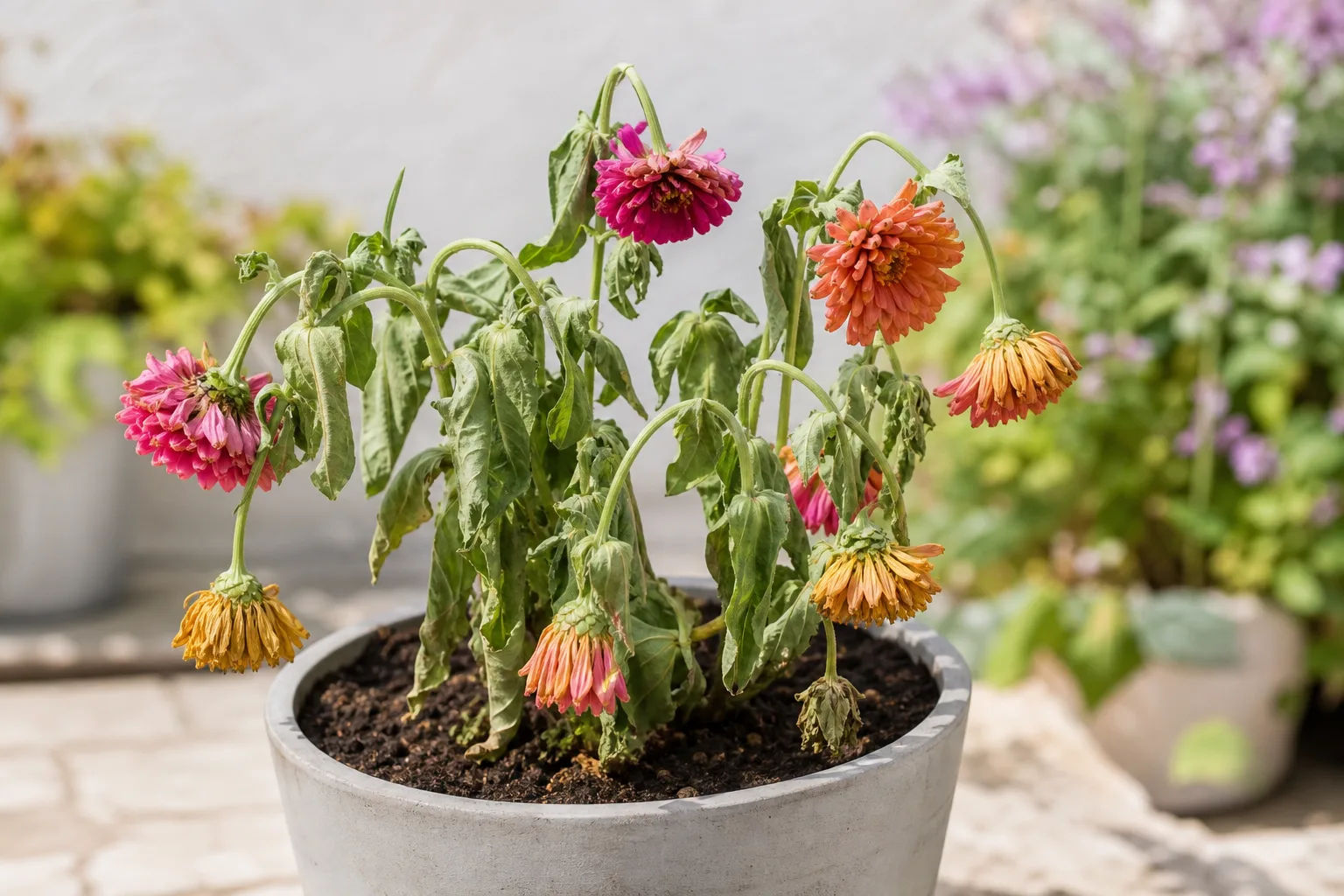
A wilted zinnia is giving you a water-transport warning, not a single diagnosis. The same drooping leaves can mean the soil is bone-dry, the roots are suffocating in saturated soil, or the plant is losing water faster than it can replace it during a hot afternoon.
Before you water, touch the soil below the surface and look at the base of the stem. That two-minute check keeps you from turning drought stress into root rot. Zinnias are warm-season annuals that usually recover well from short heat or watering mistakes, but they recover poorly when a wet crown, disease, or internal stem damage is allowed to spread.
What to check before you water
Start at the root zone rather than the leaves. Push a finger, wooden skewer, or moisture meter about 2 to 3 inches into the soil beside the plant, below any mulch. In a container, lift the pot as well: a very light pot with wilted leaves points toward thirst, while a heavy pot with limp leaves points toward excess moisture or heat trapped around the roots.
Next, note the clock. A zinnia that droops in the hottest part of the afternoon but firms up after sunset is often experiencing temporary heat strain. Gardenish uses that evening-recovery pattern as a practical clue; a plant that is still slack at dawn after a cool night needs a wider diagnosis, especially if the soil is wet.
Dry wilt and wet wilt can look identical
The useful difference is under the surface. Dry roots cannot refill the water lost by leaves; saturated roots lose access to oxygen and eventually lose the fine roots that absorb water. In both cases, the leaves become limp because the canopy is not receiving enough usable water.
| Clue | Dry-root wilt | Wet-root wilt or root rot |
|---|---|---|
| Soil 2–3 inches down | Dry, dusty, or barely cool | Wet, sticky, or still saturated days after watering |
| Leaves | Limp, curling, or crisp at the edges | Dull, soft, yellowing, or limp despite wet soil |
| Pot weight | Light for its size | Heavy for several days |
| Stem base | Usually firm | May be dark, soft, pinched, or foul-smelling |
| Recovery | Improves after a deep soak if damage is limited | Does not improve with more water; may worsen |
| First move | Water slowly at the soil line | Stop watering and check drainage and roots |
The table is a triage tool, not a laboratory diagnosis. If your zinnia is in a garden bed, dig a small inspection hole a few inches from the stem rather than pulling the whole plant up immediately. If it is in a pot, slide the root ball out carefully only when wet soil and persistent wilt make root damage plausible.
The timing and pattern reveal the first clue
Wilt that is limited to a few hot hours is different from a sudden overnight collapse. If several nearby zinnias wilt together after a dry, windy day, check shared moisture and heat exposure first. If one plant fails while its neighbors remain upright, inspect that plant’s stem base, roots, and foliage for localized damage.
A plant that wilts after transplanting may simply have lost fine roots and need steady moisture while it re-establishes. A plant with a single limp stem and otherwise healthy growth may have a kink, borer tunnel, or stem lesion. A plant with spotted leaves, white coating, distorted flowers, or sticky shoots needs disease or pest inspection before you reach for fertilizer.
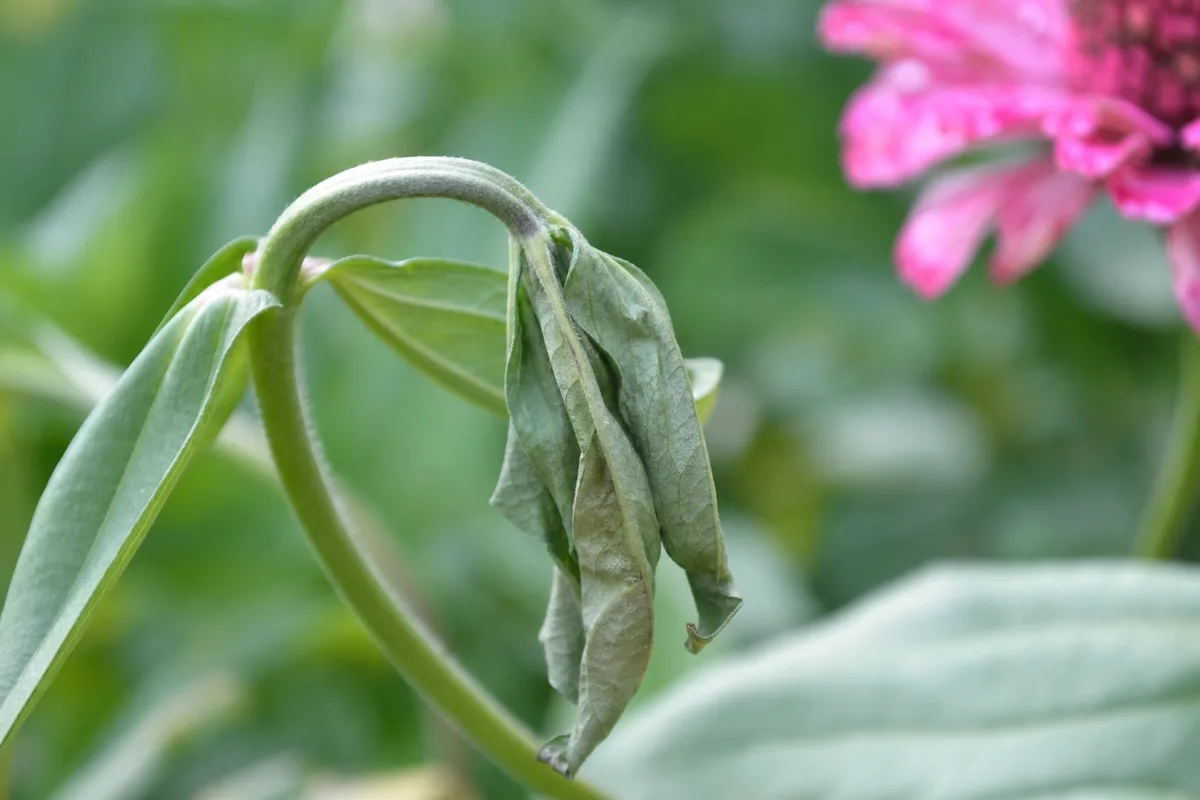
A wilted zinnia leaf does not tell you whether the root zone is dry or waterlogged; check soil moisture and the lower stem before treating.
Reason 1: The root zone is too dry
Zinnias can tolerate some drying once established, but a flowering plant in a small pot, raised bed, sandy soil, or exposed site can use water faster than a calendar-based routine replaces it. Shallow, frequent sprinkles wet the top layer and evaporate before the main root zone is replenished. Hot wind makes the gap larger by increasing water loss from leaves.
Signs of drought wilt include dry soil at depth, leaves that feel thin or crisp, curled margins, fading buds, and a pot that feels surprisingly light. Seedlings and newly transplanted zinnias are less forgiving because their roots occupy a smaller volume of soil. Established plants may wilt briefly at midday yet still recover if the root zone is moist enough by evening.
Epic Gardening’s zinnia guidance recommends checking the soil an inch or two down and maintaining consistent moisture while plants are young, while allowing established plants to dry slightly between waterings. That is more useful than promising one exact interval: the right rhythm depends on soil, sun, wind, plant size, and whether the zinnia is in a pot or the ground.
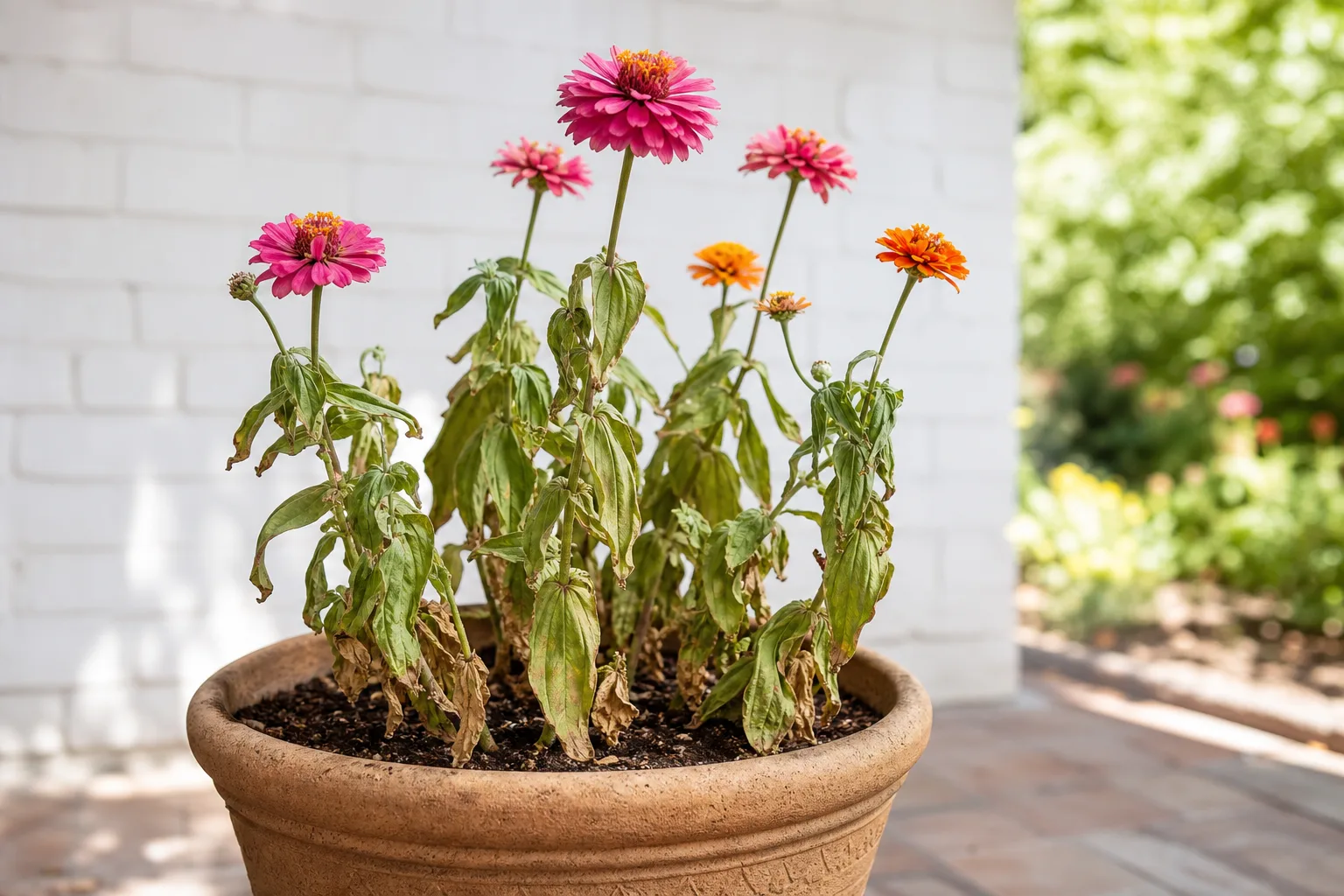
Fix drought wilt with a deep, slow soak
Water at the soil line in the morning when possible. Apply water slowly enough that it infiltrates rather than running off, and keep going until the bed is wet several inches down or the container drains freely from its holes. If the soil has become hydrophobic and water runs around the root ball, pause for a few minutes and repeat with a slower stream.
Do not turn a dry plant into a constantly wet plant. Recheck the soil at depth before watering again; the surface can dry quickly while the lower root zone remains moist. In-ground zinnias can use roughly an inch of total water per week as a starting point during dry weather, including rainfall, but containers and very hot sites may need more frequent checks rather than automatic daily watering.
Mulch helps after the soil is thoroughly watered. Add a thin, even layer of straw, shredded leaves, or fine bark around the root zone, leaving a few inches clear around each stem. Mulch should slow evaporation, not sit against the stem and keep the crown wet.
Reason 2: The roots are too wet
Overwatering is not just “too much water in one day.” It is soil that stays saturated long enough to drive air out of the pore spaces. Roots need both water and oxygen; when the air phase disappears, fine roots stop functioning and may decay. The plant can then wilt while sitting in wet soil, which is why adding another drink is the wrong rescue.
Wet-root wilt often comes with yellowing lower leaves, a dull canopy, soft stems, algae or mold on the soil surface, a sour odor, or water that sits in a saucer. In garden beds, low spots, compacted clay, downspout runoff, and dense mulch can create the same problem even when the watering schedule is reasonable.
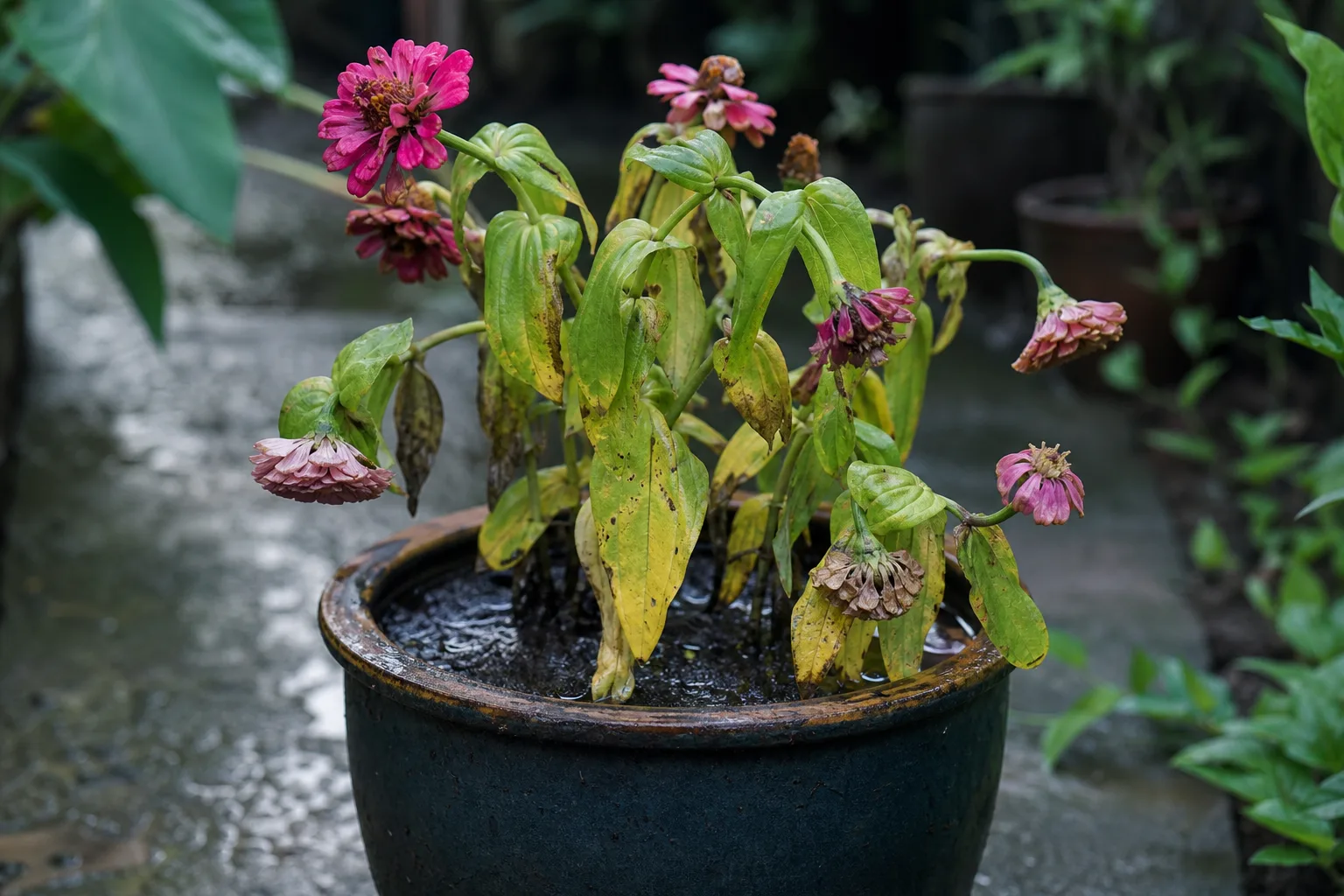
Check drainage and roots before adding water
Pause irrigation and empty any saucer beneath a container. Confirm that the pot has open drainage holes and is not sitting inside a decorative cachepot full of water. If the mix remains wet for many days, move the plant to a brighter, airy location and consider repotting only after you have confirmed the problem; a rushed transplant can damage already-stressed roots.
For a root check, slide the zinnia from its pot or expose a small section near the edge of the root ball. Healthy roots are firm and pale tan to white, though soil color makes exact color unreliable. Rotten roots are soft, brown to black, and may pull apart or smell sour. Trim only tissue that is clearly dead with clean shears, repot into a clean pot and free-draining mix, and water once to settle the roots before allowing the mix to approach the dry side again.
Do not add fertilizer to a wilted, waterlogged zinnia. Fertilizer cannot restore oxygen-starved roots, and concentrated salts can add another stress. If the crown or most of the roots are mushy, the honest fix may be removal and replacement, especially for an annual whose healthy neighbors can fill the space.
Reason 3: Heat, wind, or a hot container is overwhelming uptake
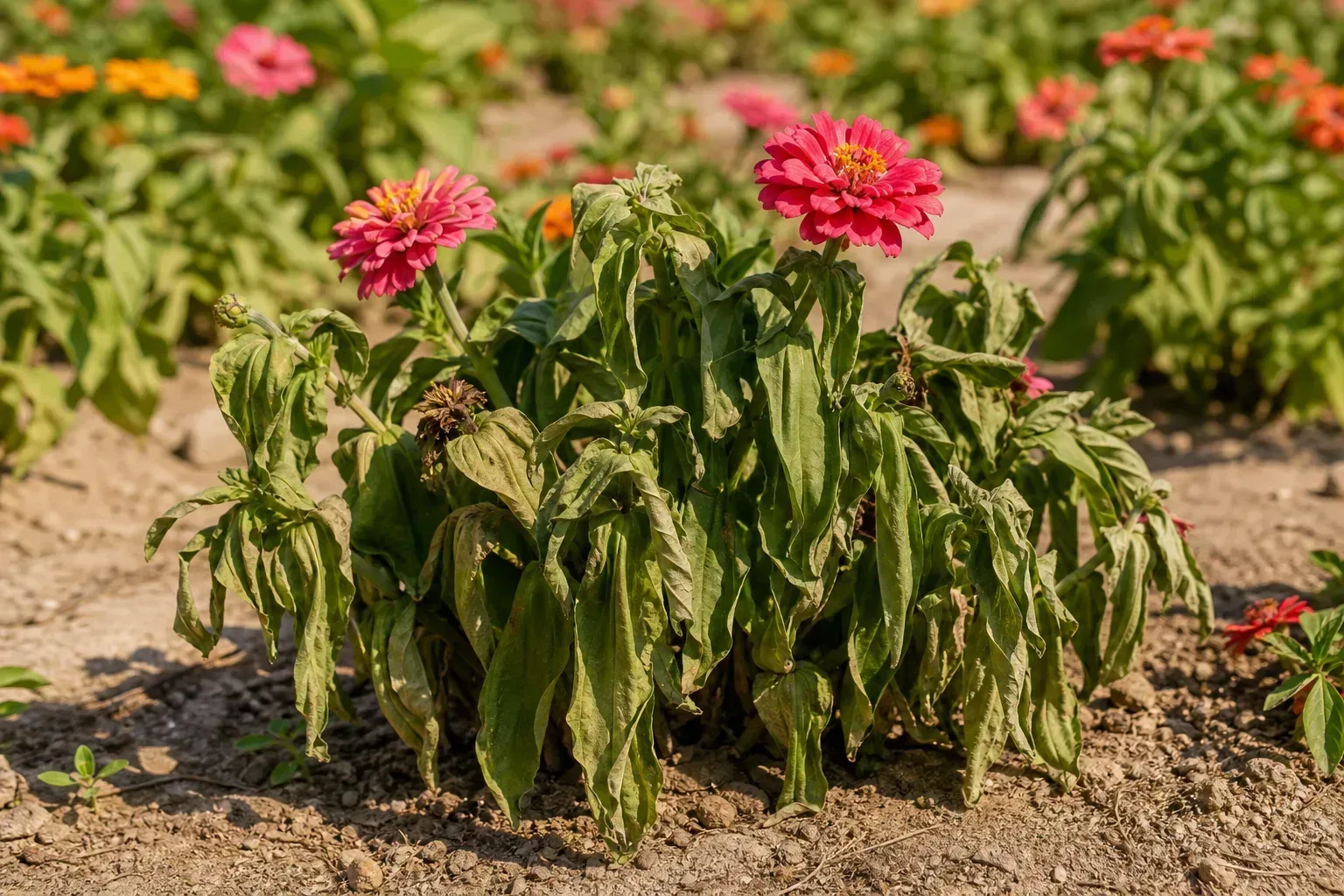
Zinnias love warmth and full sun, but “heat tolerant” does not mean “immune to heat wilt.” On a hot afternoon, leaves can lose moisture through transpiration faster than roots move replacement water. Wind accelerates that loss, while reflected heat from paving, walls, or a dark pot can raise the plant’s temperature beyond what the air reading suggests.
Heat wilt has a recognizable rhythm: leaves hang during the peak of sun and often recover in the evening or by the next morning. The soil may be moist at 2 to 3 inches. If the plant recovers every night, treat the exposure and root-zone temperature before increasing irrigation.
Containers are especially vulnerable because they hold a small amount of soil and expose roots to heat on all sides. A dark plastic pot on a paved patio can need an afternoon move even when a zinnia in the ground beside it stays upright.
Reduce root-zone and leaf stress
First confirm the soil is not dry. If it is dry, give a deep morning soak; if it is already moist, add temporary afternoon shade rather than another watering. Shade cloth on stakes, a patio umbrella, or the east side of a building can protect the plant during the hottest hours while preserving morning light.
Move potted zinnias to morning sun and afternoon shade, or place the grow pot inside a larger, light-colored container to reduce heat against the root ball. Do not wrap a pot so tightly that drainage is blocked. In-ground plants benefit from mulch that covers the root zone but stays clear of the stem.
Avoid pruning healthy foliage during the hottest part of the day. Remove only leaves or flowers that are fully brown, collapsed, or diseased, and wait until the plant has cooled and regained firmness. Brown scorch will not turn green again, but new leaves can emerge when the root zone and exposure are corrected.
Reason 4: Disease is damaging leaves, stems, or roots
Disease becomes more likely when wilt is persistent, spreads from plant to plant, or arrives with spots, coatings, cankers, distorted flowers, or collapse that does not track the weather. Wet foliage, crowded stems, soil splash, contaminated debris, and infected seed can all help a pathogen move through a zinnia bed.
Penn State Extension’s updated zinnia disease table distinguishes several patterns that gardeners often lump together. Alternaria leaf spot produces reddish-brown or purple spots that develop gray or tan centers; bacterial leaf spot produces angular reddish-brown to dark-brown spots that may have a prominent yellow halo; powdery mildew appears as white fungal growth on leaf or petal surfaces. The correct label matters because management differs, and not every “fungus-looking” spot responds to a fungicide.
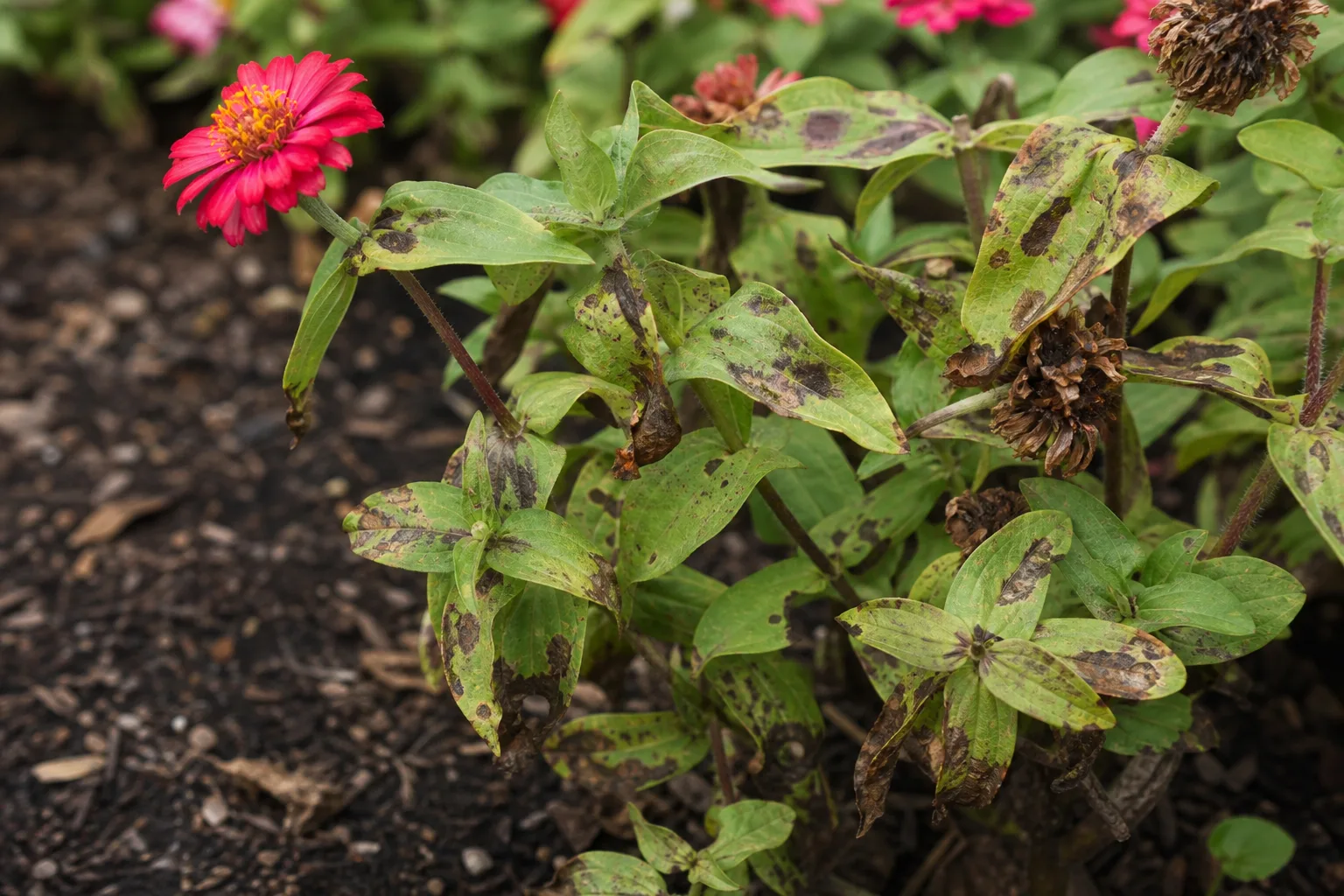
Match the spot, coating, or flower change to the disease
Alternaria blight often starts as discrete spotted leaves and progresses to dry, brittle foliage, spotted petals, stem lesions, and wilt. Remove affected leaves promptly, bag heavily infected plants rather than composting them, water at the soil line, and clean up debris at the end of the season. Penn State notes that keeping leaves dry helps limit this seedborne disease; crop rotation and resistant or less susceptible varieties can reduce repeat problems.
Bacterial leaf spot can look similar but tends toward angular lesions with yellow halos. Purdue Landscape Report documents Xanthomonas campestris pv. zinniae on zinnias and notes that the bacterium can be carried on seed or leaves. Remove infected material, avoid working through wet foliage, sanitize cutting tools between plants, and do not assume a spray will cure existing lesions. Copper products may help reduce spread in some situations, but use only a product labeled for the crop and follow its label.
Powdery mildew looks like flour dusted over leaves, stems, or petals. Improve spacing and air movement, remove the worst leaves, keep irrigation off the foliage, and avoid high-nitrogen feeding that produces dense, soft growth. Early protective treatments may slow spread, but no product restores tissue that is already covered, yellow, or dead.
Aster yellows is a different warning: flowers become green or leafy, shoots distort, and the plant may yellow and weaken. There is no cure for an infected plant; remove it and manage weeds and leafhopper habitat around the bed. If the flowers are simply faded or spent, that is not a disease diagnosis—deadheading is a bloom-maintenance choice, not a treatment for wilt.
Reason 5: Pests are draining sap or damaging stems
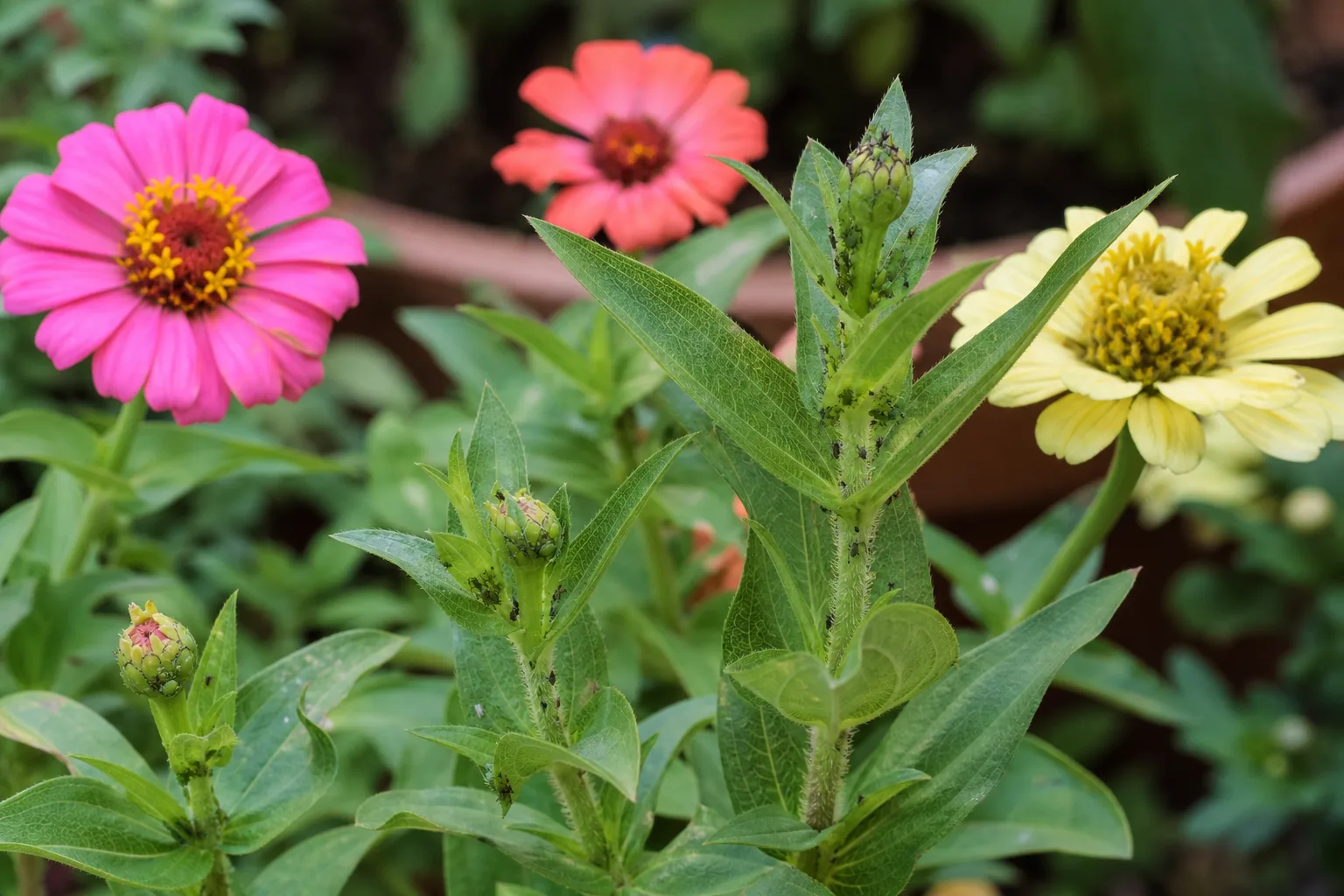
Pests usually create additional evidence beyond general droop. Aphids gather on tender stems and buds, leave sticky honeydew, and can distort new growth. Spider mites cause fine pale stippling, bronzing, curling, and delicate webbing during hot, dry weather. Thrips can scar petals and new leaves, while caterpillars and beetles leave holes or chewed edges.
A sudden collapse of one stem overnight deserves a stem inspection. A stalk borer can tunnel inside a stem, interrupting water movement; once the larva is inside, a foliar spray cannot reach it. Cut and bag the affected stem or plant, then remove nearby weeds and grass that can shelter the pest’s early stages. Do not keep watering a stem that has lost its internal plumbing.
Match the pest evidence to the least disruptive fix
Start with the method that protects the plant and its beneficial insects. Rinse aphids from stems and leaf undersides with a firm but not destructive stream, prune severely infested tips, and recheck in two days. Small colonies often decline when lady beetles, lacewings, syrphid larvae, and parasitic wasps are left undisturbed. Epic Gardening’s zinnia pest guidance likewise puts identification and lower-impact controls ahead of broad spraying.
For mites, correct drought stress and rinse undersides of leaves in the morning. If pests persist, use an insecticidal soap or horticultural oil labeled for ornamental plants, test it on a small area, and follow the label for dilution, temperature, repeat interval, and pollinator precautions. Do not spray open flowers while bees are actively visiting, and do not improvise with concentrated dish soap; household detergents can burn foliage.
Large holes that appear overnight point more toward slugs, earwigs, or other night feeders than aphids. Inspect after dark with a flashlight, clear wet debris from the crown, and use physical traps or barriers before reaching for a broad insecticide. A few earwigs may eat aphids, so the goal is to match control to damage rather than eliminate every insect you see.
Reason 6: Crowding, weak growth, or transplant stress is tipping the plant over
Not every wilt is a root crisis. Tall zinnias with heavy flowers can lean or bow when stems are crowded, stretched by inadequate light, battered by wind, or carrying more top growth than the base can support. Plants moved from a nursery container or transplanted in hot weather can also droop while fine roots re-establish.
Crowding raises humidity around leaves and slows drying, which increases disease pressure. Poor light produces weak, leggy stems with fewer, smaller flowers; it does not usually cause a healthy zinnia to collapse in one afternoon. Likewise, nutrient deficiency is more likely to cause pale or stunted growth over time than sudden wilt. Treat sudden wilt as a moisture, heat, pest, or disease problem first.
Correct the site without adding a second shock
Give zinnias the bright exposure they need while protecting a newly transplanted plant from the harshest afternoon heat for several days. Water the root ball thoroughly at planting, keep it evenly—not constantly—moist, and avoid moving it again unless drainage or exposure is clearly wrong.
Thin or relocate crowded plants early enough to preserve airflow. Follow the seed packet’s spacing for the cultivar; compact zinnias need less room than tall cut-flower types. Stake tall stems before they flop, using a low-profile support that does not trap wet foliage.
Do not “boost” a wilting plant with a heavy dose of fertilizer. Once it has firm, healthy new growth and the soil drains well, feed only if the plant’s overall care plan calls for it and use the label rate. Excess nitrogen can produce lush, weak growth and fewer flowers, while fertilizer salts can damage already-stressed roots.
A seven-day rescue plan for a wilting zinnia
Use this order when the cause is not obvious:
- Check moisture at depth. Dry means water slowly at the soil line. Wet means stop watering, empty the saucer, and inspect drainage.
- Check the timing. Afternoon-only wilt with evening recovery suggests heat strain; persistent wilt at dawn raises the urgency.
- Inspect the stem base and roots. Look for softness, dark tissue, a sour smell, a kink, or a tunnel. Remove tissue that is clearly dead.
- Scan both leaf surfaces and buds. Look for spots, white coating, stippling, webbing, honeydew, holes, distorted flowers, or insects.
- Reduce shared stress. Add temporary afternoon shade, clear competing weeds, improve airflow, and keep water off foliage.
- Recheck after 24 to 48 hours. New firmness and no spread are good signs. Continued collapse, expanding lesions, or multiple infected plants call for removal and replacement rather than repeated rescue attempts.
Do not judge recovery by old leaves turning perfect again. Damaged tissue may stay curled, spotted, or brown even after the cause is corrected. Look instead for firmer stems, less daily wilt, healthy new growth, and soil that dries at a reasonable pace between deep waterings.
Prevent zinnia wilt next season
Choose a site with full sun, good drainage, and enough space for mature airflow. Improve compacted beds before planting rather than trying to correct waterlogging after roots are already damaged. Containers should have open drainage holes and enough soil volume that the plant does not swing from bone-dry to saturated after each watering.
Water the root zone deeply when the soil is dry at depth, and adjust for rain, wind, pot size, and heat. Morning watering gives foliage time to dry if some splash occurs. Mulch conserves moisture and reduces soil splash, but keep it off stems and do not bury the crown.
Scout once a week, checking new growth, leaf undersides, stem bases, and the soil surface. Remove diseased debris at the end of the season, clean tools between plants when disease is present, rotate zinnias to a different bed after a serious outbreak, and choose varieties with improved resistance where available. Keep weeds and tall grass managed around the bed, especially if stem borers or chewing pests have been a problem.
The best prevention is a measured response. Zinnias do not need a perfect moisture number or a pesticide routine; they need water when the root zone is dry, air around the leaves, sunlight, and a gardener who checks the evidence before acting.
Conclusion
When a zinnia wilts, start with the soil—not the watering can. Dry soil calls for a slow, deep soak; wet soil calls for drainage and oxygen; afternoon-only wilt calls for heat relief; spotted leaves, insects, or a damaged stem call for a more specific intervention.
Most heat and watering stress is reversible when caught early, but root rot, aster yellows, advanced blight, and internal stem damage may make removal the most responsible choice. Diagnose the pattern, make one proportionate change, and watch the plant’s response over the next two days before adding another treatment.