Why Petunia Leaves Turn Yellow and How to Fix It
Petunia leaves turning yellow? Use leaf pattern, soil moisture, light, pests, and root checks to find the cause and fix the problem without guesswork.
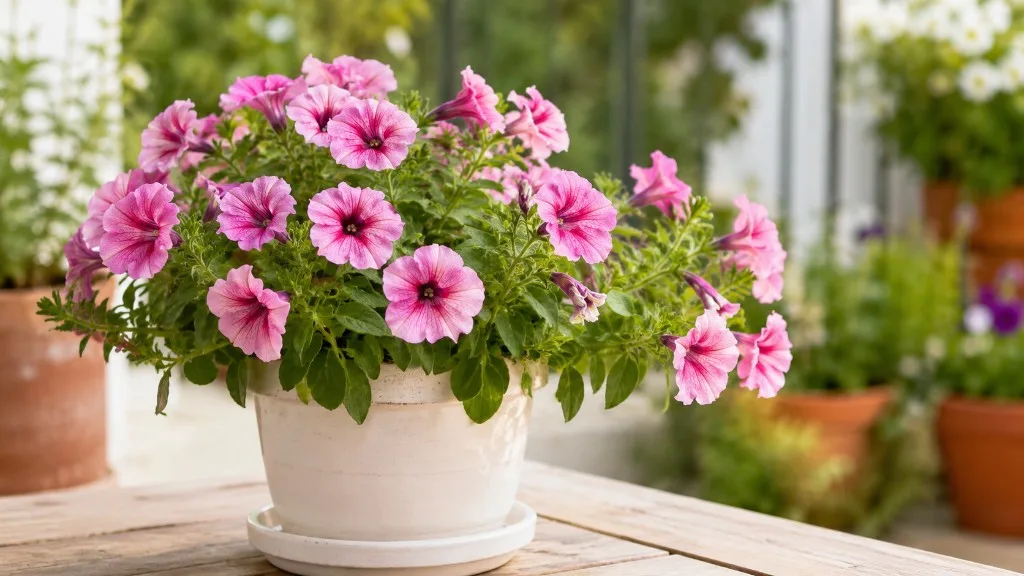
If one or two of the oldest petunia leaves have turned yellow while the tips are still growing and flowering, do not reach for fertilizer yet. A yellow leaf is a symptom, not a diagnosis: the same color can appear when roots are sitting in water, when a hanging basket dries too quickly, when a pest is sucking sap, or when a plant is simply shedding old foliage.
The fastest fix is a short inspection in the right order. Feel the root zone, look at where the yellowing begins, check the underside of the leaves, and review recent weather and feeding. That sequence usually tells you whether to water, let the mix drain, move the pot, feed lightly, wash off pests, or stop trying to rescue a plant affected by a virus or frost.
Start with a 10-minute triage
Check soil moisture and drainage
Push a finger about 1 to 2 inches into the soil near the edge of the pot, rather than only touching the surface. In a garden bed, scrape aside the mulch and check the soil a few inches down. The soil should be moist but not shiny, muddy, or sour-smelling; a dry, hard root ball points in the opposite direction.
For a container, lift it if you can. A pot that feels unexpectedly light, has soil shrinking away from its sides, or sends water straight down the gap between the mix and the pot may be too dry for the roots to rehydrate evenly. A pot that stays heavy for days, has a full saucer, or has no clear drainage hole is more likely suffering from poor aeration than thirst.
Waterlogging matters because roots need both water and air. The RHS guide to chlorosis notes that saturated soil displaces air and can lead to yellowing, wilting, leaf loss, and dieback. That is why a yellow, limp petunia in wet soil should not be “rescued” with another drink.
Read which leaves changed and how
Look at the whole plant before removing anything. Mark the newest leaves with your eyes, then compare them with the oldest leaves near the base. Note whether the yellow is even across the blade, concentrated between green veins, limited to the edges, or mixed with spots and distortion.
Also check whether the plant is still producing firm green tips and flower buds. Old leaves that yellow one at a time while new growth stays vigorous are a different problem from a plant whose entire canopy pales, wilts, and stops extending. The color pattern and the plant’s momentum are more useful than a generic fertilizer schedule.
Inspect undersides, stems, and nearby plants
Turn over several leaves, especially around tender tips and flower stems. Aphids cluster in protected folds and on new growth; mites can leave fine stippling or a dusty, bronzed look; whiteflies scatter when disturbed. Sticky foliage, ants, shed skins, webbing, or tiny moving specks are evidence that the yellowing may be pest-related.
Examine stems at the soil line as well. Soft, dark, or collapsing tissue combined with persistently wet soil raises the urgency of a root or crown problem. If neighboring plants show the same symptoms after a shared spray, cold snap, or heavy rain, look for a site-wide cause rather than treating one petunia in isolation.
What the main yellowing patterns mean
Yellowing is often called chlorosis, but that word describes the loss of green color rather than naming the cause. The Royal Horticultural Society’s symptom guide emphasizes that leaf position, pattern, and accompanying symptoms help separate nutrient problems from waterlogging, drought, pests, diseases, weather, and chemical injury.
Older leaves turn evenly yellow
Even yellowing that begins on the lower, older leaves can mean natural senescence, especially late in the season or after a long period of flowering. If only a few shaded leaves are affected and the petunia is making healthy new growth, remove those leaves and monitor rather than changing every care variable at once.
If many lower leaves are pale and the plant is small, thin, or flowering weakly, nitrogen shortage becomes more plausible. Nitrogen is mobile in the plant, so a shortage is often seen first in older foliage. However, waterlogged or bone-dry roots can produce a similar pattern because the plant cannot take up nutrients reliably.
A useful rule is to correct root conditions before assuming the soil needs more food. Feeding a petunia with damaged roots can add salt stress without fixing the underlying uptake problem.
New leaves yellow while the veins stay green
Yellow tissue between green veins on young leaves points toward iron or manganese availability, while a similar pattern on older leaves can involve magnesium. The RHS nutrient-deficiency guidance also warns that extreme pH, dry soil, saturated compost, and other growing conditions can resemble a deficiency.
That distinction prevents a common mistake: adding an iron product or Epsom salts based on color alone. A nutrient can be present in the soil but unavailable to roots when the mix is too wet, too dry, or chemically out of balance. If the pattern keeps returning in a garden bed, a soil test is more useful than a rotating collection of supplements.
Leaves show mottling, spots, distortion, or sudden decline
Mosaic-like patches, rings, streaks, curled or distorted new leaves, and a sudden drop in vigor deserve a different response from uniform yellowing. Viral diseases can cause irregular chlorosis, while leaf-spot diseases may add brown or black lesions, and root diseases may cause a whole plant to decline despite wet soil.
Herbicide drift is another possibility when new growth is twisted, narrow, cupped, or bleached across several plants. Record what changed in the previous week: a lawn treatment, windy spray day, unusually cold night, or neighboring plant removal can be a more important clue than the fertilizer you last used.
Fix water and drainage before adding fertilizer
Water is the first variable to correct because both extremes can make leaves yellow. Petunias like consistent moisture, but they do not want their roots in a permanently saturated mix. The Gardening Know How petunia care guide describes the target as moist, well-drained soil and notes that containers need more frequent attention than beds.
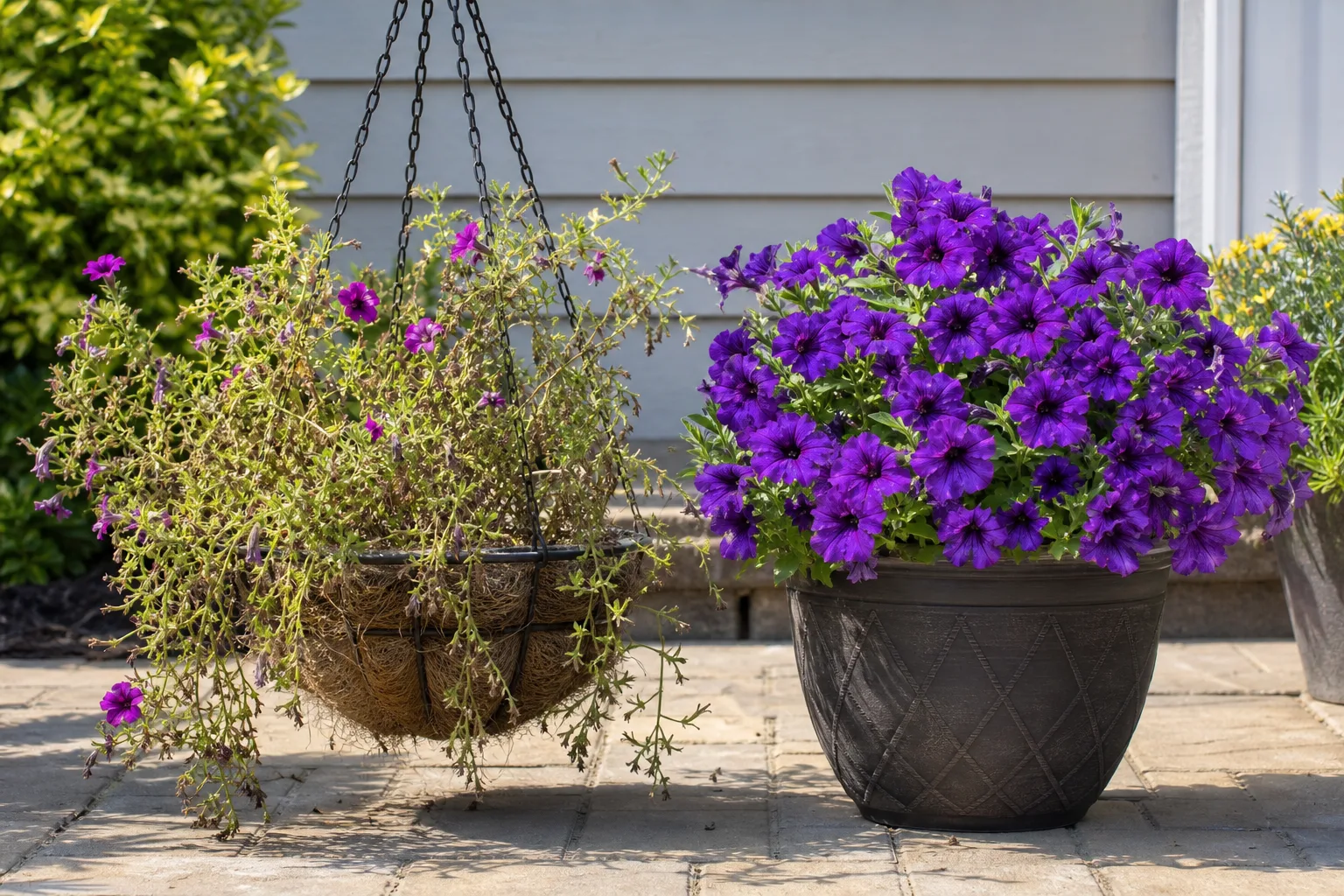
Wet soil, yellow leaves, and root stress
Overwatered petunias often have lower yellow leaves, soft or limp foliage, slow growth, and soil that remains wet well after the last watering. They may look thirsty even though the root zone is saturated, because damaged roots cannot move water normally. Rainy weather, a saucer that never gets emptied, compacted clay, a pot without holes, or a container that is too large for its root ball can all create this situation.
First, stop adding water and remove any standing water. Move a container where rain cannot keep filling it, raise it slightly so the drainage holes are open, and confirm that the hole is not blocked by roots or compacted mix. Do not drill into a fragile decorative pot while it contains the plant; use a draining nursery pot inside the cover pot if needed.
If the soil is only moderately wet and the stems are firm, let the surface dry slightly and resume watering by soil feel. If the mix is foul-smelling, the stem base is soft, or the plant continues to wilt while the soil stays wet, slide the root ball out and inspect it. Healthy roots are generally firm and light-colored; rotten roots are soft, dark, and easy to pull apart. Trim only clearly dead tissue with clean scissors, repot into fresh, airy mix in a draining container, and give the plant a quieter recovery period.
Avoid burying the stem deeper to stabilize a stressed petunia. Deeper planting can keep the crown wet and may turn a drainage problem into a stem-rot problem. Likewise, do not “fix” heavy garden soil by aggressively digging around established roots; improve drainage around the plant gradually or relocate it during a suitable planting window.
Dry soil, crispy leaves, and fast container loss
Underwatered petunias are more likely to have crispy edges, curled or papery leaves, limp stems, dropped buds, and soil that is dry below the surface. Hanging baskets and small dark containers can cross from adequately moist to dangerously dry in a single hot, windy day, especially once the plant has filled the pot with roots.
Water a dry container slowly until the entire root ball is wet and water exits the drainage holes. If water races down the sides without soaking in, apply a small amount, wait a few minutes, and repeat; a severely shrunken root ball may need a supervised soak to rehydrate. Empty the saucer afterward. In a bed, direct a slow stream to the root zone rather than wetting the flowers and foliage, and water deeply enough to moisten the soil around the roots.
Do not compensate for one dry day by keeping the soil constantly wet for the next week. A PubMed-indexed study of Petunia × hybrida under water-deficit stress found that plants showed a measurable stress response after five days without water, but that research was conducted under controlled conditions and does not translate into a universal watering calendar. Container size, wind, sun, root mass, humidity, and rainfall decide the real interval in your garden.
Correct a real nutrient shortage without causing burn
Feed only after the soil moisture problem is under control and the symptom pattern supports a shortage. Petunias grow quickly and flower heavily, so nutrients can run low in a small pot or hanging basket, but more fertilizer is not automatically more helpful. The USDA Agricultural Research Service’s petunia fertility archive shows how seriously professional production treats the interaction between light, fertility, lime, boron, and plant growth.
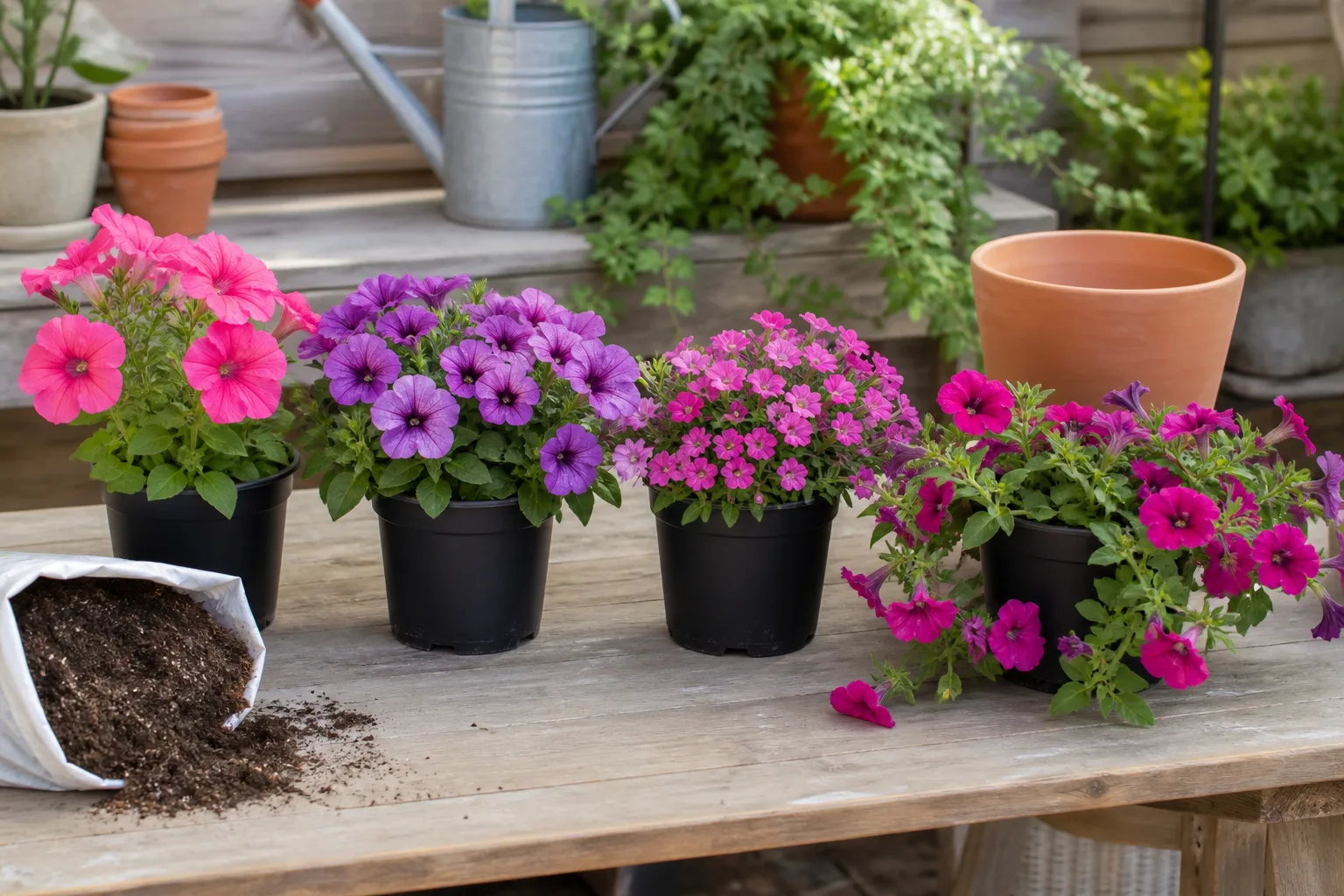
For a mildly pale but otherwise healthy plant, use a complete fertilizer according to its label, applied to already moist soil. A balanced or flower-formulated product can be reasonable; there is no need to chase an unusually high phosphorus number. Follow the product’s interval, and reduce feeding when growth slows in cool weather or when the plant is visibly stressed.
Container petunias often need more regular feeding than established bed plants because frequent watering can carry nutrients out of the mix. Slow-release fertilizer can provide a steadier baseline, while a diluted liquid feed can help when a plant is actively growing. Pick one approach and observe the new growth instead of stacking slow-release granules, liquid fertilizer, compost tea, and supplements together.
Fertilizer salt buildup creates a different pattern: white crust on the soil or pot rim, browned leaf tips and edges, wilting even though the mix is moist, or a decline soon after feeding. If the container has good drainage, flush the mix thoroughly with plain water and allow it to drain completely, then pause fertilizer. Do not flush a pot that has no drainage; correct the container first.
If yellowing returns in the same garden bed, test the soil before applying iron, magnesium, lime, or Epsom salts. The RHS nutrient guide explains that pH can affect nutrient availability and that dry or waterlogged roots can imitate deficiency. A test can prevent a cycle in which one supplement creates an imbalance that produces a second yellowing pattern.
Restore useful light without worsening heat stress
Petunias are sun-loving plants. Aim for at least about six hours of direct light, with more light often supporting fuller growth, but evaluate the root zone at the same time. A shaded petunia may become leggy and pale; a sunlit hanging basket with a tiny, dry root ball may wilt and yellow from water stress.
Look for changes in the sun path. A tree in full leaf, a new umbrella, a fence, or the changing angle of late-season sunlight can turn a previously bright bed into partial shade. If the plant is healthy enough to move, shift a container gradually or relocate a bed plant with as much of the root ball intact as possible.
Do not move a severely dry petunia into deeper shade as the only treatment. Water it first, protect it from the hottest reflected heat for a short period, and then restore bright light once the leaves are no longer limp. A light mulch layer can slow evaporation in a bed, but keep mulch away from the stems and do not use it to hide saturated soil.
Manage aphids and other pests
Aphids are common on tender petunia tips and undersides. They suck sap, leave sticky honeydew, distort new growth, and can contribute to yellowing when populations build. Mites can cause fine pale speckling and bronzing, while whiteflies may rise in a cloud when foliage is disturbed. Chewing pests create holes and ragged edges rather than the even yellowing associated with a root-zone problem.
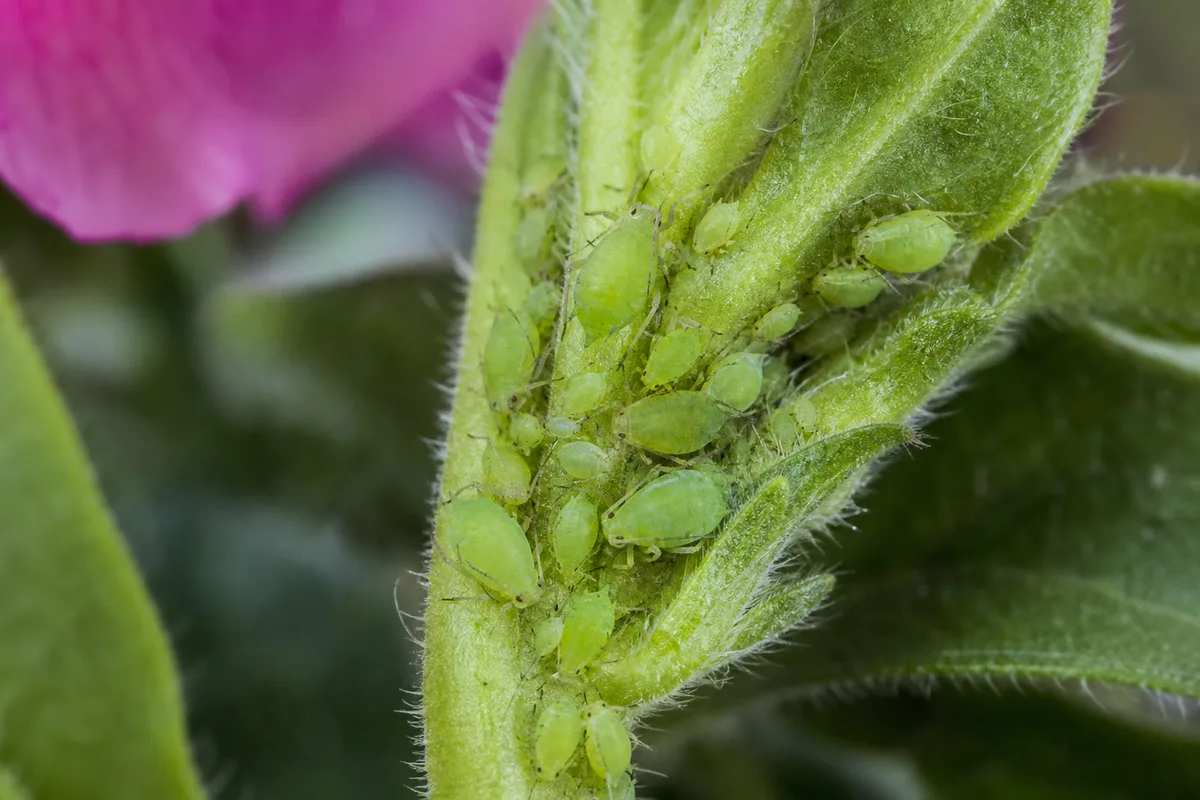
For a light aphid infestation, aim a firm stream of water at the undersides and growing tips, then repeat the inspection every few days. Remove a badly infested tip if the plant is large enough to spare it. Rinse early enough in the day for foliage to dry, and avoid blasting flowers so hard that stems break.
If a product is needed, identify the pest first and follow the label for that plant and pest. The practical disease-management guidance from Savvy Gardening makes the same broader point: a control product is useful only when it matches the problem, and unnecessary sprays can waste money and expose beneficial insects. Do not spray flowering petunias while pollinators are actively visiting, and do not assume a fungicide will fix yellowing caused by insects, roots, or nutrition.
Know when yellowing is disease, frost, or chemical injury
Some plants cannot be restored by adjusting water and fertilizer. A petunia with mosaic-like yellow-green patterns, distorted leaves, stunting, and progressive decline may have a virus. There is no home treatment that reliably reverses a systemic viral infection. Isolate the plant while you assess it, disinfect tools between plants, and remove it if the symptoms continue to spread; put questionable diseased material in household waste rather than a home compost pile.
Root and crown diseases are more likely when yellowing is paired with wet soil, a soft base, a bad smell, or roots that are dark and collapsing. Remove the cause of standing water, but be realistic about the odds. A plant with widespread root loss and limp stems may not have enough healthy tissue left to rebuild, and replacing it after correcting the container or bed can be the most practical choice.
Cold injury often appears near the end of the season or after an unexpected frost. Leaves may turn yellow, gray, or translucent and then collapse. In a warm climate, a container petunia can sometimes be protected and carried on; in a cold climate, a frost-damaged annual may simply be reaching the end of its useful season.
Herbicide injury deserves patience and restraint. New leaves that emerge twisted, narrow, cupped, or unusually pale after a nearby lawn or weed treatment may not respond to extra feeding. Keep the plant watered normally, avoid additional chemical stress, and watch the next flush. If several plants show the same distorted new growth, document the timing and likely exposure rather than treating each one for a different deficiency.
Follow a seven-day recovery plan
Day 1: Record the evidence.
Photograph the whole plant and one yellow leaf before pruning. Write down whether the soil is wet or dry, how long it has been since rain or watering, the amount of direct sun, the last fertilizer application, and any pest or chemical exposure. This simple record keeps you from changing three variables at once and losing the clue that would have solved the problem.
Days 1–2: Correct the root-zone problem.
Water thoroughly if the root ball is genuinely dry; stop watering and open the drainage path if it is saturated. Do not fertilize during this first correction window. Check the container again the next day because a pot can feel damp on top while remaining waterlogged lower down, or feel wet at the surface while the center is dry.
Days 3–4: Correct light and pests.
Measure the plant’s actual direct light rather than relying on last month’s conditions. Move or prune back an obstruction if appropriate, and inspect new growth and leaf undersides for pests. Rinse a light infestation and repeat the check. Remove only leaves that are fully yellow, brown, torn, or clearly diseased; a partly green leaf is still contributing energy.
Days 5–7: Feed only if the evidence supports it.
If the soil now drains normally, the plant is not wilting, and the pattern still looks like a shortage, apply one label-directed feeding to moist soil. If the plant has a salt crust, skip fertilizer and flush a well-draining container instead. If new leaves are firm and green, the plant is recovering even though older yellow leaves remain unattractive.
Do not expect a fully yellow leaf to turn green again. Chlorophyll loss is usually permanent in that tissue. The meaningful recovery signs are that yellowing stops spreading, stems remain firm, pests disappear, the soil follows a predictable dry-down, and new leaves emerge green and proportionate.
Prevent another flush of yellow leaves
Build a routine around conditions rather than a fixed weekday. Check containers by lifting them or feeling the mix, especially after hot wind, heavy rain, or a major flush of new growth. Hanging baskets may need water more often than a bed, while a cool, cloudy week may require less than a sunny one.
Use a container with open drainage holes and a potting mix that drains without becoming hydrophobic. Keep saucers empty after watering. In beds, avoid planting petunias in a low spot that stays puddled, and improve compacted soil before planting rather than repeatedly disturbing established roots.
Give petunias the light they need, but pair full sun with enough root volume and moisture-holding capacity. Water at the soil line in the morning when possible so leaves dry quickly. A light mulch layer reduces evaporation in a bed; it should not touch the crown or substitute for correcting poor drainage.
Feed during active growth according to the fertilizer label, and keep notes if the same bed or container repeatedly develops pale leaves. Deadhead spent flowers when the variety benefits from it, prune only dead or damaged growth, and inspect the plant weekly for aphids, mites, whiteflies, chewing damage, and early disease symptoms.
Finally, treat the first yellow leaf as a prompt to observe, not an emergency instruction to add something. When you connect the color pattern with soil moisture, root health, sunlight, pests, and recent weather, the right fix is usually much smaller—and much faster—than a wholesale change in care.
Conclusion
Petunia leaves turn yellow for several different reasons, but the plant usually gives you enough clues to narrow them down. Start with the root zone, then read whether the yellowing is old or new, even or interveinal, clean or mottled, and accompanied by pests, spots, soft stems, or weather injury.
Correct one likely cause at a time. Restore drainage before feeding, rehydrate dry roots without keeping them wet, provide bright light without ignoring heat, and use pesticides or nutrient products only when the evidence and label support them. Old yellow leaves may never recover, but stable color, firm stems, and healthy green new growth are strong signs that your petunia is back on track.