Rose of Sharon Buds Not Opening: Causes and Fixes Explained
Diagnose unopened Rose of Sharon buds by timing and condition, then use a low-risk plan for this season and healthier flowering next year without guesswork.
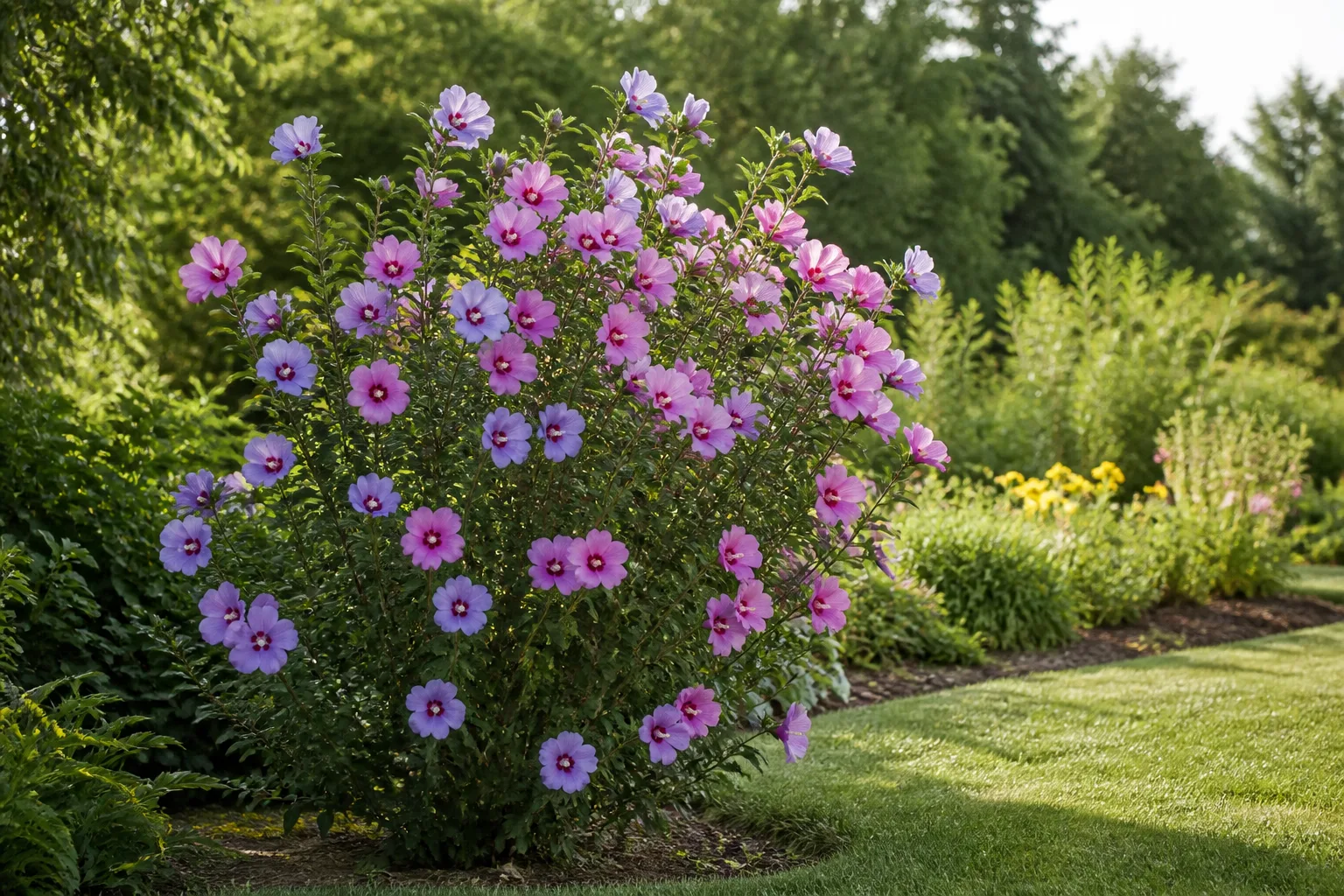
When a Rose of Sharon carries plenty of buds but few flowers open, start by checking when the buds formed and what they look like now. A shrub that has not reached its usual bloom period needs patience; one whose green buds are browning, softening, or dropping needs a closer look at water, roots, weather, pests, and disease.
There is no single confirmed cause for every case. Purdue Extension notes that failed opening and premature bud drop are common frustrations with Rose of Sharon, but the reasons are not fully understood; it lists moisture or fertilizer stress, Botrytis, thrips, weather, and even possible normal shedding among the explanations. That uncertainty matters: a symptom is a clue, not a diagnosis, so changing three things at once can make the real cause harder to find (Purdue Extension).
Start with the symptom: no buds, or buds that fail?
First separate a shrub that has not made many buds from one that forms buds and loses them before they open. These patterns point to different parts of the plant’s growing conditions, and the first one is not a “bud-opening” problem at all.
| What you see | Check first | What it may suggest |
|---|---|---|
| Healthy leaves and shoots, but no buds yet | Local bloom timing, direct sun, and recent pruning | The shrub may be early, shaded, or still replacing growth after a cut |
| Many green buds that stay firm | Bloom season and cultivar timing | Buds may not be ready; keep watching before intervening |
| Buds yellow, dry, or drop after hot weather | Soil moisture several inches down and recent watering swings | Drought stress or uneven moisture is plausible |
| Buds turn brown and soft, especially after wet weather | Close inspection for gray growth or damaged tissue | Botrytis or another decay issue is possible, but not proven by color alone |
| Leaves wilt while soil stays wet | Drainage and root-zone conditions | Saturated soil or root damage may be limiting the shrub |
| A few flowers fade while new ones keep opening | Normal flower turnover and weather | Often no treatment is needed |
Use the table to decide what to inspect, not to label the problem from one clue. Purdue Extension specifically notes that Rose of Sharon flowers are short-lived and that heat, heavy rain, and wind can hasten the loss of mature flowers; premature loss of immature buds is a different pattern and deserves attention.
Wait for your shrub’s local bloom window
Rose of Sharon (Hibiscus syriacus) is a summer-flowering shrub, but there is no single calendar date that applies across its range. In Indiana, Purdue Extension describes flowers beginning in late June or early July and often continuing through August, sometimes into September; NC State Extension lists summer flowering and notes that cultivars differ. A plant in a cooler climate, a shaded site, or a different cultivar may start later than a nearby shrub.
Look at the plant’s recent history before diagnosing it. If it normally starts flowering in August and it is still early summer, green buds that have not opened may simply be immature. If the shrub has already flowered for weeks and buds are suddenly dropping, pay more attention to weather, watering, and visible bud damage.
A newly planted shrub can also spend energy establishing roots and shoots before it produces the display you expect. That does not guarantee that age is the cause, but it is a reason to avoid aggressive fertilizer or pruning as a first response. Track when buds first appear, when the first flowers open, and what the weather was like; those notes make next year’s comparison far more useful than relying on memory.
Check the light the shrub receives now
Rose of Sharon flowers best in a sunny location. NC State Extension defines full sun as at least six hours of direct sunlight per day and notes that the shrub can tolerate partial shade; tolerance does not mean it will flower equally heavily in a dim site. If it gets only a few hours of direct light, or receives shade during the middle of the day, fewer flower-bearing shoots may develop.
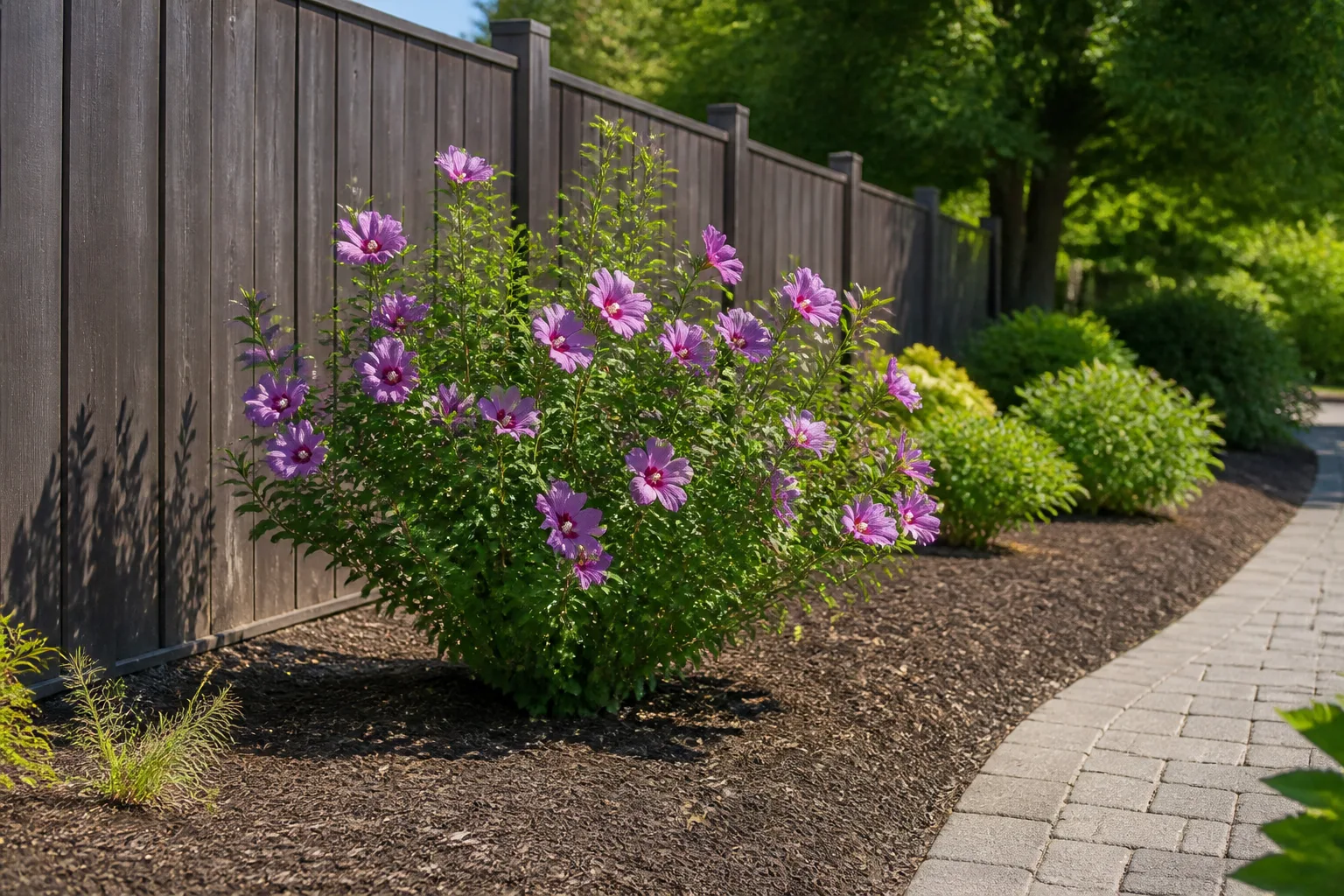
Check the shrub rather than the yard in general. A spot can look bright while the plant sits behind a roofline, fence, mature tree, or a neighboring shrub that blocks direct sun; tree canopies also fill out between early spring and midsummer. Observe the plant at several times during a clear day and note how many hours direct sunlight actually reaches its leaves.
If shade is the likely reason, pruning a nearby tree is not automatically the right fix. Do not remove large limbs without considering tree health and local rules; first see whether a small, safe reduction of nearby competition would help. If the Rose of Sharon is badly misplaced, plan a move during a suitable dormant-season window rather than digging it up in heat while it is carrying buds.
Stabilize water without saturating the roots
Both too little and too much moisture can stress Rose of Sharon. NC State Extension describes its preferred soil as moist and well drained, while Purdue Extension includes low or excessive moisture among possible stresses associated with premature bud loss. A fixed weekly amount cannot account for soil texture, rainfall, shrub size, heat, or whether roots have filled the planting area.
Water the root zone when the soil is drying, not because buds exist or because a calendar reminder went off. Apply water slowly over the area beneath the outer branches so it can soak in, then pause and check the soil again; short, frequent sprinkling may wet only the surface while leaving deeper roots dry. In hot, windy weather, check more often, but do not keep an already wet root ball saturated.
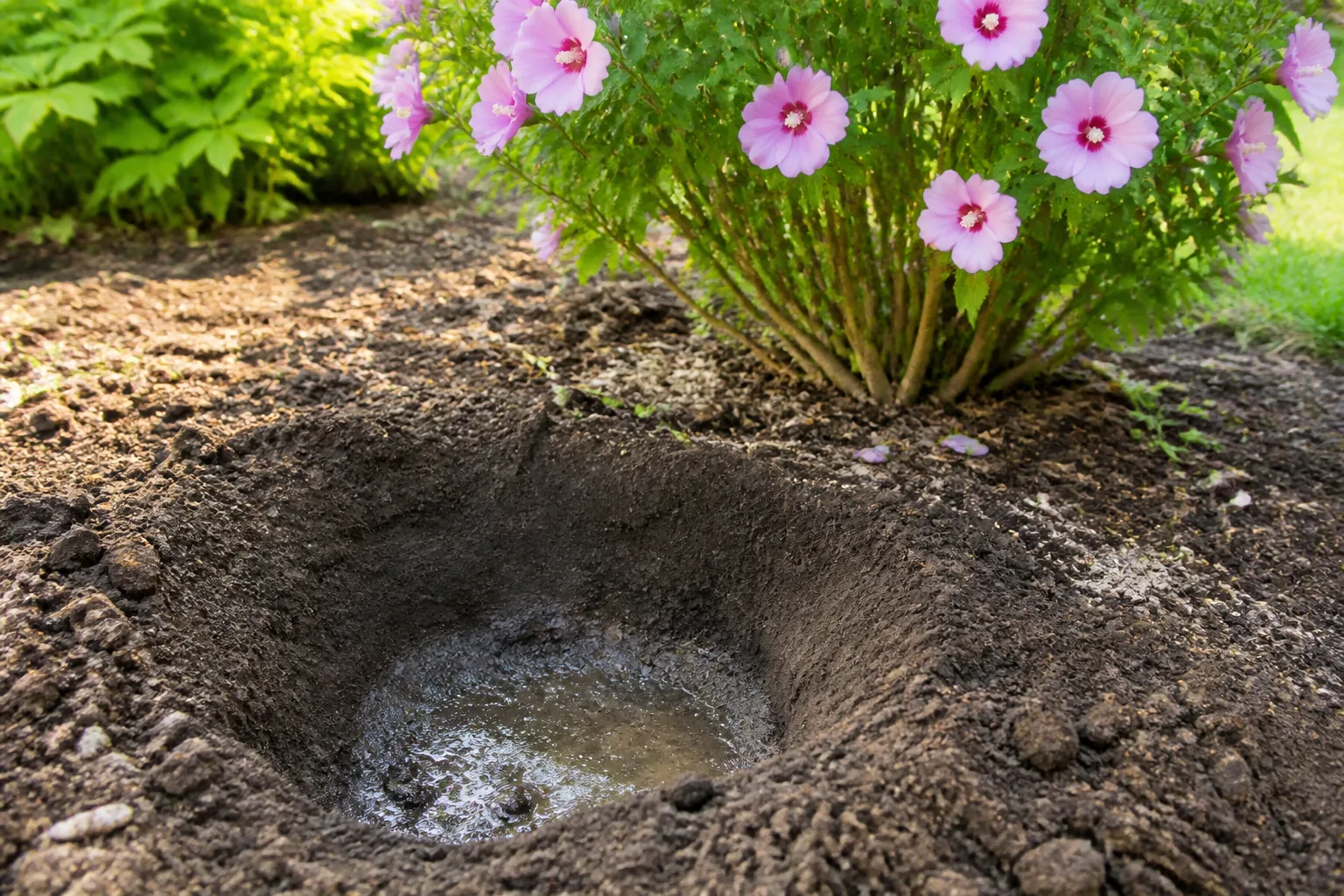
Check moisture at root depth
Use a narrow trowel or finger to check the soil about three to four inches below the surface, a little away from the main stems. If it is dusty and dry there, water deeply; if it is cool and moist, wait; if it is wet and sticky for days after rain, adding more water is the wrong correction. The surface can dry quickly while the lower root zone remains damp, especially in clay or in a mulched bed.
For a recently planted shrub, check near the original root ball as well as the surrounding soil. A pot-grown root mass can dry faster than the native ground around it, or it can remain wet if the planting hole is slow to drain. Avoid digging around repeatedly because fine roots occupy the upper soil; a few careful checks are enough to establish a pattern.
Inspect buds before treating pests or disease
Look closely at both the buds and the tender shoots that support them. Use a hand lens or take a clear phone photo, then compare several buds from different parts of the shrub; a single damaged flower may have been bruised by wind or rain, while damage across many buds suggests a wider stress or pest pattern.
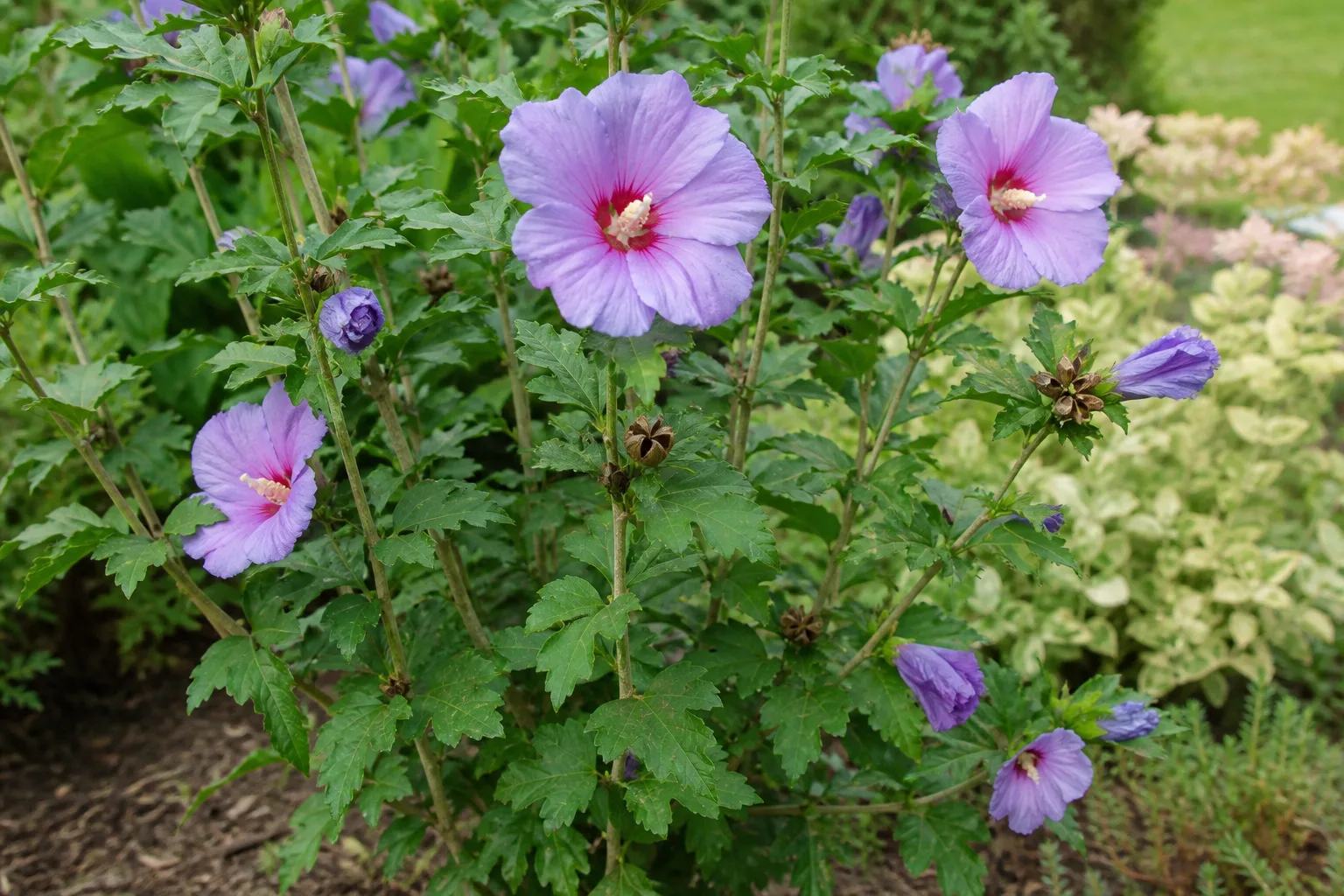
Purdue Extension identifies Botrytis, a fungal disease that can make buds turn brown and drop before or just after opening, and thrips, which feed on flower buds and can contribute to drop. Those are possibilities to investigate, not grounds for automatically spraying. Look for repeated browning or soft decay after prolonged damp weather, or for tiny insects and scarring on buds and the newest growth; photograph the evidence and ask a local extension office if you cannot identify what you see.
When Botrytis or thrips are plausible
If buds have brown, water-soaked or soft tissue and nearby flowers are affected during humid, rainy weather, remove a few clearly decayed buds and discard them rather than leaving them under the plant. Keep irrigation directed to the soil, avoid crowding the shrub with vegetation, and allow leaves to dry after rain; these are low-risk steps while you watch whether new buds remain healthy.
Thrips are tiny and easy to mistake for dust or debris. Gently tap a suspect bud over white paper and inspect anything moving with a magnifier; do not assume an insect is the cause simply because the shrub has flowers and insects visit them. Avoid broad-spectrum insecticides on an unidentified problem, especially while flowers are open and pollinators are visiting; use a local diagnostic service to confirm the pest and choose a control that fits the plant and site.
Review pruning timing on new wood
Rose of Sharon produces flowers on new growth made during the current season, so dormant-season pruning is usually compatible with flowering. NC State Extension says spring pruning encourages flowers on new growth and can increase flower size; Gardening Know How likewise describes late-winter to early-spring pruning as the main window and warns that mid- to late-summer cuts can delay flowering or remove growing shoots (NC State Extension, Gardening Know How).
The practical distinction is whether you cut before or after the season’s flower-bearing shoots formed. A late-winter cut, before bud break, leaves the shrub time to push new stems. Repeatedly shearing it after it has produced new shoots can remove the very tips that would carry buds, so the shrub may leaf out well but flower later or less heavily.
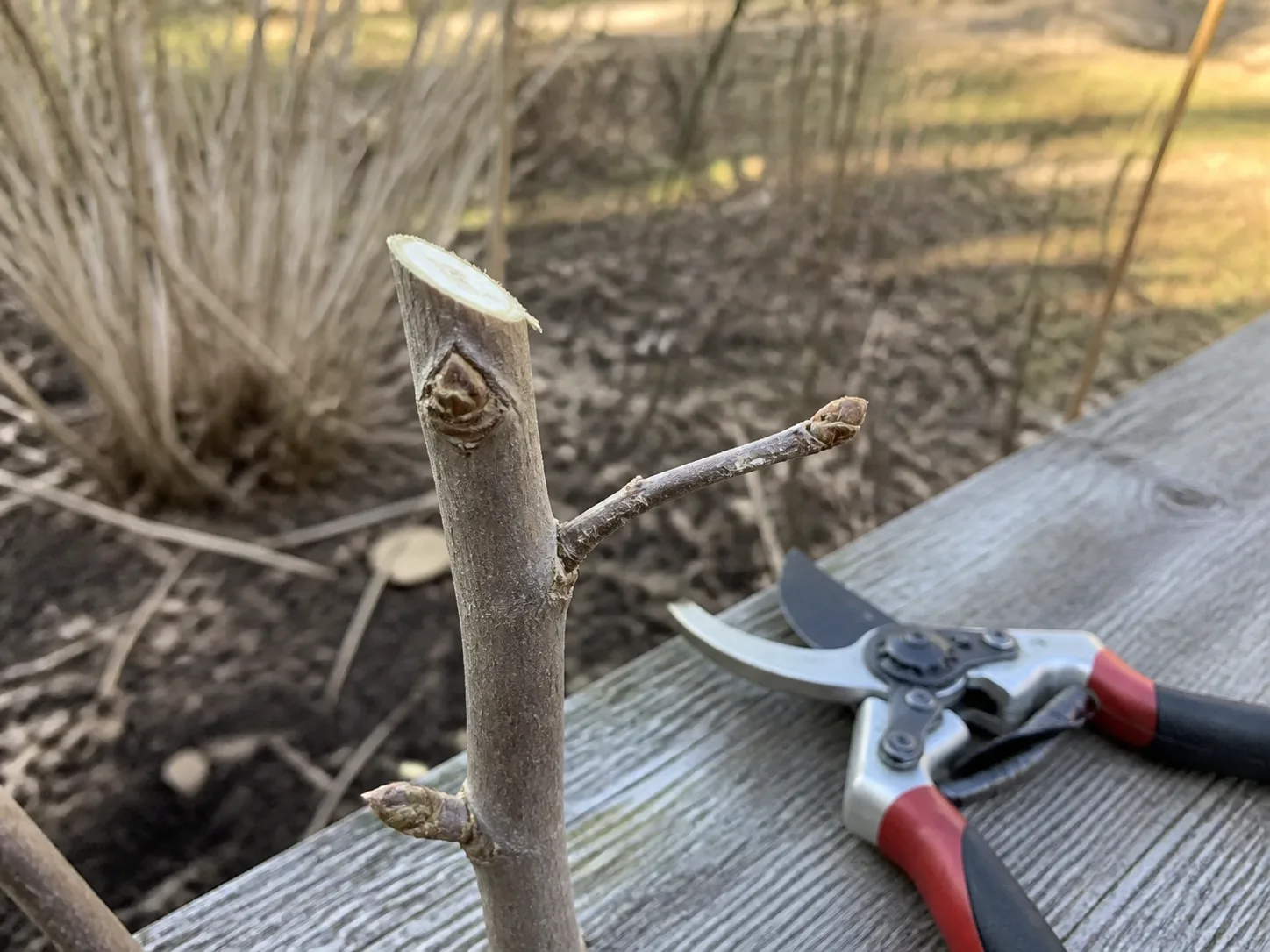
If the shrub has already set buds, do not prune it to “make” those buds open. Leave healthy stems alone for the rest of the flowering season, and reserve shaping for late winter or early spring. For size or structure advice, see the Rose of Sharon pruning guide.
Rule out fertilizer guesses
Unopened buds do not diagnose a phosphorus deficiency. Purdue Extension notes that both too little and too much fertilizer may be part of plant stress, but it does not identify phosphorus shortage as the confirmed explanation for Rose of Sharon bud drop. Avoid bone meal, high-phosphorus products, or repeated liquid feeding as a test; if growth is weak or leaves show a broader nutrient problem, use a soil test and follow its recommendation rather than trying to force flowers.
A leafy shrub with few flowers does not automatically need fertilizer. First check light, timing, and pruning, then look at moisture and the overall vigor of the plant. Some published advice offers fixed feeding intervals or phosphorus formulas, but a schedule cannot reveal what is actually present in your soil; Hunker’s reviewed advice is one example of such a prescription, while Purdue Extension explicitly says the cause of bud drop is not known with certainty (Hunker, Purdue Extension).
Account for cultivar, age, and short-lived flowers
Rose of Sharon varieties do not all flower at the same time or in the same way. NC State Extension lists cultivars described as blooming from mid-summer into early fall, while Purdue Extension notes that the individual flowers last only a short time—often about a day. A shrub can therefore appear to “stop blooming” between flushes even when more buds are still developing.
Watch a few marked stems over several days instead of inspecting only one afternoon. If one flower fades but nearby buds swell and open in sequence, that is normal turnover; if many buds on different branches brown or fall together, record the pattern and look for a shared stress such as a dry root ball, waterlogged soil, a recent pruning, or a run of hot or stormy weather. Heat, heavy rain, and wind can shorten the display even when the plant is otherwise healthy.
Also confirm that the shrub is actually Rose of Sharon, Hibiscus syriacus. It is a hardy deciduous shrub, not the tropical hibiscus often sold in pots; advice for a tropical patio hibiscus can mislead you about winter growth, light, and flowering. NC State Extension’s profile describes the species and its wide range of flower colors and cultivars, and the site’s Rose of Sharon care guide covers identification and baseline growing conditions.
Use a low-risk plan for the current season
You cannot force a bud that has already aborted to reopen. The best current-season response is to prevent additional stress and avoid a late intervention that removes healthy flower-bearing growth.
For the next two weeks, keep the response simple:
- Photograph several buds and note whether each remains firm, dries, turns soft, or falls.
- Check soil moisture below the surface before watering; water only when the root zone is drying.
- Look for direct sun, especially during the middle part of the day, and note any recent change in shade.
- Inspect buds and new shoots for insects, scarring, or decay; do not treat unless you can identify a problem.
- Pause routine fertilizer and pruning until you know whether either is justified.
Make one correction at a time when possible. If the soil is dry, water thoroughly and then check whether new buds remain firm; if it is wet, stop adding water and investigate drainage rather than trying a fertilizer or pesticide. A short log of weather, irrigation, and bud changes will help you distinguish a temporary episode from a recurring site problem.
If open flowers fade as new buds drop
Treat this as a pattern, not as proof that the shrub is failing. Mature blooms can fade quickly in hot, windy, or rainy conditions, while simultaneous loss of immature buds can point to stress, Botrytis, thrips, or a combination of factors; Purdue Extension is careful to say the cause is not always knowable from the plant alone.
Remove only buds that are plainly rotting or heavily damaged. Do not deadhead every fading flower in hopes of making unopened buds open faster; Rose of Sharon continues producing flowers on new growth, and deadheading is not a treatment for root-zone stress or bud injury. If the shrub is otherwise vigorous and some buds still open, watch the next flush before making a major change.
Prepare for next season’s bloom
When the plant is dormant, note whether it receives enough sun and whether water lingers around its roots after rain. If the site stays shaded or waterlogged, solve that underlying condition before next summer; repeated feeding will not substitute for light or oxygen around the roots.
Do structural pruning in late winter or early spring, before new growth carries flower buds. Remove dead, damaged, crossing, or poorly placed branches first, then shape selectively; heavy pruning may reduce the number of flowers while changing their size and timing. Avoid repeated tip-shearing during active growth if your goal is an uninterrupted summer display.
In spring, spread a modest layer of compost or mulch over the root area if it suits your soil, but do not pile it against the stems. Do not apply a high-phosphorus fertilizer unless a soil test indicates that the soil needs phosphorus. Once growth begins, water based on root-zone moisture and note when the first buds form so you can judge the bloom window more accurately next year.
Avoid fixes that can make the problem worse
A fixed weekly watering amount can leave one shrub thirsty and another waterlogged. Use the soil beneath the surface and recent rainfall to guide irrigation, and change your approach if the soil stays wet rather than continuing to add water because the buds look stressed.
Fertilizing repeatedly is not a harmless shortcut. Excess nutrients can create additional stress and do not repair damaged buds; a soil test gives you a defensible reason to add a nutrient, or to leave the fertilizer bag closed. The same principle applies to pesticides: spraying without identifying thrips or another pest can expose beneficial insects while leaving the actual cause untouched.
Avoid moving a large shrub in midsummer, hard pruning after buds have formed, or cutting back all the new shoots because one flush of buds failed. Those actions add stress or remove future flowers. Correct the condition you can verify, then give the shrub time to show whether the change helped.
When to seek a local diagnosis
Ask your county or regional extension office for help when many buds brown or drop across the plant, decay continues after you correct watering, or the leaves wilt despite soil that stays wet. A useful diagnostic request includes the cultivar if known, your location, when buds first appeared, recent rain and watering, sun exposure, pruning dates, and close photos of both healthy and affected buds.
If you can, submit a sample according to the extension office’s instructions rather than mailing loose leaves or buds without context. A photo of the whole shrub helps show canopy density and exposure; close-ups show the bud surface, stem, and any insects. This information is more useful than a message that says only “it won’t bloom,” and it can prevent unnecessary treatments when normal weather-related turnover is the better explanation.
Conclusion
Rose of Sharon buds that fail to open can reflect a late bloom window, insufficient sun, uneven moisture, recent pruning, pest or disease damage, or ordinary flower turnover. Because Purdue Extension says the causes of bud drop are not fully understood, inspect the pattern before treating it: compare bud condition, recent weather, soil moisture, light, and pruning history.
For this season, protect healthy buds by stabilizing the root zone, leaving new shoots intact, and treating pests only after you identify them. For next year, improve the site if needed, prune before new growth begins, and base fertilizer on a soil test. Those measured steps give the shrub a better chance to flower without adding avoidable stress.