When to Prune Rose of Sharon to Encourage Growth and Blooms
Learn when to prune Rose of Sharon, how much wood to remove, where to cut, and how to balance more blooms with larger flowers.
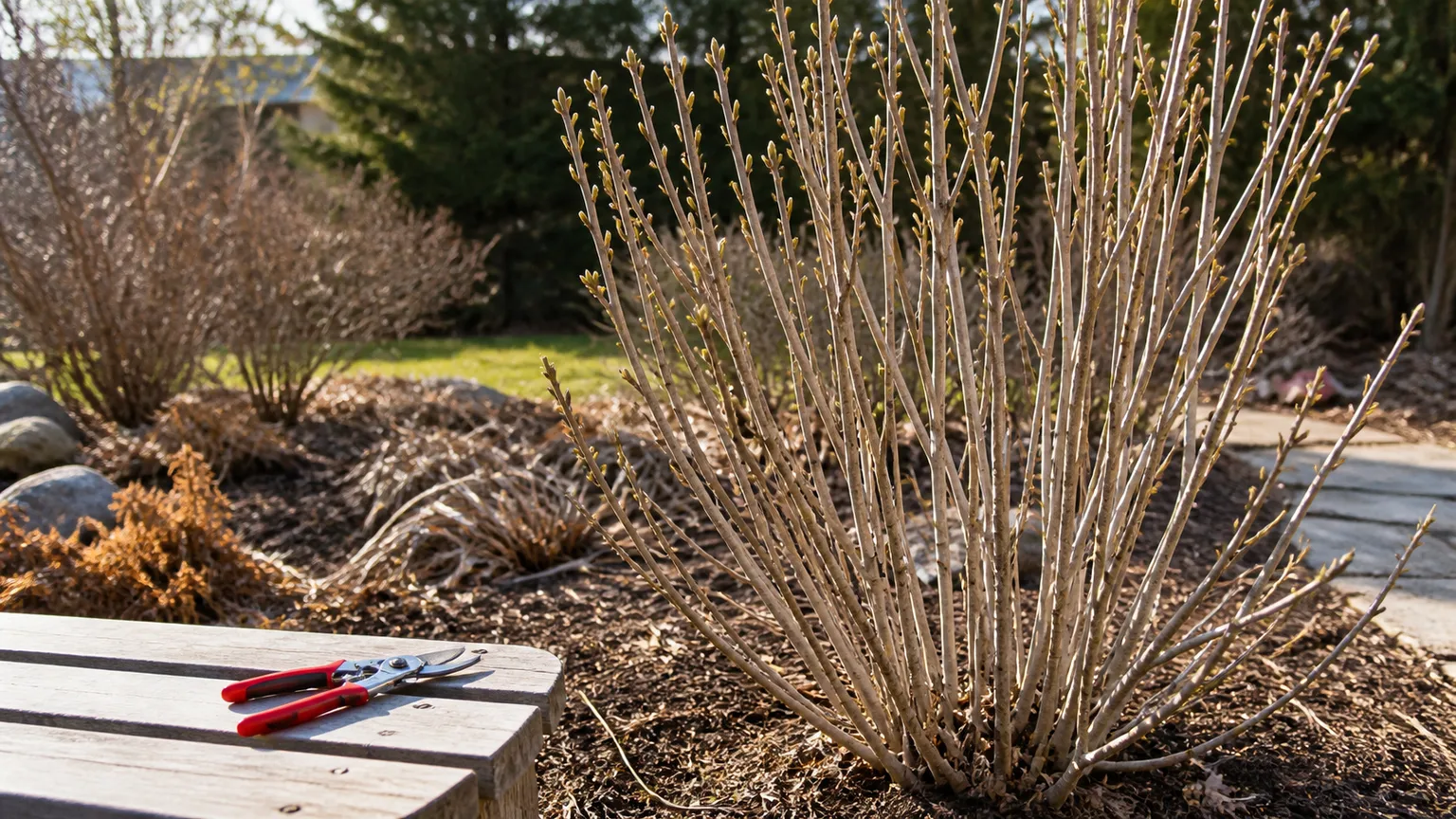
The best time to prune Rose of Sharon is late winter or early spring, while the shrub is dormant and before its new leaves and flower-bearing shoots begin to expand. In colder climates, wait until swelling buds make it easier to tell live wood from winter-killed stems, but finish structural pruning before vigorous new growth is underway.
That timing works because Rose of Sharon (Hibiscus syriacus) flowers on new wood. A well-timed cut can redirect energy into a smaller number of stronger shoots and, when you prune selectively, improve the size and placement of the flowers. The goal is not to remove as much as possible; it is to decide which stems should carry the next season of growth.
The Short Answer: Prune Before Bud Break
Aim for the window after the harshest winter weather has passed but before bud break. A dormant, leafless shrub lets you see its framework, identify crowded or damaged branches, and make cuts without hiding the structure under foliage. NC State Extension specifically recommends spring pruning to encourage flowers on new growth and increase flower size, while University of Illinois Extension notes that spring cleanup may be needed after winter injury.
The calendar date will vary with your location. In a mild area, that window may arrive in late winter; in a cold area, it may be early spring. Use the plant’s condition as the final signal: buds should be swelling, the soil should be workable, and a hard freeze should not be imminent.
Do not confuse this with a rule that every cut must wait. Remove a clearly broken, hazardous, or diseased branch as soon as you notice it, using a clean tool. Save the larger shaping and renewal decisions for the dormant-season window so you can see the whole shrub and avoid stimulating tender growth just before a freeze.
Why Rose of Sharon Responds to Spring Pruning
Rose of Sharon is a deciduous woody shrub that can become a large plant when its stems are left to grow freely. Purdue University describes it as a summer-flowering plant that produces flowers on new growth, which is why a spring cut does not remove the previous season’s flower buds in the way it would on a shrub that blooms on old wood.
New Wood Means a Flexible Pruning Window
“Blooms on new wood” means the flowers form on shoots produced during the current growing season. That gives you more flexibility than you have with spring-flowering shrubs whose buds were formed the year before, but it does not make every season or every cut equally useful.
Prune too early, before you can assess winter damage, and you may leave weak or dead stems in the framework. Prune after vigorous shoots and flower buds have already developed, and you may spend the season replacing growth you just removed. The practical sweet spot is dormant-season pruning shortly before new growth accelerates.
Late summer is a different kind of risk. A late-season structural cut can encourage tender shoots that have less time to harden before frost, especially where autumn arrives quickly. A small cleanup of spent flowers or seed capsules is less disruptive than a major reshaping cut, but it should not be used as a substitute for spring structure work. Gardening Know How likewise places the main pruning window in late winter or early spring and treats late-season cuts cautiously.
What Pruning Changes—and What It Cannot Fix
Pruning can change the number, length, and direction of new shoots. It can open a congested center, remove wood that will never leaf out, lower an overgrown canopy, and place new growth where it is less likely to rub against a neighbor or grow into a walkway.
It cannot compensate for deep shade, chronic drought, waterlogged soil, root damage, or a cultivar that is simply too large for its planting site. If a Rose of Sharon is sparse on the shaded side, first look at sunlight and competition; cutting the bare side harder may create an even weaker plant. NC State Extension recommends full sun to partial shade and well-drained soil, so pruning works best when those basic conditions are reasonably sound.
Choose the Result You Want Before You Cut
The right amount of pruning depends on what you want the plant to do next. Take a minute to choose a target before picking up the pruners: a fuller flowering shrub, a smaller plant, an open multi-stem form, or a trained tree form each calls for a different pattern of cuts.
More Flowers vs. Larger Flowers
Light shaping usually preserves more flowering points, while harder shortening tends to leave fewer points that can produce larger flowers. The difference is not an on-or-off switch, and the cultivar, sunlight, moisture, and vigor of the plant all matter. Think of it as a useful tradeoff: more retained shoots generally offer more places to flower; fewer, stronger shoots can make the individual flowers more prominent.
For the fullest display, focus on removing problems rather than shortening every branch. Take out dead, damaged, crossing, and badly placed wood, then lightly shorten only the longest or most wayward stems. This keeps the plant’s flowering framework while encouraging fresh shoots from a manageable number of tips.
If larger flowers are the priority, shorten selected stems more decisively in spring, leaving healthy buds near the remaining framework. Purdue’s Rose of Sharon guidance notes that a hard spring cut can reduce the number of buds while producing fewer, larger flowers. Do not make that cut on every stem unless you are intentionally resetting the shrub and have accounted for its size, vigor, and recovery time.
Natural Shrub, Hedge, or Tree Form
A natural Rose of Sharon looks best when its stems have room to branch and the top is not forced into a smooth ball. If you want a hedge-like outline, use selective cuts to control height and width; repeated shearing creates a dense outer shell with weak light and air movement inside, and it can hide the plant’s natural vase-shaped framework.
For a tree form, decide whether you want one central leader or a deliberate multi-trunk standard. On a young plant, remove lower side branches gradually and keep the future canopy above the desired trunk height. On an established multi-stem shrub, converting the whole plant in one season can create large wounds and a lopsided recovery; remove competing stems in stages instead.
Read the Shrub Before Making a Cut
Stand back far enough to see the shrub from all sides. Look for the main stems, the points where they divide, the branches that lean into the center, and the outer outline that you want to keep. A few minutes of observation prevents the common mistake of making several isolated cuts that collectively remove too much.
Find Living Wood After Winter
Rose of Sharon can leaf out later than many familiar shrubs, so bare stems are not automatically dead. Scratch a very small patch of bark on a questionable twig with a clean fingernail or knife edge: living tissue just beneath the bark is usually moist and greenish, while dead wood is dry and brown. Stop the test once you find live tissue; there is no benefit to repeatedly wounding a stem.
Work from the tip toward the base when checking winter damage. If the tip is dead but the lower stem is alive, cut back to a healthy bud or side branch rather than removing the entire stem. If a thick branch is dead all the way to its origin, remove it at the branch collar without cutting into the trunk or neighboring stem.
Mark the Cuts That Matter
Before cutting, identify three groups: wood that must go for plant health or safety, wood that should go for structure, and wood that can stay. The first group includes dead, broken, diseased, rubbing, and crossing branches. The second includes a few old stems that crowd the base, suckers outside the intended framework, and long shoots that throw the canopy out of balance. The third is healthy wood that is well placed, even if it is not perfectly straight.
For a mature shrub, a conservative renewal target is to remove about one-quarter to one-third of the oldest or least productive stems over a season. That may mean fewer cuts than you expected, but the remaining framework can leaf out and flower while the plant replaces the removed wood. If the shrub needs more work, repeat the process over two or three dormant seasons.
How to Prune Rose of Sharon Step by Step
Use bypass pruners for small shoots, loppers for branches that are too large for a comfortable hand cut, and a sharp pruning saw for heavy wood. Clean and sharpen the blades before you start, and wipe them with isopropyl alcohol between plants or after cutting diseased material. The tool should do the work; if you have to twist or crush a branch, switch to a larger tool.
Start With Dead, Damaged, Diseased, and Crossing Wood
Begin at the base and work outward. Remove dead stems back to healthy wood or to their point of origin, cut broken branches below the damage, and take diseased wood back to clean tissue. Bag suspicious diseased debris rather than leaving it under the shrub, and disinfect the blade before moving to another plant.
Next, remove one of two branches that rub together or form a tight V with poor attachment. Keep the branch with the better direction and stronger union. A crossing branch that is still small can be removed cleanly now; waiting until both branches thicken makes the correction more disruptive.
Avoid leaving long stubs. A stub rarely produces a strong new framework, and it can die back or create a cluster of weak shoots. Make a clean cut just outside the branch collar when removing a whole branch, preserving the slightly swollen tissue where the branch joins its parent.
Thin the Center Without Hollowing It Out
Once damaged wood is gone, look through the shrub from one side to the other. Remove a few inward-growing stems and selected old branches at the base so light and air can reach the center, but leave enough interior wood to support the canopy. An open center is useful; a hollow shell with foliage only at the outside is not.
On a multi-stem Rose of Sharon, vary the height of the remaining stems instead of cutting them all to one level. Selective thinning gives new growth somewhere to go and preserves a natural outline. If a basal shoot is part of the multi-stem form you want, keep it; remove only shoots that are outside the framework or competing with a leader you intentionally retained.
Shorten Selected Stems Above Outward-Facing Buds
For a heading cut, choose a healthy bud or small side shoot that points away from the center of the shrub. Make the cut about one-quarter inch above that bud at a slight angle, with the high side above the bud and the cut face shedding water away from it. Cutting too close can damage the bud; leaving a long stub wastes the direction you just selected.
Shorten only the stems that need more branching, height control, or correction. Avoid cutting every branch to the same height, which produces a knobby top and a flush of shoots competing from the same plane. A few deliberate cuts distribute new growth more naturally and make the plant easier to assess next season.
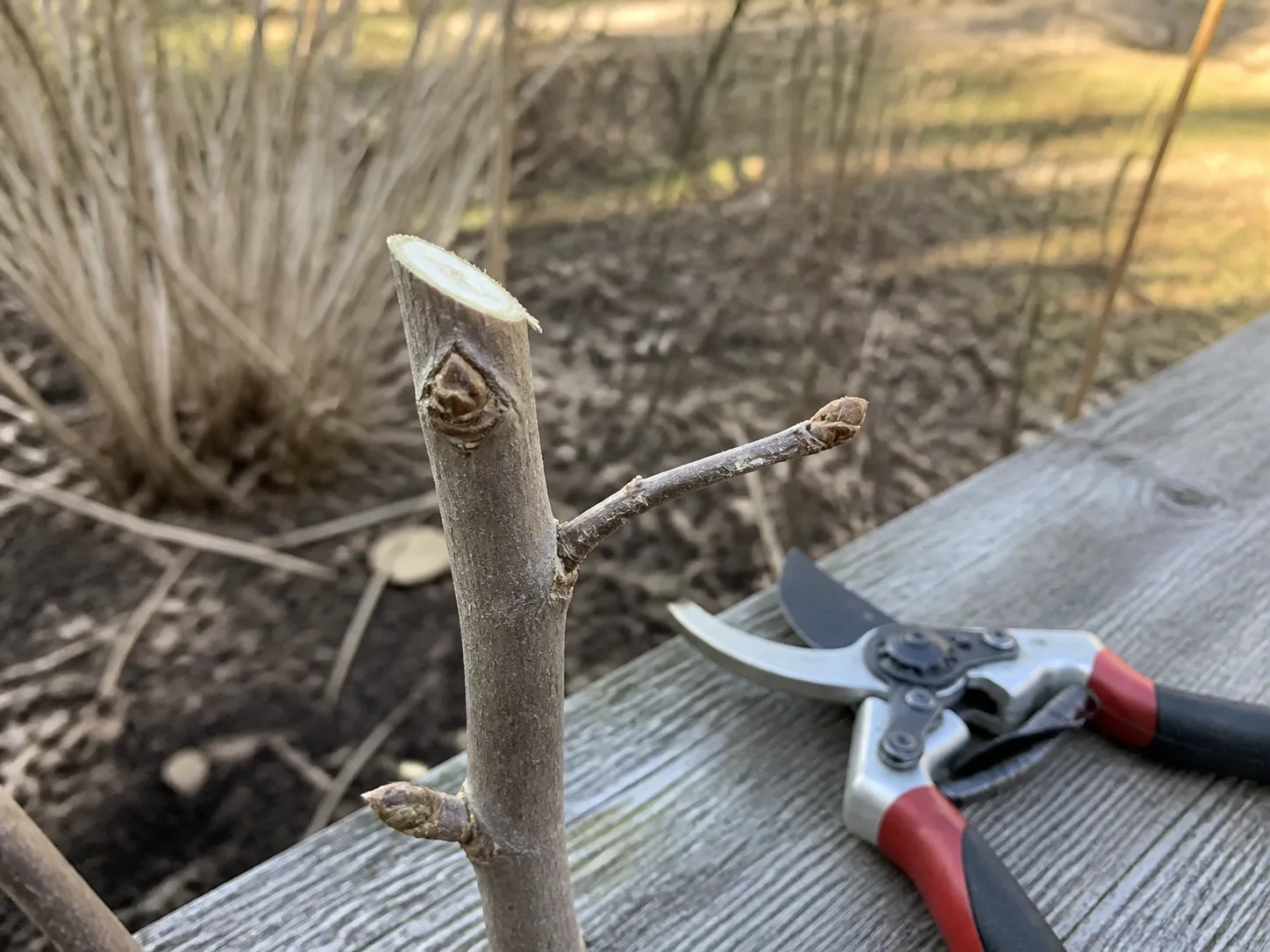
After each few cuts, step back and reassess the silhouette. Stop when the goals you set are met, even if some small imperfections remain. A living shrub does not need to look perfectly geometric on pruning day to grow into a balanced plant.
Renew an Overgrown or Leggy Shrub in Stages
An overgrown Rose of Sharon is usually better renewed than sheared. Start by removing dead wood and the oldest, weakest, or most poorly placed stems at ground level. Then shorten a limited number of vigorous stems to outward-facing buds so new shoots can fill the gaps without creating a thicket.
For most home shrubs, keep the total removal to roughly one-third of the stem framework in one dormant season. If the plant is dramatically oversized, remove the oldest third this year, another third next year, and the final problem stems in the third year. This staged approach preserves enough leafing and flowering wood to support the roots while giving you a chance to correct the direction of new growth.
Do not use a single drastic cut as a shortcut unless a qualified professional has determined that the plant’s size, structure, or safety condition requires it. A severe reset can produce vigorous shoots, but those shoots may be weakly attached, crowded, or poorly matched to the space. Plant Addicts and other horticulture references recommend treating major renewal as selective work spread across seasons rather than stripping every stem at once.
If the shrub is leggy because it receives too little light, pruning alone will not solve the problem. Improve the exposure if possible, reduce nearby competition, and water consistently during the recovery season. A plant that is already drought-stressed should receive care before any nonessential reshaping.
When to Prune for Seed-Pod Control
Seed-pod cleanup is a separate job from structural pruning. Rose of Sharon produces capsule-like fruits after flowering, and the seeds can create unwanted seedlings where the plant is prolific. If you want to limit self-seeding, remove spent flowers or developing capsules before they mature and open, or collect mature capsules before they drop.
This light cleanup can happen after flowering and does not require cutting the main framework in late summer. Use clean snips to remove the flower stalk or capsule, then leave healthy leafy shoots alone. If you like the winter texture or want the plant to reseed, skip this step and accept that seedlings may appear.
Check local guidance before deciding how aggressively to control seedlings. NC State Extension notes that Rose of Sharon has been reported as invasive in some states, and cultivars differ in how freely they set seed. Pull young unwanted seedlings when the soil is moist, and consider a less-seedy cultivar if the plant repeatedly spreads beyond its bed.
What to Do After Pruning
Gather cut branches and remove diseased debris from the bed. Do not paint pruning wounds; clean, correctly placed cuts are designed to close naturally. If you cut into dry soil, water deeply after pruning, then let the surface begin to dry rather than keeping the root zone constantly wet.
Spread a two- to three-inch layer of mulch over the root zone if needed, keeping it a few inches away from the stems. Mulch moderates soil temperature and moisture while the shrub regrows, but a mulch volcano against the base can trap moisture and encourage decay. Avoid a heavy nitrogen push immediately after a hard renewal cut; steady moisture, sunlight, and time are more useful than forcing soft shoots.
Watch the new growth through spring. A few shoots may emerge in directions you do not want, so rub off an obviously misplaced soft shoot early if it competes with the framework. Once the canopy fills, do not keep trimming every new tip; let the plant build leaf area and flower-bearing wood.
Common Rose of Sharon Pruning Mistakes
Pruning by month alone. A calendar date cannot account for a late freeze or an early spring. Use dormancy, swelling buds, winter-damage visibility, and your local frost pattern together.
Treating every bare stem as dead. Rose of Sharon can leaf out late. Test questionable stems or wait for bud movement before removing large amounts of wood, unless the branch is clearly broken or hazardous.
Shearing the plant into a ball. Shearing stimulates many tips at the outside while leaving the center congested. Selective thinning and heading cuts create stronger distribution and a more natural habit.
Removing all the old stems at once. Even a vigorous shrub needs enough framework to support recovery. Staged renewal is safer for an overgrown plant and gives you feedback from the first season’s regrowth.
Making every cut at the same height. A flat top often becomes a crowded line of shoots. Vary the height and direction of cuts, and let outward-facing buds set the path.
Pruning a stressed shrub as if it were healthy. Drought, root damage, shade, and poor drainage can all limit the response to pruning. Correct the growing conditions first and restrict cuts to essential cleanup when the plant is under stress.
Using fall structural pruning to solve a spring problem. Fall is useful for optional seed-pod cleanup, but a major late-season cut may push tender growth before frost. Keep the main reshaping work for late winter or early spring.
Conclusion
Prune Rose of Sharon in late winter or early spring, just before bud break, after you can assess winter damage and before the plant commits to a flush of new growth. Because it flowers on new wood, the plant can tolerate useful spring shaping, but the best results come from selective cuts tied to a clear goal.
Remove damaged and poorly placed wood first, open the center modestly, and shorten only the stems that need new direction. Keep hard renewal to about one-third of the framework in a season, handle a large shrub over several years, and reserve after-flowering work for seed-pod control. With that rhythm, pruning becomes a way to guide growth and flowering rather than a yearly attempt to make the shrub smaller.