Tree Leaves Turning Brown? Find the Cause and Next Step
Tree leaves turning brown can signal drought, soggy roots, scorch, disease, or normal aging. Use the pattern, timing, and soil to choose a safe first step.
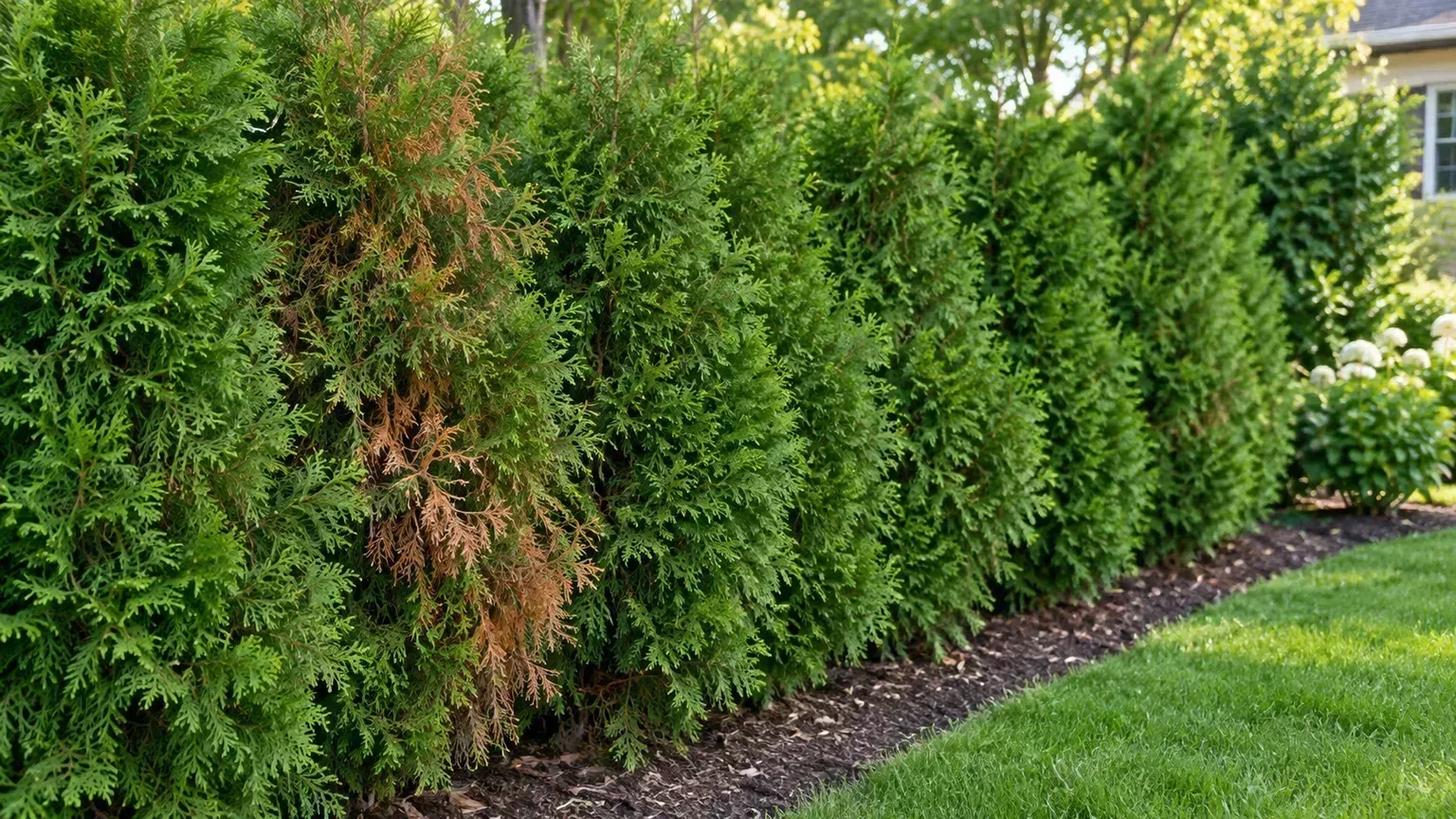
Brown foliage is a symptom, not a diagnosis. Drought, roots sitting in saturated soil, weather injury, pests, disease, chemicals, and normal seasonal change can all leave a tree with brown leaves—and several causes can look alike from the ground.
Before reaching for a hose, fertilizer, or spray, note where the browning starts, when it appeared, and whether the soil is dry or wet. Those three clues narrow the possibilities and help you avoid making root stress worse with the wrong treatment. A brown leaf will not turn green again; the useful question is whether the tree can maintain healthy buds and growth after the underlying stress is corrected.
Start with the leaf pattern, not a treatment
Look at the whole canopy before inspecting a single leaf. Is the damage scattered, concentrated on the outer or sunny side, limited to one branch, or beginning among older leaves inside the canopy? Also note whether the leaves are crispy, soft, spotted, curled, yellow before browning, or still attached after they die.
| What you see | What it may suggest | What to check next |
|---|---|---|
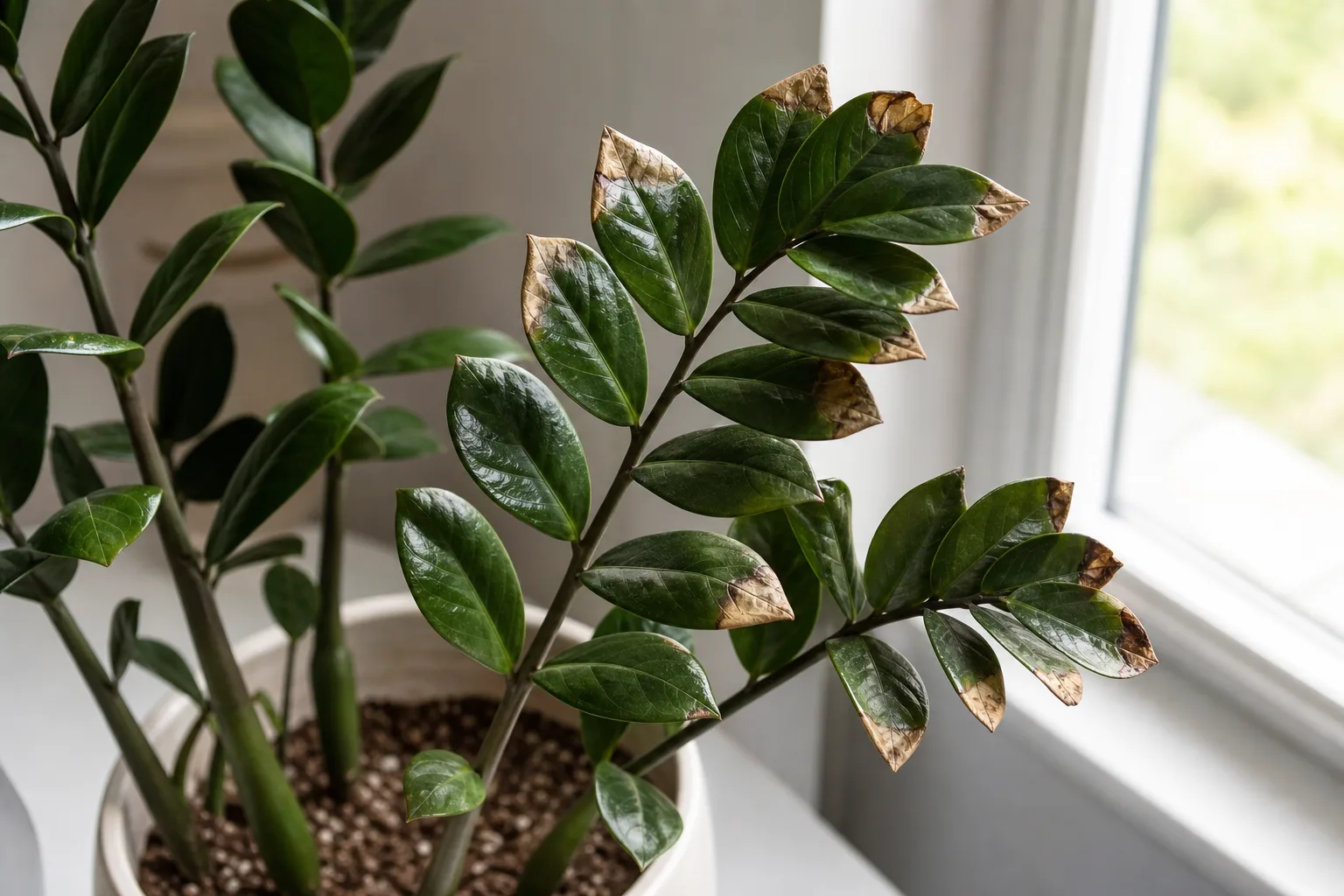
| Dry brown tips or margins on many leaves | Water demand exceeding root supply; wind or reflected heat may add stress | Recent heat, rainfall, soil moisture, exposure |
| Brown patches on the most exposed side | Sun, heat, or drying wind; sometimes localized root stress | The direction of exposure and recent weather |
| Distinct spots, rings, holes, or a yellow border | Leaf-spot disease, insects, or physical injury | Whether spots repeat on new leaves and whether branches are affected |
| One branch or one sector browns while the rest stays green | Local root, stem, pest, or disease problem | The branch base, trunk, recent digging, and the pattern over time |
| Older interior foliage browns while outer tips stay healthy | Seasonal leaf or needle replacement can be normal on some evergreens | Species, season, and whether new growth remains green |
These are clues, not a diagnosis. A drought-stressed tree can develop spots from secondary problems, and a disease can reduce water movement enough to create scorch-like edges; the pattern has to be read with the tree’s history.
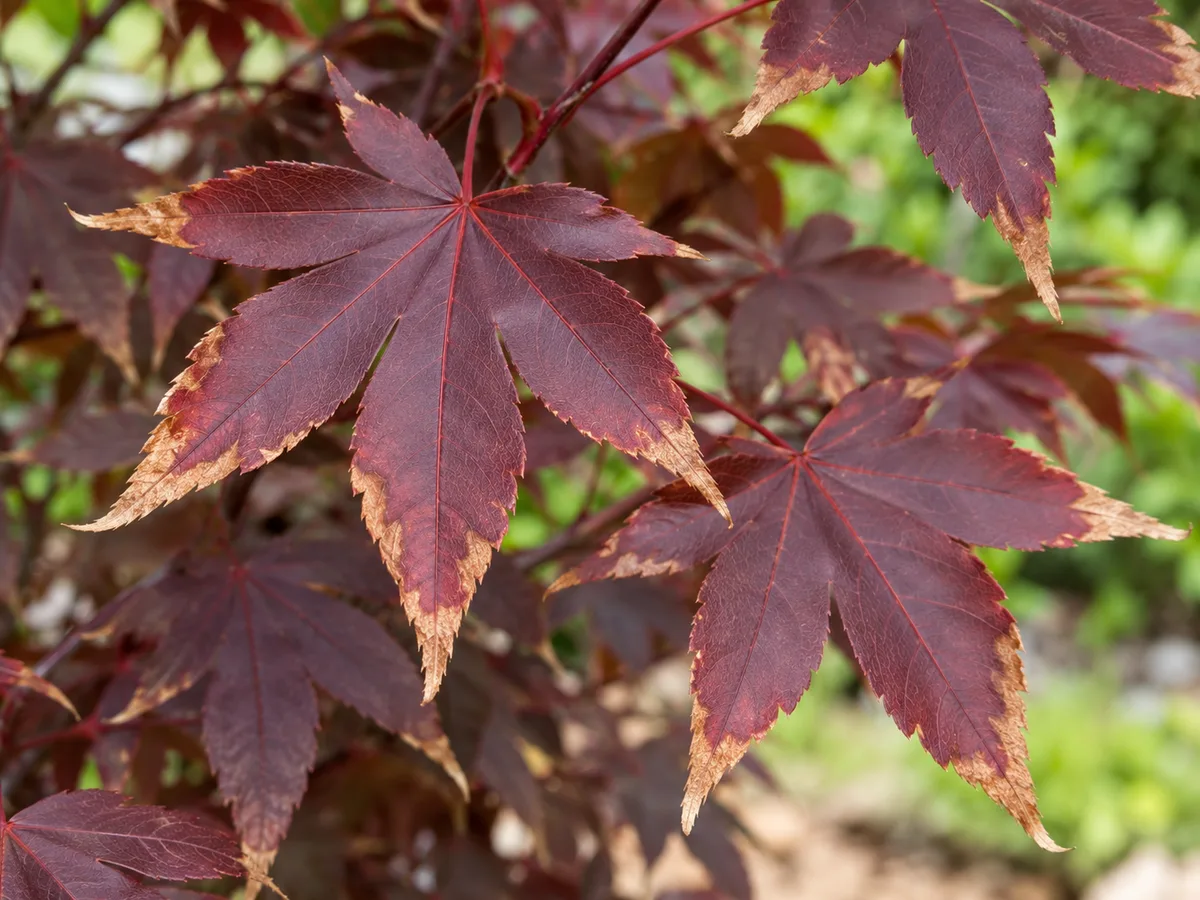
What browning location can—and cannot—tell you
Leaf margins and tips are often the first tissue to dry during abiotic leaf scorch because they are farthest from the main veins carrying water. The Morton Arboretum describes scorch as a noninfectious response to conditions such as high temperatures, dry winds, low soil moisture, root damage, compaction, restricted rooting space, poor drainage, and salts. Its guidance also notes that exposed leaves may be hit harder by wind, strong sun, or reflected heat from paving and walls (Morton Arboretum).
But “scorch” is also used in the names of some diseases, and brown edges do not prove that drought is the cause. For example, the RHS distinguishes fungal cherry leaf scorch, where leaves may shrivel and stay attached, from cherry leaf spot, which can yellow leaves and cause early drop (RHS cherry disease guide). Better diagnosis comes from combining the leaf pattern with weather, soil moisture, the species, and whether a whole branch or the entire canopy is declining.
Heat, drought, sun, and wind scorch
Hot weather raises water loss from leaves. If dry soil, limited roots, or a high-demand site prevents the roots from replacing that water, leaf tissue can yellow, curl, turn crisp at the edge, and eventually become brown. Newly planted trees and trees with damaged roots are especially vulnerable because they have less functional root area to draw on.
A dry spell is not the only factor. Strong wind speeds drying, while heat reflected from pavement, a wall, or a driveway can make one side of a tree hotter than the rest. Utah State University Extension describes premature browning and leaf drop during prolonged drought and notes that even a heat-tolerant tree can scorch when planted beside asphalt or concrete (Utah State University Extension).
Species still matter: the same exposure can produce more visible damage on a tree poorly matched to a hot, dry site than on one adapted to it. If the tree is a Japanese maple, our guide to brown leaves on Japanese maple trees covers that species-specific pattern in more detail.
Why the exposed side may be worse
When browning is strongest on the west or south side, the outer crown, or the side facing an open windy area, exposure is a reasonable lead. Compare several branches at the same height: scorch often follows the site’s heat and wind pattern, while a single sharply affected branch can point to a local injury, canker, insect activity, or a damaged root sector.
The Better Homes & Gardens diagnosis guide, which includes comments from Iowa State horticulture professor Jeff Iles, emphasizes that scorch varies by species: margins, veins, blotches, or entire leaves may brown. That variation is why color alone is not enough; use the distribution and timing as well as the leaf itself (Better Homes & Gardens).
Waterlogged soil and damaged roots
Too much water can produce foliage that looks drought-stressed. Roots need oxygen as well as moisture; when soil stays saturated, roots can lose function or rot, leaving the canopy unable to take up water even though the ground is wet. Utah State Extension specifically cautions that adding water to already moist soil can worsen root loss, so brown leaves are not a reason to water automatically.
Check below the surface in more than one place, including near the root ball for a young tree and beneath the outer canopy for an established one. If soil is sticky, waterlogged, or still saturated long after irrigation or rain, pause supplemental watering and look for a leak, a low spot, compacted soil, or poor drainage rather than trying to “flush” the tree.
The Royal Horticultural Society (RHS) likewise notes that waterlogging deprives roots of air and can cause root rot, yellowing, and plant decline. Its guide to brown leaves on woody plants treats moisture, drainage, and shelter as separate factors, not interchangeable fixes.
The surface can fool you in either direction: mulch and shade keep the top layer damp while the root ball below is dry, or a crusted surface can look dry even though heavy soil underneath is saturated. Probe a few spots at different distances from the trunk and compare them instead of making a decision from one handful. If the soil is wet in one low area but dry elsewhere, irrigation coverage or site drainage may be uneven.
Transplant shock, compaction, and buried root flare
A recently planted tree can lose leaves or develop brown margins while its roots adjust, especially if the root ball dries out between irrigations or spring planting is followed by dry, windy weather. The root ball and surrounding soil do not always dry at the same rate, so check both instead of assuming a nearby lawn sprinkler has wetted the roots evenly. New trees may need closer monitoring through establishment, but the correct interval depends on the soil, weather, species, and drainage.
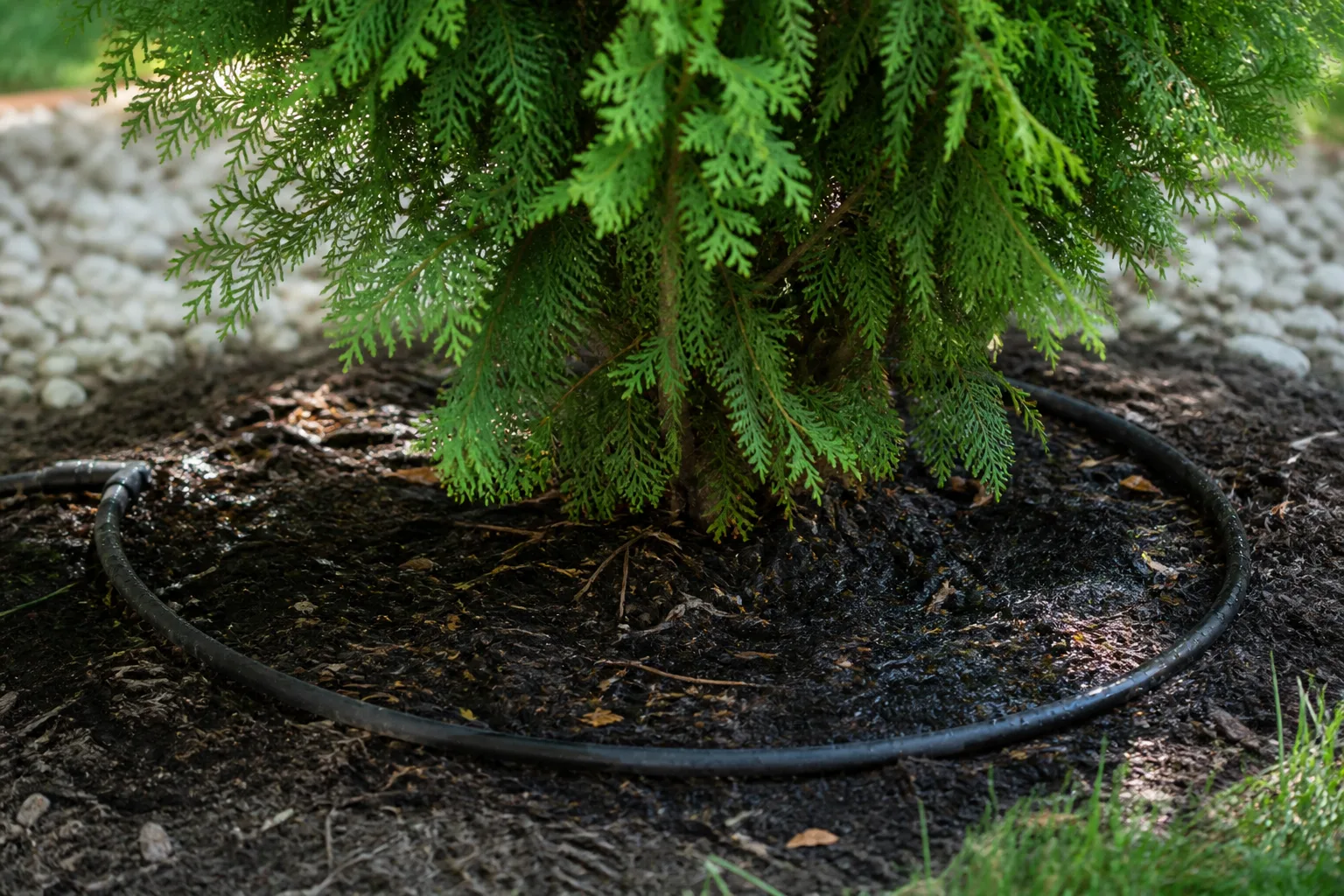
For a new planting, direct water to the root ball and the surrounding backfill, then check that moisture reached the soil rather than running off the surface. A brief sprinkle on the foliage or a fast blast at the trunk is not a substitute for root-zone moisture. If the root ball is dry but nearby soil is wet, adjust where you apply water; if both stay wet, stop and investigate drainage.
Established trees can show a similar water-supply problem after construction, trenching, paving, grading, or repeated vehicle traffic cuts or compacts roots. Compaction restricts air and water movement; root damage lowers the area available to supply the canopy. A tree can take months or years to show the full effect, so connect current browning with recent work around the root zone, not only with last week’s weather.
Check that mulch is not piled against the trunk and that the root flare—the widening where the trunk meets the main roots—is visible. Deep planting, girdling roots, or buried trunk tissue can impair roots and eventually create drought-like foliage symptoms; Utah State Extension describes both circling roots and planting too deeply as causes of delayed decline. Do not excavate aggressively around a mature tree to expose roots; if the flare seems buried or the trunk is constricted, ask an arborist to assess it.
Frost and seasonal injury
A late spring freeze can damage new leaves that emerged during a warm spell. The injury may appear suddenly after a cold night, often on the tender upper or outer growth, while older protected leaves remain normal. Wait until the next flush or clear dieback pattern shows which twigs are alive before pruning; a browned leaf does not automatically mean the branch beneath it is dead.
Cold-season browning on evergreens has a different pattern. Needles or scale-like leaves may dry where winter sun and wind pull moisture from foliage while frozen soil limits replacement water. The RHS weather-damage guide distinguishes frost, wind, drought, and flooding injury by their exposure patterns and cautions that pests or diseases can create similar symptoms (RHS weather damage guidance).
Normal fall color is usually seasonal and reasonably consistent with the tree’s typical timing, while premature browning during summer or after a weather event deserves a closer look. Some evergreens also shed a portion of older interior foliage as they replace it; compare the outer tips and current growth before treating inner browning as a crisis. The RHS notes that natural replacement is often limited to older leaves within the canopy, while whole shoots or outer growth browning calls for a different investigation (RHS brown-leaf guide). If your tree is a cedar, the cedar browning guide explains the species-specific difference between seasonal needle drop and other causes.
Pests and diseases that resemble scorch
Insects and disease can brown leaves directly or disrupt the tree’s ability to move water. Leaf spots often have defined edges, halos, or repeated lesions; chewing insects leave holes or ragged margins; sap-feeding insects may leave stippling, sticky honeydew, or visible insects. None of these clues alone identifies a pest, but they tell you to inspect the underside of leaves and nearby twigs rather than simply changing the watering routine.
Weather and disease can also overlap in time: a wet spring may favor some leaf diseases, followed by hot weather that makes damaged foliage look scorched. If spots keep appearing on new leaves, if a tree repeatedly loses foliage before fall, or if branch dieback accompanies the spots, save a few affected leaves and get a local diagnosis rather than treating the weather as the only cause. The BHG guide also notes that fungal and bacterial disease can resemble weather-related scorch, so the visual difference is not always obvious to a homeowner.
Diseases that affect roots or water-conducting tissues can make leaves wilt, scorch, or die on one branch even when soil moisture seems adequate. Verticillium wilt is one example Utah State Extension discusses for susceptible trees such as maples; the same source cautions that girdling roots and overly deep planting can also produce a drought-like response. Because the treatments differ by disease, tree species, and region, do not spray a general-purpose fungicide or insecticide based only on brown foliage.
Clues that point to a localized problem
A branch that wilts and browns while neighboring branches remain healthy, a canker or cracked bark at the branch base, repeated leaf spots, oozing, unusual growths, or rapid dieback deserves a closer diagnosis. The RHS notes that browning of whole shoots can signal a problem in the roots, stems, or trunk, and lists several diseases that can interrupt moisture movement; its leaf-damage guide recommends using the pattern to investigate rather than guessing at a treatment.
Photograph the entire tree, the affected branch, and both sides of a representative leaf. If you seek help, include the tree species if known, when symptoms began, the weather, irrigation history, and any recent digging or chemical use; a local Extension office can advise whether a sample should go to a plant diagnostic lab.
Fertilizer, salt, herbicide, and other chemical injury
Excess fertilizer can injure roots or increase salts around them, and deicing salts may harm foliage or the root zone near roads, sidewalks, and driveways. Herbicide drift or a spill can also distort or brown leaves, sometimes on only the side facing the source. Look for a recent application, an adjacent treated lawn, a salty snow pile, or a narrow band of symptoms before adding any nutrient.
Do not respond to brown foliage with fertilizer unless a soil test or qualified diagnosis identifies a deficiency. Fertilizer cannot repair dead leaf tissue or cut roots, and it can add stress when soil is dry; the Morton Arboretum advises avoiding fertilizer applications to trees and nearby lawn during summer when soils are drier. Yellow leaves with green veins may point toward iron chlorosis in some high-pH soils, but the Utah State Extension guidance makes clear that this is a soil-chemistry issue—not a reason to apply iron to every tree with brown leaves.
A safe diagnosis in four checks
Take a few minutes to gather evidence before changing care. Record what you see and repeat the same observations in several days; a single close-up can make a branch problem look like a whole-tree problem.
Check the weather and timing
Write down when the browning began and what happened shortly before it: heat, a dry spell, a sudden freeze, a storm, transplanting, pruning, construction, fertilizer, lawn herbicide, or a change to irrigation. Symptoms that appear after one event and stay on the exposed side fit weather injury better than a long, steady decline, although roots and disease can interact with weather stress.
Compare the timing with normal seasonal change for that species and your local climate. If the tree is deciduous and it is fall, a normal color shift is different from crispy brown leaves in midsummer; if it is evergreen, some inner foliage replacement can be normal, but browning across outer tips or entire shoots calls for further checking.
Check soil moisture and drainage
Use a hand trowel or soil probe to examine the root zone below the dry surface crust. Test more than one area and, for a new tree, check inside the root ball as well as just beyond it; the goal is to learn whether the roots are dry, evenly moist, or sitting in saturated soil. A schedule based only on the calendar, surface appearance, or lawn irrigation timer can miss those differences.
If the soil is dry, water slowly over the root zone and allow time for it to soak in rather than applying a brief splash at the trunk. If it is wet or poorly drained, do not add more water; inspect irrigation leaks, runoff, and drainage, then ask for local advice if saturation continues. Established trees draw from a broad root area, so watering only at the trunk is often too narrow to help.
Look at branches, roots, and nearby changes
Walk around the tree and compare the healthy and affected sides. Follow a browned branch back toward the trunk, look for mechanical damage or cankers, and note whether leaves have spots, chew marks, webbing, or other visible signs; do not cut into bark or dig around structural roots to investigate.
Check for buried mulch, a buried root flare, recent trenching, soil piles, compacted traffic paths, salt application, or changes in sprinklers. The RHS and Morton Arboretum both list root damage, restricted rooting space, poor drainage, and weather as possible contributors to browning, which is why the surrounding site can be as important as the leaf.
What to do after diagnosis
If the root zone is dry and the tree is in a dry spell, give it a slow, thorough soak over the area beneath and just beyond the canopy, then check soil moisture before watering again. Newly planted trees need special attention to the root ball; established trees should not be put on a universal daily schedule. A few inches of organic mulch can reduce evaporation and temperature swings, but keep it away from the trunk and do not bury the root flare.
If the soil is saturated, pause irrigation until it begins to drain and identify the source of excess water. Avoid digging a trench through the root zone, adding fertilizer, or removing large branches as a quick fix; major grade or drainage changes can injure the same roots you are trying to help. If browning followed frost or a short heat event, maintain sensible care and watch the next growth rather than pruning every brown leaf.
When spots, cankers, branch dieback, or pests are present, document them and ask a local Extension diagnostic service or qualified arborist what evidence they need. Use pesticides only after the problem is identified and according to the product label and local rules; many brown-leaf problems are environmental and will not improve with a spray.
When to call an arborist
Get a qualified arborist’s assessment when browning is spreading quickly through the canopy, several large branches are dying, one side is declining without a clear exposure cause, the trunk or root flare is damaged, or the tree has a new lean, cracked union, or hanging limbs. Those signs do not prove that the tree is dying, but they can indicate structural or root problems that are difficult to assess from a leaf photo and may affect people or property.
A single season of leaf scorch does not tell you the tree’s fate. Many trees replace foliage the following year if the roots and buds remain healthy, while repeated scorch, reduced growth, dead twigs, and progressive canopy thinning suggest a deeper problem that needs species-specific evaluation. Ask for an arborist who can explain the evidence and options before recommending major pruning, injections, or removal.
Conclusion
Tree leaves turn brown when weather, roots, pests, disease, chemicals, or normal aging damage leaf tissue, but the same color can have very different causes. Start with the pattern and timing, check soil moisture before watering, and connect symptoms to recent weather or site changes.
Correct only the problem you can verify: water a dry root zone, stop adding water to saturated soil, and seek a diagnosis for spots or branch-level decline. Brown leaves themselves will not recover, but the tree’s live buds, twigs, and next flush will show whether better conditions are helping.