Spiderwort Indoor Plant Care and Growing Guide
Get a practical spiderwort care routine for light, water, soil, pruning, and propagation, plus help with pests, fading color, and pet safety.
Spiderwort is a common name for several plants in the genus Tradescantia, so the care tag on your plant matters. The trailing houseplants sold as inch plant, zebra plant, or Nanouk share a preference for bright light and a pot that drains, but they do not all respond the same way to sun, dry soil, cold, or pet exposure. Upright native spiderworts grown as outdoor perennials are a different kind of plant-care project.
For most indoor trailing types, start with bright filtered light, water after the upper layer of mix dries, and pinch stems to keep growth dense. Then adjust: T. zebrina loses color and leaf density in dim corners, T. fluminensis prefers more even moisture and can spread aggressively outdoors, and T. pallida (Purple Heart) usually needs more light to hold its purple foliage. Here’s how to care for the plant you actually have rather than following one schedule for every Tradescantia.
Identify Your Tradescantia Before Following a Care Schedule
Before changing the light or watering routine, check the botanical name on the nursery label or plant record. “Spiderwort” can refer to several Tradescantia species, while “inch plant” and other common names may be applied to more than one trailing type. North Carolina State Extension’s Tradescantia genus profile notes that T. zebrina is often confused with T. fluminensis and T. pallida, even though their foliage and habits are distinct. If a label gives only a common name, compare the leaves and growth habit below and keep the identification provisional.
Most people use this guide for trailing indoor plants with soft, jointed stems that spill over a pot. The genus also includes hardy, upright garden perennials; NC State describes Tradescantia species as both sprawling and erect. This guide focuses on the trailing tropical types most often sold as houseplants, so check the botanical name before applying an indoor routine to an outdoor spiderwort. A clear photo of the leaves, stem joints, and plant tag can help a local extension service identify an uncertain plant.
Common Houseplant Species Have Different Strengths
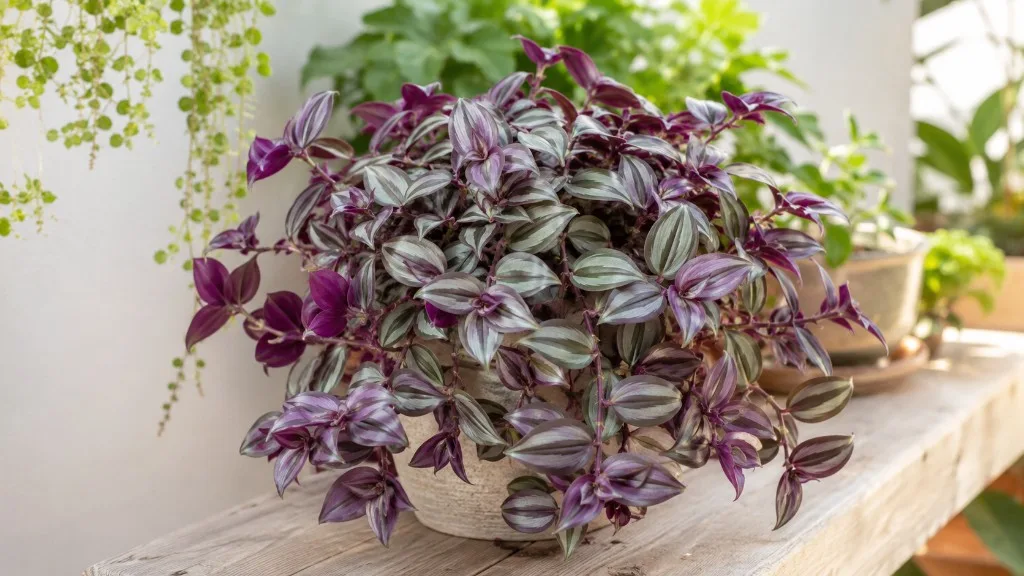
Tradescantia zebrina is a familiar zebra plant: its leaves usually show silvery bands above purple undersides, and its soft stems trail or root at nodes. Give it bright indoor light for good color and compact growth. The University of Wisconsin–Madison Extension profile of T. zebrina notes that low light can reduce color and leave stems bare near the pot, while intense sun in hot climates can wash out the pattern or scorch foliage.
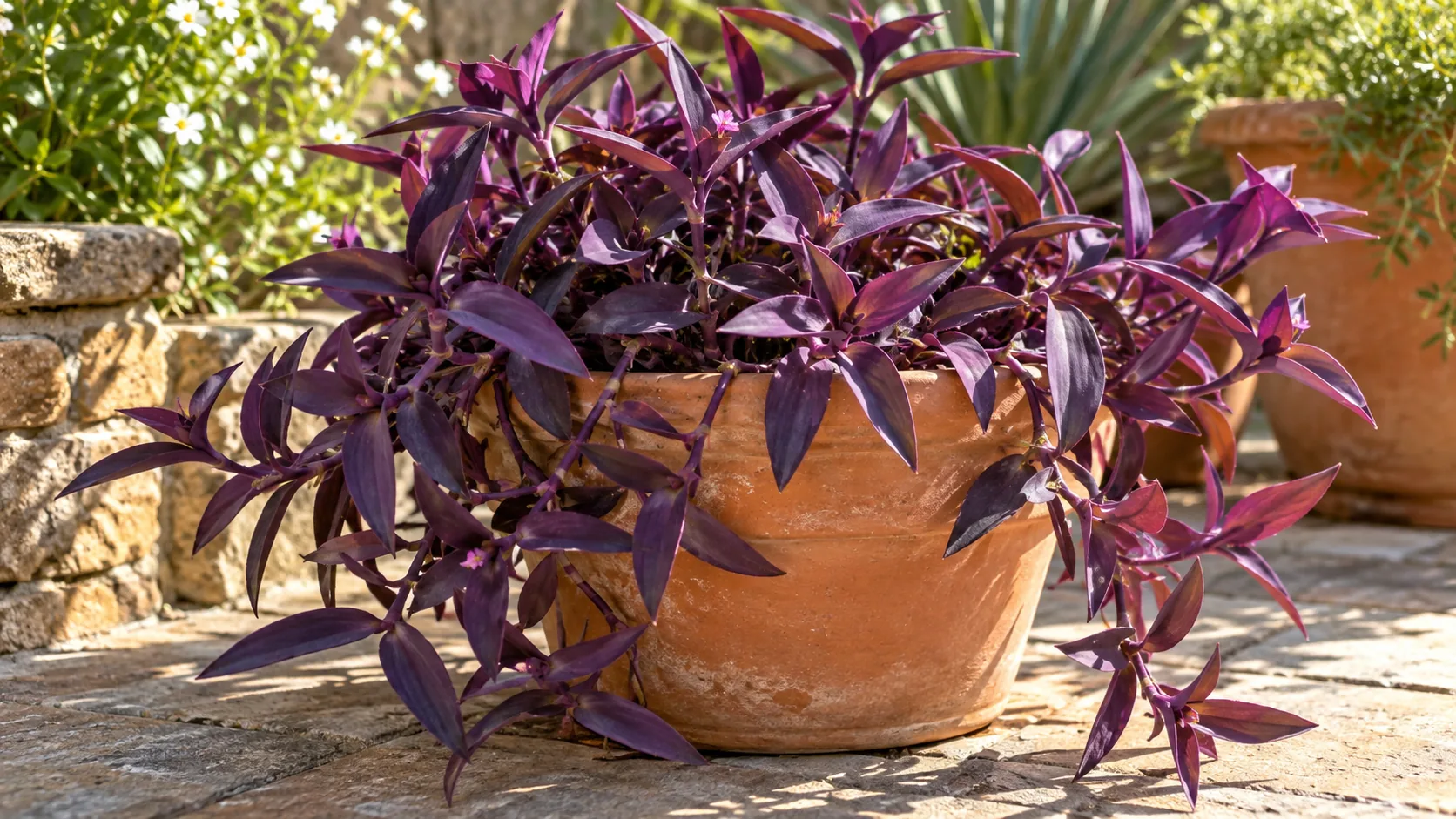
Tradescantia fluminensis, often sold as small-leaf spiderwort or inch plant, has smaller, mostly green oval leaves, sometimes with cream variegation. NC State’s species profile describes it as preferring bright, indirect light and moist but well-drained mix; outdoor stems can root at their nodes and become invasive in some regions. Tradescantia pallida, or Purple Heart, has longer, pointed leaves and more succulent-looking stems. The RHS profile for T. pallida lists it for full sun or partial shade outdoors, but its indoor cultivation advice calls for bright filtered light and warns that direct sun can scorch leaves. Let acclimation and the plant’s response guide any increase in sun.
White velvet (T. sillamontana) has folded leaves covered in fine, pale hairs and a more upright-to-trailing shape. The RHS profile for white velvet advises bright filtered light under glass and sparing winter watering. That distinct species profile is a cue to avoid treating it like a soft, thirsty T. fluminensis. When species identification is uncertain, use a conservative middle ground—bright filtered light, a draining pot, and soil checks before watering—then observe new growth.
Cultivar Names Describe More Than One Kind of Difference
Cultivars such as ‘Nanouk’ are selected for foliage pattern, leaf size, color, or growth habit, not necessarily because they need a completely different care routine. You may see ‘Nanouk’ labels paired with different species names across plant retailers and horticulture pages. Keep the original tag if you have it; it can be useful when comparing advice or asking for help. A broad pink, white, and green pattern may be a cultivar trait, while faded color across new leaves may signal that the plant needs brighter light.
There is a real naming wrinkle: the Wisconsin Extension article groups ‘Nanouk’ with T. fluminensis varieties, while Gardeners’ World calls it T. cerinthoides ‘Nanouk’. Because horticulture sources do not agree on the species label, retain the plant’s own tag and treat the cultivar name as useful information instead of guessing from a broad common name.
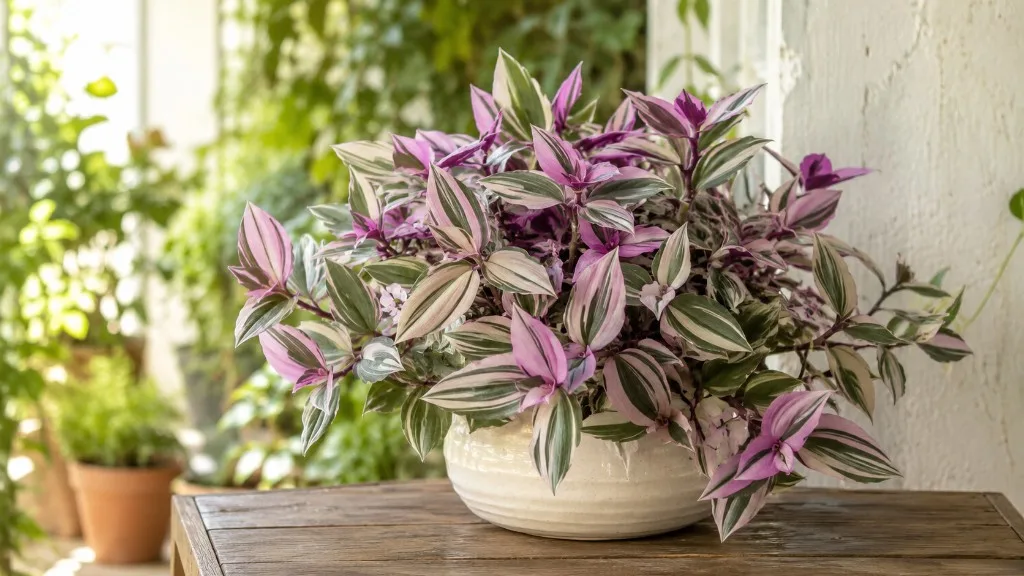
Start a variegated cultivar in bright, indirect light. Its paler leaf areas contain less chlorophyll than green tissue, so a dim location can make growth sparse; however, moving it directly into harsh midday sun can cause pale or scorched patches. Change one condition at a time and judge the next few weeks of growth, not only the older leaves. Guidance for Purple Heart differs by setting: the RHS favors bright filtered light indoors to avoid scorch, while Epic Gardening’s species profile recommends stronger sun to deepen purple color, especially outdoors. Start with filtered light indoors and acclimate gradually if you want to test a brighter spot.
Give Spiderwort Bright, Filtered Light
A bright window with filtered or indirect light is a reliable starting point for many trailing Tradescantia. Place the pot near an east-facing window or a little back from a brighter south- or west-facing one, then watch the leaves and stem spacing. A few hours of gentle morning sun can work for some plants, but the same exposure may be too intense in a hot climate or behind glass. The University of Wisconsin–Madison Extension profile notes that light can affect T. zebrina color differently by region; stronger light does not mean that every species should sit in direct sun all day.
If your plant is several feet from a window, shaded by a deep overhang, or lit mostly by a dim room, it may gradually lose its bright pattern and shed lower leaves. Turn the pot periodically so growth stays balanced. When moving a plant outdoors for summer, start in shade and increase exposure gradually over a week or two; sudden sun is a common cause of scorch. Bring tender tropical species back inside before cold weather arrives in your area.
Water When the Potting Mix Begins to Dry
Don’t water on a fixed weekly schedule. Check the mix with a finger or wooden stick; when the top inch or two is dry for a typical T. zebrina, water thoroughly until excess drains from the bottom. Empty the saucer after the pot has finished draining. The BBC Gardeners’ World Tradescantia guide also ties watering to the upper layer of compost drying and recommends reducing water in winter.
Use the plant’s species and growth conditions to fine-tune that cue. T. fluminensis generally prefers a more evenly moist—but never waterlogged—mix, while more succulent types such as T. pallida and T. sillamontana can be allowed to dry a little further between waterings. A small pot in a warm, bright room dries faster than a large pot in winter light. If the mix is still damp below the surface, wait and check again instead of adding a splash because the top looks dry.
Repeatedly wet soil deprives roots of air and can lead to root or stem rot. On the other hand, a very dry pot may become hard to rewet, and its leaves can lose firmness. Watering deeply and then letting the mix partially dry gives roots a clearer wet–dry cycle than frequent small sips. If the plant wilts, check both soil moisture and drainage before deciding which direction to adjust.
Use a Draining Mix and a Pot With Open Drainage
A standard indoor potting mix can work if it drains freely and does not pack into a soggy block. Use a container with at least one drainage hole; a decorative cachepot is fine if you remove the nursery pot for watering and pour away collected water. For Purple Heart or white velvet, a little extra coarse material such as perlite can help excess water leave the root zone, but the plant should not be pushed into an excessively dry cactus mix if its leaves are still thin and soft.
Repot when roots crowd the drainage holes, the mix collapses or dries unusually fast, or the plant becomes unstable—not simply because a calendar year has passed. Move up only one pot size so the new mix does not stay wet around a small root system. After repotting, water once to settle the mix, let it drain, and resume checking soil before watering again.
Keep the Plant Warm and Away From Cold Drafts
The tender trailing species commonly kept as houseplants grow best in a warm room without cold drafts from a door, air conditioner, or winter window. Gardeners’ World gives a general indoor range of 18–24°C (about 64–75°F) for Tradescantia; that is a practical comfort zone, not a guarantee that every species or cultivar tolerates the same extremes. Avoid chilling wet soil or leaving the plant outdoors when frost is possible.
Average household humidity is often adequate. A humid room may benefit a plant whose leaf edges keep drying, but brown tips are not proof of low humidity by themselves. First check watering, drainage, direct sun, and whether the plant sits close to a hot vent. Misting is brief and does little to maintain stable humidity; if dry air is truly the issue, group plants or use a clean humidifier and keep good air movement around dense growth.
Feed Lightly While It Is Actively Growing
A Tradescantia pushing new leaves in spring and summer can use a modest amount of houseplant fertilizer, but heavy feeding is rarely a shortcut to fuller growth. Follow the product label and use a conservative rate; too much fertilizer can leave salts in the mix and stress roots. Reduce or pause feeding when growth slows in the darker, cooler months, and do not feed a plant with saturated soil or damaged roots until it is recovering.
If new leaves are healthy and the stems are growing, there is no need to fertilize more often to chase faster growth. Adequate light, timely pruning, and a pot with good drainage matter more. If growth stalls despite those basics, check for root crowding, cold, or pests before adding nutrients.
Prune Leggy Stems to Make the Pot Fuller
Tradescantia grows from nodes along its flexible stems. Pinching or cutting just above a leaf joint encourages branching below the cut, while the removed tip can become a cutting. Use clean scissors and trim the longest bare or damaged sections first; taking a few stems at a time preserves some foliage while the plant adjusts. Wisconsin Extension notes that T. zebrina tolerates pruning and that cut stems can be reused for propagation.
If the plant is mostly bare near the pot, simply shortening the ends may not fill the center. Take several healthy tips and root them, then plant the new starts around the pot’s edge so growth fills the gaps. Rotate the container every few weeks to even out light exposure. Wear gloves if you have sensitive skin: sap from some Tradescantia can cause irritation, and wash hands after pruning.
Propagate Tradescantia From Stem Cuttings
Propagation is a practical way to refresh a sparse plant and keep a favorite cultivar going. Select healthy, non-flowering tips with at least two or three visible nodes, then cut just below a node with clean scissors. Remove leaves from the bottom node or two so no foliage sits underwater or beneath the potting mix. The node is the point that can produce roots; a piece without a node is unlikely to develop into a full plant.
Set the cutting in clean water with a node submerged, or place the node directly into lightly moist, free-draining potting mix. Keep it in bright indirect light and warm conditions. Water roots are easy to watch, but a cutting must later adapt to soil; mix-rooted cuttings skip that transition and may need steadier moisture while establishing. Wisconsin Extension reports that T. zebrina roots readily in water or moist potting soil and does not need rooting hormone.
Once cuttings have several healthy roots, pot them together in a small container or tuck them into the parent pot. Avoid using a pot that is much larger than the combined root mass. Keep the mix lightly moist during establishment, then switch to the same check-before-watering routine as a mature plant. If the cutting begins to rot or leaves soften, remove the affected section and restart with a fresh, firm tip.
Choose Water or Potting Mix for Rooting
Choose water if you want to see root development and can check the jar; choose mix if you want to avoid transferring water-grown roots later. Either route can work for common trailing types, and neither requires rooting hormone under ordinary indoor conditions. Change water if it becomes cloudy, and keep leaves out of the jar so they do not decay. In mix, press a node below the surface and use a light, free-draining medium rather than burying a long section of stem.
For a fuller basket, root several cuttings and plant them around the perimeter rather than waiting for one long stem to branch across the empty space. Keep each cutting’s leaves above the soil and space stems so air can move through them. New growth is a better sign of establishment than a specific number of days; rooting speed depends on temperature, light, and the condition of the cutting.
Diagnose Common Spiderwort Problems
A Tradescantia can look tired for several different reasons, and the visible symptom is a clue rather than a diagnosis. Check the light and soil moisture first, inspect the leaves and stem joints for insects, and then look at the roots if the potting mix stays wet and the stems soften. Change one care condition at a time so you can tell whether the plant responds.
Faded Color and Long Bare Stems Point to Light
When new growth is smaller, paler, or spaced farther apart and the stems stretch toward a window, increase light gradually. A photo of the whole pot and its window position can help you compare new growth after moving it closer. Low light is especially noticeable on the striped foliage of T. zebrina and variegated cultivars; old bare sections may not refill, so trim them and root the healthy tips after correcting the placement.
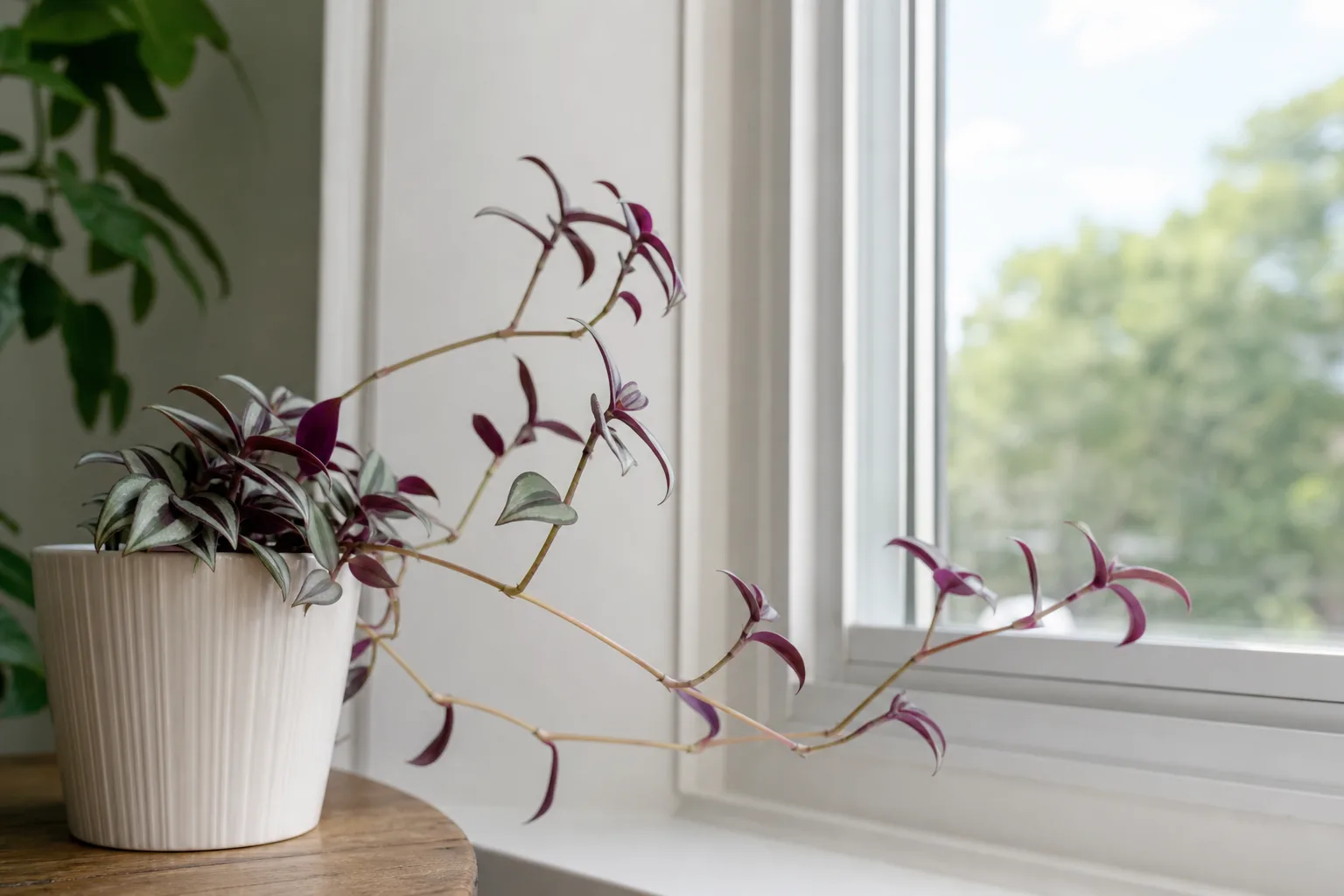
Do not respond by placing the plant in direct afternoon sun all at once. Brown, bleached patches on the window-facing side after a move suggest light scorch, not a need for even more exposure. Back the plant away from the glass and let it adjust before trying a smaller increase. Purple Heart can usually handle brighter conditions than many striped trailing types, but it too should be acclimated indoors or outdoors.
Yellow Leaves, Brown Tips, and Limp Stems Need Different Checks
One or two older leaves yellowing near the base can be normal as a trailing stem grows, but widespread yellowing calls for a soil check. If the mix is wet for days, the pot has no drainage, or stems are soft at the soil line, address excess moisture and inspect for rot. If the mix is dry and compacted and the plant perks up after a thorough watering, underwatering may be involved. A wilted plant in already-wet soil should not receive more water until you understand why roots are not taking it up.
Brown tips can follow dry soil, low humidity, strong direct sun, or accumulated salts. Check placement and watering before adding a humidifier or trimming every leaf. Remove only fully dead tissue with clean scissors; a small brown edge does not always mean the whole plant is failing. If browning spreads rapidly or leaves develop spots, isolate the plant and seek a more specific diagnosis rather than applying several products at once.
Inspect for Mites, Mealybugs, Aphids, and Thrips
Look along leaf undersides, new growth, and stem joints for fine webbing, cottony clusters, sticky residue, tiny moving insects, or silvery scarring. The RHS lists spider mites, mealybugs, aphids, and thrips among pests that can affect Tradescantia pallida; Gardeners’ World also notes these pests on houseplant Tradescantia. Isolate an affected plant while you inspect nearby plants, and rinse or wipe pests from a small infestation before choosing a treatment.
Repeat the inspection after a few days because eggs and hidden insects may remain. If you use an insecticidal soap or other plant-protection product, choose one whose label covers indoor ornamental plants and follow every direction; test a small section first because leaf surfaces vary by species and cultivar. Avoid coating a plant in direct sun or mixing home remedies. For persistent or spreading damage, identify the pest before escalating treatment.
Protect Pets and Sensitive Skin
Do not assume every plant sold as spiderwort is pet-safe. ASPCA Poison Control lists “inch plant” (Tradescantia fluminensis) as toxic to dogs, cats, and horses, with dermatitis as the listed clinical sign. The NC State genus profile says that contact with some species can irritate skin and that ingestion may cause mild mouth or stomach irritation. That is a species-specific caution, not proof that every Tradescantia causes the same reaction.
If you have a pet that chews plants, identify the botanical name and place the plant out of reach; hanging baskets do not help if fallen stems or prunings are accessible. Wear gloves if handling has irritated your skin, and wash sap off promptly. If a pet eats part of the plant or develops symptoms, contact your veterinarian or an animal poison-control service with the plant’s scientific name and a photo. Do not rely on a common label like “inch plant” alone to establish safety.
Move Plants Outdoors Only With a Species-Specific Plan
A warm summer outdoors can improve light and growth, but move a houseplant into shade first and increase exposure over several days. Protect trailing tender species from cold nights and bring them back inside before temperatures fall below what the exact plant can tolerate. T. pallida can take more sun than a typical variegated T. zebrina once acclimated; a white- or pink-patterned cultivar may scorch sooner.
Check local invasive-plant guidance before planting any Tradescantia in the ground. NC State flags T. fluminensis as invasive or weedy in some regions, and purple-heart can also spread aggressively in warm climates. Keep spreading types in a container where appropriate, collect broken stems, and dispose of cuttings securely instead of leaving node-bearing pieces on damp soil or in a natural area.
Conclusion
For most trailing spiderwort houseplants, bright filtered light, a freely draining pot, and watering after the upper mix begins to dry are a solid starting point. The exact species changes the details: T. zebrina needs enough light to keep its stripes and compact shape, T. fluminensis prefers more even moisture and needs outdoor containment in some regions, and Purple Heart can handle brighter light once acclimated. Prune above nodes, root healthy cuttings to refill a sparse pot, and diagnose symptoms before changing several conditions at once. Keep a plant tag for identification, take pet and skin cautions seriously, and let new growth—not a rigid calendar—tell you whether the routine is working.