How to Grow and Care for Rose of Sharon
Learn rose of Sharon care, from sun and soil to pruning, watering, propagation, seed control, cultivar choice, and common bloom problems.
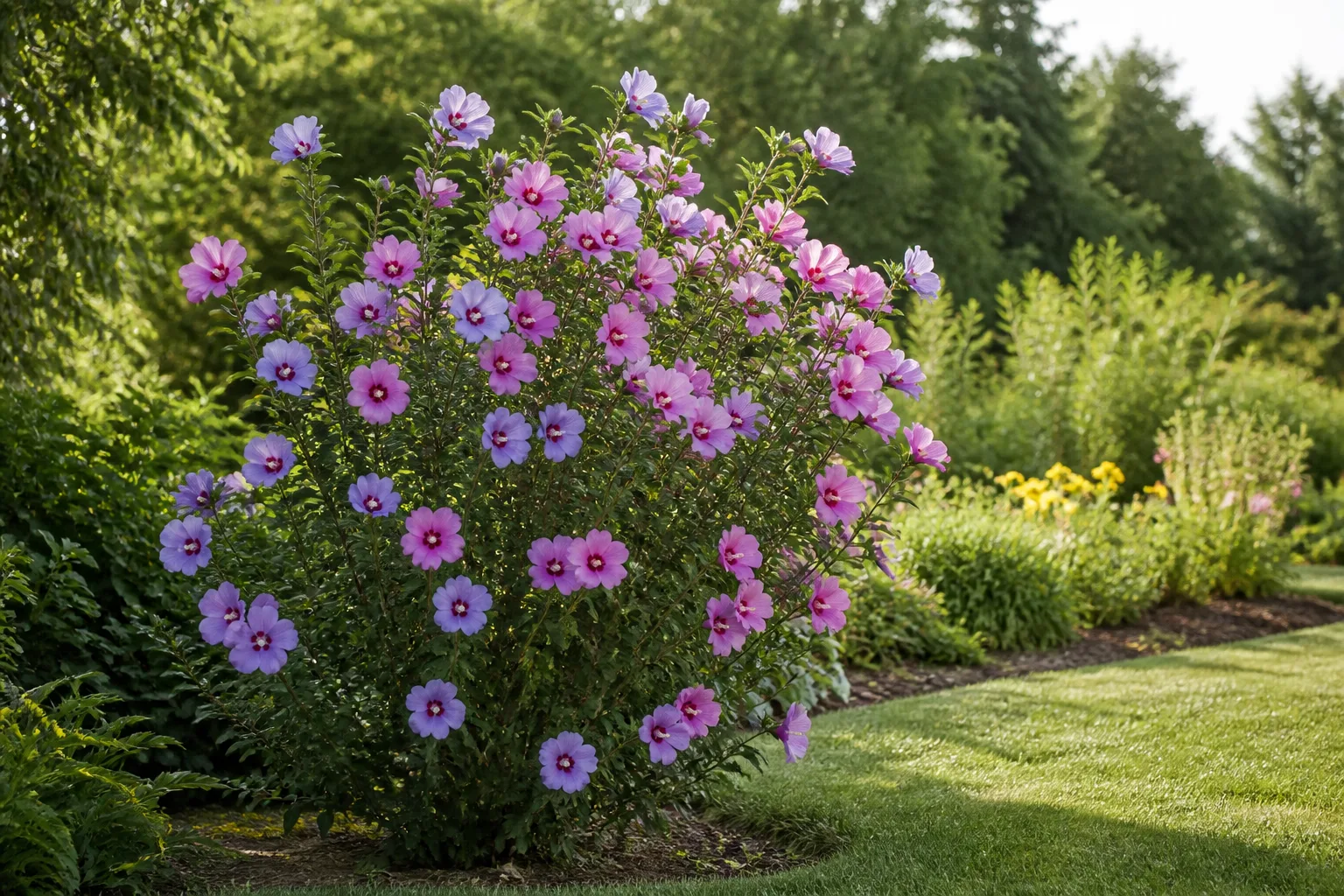
Rose of Sharon (Hibiscus syriacus) is a deciduous shrub for the part of summer when many early bloomers are finished. It brings hibiscus-shaped flowers, upright structure, and late-season color to a sunny border, but it is not a tiny, carefree foundation plant. Mature size, late leaf-out, seed production, and pruning timing determine whether it feels like an asset or a yearly chore.
The reliable formula is simple: give it sun, drainage, room to mature, and steady moisture while it establishes. Then prune with a purpose—shape, renewal, larger flowers, or seed control—rather than cutting at random.
Quick answer: rose of Sharon care at a glance
Plant rose of Sharon in full sun—ideally six or more hours of direct light—in soil that drains after rain but does not become powder-dry for long periods. It tolerates a wide range of soil textures and pH, yet persistent wetness is a more serious problem than imperfect fertility. A standard shrub commonly reaches about 8 to 12 feet tall and 6 to 10 feet wide, so use the cultivar’s mature dimensions when spacing it.
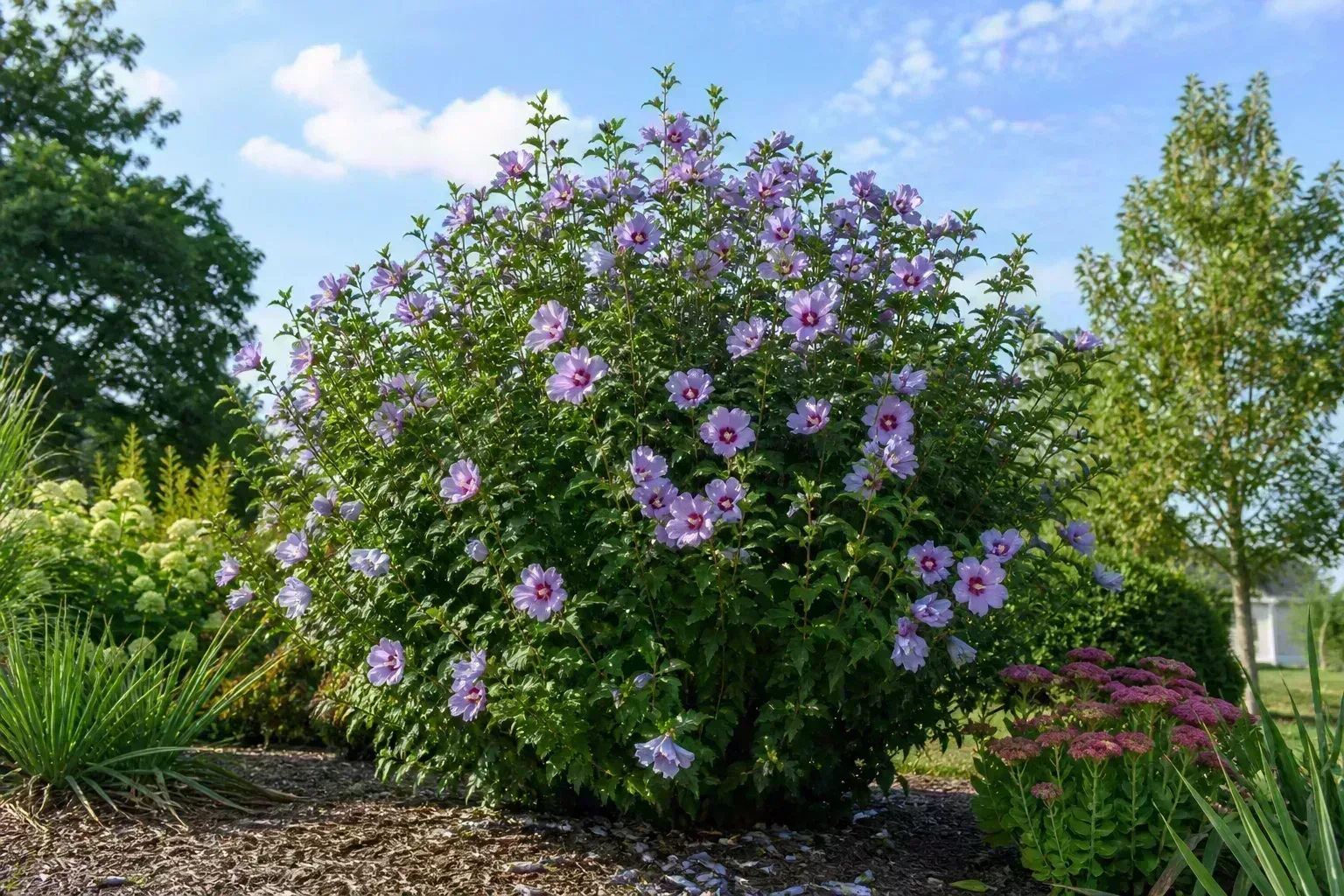
Water a new shrub deeply whenever the upper root zone begins to dry, especially during its first growing season. Once established, it usually needs supplemental water only during prolonged heat or drought. Feed only if a soil test or weak growth suggests a need, prune in late winter or early spring because flowers form on new wood, and remove developing seed capsules if volunteer seedlings are not welcome.
The shrub is generally hardy in USDA Zones 5 through 9, though cultivar, exposure, and winter extremes matter. It often leafs out late in spring; bare branches are not proof of death. NC State Extension describes the plant as rapidly growing, heat tolerant, and adaptable while also flagging its weedy or invasive tendency in some states (NC State Extension).
Know the plant before you plant it
Rose of Sharon belongs to the mallow family, Malvaceae. Its alternate leaves are usually three-lobed and coarsely toothed, and its upright, often vase-shaped framework carries five-petaled flowers in white, pink, lavender, blue, or red-centered combinations. The brown, five-valved capsules can persist into winter, which makes the plant easy to identify after the leaves fall and explains why seedlings can appear the following spring.
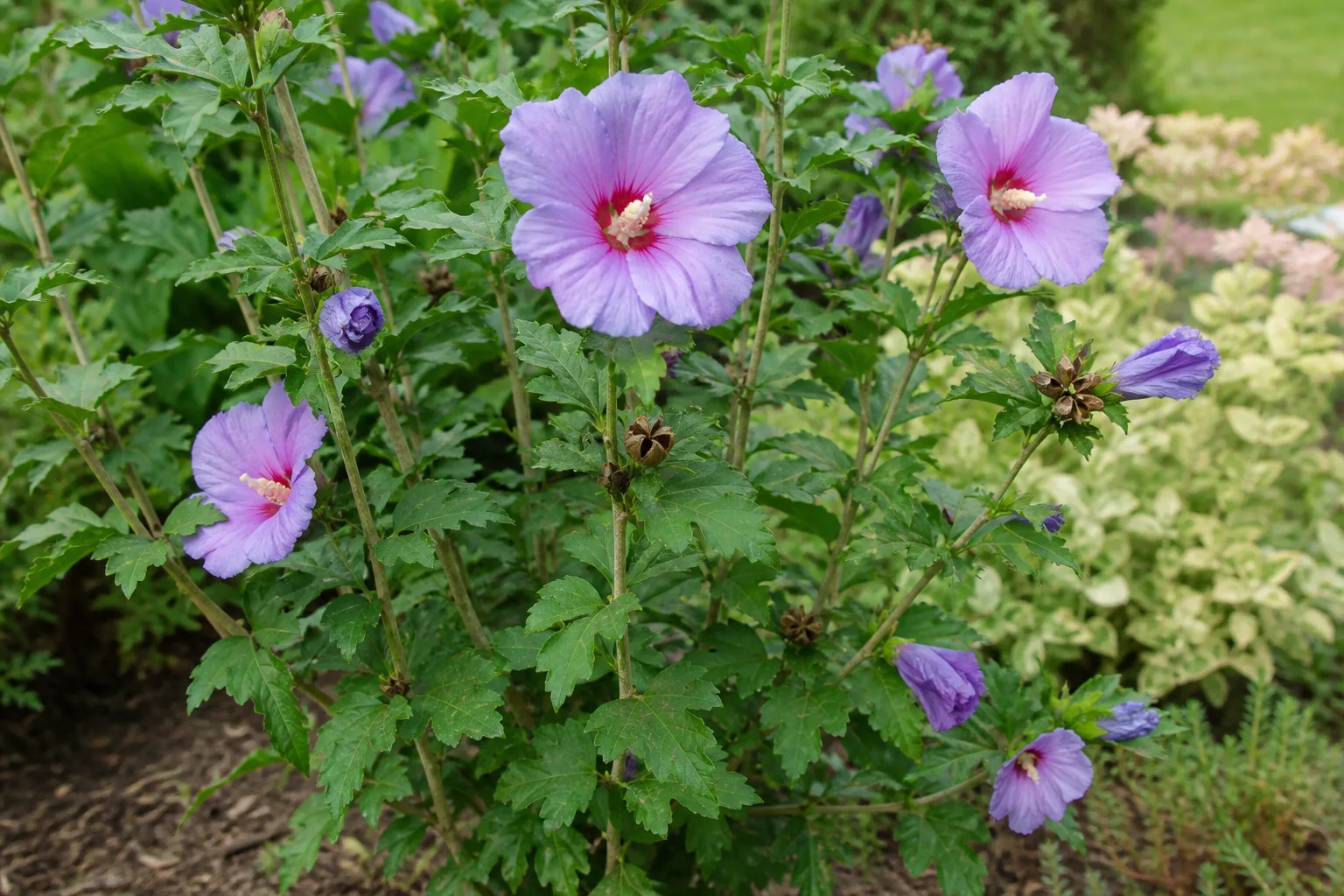
This is a shrub hibiscus, not the same plant as tropical hibiscus (Hibiscus rosa-sinensis) sold for patios and not the same as perennial rose mallow (Hibiscus moscheutos and related hybrids). Proven Winners makes the distinction useful for gardeners: shrub hibiscus is a woody, hardy outdoor plant that flowers abundantly with smaller blooms, while tropical hibiscus is the warm-climate or seasonal container plant many people bring indoors (Proven Winners).
Expect a delayed spring performance and a stronger late-summer show. Purdue University Extension places the main bloom period from late June or early July through August and sometimes September, while UConn lists large flowers in July, August, and September (Purdue University, University of Connecticut Plant Database). Individual flowers are brief, often lasting about a day, but new buds open in succession. Judge the shrub by the number of flowers it produces over time, not by whether yesterday’s bloom is still open.
Choose a cultivar that fits your garden
The species is often sold as though every rose of Sharon will become the same shrub. It will not. Cultivars vary in height, spread, flower form, leaf color, branching, and seed set, so the tag is a design tool, not just a flower-color label.
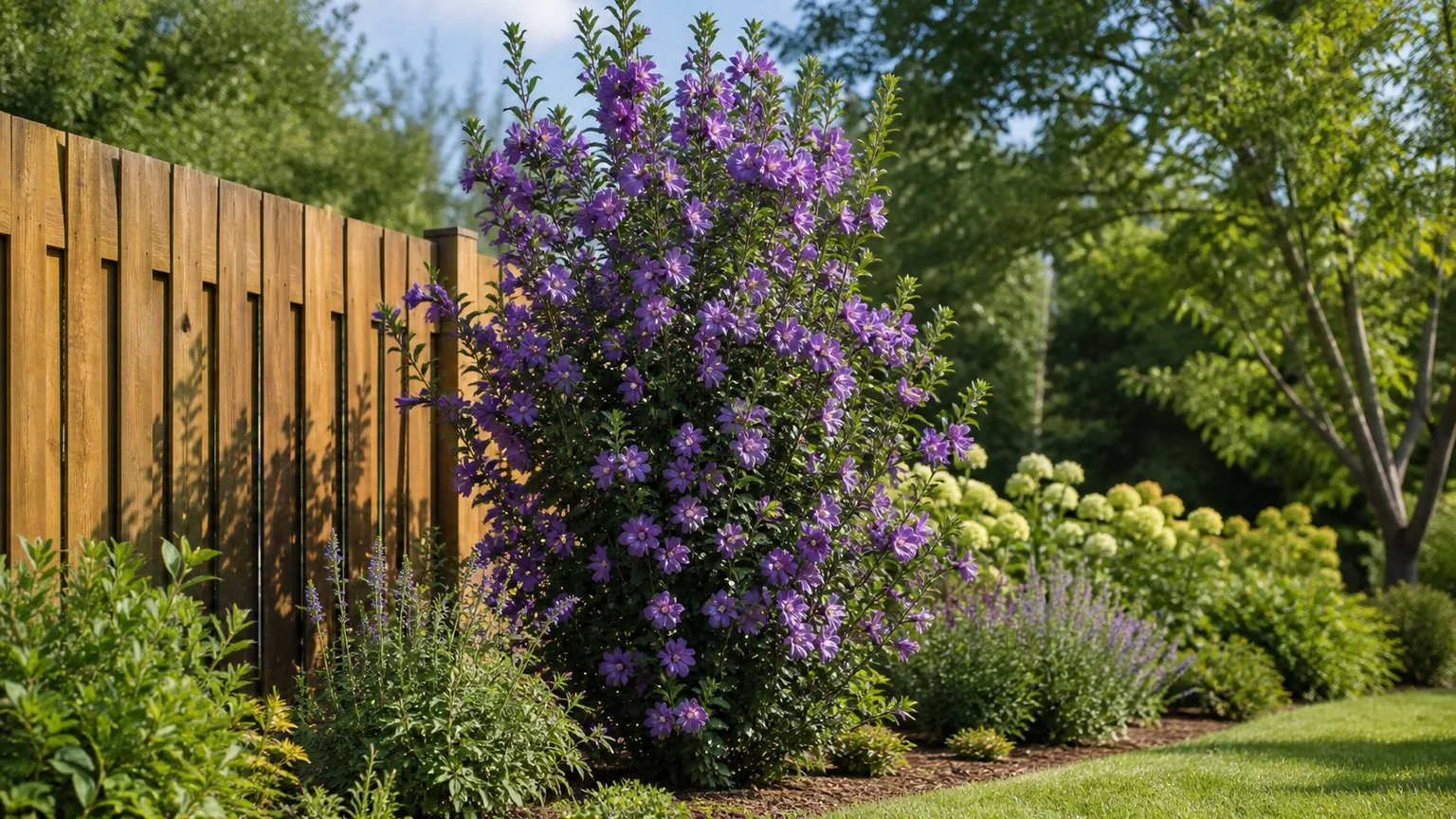
For classic single flowers and a pollinator-friendly display, consider forms such as ‘Blue Bird’, ‘Red Heart’, or ‘Diana’. Double-flowered types such as ‘Helene’, ‘Lavender Chiffon’, or ‘Peppermint Smoothie’ create a fuller look but may have a different habit and bloom response. UConn’s plant database documents the range from narrow, blue-flowered selections to triploid white and lavender introductions, while NC State lists many of the same cultivars with their distinguishing colors and habits (UConn Plant Database, NC State Extension).
Choose for mature width before flower color if the shrub will sit beside a path, window, fence, or foundation. A narrow pillar type may work where a broad, vase-shaped shrub will not. Variegated forms can brighten a border even when they produce fewer or less dominant flowers, while a standard tree form saves ground-level space but needs a more deliberate training and staking plan during establishment.
Seed set deserves its own check. Some modern selections are marketed as producing little or no viable seed, but low seed production is not the same as a universal guarantee. UConn notes that some triploid introductions set little fruit yet also records observations that one can produce more seed than expected. If seedlings would be a problem in your area, confirm the exact cultivar, ask your local extension service about regional status, and plan to remove capsules even if the tag uses words such as “sterile” or “seedless.”
Site selection: sun and spacing come first
Start with the light. Full sun gives rose of Sharon the most flowers, denser branching, and better resistance to a floppy, one-sided shape. It can tolerate partial shade, but shade under a tree or beside a tall building usually means fewer flowers, slower drying after rain, and a shrub that reaches toward the brightest opening.
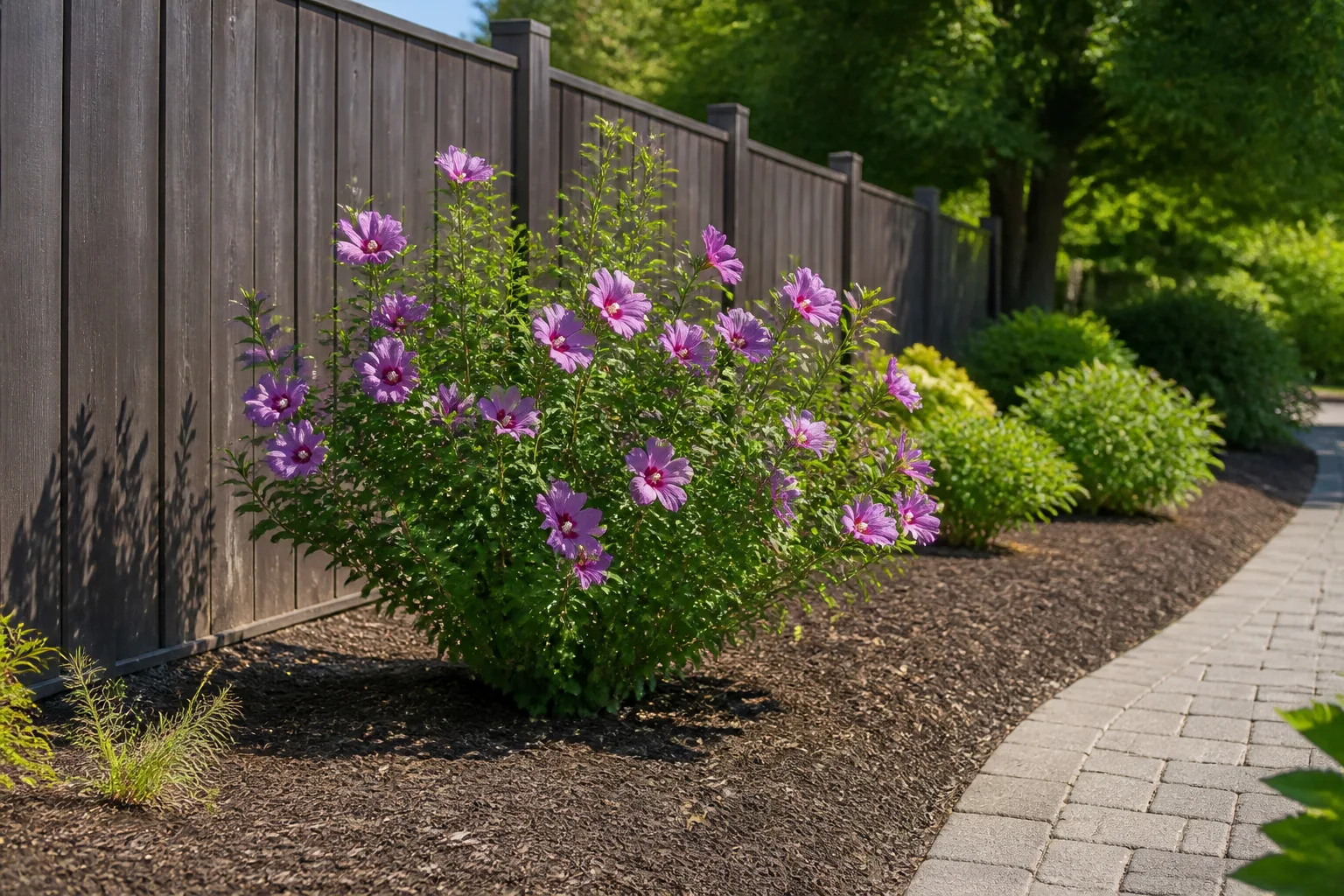
Give the plant enough air and elbow room to arch naturally. NC State lists a typical mature width of 6 to 10 feet and recommends roughly 6 to 12 feet between plants for a hedge; the exact distance should follow the cultivar tag and the look you want (NC State Extension). For a quick screen, closer spacing fills sooner but creates more pruning and airflow work. For specimen planting, use mature width so branches do not press against a wall or walkway.
Avoid a low pocket where water stands after storms, a narrow strip trapped between pavement and a fence, or a location directly under roof runoff. If you garden near a woodland edge, unmanaged lot, or natural area in a state that lists the plant as invasive or weedy, choose a lower-seed cultivar or a different shrub. UConn specifically notes an invasive tendency in Connecticut, and NC State reports invasive concerns in states including Virginia and Kentucky (UConn Plant Database, NC State Extension).
Planting rose of Sharon step by step
Spring is the easiest planting window in cold-winter climates because the shrub has a full season to establish before severe cold. Early fall can work where the ground remains workable for weeks, but avoid planting so late that roots enter frozen or waterlogged soil. Container-grown plants are more forgiving than recently dug bare-root material because the root ball is less disturbed.
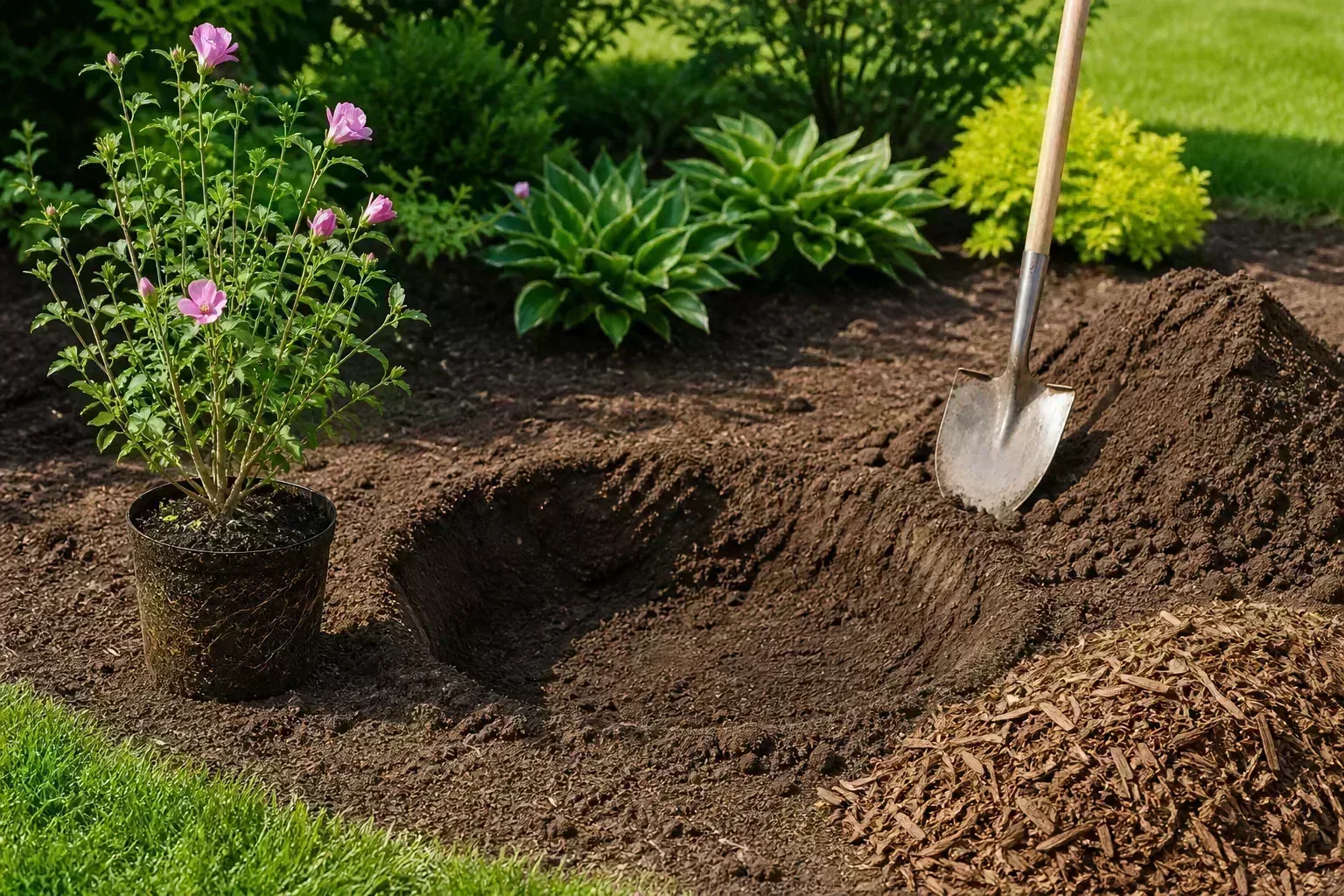
Before digging, water the nursery plant thoroughly and clear grass from the planting circle. Dig a hole no deeper than the root ball and about twice as wide. A wide hole loosens the soil where new roots need to travel; a deep hole can leave the root flare below grade, where settling water and low oxygen cause problems.
Slide the shrub out without pulling on the stems. If circling roots are visible, tease a few loose with your fingers or make shallow vertical cuts on the outside of the root ball. Set the plant so the top of the root ball is level with, or slightly above, the surrounding soil. Backfill with the excavated soil unless it is extremely compacted or contaminated; a pocket of rich amended soil can encourage roots to stay in the hole instead of moving into the surrounding ground.
Water slowly until the entire root ball and surrounding soil are wet. Add a 2- to 3-inch layer of organic mulch over the root zone, keeping it several inches away from the stems. Mulch should moderate moisture and temperature, not form a wet collar around the trunk. Continue checking the soil rather than relying on a calendar, because a rainy week and a hot, windy week demand different care.
Soil and drainage: average is fine, standing water is not
Rose of Sharon is adaptable. It can grow in loam, sand, clay, and alkaline conditions, and both Illinois Extension and the RHS describe it as tolerant of several soil types when drainage is adequate (University of Illinois Extension, Royal Horticultural Society). “Tolerant” does not mean that every site performs equally well. A shrub in compacted clay may survive yet grow slowly, while one in loose, fertile soil may grow too lushly and need more shaping.
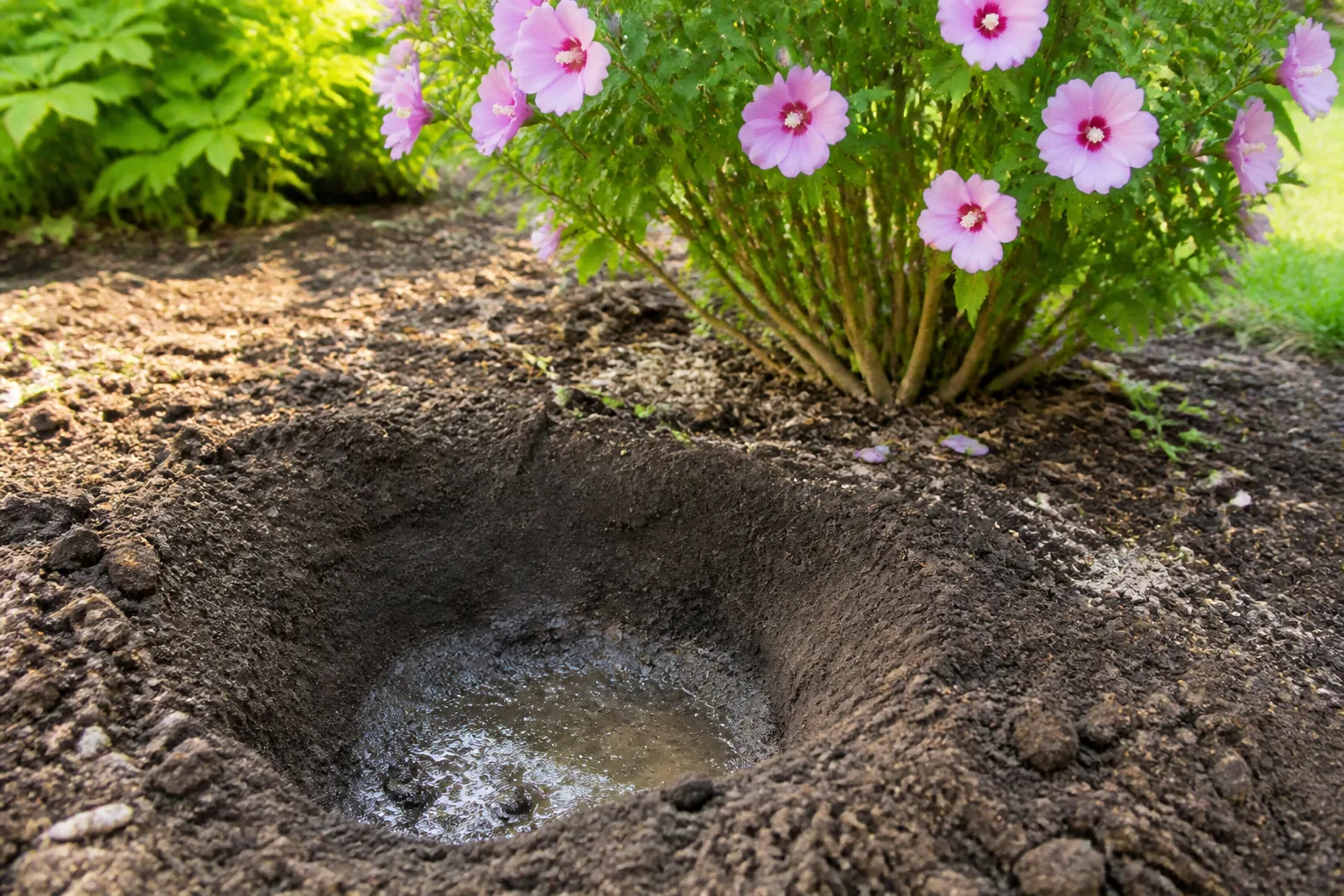
Test drainage before planting by filling the hole with water and watching how quickly it disappears. If water remains for much of a day after ordinary rain, solve the site problem with a raised bed, a different planting location, or a drainage correction that does not create a soggy basin around the roots. Do not put gravel in the bottom of a shallow hole and expect it to fix a perched water table.
Watering from planting through establishment
For the first growing season, water deeply enough to moisten the root ball and the surrounding soil, then wait until the top few inches begin to dry. In hot, sandy, or windy sites that may mean more frequent watering; in clay or rainy weather it may mean waiting longer. A short sprinkle that wets only the mulch encourages shallow roots and does not protect a new shrub during a heat wave.
After establishment, rose of Sharon handles dry spells better than a new planting. That is a reason to reduce irrigation gradually, not a reason to let the root zone become bone-dry every week. Water slowly at the drip line during prolonged drought, especially while flower buds are forming. Consistent moisture also matters because Purdue identifies both too little and too much moisture as possible contributors to bud drop (Purdue University).
Temperature, hardiness, and late leaf-out
Rose of Sharon is a warm-season shrub that tolerates winter cold better than tropical hibiscus. NC State lists it across Zones 5a to 9b, while the RHS describes an upright deciduous shrub that can reach 2.5 to 4 meters in height and spread depending on conditions (NC State Extension, RHS). Zone labels are a starting point, not a promise: exposed wind, a late freeze, a container root ball, or a warm spell followed by hard cold can change the outcome.
Late leaf-out is one of its defining quirks. In spring, check for swelling buds and scratch a tiny patch of bark on a young twig. Green tissue under the bark and flexible buds indicate life; dry brown tissue all the way to the base suggests dieback. Wait until the shrub’s normal leaf-out window has passed before removing apparently bare stems, and then prune back to living wood rather than cutting the whole plant on sight.
Protect a newly planted shrub from drying winter wind with proper watering before the ground freezes and a reasonable mulch layer over the root zone. Do not wrap it in plastic or pile mulch against the stems.
Fertilizer: feed only when the plant needs it
Healthy, established rose of Sharon usually does not need a complicated feeding program. If the shrub has good leaf color, steady growth, and normal flowers, leave the fertilizer bag alone. Excess nitrogen can push long, soft shoots and foliage at the expense of a balanced shape, and it can make a shrub that already flops even harder to manage.
Top-dress with a thin layer of compost in spring if the soil is poor, or use a slow-release product only when a soil test or a local recommendation supports it. Apply fertilizer to moist soil and follow the product label; do not pile it against the stems. If the shrub is not blooming, inspect light, pruning timing, drought, and bud damage before assuming a missing nutrient is the cause.
Pruning: timing and cut strategy
Rose of Sharon flowers on new wood, meaning the shoots it produces during the current growing season. That makes late winter or early spring, before strong new growth begins, the best time for major pruning. Gardening Know How and Nature Hills both emphasize dormant-season pruning, clean cuts, and the useful distinction between light trimming for many flowers and harder pruning for fewer, larger flowers (Gardening Know How, Nature Hills).
Start by removing dead, broken, diseased, or badly damaged wood. Then remove branches that cross, rub, grow into the center, or make the plant lean. Cut just outside a healthy outward-facing bud or branch junction, leaving no long stub. A sharp bypass pruner works for young stems; loppers or a pruning saw are safer than forcing small shears through thick wood.
Do not shear the shrub into a ball unless that artificial shape is the goal and you accept dense outer growth with poor interior air movement. Selective cuts preserve the natural vase-like form. For a lighter annual trim, shorten wayward stems and thin crowded growth. For larger flowers, shorten more of the previous season’s growth so the shrub produces fewer, stronger flowering shoots. Heavy pruning is not required for survival; it is a design and bloom-size choice.
Shape or rejuvenate without sacrificing the shrub
If an established shrub is too tall, leggy, or crowded, do not remove every large stem at once unless you have accepted a season of reconstruction. A safer renewal approach is to remove about one-quarter to one-third of the oldest or weakest stems at ground level over a dormant season, then repeat the process in later years. This keeps some flowering framework while stimulating new basal shoots.
For a neglected shrub that truly needs a reset, a more severe dormant cut can work because rose of Sharon is vigorous, but expect strong leafy regrowth and a temporarily uneven silhouette. Keep the cuts clean and use the mulch-and-water routine afterward. Avoid heavy pruning in late summer or fall when it may stimulate tender shoots that face winter before they harden. Light removal of dead or hazardous wood is a different matter and can be done when needed.
Deadheading, seed pods, and unwanted spread
Deadheading is optional for flower production because each bloom is short-lived and new buds keep coming. It becomes important when you want to reduce self-seeding. After flowers fade, snip off the developing capsule before it turns brown and splits. Removing only the papery flower is less effective if the ovary has already begun forming a seed pod.
Leave seed capsules on the plant only when you want winter structure or intend to collect seed. Pick up fallen capsules and pull small seedlings while the soil is loose; a six-inch seedling is far easier to remove than a volunteer with a woody crown. Never assume that a cultivar described as low-seed will behave identically in every garden or cross-pollination situation.
Regional status matters. NC State reports rose of Sharon as invasive in some states, and UConn notes an invasive tendency in Connecticut. Check your state invasive-plant list before planting near natural areas, and if the plant is restricted or a spread risk in your location, choose a locally appropriate native shrub instead. This is a planting decision, not a maintenance challenge that every garden should accept.
Propagating from cuttings and seed
Stem cuttings are the best choice when you want a new plant that matches a named cultivar. Take a 4- to 6-inch cutting from a healthy, nonflowering shoot in late spring or summer. Remove the leaves from the lower half, optionally coat the base with rooting hormone, and insert the cutting into a small container of moist, airy soilless mix. Keep the container in bright indirect light, cover it loosely with a clear bag to slow moisture loss, and ventilate it so the cutting does not stay wet and stagnant.
Check the mix every few days. It should be evenly moist, never waterlogged. Gentle resistance when you tug the cutting, followed by new leaf growth, suggests roots are forming; this often takes several weeks and can take longer in cool or low-light conditions. Pot rooted cuttings individually and let them build a strong root system before planting them outdoors. Harden them off gradually rather than moving tender new roots straight into hot sun or a freezing night.
Seed is simple but less predictable. Collect mature capsules after they dry, sow the seed in a sterile, well-drained medium, and keep it warm and evenly moist. Seedlings may differ from the parent in flower color, flower form, size, and seed production, so use seed for experimentation or a broad planting—not for cloning a special cultivar.
Container growing and tree-form training
A dwarf or narrow cultivar can grow in a large container on a patio, but most rose of Sharon shrubs are better in the ground. Choose a pot with drainage holes, use a quality container mix, and move up only one pot size at a time. A container that is too large stays wet longer and makes it harder to balance moisture and oxygen around the roots.
Container plants dry and freeze faster than in-ground shrubs. Check moisture more often in summer, protect the pot from extreme winter exposure, and expect to repot or root-prune as the plant fills the container. Do not treat a container rose of Sharon as a year-round indoor houseplant: shrub hibiscus needs outdoor sun and seasonal dormancy, unlike tropical hibiscus. If an indoor hibiscus is the goal, choose a species sold for that purpose rather than forcing this shrub into a dim room.
Tree-form rose of Sharon is a trained shrub, not a different species. Keep the selected trunk or trunks clear of competing shoots, stake only while necessary, and place the crown where branches have room to spread; a tree form can be more vulnerable to wind than a low multi-stemmed shrub.
Blooming better: buds, flowers, and what is normal
The strongest bloom combination is full sun, reliable moisture during drought, and dormant-season pruning. Avoid late cuts that remove the current season’s flowering shoots, and do not overfertilize in an attempt to force flowers. If the shrub has lush leaves and long, weak stems but few blooms, look first at shade and excess nitrogen.
Some bud drop is normal. Rose of Sharon can form many more buds than open flowers, and heat, heavy rain, and wind can shorten the life of mature blooms. Purdue also notes that stress from too much or too little moisture, excess fertilizer, Botrytis on buds, and thrips can contribute to premature drop (Purdue University).
Use this sequence when buds fall: check soil moisture and drainage, inspect buds for brown decay or fuzzy mold, look for tiny insects or distorted petals, and consider recent weather. If only a few older flowers disappear, do nothing. If unopened buds turn brown and fall across the shrub, improve airflow, keep foliage dry when watering, remove affected debris, and seek a local diagnosis before choosing a treatment.
If there are no flowers at all, confirm that the shrub is alive, that it receives enough direct sun, and that it was not pruned after vigorous spring growth began. A soil test can identify a genuine fertility problem, but adding a high-phosphorus product without evidence can create a new imbalance rather than solve the bloom issue.
Diagnose yellow leaves, browning, and wilt
Treat leaf color as a clue, not a diagnosis. Start at the root zone, then inspect the leaf pattern and the branch tips. A few older leaves yellowing as the season changes is less alarming than a whole canopy turning yellow while the soil stays saturated.
| Symptom | First check | Useful next move |
|---|---|---|
| Lower leaves yellow and soil is wet | Drainage and irrigation frequency | Pause watering, improve drainage, and check roots if decline continues. |
| Leaves yellow in dry, hot soil | Root-zone moisture several inches down | Deeply soak the root zone, then mulch and monitor rather than watering shallowly every day. |
| Leaf edges brown and crispy | Drought, hot wind, salt, or root damage | Correct the stress that is still happening; browned tissue will not turn green again. |
| Whole branch wilts while other branches look fine | Winter injury, canker, or a damaged root section | Scratch-test the branch and prune back to live wood if appropriate. |
| Leaves are distorted or stippled | Aphids, mites, or other sap-feeders | Inspect leaf undersides and new growth before treating. |
Illinois Extension lists drought, drowning or edema, gray mold, powdery mildew, wood rots, leaf spots, cankers, aphids, Japanese beetles, and whitefly among possible problems for this shrub (University of Illinois Extension). That list is useful because it prevents the common mistake of calling every yellow leaf “overwatering.” The pattern, soil condition, weather, and affected plant parts matter.
Pests and diseases: inspect before spraying
Japanese beetles can skeletonize leaves and are easy to notice on a flowering shrub. Handpick visible adults into a container of soapy water or remove the most damaged leaves when practical. Avoid broad, routine insecticide applications that can harm visiting pollinators when a limited, visible pest problem can be managed directly.
Aphids cluster on tender tips, whiteflies flutter when foliage is disturbed, and spider mites cause fine stippling in hot, dry weather. Thrips are harder to spot and may hide in buds. A strong water spray directed at leaf undersides can reduce some soft-bodied pests; repeat inspections are more useful than one dramatic treatment.
Powdery mildew appears as a pale coating, while leaf spots and Botrytis can create dark lesions or rotting buds. Crowded inner branches, overhead watering, shade, and wet foliage that dries slowly all increase disease pressure. Improve spacing and airflow first, remove badly affected material, and dispose of diseased debris rather than composting it unless your compost system reaches reliably hot temperatures.
Use a pesticide only if the pest is identified and the product is labeled for that plant and problem in your location. Follow the label exactly and avoid spraying open flowers when pollinators are active. For recurring or ambiguous symptoms, ask your county extension office or a plant clinic for help.
Seasonal care checklist
Late winter to early spring: Check which stems survived winter, then remove dead and crossing wood before buds break. This is the main window for shaping, renewal pruning, and choosing whether you want more flowers or larger flowers. Refresh mulch without burying the stems.
Spring: Be patient while the shrub leafs out. Once growth begins, water new plantings consistently, watch for basal shoots, and avoid heavy pruning that removes the season’s developing framework. This is also a good time to finish planting and to check that the site still receives enough sun as nearby trees leaf out.
Summer: Water deeply during prolonged dry weather, especially while buds are swelling. Let individual flowers fade naturally unless you are removing capsules, and inspect buds before assuming every drop is disease. Thin crowded growth only when necessary; save major shaping for dormancy.
Fall: Remove seed capsules before they split if spread is a concern, pull volunteer seedlings while young, and keep newly planted shrubs from entering winter drought-stressed. Leave healthy structure in place for winter interest, but remove branches that could break or create a hazard.
Conclusion
Rose of Sharon is at its best when you plan around what it actually is: a large, deciduous, late-blooming shrub hibiscus that wants sun, drainage, and room. Its care is forgiving after establishment, but its self-seeding, late spring start, and vigorous growth deserve attention before the plant goes into the ground.
Choose a cultivar for mature size and seed behavior as well as flower color. Water deeply while it establishes, use fertilizer sparingly, prune in late winter with a clear goal, and diagnose stress from the soil and symptom pattern before reaching for a treatment. Those few decisions turn a bare spring framework into a dependable late-summer display without making the shrub—or its seedlings—the garden’s next problem.