Can a Rusty Pot Kill Your Plant? What Really Matters
A rusty pot is unlikely to kill a plant by itself. Learn how to check drainage, heat, loose rust, and old finishes—and when a liner is the simplest fix.
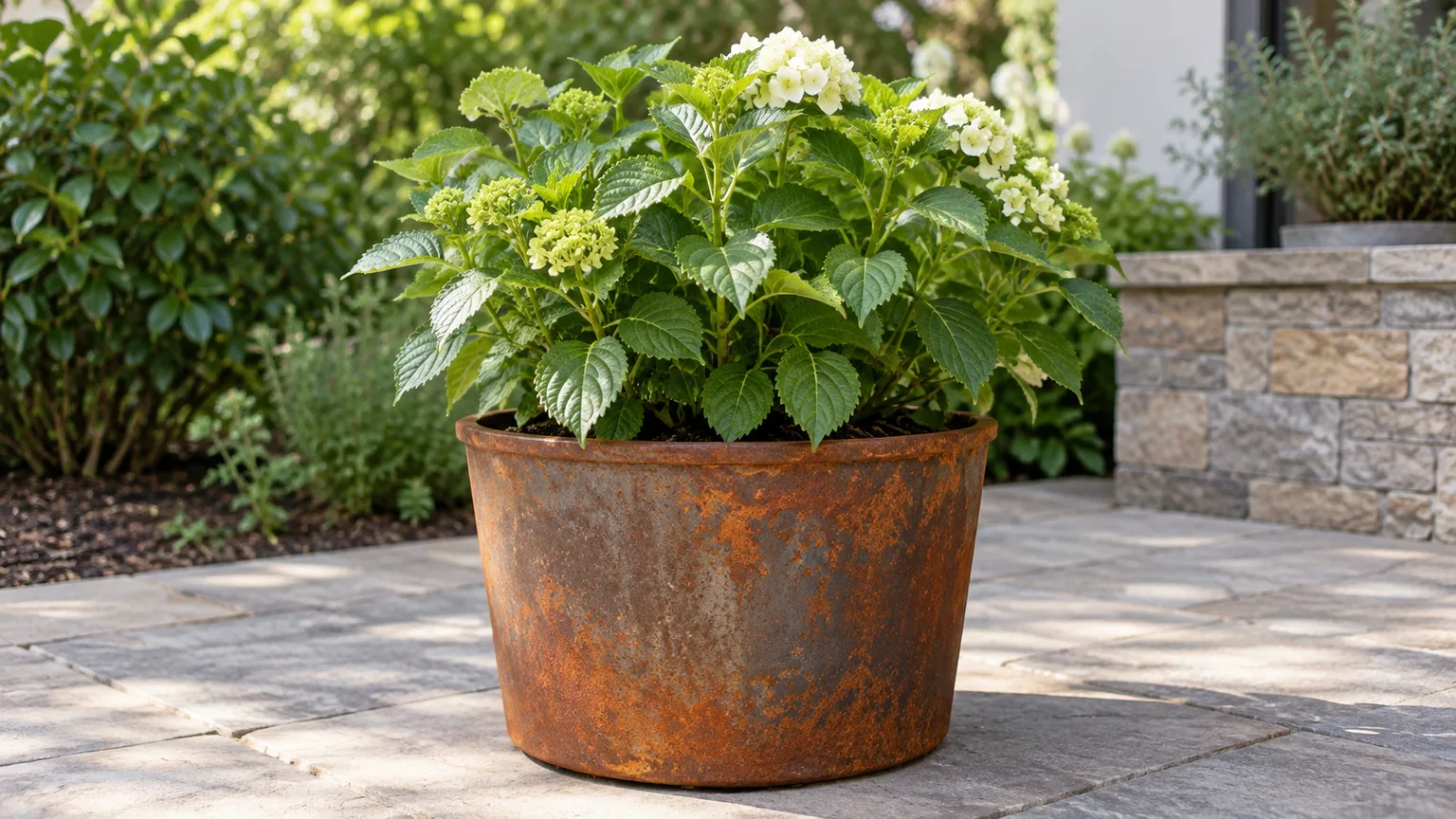
A rusty metal pot is unlikely to kill a plant simply because orange-brown rust is visible on its surface. If the plant is declining, check the container’s drainage, heat exposure, condition, and any unknown paint or coating before blaming the rust.
That answer has limits. A faint patch on the outside of a sturdy pot is different from a container shedding flakes into the root ball, holding water around the roots, or sitting in harsh afternoon sun. The useful question is not just “Is rust bad?” but “What is this pot doing to the plant’s roots?”
The short answer: surface rust alone is unlikely to kill a plant
Rust is a sign that iron-bearing metal has reacted with oxygen and moisture. It is not a diagnosis of plant poisoning, and its color does not tell you how much iron can dissolve into the potting mix or reach the roots. A plant that has grown well for months in a lightly rusted planter does not need an emergency repot just because you noticed an orange mark.
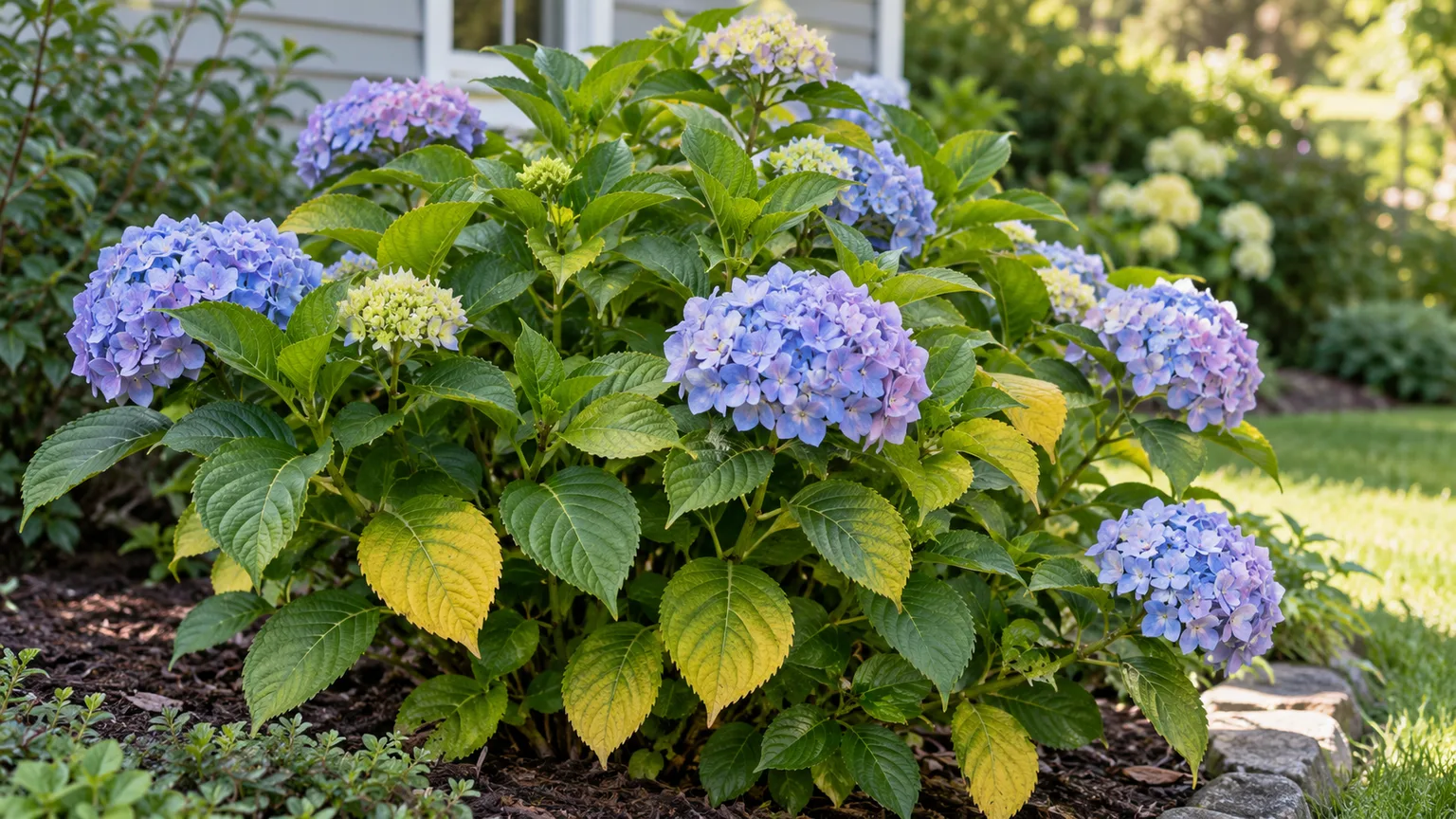
Iron is an essential plant micronutrient, but “contains iron” and “supplies usable iron” are not the same thing. The plant’s ability to take up a nutrient depends on its form and on the chemistry around the roots. West Virginia University Extension explains that soil pH affects nutrient availability, movement, and uptake; iron deficiency can show up as yellowing between the veins in susceptible plants grown under unsuitable conditions. That is a reason to assess the root environment, not to treat rust as a measured fertilizer dose (WVU Extension on soil pH and nutrient uptake).
For an established plant, prioritize direct signs of trouble. Soil that stays wet, roots sitting in runoff, a pot that becomes very hot in sun, or a metal wall that is breaking down can create a more actionable risk than stable surface rust. If none of those problems is present and the plant is growing normally, monitoring is usually more sensible than disturbing it.
What rust means for a plant’s iron supply
The orange coating commonly called rust is a mixture of iron oxides and related corrosion products, not a soluble iron fertilizer with a known concentration. A rusty nail or pot may contain a lot of iron as a material, but that does not mean the plant can absorb it at a useful rate. Gardeners cannot infer iron deficiency from rust, or correct it by adding more rust.
Plants take up iron through root processes that depend on the plant species and the conditions in the growing medium. High root-zone pH can restrict iron uptake even when iron is present. In a controlled study of three woody species, researchers found that root-zone pH changed iron concentrations in young leaves and affected growth and photosynthesis; that experiment illustrates why the chemistry around roots matters, but it did not test rusty pots (Springer study of iron and root-zone pH).
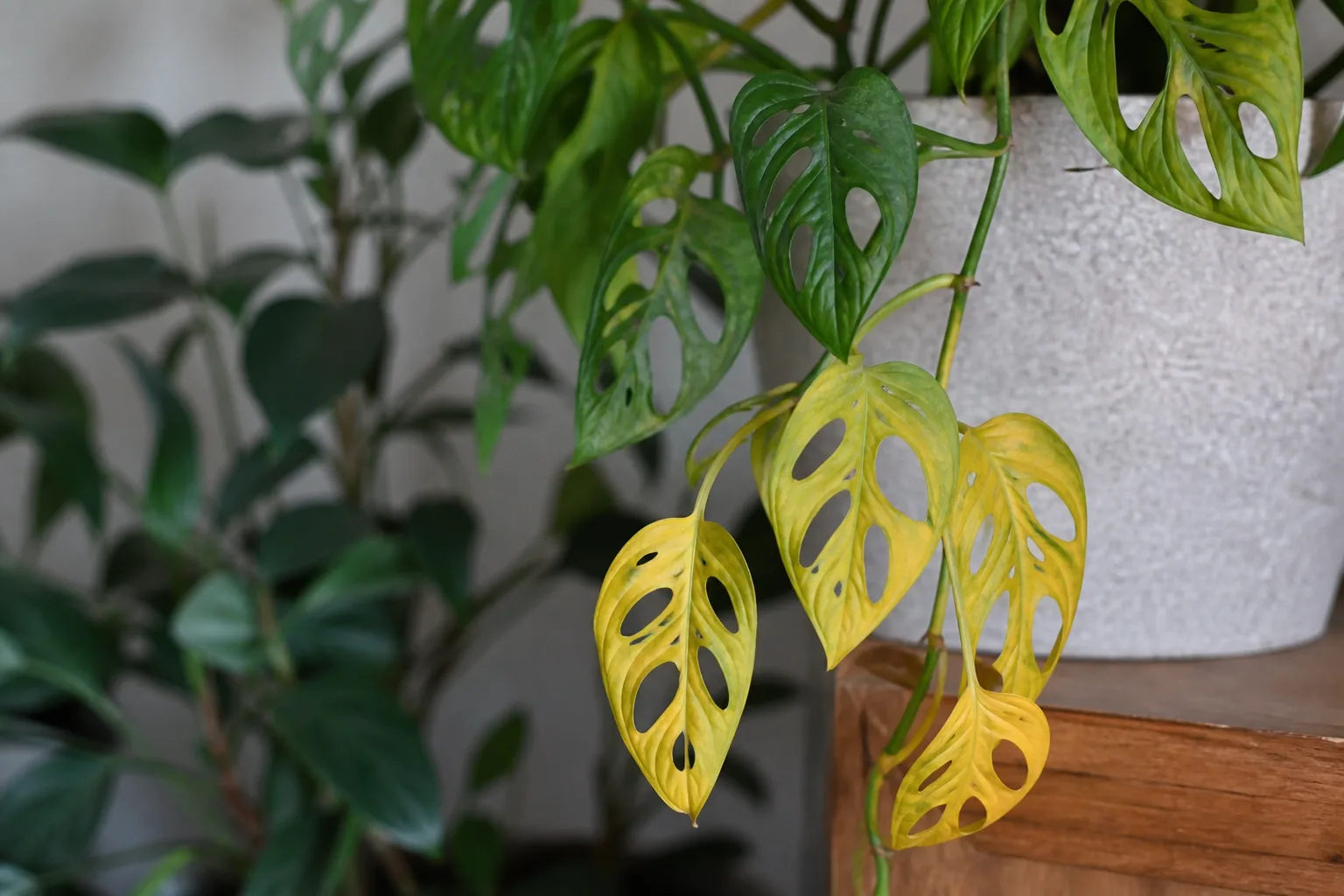
This distinction matters when leaves turn pale or yellow. Iron deficiency often affects young leaves first, while older veins remain greener, but visual symptoms overlap with root damage, watering stress, poor light, and other nutrient issues. A rusty container does not prove an iron problem, and adding nails, iron products, or acidifying materials without identifying the cause can make the growing conditions less predictable.
Birds & Blooms asked horticulture professional Peter Lowe about the old rusty-nail remedy. His advice is that nails do not provide a dependable iron treatment; the article also points out that soil pH can prevent plants from accessing iron already present. That is a better model for thinking about a rusty planter: it may contain iron, but it is not a controlled or reliable way to feed a plant (Birds & Blooms on rusty nails and plant soil).
Does it matter whether rust is inside or outside?
Yes, but location changes the level of concern rather than creating a simple safe-or-dangerous rule. Rust confined to the outside of a sound pot has little direct contact with the growing medium. Rust on the inner wall can contact damp mix, yet its presence still does not reveal the amount or form of metal that reaches the roots.
Look at the pattern. If the pot has a liner, inspect whether the liner is intact and whether its drainage openings remain clear. If the metal itself holds the soil, check whether the rust is a thin, stable film or thick corrosion that lifts, flakes, exposes holes, or makes the base soft; widespread deterioration is a reason to move the plant for structural and practical reasons even if rust toxicity is not the concern.
Also notice whether the bottom of the pot is rusty because it is continually wet. Persistent moisture can accelerate corrosion and may signal that water is trapped under the container or unable to escape. Raise the pot enough for its outlet to drain, empty collected runoff, and check the mix before changing the soil or treating the metal.
Check the pot’s material and history
“Metal pot” can mean bare steel, galvanized steel with a zinc coating, aluminum, painted sheet metal, or a reused can whose earlier use is unknown. The orange color alone cannot identify the base metal or any finish. If a decorative planter came with a manufacturer’s description, check it; if it is an old salvage object, its previous contents and coatings may be impossible to verify.
Before planting directly in it, ask four questions:
- Is the material known, and is the inside free of an unknown or peeling coating?
- Does excess water have a clear route out of the bottom?
- Is the metal still firm, without sharp edges, holes, or loose layers?
- Will the container sit in intense sun where the root zone could heat up?
For ornamental plants, uncertainty about a finish is often easy to avoid: keep the plant in a separate nursery pot and use the metal vessel as an outer cover. For herbs or vegetables, be more conservative with containers of unknown origin or coating. Choose a planter intended for growing food or use a known, intact inner pot so the edible crop’s growing medium is not in direct contact with an unverified surface.
Galvanized steel is protected with a zinc coating, so it is not chemically identical to bare rusty steel. The relevant questions are the product’s intended use, the condition of its coating, and the plant’s contact with the container—not just whether the surface looks metallic. If the coating is badly damaged or the vessel’s history is unknown, a liner is a straightforward precaution that avoids guessing about the material.
The bigger risks are drainage, heat, and condition
When a plant struggles in a metal container, start with the conditions you can observe and correct. A container can look attractive while functioning poorly as a growing pot: it may have no outlet, trap runoff, expose a small root ball to strong sun, or be deteriorating where the soil stays wet. These issues can explain symptoms without requiring a theory about iron poisoning.
No drainage or a liner sitting in water
Many decorative metal planters have no drainage opening because they are designed to hold another pot. If you plant directly in a sealed vessel, water can accumulate at the bottom after repeated watering. The surface may look dry while the lower mix remains saturated, leaving roots short of oxygen and increasing the risk of root decline.
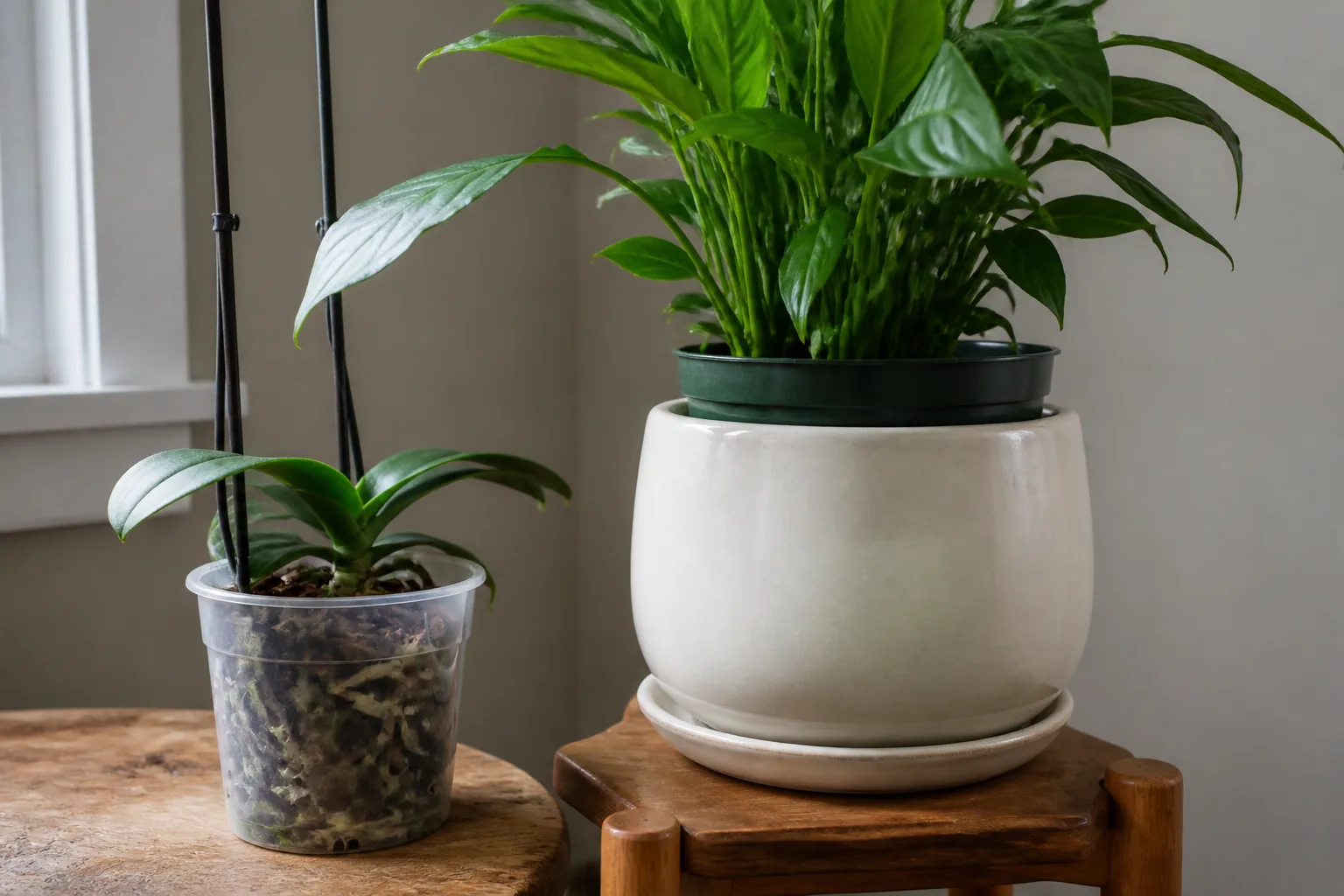
A liner solves that only when it can drain freely. A nursery pot placed inside an outer metal pot still needs open drainage holes, and the outer vessel needs to be emptied after watering rather than becoming a standing reservoir. Do not wedge the liner so tightly that water cannot escape or inspect the drainage holes; a pot perched above collected water is safer than one with its base submerged.
There is some newer evidence that complicates the old blanket rule about gravel layers. A 2025 PLOS ONE experiment found that coarse drainage layers usually reduced or did not change water retention in the tested potting media, but the effect depended on the mix and the study did not grow plants or test whether a layer removes metals. The practical constant is that a drainage layer is not a filter for rust and cannot compensate for a sealed pot with no outlet (PLOS ONE study of drainage layers in containers).
Sun-heated metal around the root ball
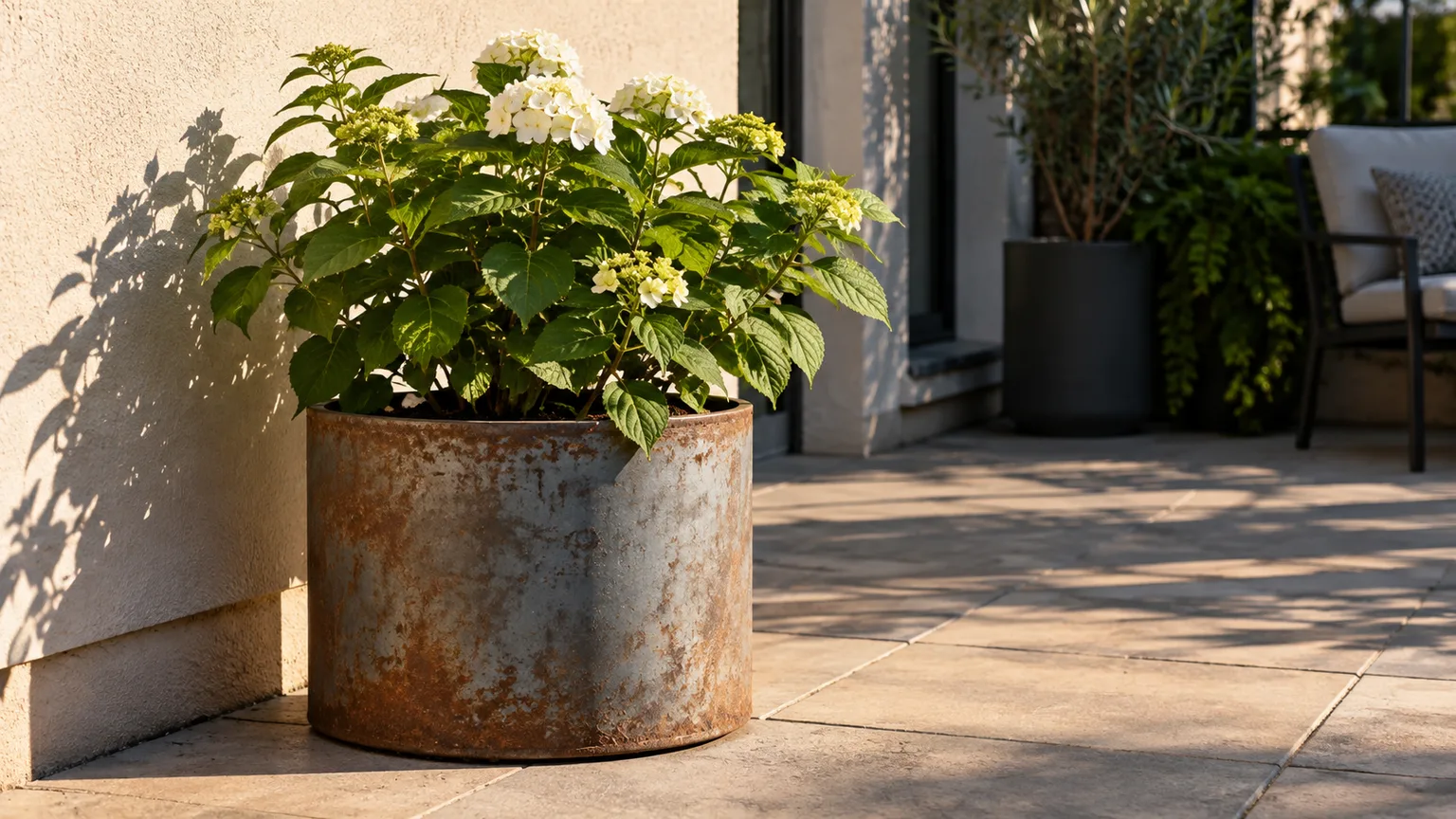
Metal transfers heat readily, but a warm outside wall does not automatically mean the entire root ball is dangerously hot. A large raised bed contains much more soil than a small pot, and the roots near its edge are a smaller share of the total. A compact planter on a west-facing balcony has less soil to buffer temperature and may heat through a larger portion of its root zone.
Epic Gardening’s discussion of metal raised beds describes warmer soil near the exposed edges while the center remained less affected in the author’s Midwestern garden. That practical observation is useful, but it should not be turned into a universal guarantee for small pots, thin sheet metal, hot climates, or a reflective wall that adds radiant heat (Epic Gardening on metal raised beds and heat).
Check the plant and its position during the hottest part of the day, not only in the cool morning. A pot that is baking against a south- or west-facing wall may dry quickly and stress roots even if rust is harmless. Move it into bright afternoon shade, group it with other pots, or use the metal vessel as a cachepot around an insulated nursery pot; then adjust watering based on the mix rather than on the calendar.
Peeling finishes, loose flakes, and sharp edges
Surface rust on bare steel is different from a painted or coated finish that is peeling into the soil. The concern with an old, unknown finish is uncertainty about what the material is and what it was designed to contact. Do not assume that a decorative coating is intended to sit against damp potting mix, especially when it is breaking down.
Loose metal can also damage roots during watering or repotting, and sharp edges can cut the person handling the container. A small flake on the outer wall is not a reason to panic, but extensive scaling, holes, a weak base, or rust that crumbles when touched means the planter may no longer contain wet soil reliably. Use an intact liner or move the plant before the bottom gives way.
For a container with a known, intact finish and a clean history, the issue may be ordinary wear rather than a plant hazard. For a salvaged object with paint, plating, or prior contents you cannot identify, keep it decorative or isolate the root ball in a known nursery pot. The more direct the contact and the less certain the material, the more useful that simple barrier becomes.
How to tell whether the pot is part of the problem
Do not diagnose from one yellow leaf or from rust color alone. First note when the symptoms began and whether they appeared after moving the pot into direct sun, missing a drainage outlet, changing the watering routine, or placing the liner inside the vessel. Timing helps distinguish a sudden environmental stress from a slow decline that may have another cause.
| What you notice | More useful first check | First response |
|---|---|---|
| Wilting while the mix stays wet | Drainage, standing water, and roots | Empty runoff; inspect the root ball if decline continues |
| Wilting on hot afternoons, recovery overnight | Sun exposure and pot-wall heat | Move the pot to afternoon shade and reassess |
| Yellow new leaves with greener veins | Species needs, mix pH, and root condition | Check care and consider a soil or mix test before adding iron |
| Plant is healthy; rust is a stable outer film | Structural condition and drainage | Leave it in place and monitor |
| Flakes, holes, soft base, or peeling coating | Container integrity and material history | Move the plant into a sound liner or another pot |
Next, lift the liner if there is one and feel the mix below the surface. If it is soggy and sour-smelling, inspect for soft, dark roots; if it is dry and pulling away from the pot wall, water stress may be more likely. Avoid pulling a healthy plant out just to look at the roots, since repotting adds disturbance without answering a real question.
If the symptoms resemble iron chlorosis, check the plant’s newest growth and its known growing requirements. Some plants develop interveinal yellowing when the root environment limits iron uptake, but that sign does not prove rust is involved. West Virginia University Extension recommends using a soil test to understand pH before making amendments; for a houseplant, first verify that its mix, water, and care suit the species rather than pouring iron or acidifying products into the pot.
How to use a rusty planter more safely
You usually do not need to throw away a sturdy metal planter with modest surface rust. The lowest-effort solution is to let it serve as an outer decorative shell while a separate growing pot manages the roots, water, and drainage. This setup also makes it easier to inspect the metal and remove runoff.
Use the metal pot as a cachepot
Choose a plastic nursery pot or another known, intact pot with several open drainage holes. Set it inside the metal planter on a low riser or pot feet so its base is not sitting in water that collects at the bottom. The inner pot should lift out without forcing it against sharp or flaky edges.
Water the plant where excess water can drain, then let it finish dripping before returning it to the metal cover. If you water in place, remove the liner afterward, pour away the collected water, and return it only when the outer pot is empty. A saucer can catch drips beneath the metal pot, but it should not become a permanent bath for the roots.
This arrangement is especially useful when the outer vessel has no hole, when the inside is rusty, or when you cannot verify the coating. It does not make a failing pot structurally sound, and it will not prevent the plant from overheating if the inner root ball is still exposed to intense sun. Treat the liner as a contact and drainage barrier, then manage temperature and container condition separately.
Plant directly only when the container passes a short check
Direct planting can be reasonable in a metal pot when the material is known, the interior is sound, and water can drain. Confirm that any drainage holes are large and numerous enough for the pot’s size, and that they will not be blocked by the surface underneath. Use a potting mix suited to the plant and container, not dense garden soil that stays saturated in a small vessel.
Check moisture more often in hot weather because containers can dry at different rates depending on their size, exposure, and plant. A light-colored outer sleeve, a position with afternoon shade, or a larger volume of mix can reduce the stress of a sun-baked site. Do not water just because the metal feels warm; check the root-zone moisture and the plant’s needs.
For edible crops, only plant directly when you know the container is made and finished for that use. If you inherited an old can or found a rusty vessel with unknown paint, plating, or previous contents, use a food-safe growing pot inside it or choose another container. That recommendation is a precaution about unknown materials, not a claim that every rusty planter contaminates food.
Should you remove or seal the rust?
If the only concern is the plant, you generally do not need to scrub off a stable patch of rust. Removing surface corrosion may improve appearance, but it does not correct poor drainage, reduce afternoon heat, identify an unknown coating, or provide nutrients. Decide whether the metal needs repair because it is deteriorating, not because rust is automatically poisoning the soil.
Before cleaning or coating any planter, identify the metal and follow the product maker’s directions for that surface. Keep cleaning residues and coatings away from the potting mix, roots, and edible plant surfaces; do not apply an interior sealant unless its label says it is suitable for the intended contact and use. Let repaired surfaces cure fully before placing a plant inside, and avoid harsh acids or household treatments that can damage metal or leave residues.
If you cannot verify that a coating is appropriate for a planter, leave the container as an outer cachepot instead of painting the inside. A liner gives you a reversible way to keep soil away from the metal without adding another unknown product. If the pot is already flaking or leaking, replacement is more reliable than repeatedly sanding and sealing it.
When it is time to retire the planter
Retire a metal planter when the base is unstable, the wall has holes, sharp edges cannot be made safe, or corrosion is shedding into the soil faster than you can contain it. A liner protects roots from contact, but it cannot prevent a weak vessel from collapsing or spilling a heavy, wet root ball. Move the plant before the container fails, ideally when the mix is slightly moist and easier to handle.
An uncertain industrial container or a vessel with a strong chemical odor, unknown contents, or extensive peeling paint is also a poor candidate for direct planting. It may still work as an outer decorative cover if it is structurally sound and the plant is isolated in a known pot, but do not use an unknown object as the growing container for food. When both the structure and the history are questionable, choosing a different planter is the simple call.
What to do if your plant is already in the pot
If the plant looks healthy and the container is firm, do nothing today beyond checking that water drains and does not remain under the pot. Take a quick photo of the leaves and the inside of the vessel so you can compare changes later. Repotting a thriving plant solely because you noticed exterior rust can cause more disruption than leaving a stable setup alone.
If water is trapped, remove the plant’s inner pot, empty the metal vessel, and let the liner drain. If the metal pot has no opening and the plant was planted directly in it, move the root ball into a pot with working drainage; do not try to correct a sealed container with gravel alone. If rust is inside but the planter is solid, a separate nursery pot is an easy next step when the plant next needs repotting.
If the plant is actively declining, correct the strongest visible problem first. A saturated root ball calls for drainage and watering changes; a plant wilting only during intense sun needs a cooler placement; a failing or unknown-coated vessel calls for isolation or replacement. After the change, give the plant a stable environment and watch new growth—older damaged leaves may not return to their original color even when the cause has been fixed.
Avoid doing several treatments at once. Do not scrape the pot, add fertilizer, acidify the mix, and repot the plant on the same day unless there is an urgent structural problem. Changing one likely cause at a time makes it easier to see whether the plant improves and avoids stacking new stress on already compromised roots.
Why rusty nails are not a reliable plant tonic
The same reasoning applies to burying rusty nails in potting mix. Rust is not a calibrated micronutrient product, and adding a piece of hardware does not tell you whether the plant needs iron or whether its roots can take up what is present. If yellow leaves suggest a nutrient issue, confirm the plant’s care and growing-medium conditions before reaching for a homemade iron remedy.
There are practical downsides too: a nail can injure someone digging in the pot, scratch a root during repotting, or introduce a coating that was never intended for soil contact. Birds & Blooms’ interviewed horticulture professional recommends against the practice and points readers toward identifying the soil problem instead. A rusty pot already in service is not the same as a nail deliberately added to soil, but neither should be treated as a fertilizer strategy.
If iron deficiency is confirmed, use a product formulated for plants and follow its label or a local extension recommendation. The suitable product and dose depend on the plant and the reason iron is unavailable; changing pH without testing can create new problems. A rusty object offers none of that control.
Conclusion
A rusty pot is unlikely to kill a plant just because rust is visible, especially when the corrosion is a stable patch on the outside. Rust does not tell you how much iron is available to roots, and it is not a dependable way to correct yellow leaves.
Check the basics that can harm a container plant sooner: an outlet for excess water, a liner that does not sit in runoff, manageable heat around the root ball, a sound vessel, and a known or isolated finish. Keep a thriving plant in place if those checks pass; use a draining inner pot when they do not. The right response is usually a better container setup, not panic over the color of the metal.