Sunny Window Box Flowers: 5 Ideas That Keep Blooming
Build a sunny window box with flowers that share light and water needs. Get five plant combinations plus practical advice on drainage, heat, and care.
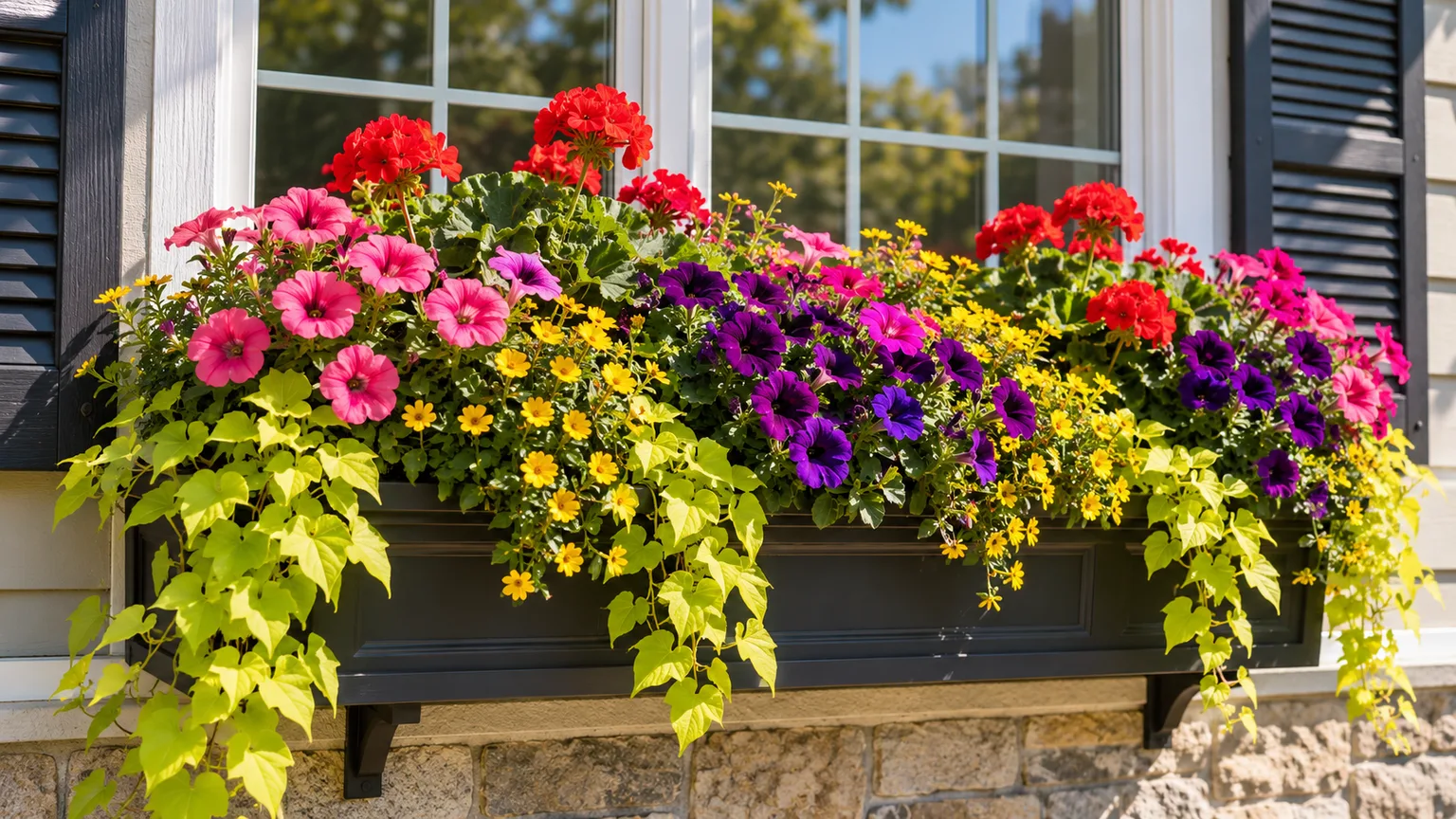
A sunny window box can carry a surprising amount of color, but the plants only look effortless when the box fits the site. A shallow trough against a hot wall dries and heats differently from a deep, shaded balcony planter. Start by observing the exposure and choosing flowers that tolerate the same conditions; then arrange them so the box looks full without forcing every plant to compete for a small root zone.
The combinations below are starting formulas, not rigid shopping lists. Swap cultivars for compact or trailing versions, and follow the mature-width information on nursery labels. A box that is watered easily and drains freely will usually outperform a more elaborate arrangement that is difficult to reach.
Read the Light and Heat at the Window
“Full sun” is a useful first filter, not a complete description of a window. Rutgers Cooperative Extension defines full sun as at least six hours of direct sunlight per day; the hours do not have to be continuous. Count what actually reaches the planter, because a deep eave, nearby tree, balcony above, or reflective glass can change the exposure that a compass direction suggests. A sunny box can receive fewer direct hours than the room behind it, or more intense afternoon light than the garden below.
Heat is separate from light. A west-facing box beside brick, stone, or dark siding can receive hot late-day sun and reflected heat even when the air feels manageable. Wind across an upper-story wall also pulls moisture from leaves and potting mix. If plants will face that combination, select heat-tolerant flowers, use the deepest practical box, and make sure you can water it when needed. Do not expect a “full sun” label by itself to guarantee that a plant will thrive in every hot microclimate.
For a bright but cooler exposure, many classic annuals have a broader range of choices. In a genuinely hot site, prioritize compact plants that tolerate heat and drying between waterings, or use one dominant plant type rather than mixing flowers with conflicting moisture needs. NC State Extension’s container guidance emphasizes that light, water, temperature, air movement, and growing medium all work together; a plant can struggle even when its sun requirement is technically met. (NC State Extension: Plants Grown in Containers; Rutgers Cooperative Extension: Outdoor Container Gardening)
Choose a Box That Can Hold Summer Moisture
The best window box is large enough for roots and moisture, but not so heavy that its brackets, sill, or wall anchors are overloaded. Soil is especially heavy when wet, and mature plants add weight. Follow the planter and mounting hardware instructions, check that the structure is sound, and do not assume a window frame can support a filled box. If you cannot safely install or reach it, a ground-level trough or railing planter is a better choice.
Choose a box with drainage holes and a depth that leaves room for roots below the nursery pots’ root balls. Rutgers recommends leaving roughly three inches of growing medium under the root balls and one to two inches of free space below the rim so watering does not spill over immediately. Treat those as useful design targets rather than a guarantee for every species; deeper soil generally gives flowers more buffer against drying than a very shallow trough. Leave the holes open, and raise the planter slightly if its base sits flat against a surface that could block them.
Use a fresh, lightweight container potting mix, not soil dug from the garden. Garden soil can compact in a box and restrict both drainage and air around roots. A layer of gravel at the bottom does not fix a box without drainage holes; NC State Extension explains that the change in particle size can hold saturated water above the gravel instead. If the box will sit above a path or entry, plan where runoff will go before filling it. (NC State Extension; Rutgers Cooperative Extension)
Material affects the daily routine. Porous containers can lose water quickly; plastic, resin, and other less-porous boxes tend to retain it longer. Dark containers in summer sun can also heat the root zone more than pale ones, so use a light-colored liner or choose a lighter finish when the planter will bake against a wall. None of these materials removes the need to check moisture, but the choice can make the difference between one watering check and repeated emergency watering.
Build a Design with Height, Filler, and Spill
Instead of selecting flowers by color alone, give each one a job. A thriller provides vertical shape or a focal point, a filler creates the main flowering mass, and a spiller softens the front edge. This container-design shorthand is especially useful in a narrow box: a compact upright angelonia or snapdragon can add height, petunias or geraniums can fill the middle, and calibrachoa or sweet potato vine can trail. Not every design needs all three roles; a repeated band of one plant can look more polished than an overcrowded mix.
Match plants by growing conditions before matching them by bloom color. Choose flowers that want similar light, temperature, and moisture, and avoid pairing a fast, sprawling plant with a tiny slow grower that it will swallow. Rutgers Cooperative Extension recommends designing around shared cultural needs and points out that foliage can provide interest between bloom cycles. The design examples in Better Homes & Gardens and Epic Gardening also show how repetition, contrasting foliage, and trailing forms can make a box read as a composition rather than a random collection. (Rutgers Cooperative Extension; Better Homes & Gardens: Window Box Ideas; Epic Gardening: Window Box Flower Ideas)
Five Flowering Window Box Ideas for Sun
Each recipe assumes a box with open drainage and enough space for the chosen cultivars’ mature spread. Plant fewer starts if the label calls for wider spacing or the box is shallow. You can repeat one combination across several windows for a calmer exterior, or vary only the accent color while keeping the same main plants.
Pink and Purple Petunias for a Long-Blooming Cascade
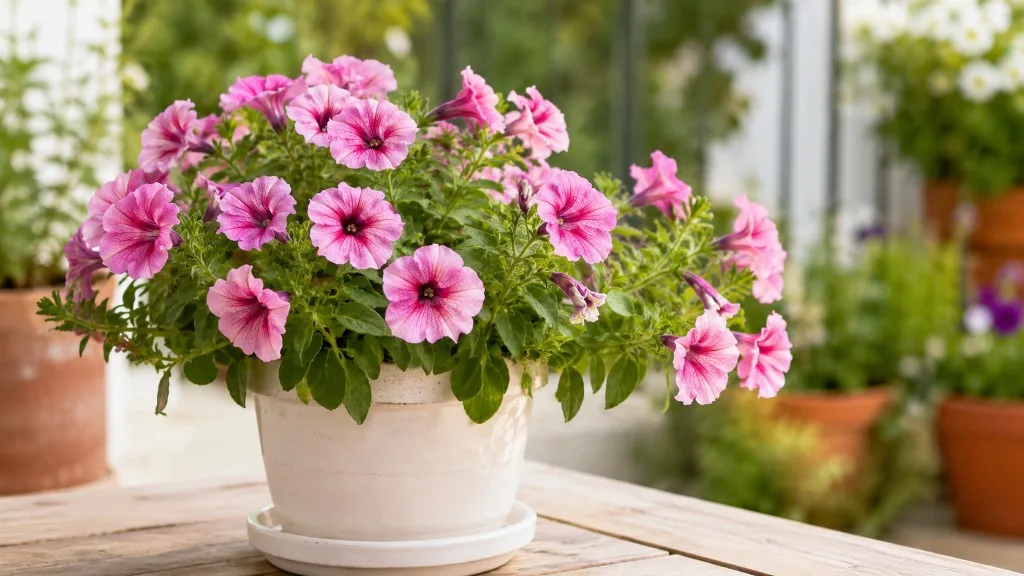
Use trailing petunias as the main color, add a few compact calibrachoa plants near the front, and tuck in one upright accent such as angelonia. Petunia and calibrachoa flowers echo one another, while the upright stems keep the arrangement from becoming a flat mound. Choose a coordinated palette—pink with purple, for example—rather than several unrelated colors if the box is viewed from the street.
This is a strong choice for a box that gets abundant sun and can be checked often. Both trailing plants can grow vigorously, so leave room for air and avoid stuffing every gap at planting; the young starts will fill in. Petunias often benefit from trimming when stems become long or bloom slows, while many modern calibrachoa varieties shed spent flowers without much deadheading. If the site is very hot and humid, choose a cultivar specifically sold for those conditions and watch for fading or leaf problems rather than assuming all petunias handle every summer equally well. Epic Gardening describes petunias as full-sun performers and recommends improved heat- and humidity-tolerant types for warmer southern gardens. (Epic Gardening)
Red Geraniums, Yellow Bidens, and Chartreuse Foliage
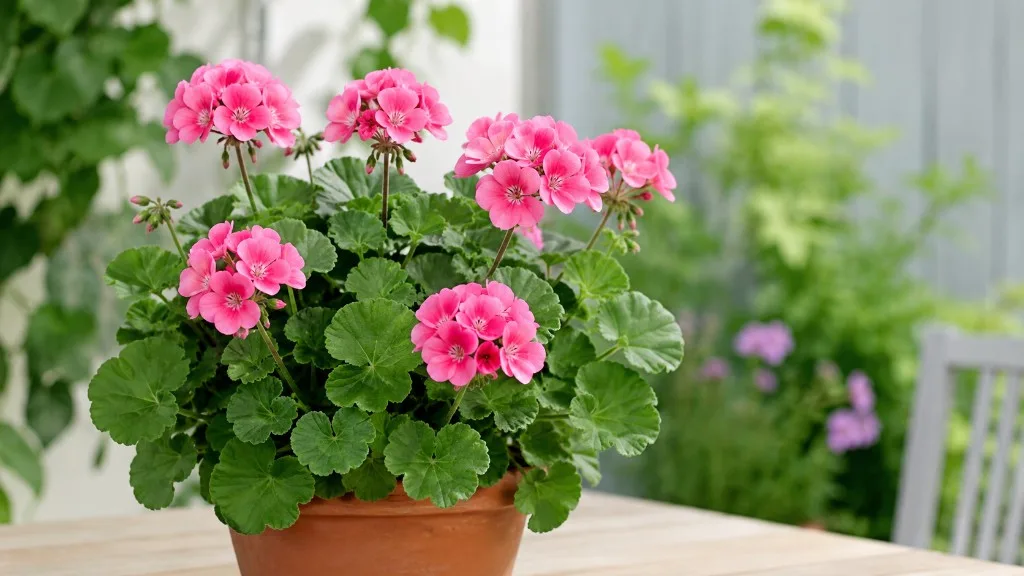
For a high-contrast, architectural look, set compact zonal geraniums in the middle, use yellow bidens as a bright filler, and let chartreuse sweet potato vine spill over one or both ends. The upright flower clusters stay visible above the foliage, the bidens repeat the warm color lower in the box, and the lime leaves make the arrangement legible from a distance. The same layout works with white or coral geraniums if red would compete with the house color.
The main trade-off is vigor: sweet potato vine can cover neighboring plants quickly, so choose a compact cultivar or prune it back before it blankets the flowers. Geraniums generally tolerate a little drying between waterings better than a box dominated by thirsty petunias, but bidens still needs steady moisture to flower well in a container. Check the box before watering and give all three plants a thorough drink when the root zone is dry rather than giving the surface a quick splash. This formula suits a gardener who wants strong foliage contrast as well as flowers.
A Pollinator-Minded Mix of Zinnia, Angelonia, and Verbena
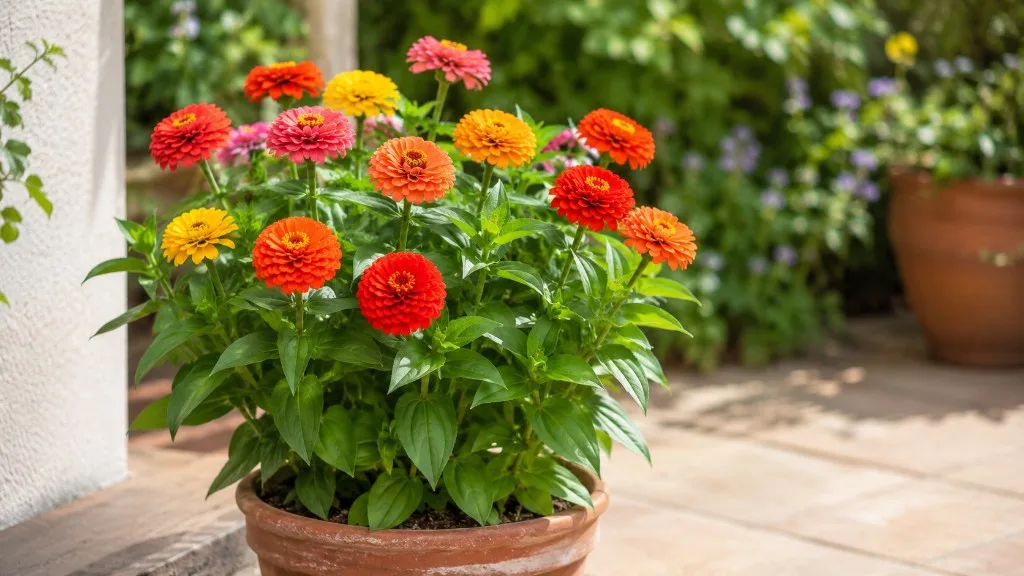
Combine a compact, branching zinnia with upright angelonia and trailing verbena for a sunny box with varied flower shapes. Zinnia supplies broad, open blooms; angelonia adds narrow vertical spikes; verbena softens the edge with clusters of smaller flowers. Pick compact varieties so the zinnia does not shade its neighbors, and keep the color story simple—yellow and violet, coral and white, or several shades of pink.
This design is “pollinator-minded,” not a promise that every hybrid cultivar will provide equal nectar or attract the same visitors. If supporting insects is a goal, favor single or less-double flowers with visible centers, avoid pesticide use on flowers that are in bloom, and include a range of flowers elsewhere in the garden too. Deadhead zinnias when you want a tidier display and more branching; leave some spent heads near the end of the season if you want to collect seed. A sunny box can be a small part of a larger habitat, but it cannot replace diverse, pesticide-conscious planting at ground level.
A Loose Cottage Look with Nasturtium and Alyssum
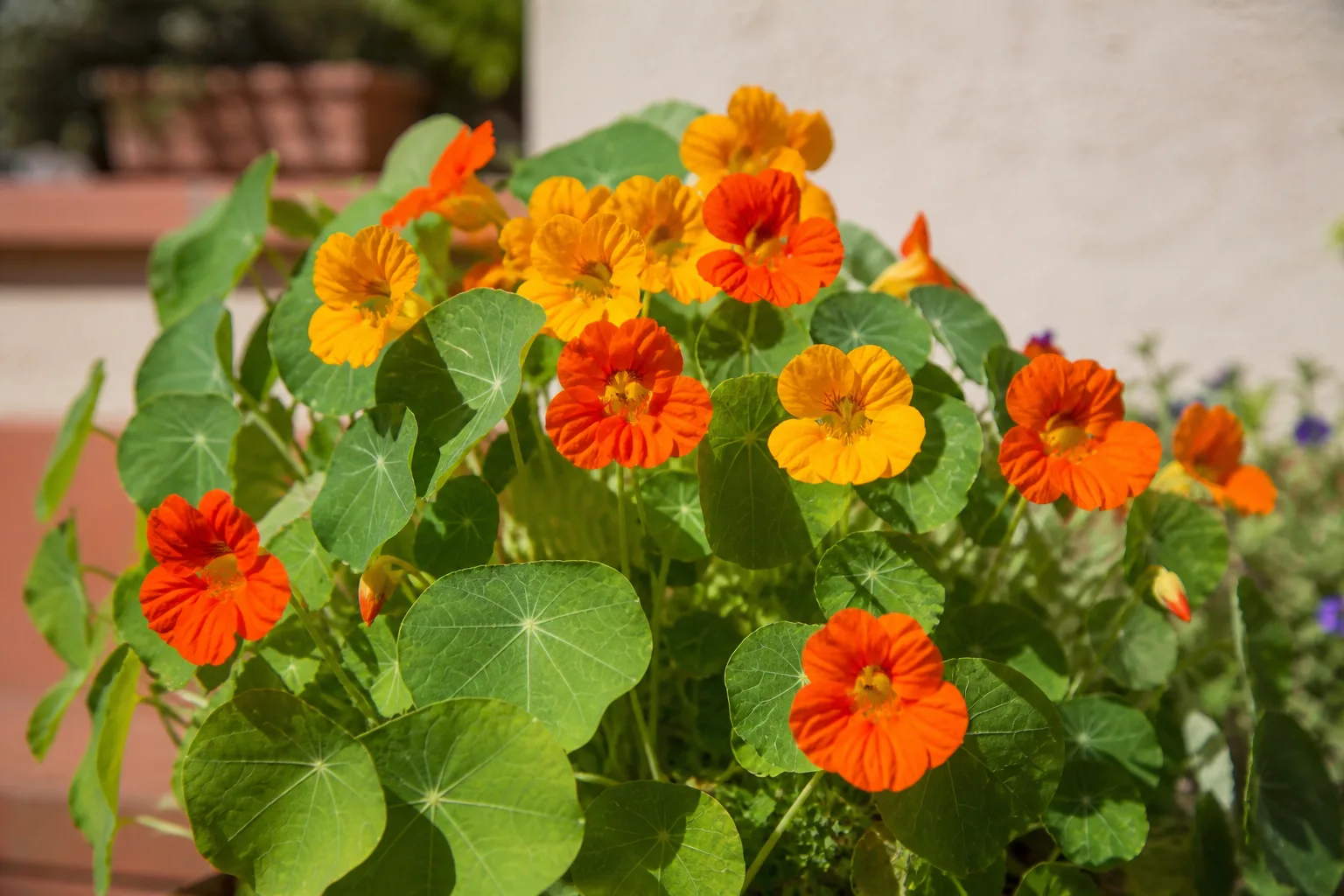
For a less formal edge, plant dwarf nasturtiums toward the front and combine them with compact marigolds and a few low-growing annuals that suit your climate. Nasturtium’s rounded leaves and warm flowers create a soft, slightly sprawling look; marigolds add upright color and a tidier silhouette. Keep the arrangement loose enough that the rounded leaves and flowers remain visible instead of burying them under one large spiller.
Nasturtiums can grow leaves at the expense of flowers when soil is overly rich or heavily fertilized. Keep their section of the box on the leaner side, and avoid pairing them with especially hungry annuals if you cannot manage different feeding needs. Sweet alyssum is a useful low, fragrant edging plant in mild weather, but it can fade during severe summer heat; plan to trim or replace it if the hottest part of the season arrives. For edible flowers, use only plants grown without products that are not labeled for edible crops, and follow the product label and local guidance. If you want a simpler care routine, repeat nasturtiums and marigolds instead of adding a moisture-sensitive accent.
Heat-Ready Vinca and Scaevola for an Exposed Box
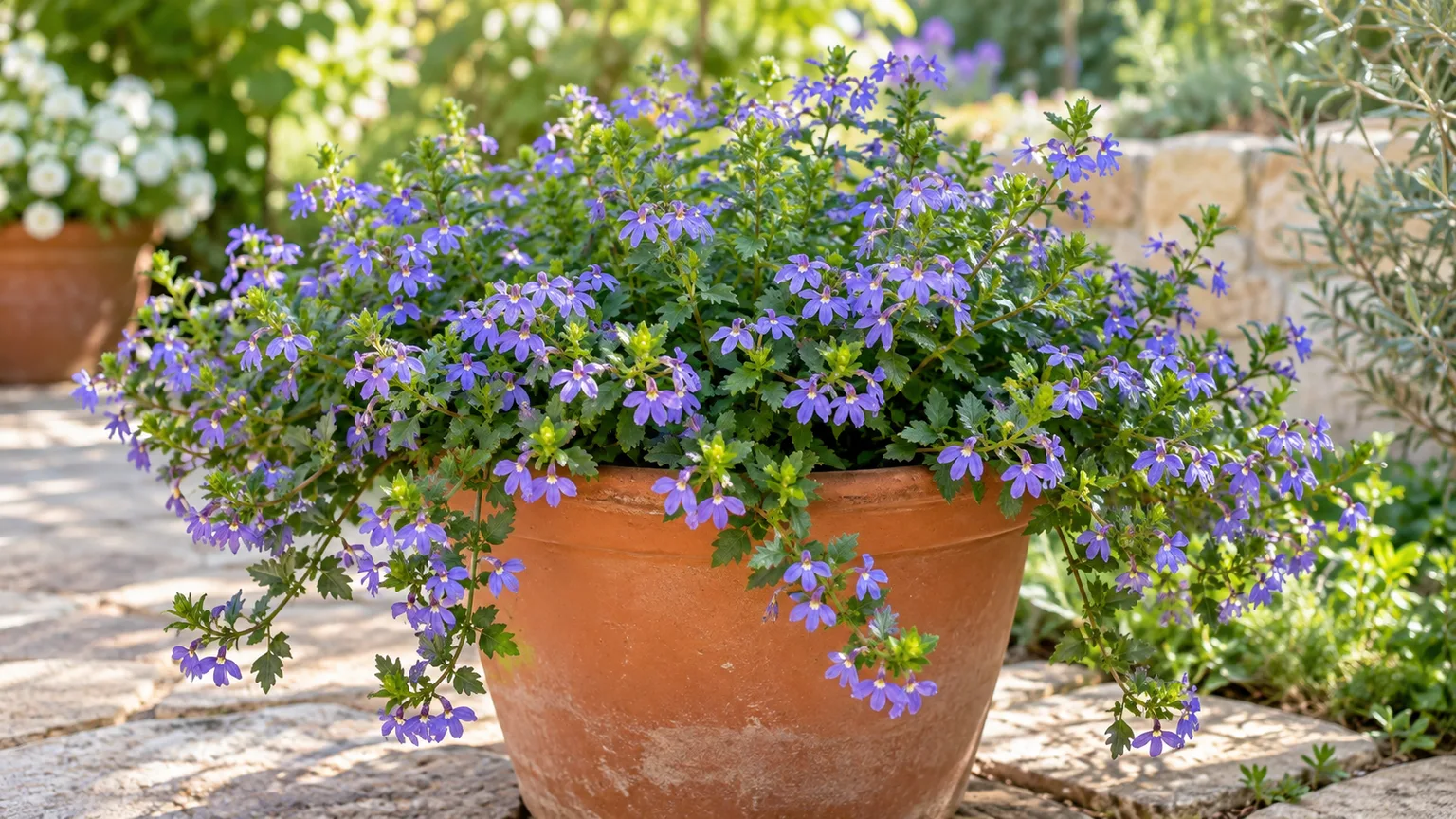
For a bright, exposed location where mid-summer heat is the main challenge, try compact annual vinca in the center with trailing scaevola at the edges. Add silver foliage such as dusty miller only if the box has enough room and you can keep its watering needs aligned with the flowers. Vinca’s glossy leaves and simple blooms create a neat mass, while fan-shaped scaevola flowers add a softer spill. Both give a more heat-ready look than a box built entirely around cool-weather flowers.
“Heat-ready” does not mean drought-proof. A window box contains less growing medium than a garden bed, and roots can still dry during a hot, windy day. Check moisture frequently while plants establish and during heat waves, then reduce watering when cool or rainy weather slows evaporation. Epic Gardening identifies annual vinca as a useful option for sunny, high-heat boxes and scaevola as a spreading flower that tolerates heat and some drying; follow the specific plant label because cultivar and local climate change performance. (Epic Gardening)
Match the Color Palette to the House and Season
Color can connect the planting to siding, shutters, brick, or trim without matching them exactly. Repeat one exterior color in a flower or leaf, then add a contrasting bloom to keep the box from disappearing into the facade. A dark wall often benefits from pale or bright flowers that read from the street; a light wall can carry deeper purple, red, or foliage contrast. For several windows, repeating the same three-plant recipe creates rhythm, even if each box is not planted in precisely the same order.
Think about viewing distance, too. Tiny flowers can look like texture from across a yard, while larger blooms make a clear focal point near a walkway. Avoid a lineup of unrelated varieties in every box; use two or three main colors and repeat a foliage accent. If the display needs to look full immediately, plant modestly closer than in a bed, but leave enough room for mature growth and air movement. The goal is a finished look after establishment, not a completely packed trough on planting day.
Plant the Box Without Overcrowding It
Before planting, set nursery pots on the soil surface and view the arrangement from the main approach and from inside the room. Put the most upright plant toward the back if the box is viewed from one side, and place spillers along the visible front edge. If the box is accessible from both sides, keep the tallest plant near the center or use repeated low plants instead. This dry layout makes it easier to move plants around before their roots are disturbed.
Moisten the potting mix before filling the box so it settles evenly instead of pulling away from the sides after the first watering. Set each plant at the same soil depth it had in its nursery pot; burying stems or leaving root balls exposed can stress plants. Fill gaps with mix, firm it lightly, and leave the rim space needed to water without overflow. Water thoroughly after planting until excess drains through the holes, then check again after the box settles.
The number of plants depends on their mature spread and on how much root volume the box provides. Follow spacing guidance on the variety label as a starting point; a six-inch petunia does not occupy the same space as a vigorous wave petunia. A short-lived display can be planted more tightly for a quick effect, but crowded plants dry unevenly and are harder to inspect. In a narrow box, fewer well-spaced plants often look better by midsummer than a dense planting that has to be clipped every week.
Water by Checking the Root Zone
Do not water a sunny window box on a fixed calendar. Check it daily during warm, dry weather, especially once roots have filled the box, but water only when the mix is becoming dry in the root zone. Push a finger into the soil several inches or use a moisture meter as a second check; a dry surface can hide damp mix below. When it is time to water, apply enough to wet the full root zone and allow excess to drain. A light sprinkle on the leaves does little for dry roots.
Containers can dry far faster than beds, and the rate changes with box depth, material, wind, plant size, and weather. Rutgers Cooperative Extension notes that hot, dry containers may need water once or even twice a day, while cooler wet periods can pass for days without watering. Treat that as a possible range, not a routine to impose on every box. If the mix repeatedly dries before evening, increase the soil volume, add a reservoir-style planter designed for outdoor use, or choose less thirsty plants rather than simply saturating an undersized box every few hours. (Rutgers Cooperative Extension)
Water near the soil, preferably when you can do it without spilling onto pedestrians or siding. A box that stays wet and has poor drainage can wilt too, because damaged roots cannot take up water normally. If plants droop, check both moisture and drainage before adding more. Persistent midday wilt that recovers by evening may be heat stress; wilt that remains in the morning calls for a closer look at dry roots, blocked holes, or root damage.
Feed, Deadhead, and Trim by Plant Habit
Frequent watering carries nutrients out of a container, so a window box may need more regular feeding than the same flowers planted in the ground. Read the potting-mix and fertilizer labels first; some mixes already contain starter fertilizer, and some slow-release products continue to feed for weeks or months. Use the product at the stated rate rather than adding a stronger dose to force more blooms. Rutgers Extension explains that nutrient release from slow-release fertilizer can increase in warm, moist mix, so the timing and rate on the label matter.
During active growth, follow the fertilizer schedule that matches the chosen mix and plants. If foliage is pale and growth is weak, check moisture, root crowding, and light before assuming the box needs more food. Too much fertilizer can produce leafy growth or damage roots, and salt buildup can occur in a container that is fed heavily but rarely flushed by rain. If you decide to supplement, water the mix thoroughly and use only a labeled, appropriate product at its recommended rate. (Rutgers Cooperative Extension)
Deadhead flowers that hold onto spent blooms, such as many petunias and zinnias, when the display begins to look tired. Self-cleaning varieties may not need individual flower removal, but they can still benefit from a light trim if stems get leggy. Pinch or cut back only enough to restore the intended shape; severe pruning during extreme heat can add stress. Remove dead leaves and inspect the undersides of foliage when watering so problems are caught before plants are crowded together.
Refresh the Box as the Season Changes
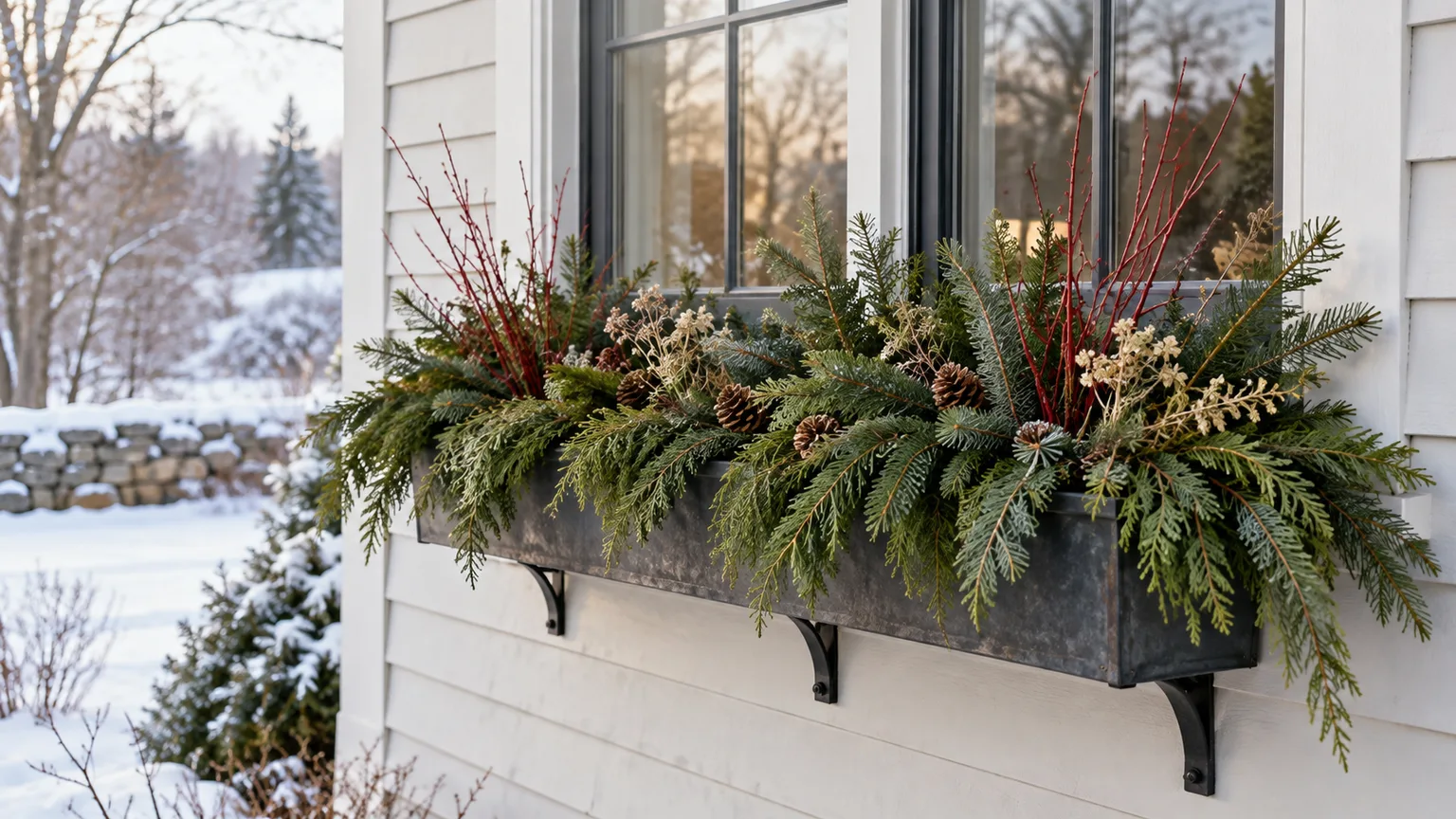
Window boxes do not have to carry one planting from spring through frost. In regions with cold winters, pansies and violas can give an early cool-season display, then be replaced with heat-loving annuals once local frost risk has passed and warm weather is established. In hot-summer climates, the sequence may work in reverse: use cool-weather flowers in fall or winter, and switch to heat-tolerant plants for summer. Better Homes & Gardens likewise recommends replacing cool-season pansies with heat-loving plants when they fade, rather than expecting one planting to perform year-round. (Better Homes & Gardens)
You can also refresh a box in place. Remove a plant that has stopped performing, loosen nearby stems, and add a compact replacement that matches the established plants’ sun and water needs. Avoid disturbing the full root mass in the hottest part of the day. If a summer annual is declining because the box is too shallow or exposed, replacing it with another equally thirsty annual will not solve the underlying problem; choose a sturdier plant or move the arrangement to a more manageable location.
For winter, remove frost-killed annuals and use hardy foliage, evergreen cuttings, or climate-suited cool-season plants rather than leaving a mass of dead growth. Secure decorations so they cannot catch wind or fall, and check the box hardware after storms. A seasonal reset is also a good time to clean the container, clear drainage holes, inspect the mounting, and replace spent potting mix when it has broken down or become compacted.
Fix Common Sunny Window Box Problems
When a box looks poor, diagnose the site and the root zone before reaching for fertilizer or pesticide. The same symptom can come from different causes: leaves that wilt may be dry, heat-stressed, or sitting above rotting roots. Ask what changed first—hotter weather, a new vine covering its neighbors, a missed watering, or blocked drainage—then make one adjustment and observe the plant’s response.
Flowers Wilt in the Afternoon
If plants droop during the hottest hours but recover by evening, the leaves may be losing water faster than the roots can replace it. Check soil several inches down; if it is dry, water the mix deeply and consider whether wind, sun-baked material, or a shallow box is speeding moisture loss. If the soil is already wet, do not keep adding water. Confirm the drainage holes are open and that the planter is not standing in runoff. A repeat of morning wilt suggests a more serious root or moisture problem than a brief midday slump.
Plants Look Lush but Stop Flowering
A box with plenty of leaves but few flowers may be receiving too little direct light, too much fertilizer, or too much shade from a vigorous neighbor. Count the hours of direct sun at the planter and prune spillers that cover smaller flowers. Pause extra feeding until you have checked the fertilizer label and the mix’s nutrient content. If the box remains in a low-light spot, replace the sun-loving flowers with plants suited to that exposure instead of trying to compensate with more fertilizer.
Conclusion
The most dependable sunny window box starts with an honest read of the site: direct-sun hours, reflected heat, wind, water access, and the amount of soil the box can safely hold. Build the planting from flowers that share those conditions, use height and trailing forms with restraint, and choose a palette that relates to the house. Petunias, geraniums, zinnias, nasturtiums, vinca, and scaevola can all contribute to bright displays, but no combination is universal across climates or planter depths.
Give the box open drainage, a suitable potting mix, enough root room, and a moisture check that changes with the weather. Then trim and replace plants as their growth habits or the season demand. A simpler recipe matched to the wall will stay attractive longer than a crowded mix that needs constant rescue.