Iron Deficiency on African Milk Tree: Causes, Checks & Fixes
Quick answer
Iron deficiency on African milk tree shows as pale or yellow new teardrop ridge leaves with dark green veins (interveinal chlorosis) at active branch tips during warm growth, while older ridge leaves and the triangular green stem may look normal. First step: confirm the vein pattern is on the newest expanding ridge leaves—not seasonal drop, uniform pale lower leaves, or washed-out color from dim light—then check whether alkaline tap water, micronutrient leaching through gritty mix, or wet soil is blocking iron uptake before applying chelated iron.
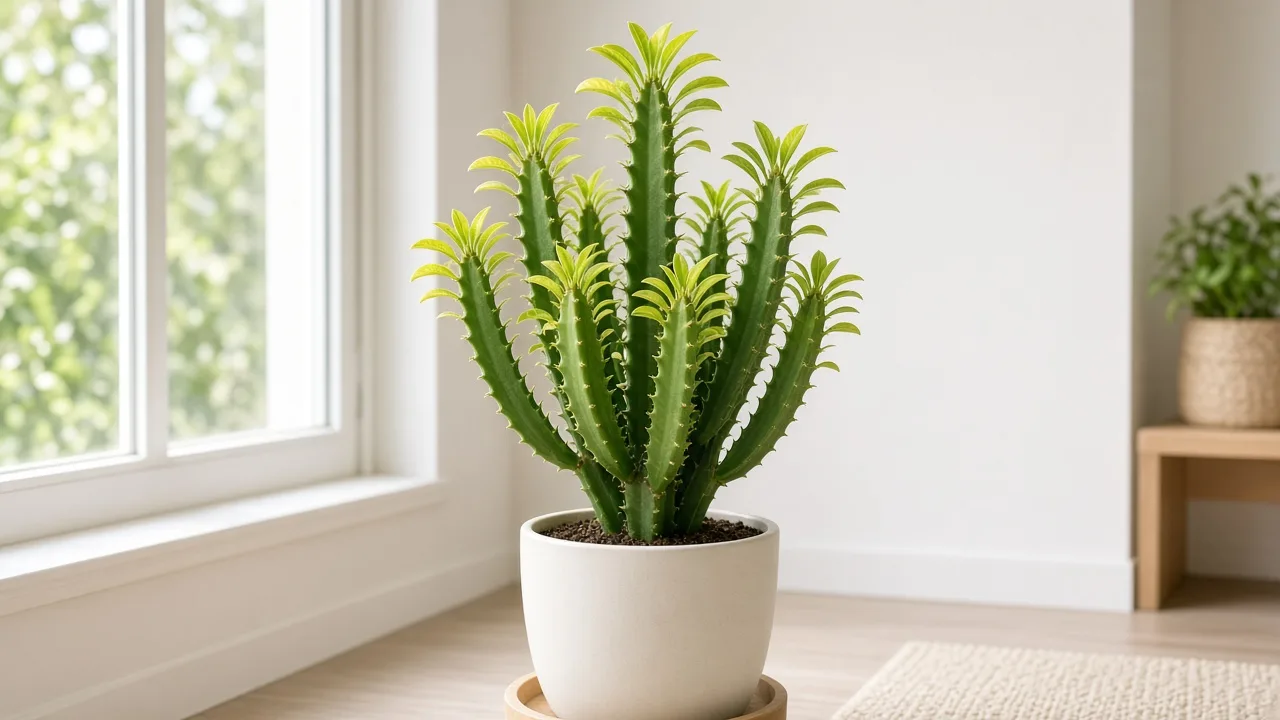
Iron Deficiency on African Milk Tree: Causes, Checks & Fixes
This guide covers iron deficiency on African Milk Tree. See also the general Iron Deficiency guide, watering, and light pages for this plant.
Iron Deficiency on African Milk Tree: Causes, Checks & Fixes
Quick answer
Iron deficiency on African milk tree (Euphorbia trigona) shows as pale or yellow new teardrop ridge leaves with dark green veins (interveinal chlorosis) at active branch tips during warm growth, while older ridge leaves and the green triangular column may look normal. Iron is immobile in plants, so chlorosis appears on young expanding tissue first—not on the lowest old ridge leaves the way nitrogen deficiency does.
See our iron deficiency guide for general chlorosis mechanics. On African milk tree, inspect the small teardrop leaf still expanding along each ridge at the top of every candelabra arm—veins stay green while tissue between them yellows on the newest blade above firm green stems.
First step: confirm new-growth interveinal chlorosis with green veins during active warm-season growth, then check whether gritty mix leaches micronutrients, alkaline tap water locks iron, or wet soil blocks uptake before applying chelated iron.
When to use this page vs other African Milk Tree guides
| Pattern | Read next |
|---|---|
| New ridge-tip leaves yellow with green veins | Iron deficiency (this page) |
| Lowest ridge leaves pale uniformly; no vein pattern | Nitrogen deficiency |
| Whole column washed-out in a dim window | Pale leaves or not enough light |
| Interveinal yellowing on older mid-column ridge leaves | Magnesium deficiency |
| Yellow lower cluster, wet soil, soft base | Overwatering or root rot |
| Brown crispy ridge tips after heavy feed | Salt stress from over-fertilizing — see fertilizer guide |
| Sparse ridge leaves, firm column, cool short days | Normal seasonal leaf drop—not iron deficiency |
What iron deficiency looks like on African Milk Tree
Healthy African milk tree pushes small obovate teardrop ridge leaves along three-sided green columns during warm bright growth. Iron stress breaks that pattern at each active growing point, not across every ridge on the plant at once.
Typical signs:
- Pale or yellow new ridge leaves at branch tips with veins remaining darker green
- Successively paler new teardrop leaves on the same arm if untreated—two or three pale openers in a row during summer flush
- Older ridge leaves lower on the column may stay deep green while only the newest tip leaf looks chlorotic
- Smaller or thinner new teardrop leaves when chlorosis is severe on a fast-growing column in strong sun
- Firm triangular stems along the column if roots are functional—soft mushy base at soil line on wet mix points to overwatering instead
Not iron deficiency:
- Uniform pale lower ridge leaves first — nitrogen deficiency
- Washed-out green across many columns with long bare stem between leaves — pale leaves or not enough light
- Interveinal yellowing on oldest mid-column ridge leaves — magnesium deficiency
- Few ridge leaves, firm column, cool room — normal seasonal drop on this deciduous-leaf euphorb
- All leaves yellow on persistently wet soil — root rot overlap
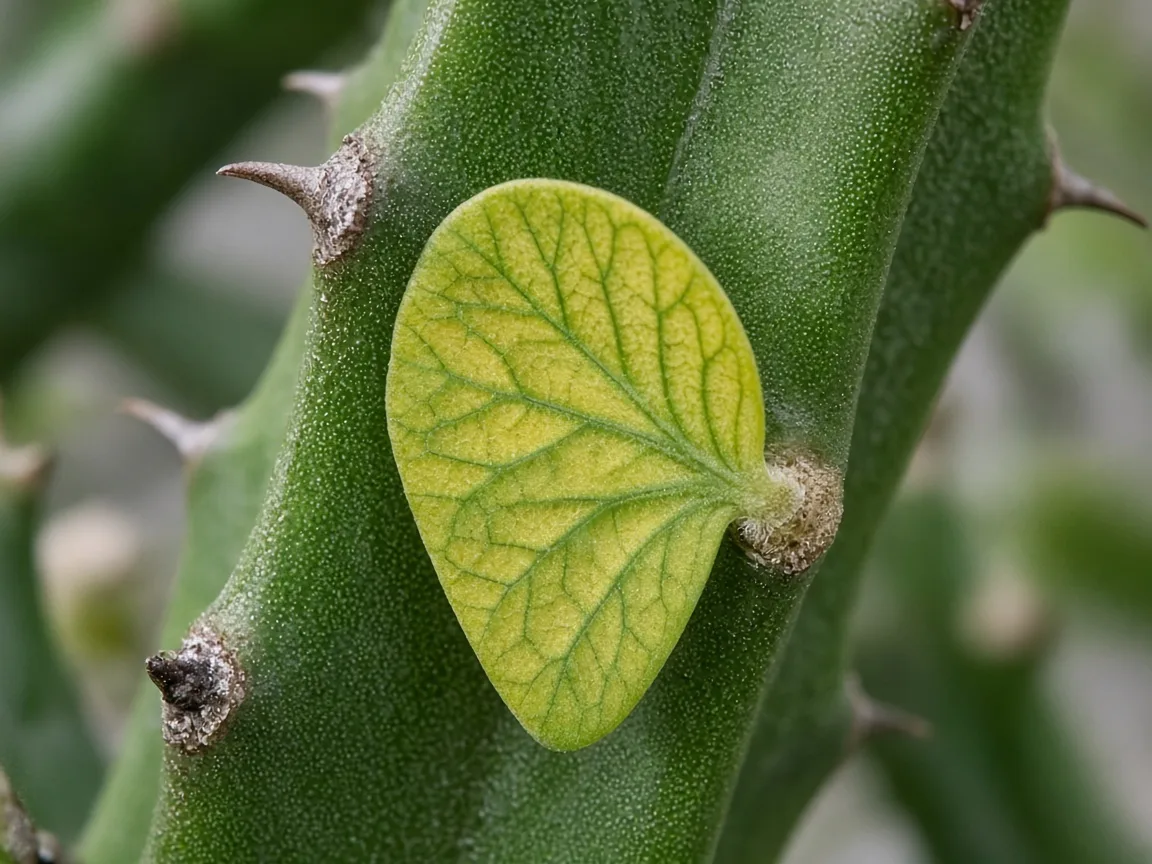
New teardrop ridge leaf at a branch tip: pale yellow tissue between dark green veins while older ridge leaves lower on the triangular stem stay normal—classic iron chlorosis on expanding euphorb foliage.
The classic symptom of iron deficiency is interveinal chlorosis where leaf tissue yellows while veins stay green. RHS notes iron deficiency affects the youngest leaves first, unlike magnesium problems that tend to start on older foliage. On a tall columnar succulent, that pattern is easiest to read on the ridge leaf still opening at each branch tip—not on mature lower teardrops that may simply age before seasonal drop.
Why African Milk Tree gets iron deficiency
African milk tree is a fast-growing columnar succulent that stores water in triangular stems and pushes seasonal flush growth in warm bright conditions. Iron chlorosis often results when roots cannot absorb iron even when it is present in fertilizer—high pH, waterlogged mix, salt crust, or depleted gritty soil block uptake while branch tips keep trying to open new ridge leaves.
African milk tree-specific causes:
- Micronutrient leaching through gritty cactus mix — African milk tree soil drains within seconds; frequent summer watering washes iron from small terracotta pots faster than two or three light feeds replace it.
- Light feeding without micronutrients — This species is a light feeder; owners who skip fertilizer entirely for years—or use diluted succulent formula without chelated iron—can see tip chlorosis during rapid warm-season vertical growth per the fertilizer guide.
- Alkaline tap water — Repeated hard tap watering raises pot pH over time and locks iron chemically; high pH makes iron unavailable to plants even when you feed occasionally (USU Extension).
- Overwatering during cool weather — Wet mix reduces root oxygen and micronutrient uptake; symptoms worsen in poorly drained soils. African milk tree is easily overwatered when growth slows in low light or cool rooms.
- Skipped summer feeding on a fast-flushing column — Tall specimens in bright windows push multiple ridge leaves per arm during peak growth when iron demand is highest.
- Misread nitrogen deficiency — Old ridge leaves yellow first with nitrogen; iron hits the newest teardrop blade with green veins.
Do not diagnose iron deficiency on sour wet soil with a soft base—that is root failure from chronic saturation until you confirm mostly firm stem tissue at the soil line.
Ridge-tip flush leaves: chlorosis on expanding teardrop foliage
Euphorbia trigona shows iron stress on the small teardrop ridge leaf still opening at each branch tip during warm active growth—a pattern that would be nonsense on a snake plant rosette or fern frond crown. Veins remain green while the expanding blade between them yellows before the leaf fully hardens along the triangular ridge.
That tip-only chlorosis distinguishes iron from nitrogen, which starts on the lowest oldest ridge leaves before they drop. It also differs from normal juvenile color: a brand-new milk tree ridge leaf is briefly lighter green for a few days in peak sun, then deepens. Worry when every new branch-tip teardrop stays yellow-green with dark veins for weeks after hardening.
Because African milk tree produces flush growth in bursts during hot bright months—sometimes several new ridge leaves per arm in one season—compare two or three consecutive new tip leaves on the same column. One pale opener after repotting may be transient; two or three in a row with green veins during warm growth is a strong iron signal.
Candelabra arms: compare branch tips, not the middle of the column
African milk tree branches like a candelabra. Iron chlorosis follows the softest growth on each arm, not the middle of a tall column where ridge leaves are sparse or absent.
Walk the plant and inspect the highest growing point on every vertical branch:
- One arm with chlorotic ridge tips beside clean neighbors — often localized uptake stress in that arm’s root zone or a pocket of wet mix on one side of a large pot
- Every arm showing the same green-vein yellowing during warm flush — systemic iron lockout, depleted mix, or chronic alkaline watering
- No ridge leaves at all on a firm column in cool months — seasonal rest; hold iron until new flush returns
This arm-by-arm check is specific to multi-branched euphorb columns and does not apply to single-rosette succulents or vining houseplants.
Seasonal ridge leaf drop vs iron stress on a firm column
Milk tree owners often confuse cool-season ridge leaf loss with nutrient failure. During short days and cooler rooms, Euphorbia trigona may shed most ridge leaves while triangular stems stay firm and green—that seasonal pattern is not iron chlorosis.
The diagnostic split:
- Seasonal drop — few or no ridge leaves, firm green columns, cool room, no active branch-tip flush. Hold fertilizer and iron until warm bright growth resumes per watering guidance.
- Iron chlorosis — active warm-season growth with new teardrop leaves opening at ridge tips showing green-vein yellowing while stems are firm on appropriate dry-down.
Iron drenches on a leafless firm column in a cool storage spot waste product and accumulate salts while roots are slow. Resume micronutrient correction only when you see new expanding ridge leaves and stable warm growth.
Royal Red and variegated clones: light wash-out is not iron
‘Royal Red’ and other red-edged cultivars need brighter light than plain green forms. In a dim corner, the whole column—including maroon stem edges—can look washed out without the green-vein yellow interveinal pattern iron produces.
Before treating variegated arms for iron:
- Confirm veins stay darker green on the newest ridge leaf, not uniform pale pink-red wash
- Move to brighter exposure first if stems stretch and ridge leaves shrink without vein contrast
- See not enough light when every arm looks thin and pale, not just new teardrops with green veins
Gritty mix and the micronutrient wash-out trap
Unlike peat-heavy houseplant mix that holds nutrients, African milk tree’s sharply draining cactus blend passes water through within seconds—excellent for rot prevention, hard on micronutrient retention. Every deep summer soak can carry iron out of a terracotta pot before roots absorb it, especially when:
- The pot is small relative to a fast-flushing ceiling-height specimen in six or more hours of direct sun
- You water frequently during peak heat but feed only two or three times per season with formula lacking chelated iron
- White salt crust rings the pot rim from hard tap water—flush before adding iron
- The same gritty mix has not been refreshed in two or more years while roots fill the pot
Check whether watering rhythm matches dry-down in the top 2–3 inches. Firm columns on appropriate dry-down with ridge-tip chlorosis despite occasional feeding points to uptake or leaching, not simple starvation from skipped water.
Lookalike symptoms
| Pattern | Check | Likely cause |
|---|---|---|
| New tip yellow, green veins | Newest teardrop on warm branch | Iron deficiency (this page) |
| Old lower ridge leaves pale first | Leaf position on column | Nitrogen deficiency |
| Whole column lime-green, bare stem | Window exposure | Pale leaves or not enough light |
| Interveinal yellow on older mid-column leaves | Leaf age | Magnesium deficiency |
| All yellow, wet soil, soft base | Stem squeeze at soil line | Overwatering or root rot |
| Tip burn after heavy feed | Recent fertilizer | Over-fertilizing — see fertilizer guide |
| Few ridge leaves, firm column, cool months | Season | Normal leaf drop |
How to confirm the cause
Work through these checks in order. African milk tree responds on a seasonal rhythm; one change at a time makes it easier to read the next ridge-tip leaf over three to six weeks.
- Season and growth stage — Is the plant in warm active flush with new ridge leaves opening? Iron. Leafless cool rest? Not iron—wait for spring wake-up.
- Leaf age pattern — interveinal chlorosis on the newest ridge-tip teardrop only; older leaves green? Iron. Lowest ridge leaves pale uniformly? See nitrogen deficiency.
- Vein pattern — tissue between veins yellow while veins stay green confirms interveinal chlorosis.
- Stem firmness — firm triangular tissue at soil line; soft base on wet mix means fix overwatering before iron drenches.
- Soil moisture rhythm — dry in top 2–3 inches before soaking per the watering guide; chronically wet outer mix blocks uptake.
- Feeding history — months without complete micronutrients during summer growth; white crust on pot rim suggests flush before iron.
- Light level — very dim corners slow growth and mask chlorosis; confirm bright window or grow light per the light guide.
- Multiple branch arms — chlorosis on several active tips during warm flush supports systemic uptake failure.
The first fix to try
Confirm the column base is firm and soil dries appropriately in the top 2–3 inches during warm active growth, then apply one chelated iron soil drench at label rate for container plants—only if interveinal chlorosis is on expanding ridge-tip leaves, not during cool seasonal rest.
Iron drenches on stressed, waterlogged roots waste product and can burn foliage. Correct the uptake environment first: appropriate watering, flush salts if white crust rings the pot, and pause feeding until roots recover. If interveinal chlorosis persists on the next ridge-tip leaf after those corrections, apply one chelated iron drench—FeEDDHA forms work best in alkaline mix per NMSU Extension. Avoid foliar sprays above 85°F (29°C) because chelated iron can burn ridge leaves.
Use the Fertilizer Dilution Calculator to halve strength if you are unsure of dose. Wear gloves when handling stems near spines—latex sap irritates skin. Do not stack repotting, heavy pruning, and iron treatment on the same day.
Step-by-step recovery
- Confirm diagnosis — green-vein chlorosis on newest ridge-tip teardrops during warm growth; rule out yellow leaves from moisture stress alone.
- Fix watering — dry in top 2–3 inches before soaking; reduce frequency when nights cool.
- Flush salts if white crust rings the pot—plain water at three times pot volume, draining fully.
- Apply chelated iron once on firm roots after steps 2–3, during active ridge flush in spring or summer—not on a leafless cool column.
- Resume light complete feeding — half-strength succulent liquid with micronutrients per fertilizer guide after one month if new ridge leaves green up.
- Repot into fresh gritty cactus mix if chlorosis returns after two iron cycles and roots are compacted in depleted mineral-poor soil.
Recovery timeline
African milk tree flush growth is seasonal, not year-round. Expect three to six weeks for the next ridge-tip teardrop to show greener tissue between veins after corrected watering, a salt flush if needed, and one iron drench during warm active growth. A full summer season may pass before two consecutive tip leaves look normal on a slow-recovering tall specimen.
Signs of improvement: darker green tissue between veins on the newest unfurling teardrop, normal leaf size returning, firm columns, stable dry-down rhythm.
Signs the problem is worsening: each successive ridge-tip leaf more chlorotic during warm growth, soft base on wet soil, widespread yellowing beyond active tips—stop iron and check root rot.
Chlorotic ridge-tip leaves rarely re-green fully once hardened; judge success by new teardrop flush, not old blades that will drop seasonally anyway.
Mistakes to avoid
- Iron before drainage — chelated iron on waterlogged mix fails and can stress roots; firm column and appropriate dry-down first.
- Iron during cool seasonal rest — leafless firm columns cannot use nutrients efficiently; salts accumulate while growth is paused.
- Treating every yellow ridge leaf as iron — one fading bottom teardrop before seasonal drop is often normal aging; see yellow leaves.
- Heavy high-nitrogen fertilizer instead of iron — nitrogen push on chlorotic tip growth does not fix interveinal pattern and adds salt stress.
- Expecting the current chlorotic teardrop to re-green — judge the next ridge flush.
- Using non-chelated iron sulfate on alkaline indoor mix when FeEDDHA chelate is available for high-pH pot culture.
Prevention
- Feed lightly with complete fertilizer including micronutrients during warm active growth per the fertilizer guide—not skipped entirely for entire seasons on fast-growing columns.
- Flush gritty mix occasionally with plain water during the feeding season to limit salt buildup from tap water and fertilizer.
- Match watering to dry-down in the top 2–3 inches; never keep mix wet through cool nights.
- Use pH-friendly water when hard alkaline tap repeatedly crusts the pot rim.
- Repot into fresh mineral-rich cactus mix when roots exhaust depleted soil every two to three years.
- Pause all feeding and iron when winter light slows growth and ridge leaves drop naturally.
Related African Milk Tree guides
- Overview
- Problems hub
- Watering
- Soil
- Light
- Fertilizer
- Nitrogen deficiency
- Magnesium deficiency
- Pale leaves
- Potassium deficiency
Scope note: Use this page when new ridge-tip teardrop leaves show green-vein yellowing during warm active growth. Use pale leaves for whole-column wash-out in weak light, nitrogen deficiency when oldest lower ridge leaves pale first, and overwatering when the base softens on wet mix—regardless of leaf color.
Related tool
Use the Fertilizer Dilution Calculator to narrow causes for iron deficiency on this plant before changing multiple variables at once.