Slow Growth on African Violet: Causes, Checks & Fixes
Quick answer
Slow growth on African Violet means the crown produces few or no new leaves for weeks while older foliage stays static-not a normal winter pause if light and warmth are adequate. First fix: audit daily light hours and pot distance from the window, then check whether roots have outgrown a 2–4 inch pot.
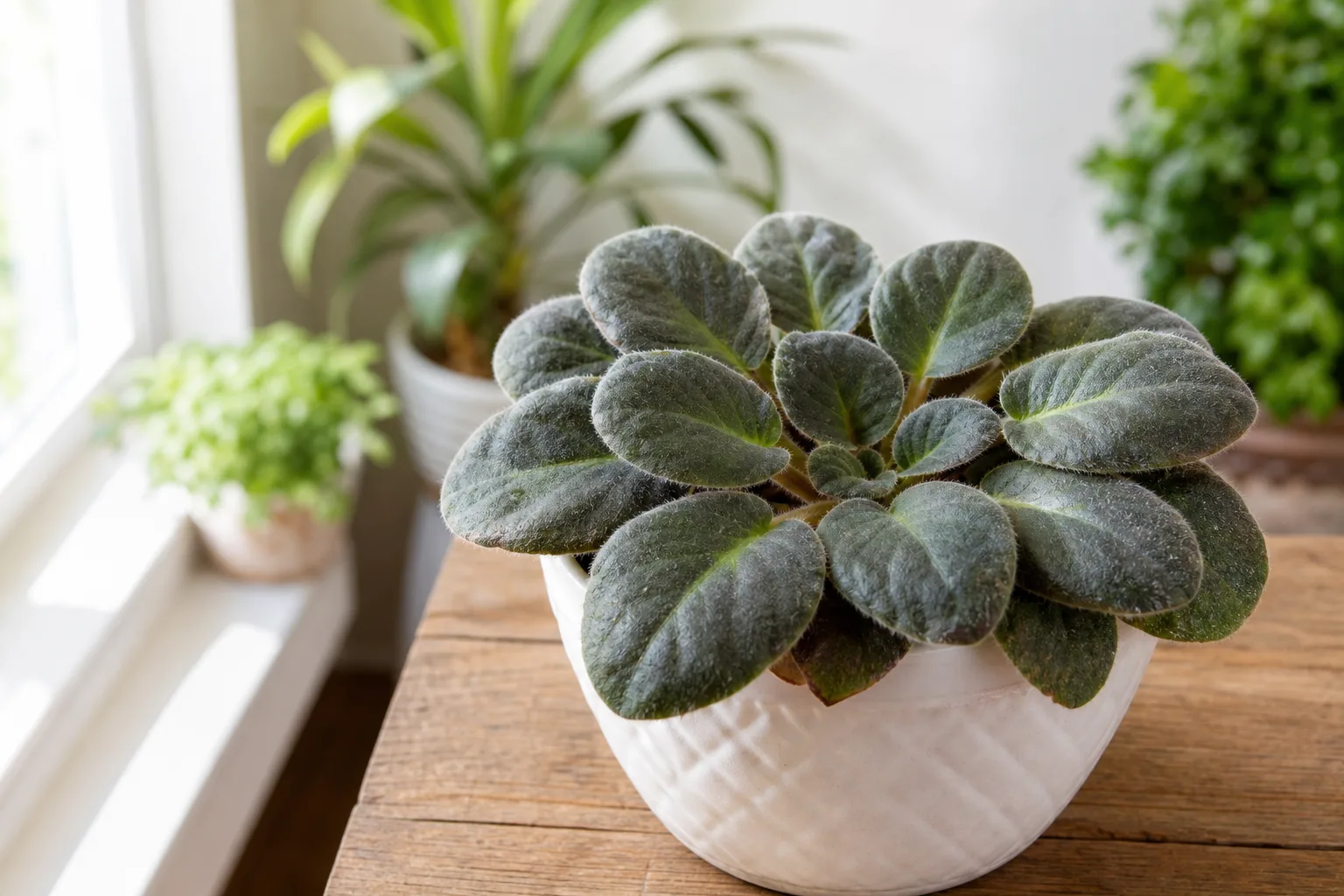
Slow Growth on African Violet: Causes, Checks & Fixes
This guide covers slow growth on African Violet. See also the general Slow Growth guide, watering, and light pages for this plant.
Slow Growth on African Violet: Causes, Checks & Fixes
Quick answer
Slow growth on African Violet means the crown stops producing new leaves for weeks or months while the rest of the rosette looks frozen in place-not the brief pause after repotting, and not the same as a few lower leaves aging off normally. On this shallow-rooted gesneriad, stall usually traces to too little usable light, cool room temperatures, root congestion or tired mix, chronic wet roots, weak feeding, cyclamen mites, or recent transplant shock.
First fix: audit light before fertilizer or repotting. African violets need more light than most growers realize-confirm the pot sits within about 12 inches of a bright north, northeast, or east window, or run fluorescent or LED grow lights for roughly 12 to 16 hours daily. See the African violet light guide for hour and distance targets. Only after light and temperature look adequate should you inspect roots or adjust feeding.
What slow growth looks like on African Violet
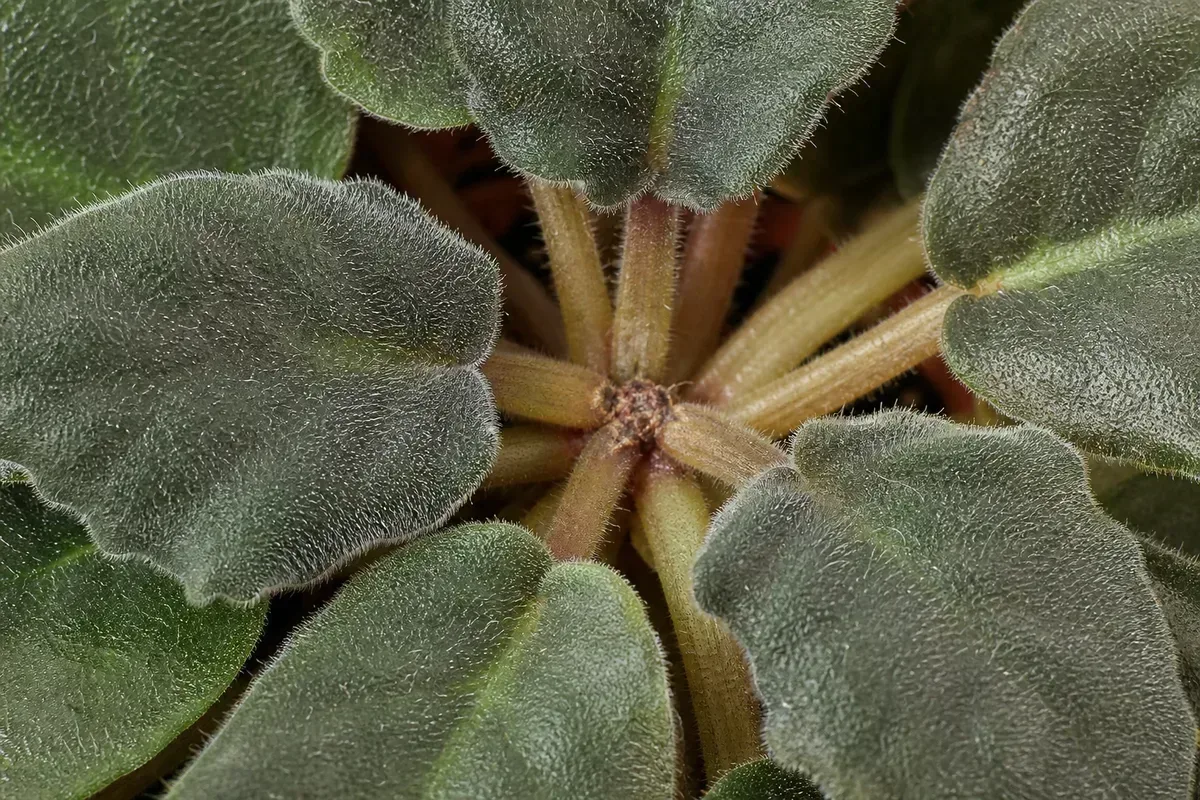
A flat static crown with mature outer leaves but no tiny new leaf buds emerging - stalled center growth usually traces to light, roots, or feeding before repotting.
Healthy African violets form a flat wheel of fuzzy leaves with steady center growth when light, moisture, and feed stay balanced. Slow growth breaks that rhythm:
- No new center leaves for 4–8+ weeks during warm indoor months, while lower leaves may still yellow and drop one at a time.
- Smaller or paler new foliage compared with mature leaves from when the plant last grew vigorously.
- Static rosette size - the plant neither stretches toward a window (leggy growth) nor collapses from wilt; it simply sits unchanged.
- Few or no flowers for a long stretch, because bloom production depends on the same light and root health that drive leaf growth.
- Tight, brittle, or hairy center leaves - a different pattern pointing to cyclamen mites or over-fertilization, not simple low light.
Compare with normal aging: bottom leaves die and fall off as the neck forms-that is expected. Slow growth means nothing replaces the energy the plant should put into the crown.
Why African Violet grows slowly
For how chronic stagnation works across houseplants in general, see our slow growth hub. On African violet, the stall usually shows up as a flat velvety rosette with no emerging center leaves while the plant still looks alive in a small pot—light hours, crown warmth, slightly root-bound roots, and bottom-watering rhythm matter more than generic “feed more” advice.
African violets are cloud-forest rosettes with fine roots in small pots. Growth stalls when photosynthesis, root uptake, or crown health falls below what new leaf tissue demands.
Insufficient light or short day length
This is the most common bottleneck indoors. Thin, dark, blue-green leaves with long petioles signal insufficient light-but even without obvious stretch, too few daily hours of gentle brightness limits new leaf production. A desk away from windows, winter sun at a low angle, or a grow light on too short a timer all qualify. Plants need roughly 14 to 16 hours of light and 8 to 10 hours of darkness daily to flower; leaf growth follows the same energy budget. For deeper light troubleshooting, see not enough light.
Cool temperatures and seasonal slowdown
African violets prefer daytime temps in the 70s °F with nights around 65–70 °F. Temperatures below about 65 °F slow metabolism, and temperatures above 85 °F also slow growth and flowering. A violet in a drafty winter window or unheated room may pause even when light looks acceptable on paper.
Root-bound pots or compacted, acidic mix
African violets bloom well slightly root-bound, but extreme congestion or year-old peat mix stops new leaves. Repot plants in fresh potting mix once a year because decomposing organic matter acidifies the profile and squeezes out air pockets roots need. A 2–4 inch pot with roots circling the wall, mix that dries in hours, or water that runs straight through channels points to root-bound stress or exhausted media-not the healthy tight fit that still supports blooms.
Overwatering, crown stress, and weak roots
Root rot from overwatering is one of the most common reasons African violets die. Saturated fine roots cannot support new tissue even when old leaves look green. Crown rot on overwatered plants shows water-soaked, shriveled center growth-stall plus soft crown tissue is an emergency, not slow cultural growth. Review overwatering and crown rot if the center blackens on wet mix.
Under-fertilization or inconsistent feeding
Pale leaves, lack of growth, and few flowers can indicate nutrient deficiency when feed is skipped. African violets expect mild, steady nutrition-a complete fertilizer at one-quarter recommended strength each watering suits active growth. Months of plain water in old mix without refresh often produce a stalled, pale rosette. See the fertilizer guide before boosting dose.
Cyclamen mites and other growth suppressors
The cyclamen mite is devastating to African violets-too small to see without magnification, it injects toxins that stunt and distort center leaves. Severe stunting, hairy grayish new growth, and curled center leaves differ from low-light stall, where petioles may lengthen but leaves are not twisted and brittle. Isolate suspect plants immediately.
Recent repotting or environmental shock
A violet repotted into oversized or dense mix, moved from a warm grow shelf to a dim room, or watered with cold water on leaves may pause for two to four weeks while roots re-establish. Transplant shock looks like temporary stall with otherwise firm tissue-not progressive crown collapse.
How to confirm the cause
Work through checks in order so you fix light-not rot, mites, or feed gaps.
- Light audit - Note window exposure and pot distance. Fewer than ~12 hours of usable brightness or more than 18 inches from glass on a dim exposure strongly supports low light. Confirm grow-light height (often 4–12 inches above leaves) and timer length.
- Temperature log - Thermometer at pot level for 48 hours. Nights below ~65 °F with dim light compound stall.
- New-leaf count - Mark the newest leaf; recheck in 14 days. Zero progress in a warm, bright room shifts suspicion toward roots, feed, or pests.
- Pot weight and dry-down - Lift after watering and when you think it is dry. A pot that stays heavy for a week suggests wet roots; one that goes feather-light in two days on a small violet may be root-bound or underwatering on African Violet.
- Root peek - Slide the plant partway from the pot. White, firm roots in airy mix support cultural fixes; brown mush or a solid root brick needs repot intervention per the repotting guide.
- Crown and leaf feel - Soft, water-soaked center on wet soil = crown rot. Twisted, hairy, brittle center leaves = mites. Tight rusty center = over-feed, not slow growth alone.
- Recent changes - New pot, fertilizer spike, relocation, or winter window draft narrows the cause without stacking fixes.
Confirmed cultural stall: firm crown, no new leaves for weeks, adequate moisture, no mite distortion, and measurable light deficit. Suspected if winter cool + short days only-still increase light rather than waiting indefinitely.
First fix for African Violet
Increase usable light and stabilize temperature-today. That single step addresses the dominant cause. Do not fertilize, repot, or apply miticide on day one without evidence.
Practical targets:
- Move the pot within about 12 inches of a bright north, northeast, or east window or add fluorescent or LED grow lights timed for 12 to 16 hours daily.
- Warm the growing spot toward daytime temps in the 70s °F if the room runs cool.
- Rotate a quarter turn weekly once light improves so the crown fills evenly.
- If the crown is soft on wet mix, stop watering and inspect for rot before adding light-see crown rot.
Give the plant three to four weeks under corrected light before repotting or increasing fertilizer. Fixing roots first without light invites repeat stall.
Step-by-step recovery
After light and warmth are stable:
- Track the first new center leaf - Shorter petioles and normal velvety texture confirm the energy budget improved.
- Adjust watering - Bottom-water when the top inch of mix feels dry; match rhythm to the watering guide so wet/dry swings do not abort new growth.
- Refresh mix or pot size if roots are packed - Repot into the same or one-size-larger container with fresh African violet mix; bury an emerging neck per standard practice. Do not jump to a large pot-oversized containers stay wet and stall growth.
- Resume quarter-strength feed only after stable new leaves appear-mild fertilizer each watering during active growth, not a double dose to “force” speed.
- Treat mites if confirmed - Isolate, inspect with magnification, and follow society or extension mite protocols; distorted leaves will not un-twist, but clean new growth tells you control is working.
Recovery timeline
Weeks 1–3 (light correction): First new center leaf often appears within two to four weeks when light and temperature were the main limits. No change means intensity or duration is still too low.
Weeks 4–8: Rosette looks fuller from the crown outward; blooms may return six to eight weeks after steady light-similar timing to correcting leggy growth.
Repot or mix refresh: Can trigger a two-week pause before growth resumes; judge success by leaves after that window, not the day of repotting.
Mite or crown-rot recovery: Weeks to months; old distorted foliage stays distorted until pruned away gradually.
Worsening signs: Soft crown on wet soil, black center leaves, or spreading stunted hairy growth-escalate to rot or mite protocols, not more fertilizer.
Slow growth vs. lookalike symptoms
| Pattern | Likely cause | Key differentiator |
|---|---|---|
| Long petioles, lean toward window | Low light (leggy) | Stems stretch; growth continues slowly upward |
| No new leaves, flat rosette | Light deficit, cool temps, weak roots | Crown static; not reaching for light |
| Soft crown, black center on wet mix | Crown rot / overwatering | Urgent-see crown rot |
| Twisted, hairy, brittle center | Cyclamen mites | Short distorted leaves, not long reach |
| Tight rusty center | Over-fertilization | Bunched crown without mite fuzz |
| Pause 2–4 weeks after repot | Transplant shock | Firm tissue; follows recent pot change |
| Winter only, cool room | Seasonal slowdown | Reverses with longer light hours in spring |
What not to do
Do not pile on fertilizer to force growth-a stressed rosette responds with tight centers and rusty leaves, not speed. Do not repot into a much larger pot on day one; excess wet mix suffocates fine roots. Do not mist leaves to compensate for stall; wet foliage causes spots. Do not assume winter pause needs no action if the plant sits in a dim interior room year-round. Do not treat cyclamen mites with generic insecticide without a mite-specific plan-confirm distortion first.
How to prevent slow growth next time
- Keep bright, cool locations with 12 to 16 hours of gentle light daily via window plus timer-controlled grow lights in short winter days.
- Refresh potting mix yearly and repot before roots form a solid brick-see repotting.
- Bottom-water on soil dryness, not calendar alone, per the watering guide.
- Feed lightly and consistently at quarter strength during active growth; flush monthly with plain water.
- Quarantine new plants 60–90 days and inspect crowns often-healthy plants resist pests better than stressed ones.
- Match pot size to leaf span-slightly root-bound encourages bloom, but congested dry-out in hours signals time to refresh.
When to worry
Treat as urgent if the crown feels soft, center leaves blacken on wet soil, or new growth is twisted and excessively hairy. Those patterns overlap crown rot and cyclamen mites-not a patience problem.
Treat as routine if the plant simply has not added leaves in a dim corner but tissue is firm and roots are white-light correction is enough.
Conclusion
On African Violet, slow growth is usually an energy problem at the crown: too little light, too cool a room, tired roots, or wet soil starving fine roots-not a mystery disease. Confirm stalled center leaves against light hours and pot condition; brighten and warm first, then refresh mix or feed once new growth proves the foundation is sound. A flat, steadily renewing rosette-not a frozen wheel of old leaves-is the sign you solved it.
When to use this page vs other African Violet guides
- African Violet watering guide - Use for routine moisture checks before assuming slow growth is the main issue.
- African Violet problems hub - Browse all 52 common issues on this species.
- Leggy Growth on African Violet - Different entry point when symptoms overlap with slow growth.
- Yellow Leaves on African Violet - Different entry point when symptoms overlap with slow growth.