Not Enough Light on African Violet: Causes, Checks & Fixes
Quick answer
An African violet in too little light stays alive but looks dark green, reaches upward, and often stops blooming. First fix: move within about a foot of bright indirect light or add a grow light on a 12–16 hour timer with 8 hours of darkness-before repotting or changing fertilizer.
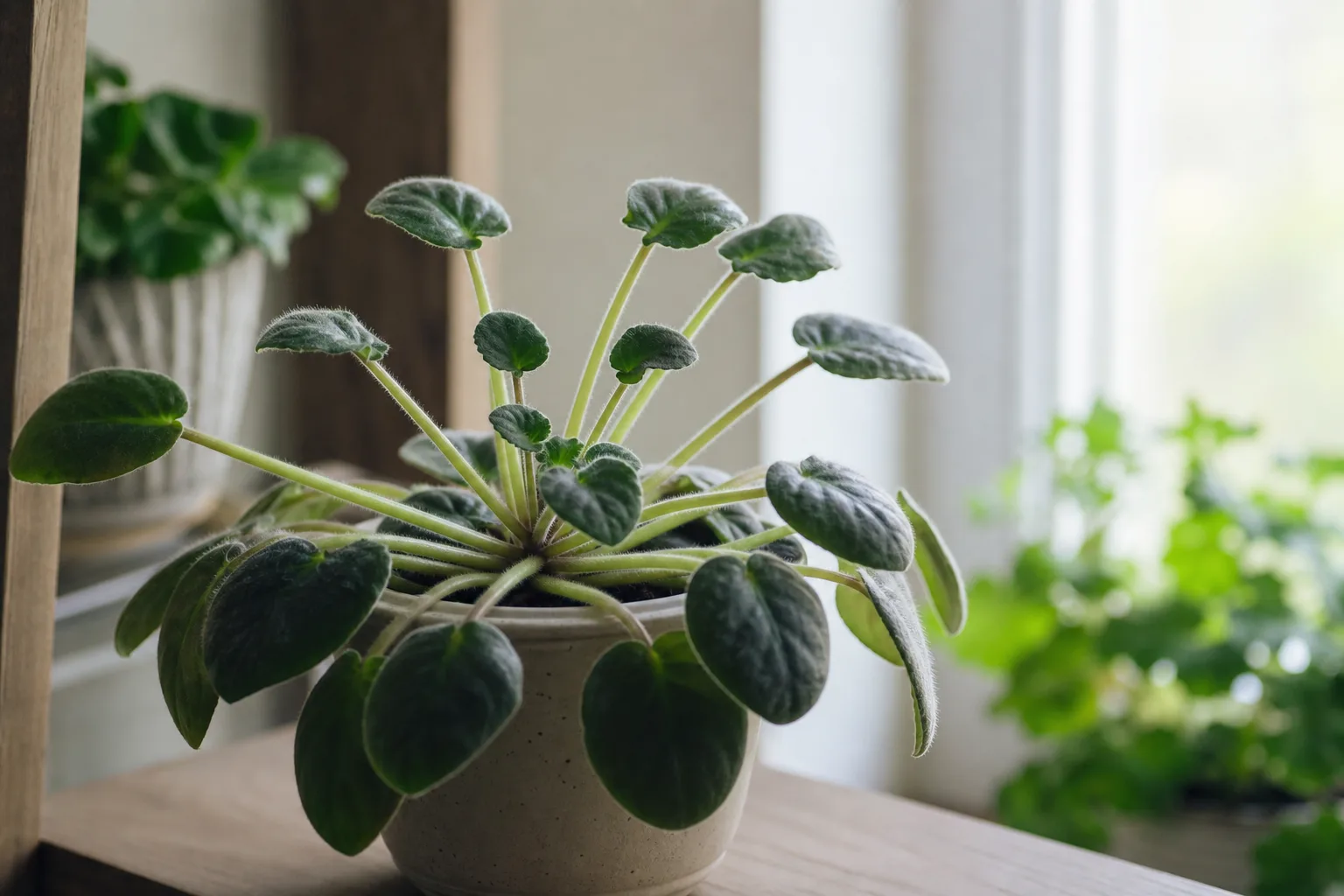
Not Enough Light on African Violet: Causes, Checks & Fixes
This guide covers not enough light on African Violet. See also the general Not Enough Light guide, watering, and light pages for this plant.
Not Enough Light on African Violet: Causes, Checks & Fixes
Quick answer
Not enough light on African violet (Streptocarpus sect. Saintpaulia) is the gap between survival light and bloom light. The plant may stay green on a desk or interior shelf, but thin, dark blue-green leaves with long petioles and poor flowering tell you photosynthesis is running on fumes.
For how chronic low light limits growth and bloom in general, see our not enough light hub. On African violet, the signature trap is a velvety rosette that still looks healthy from across the room-dark reaching leaves, an open crown, and missing buds while the pot sits too far from usable window light or on too short a grow-light timer.
First fix: increase bright indirect light today. Move the pot within about 12 inches of a suitable window-north, northeast, or east-or add supplemental LED or fluorescent light on a timer for roughly 12 to 16 hours daily with 8 hours of darkness at night. Do not repot, fertilize heavily, or move into harsh direct sun on day one.
For full placement targets and grow-light setup, see the African violet light guide. If petioles are already very long with a bare neck, also read leggy growth-that page covers structural stretch after light is corrected.
When to use this page vs other African Violet guides
This page is the symptom-first entry for shade-stressed African violets-dark reaching foliage, open rosettes, and missing blooms without necessarily obvious neck elongation yet.
- Leggy growth — go here when long petioles, bare neck, and crown lean are the main pattern after months of dim placement
- No flowers — go here when light looks adequate but buds still fail (feed imbalance, cool nights, or age)
- Pale leaves — go here when color washes out on older foliage rather than deepening to blue-green
- Light guide — go here for long-term window placement and grow-light tuning after you confirm the diagnosis
- All African violet problems — full cluster index
What insufficient light looks like on African Violet
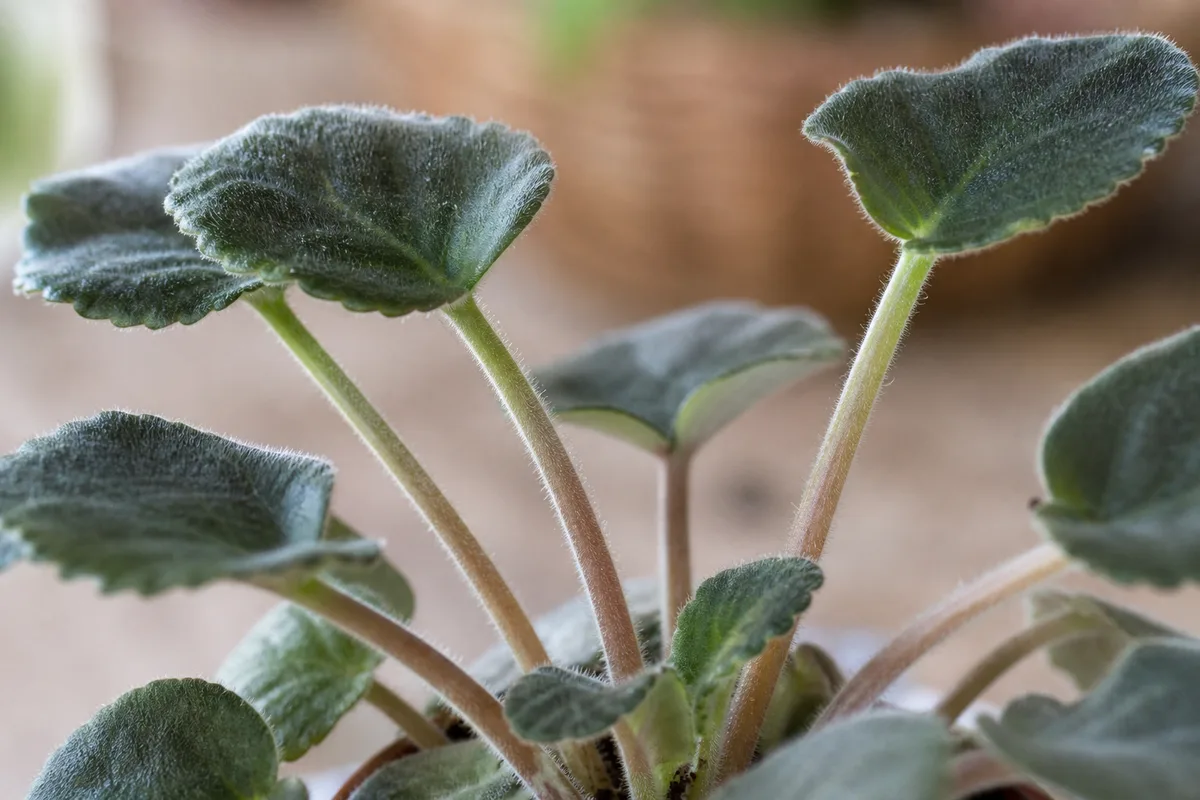
Dark blue-green leaves on unusually long petioles tilting toward the brightest side - classic etiolation from survival light without enough daily intensity to bloom.
Low light on African Violet overview rarely kills quickly. Instead, the plant adjusts downward: slower growth, darker foliage, and bloom failure while leaves keep emerging.
Watch for these patterns together:
- Dark, thin leaves - Deep green or blue-green foliage that looks richer than healthy medium green often signals the plant is compensating for weak intensity.
- Upward reach - Leaves and petioles tilt toward the window instead of lying in a flat spiral; the rosette looks open and loose.
- Long petioles - Leaf stems extend as the plant searches for photons-a classic etiolation sign. Severe stretch and bare neck are covered in depth on the leggy growth page.
- Leaves but no flowers - Insufficient light is among the most common reasons African violets fail to bloom. Greenhouse-bought plants often flower once, then stall at home because indoor light is weaker than grow-house levels.
- One-sided lean - The bright side grows longer petioles; the shaded side stays shorter, twisting the crown.
- Winter slowdown - Same window spot delivers fewer usable hours in short days; a plant that bloomed in summer may go leaf-only through winter without supplemental light.
What low light usually does not look like: mushy crown tissue on wet soil (overwatering or crown rot), bleached tan patches (too much direct sun), or a crowded rusty center (over-fertilization). Those need different fixes first.
Why velvety rosettes hide dim-light stress
African violets evolved in bright, filtered cloud-forest light in Tanzania and Kenya-not deep shade. Indoors they behave as long-day bloomers: they need enough intensity and enough daily hours to build the energy flowers demand.
Distance drops intensity fast. Human eyes adapt to dim rooms; a spot that feels bright enough to read in may be too weak for flowering. Light within about 3 feet of a suitable window can approach roughly 1,000 foot-candles-a useful bloom range-but a plant six feet into the room receives far less.
Duration matters as much as brightness. UF/IFAS notes that a plant with correct intensity for too short a period may do worse than one given weaker light for a longer period. An east window with four hours of gentle sun plus darkness may underperform a modest grow light on a 14-hour timer.
Cool rooms stack onto dim light. Daytime temps in the 70s °F with nights around 65–70 °F support steady growth. A violet in a 62 °F back bedroom with weak light slows metabolism and skips buds even when leaves look acceptable.
Constant light prevents blooming. Leaving a lamp on 24 hours does not substitute for brighter daytime exposure-plants need a defined dark period. Roughly 8 hours of darkness daily supports normal flowering rhythm.
Dim corners and bottom-water timing
African violets are often bottom-watered to protect velvety leaves from cold-water spotting. In a dim corner, that habit can mask light stress: the mix stays damp longer, the rosette looks perky from stored moisture, and you assume care is fine because the crown is not wilting.
The light check still comes first. If the top inch of mix dries slowly and new leaves keep reaching, move toward brighter exposure before you change watering rhythm. Brighter spots dry faster; dim corners stay wet longer and invite overwatering on an already stressed plant. Match moisture to the new light level after you move the pot-do not only add light while keeping the old soak schedule.
How to confirm low light vs lookalikes
Work through checks in order so you brighten exposure-not treat rot, pests, or feed gaps.
- Window audit - Note exposure and measure pot distance from glass. More than 12–18 inches back on a dim north or interior wall usually means insufficient intensity for blooms.
- Bloom history - Did flowers stop after moving away from a window? Did store blooms fail to repeat? That timeline points to light, not sudden disease.
- Leaf color and angle - Dark, thin, reaching leaves with long petioles support low light. Pale bleached leaves mean too much sun-the opposite problem.
- Grow-light check - If you already use supplemental light, verify fixture height (often 8–12 inches above leaves for small LEDs) and timer length. Fewer than about 12 hours daily may still leave the plant wanting more.
- Temperature - Nights below about 65 °F with dim light strongly support a light-plus-cool diagnosis.
- Rule out overwatering - Wilting on wet mix, soft crown, or sour soil smell points to overwatering or crown rot-not light alone. Petioles are not especially elongated in that case unless light is also poor.
- Rule out feed imbalance - Lush wide leaves with tiny blooms can mean high nitrogen; see no flowers and small flowers if light looks adequate but blooms stay undersized.
Confirmed diagnosis: dark reaching foliage, reduced or absent blooms, adequate moisture, no pest or rot signs, and a dim placement history. Suspected if only winter leaf-only growth appeared-still increase light rather than waiting for spring alone.
First fix for African Violet
Move to brighter indirect light or add artificial light-today. One targeted change beats stacking repot, fertilizer, and pesticide.
Practical targets:
- Place the pot within about 12 inches of a bright window-north, northeast, or east-or the brightest filtered spot available without hot midday sun on the leaves.
- Or suspend fluorescent or LED grow lights 8 to 12 inches above the crown, timed for 12 to 16 hours daily depending on natural light already in the room.
- Keep 8 hours of darkness each night-do not leave grow lights on around the clock.
- Rotate the pot a quarter turn weekly once light improves so the rosette fills evenly.
- If the room runs cool, warm daytime temps toward the 70s °F-light correction matters most, but warmth supports compact new growth.
Give the plant two to three weeks under improved light before African Violet repotting guide, heavy pruning, or fertilizer changes. Fixing soil first without light invites repeat stretch-see leggy growth if a bare neck already developed.
Step-by-step light correction
After the first move or grow-light install:
- Baseline photo - Snap the rosette from above so you can compare leaf angle and petiole length in three weeks.
- Adjust distance once - If leaves still reach after two weeks, move 6 inches closer to the window or lower the fixture slightly-not both on the same day.
- Extend duration before intensity jumps - If the rosette is green but budless, add one to two timer hours before moving into direct sun.
- Watch new leaves only - Older stretched petioles do not shrink; shorter new petioles confirm success.
- Resume mild feed after stability - Quarter-strength balanced violet fertilizer on a regular schedule once new growth looks firm-not as a substitute for light.
- Winter supplement - When days shorten, add or extend grow-light hours rather than pushing fertilizer to force blooms.
For fixture distance, spectrum, and seasonal window shifts, the light requirements guide goes deeper than this diagnostic page.
Recovery timeline
Weeks 1–3: New crown leaves should emerge tighter and on shorter petioles if intensity and duration are adequate. The plant may still lean until you rotate consistently.
Weeks 4–8: Buds often return once day length and intensity stay steady-commonly four to eight weeks after light correction, though a plant long deprived of bloom light may take longer.
Old stretched leaves: Permanent. Judge success by new growth shape and fresh bud initiation, not older foliage shrinking.
Flowers after correction: Without correct light, African violets will not bloom reliably; the first flower cycle after improvement may still produce fewer blooms than a greenhouse-grown plant.
Worsening signs: Continued elongation after light increase means intensity or duration is still too low-or the plant sits in direct hot sun and stress has stalled growth. Soft crown on wet soil is rot; dry down and inspect roots, do not only add light.
Lookalike symptoms
| What you see | Likely cause | Differentiating check |
|---|---|---|
| Long petioles, bare neck, lean | Low light etiolation | See leggy growth for neck repot steps |
| Leaves only, no buds | Insufficient bloom light | Dark reaching leaves; dim placement |
| Pale bleached patches | Too much direct sun | Damage on sun-facing leaf surfaces |
| Wilting on wet mix | Overwatering / root stress | Soft crown, sour soil; petioles not especially long |
| Tiny blooms on lush leaves | High nitrogen feed | Wide leaves, no stretch; light may be adequate |
| Faded open flowers | Age or excess light | See faded flowers; buds formed but color washed |
| Stunted twisted center | Cyclamen mites | Short brittle new growth, not window reach |
What not to do
Do not jump from a dim corner to harsh south-window sun-bleached leaves mean too much light, not a fix for dim stress. Do not leave grow lights on 24 hours; darkness is part of the bloom cycle. Do not fertilize heavily to force flowers on a light-starved plant-that drives leafy growth, not buds. Do not repot or bury the neck before correcting light, or new leaves stretch again on a taller stem. Do not mist leaves to compensate for dim rooms; wet foliage causes spots on African violets. Do not assume a green plant is a healthy plant-survival without blooms is the classic low-light trap.
How to prevent dim-light failure next time
- Keep violets where bright indirect light is realistic all day, not where the pot merely looks decorative.
- Run grow lights on a timer for steady 12 to 16 hours combined with window light as needed-14 to 16 hours supports flowering in extension guidance.
- Rotate weekly for even rosettes.
- Supplement in winter when natural hours drop; do not rely on fertilizer to replace missing light.
- Re-check distance after rearranging furniture or when outdoor trees leaf out and shade a window.
- Match watering to light-brighter spots dry faster; dim corners stay wet longer and invite rot on an already stressed plant.
Conclusion
On African violet, not enough light is less about imminent death and more about a plant stuck in survival mode-dark reaching leaves, open rosette, and missing blooms. Confirm the pattern against watering and feed lookalikes, then brighten exposure or add timed supplemental light before any other intervention. New tight leaves and returning buds within weeks tell you the fix worked; old stretch does not reverse. For ongoing placement and grow-light tuning, keep the light guide bookmarked; for long petioles and neck burying after light improves, use leggy growth.
Related African Violet guides
- African Violet overview
- African Violet watering
- African Violet light
- African Violet soil
- Leggy Growth on African Violet
- Yellow Leaves on African Violet
- Leaf Drop on African Violet
- African Violet problems
Use this page when dark reaching foliage and missing buds point to dim placement. Use leggy growth when a bare neck and severe stretch need repotting after light improves. Use no flowers when the rosette looks compact but buds still fail.
Related tool
Use the Plant Problem Diagnosis Tool to narrow causes for not enough light on this plant before changing multiple variables at once.